London & Hertfordshire Free Site Visit
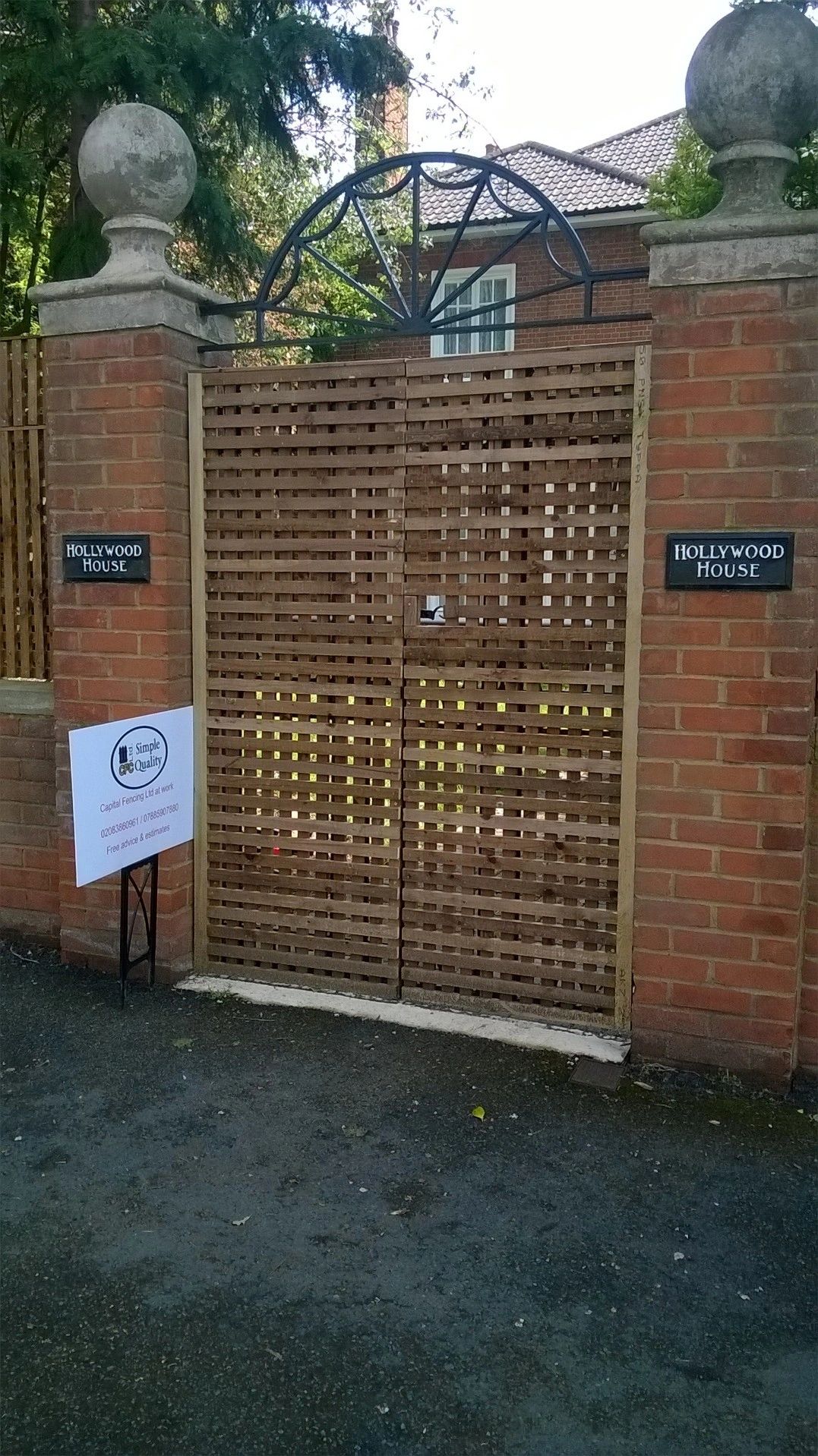
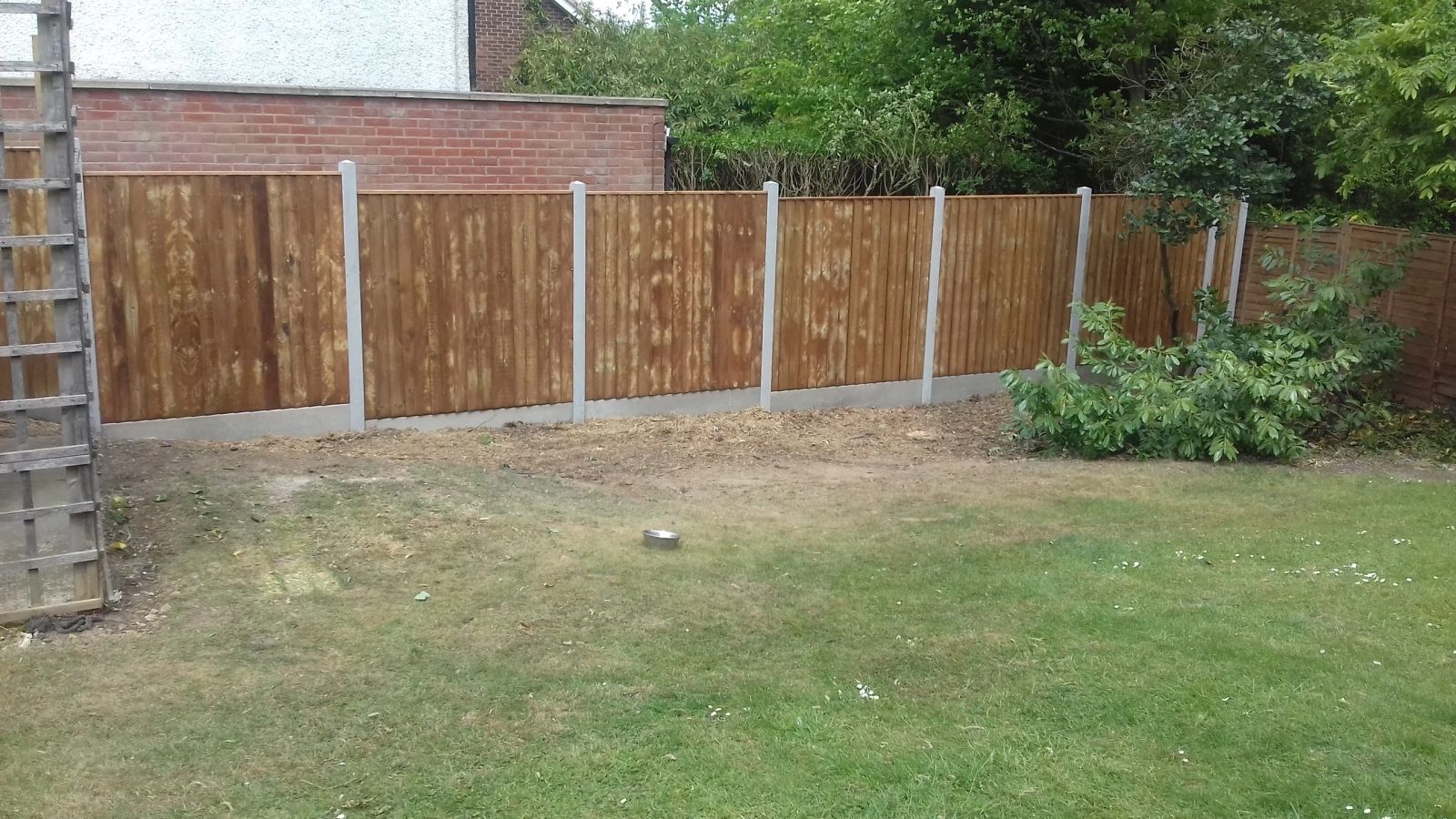
closeboard fence run installed by Capital Fencing in Potters Bar (EN6)
Potters Bar · EN6

Potters Bar Composite Fencing — Specified for EN6

Expansion is the thing installers get wrong with composite. Boards move along their length in summer, so gaps at the post channels are deliberate, not sloppy. On Potters Bar gardens we set out runs to land on full boards where we can, because a cut composite end never looks like a factory one. Composite Fencing in Potters Bar isn't a bolt-on for us — it's a day-in, day-out install. We cover EN6 and the streets running toward A1000 Great North Road, and we know before we arrive that many gardens border the green belt — the brief usually needs sturdy stock-proof boundary work. That's the first thing that shapes the spec, not the last. Recent work on Darkes Lane and The Walk. We orient jobs off Oakmere Park.

Expansion is the thing installers get wrong with composite. Boards move along their length in summer, so gaps at the post channels are deliberate, not sloppy. On Potters Bar gardens we set out runs to land on full boards where we can, because a cut composite end never looks like a factory one. Composite Fencing in Potters Bar isn't a bolt-on for us — it's a day-in, day-out install. We cover EN6 and the streets running toward A1000 Great North Road, and we know before we arrive that many gardens border the green belt — the brief usually needs sturdy stock-proof boundary work. That's the first thing that shapes the spec, not the last. Recent work on Darkes Lane and The Walk. We orient jobs off Oakmere Park.

Why composite fencing works here

  • no annual staining or oiling
  • colour-through boards don't fade to grey the way pressure-treated timber does
  • aluminium post system won't rot at ground level, which is where 90% of timber fences fail
Honest trade-offs

Where composite fencing isn't the right answer

  • colour range is narrower than paint-grade timber
  • boards can dent under a football or garden strimmer edge

We'll say so on the site visit — a wasted quote helps nobody.

Typical spec

How we build composite fencing in Potters Bar

Wood-polymer composite boards on aluminium or steel posts. Standard build: 6ft × 6ft panels, 2.4m aluminium posts on 700mm concrete bases. On Potters Bar jobs we adjust for many gardens border the green belt — the brief usually needs sturdy stock-proof boundary work.

Property mix locally: 1930s semis, post-war detached homes around Cranborne Road, and infill developments near Little Heath. Typical gardens: generous rear gardens — often deep enough for decking plus a separate utility area. Postcodes we regularly service: EN6.

Common Potters Bar briefs

  • long rear boundaries where zero maintenance matters more than up-front cost
  • commercial forecourts where painted timber looks tired within a season

Composite Fencing FAQs — Potters Bar

Does composite fencing warp or fade in full sun?

Composite is heavier than lap panels, so access along generous rear gardens — often deep enough for decking plus a separate utility area is checked on the visit before we commit to a date. For 1930s semis in EN6, that is where the cost sits. In short: no annual staining or oiling, though up-front cost is roughly double a lap-panel fence.

Is composite fencing worth the extra cost?

We keep colour batches together on a single run, so a Potters Bar boundary reads as one boundary rather than two deliveries. We allow for generous rear gardens — often deep enough for decking plus a separate utility area when setting out in Potters Bar. Practically, that means colour-through boards don't fade to grey the way pressure-treated timber does — and we're upfront that boards can dent under a football or garden strimmer edge.

Can composite panels drop into existing concrete posts?

We keep colour batches together on a single run, so a Potters Bar boundary reads as one boundary rather than two deliveries. Survey slots across EN6 are usually inside a week. Practically, that means colour-through boards don't fade to grey the way pressure-treated timber does — and we're upfront that boards can dent under a football or garden strimmer edge.

Do composite panels handle high wind loads?

Post fixing matters more than the boards here: aluminium posts get concrete-set, because a composite run has no give to hide a leaning post in Potters Bar. We work this patch weekly, from Cranborne Industrial Estate out toward barnet. Practically, that means colour-through boards don't fade to grey the way pressure-treated timber does — and we're upfront that boards can dent under a football or garden strimmer edge.

How is composite fencing recycled at end of life?

Post fixing matters more than the boards here: aluminium posts get concrete-set, because a composite run has no give to hide a leaning post in Potters Bar. For 1930s semis in EN6, that is where the cost sits. Practically, that means colour-through boards don't fade to grey the way pressure-treated timber does — and we're upfront that boards can dent under a football or garden strimmer edge.

Recent composite fencing work
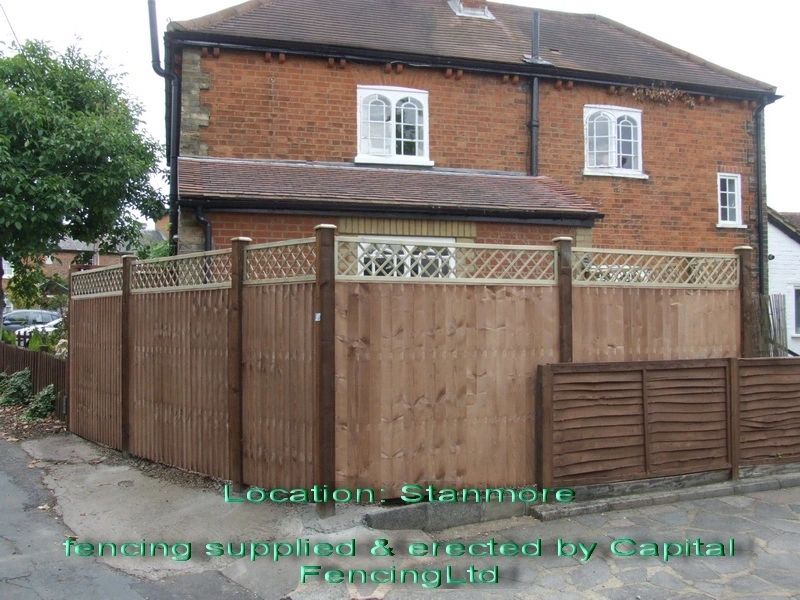
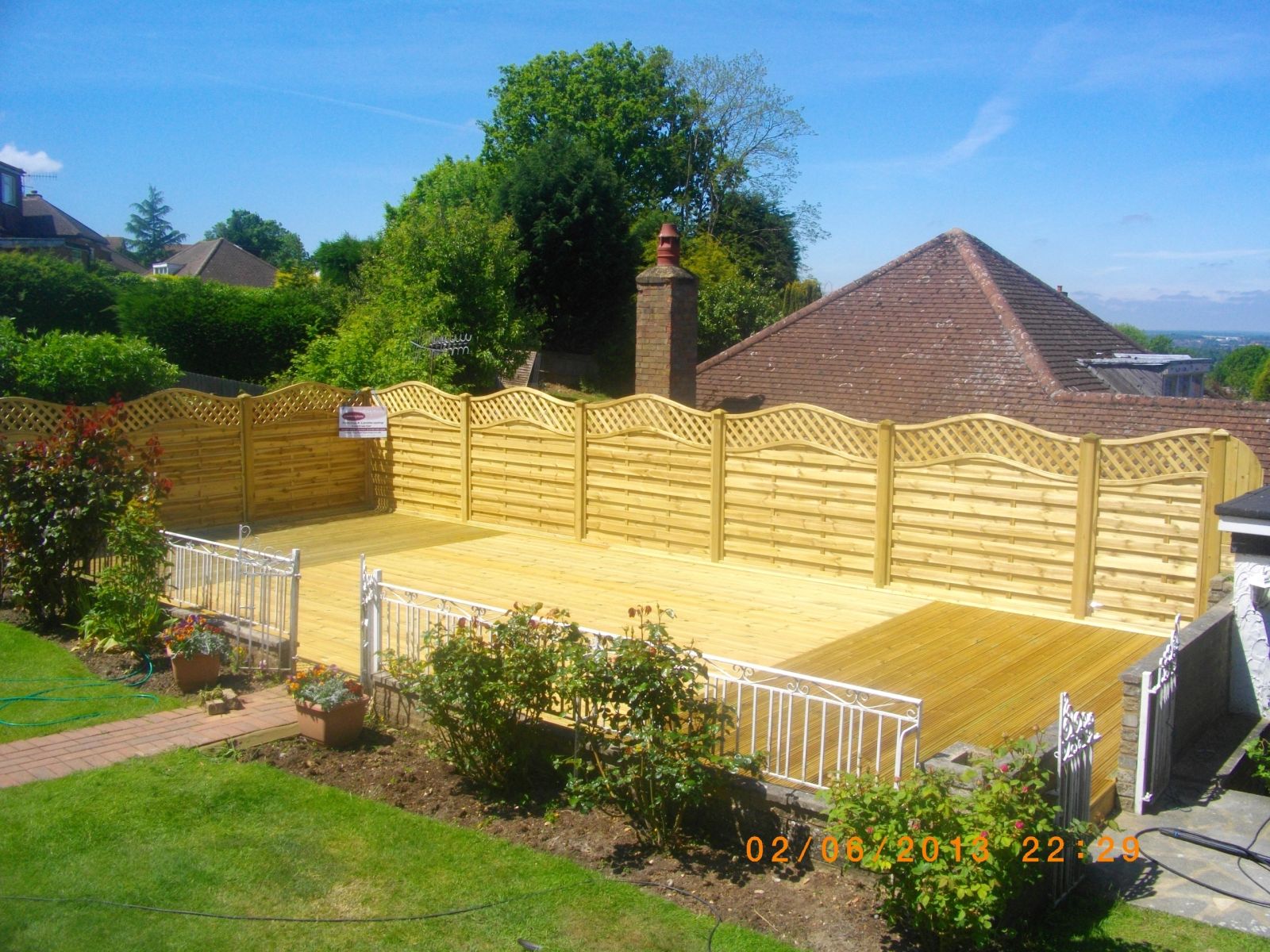
closeboard fence run installed by Capital Fencing in Potters Bar (EN6)panel fence install installed by Capital Fencing in Potters Bar (EN6)trellis-topped fence installed by Capital Fencing in Potters Bar (EN6)bespoke decorative fence installed by Capital Fencing in Potters Bar (EN6)

Site notes: composite fencing in EN6

Working near a live road or railway boundary

An acoustic fence often sits right against a busy road or a railway cutting, so work is planned to keep materials and tools clear of the carriageway or track side at all times, with extra care taken on any section within reach of passing traffic.

On a school-boundary job, timing around drop-off and pick-up avoids disruption on both sides of the fence.

Concrete post lifetime versus timber in like-for-like exposure

A reinforced concrete post doesn't rot and isn't vulnerable to the ground-level moisture that ends most timber posts' service life, which is why concrete posts with timber panel infill are a common way to combine a long-lived structural frame with a more traditional timber appearance.

Concrete posts are heavier and less forgiving to adjust once set, and a cracked or spalled concrete post — usually from a hard frost hitting a hairline crack, or from an impact — can't be patched as simply as replacing a length of timber.

For a boundary where the main failure history has been posts rather than panels, moving to concrete posts while keeping timber panels is often a more effective lifetime upgrade than simply replacing like-for-like.

Combining a barrier with secondary glazing

An external acoustic fence addresses noise reaching the garden, but noise entering through windows is a separate path that a garden barrier can't fully control, particularly for an upstairs room facing the same source.

Secondary glazing addresses that separate path and is sometimes considered alongside an external barrier as part of a wider approach, though it falls outside fencing work itself.

Wildlife gaps for hedgehog movement

A small gap of around 130mm square cut into the base of a solid fence panel, sometimes called a hedgehog highway, lets hedgehogs move between connected gardens without needing to dig under or go around a continuous boundary.

This is increasingly requested by clients aware of declining hedgehog populations and is straightforward to incorporate into a new close-boarded panel, ideally agreed with the neighbouring property so the gaps line up on both sides of the boundary.

The gap doesn't compromise the fence's structural performance if it's cut cleanly within a single board rather than across a post or rail.

Schedules of condition before nearby works

A schedule of condition is a dated record, often with photographs, of a boundary structure's state before nearby building work begins, used to settle any later dispute about damage caused during that work.

Where a neighbour is undertaking significant building work close to a shared boundary, requesting this kind of record beforehand is reasonable and protects both parties.

This is distinct from a full party wall agreement but is often produced as part of the wider party wall process where one applies.

Timber moisture content testing

A pin-type moisture meter measures electrical resistance between two probes pushed into the timber's surface, giving a reasonably reliable reading of moisture content near the surface but not necessarily reflecting the core of a thick section.

Fencing timber delivered at above roughly 20% moisture content is more prone to significant post-installation shrinkage and movement than timber closer to its long-term equilibrium moisture content for outdoor use.

Because timber left stacked outdoors and uncovered reabsorbs moisture from rain and humidity, a moisture reading taken on delivery can differ significantly from the same stack a fortnight later if it hasn't been kept covered.

Handling excavated spoil on a fencing job

Digging even a modest run of post holes generates a surprising volume of spoil, and leaving it in a single heap on a lawn for the duration of a job kills the grass underneath if left more than a few days.

Spreading spoil thinly on a border, bagging it for removal, or arranging same-day disposal all avoid that dead patch, and the right choice depends on whether the client wants the spoil kept for landscaping elsewhere on the plot.

Heavy clay spoil is particularly slow to dry and awkward to barrow once it's rained on, so timing the dig to avoid leaving wet spoil sitting overnight where possible reduces both the mess and the extra effort of moving it later.

Post spacing on a run that doesn't divide evenly

Standard panels are usually 1.83m (6ft) wide, but very few boundary runs measure out as an exact multiple of that, so the layout has to absorb the remainder somewhere rather than pretend it isn't there.

The common approach is to split the shortfall across the two end bays so both are cut slightly narrower and roughly matched, rather than leaving one full-width bay and one very narrow offcut at a single end.

Where a fixed feature — a gate opening, a manhole, an existing post that must stay — sits partway along the run, setting out works outward from that fixed point in both directions rather than from one end only.

Knot loosening in structural timber

Knots are the base of a branch embedded in the trunk, and as timber dries the knot itself shrinks less than the surrounding wood, which can leave it loose or eventually cause it to drop out and leave a hole.

A live knot, still bonded to the surrounding fibres, is far less of a concern than a dead knot with a dark ring around it, which indicates the branch had already died before the tree grew over it and bonds poorly.

On load-bearing sections like arris rails, a cluster of large or dead knots near a fixing point is worth avoiding, since it reduces the effective cross-section carrying the load at that point.

Off-street parking and dropped kerbs

Converting a front garden to off-street parking usually requires a dropped kerb permit from the highway authority, and a boundary fence or gate across that new access has to be positioned clear of the visibility splay the dropped kerb creates.

Where a low front boundary already exists specifically to preserve sightlines onto the new parking, replacing it with a taller or solid fence can undo the safety benefit the dropped kerb approval was granted on.

It's worth checking whether the dropped kerb approval included any conditions on boundary treatment before ordering a new front fence or gate.

Data protection basics for boundary CCTV

Domestic CCTV covering only a homeowner's own property is generally exempt from full UK GDPR obligations, but that exemption narrows considerably once cameras capture a neighbour's garden, shared paths, or public areas.

Where wider coverage is genuinely needed, clear signage and being able to explain why footage is captured helps if a neighbour raises a concern with the Information Commissioner's Office.

Positioning cameras to focus tightly on a homeowner's own boundary and property, rather than sweeping across a neighbour's space, is the simplest way to avoid this becoming an issue.

Sliding versus swing gate mechanisms

A swing gate needs clear space to open into, whether that's the driveway itself or the street, while a sliding gate runs parallel to the boundary and suits plots where that swing space isn't available.

Sliding gates need a level, unobstructed track run at least as long as the gate itself, plus a foundation for the track and rollers that copes with the gate's full weight — cutting corners here is the most common cause of a sliding gate that jams.

Swing gates are generally simpler to install and service, which is worth weighing against a sliding gate's space-saving advantage on a tight or sloping driveway.

Tree Preservation Orders and a post line

A Tree Preservation Order protects specified trees from work that would damage them, and that protection extends below ground to root systems, not just the visible trunk and canopy.

Digging post holes within a protected tree's root protection area can count as damage even without touching the trunk, so it's worth checking the local TPO register before finalising a post line near a mature tree.

Where a TPO applies, the local authority can require an application before any groundworks proceed, and unauthorised damage carries meaningful penalties.

Applying to modify or discharge an old covenant

Where an old restrictive covenant genuinely no longer serves a useful purpose, it's possible to apply to the Upper Tribunal (Lands Chamber) to have it modified or discharged, though this is a formal legal process rather than a quick fix.

This route is generally used where a covenant is preventing otherwise sensible work and informal agreement with whoever benefits from it can't be reached.

Given the legal complexity involved, this is very much a solicitor-led process rather than something to attempt without professional advice.

If you want the boundary to look the same in ten years as it does on handover, composite is the answer. We fit it across EN6 with aluminium posts, and we hand over the board reference so a future replacement panel matches. Potters Bar clients get the same crew from first visit to hand-over. That's the whole model — one small team, composite fencing done properly, work agreed in writing before it starts. Recent work on Darkes Lane and Mutton Lane. We orient jobs off Wyllyotts Centre.

Get In Touch

Get My Free Quote — 24h Response

No callout fee · Free site visit · Friendly local team covering London & Hertfordshire.

Call us
07885907880
or 02036484746
Email
capital_fencing@yahoo.com
WhatsApp
Message us anytime
Area
London & Hertfordshire
Payment
Card payments accepted

Pay by debit or credit card, bank transfer or cash once the work and price are agreed. No deposit taken online.

Request a Free Quote

We'll get back to you within 24 hours.

Free Site Visit No Callout Fee
Call WhatsAppQuote