London & Hertfordshire Free Site Visit
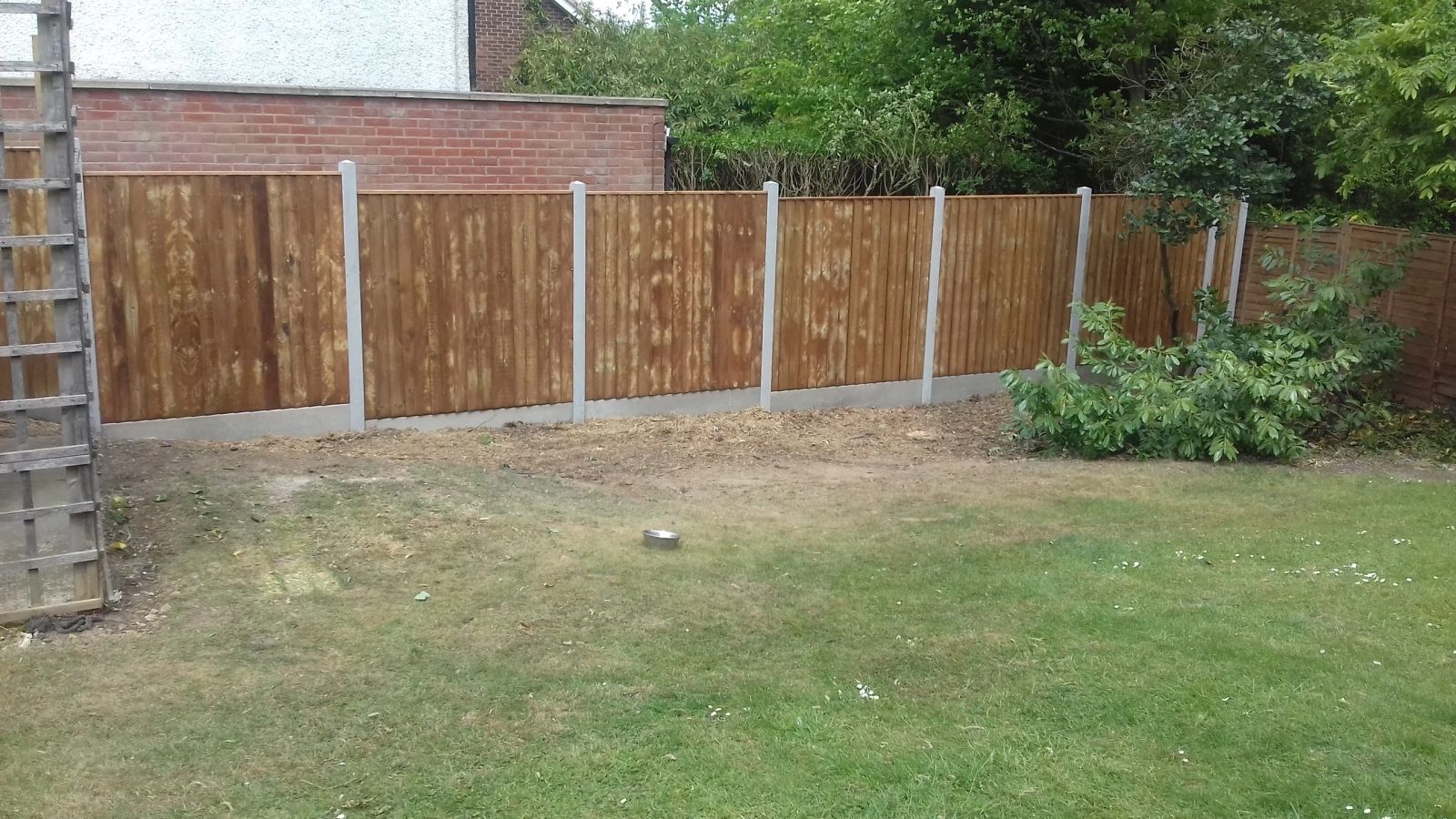
closeboard fence run installed by Capital Fencing in Haringey (N4)
Haringey · N4 / N8 / N15 / N17 / N22

Metal Fencing in Haringey (N4)

Steel earns its price in two places: it does not rot, and it can be made to an exact opening. For Haringey front boundaries and commercial lines we fabricate to survey, hot-dip galvanise, then powder-coat to a RAL colour. Every metal fencing job we run in Haringey starts from what fails locally: ladder-street back-to-back gardens mean every fence run has two owners and three neighbours to keep informed. Our default spec — 1.8m bow-top or estate railings, 40mm SHS posts, concrete-set at 750mm — is built around that, not around a generic price sheet. Recent work on Green Lanes and Wightman Road. We orient jobs off Bruce Castle Park.

Steel earns its price in two places: it does not rot, and it can be made to an exact opening. For Haringey front boundaries and commercial lines we fabricate to survey, hot-dip galvanise, then powder-coat to a RAL colour. Every metal fencing job we run in Haringey starts from what fails locally: ladder-street back-to-back gardens mean every fence run has two owners and three neighbours to keep informed. Our default spec — 1.8m bow-top or estate railings, 40mm SHS posts, concrete-set at 750mm — is built around that, not around a generic price sheet. Recent work on Green Lanes and Wightman Road. We orient jobs off Bruce Castle Park.

Typical spec

How we build metal fencing in Haringey

Galvanised steel, powder-coated bar-and-rail or estate railings. Standard build: 1.8m bow-top or estate railings, 40mm SHS posts, concrete-set at 750mm. On Haringey jobs we adjust for ladder-street back-to-back gardens mean every fence run has two owners and three neighbours to keep informed.

Property mix locally: Victorian terraces (Harringay Ladder, Crouch End), 1930s semis in Muswell Hill, and post-war estates around Tottenham. Typical gardens: long thin Victorian rear gardens with London clay and mature street trees. Postcodes we regularly service: N4, N8, N15, N17, N22.

Why metal fencing works here

  • structurally the toughest boundary material we install
  • hot-dip galvanising plus powder coat gives a 25-year plus service life
  • doesn't warp, twist or lose fixings the way seasoned timber does

Common Haringey briefs

  • commercial yards and forecourts where fork-lift damage is a real risk
  • front boundaries where visibility for parking and CCTV matters more than privacy

Metal Fencing FAQs — Haringey

How much clearance under the railings for a domestic front garden?

Bar spacing gets set to the use: closer for a Haringey frontage with young children, wider where the priority is the view through. We work this patch weekly, from Wood Green High Road out toward hackney. Worth weighing structurally the toughest boundary material we install against no privacy — this is a demarcation and security material, not a screen before you commit.

How do you finish metal fencing to stop rust?

Every fixing hole is drilled before galvanising, so nothing on a Haringey run exposes raw steel after fitting. For victorian terraces (harringay ladder in N4, that is where the cost sits. Practically, that means hot-dip galvanising plus powder coat gives a 25-year plus service life — and we're upfront that damaged uprights usually mean cutting and welding on site.

What's the lead time on made-to-measure railings?

Every fixing hole is drilled before galvanising, so nothing on a Haringey run exposes raw steel after fitting. We allow for long thin Victorian rear gardens with London clay and mature street trees when setting out in Haringey. In short: structurally the toughest boundary material we install, though no privacy — this is a demarcation and security material, not a screen.

Can metal railings be installed on a low brick wall?

Bar spacing gets set to the use: closer for a Haringey frontage with young children, wider where the priority is the view through. Survey slots across N4 are usually inside a week. Worth weighing structurally the toughest boundary material we install against no privacy — this is a demarcation and security material, not a screen before you commit.

Can metal fencing be repaired after impact damage?

Bar spacing gets set to the use: closer for a Haringey frontage with young children, wider where the priority is the view through. We work this patch weekly, from Wood Green High Road out toward hackney. Worth weighing structurally the toughest boundary material we install against no privacy — this is a demarcation and security material, not a screen before you commit.

Recent metal fencing work
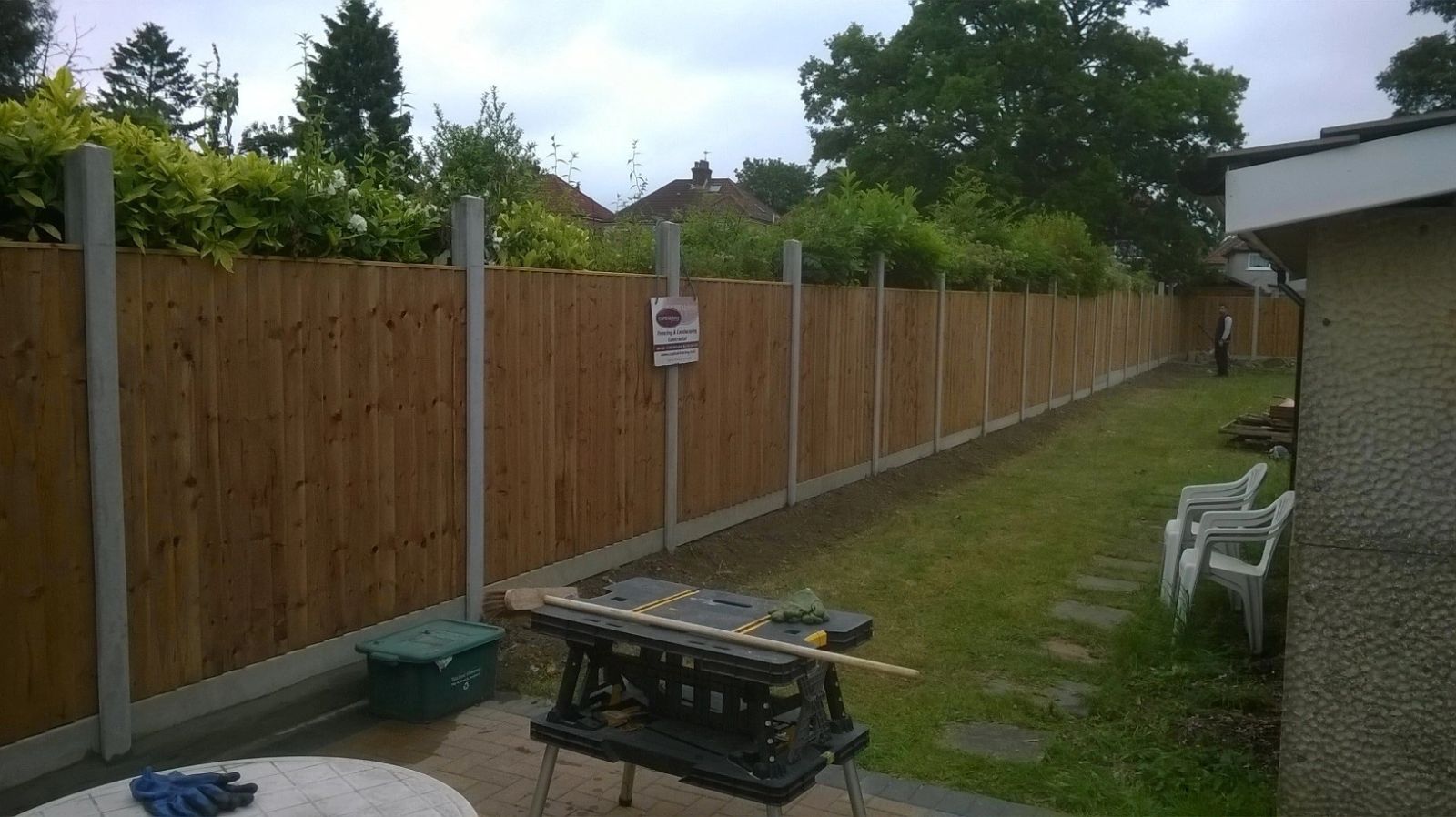
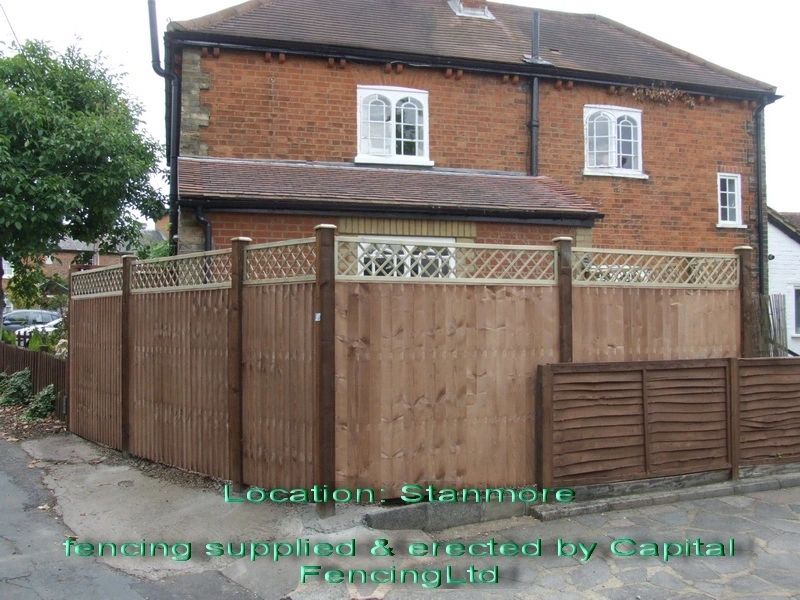
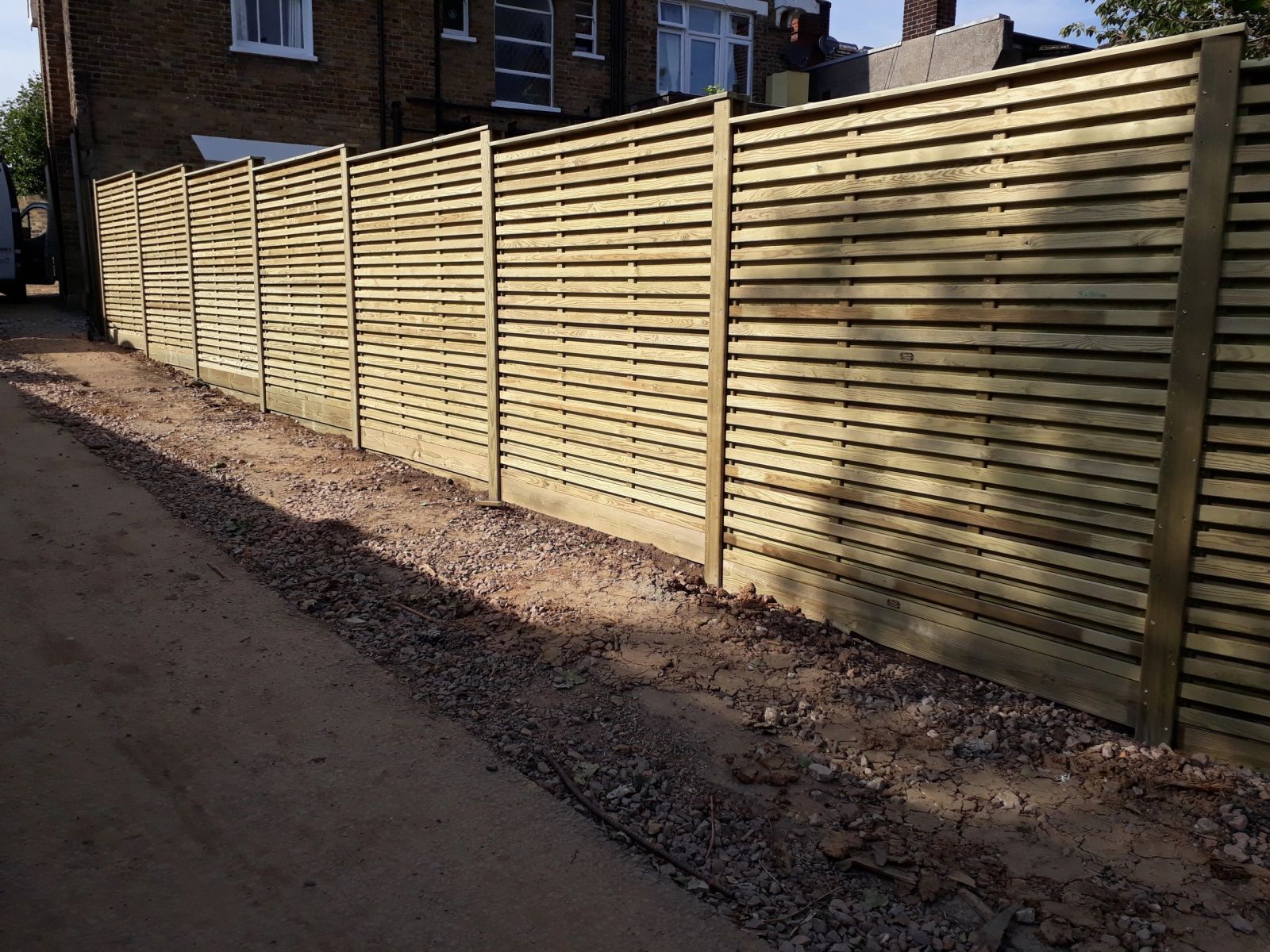
closeboard fence run installed by Capital Fencing in Haringey (N4)panel fence install installed by Capital Fencing in Haringey (N4)trellis-topped fence installed by Capital Fencing in Haringey (N4)bespoke decorative fence installed by Capital Fencing in Haringey (N4)

Site notes: metal fencing in N4

What happens after storm damage to a fence

A fence panel blown over in a storm is usually a buildings insurance matter rather than a workmanship warranty claim, since even a correctly installed fence can fail under genuinely severe wind loading.

Photographing the damage before clearing debris, and checking whether posts have snapped versus panels simply blowing out of their slots, both help establish whether a straightforward panel swap or a full rebuild with new posts is needed.

Where storm damage recurs on the same run, it's usually a sign the original specification wasn't suited to how exposed that particular boundary is, which is worth addressing at the rebuild stage rather than repeating the same spec.

Protecting an adjoining property while working a boundary corner

Work at a corner post often means standing tools, ladders or spoil temporarily on or very close to a neighbour's side of the boundary, which is worth agreeing in advance rather than assuming implied consent.

Where the corner adjoins a neighbour's planted border or a section of their own fence, photographing the condition before work starts gives both parties a clear reference if any question arises afterwards about pre-existing damage.

Finishing and clearing a corner section fully before moving along the rest of the run, rather than leaving it half-done for days, reduces the time any disruption to the neighbour's side is visible or ongoing.

Drive-through lane and order-point noise

A drive-through lane generates queuing engine idle, order-point speaker announcements and stop-start acceleration in a fairly continuous stream during trading hours, which differs from the short bursts typical of a delivery yard.

Because the order point itself sits at a fixed location, a barrier positioned to break the sightline to that specific point often does more than a longer run along the whole lane.

Waste carrier duty of care for site waste

Anyone removing fencing, decking or building waste from a client's property in the course of business needs to be a registered waste carrier with the Environment Agency, and should be able to provide a waste transfer note showing where the material was taken.

Treated timber, in particular, is classed differently to plain untreated offcuts and generally can't simply go on a bonfire or into general household waste, since some older preservatives fall under hazardous waste rules.

Asking a contractor for their waste carrier registration number and a transfer note isn't excessive caution — the householder can be liable if waste is later found fly-tipped and traced back to the job.

Waste carrier duty of care for old fencing

Under the Environmental Protection Act 1990, anyone arranging removal of construction waste such as old fence panels and posts has a 'duty of care' to ensure it's handled by a registered waste carrier.

Asking to see a waste carrier's registration number, and requesting a waste transfer note for larger quantities, is a reasonable and legitimate request rather than an unusual one.

Householders can be held responsible if waste from their property is later found fly-tipped, even where they paid someone else to take it away, which is why checking credentials matters.

When deeds don't say who owns a boundary

It's common for older title deeds to be entirely silent on which side owns a given boundary, especially on properties built before detailed conveyancing plans became standard practice.

In that situation there's no single automatic rule that applies in every case, and long-standing practical evidence — who has always maintained the fence, existing physical features — can carry real weight.

Where ownership genuinely isn't clear, we'd always suggest raising it with the neighbour and, if needed, a conveyancing solicitor, rather than assuming a default answer.

Boundary rules in National Parks and AONBs

Properties within a National Park or an Area of Outstanding Natural Beauty can have reduced permitted development rights for boundary structures, reflecting the additional planning protection these areas carry.

Material and colour choices are often more tightly guided in these areas too, even where the height itself would otherwise be permitted.

The relevant National Park authority or council planning department is the right first point of contact for confirming what applies before ordering materials.

North-facing boundaries and slower drying

A north-facing boundary receives little or no direct sun through autumn and winter, so rainfall sits on the timber and in the surrounding ground noticeably longer than on a south-facing equivalent.

This affects concrete curing time as well as timber drying — a post base poured on a north-facing run in cold weather takes longer to reach working strength and shouldn't be loaded or backfilled early just because a south-facing base nearby has already set.

Over the life of the fence, the practical effect is usually a shorter repaint or restain interval on the shaded side than the rest of the same boundary.

Measuring existing noise levels and why a survey helps

A basic noise survey — even an informal one comparing levels at different points and times of day — helps establish what's actually reaching the garden before deciding on barrier height and specification.

Where noise varies significantly by time of day, such as rush-hour traffic or a school's start and finish times, a survey that captures those peaks gives a more realistic basis for the design than a single spot reading.

Sizing gates for specific vehicle types

A driveway gate wide enough for a family car may still be too narrow for a van, motorhome or trailer, which is worth checking against the actual vehicles a household owns or plans to own rather than a generic standard opening.

Turning circle matters as much as raw width on a tight driveway, since a gate that technically fits a vehicle's width can still be unusable if there isn't room to straighten up before passing through it.

For a household with mixed vehicle needs, a wider single gate or double gates with an off-centre split (one narrow, one wide leaf) can give flexibility that two equally-sized leaves don't.

Fencing above a basement lightwell or retaining structure

Where a boundary fence sits directly above a basement lightwell, sunken patio, or retaining wall with a significant drop on one side, the fence effectively doubles as a safety barrier and needs a height and gap specification suited to that fall risk rather than a standard garden boundary spec.

Post fixings in this situation often need to tie into the retaining structure itself rather than a simple ground-set post, which is a different engineering detail to a standard concrete-in post.

This is worth identifying clearly at survey stage, since treating it as a routine fence replacement without accounting for the drop below is a genuine safety oversight.

Sacrificial facing over a core acoustic build

A sacrificial timber facing fixed to the outer face of a mineral-wool-cored panel protects the weatherproofing layer beneath from UV and physical damage, and can be replaced on its own if it weathers or is damaged without disturbing the acoustic core.

This two-layer approach separates the decorative, weather-facing element from the performance-critical core, which is a different design logic from a standard fence where the visible boards are usually also the only structural element.

Road traffic, rail and aircraft noise character

Road traffic noise is fairly continuous and dominated by mid frequencies from tyres and engines, rail noise is intermittent with stronger low-frequency content from wheel-rail contact, and aircraft noise arrives from above rather than along a ground-level path, which limits what a fence can do about it.

Because a fence works by breaking a line-of-sight path, it's far more effective against road or ground-level rail noise than against noise arriving overhead from aircraft.

Specifying fencing for an exposed hilltop plot

Plots on high ground with little surrounding shelter, common on the higher parts of the Chilterns and similar ridgelines, combine strong wind loading with faster-drying but also faster-weathering timber due to constant air movement.

A specification for this kind of site usually combines shorter bay spacing, part-slatted or louvred infill to reduce wind load, and a slightly heavier post section than the same height fence would need in a sheltered valley garden a few miles away.

It's a case where two gardens in the same postcode can genuinely need different specifications purely because of local topography rather than anything about the boundary itself.

Railings suit Haringey front boundaries where you want a defined line without losing light or view — and where timber would look wrong against brick and stone. Whether you're on a period street near Wood Green High Road or a newer estate toward hackney, metal fencing in Haringey is a service we run every week — booked in, on time, and left tidy. Recent work on Alexandra Park Road and Wightman Road. We orient jobs off Turnpike Lane market.

Get In Touch

Get My Free Quote — 24h Response

No callout fee · Free site visit · Friendly local team covering London & Hertfordshire.

Call us
07885907880
or 02036484746
Email
capital_fencing@yahoo.com
WhatsApp
Message us anytime
Area
London & Hertfordshire
Payment
Card payments accepted

Pay by debit or credit card, bank transfer or cash once the work and price are agreed. No deposit taken online.

Request a Free Quote

We'll get back to you within 24 hours.

Free Site Visit No Callout Fee
Call WhatsAppQuote