
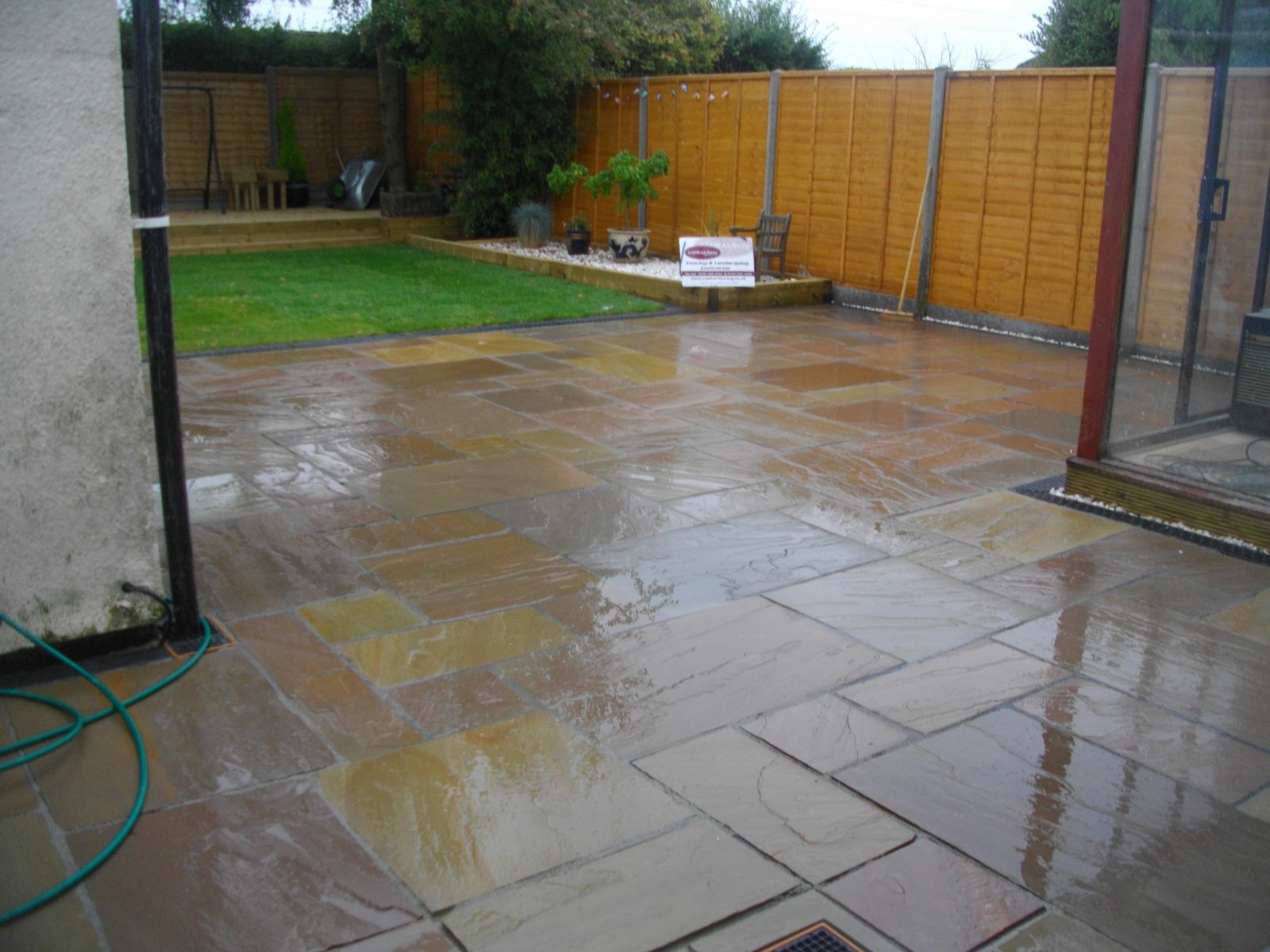
Turfing is part of the landscaping work our own team carries out across London and Hertfordshire. Most of the lawns we lay go down at the end of a bigger garden job: a new fence run, a deck or a patio has gone in, the ground has been churned up, and the garden needs a clean finish. We also lay lawns as a stand alone job where the old grass has worn out, flooded or been taken over by moss and weeds.
You can choose real rolled turf or artificial grass. Both are only as good as the ground underneath them, so most of the work on any lawn happens before the first roll is unwrapped.
What is included
Every turfing job is priced from a free site visit, so the written quote lists exactly what is being done in your garden. A typical job covers:
- Clearing the old lawn, weeds, stones and any rubble left from earlier work
- Levelling the ground and filling hollows so water does not sit in puddles
- Preparing the soil for real turf, or a compacted sub base for artificial grass
- Laying the turf or grass with tight, staggered joins
- Edging where the lawn meets beds, paths, patios or decking
- Taking away the waste so the site is left tidy
Real turf or artificial grass
Real turf gives a natural lawn that stays cool underfoot and suits gardens that get a fair amount of light. It needs watering while it roots in and regular mowing after that, and a shady or heavily used patch will always wear faster.
Artificial grass suits shady corners, small courtyard gardens, family gardens that get a lot of wear and owners who would rather not mow. It needs a well compacted, free draining base under it, and a firm edge so the grass stays taut. We are happy to talk through which suits your garden when we visit; there is no single right answer.
How a turfing job runs
First we visit, look at the ground, check drainage and access, and measure up. You then get a written quote. On the day, the team clears and prepares the area, lays the lawn and edges it, and removes the waste. If turfing is part of a bigger job it is normally the last thing done, so nothing heavy crosses the new lawn once it is down.
For real turf we will explain how often to water it over the first few weeks and when it is safe to walk on and mow. Artificial grass can be used as soon as it is finished.
What affects the cost
We do not publish set prices because every garden is different. The things that change the price of a lawn are:
- The size of the area
- Real turf or artificial grass, and the grade of grass chosen
- How much clearing is needed and how much waste goes away
- The state of the ground: levelling, poor soil or drainage problems add work
- Access: whether materials have to be barrowed through the house or down a narrow side passage
- Edging and any borders or paths laid at the same time
Turf alongside fencing, gates and decking
Because the same team builds fences, gates and decks, we can plan the lawn around them: posts set before the ground is levelled, gravel boards sitting at the right height against the finished lawn, and a neat line where the grass meets the deck. One team and one point of contact means the garden is finished in the right order. Payment is by card, bank transfer or cash.