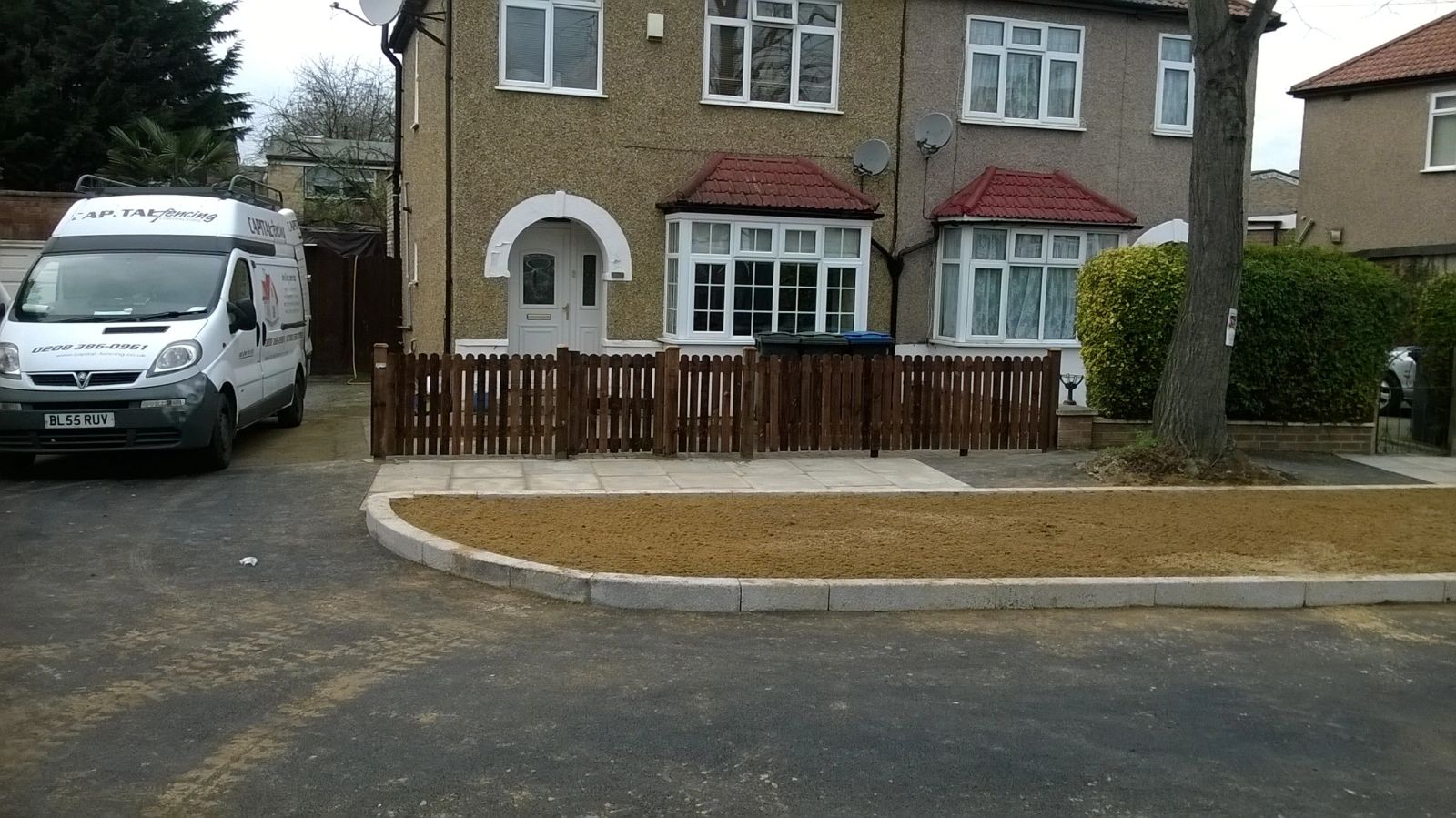
Welwyn Hatfield Borough Council is the local authority for Welwyn Garden City (AL7, AL8); the housing stock leans toward the original garden city movement housing — neo-georgian semis and short terraces with consistent frontages, and gardens tend to be rear gardens hidden behind tall established hedgerows; many properties sit on the original 1920s grid. What tends to drive the spec on a Welwyn Garden City job is welwyn garden city has design covenants — front fences typically restricted in height and style. How garden slope affects water shedding along a fence base: On a sloped garden, water naturally runs along the base of a fence line toward the lowest point, which means the downhill end of a run often sits in wetter ground than the uphill end even though both were built to the same specification. This uneven exposure is a common reason why one end of an otherwise uniform fence needs gravel board replacement years before the rest. Pressure treatment and incising: Pressure treatment (vacuum-pressure impregnation) forces preservative into the timber under pressure rather than just coating the surface, which is why treated softwood outperforms a surface-brushed equivalent even though both can look similar when new.
Property: the original Garden City Movement housing — neo-Georgian semis and short terraces with consistent frontages
Gardens: rear gardens hidden behind tall established hedgerows; many properties sit on the original 1920s grid
Welwyn Garden City has design covenants — front fences typically restricted in height and style
Under Welwyn Hatfield Borough Council, covering AL7, AL8. Nearest arterial: A1000 / B197, A1(M) J4. Served from Welwyn Garden City (East Coast / Thameslink). Local commercial anchors: Broadwater Road, Mundells industrial area.
Streets we regularly work on: Longcroft Lane, Applecroft Road, Digswell Road, Parkway. Local anchors: Welwyn Garden City station, Stanborough Lakes, Campus West.
Welwyn Garden City's planned layout means many streets share a consistent boundary style dating from the original 1920s-30s development. The Garden City Movement's design principles, associated with Ebenezer Howard, are still referenced informally by residents on streets such as Applecroft and Handside. Digswell Road slopes toward the Digswell Viaduct, a Grade II listed railway viaduct and well-known local landmark. Sherrardswood, on the town's southern edge, includes woodland known to support protected wildlife, including badgers.
Practical points for boundary work in Welwyn Garden City
How garden slope affects water shedding along a fence base
On a sloped garden, water naturally runs along the base of a fence line toward the lowest point, which means the downhill end of a run often sits in wetter ground than the uphill end even though both were built to the same specification.
This uneven exposure is a common reason why one end of an otherwise uniform fence needs gravel board replacement years before the rest.
A shallow cross-fall drainage channel or a slightly raised gravel board at the low point can intercept some of this flow before it pools against the timber.
Pressure treatment and incising
Pressure treatment (vacuum-pressure impregnation) forces preservative into the timber under pressure rather than just coating the surface, which is why treated softwood outperforms a surface-brushed equivalent even though both can look similar when new.
Denser softwoods such as redwood resist deep penetration, so posts and other high-risk sections are often incised first — small slits cut into the surface — to let preservative reach further into the timber than it otherwise would.
Incising leaves a visible pattern of shallow cuts on the timber face, which is a normal sign of proper treatment rather than a defect, though it's more noticeable on posts than on finish-grade boards.
Setting posts in clay
London clay and the heavier Hertfordshire boulder clays shrink and swell noticeably between a dry summer and a wet winter, which is exactly the movement that works a badly-set post loose over a few seasons.
The fix is depth and drainage rather than just more concrete: posts need to go below the zone that dries out and cracks seasonally, typically deeper than the standard 600mm used on free-draining ground, with a stone or gravel key at the base so water isn't trapped against the timber.
Postcrete alone on shallow clay bases is one of the most common reasons we're called out to replace a fence that's only a few years old.
Fencing above a basement lightwell or retaining structure
Where a boundary fence sits directly above a basement lightwell, sunken patio, or retaining wall with a significant drop on one side, the fence effectively doubles as a safety barrier and needs a height and gap specification suited to that fall risk rather than a standard garden boundary spec.
Post fixings in this situation often need to tie into the retaining structure itself rather than a simple ground-set post, which is a different engineering detail to a standard concrete-in post.
This is worth identifying clearly at survey stage, since treating it as a routine fence replacement without accounting for the drop below is a genuine safety oversight.
Shared driveways and where fencing can go
Semi-detached and some terraced properties sometimes share a driveway or side access under a right of way recorded in both sets of title deeds, which limits where a fence can be positioned along that strip.
Fencing off a shared driveway without checking the recorded rights can obstruct a neighbour's legitimate access, even if the land is technically owned by only one party.
Checking both properties' title documents for a recorded shared access right before proposing any fencing along a shared drive avoids this becoming a dispute later.
The difference between an informal and a legal boundary
The 'legal' boundary is whatever the title deeds and any supporting documents actually define, whereas the 'physical' or informal boundary is simply where a fence, hedge or wall happens to stand today.
Over years of incremental replacement, these two things can drift apart without anyone intending it, particularly where each new fence has been built slightly inside the previous one's line for convenience.
Where a discrepancy is suspected, this is worth raising as a documents question rather than assuming the current physical fence line is automatically correct.
Is Welwyn Garden City within your standard travel area?
Yes — Welwyn Garden City is served from Welwyn Garden City (East Coast / Thameslink), off A1000 / B197, and is inside our regular working patch.
What's the typical garden like in Welwyn Garden City?
Rear gardens hidden behind tall established hedgerows; many properties sit on the original 1920s grid is typical, alongside the original garden city movement housing — neo-georgian semis and short terraces with consistent frontages.
Is fencing above a basement lightwell or retaining structure something you plan for in Welwyn Garden City?
Where a boundary fence sits directly above a basement lightwell, sunken patio, or retaining wall with a significant drop on one side, the fence effectively doubles as a safety barrier and needs a height and gap specification suited to that fall risk rather than a standard garden boundary spec. Post fixings in this situation often need to tie into the retaining structure itself rather than a simple ground-set post, which is a different engineering detail to a standard concrete-in post. This is worth identifying clearly at survey stage, since treating it as a routine fence replacement without accounting for the drop below is a genuine safety oversight.
Does setting posts in clay come up much on jobs around Welwyn Garden City?
The fix is depth and drainage rather than just more concrete: posts need to go below the zone that dries out and cracks seasonally, typically deeper than the standard 600mm used on free-draining ground, with a stone or gravel key at the base so water isn't trapped against the timber. Postcrete alone on shallow clay bases is one of the most common reasons we're called out to replace a fence that's only a few years old. London clay and the heavier Hertfordshire boulder clays shrink and swell noticeably between a dry summer and a wet winter, which is exactly the movement that works a badly-set post loose over a few seasons.
The difference between an informal and a legal boundary — what does that mean for a job in Welwyn Garden City?
The 'legal' boundary is whatever the title deeds and any supporting documents actually define, whereas the 'physical' or informal boundary is simply where a fence, hedge or wall happens to stand today. Over years of incremental replacement, these two things can drift apart without anyone intending it, particularly where each new fence has been built slightly inside the previous one's line for convenience. Where a discrepancy is suspected, this is worth raising as a documents question rather than assuming the current physical fence line is automatically correct.
Shared driveways and where fencing can go — what does that mean for a job in Welwyn Garden City?
Fencing off a shared driveway without checking the recorded rights can obstruct a neighbour's legitimate access, even if the land is technically owned by only one party. Checking both properties' title documents for a recorded shared access right before proposing any fencing along a shared drive avoids this becoming a dispute later. Semi-detached and some terraced properties sometimes share a driveway or side access under a right of way recorded in both sets of title deeds, which limits where a fence can be positioned along that strip.
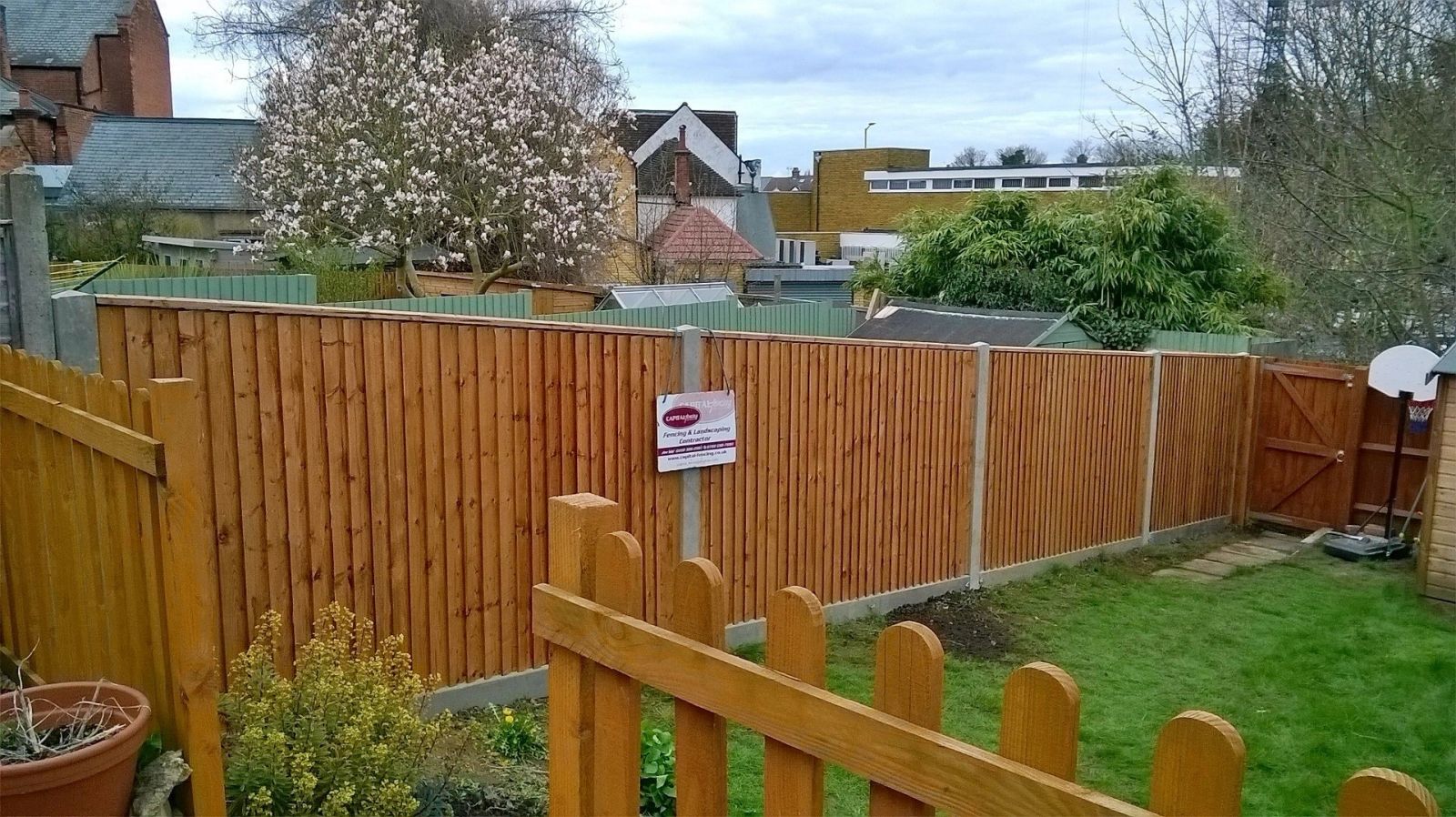
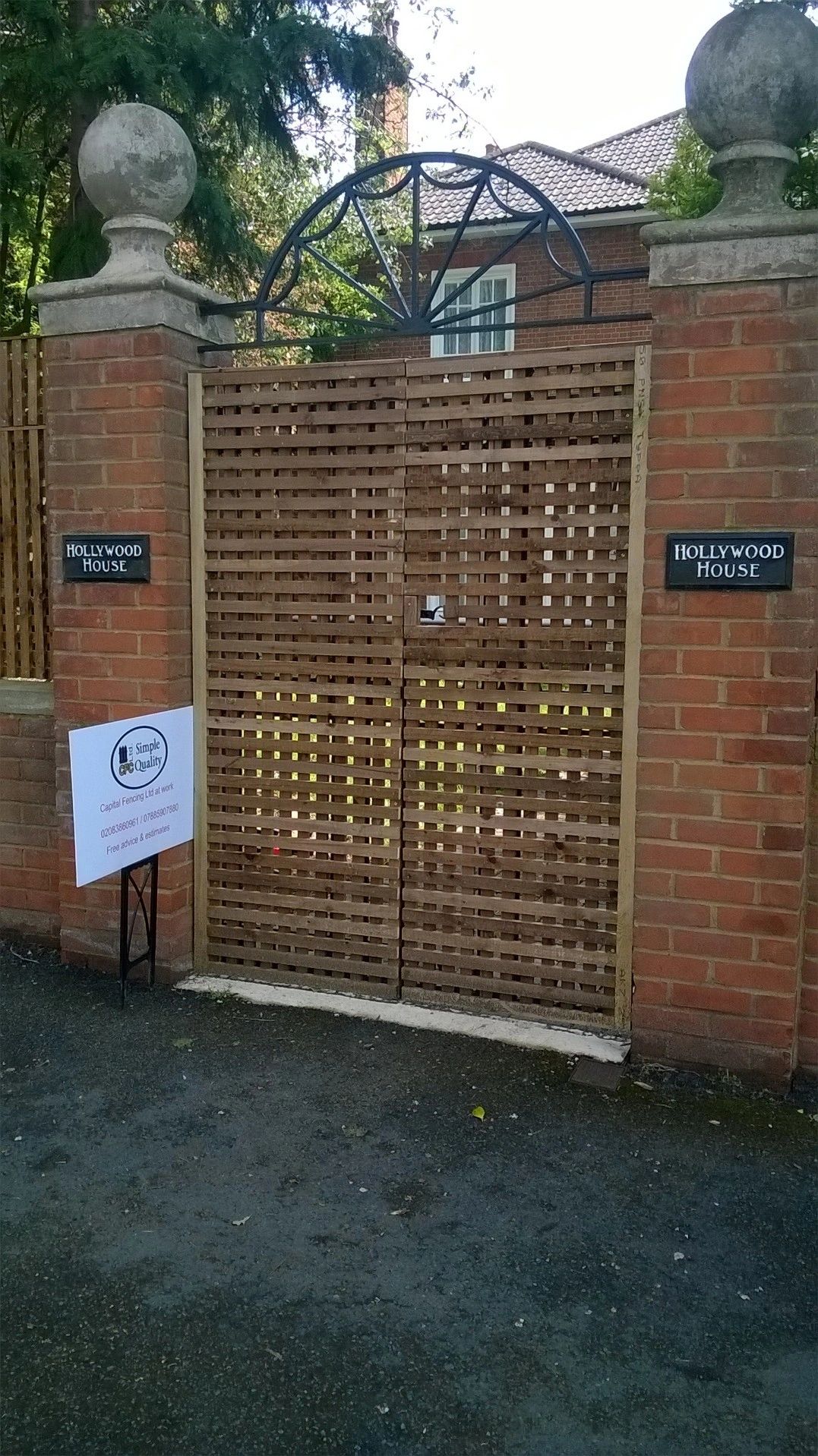
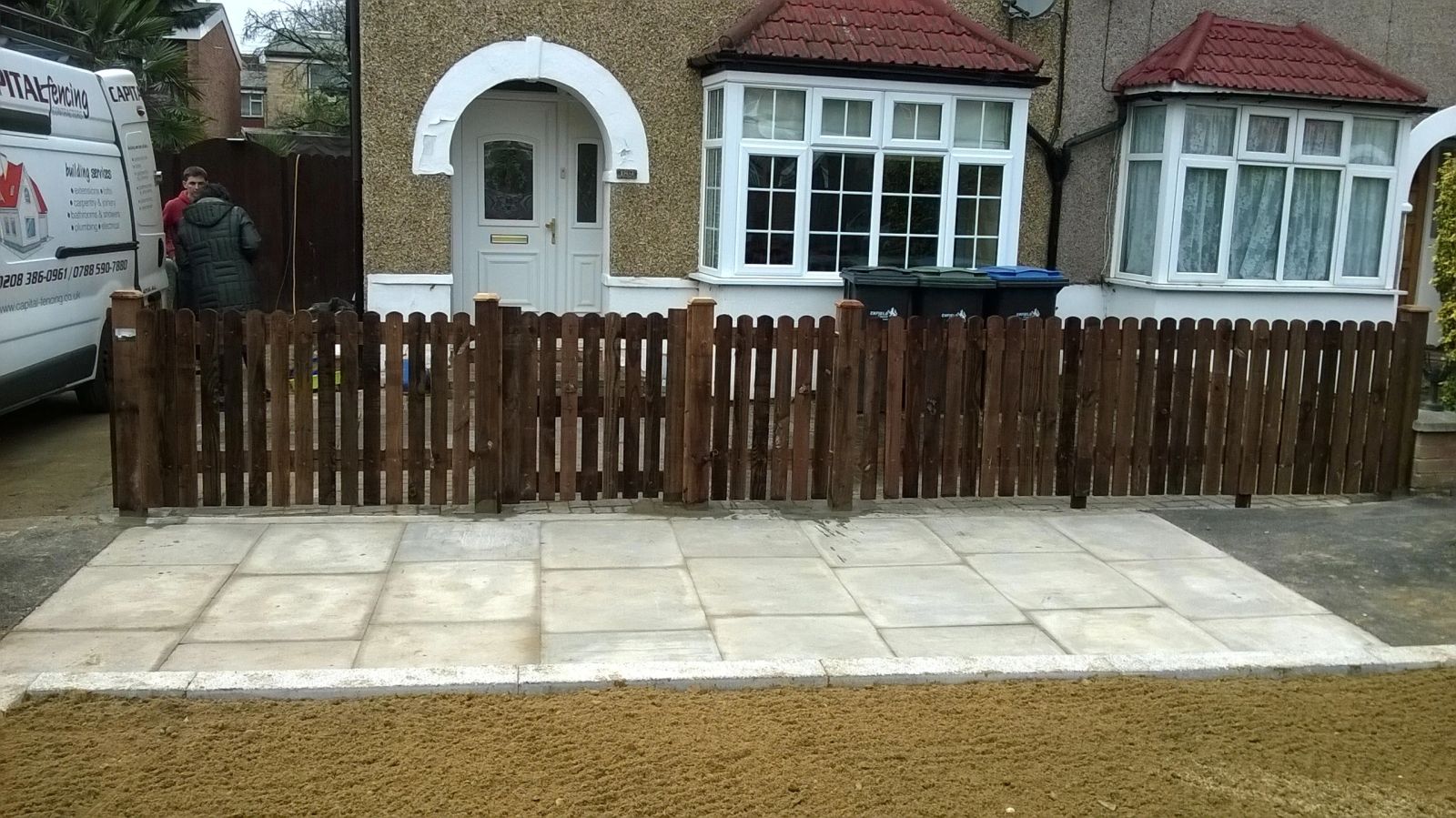
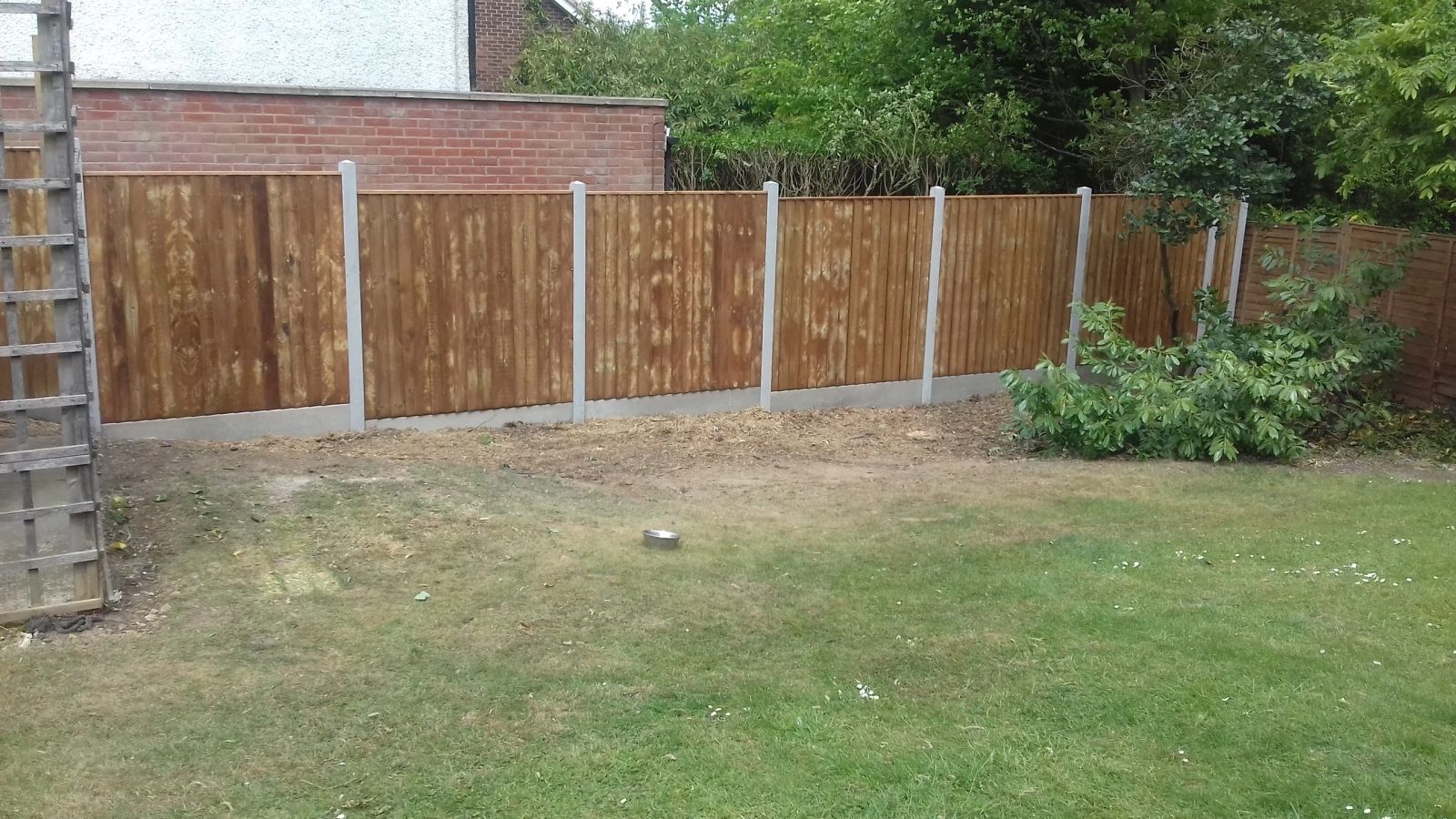
Some of our projects
We work this patch off A1000 / B197, close to A1(M) J4, via Welwyn Garden City (East Coast / Thameslink). Setting posts in clay: London clay and the heavier Hertfordshire boulder clays shrink and swell noticeably between a dry summer and a wet winter, which is exactly the movement that works a badly-set post loose over a few seasons. The fix is depth and drainage rather than just more concrete: posts need to go below the zone that dries out and cracks seasonally, typically deeper than the standard 600mm used on free-draining ground, with a stone or gravel key at the base so water isn't trapped against the timber. Fencing above a basement lightwell or retaining structure: Where a boundary fence sits directly above a basement lightwell, sunken patio, or retaining wall with a significant drop on one side, the fence effectively doubles as a safety barrier and needs a height and gap specification suited to that fall risk rather than a standard garden boundary spec.
Get In Touch
Get My Free Quote — 24h Response
No callout fee · Free site visit · Friendly local team covering London & Hertfordshire.