
Finchley, N3 / N12
Fence Repairs for Finchley Homes
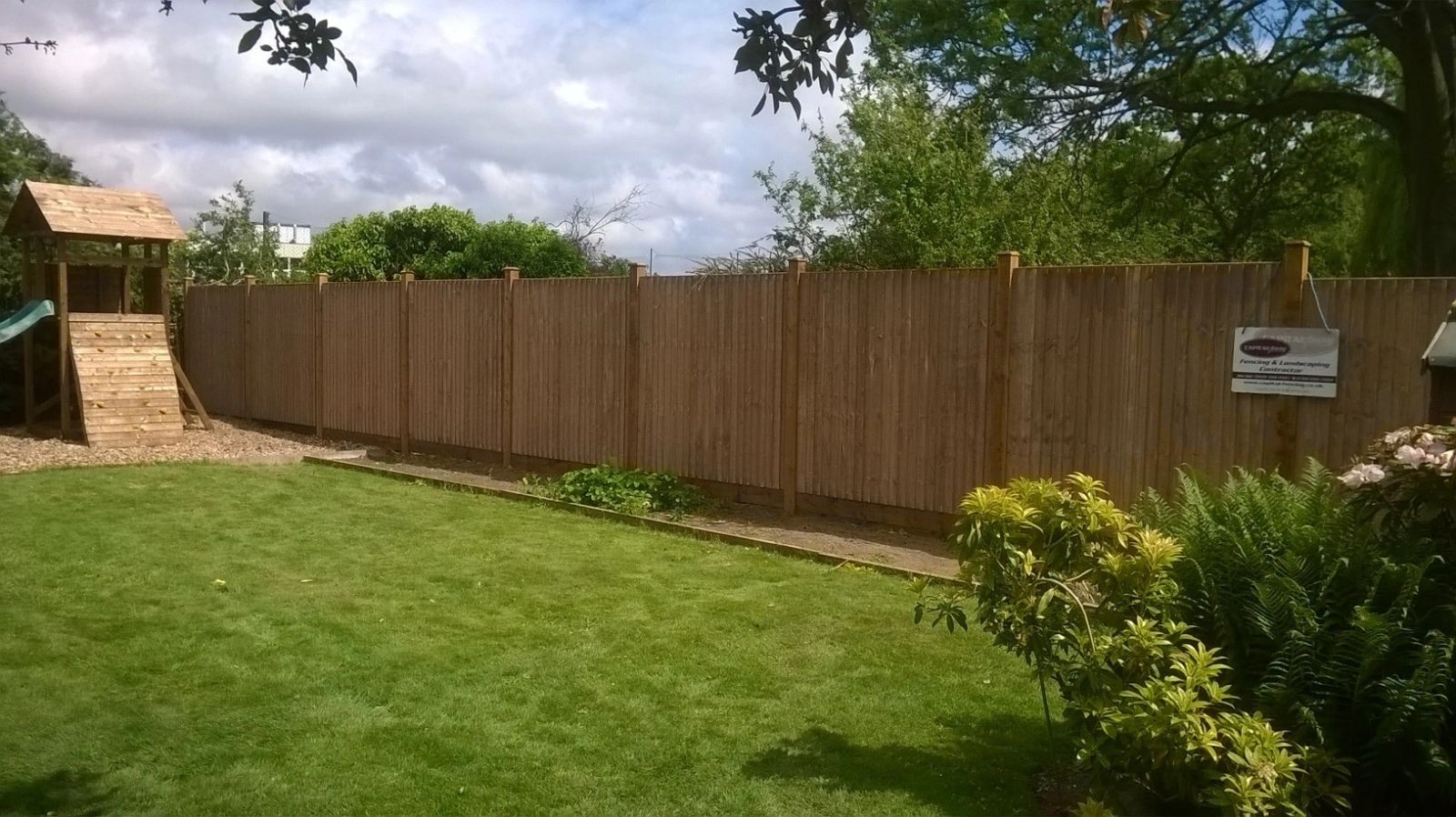
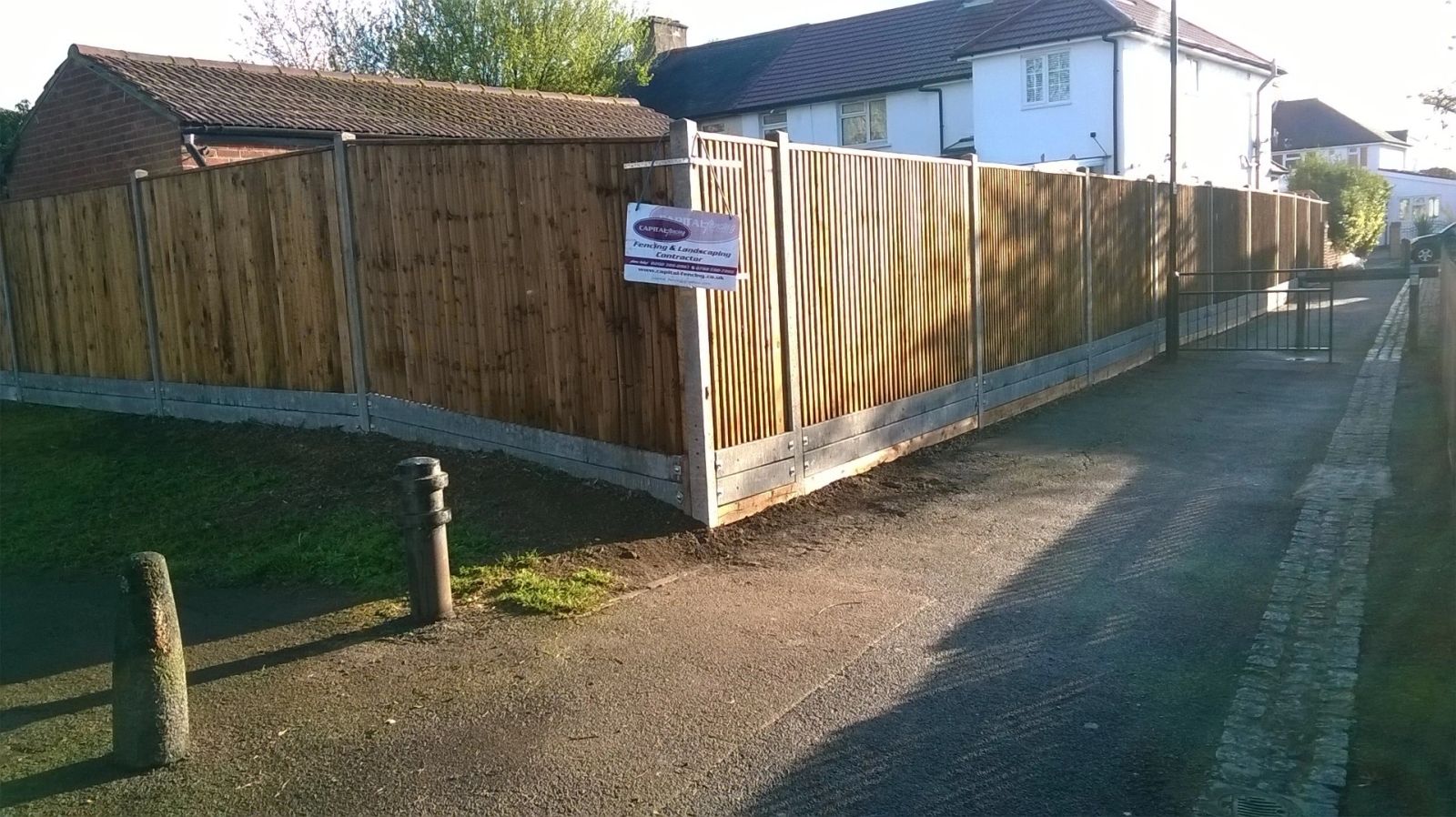
Most fence repairs are one of four jobs — a post, a panel, a gravel board or a full spurred run — and knowing which one you actually need is what keeps the bill down.
Call 07885907880Fence Repairs in Finchley usually comes down to one thing first: cat-proofing retrofit limits. Adding an inward-curved topper or roller bar to deter cats from climbing over an existing fence works reliably on a fence in good condition, but the fixings for that addition still rely on the post and rail beneath being sound. Fallow Court Avenue, Squires Lane Avenue House gardens The Church End Conservation Area covers much of the historic centre around Avenue House. The Church End Conservation Area covers much of the historic centre around Avenue House.
Multiple neighbours affected?
We can coordinate a shared boundary repair across several gardens in one visit. We're on site around Finchley via A1000 / A406 North Circular regularly.
Ask about a shared repairFree, no-obligation site visit for Finchley and the surrounding area — written quote, no pressure.
Cat-proofing retrofit limits
Adding an inward-curved topper or roller bar to deter cats from climbing over an existing fence works reliably on a fence in good condition, but the fixings for that addition still rely on the post and rail beneath being sound.
Retrofitting cat-proofing to a run that also needs repair is best sequenced after the repair, since fitting new hardware to a post that's about to be reset is wasted effort.
Repairing trellis toppers
A trellis topper is a lighter structure than the fence panel beneath it and is usually the first part of a run to fail in wind, since its open lattice catches gusts differently to a solid panel face.
Where the topper has failed but the panel below is sound, only the topper needs replacing, refitted to the same post caps or brackets as the original.
Repairing stock fencing pushed over or leaned on by animals
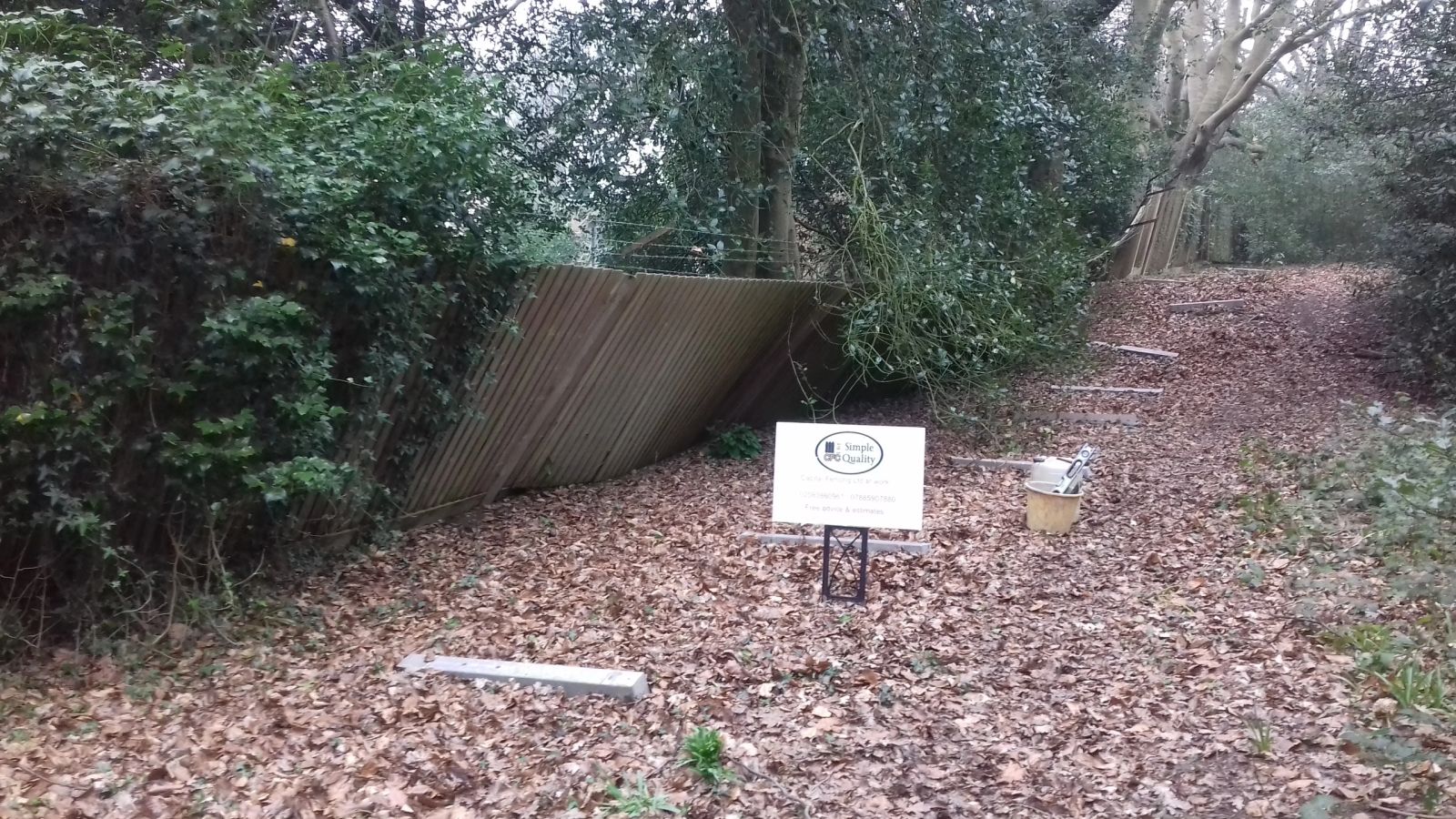
Fencing bordering land grazed by livestock takes a different kind of load to a garden boundary — sustained leaning and rubbing rather than occasional wind load — and posts along that kind of boundary often fail by gradually leaning outward rather than snapping.
Repair on this type of boundary is worth specifying with a stronger post spacing or additional strainer posts at intervals, since a repair matching a garden-fence specification often fails again quickly under the same ongoing pressure.
Cracked concrete post repair limits
A hairline surface crack in a concrete post that hasn't reached the reinforcement can sometimes be left or sealed, but any crack that's opened enough to expose or move the internal reinforcing rod means the post has lost structural integrity.
We treat a reinforcement-deep crack as a replacement rather than a repair, since a patched crack in that condition tends to reopen under the next significant load.
Bracketing as a repair technique versus re-jointing
A galvanised steel bracket bridges a failed timber joint — rail to post, or post to base — without needing to cut fresh joinery into timber that may already be weakened, which makes it quicker and less invasive than re-jointing.
Bracketing is a good fit where the surrounding timber is still structurally sound but the original joint has failed; where the timber itself has degraded, a bracket bolted into softened wood won't hold regardless of how strong the bracket is.
Choosing stainless fixings for repairs in exposed or salt-affected locations
Standard galvanised fixings corrode faster than usual in locations exposed to road salt spray or coastal air, so a repair in that kind of setting is a reasonable point to upgrade to stainless steel fixings even where the original installation used galvanised.
The extra cost of stainless fixings on a small repair is minor compared with the labour of redoing the same repair again in a few years once galvanised fixings have failed in that environment.
Why this comes up in Finchley
Gardens here run to mid to large gardens; mature trees and london clay are the recurring constraints. Repairing stock fencing pushed over or leaned on by animals matters more than usual as a result — fencing bordering land grazed by livestock takes a different kind of load to a garden boundary — sustained leaning and rubbing rather than occasional wind load — and posts along that kind of boundary often fail by gradually leaning outward rather than snapping. Nether Street runs close to the historic course of the Mutton Brook, a watercourse partly culverted as the area was developed.
Common questions
Can a bowed fence panel be straightened rather than replaced?
A mild bow can sometimes be braced from behind, but a panel bowed badly enough to have cracked its internal frame is usually more reliably replaced. Nether Street, Etchingham Park Road North Finchley bus garage Nether Street runs close to the historic course of the Mutton Brook, a watercourse partly culverted as the area was developed.
What is sistering a post?
It's bolting a new length of timber alongside a post that's only failed in one section, so the sound parts of the original post keep carrying load alongside the new piece.
How do you handle a repair on a shared boundary?
We recommend confirming ownership and notifying the neighbour in writing before starting, particularly where the repair changes the fence's height or spec. Finchley falls under Barnet Council, in the N3 postcode area, neighbouring barnet.
Should cut ends of new fence timber be treated separately?
Yes — end grain exposed by cutting on site draws in moisture faster than the factory-treated face, so sealing cut ends at the time of cutting is worthwhile.
What usually causes a fence to fail first?
Gravel boards, since they take the brunt of ground moisture — they're often the first component to fail, well before the panels above show any problem.
How often should a repaired section of fence be checked afterward?
Roughly the same interval as the rest of the fence, typically an annual check, with a closer look after the first full winter following the repair.
What happens to the old concrete and soil dug out during a post repair?
It's removed from site as part of the job rather than left in the garden, and old concrete is typically heavier and bulkier than the original hole suggests.
How do you tell if a post needs resetting or full replacement?
A probe test at and just below ground level shows how much sound timber remains; if enough good timber is left above the rot, a reset or concrete spur repair is usually enough, otherwise the post needs replacing.
Cracked concrete post repair limits is the detail that decides most fence repairs jobs here — a hairline surface crack in a concrete post that hasn't reached the reinforcement can sometimes be left or sealed, but any crack that's opened enough to expose or move the internal reinforcing rod means the post has lost structural integrity. Long Lane, Nether Street Victoria Park (Finchley) Fallow Court Avenue and Squires Lane share a back-alley layout with a pedestrian corridor running between the plots. Nether Street runs close to the historic course of the Mutton Brook, a watercourse partly culverted as the area was developed.
Get My Free Quote — 24h Response
No callout fee · Free site visit · Friendly local team covering London & Hertfordshire.
Pay by debit or credit card, bank transfer or cash once the work and price are agreed. No deposit taken online.