Bolt-down versus concreted base plates
A bolt-down base plate suits hardstanding such as a concrete yard or car park, using resin or expansion anchors rather than digging a footing, which keeps the surface intact and the fence removable if the layout changes.
A concreted post gives a stiffer, more permanent fixing on soil or made-up ground, but it isn't an option where the surface can't be broken — the choice is driven by the ground, not by preference.
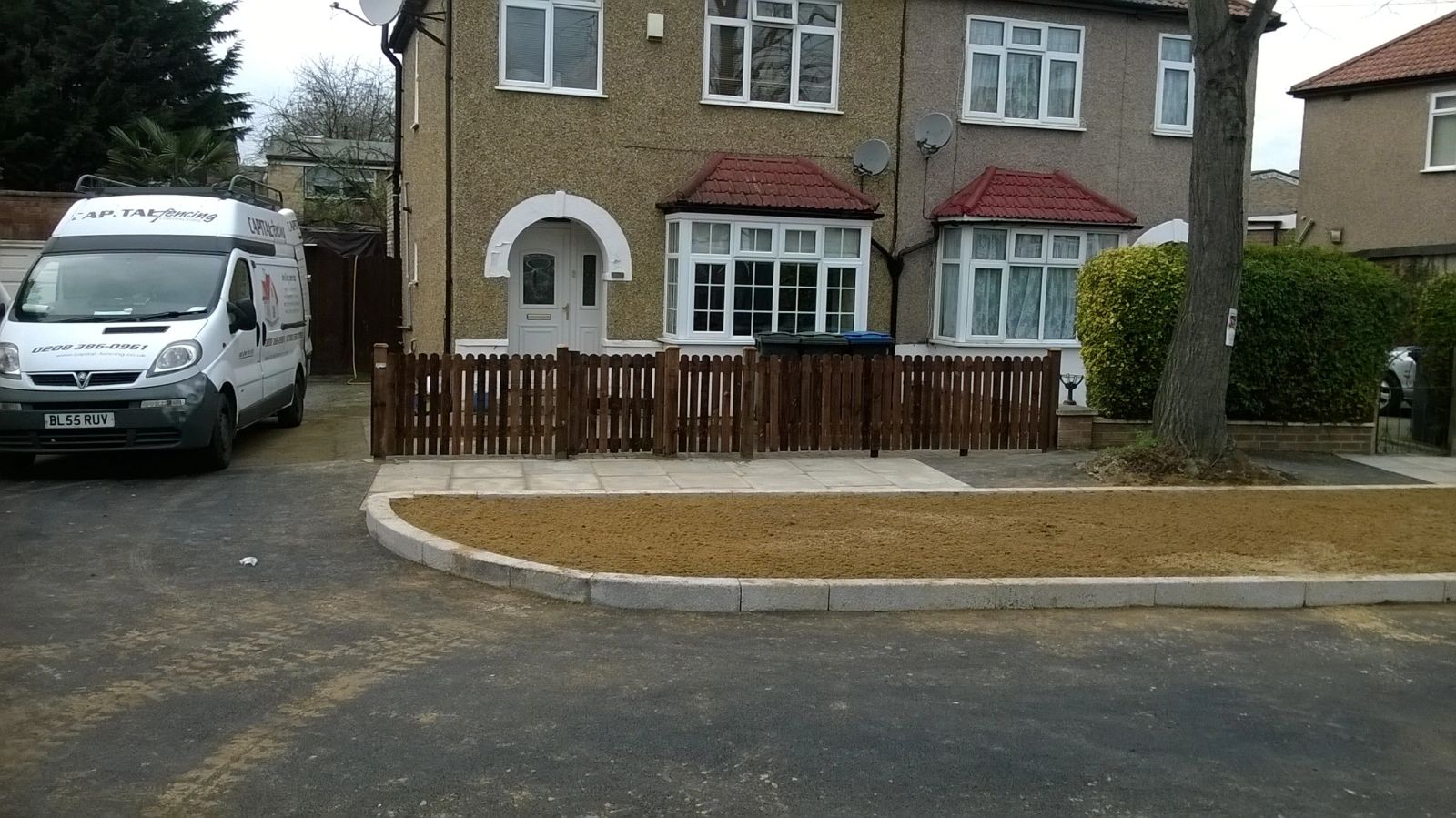
Height restrictions on a fence directly fronting a public footpath
A boundary that fronts directly onto a public footpath is often subject to a lower permitted height than a rear or side boundary under general planning rules, since a tall solid structure close to a pavement can affect sightlines and pedestrian safety.
Where security needs push toward a taller specification than the footpath frontage rule allows, planning permission is sought explicitly rather than assumed to fall under permitted development, and a mesh or picket design can sometimes reach greater height than a solid panel under the same visual-impact assessment.
Dry-mix versus wet-mix concrete for post bases
A dry mix — post-fixing concrete poured dry into the hole around a braced post and left to draw moisture from the surrounding ground — sets over a day or two and suits smaller domestic posts in reasonably moist soil.
A wet mix, gauged and mixed with water before placing, gives more control over strength and is generally preferred for larger posts, gate posts under lateral load, or very dry, free-draining ground where a dry mix may not draw enough moisture to cure properly.
Wet mix also allows proper tamping to remove air pockets around the post, which a dry mix poured in stages can't achieve to the same degree.
DBS-relevant site rules on sensitive sites
Sites such as schools, nurseries and some healthcare premises commonly require anyone attending, including contractors, to hold or provide evidence of an enhanced DBS check, or to be directly supervised at all times if they don't.
This is a site management requirement set by the school or institution rather than a universal legal rule for tradespeople in general, and requirements vary between individual sites and local authority policies.
Where a job is known in advance to be on this type of site, confirming the DBS or supervision requirement before booking the work avoids a contractor turning up unable to proceed on the day.
Subdividing a garden and creating a new boundary
Splitting part of a garden off for a new dwelling, annexe, or sale to a neighbour creates a brand new legal boundary that needs to be properly defined and registered with the Land Registry, not just marked with a fence.
A fence alone doesn't create or confirm legal ownership of subdivided land — the conveyancing and registration is what actually establishes the new boundary in law.
Anyone considering this kind of garden subdivision should involve a solicitor for the legal transfer before, rather than after, any physical fence goes in to mark the new line.
Board overlap orientation relative to prevailing weather
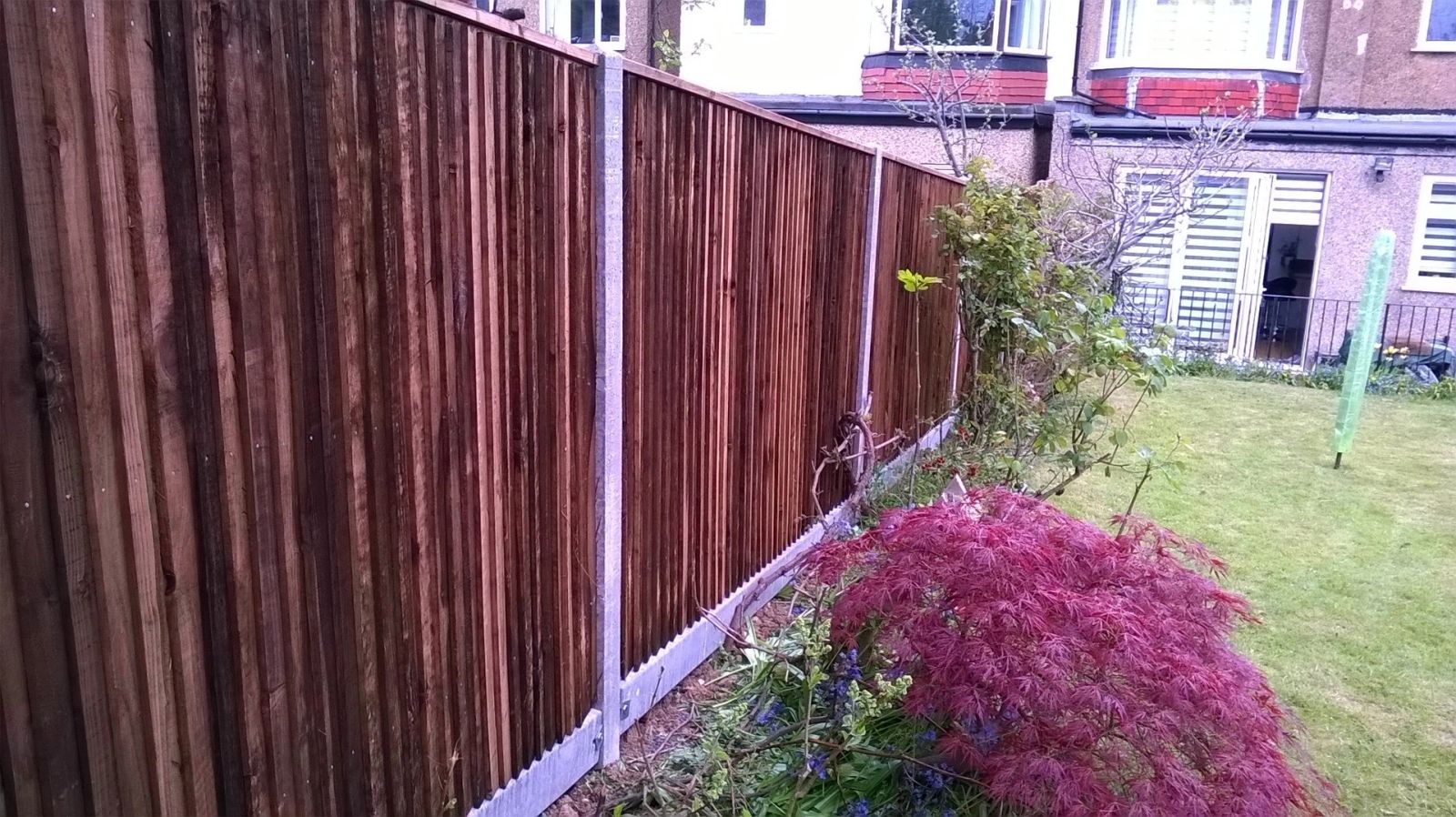
Featherboard and closeboard panels are built with each board overlapping the next, and the direction of that overlap affects how well the panel sheds driven rain — the leading edge of each board should face the prevailing wind and rain direction so water runs off rather than being driven behind the board.
This is straightforward to get right at manufacture but is occasionally reversed on a bespoke or site-built run, which shows up over time as faster localised rot on the boards facing the wrong way for the local prevailing weather.
Checking overlap direction against the site's known prevailing wind is a small detail worth confirming before a bespoke run is built rather than assuming a standard orientation will suit every site.
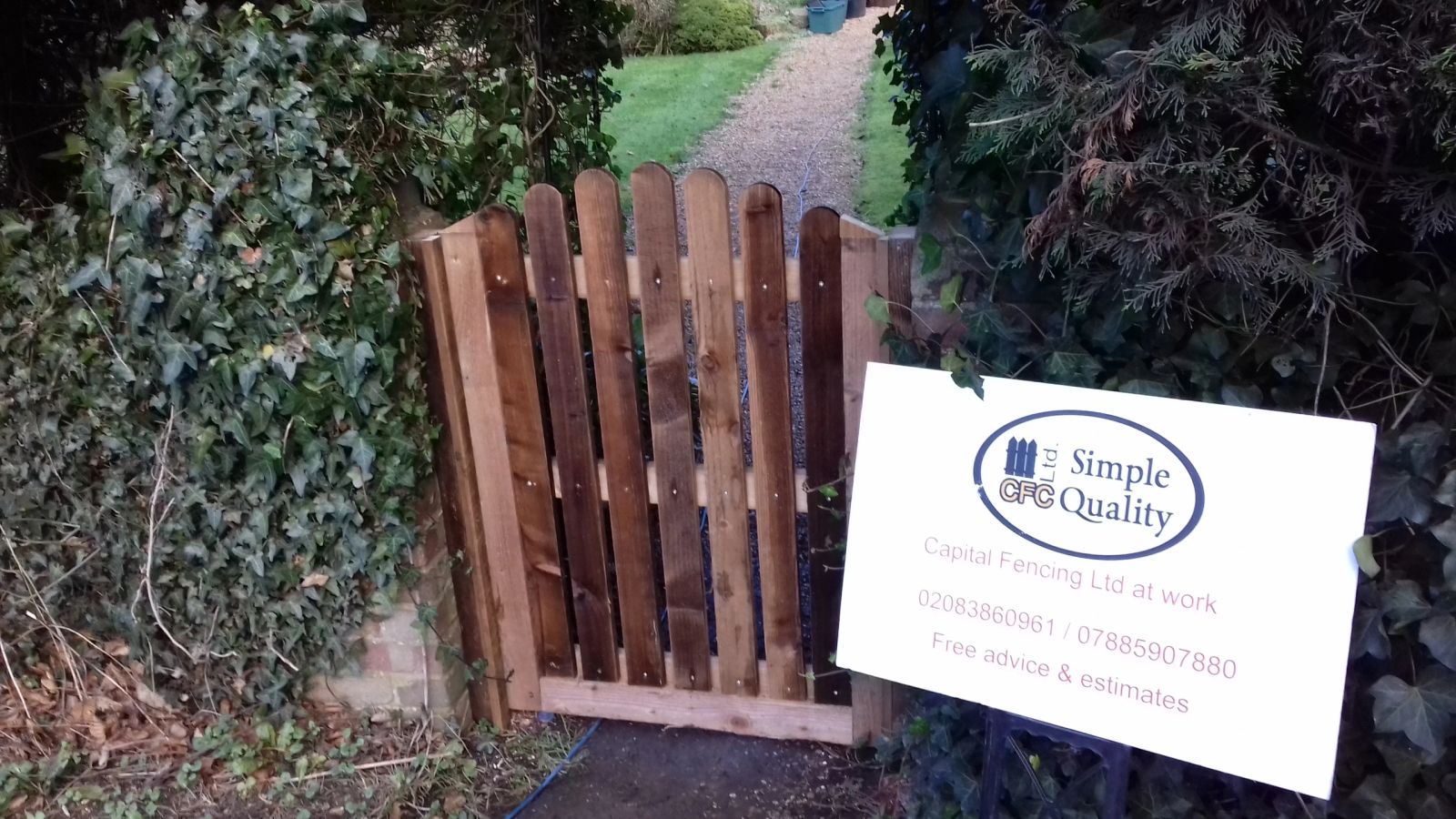
Gate frame timber sizes by width
A gate frame's timber section needs to increase with the width of the opening, since a wider gate has more leverage acting on the hinge side and more unsupported span across the middle before diagonal bracing is added.
A narrow single pedestrian gate can often use a modest frame section, while a wide double-leaf driveway gate needs substantially heavier stiles and rails plus a diagonal brace to stop it dropping or racking out of square at the latch side.
Bracing should run from the top of the hinge side down to the bottom of the latch side, in the direction that actually resists the gate's tendency to sag, not simply corner to corner for appearance.
Spoil volume and removal
Digging a full run of post holes generates more spoil than most clients expect, particularly on clay where the dug material swells in volume compared with its compacted state in the ground.
Spoil that can't be spread thinly elsewhere on the plot without smothering lawn or borders usually needs skip or licensed grab-lorry removal, which should be agreed and costed before the dig starts rather than after a pile has built up on the lawn.
Heavy clay spoil left on grass for more than a day or two will usually kill it, so covering or removing arisings promptly matters if the lawn is staying.
Narrow access and carrying materials by hand
Where there's no side access wide enough for a barrow, materials have to be hand-carried through the house or over a boundary, which changes both the time a job takes and the choice of components — shorter, lighter sections are far easier to move this way than long concrete gravel boards.
Protecting internal flooring and doorways during a through-house carry is worth agreeing before the first delivery arrives, since a scuffed hallway wall is one of the most common complaints on this kind of access.
On some terraces the only alternative is craning or lifting material over a roof or side wall, which needs its own access and safety plan rather than being treated as a simple manual carry.
Wire supports for climbing plants on a fence
Climbers like clematis or trained fruit need their own tensioned wire or trellis support rather than relying on the fence panel itself, since the twisting and clinging growth habit can distort thin battens over time.
Vine eyes and straining wire fixed into posts, not into panel infill, spreads the load onto the structural timber rather than the part of the fence most likely to need replacing first.
Planning wire runs at the time a fence is built, rather than drilling into finished posts later, avoids weakening a post at exactly the point that already carries the most load.
Communal gate access arrangements for allotment sites
An allotment site's perimeter fence is usually a lower-cost stock or mesh fence given the modest value at risk, but the communal access gate often gets a disproportionately stronger lock and hinge set, since it's the single point every plot holder and any opportunist intruder both have to pass through.
A keypad or coded padlock at the shared gate avoids the administrative burden of cutting and distributing individual keys to a changing list of plot holders over time.