Matching a repair into an older run
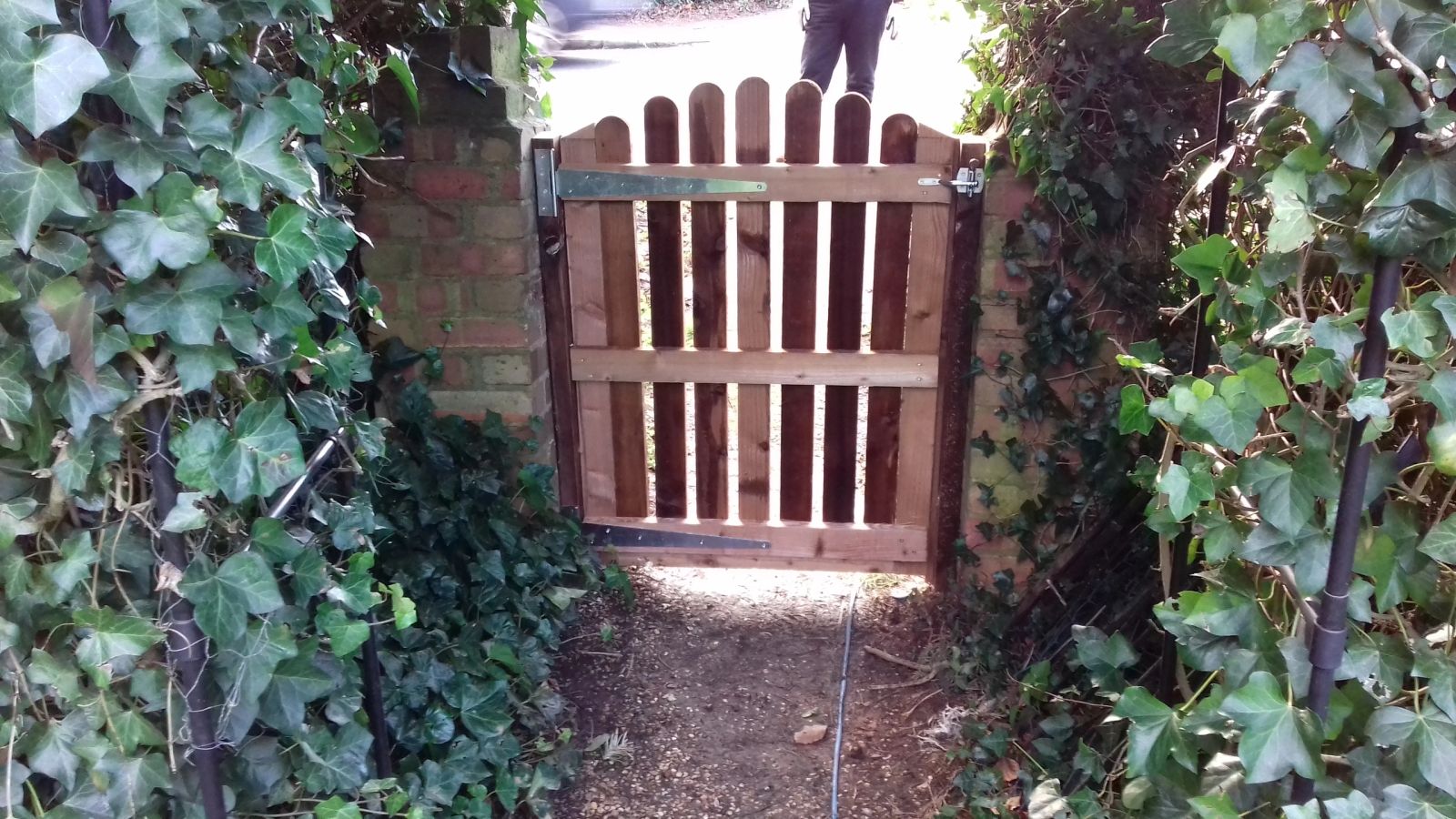
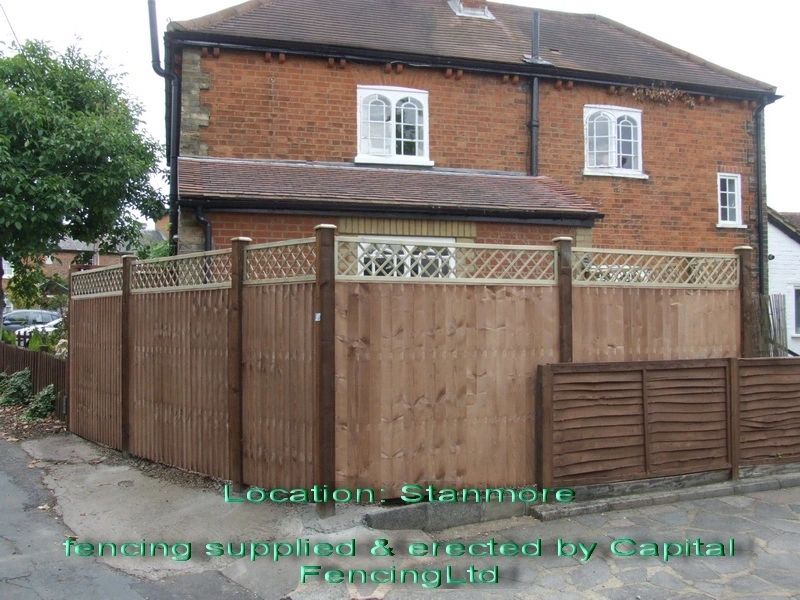
Matching a repair into a boundary that's twenty or thirty years old sometimes means the original panel profile is no longer available, in which case we offer the closest realistic option and explain honestly where it won't be an exact match.
On an estate where many neighbouring gardens share the same original fence line, one household's repair is often the first of several over the following years, and we keep a note of the spec used for consistency.
Specification driven by an insurer's boundary requirements
Some commercial and high-value premises have boundary security requirements set by an insurance policy — a minimum fence height, mesh type or lock standard — that the fencing spec has to meet regardless of what would otherwise be chosen.
Where a specific requirement applies, it's worth getting it in writing from the policy documents before quoting, since fitting to a general standard when a stricter one is required can leave a gap the client didn't expect.
Treatment class for decking joists versus visible boards
Decking joists sit closer to the ground and often in less ventilated conditions than the visible boards above them, so they generally warrant the same ground-contact-rated treatment class used for fence posts rather than the lighter treatment sometimes sufficient for above-ground fence panels.
It's a detail that's easy to overlook when the visible decking timber is specified carefully but the substructure is treated as an afterthought, even though joist failure is a structural safety issue in a way that panel weathering isn't.
Confirming the treatment class of joist timber specifically, not just assuming 'decking timber' covers the whole structure to the same standard, avoids a substructure that fails well before the visible boards show any sign of ageing.
Refixing a concrete spur that has started to pull away
A spur bolted to a repaired post can work loose if its own footing wasn't set deep enough or wide enough to resist the same wind loading that failed the original post, showing up as a visible gap opening between spur and timber.
Refixing means re-tensioning or replacing the bolts and, where the footing itself has moved, breaking it out and repouring rather than simply pulling the spur back tight against a footing that's already failed.
Construction hoarding versus the permanent boundary
Temporary site hoarding during a build is a separate specification from the permanent boundary that eventually replaces it — hoarding is chosen for site security and public safety during works, often under a party wall or highways licence, while the permanent fence is chosen for the finished property.
Where a boundary needs both, it's worth planning the sequence so the permanent fence isn't installed and then damaged by ongoing construction traffic before the build finishes.
Hoarding on a public highway usually needs its own licence from the council, separate from any planning permission covering the building work itself, and unlicensed hoarding on a footway can be removed by the authority.
What happens after storm damage to a fence
A fence panel blown over in a storm is usually a buildings insurance matter rather than a workmanship warranty claim, since even a correctly installed fence can fail under genuinely severe wind loading.
Photographing the damage before clearing debris, and checking whether posts have snapped versus panels simply blowing out of their slots, both help establish whether a straightforward panel swap or a full rebuild with new posts is needed.
Where storm damage recurs on the same run, it's usually a sign the original specification wasn't suited to how exposed that particular boundary is, which is worth addressing at the rebuild stage rather than repeating the same spec.
Applying to modify or discharge an old covenant
Where an old restrictive covenant genuinely no longer serves a useful purpose, it's possible to apply to the Upper Tribunal (Lands Chamber) to have it modified or discharged, though this is a formal legal process rather than a quick fix.
This route is generally used where a covenant is preventing otherwise sensible work and informal agreement with whoever benefits from it can't be reached.
Given the legal complexity involved, this is very much a solicitor-led process rather than something to attempt without professional advice.
Stumps in the fence line
An old hedge or tree stump sitting directly on the new fence line needs grinding or digging out before a post can go in, since a post set against or on top of decaying root wood will eventually settle as that timber breaks down.
Stump grinding leaves a mix of wood chip and soil that compacts poorly, so backfilling a post hole in that material generally needs a wider excavation and imported hardcore rather than reusing the arisings.
Where a stump is close to but not on the line, it's often quicker to shift the post position slightly than to fully remove a large root system.
Post caps and their role beyond weatherproofing
A post cap sheds water off the end grain of a timber post or the open top of a hollow steel post, but on a security run it also removes a foothold or handhold that an open post top would otherwise offer.
Domed or sloped caps are harder to grip than a flat cap, which is worth specifying on posts near a gate or corner where climbing is most likely to be attempted.
Bitumen paint on buried post bases
A bitumen-based coating applied to the section of a timber post that will sit below ground adds an additional moisture barrier on top of factory preservative treatment, aimed specifically at the zone in most sustained contact with damp soil.
It's a supplementary measure rather than a substitute for proper preservative treatment, since bitumen coating alone doesn't address fungal decay resistance the way a biocide-based preservative does.
The coating is usually stopped a short distance below the eventual ground line, since bitumen exposed to UV above ground degrades and can look unsightly, whereas below ground it's protected from sunlight entirely.
Parking suspensions and permits for works
Where a job needs a van parked directly outside for loading, or a dropped kerb blocked for delivery, most councils offer a paid parking bay suspension or dispensation that has to be applied for in advance, sometimes with several working days' notice.
On residents' permit streets, working without a suspension risks a parking charge notice for the vehicle even where the work itself is entirely legitimate, since traffic wardens enforce the bay markings regardless of the reason for parking.
Booking the suspension early and displaying the paperwork in the vehicle windscreen is a small piece of admin that avoids delays and unnecessary penalty charges on street-fronting jobs.
Tongue-and-groove privacy panels
Tongue-and-groove boards interlock edge to edge with no overlap, giving a genuinely solid, gap-free face that's the most private board profile available in timber fencing.
Because the boards key into each other rather than overlapping, the panel needs to be built with a small allowance for seasonal swelling, or the interlocking edges can bind and cup as the timber moves.
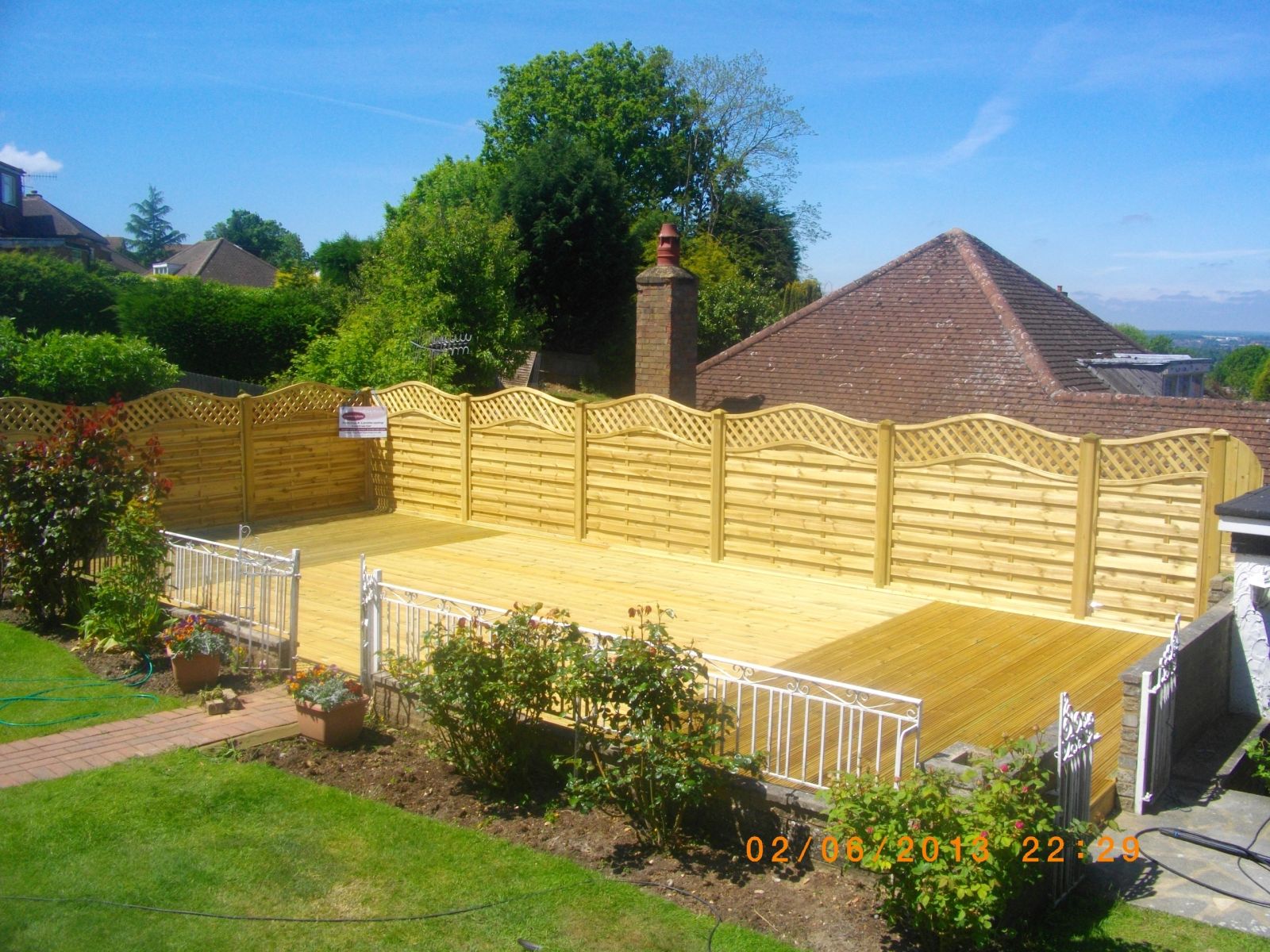
It's a heavier, stiffer panel than lap or slatted profiles, so it's usually paired with more substantial posts, and it's a common choice for pool or hot-tub screening where sightlines matter more than airflow.
Restrictive covenants on newer estates
Many post-war and modern estates carry restrictive covenants in the original transfer deeds that go beyond planning law, commonly limiting fence height, requiring a specific style, or banning solid boundary treatments on front gardens entirely to preserve open-plan sightlines.
These covenants are a private legal matter between landowner and the estate's management company or original developer, so full planning permission being unnecessary doesn't mean the fence is automatically allowed.
Breach of covenant is usually enforced by a neighbour, resident's association or management company rather than the council, and can result in a requirement to remove the work at the owner's cost, so checking the title register for covenants before ordering is worthwhile on any estate build.
Temporary fencing while a permanent boundary is rebuilt
Removing an old boundary fence before the new one is built leaves a gap that matters for security, for keeping pets or children contained, and for site safety around an open excavation.
A simple temporary screen — netting on stakes, or hurdles wired together — bridges that gap without committing to a full second install, and is worth agreeing with the client if the job will span more than a day.
On a site backing onto a road, path or shared area, a temporary barrier around open post holes overnight is also a basic precaution against someone stepping into an unmarked hole in the dark.
Conservation covenants affecting boundary land
A relatively newer legal tool, the conservation covenant, allows landowners to agree binding restrictions on land use for conservation purposes, which can in principle extend to boundary treatments on affected plots.
These are still uncommon on ordinary residential properties but more likely on larger plots, smallholdings, or land near protected habitats.
Checking the title register for any registered covenant of this kind is worth doing on larger or more unusual plots before assuming standard rules apply.
Ground clearance for airflow
Leaving a consistent gap, typically 50-75mm, between the underside of a fence panel or gate and the ground lets air circulate around the bottom rail, which is usually the first part of a timber fence to rot.
That clearance also stops the panel wicking moisture directly from wet grass or standing puddles after rain, something ground contact makes almost unavoidable over time.
On sites with soft or uneven ground, a gravel board fitted below the panel achieves the same protection while keeping the panel itself off the soil entirely.
Invasive plants and boundary work
Japanese knotweed and other invasive species near a boundary line carry specific legal obligations around disposal — cut material can't simply go in a garden waste bin, and spreading it to a neighbour's land or public land is itself an offence.
Digging near a known knotweed stand needs specialist handling rather than routine post-hole digging, since disturbing the rhizome can make an existing infestation worse rather than clearing it.
Where a boundary survey or site visit turns up suspected knotweed, the sensible step is a specialist identification and treatment plan before any fencing work goes ahead in that area of the garden.
Long-run line setting with laser and string
A straight security run over a long distance is set out with a string line or laser level between end posts before any intermediate post is positioned, since a small error compounded over many bays leaves a visibly crooked line.
On an undulating site, a laser also confirms consistent post height above ground even where the ground itself rises and falls, keeping the top line level rather than following every dip.
Gas and water service positions near boundaries
Gas and water services typically run from the property boundary to the meter position in the shortest practical line, which on many plots means they cross close to or directly under a side boundary fence.
Utility companies can usually supply a service plan on request, though older properties sometimes have connections that predate accurate record-keeping and were never mapped precisely.
Where a plan shows a service crossing the fence line, hand-digging that section and setting the post either side of the marked route avoids the need to relocate a damaged supply.
Matching a new run to an existing style
Matching an extension or repair to an existing fence starts with identifying the actual system in use — panel type, post type, rail count, board profile — rather than assuming any similarly-priced product from a different range will look consistent alongside it.
Weathered timber and faded composite are both difficult to match exactly with new material, so a visible seam between old and new sections is often unavoidable and worth agreeing with the client at quote stage rather than promising an invisible join.
Where a manufacturer has changed a profile or a colour range since the original was fitted, matching sometimes means re-doing a full run rather than extending it, which is worth flagging before ordering a small top-up quantity.
Decking fixings visible versus hidden
Face-fixed decking is screwed directly down through the board top, which is simple, cheap and easy to replace a single board on, but leaves visible screw heads that can work slightly proud over time as the timber moves.
Hidden fixing clip systems fit into the board's grooved edge and screw down into the joist from the side, giving an unbroken top surface, but they generally cost more per board and make it harder to lift a single damaged board without disturbing its neighbours.
Composite boards are more often specified with hidden clip systems since the clean, screw-free look is part of the appeal that justifies the material's higher cost.
Accelerated hardware corrosion in coastal locations
Salt-laden air near the coast accelerates corrosion of untreated or lightly galvanised gate hardware considerably faster than an inland site, which can shorten the working life of hinges, latches and fixings if they're not specified with this exposure in mind.
Stainless steel or heavily galvanised fixings are generally a better specification than standard galvanised or plated hardware for a gate sited close to the coast.