Capping rails and their function
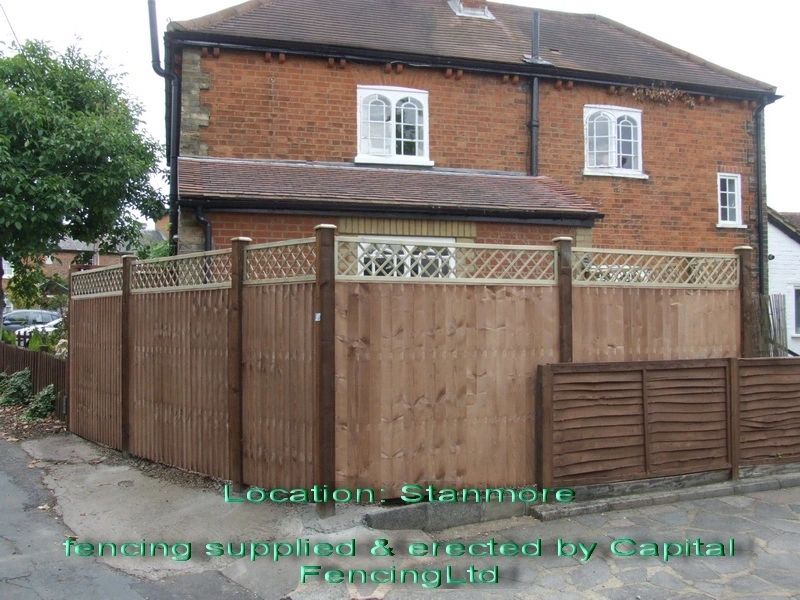
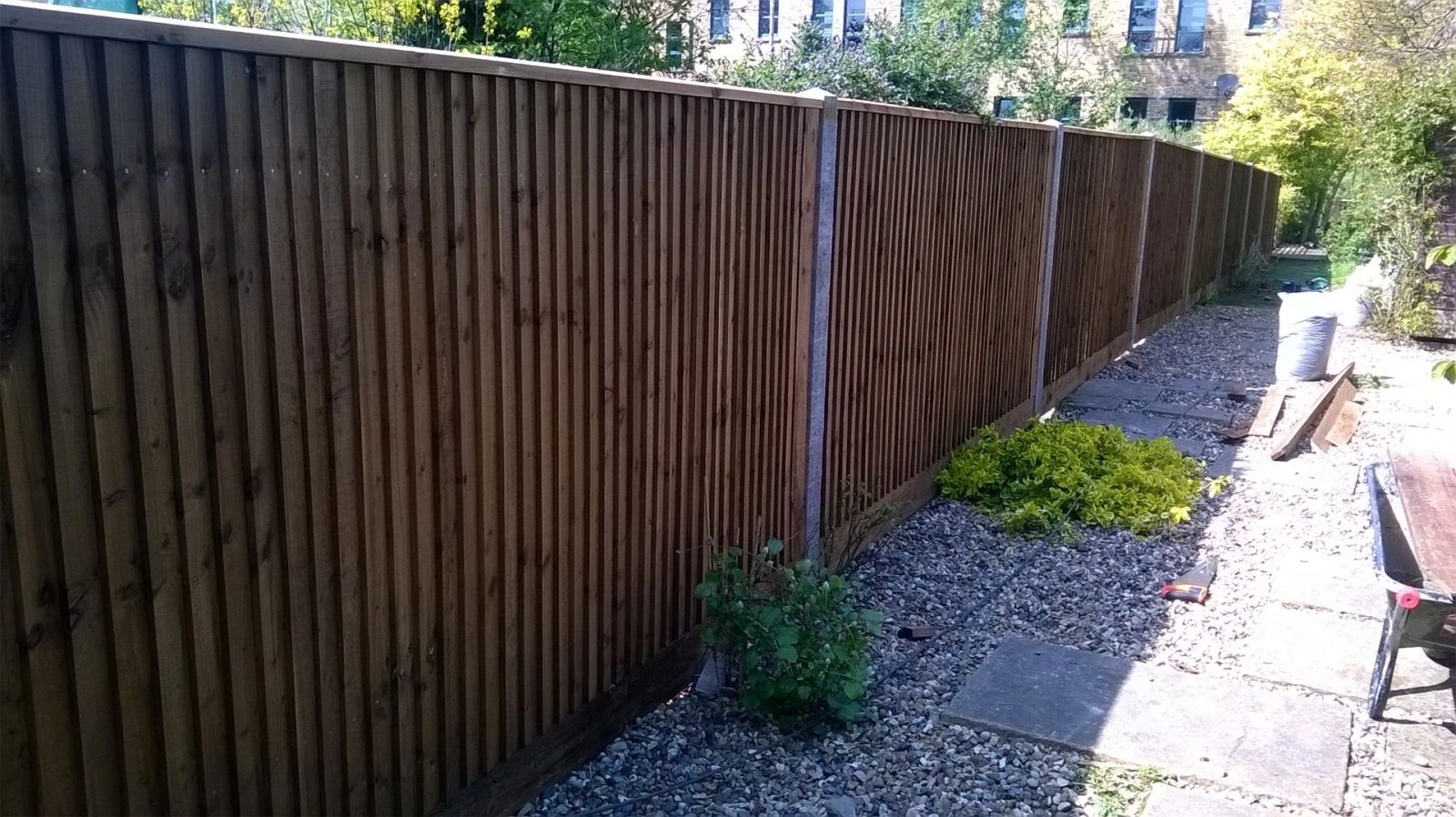
A capping rail sits along the top edge of a closeboard or panel run, covering the end grain of the vertical boards in the same way a post cap protects a post top.
Beyond weather protection it also ties the tops of the boards together, reducing the individual movement that otherwise shows up as a wavy top line after a few seasons of wetting and drying.
It's usually a shallow, weathered profile rather than flat stock, so it sheds water off the fence face instead of holding a bead of moisture along the top edge.
Spigot connections between post and base
A spigot system lets a post be lifted clear of its ground socket for replacement without breaking out the surrounding concrete, which is useful where a vehicle strike or corrosion has damaged one post in an otherwise sound run.
The spigot itself needs to be a snug fit rather than a loose sleeve, because play at that joint under lateral load is what eventually works a socket wider and lets the post rock.
Gating a shared driveway
A gate across a driveway shared by more than one property needs the agreement of everyone with a right to use it, since restricting access — even with a key provided to all parties — changes how that access can practically be used, especially for larger vehicles or emergency access.
Automated gates on a shared drive raise additional questions about who controls the opening mechanism, who pays for maintenance, and what happens if the power or motor fails, all of which are worth agreeing in writing before installation.
Where the shared drive is used by refuse collection or emergency services, checking minimum clear widths and turning circles with the council or fire service before fitting a gate avoids a structure that later has to be removed.
Working over a neighbour's flowerbed
Repairing a shared boundary sometimes means working from the neighbour's side, particularly where the fence faces that way or access from the owner's side is blocked, and that access should be agreed with the neighbour before work starts.
Protecting planting beds and lawn on the working side during the repair avoids turning a fence job into a wider dispute over incidental damage.
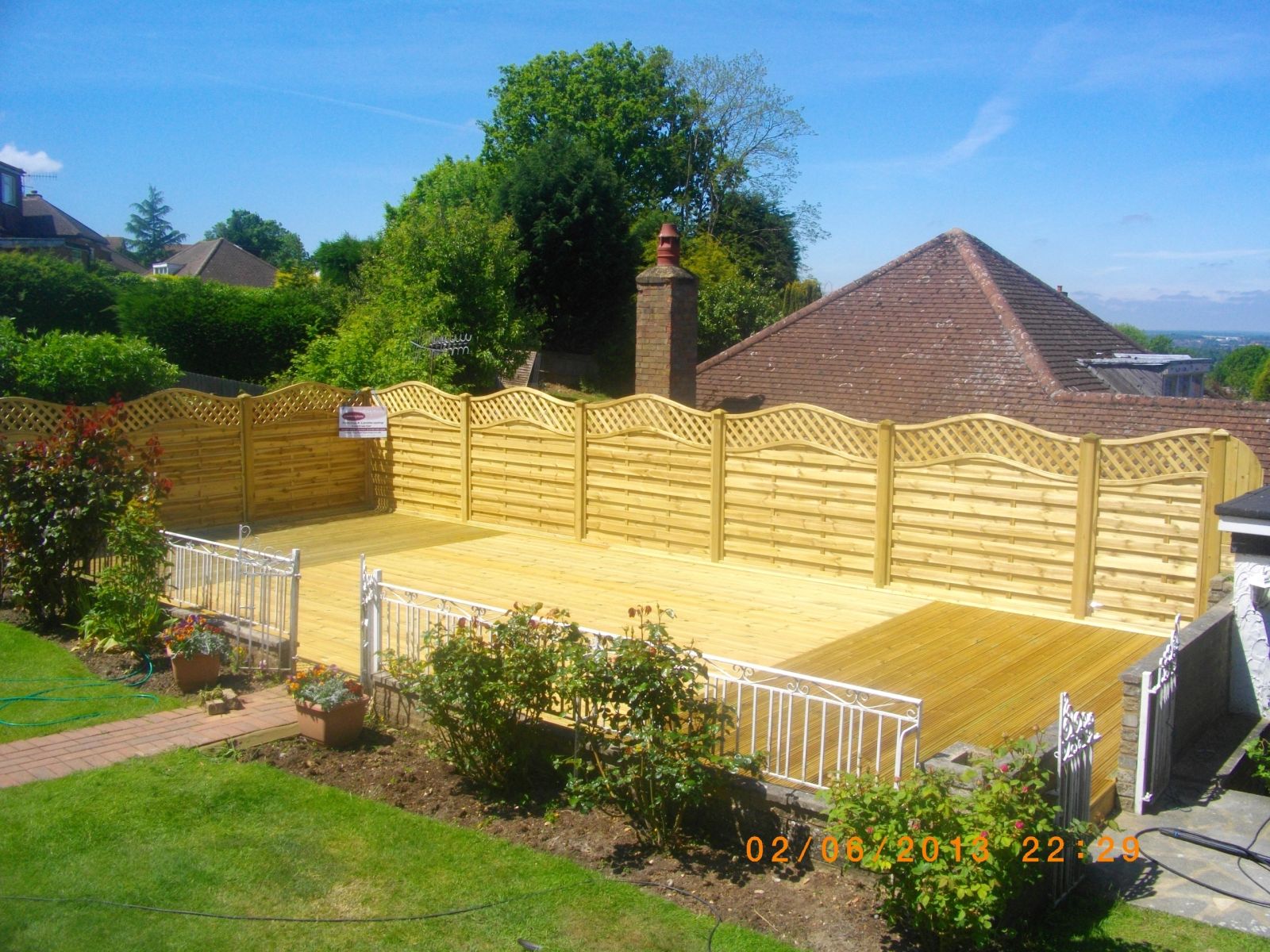
Specifying fencing for an exposed hilltop plot
Plots on high ground with little surrounding shelter, common on the higher parts of the Chilterns and similar ridgelines, combine strong wind loading with faster-drying but also faster-weathering timber due to constant air movement.
A specification for this kind of site usually combines shorter bay spacing, part-slatted or louvred infill to reduce wind load, and a slightly heavier post section than the same height fence would need in a sheltered valley garden a few miles away.
It's a case where two gardens in the same postcode can genuinely need different specifications purely because of local topography rather than anything about the boundary itself.
Padbolt throw length and post engagement
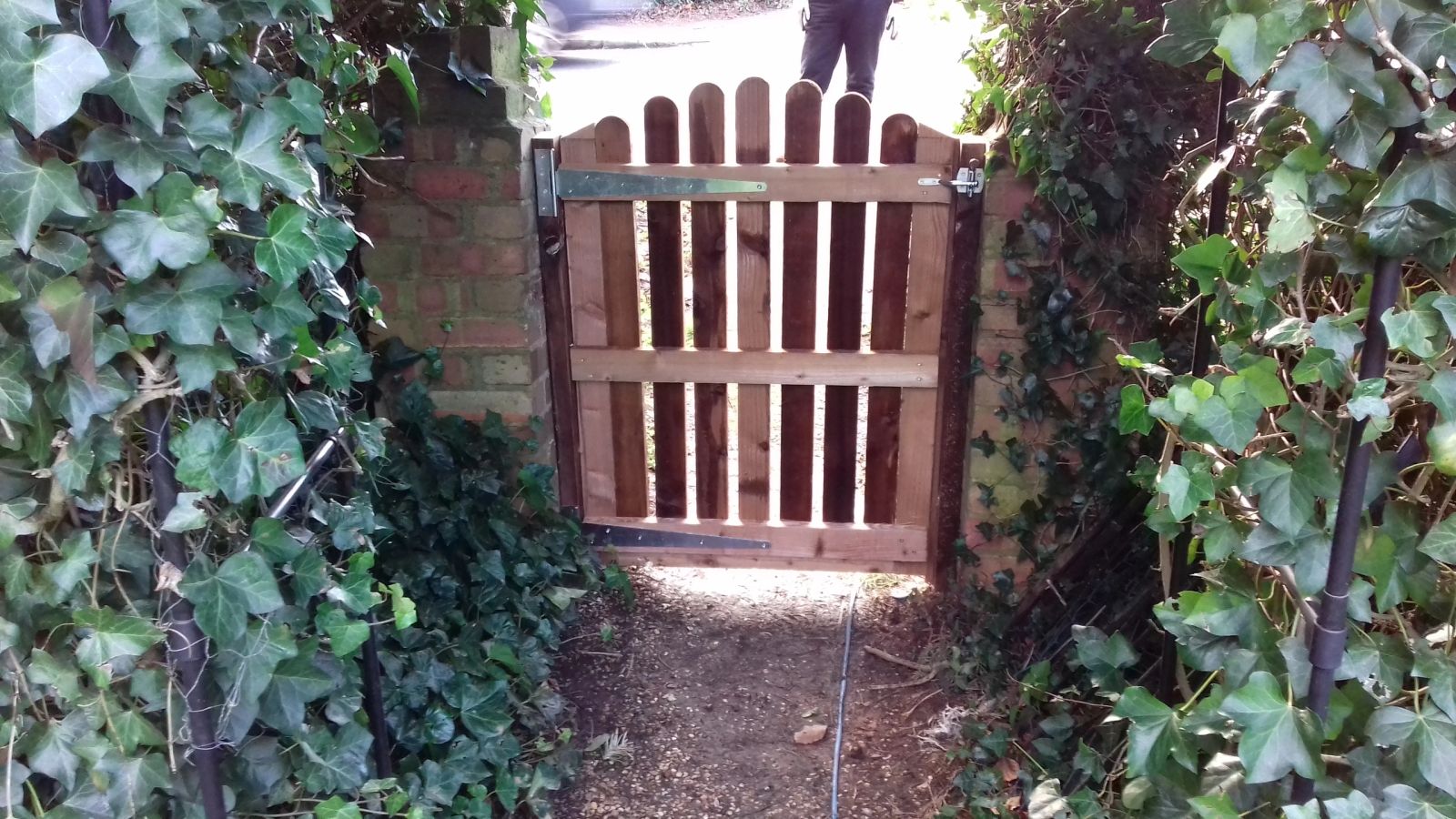
A padbolt needs enough throw length to engage solidly into the post or an adjacent leaf, and a bolt with too short a throw for the gap it's covering can be forced open with comparatively little effort.
Checking throw length against the actual gap, rather than fitting a standard-length bolt regardless of the opening, is a simple but often-missed step when upgrading gate security.
Salt and de-icing near a pavement
A front boundary fence close to a pavement or road gritted in winter is exposed to salt spray and run-off that a rear-garden fence never sees, and that salt accelerates corrosion in untreated steel fixings and speeds up timber degradation at ground level.
Galvanised or stainless fixings resist this better than standard bright steel, and are worth specifying as standard on any boundary within a few metres of a regularly gritted surface.
Salt-laden ground also tends to stay damp for longer after a thaw, extending the period a post base is sitting in wet conditions each winter.
Sliding versus swing gate mechanisms
A swing gate needs clear space to open into, whether that's the driveway itself or the street, while a sliding gate runs parallel to the boundary and suits plots where that swing space isn't available.
Sliding gates need a level, unobstructed track run at least as long as the gate itself, plus a foundation for the track and rollers that copes with the gate's full weight — cutting corners here is the most common cause of a sliding gate that jams.
Swing gates are generally simpler to install and service, which is worth weighing against a sliding gate's space-saving advantage on a tight or sloping driveway.
Power supply and cabling for automated gates
An automated gate needs a reliable power supply run to the gate location, which on many plots means a new armoured cable run from the property rather than relying on an existing outdoor socket not rated for permanent outdoor use.
Solar-powered gate automation is an option on plots without easy mains access, though it needs a battery sized for the gate's actual cycle frequency rather than a generic system that undersizes for a busy driveway.
Any outdoor electrical work for gate automation should be certified by a qualified electrician under Part P of the Building Regulations, since it isn't the kind of job to treat as a DIY extension of the fencing work.
Dealing with a post hole that keeps collapsing in loose or sandy soil
Loose or sandy soil can slump back into a freshly dug post hole before concrete goes in, which is more of a problem on a repair — where the hole is often reopening ground already disturbed by the original failure — than on undisturbed ground.
A sleeve, shuttering, or a wider hole packed with a drier mix that doesn't rely on firm hole walls to hold its shape can get a repair post set securely even where the surrounding soil won't hold a clean-sided hole.
Coordinating fencing work with other trades on a shared site
On a job where fencing follows landscaping, paving or groundworks by another trade, confirming final levels and boundary positions with that other trade before digging starts avoids fence posts being set to a level that then changes once the remaining groundwork is finished.
Where fencing is scheduled before paving, agreeing which side of the post line the paving will finish against prevents a post ending up embedded in what should have been a clear paving joint.
Simple sequencing conversations at the outset, rather than each trade working to its own assumptions, avoid the more expensive alternative of one trade's finished work being disturbed by the next.
Fixing a fence or gate to a neighbour's wall
Attaching a new fence panel, gate post or trellis to a wall that belongs solely to a neighbour is a trespass unless they've agreed to it, even where the fixing itself is small and reversible like a single bracket.
Where a wall is genuinely shared or in unclear ownership, written agreement before drilling avoids disputes later, particularly since removing a fixing can leave visible damage the wall owner didn't consent to.
The safer default on an unclear boundary is a free-standing post set just inside the client's own land, rather than relying on an existing structure whose ownership hasn't been confirmed.
Dog day-care and kennels
Commercial dog day-care and kennel boundaries need to be genuinely dig-proof and jump-proof rather than just visually enclosing, which usually means a below-ground kick board or buried mesh apron along the base as well as adequate fence height.
Licensing under the Animal Welfare (Licensing of Activities Involving Animals) Regulations sets minimum boundary standards for kennels and day-care premises, and an inspector will check fence condition as part of renewal.
Double-gated airlock entries, where an inner and outer gate can't be open at the same time, are a common feature at the perimeter to stop dogs escaping through a single opened gate.
Brush application versus spray for treatment
Brush application works the treatment into the grain and end grain more thoroughly, which matters most at cut ends and joints where untreated timber is exposed and most vulnerable to moisture uptake.
Spray application covers a large run far faster and gives a more even surface finish on smooth-planed boards, but relies on good weather and overspray control, and can leave the coating sitting on the surface rather than penetrating as deeply.
A practical approach on a full boundary is spraying the open panel faces for speed and finish, then finishing post tops, end grain and capping joints by hand with a brush.
Signage requirements for an electrified deterrent topping
An electrified topping wire fitted above a security fence needs clear warning signage at regular intervals along the run, since an unmarked live topping exposes the site owner to liability that proper signage largely removes.
The pulse unit driving the topping is a low-current, high-voltage design intended to deter rather than injure, and it's kept separate from any perimeter earthing used for other electrical services on site.
Rights of access to maintain a boundary
Some older deeds include an explicit right for a neighbour to enter adjoining land to maintain their side of a boundary structure, but this isn't automatic everywhere and shouldn't be assumed.
Where no such right exists in the paperwork, entering a neighbour's garden to repair or replace a fence normally needs their permission, arranged directly rather than taken for granted.
The Access to Neighbouring Land Act 1992 provides a separate, more formal route for essential works where agreement can't be reached, though it's aimed at more serious situations than routine fence replacement.
Chain-link and stock fencing for allotments and paddocks
Chain-link is a low-cost, low-maintenance option for allotments, paddocks and utilitarian boundaries where appearance matters less than containment and budget.
Straining wires and correctly tensioned line wire at top and bottom keep chain-link from sagging over a long run, which is the most common complaint about a poorly installed mesh fence.
Where the boundary needs to keep livestock in rather than just mark a line, stock fencing with a smaller mesh at the base stops smaller animals getting through in a way that standard chain-link doesn't.
DBS-relevant site rules on sensitive sites
Sites such as schools, nurseries and some healthcare premises commonly require anyone attending, including contractors, to hold or provide evidence of an enhanced DBS check, or to be directly supervised at all times if they don't.
This is a site management requirement set by the school or institution rather than a universal legal rule for tradespeople in general, and requirements vary between individual sites and local authority policies.
Where a job is known in advance to be on this type of site, confirming the DBS or supervision requirement before booking the work avoids a contractor turning up unable to proceed on the day.
Resin bleed from softwood
Softwoods such as pine and spruce contain resin pockets that can continue to weep sticky sap for months after installation, especially on timber that's been kiln-dried quickly or exposed to strong summer sun.
Resin bleed shows up as a darkened, tacky patch on the surface and can telegraph through paint or stain if the timber isn't left to stabilise, or if a sealer coat isn't applied over the affected area first.
It's a cosmetic issue rather than a durability one, and it typically resolves itself as the timber fully seasons, though staining over an active resin pocket without treating it first often needs redoing.
Photographic record as part of a boundary survey
A dated photographic record of the existing boundary condition, taken before work starts, protects both parties if a dispute later arises over what state a shared fence or wall was in beforehand.
This is particularly useful on a party boundary or where neighbouring property could be affected by access during the works, and costs nothing beyond the time to take and keep the photos.
Matching materials for a repair within a conservation area
A conservation area doesn't automatically restrict fence repairs, but where a specific material or style was originally required as a planning condition, a repair should match that condition rather than defaulting to a cheaper or more convenient modern alternative.
Checking any existing planning history for the property before sourcing repair materials avoids fitting something compliant with general fencing rules but not with a condition specific to that site.
Land registered as a town or village green
Land formally registered as a town or village green carries strong legal protection against enclosure or obstruction, including from fencing, under the Commons Act 2006.
This status can sometimes apply to open spaces that don't look obviously like a traditional village green, following a successful community application to register them.
Checking the relevant register before fencing land bordering an open green space avoids inadvertently obstructing protected land.