Height rules when replacing a damaged section
A repair that keeps the fence at its existing height rarely needs a fresh planning check, but if a client wants to increase height while replacing a damaged section, the same permitted development limits apply as a new boundary.
This comes up most often on a front boundary, where the allowed height is lower than at the side or rear.
Resetting versus replacing a post
A post repair is either a reset in fresh concrete where the timber itself is sound, a concrete spur bolted above a rotten section where enough good timber remains, or a full replacement where rot has reached the panel fixings.
We test each post on site with a probe at ground level rather than deciding from a visual check alone, since a post can look fine above ground and be rotten just below it.
Ground-line collars on timber posts
A plastic or metal collar fitted around a timber post at the point where it enters the ground creates a physical break between the post and the surrounding soil, reducing direct abrasion and moisture wicking at that specific zone.
Ground level is where oxygen, moisture and soil organisms are all present together in the right combination for decay fungi to thrive, which is why this narrow band is disproportionately where post failure originates compared with either the fully buried or fully exposed sections.
A collar doesn't replace preservative treatment but adds a secondary physical barrier specifically targeted at this highest-risk zone, similar in principle to the extra retention already specified for ground-contact use-class timber.
Board spacing and decking drainage
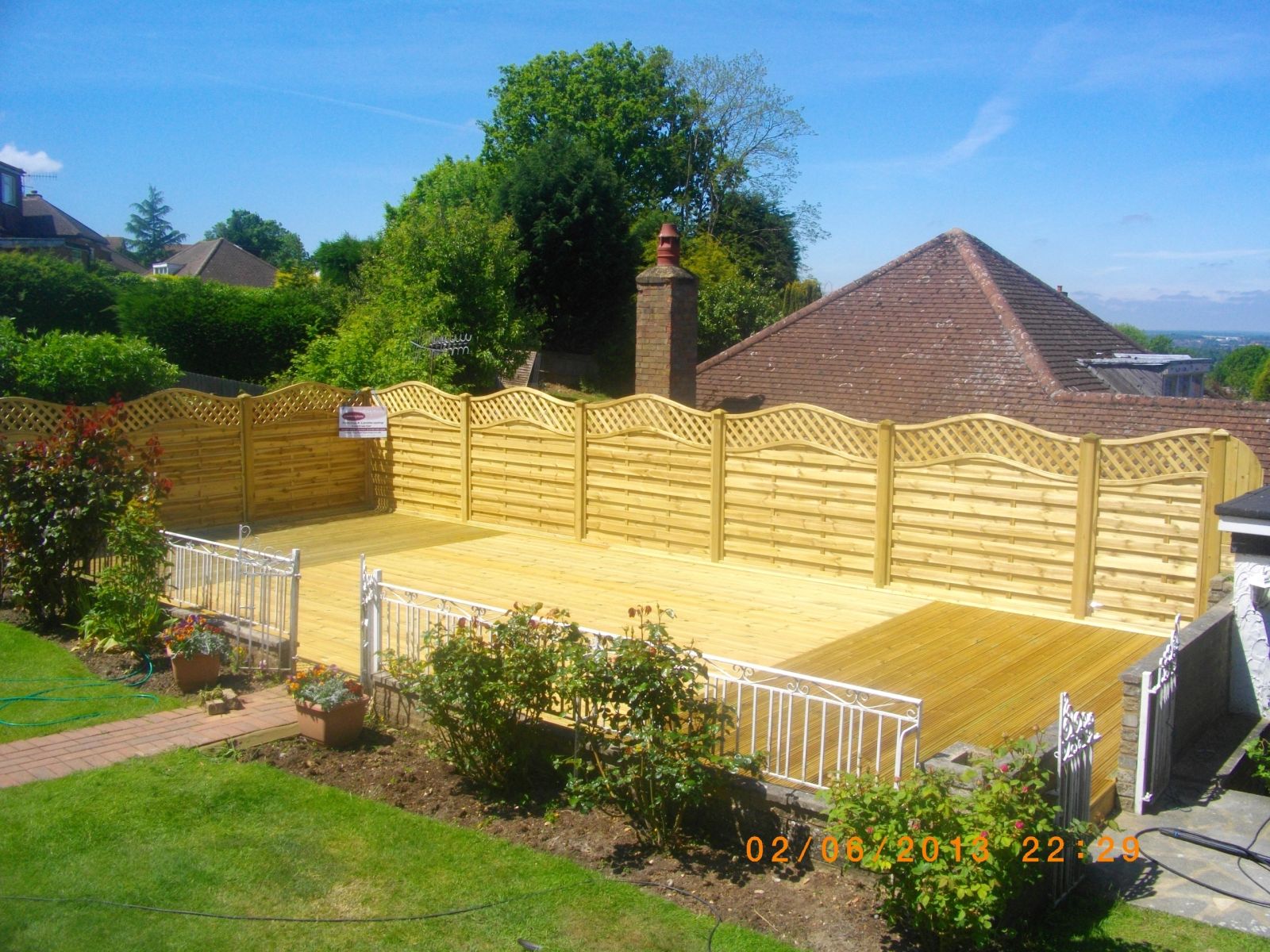
Decking boards need a consistent gap between them, usually a few millimetres, to let rainwater drain through rather than pool on the surface and accelerate algae growth or rot.
Timber that's fitted too tightly when green will open up gaps as it dries, while composite boards expand and contract with temperature and need the gap specified by the manufacturer, not guessed on site.
A deck built without a fall or slight pitch away from the house risks water sitting against the property's damp-proof course, which is a bigger problem than a slippery deck surface.
Keeping post hole depth consistent along a run
A hole dug slightly shallower than its neighbours because the ground got harder partway down is an easy shortcut to take under time pressure, but it leaves that one post less securely founded than the rest of the run.
Marking a consistent depth on the digging tool itself, rather than judging depth by eye each time, keeps every hole to the same standard regardless of how the ground conditions vary along the run.
Where genuinely harder ground forces a shallower hole at one point, compensating with a wider hole and more concrete at that post is a better response than simply accepting reduced depth and hoping it holds.
Deciding between adjustment and rebuild
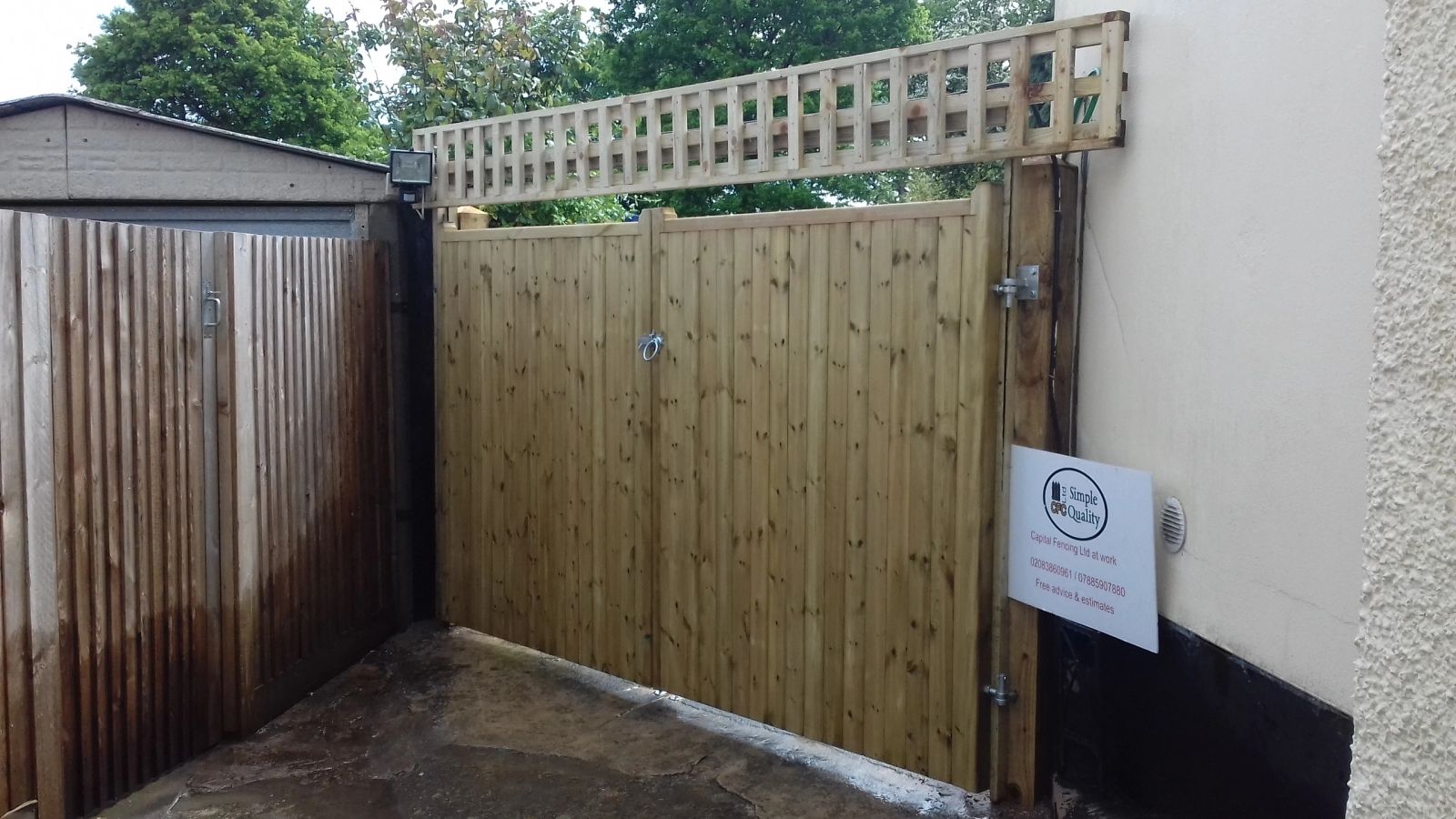
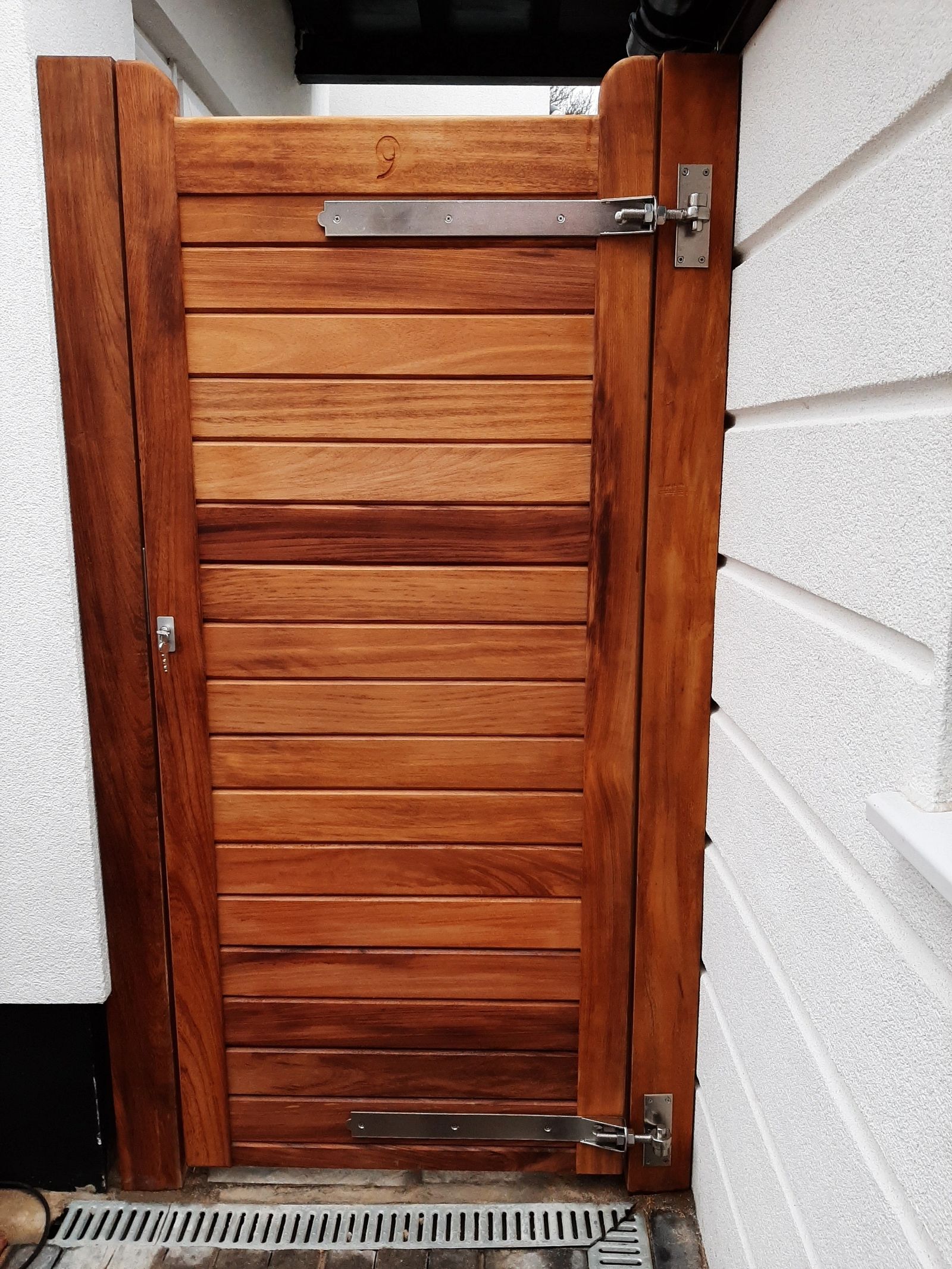
Most gate faults can be corrected by adjusting hinges, replacing a latch or hardening a loose joint, but a frame that's racked badly enough to have opened its joints permanently, or timber that's rotted through a structural member, generally needs rebuilding rather than adjusting.
Establishing which category a gate falls into early avoids repeated small adjustments on a frame that's already past the point where adjustment alone will hold.
Slotted versus morticed concrete posts
Slotted concrete posts have a continuous groove cast into two or four faces so panels slide down into the slot from above, which makes them fast to erect but means every panel in a run has to come out to replace one in the middle.
Morticed concrete posts have discrete rectangular pockets for arris rail ends instead, matching closeboard or panel construction where individual boards or panels can be replaced without disturbing the rest of the run.
The choice is largely dictated by the fencing system being used — panel fencing wants slotted posts, boarded fencing wants morticed — rather than being a free preference at quote stage.
Tree roots and root protection areas
A tree's root protection area is calculated from its stem diameter and generally extends well beyond the canopy spread, meaning a fence line can fall inside it even where the tree itself looks distant.
Excavation within a root protection area should avoid cutting roots over around 25mm diameter where possible, using hand tools and routing the post line slightly off-square if that avoids a structural root.
For a fence contractor this usually means agreeing a no-dig or reduced-depth post solution on the affected section rather than a standard auger run across the whole boundary.
Anti-twist shoulder details on post fixings
Some post shoe and anchor systems include a shaped shoulder or collar that grips the post's cross-section rather than relying purely on friction from clamping bolts, resisting the post twisting in the fitting under sustained wind load.
Without that shoulder detail, a smooth-sided post held only by bolted clamp plates can gradually rotate within the fitting as repeated gusts work it slightly each time, loosening the bolts further with each cycle.
This detail matters more on taller, more exposed posts carrying larger panel or gate areas, where the leverage from wind load is greatest, than on short, low-level fencing where twisting force is comparatively small.
Timber post taper and strength distribution
A sawn timber post is typically a constant cross-section along its length, whereas the bending moment from wind load on the attached panel is greatest at ground level and reduces toward the top, meaning the post's strength margin isn't evenly used along its height.
This is why increasing embedment depth or post section size, rather than simply extending post height, is generally the more effective way to improve resistance to wind-induced snapping at ground level.
A post that fails from wind load almost always fails at or just below ground level rather than partway up its exposed length, reflecting where the bending stress genuinely concentrates.
When a neighbour won't allow access for a repair from their side
Some repairs are far more easily done working from one side of the boundary than the other, and if that's the neighbour's side and they decline access, the repair has to be planned working entirely from the client's own garden instead.
This can mean extra propping, working at an awkward angle, or in some cases a different repair method altogether, and it's worth agreeing with the client upfront rather than assuming access will be granted on the day.
Relocating a builders' compound fence as a project phases
A builders' compound fence is often installed in stages as a construction project progresses, with the secure line moving inward as completed areas are handed over and outward again if the site boundary expands into an adjoining phase.
Because compound fencing is frequently relocated, panel systems with reusable feet or block-based supports are generally favoured over concreted posts, even though a concreted post gives a more permanent fixing where the boundary line is fixed for the whole project.
Retail yards and car parks
Fencing around a retail unit's rear yard or customer car park usually has to satisfy insurer requirements for secured perimeters as well as simple boundary marking, particularly where stock or delivery cages are stored outside.
Vehicle impact is a real consideration in a car park boundary, and posts near a marked bay or turning circle are often specified heavier or protected by a bollard rather than relying on the fence itself to survive a low-speed shunt.
Work here is usually scheduled around trading hours and delivery windows, since blocking a rear yard during a delivery slot can hold up a retailer's whole day.
Cladding fixing pattern and thermal movement
Timber cladding boards are usually fixed with a single row of fixings near one edge rather than through the centre, allowing the board to expand and contract slightly around that fixed edge without the fixing itself resisting the movement.
Fixing through both edges of a wide board effectively locks it in place, which forces any subsequent expansion or shrinkage to manifest as cupping, splitting or fixing failure rather than free movement.
This detail becomes more important as board width increases, since a narrow board moves relatively little in absolute terms while a wide board can move several millimetres across its face between a dry and a humid spell.
Aftercare guidance for the first season
Newly set posts need their first winter to fully settle, and a slight tightening of gate hinges or latch alignment after the first few months of seasonal movement is normal rather than a sign of poor work.
Untreated or lightly treated timber benefits from an owner-applied preservative or stain within the first year, particularly on end grain and cut edges exposed during installation, since factory treatment doesn't reach every surface once a panel's been cut to fit.
Clearing leaves and debris from the base of gravel boards each autumn, where they trap moisture against the timber, is a simple habit that measurably extends the life of a fence beyond what the initial installation alone determines.
Weld mesh and chain link
Weld mesh panels are a rigid grid of welded steel wire, usually galvanised and often polyester-coated, and they hold their shape under impact far better than chain link, which is why they're common on boundaries needing a firmer physical barrier.
Chain link is a diamond-pattern woven wire fixed to line wires and posts rather than a rigid panel, which makes it cheaper and easier to tension over long or uneven runs but more prone to sagging or distorting under repeated pressure.
Neither offers meaningful privacy on its own, so both are frequently paired with hedging or slatted infill where visual screening is also wanted alongside the containment.
Safety on a gate that's failed near a road
A driveway gate that's dropped or come off its hinges next to a road or shared path is treated as a priority repair, since a swinging or fallen gate in that position is a hazard to passers-by as well as an inconvenience.
We make a failed gate safe on the first visit where it poses any immediate risk, even if the full repair follows separately.
Knot loosening in structural timber
Knots are the base of a branch embedded in the trunk, and as timber dries the knot itself shrinks less than the surrounding wood, which can leave it loose or eventually cause it to drop out and leave a hole.
A live knot, still bonded to the surrounding fibres, is far less of a concern than a dead knot with a dark ring around it, which indicates the branch had already died before the tree grew over it and bonds poorly.
On load-bearing sections like arris rails, a cluster of large or dead knots near a fixing point is worth avoiding, since it reduces the effective cross-section carrying the load at that point.
Licences for scaffold or skip on the highway
Placing a skip, scaffold or hoarding on the public highway, including the pavement outside a property, needs a licence from the council's highways team, arranged before the item arrives rather than after a complaint.
Licences typically specify lighting, cones or barriers around the obstruction overnight, a maximum duration, and sometimes a requirement for the skip to be removed or covered at weekends, with conditions varying between boroughs.
Unlicensed obstructions can result in a fixed penalty or a requirement to remove the item at short notice, so on any job needing highway space for materials or waste it's worth building the licence lead time into the programme.
Comparative shrinkage rates across species
Different timber species shrink by noticeably different amounts for the same change in moisture content, with some tropical hardwoods moving comparatively little and some softwoods, particularly in the tangential direction, moving considerably more.
This matters when mixing species within the same structure, such as a hardwood gate frame with softwood infill boards, since the two materials can move at different rates and open gaps or induce stress at their junctions.
Manufacturers' technical data sheets for structural and decorative timber usually list expected shrinkage percentages, which is the more reliable way to anticipate this than relying on general species reputation alone.
Repair versus replace decision criteria
The decision between repairing and replacing usually comes down to what proportion of a run is affected and how sound the unaffected timber is — a single failed post on an otherwise good run favours a repair, while widespread rot along several bays tips toward replacement.
Age of the existing timber matters too, since a repair fitted into a fence already near the end of its working life may only buy a season or two before further failures appear elsewhere.
Cleat fixing at pale-to-rail junctions
Pales are commonly bolted to rails through a cleat rather than welded, because a bolted cleat can be replaced individually if a pale is damaged, whereas a welded joint means cutting into the rail to make a repair.
Cleats are punched to match the pale profile so the fixing sits flush rather than proud, and a mismatched cleat left loose is one of the more common defects found on an older palisade run at survey stage.