Hedgerows as a boundary feature
Some countryside and village hedgerows are protected under the Hedgerow Regulations 1997, which can restrict removing an 'important' hedgerow even where it marks a private boundary.
This mainly affects longer, older hedges in rural or semi-rural locations rather than typical suburban garden hedges, but the distinction isn't always obvious without checking.
Where a fence is planned to replace or run alongside a hedge, it's worth confirming with the council whether the hedgerow itself has any protected status before removal work begins.
Visibility splays for vehicle gates onto a road
A driveway gate opening directly onto a road needs to be positioned or set back so that a driver waiting to exit can see approaching traffic clearly, and a solid gate that opens outward across the pavement can obstruct pedestrians as well as sightlines if not set back far enough.
This is a site layout consideration that needs addressing at the design stage, since it's much harder to correct once posts are concreted in a fixed position.
Dog damage and low-level reinforcement
Repeated pushing, chewing or digging by a dog tends to damage the lowest section of a fence first, since that's the section within reach and the section closest to any dug-out gap at ground level.
Reinforcing the repaired section with a mesh liner or a kickboard behind the lower boards addresses the recurring cause rather than just replacing the damaged timber.
Anti-lift hinge pins on a security gate
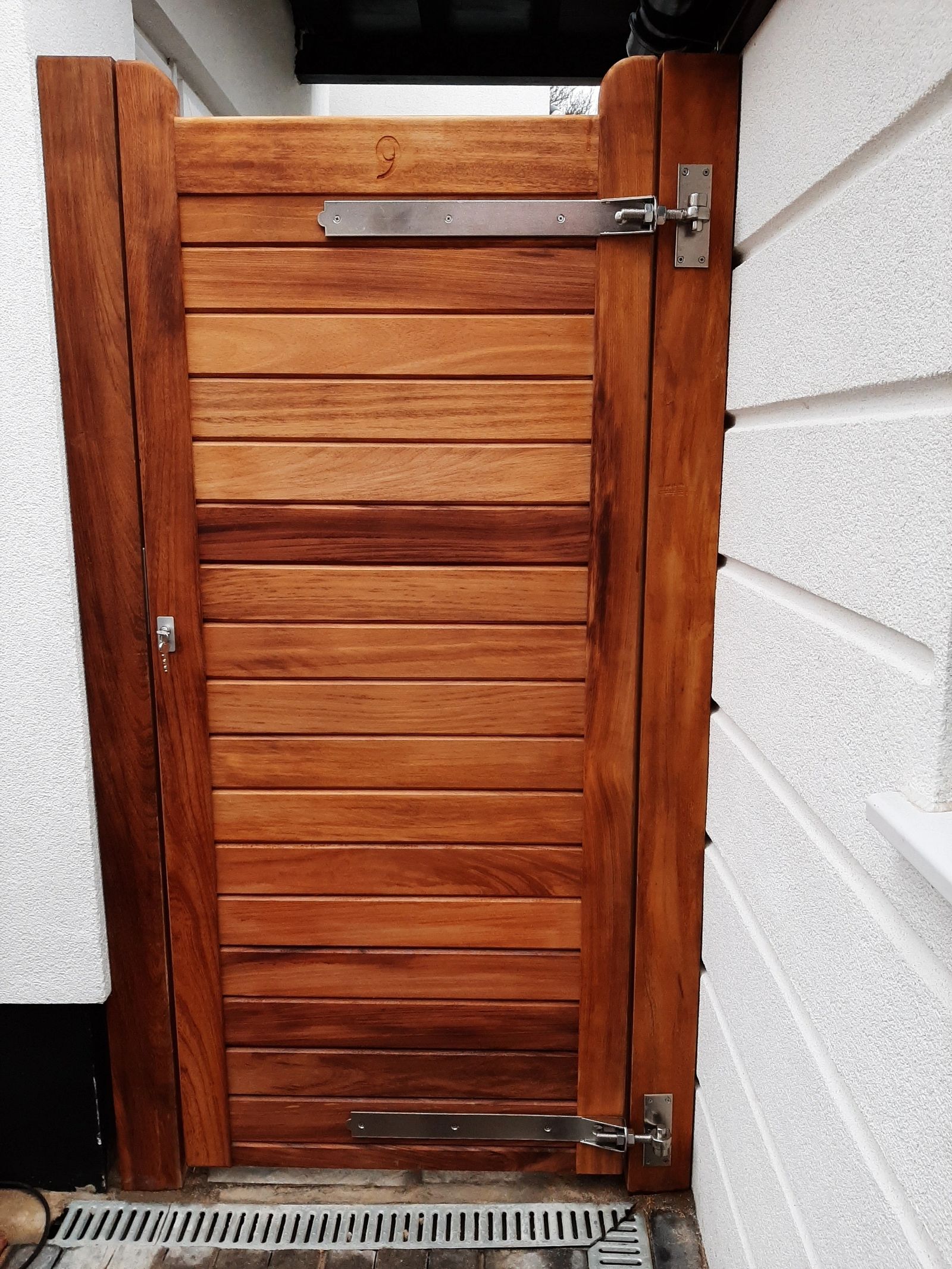
A standard hinge pin can be lifted out from outside a gate if the pin isn't captive, effectively removing the gate from its frame without touching the lock at all, which is a well-known weakness on older gates fitted with basic hinges.
An anti-lift hinge design, or a simple dowel welded to prevent the pin lifting clear, closes this gap cheaply and is worth checking for on any existing gate being assessed as part of a security upgrade.
Ground-line collars on timber posts
A plastic or metal collar fitted around a timber post at the point where it enters the ground creates a physical break between the post and the surrounding soil, reducing direct abrasion and moisture wicking at that specific zone.
Ground level is where oxygen, moisture and soil organisms are all present together in the right combination for decay fungi to thrive, which is why this narrow band is disproportionately where post failure originates compared with either the fully buried or fully exposed sections.
A collar doesn't replace preservative treatment but adds a secondary physical barrier specifically targeted at this highest-risk zone, similar in principle to the extra retention already specified for ground-contact use-class timber.
Choosing between razor wire and barbed tape toppings
Barbed tape has a flat steel strip with stamped barbed edges wound into a coil, giving a denser and more visually aggressive deterrent than traditional twisted barbed wire, which is now used less often on new commercial work.
Both carry a real injury risk and are generally reserved for boundaries without public pedestrian access, since a topping that could injure a passer-by on a footpath side raises liability concerns a lower-risk topping avoids.
Side-return gates and narrow access
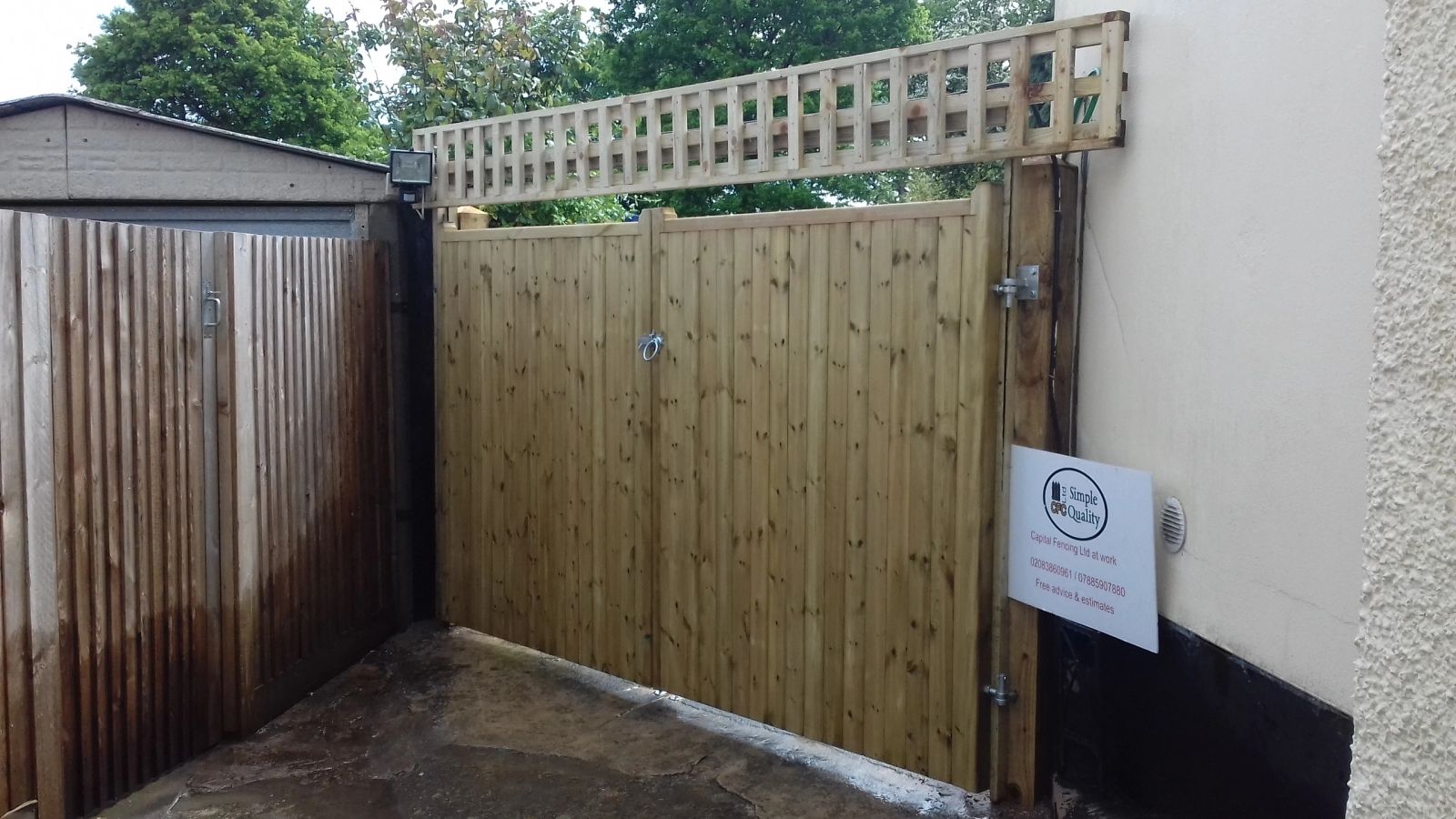
A gate across a narrow side return between two properties often has very little clearance either side, which limits hinge type and swing direction and can rule out a wide double gate in favour of a single leaf.
We measure the full return width and any obstructions along the swing arc before recommending a hinge position on this kind of opening.
Checking a panel is square before final fixing
A panel that's racked slightly out of square, even by a small amount, becomes obvious once several are fitted in a row and the tops don't line up evenly.
Measuring both diagonals of the panel frame before fixing, the same check used on gate openings, confirms it's true and worth doing before the first fixing goes in rather than after, when the panel is harder to shift.
A panel forced square against an out-of-true post rather than corrected itself tends to spring back out of shape once the fixings are removed for any future repair, so it's worth addressing the actual cause rather than just clamping it straight.
Basic safety checks before starting a repair
Before any post is dug out or panel removed, checking the fence isn't currently under load from a leaning tree, a taut washing line or a climbing plant reduces the risk of something moving unexpectedly once a fixing is cut free.
Gloves and eye protection matter as much on a small repair as a full installation, since old nails, splintered timber and rusted wire fixings are common causes of minor injury on repair work specifically.
Child safety at gaps and low openings
Gaps between vertical balusters or slatted infill wide enough to trap a small child's head are a recognised hazard, and the common guidance used for balustrades and railings — keeping gaps under 100mm — is a sensible benchmark for garden fencing near play areas too.
Horizontal rails on an otherwise vertical fence design can also create an unintentional climbing frame for a young child trying to get over a boundary, which is worth considering near a pool, driveway or road-facing frontage.
These details matter most on fences separating a garden from open water, a road, or a shared driveway, where the consequence of a small gap or easy foothold is more serious than on an internal garden division.
Carrying 2.4m panels through a domestic hallway
A standard 2.4m fence panel is longer than most internal hallways are wide, so it has to be carried end-on through doorways and pivoted at corners rather than moved flat, which takes two people to control safely.
Door frames, light switches and stair newels are the most common casualties of moving long panels through a house, so a dry run to identify pinch points before committing to carrying a stack of panels through saves repeated near-misses.
Where a hallway genuinely can't take a full panel around a tight corner, the practical fallback is building the run from shorter featheredge boards fixed in place rather than trying to force a pre-built panel through.
CDM regulations on domestic and commercial jobs
The Construction (Design and Management) Regulations 2015 apply to domestic projects as well as commercial ones, though on a domestic job the homeowner's CDM duties normally pass automatically to the contractor or principal contractor rather than sitting with the client directly.
On a commercial or public sector site, or a domestic job involving more than one contractor, formal duty-holder roles (principal designer, principal contractor) need to be identified and a construction phase plan put in place before work starts.
Even a straightforward domestic fencing job benefits from basic CDM thinking — safe access, checking for overhead cables or buried services, and clear site boundaries during the works — regardless of whether the formal paperwork threshold is met.
Ledger board fixing to an existing wall
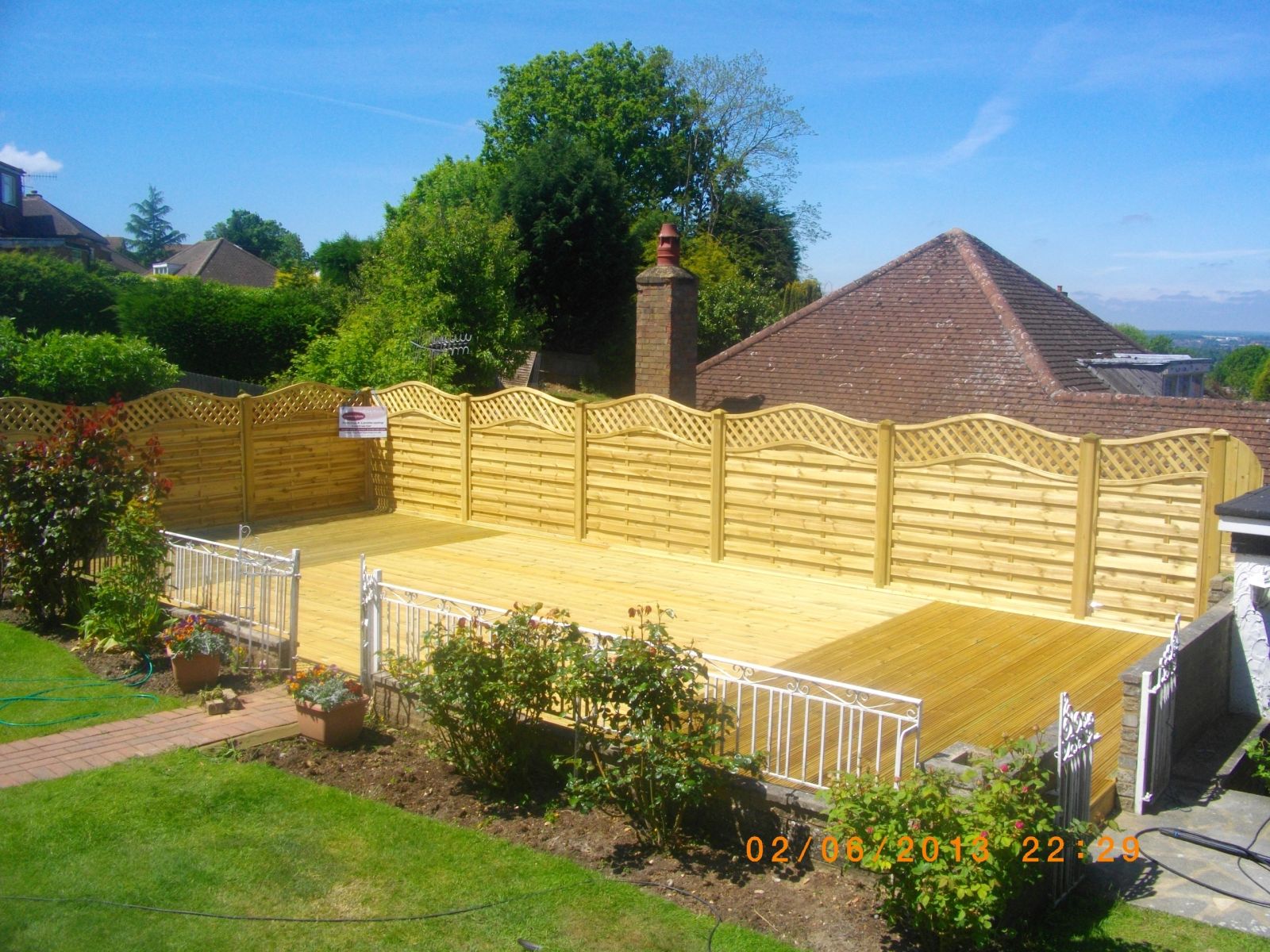
A ledger board bolted to an existing house wall to support one edge of a deck needs to be fixed through masonry into structural material, with a damp-proof membrane strip behind it and flashing above to stop water tracking into the wall build-up.
Fixing a ledger to a cavity wall needs care to avoid bridging the cavity or compressing insulation, and on a rendered or clad wall the fixings need to reach the structural leaf behind the finish rather than just gripping the surface material.
Where the wall build-up is unclear or the deck is heavily loaded, a free-standing beam and post arrangement independent of the house wall avoids the risk altogether.
Gate stops and end buffers
An end stop or buffer at the fully open and fully closed positions of a sliding gate prevents the leaf running off the end of its track or slamming into a post, and a missing or worn buffer is a common cause of impact damage over time.
Checking and replacing worn buffers is a low-cost part of a sliding gate service that prevents more expensive frame damage.
Repairing trellis toppers
A trellis topper is a lighter structure than the fence panel beneath it and is usually the first part of a run to fail in wind, since its open lattice catches gusts differently to a solid panel face.
Where the topper has failed but the panel below is sound, only the topper needs replacing, refitted to the same post caps or brackets as the original.
Treatment standards and use classes for timber
British and European standards define timber 'use classes' according to exposure — Use Class 4 covers timber in ground contact, such as fence posts, and requires a deeper level of preservative treatment than Use Class 3 cladding or rails that are exposed to weather but not buried.
Specifying Use Class 3 timber for a post that goes into the ground is one of the most common causes of early rot failure, since the treatment simply isn't rated for sustained soil contact and moisture.
A reputable timber merchant should be able to confirm the use class and treatment certificate for structural components, and it's worth asking for it explicitly rather than assuming 'tanalised' automatically means suitable for ground contact.
Boundary questions in conveyancing enquiries
When a property is sold, standard conveyancing enquiries (the TA6 form) ask the seller to confirm boundary ownership and disclose any known disputes, including informal agreements about fence lines that were never registered.
An unrecorded verbal agreement about who maintains which boundary can cause problems at sale stage if it isn't consistent with the T-marks or general boundary on the title plan, since the buyer's solicitor will flag the discrepancy.
Keeping a simple written note or email trail of any boundary agreement reached with a neighbour, even an informal one, makes a later sale considerably smoother than relying on memory years afterwards.
Salt and de-icing near a pavement
A front boundary fence close to a pavement or road gritted in winter is exposed to salt spray and run-off that a rear-garden fence never sees, and that salt accelerates corrosion in untreated steel fixings and speeds up timber degradation at ground level.
Galvanised or stainless fixings resist this better than standard bright steel, and are worth specifying as standard on any boundary within a few metres of a regularly gritted surface.
Salt-laden ground also tends to stay damp for longer after a thaw, extending the period a post base is sitting in wet conditions each winter.
Embodied carbon in timber versus composite materials
Timber sequesters carbon as it grows and, if sourced from a well-managed forest, typically carries a lower embodied carbon footprint through manufacture than composite products that incorporate manufactured polymer alongside recycled wood fibre.
Composite products often use recycled plastic content, which offsets some of their footprint by diverting material from landfill, but the manufacturing energy involved in producing the composite board itself is generally higher than sawing and treating solid timber.
Comparing the two fairly also needs to account for service life, since a material lasting genuinely longer before replacement can offset a higher manufacturing footprint over the full life of the fence.
Fox digging beneath chicken runs and fence lines
Foxes are capable diggers and will exploit any soft ground at the base of a fence or run, particularly around poultry enclosures, so a below-ground barrier matters as much as the fence height itself.
An L-shaped buried apron of mesh, turned outward from the base of the fence rather than straight down, stops digging by making the animal hit an obstruction before it reaches the fence line itself, which is more reliable than depth alone.
This detail is worth specifying separately from the fence quote for anyone keeping poultry or small livestock, since standard fence installation doesn't normally include a buried predator barrier.
Part-run replacement and matching heights
Replacing part of a run while leaving the rest standing means matching not just the panel style but the exact height, since even a small step in height between old and new sections is visually obvious along a straight boundary.
Where the original height isn't available in current stock, adjusting the post height or capping detail can sometimes close the gap without replacing the whole run.
Wayleaves and easements crossing a boundary
Some plots have a legal wayleave or easement allowing a utility company access to overhead lines or buried infrastructure crossing the garden, which can restrict what's built directly above or around that strip of land.
A shared access easement giving a neighbour a right of way across part of a garden also affects fence planning, since blocking that route — even with an otherwise perfectly legal fence — can breach the easement's terms.
These details are usually in the property's title register rather than obvious on the ground, so it's worth checking before finalising a boundary line that crosses anything unusual.