London & Hertfordshire Free Site Visit
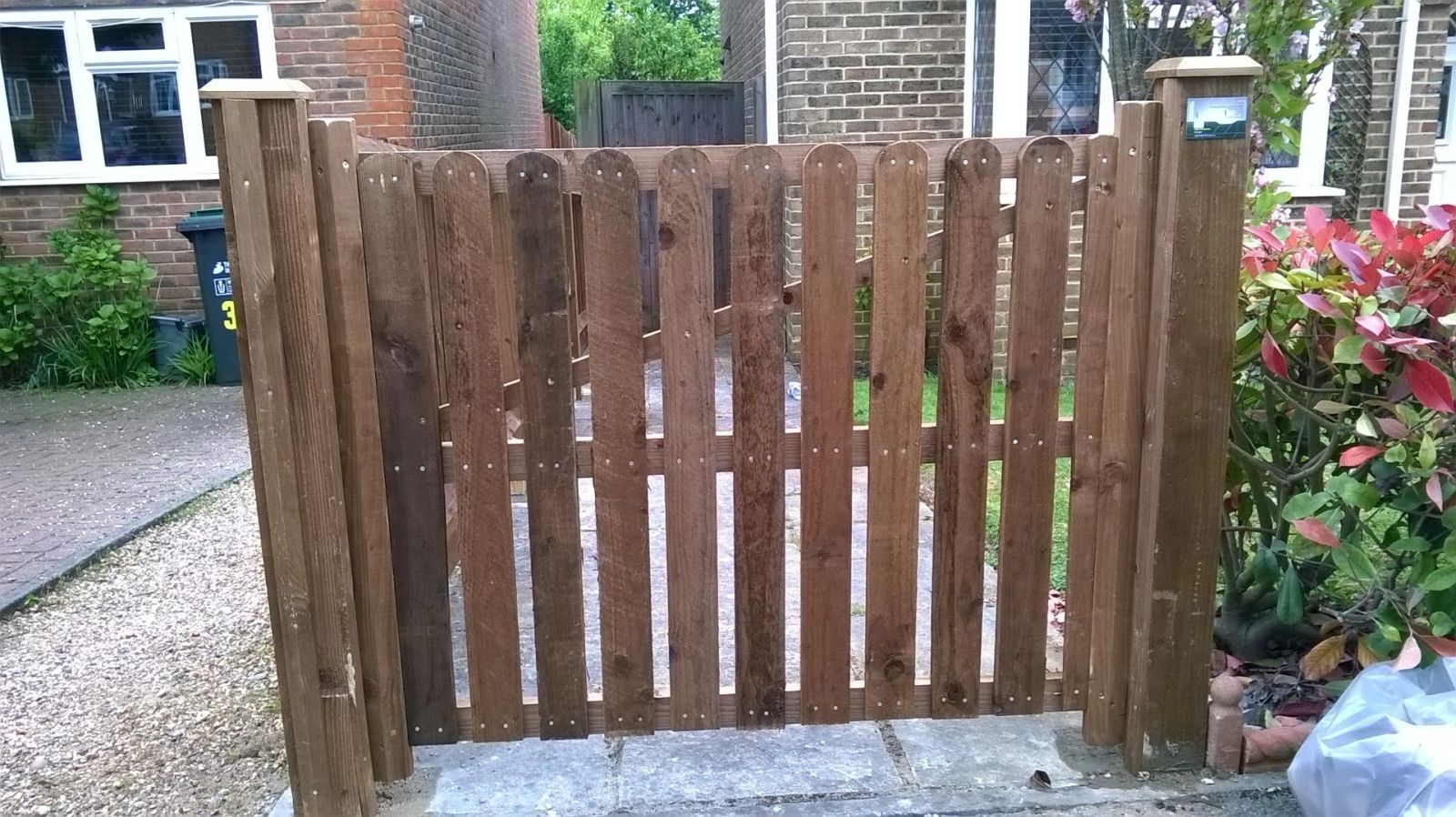
bespoke wooden gate installed by Capital Fencing in Borehamwood (WD6)
Borehamwood · WD6

Security & Access Gates, Borehamwood: engineered-to-load spec for mix of post-war terraces

Capital Fencing installs security access gates across Borehamwood and out toward bushey and barnet. What separates a security access gates job from a standard boundary is the detail: hardwood driveway gates with anti-lift hinges, key-lockable drop bolt and prep for intercom cabling. That's the work, not the marketing. Roads such as Whitehouse Avenue and Allum Lane are typical of the local layout. Elstree & Borehamwood station is a useful local reference point. Whitehouse Avenue has council-maintained hedging along the pavement that narrows the usable frontage.

Capital Fencing installs security access gates across Borehamwood and out toward bushey and barnet. What separates a security access gates job from a standard boundary is the detail: hardwood driveway gates with anti-lift hinges, key-lockable drop bolt and prep for intercom cabling. That's the work, not the marketing. Roads such as Whitehouse Avenue and Allum Lane are typical of the local layout. Elstree & Borehamwood station is a useful local reference point. Whitehouse Avenue has council-maintained hedging along the pavement that narrows the usable frontage.

Default spec

How we build security access gates in Borehamwood

steel or hardwood framed, anti-lift ball-race hinges, deadlocking hardware, cabling duct pre-run to the intercom position. On Borehamwood jobs we adjust for limited rear access on the older estates means materials usually have to come through the house.

Property mix locally: mix of post-war terraces, 1960s low-rise estates and new-build apartments near the studios. Typical gardens: small to mid-size rear plots, often south-facing on the Elstree side. Postcodes we regularly service: WD6.

Why this spec, for residential and small-commercial clients wanting secure access — anti-lift hinges, deadlocking, prep for entry systems

  • anti-lift hinge geometry as standard — a swing gate should not lift off the pins
  • prep work done for automation and access control even when it's phased for later
  • we co-ordinate with the intercom, mag-lock or GSM installer so cabling routes are right first time

Where security access gates isn't the right answer

  • high-risk commercial sites needing a rated pass-security gate — beyond a domestic joinery scope
  • listed frontages where visible ironmongery isn't allowed to change

Typical security access gates briefs in Borehamwood

  • matched pedestrian and vehicle gates cabled for GSM intercom and keypad entry
  • hardwood driveway gates with anti-lift hinges, key-lockable drop bolt and prep for intercom cabling

Security & Access Gates FAQs — Borehamwood

Are hardwood gates as secure as steel?

On security access gates jobs in Borehamwood (WD6), our default answer is: steel or hardwood framed, anti-lift ball-race hinges, deadlocking hardware, cabling duct pre-run to the intercom position. For context: prep work done for automation and access control even when it's phased for later. Structural spans and post depths calculated, not guessed.

Can the pedestrian and vehicle gates share entry control?

Across Borehamwood we spec around limited rear access on the older estates means materials usually have to come through the house, so on security access gates that usually means hardwood on galvanised anti-lift hinges. The honest trade-off is domestic hinges on a security gate — trivially lifted off — which is exactly what our default spec designs out.

Do you prep for future automation without installing it now?

Hertsmere Borough coverage means we can survey most WD6 addresses inside a week — residential and small-commercial clients wanting secure access — anti-lift hinges, deadlocking, prep for entry systems. We'll walk you through anti-lift hinge geometry as standard — a swing gate should not lift off the pins on the site visit before you commit.

How do you handle escape release on a mag-locked gate?

Practically: hardwood driveway gates with anti-lift hinges, key-lockable drop bolt and prep for intercom cabling. That's the Borehamwood version of this job, not a generic one. We'll walk you through anti-lift hinge geometry as standard — a swing gate should not lift off the pins on the site visit before you commit.

Can you fit anti-lift hinges on a wooden gate?

On security access gates jobs in Borehamwood (WD6), our default answer is: steel or hardwood framed, anti-lift ball-race hinges, deadlocking hardware, cabling duct pre-run to the intercom position. For context: prep work done for automation and access control even when it's phased for later. Structural spans and post depths calculated, not guessed.

Recent security & access gates work
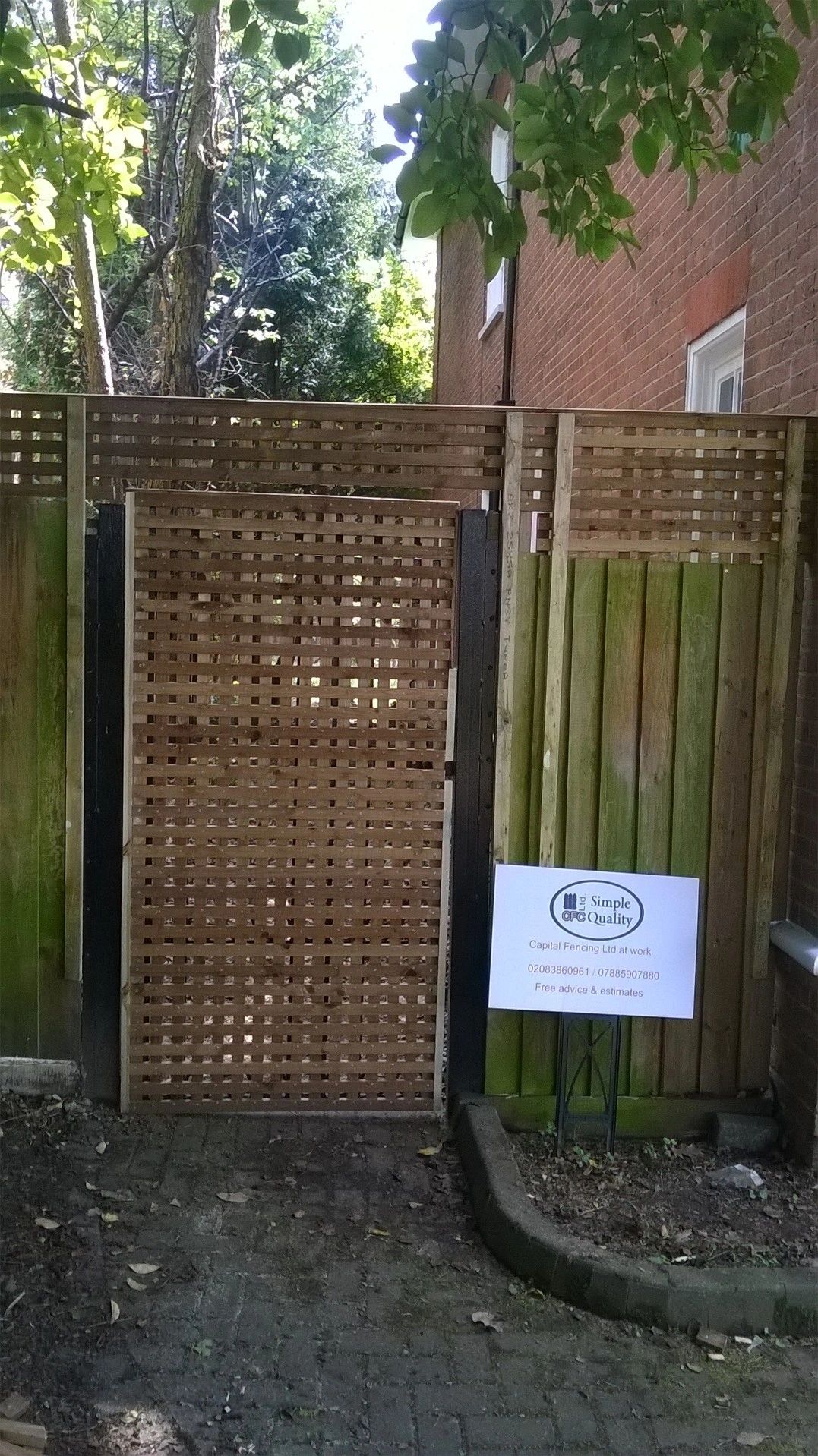
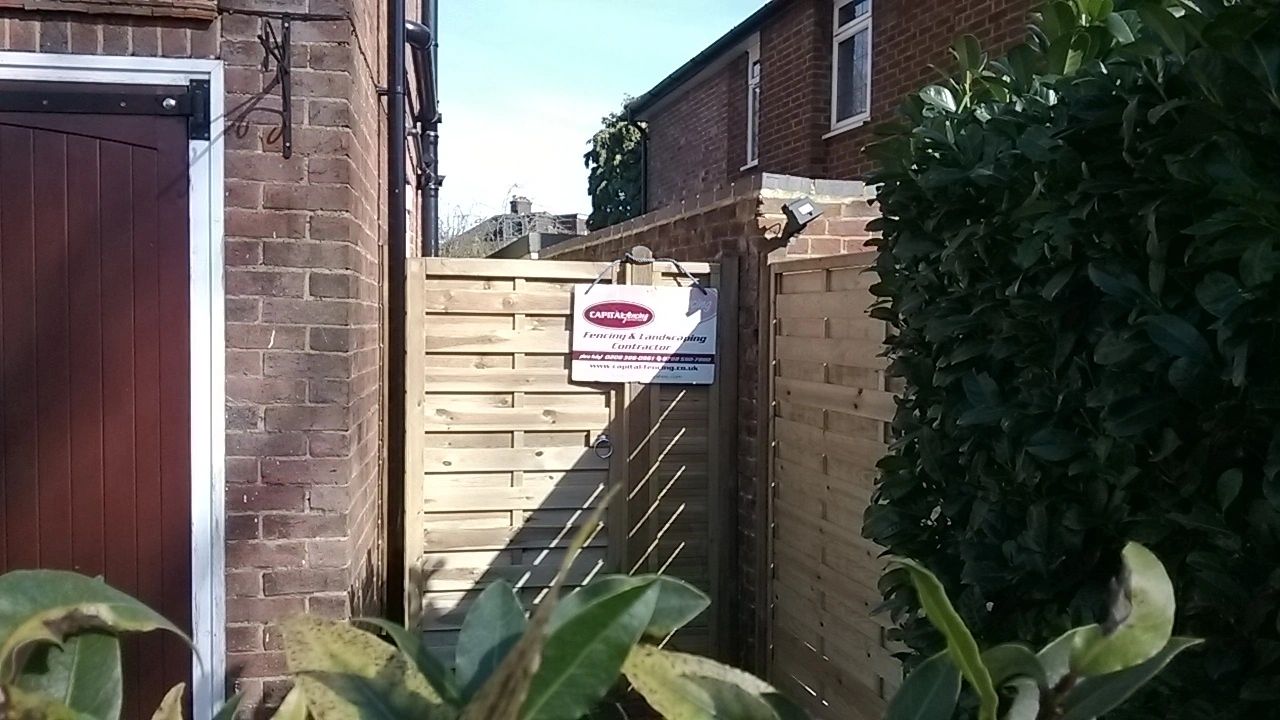
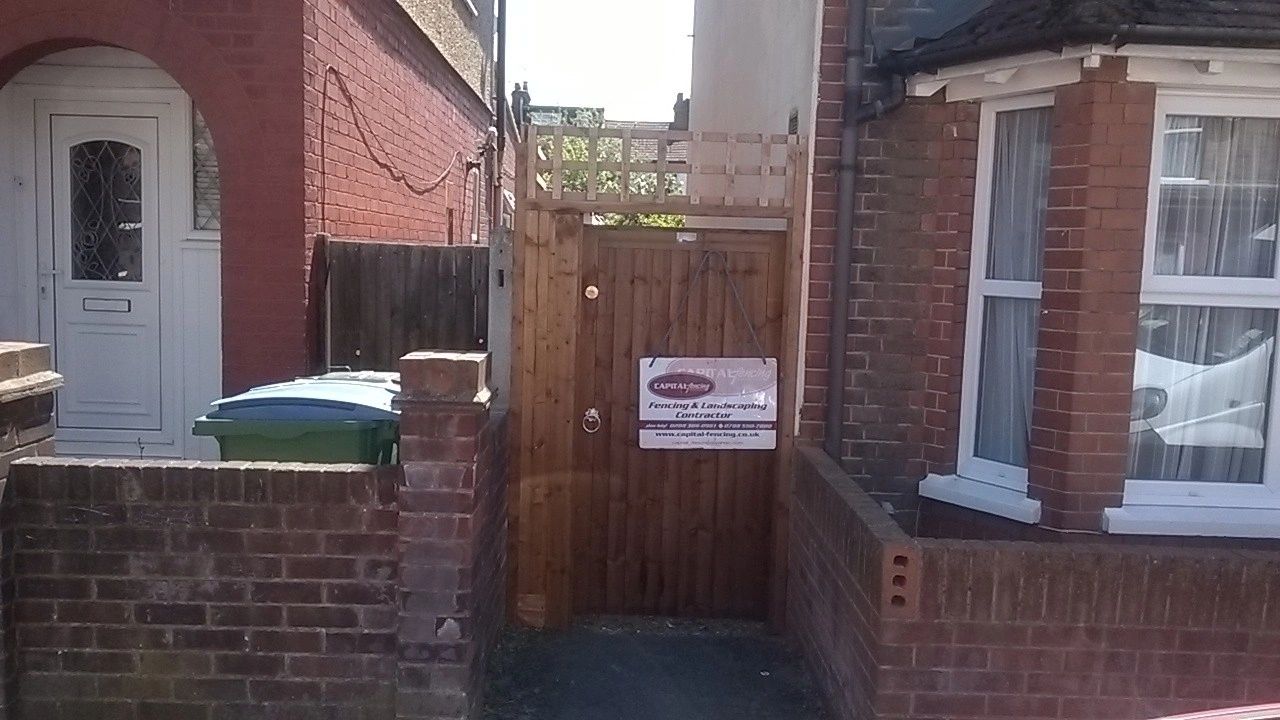
bespoke wooden gate installed by Capital Fencing in Borehamwood (WD6)double driveway gates installed by Capital Fencing in Borehamwood (WD6)hardwood side gate installed by Capital Fencing in Borehamwood (WD6)metal entrance gate installed by Capital Fencing in Borehamwood (WD6)

Before you book security & access gates in Borehamwood

BS 1722 and palisade fencing specification

BS 1722 covers dimensions, materials and fixing details for various fence types including steel palisade, and specifying to a named part of the standard gives a common reference point between client, contractor and any approving body rather than relying on informal descriptions of height and gauge.

Referencing the standard doesn't remove the need for site-specific judgement on threat level, but it does establish a baseline for pale gauge, post spacing and fixing that a site-specific spec can then be built up from.

Deliveries and access control interfaces

A gate that's also the main delivery route needs wider clearances and a more robust hinge and closer than a purely pedestrian gate, because it will be opened and knocked far more often.

Where an intercom or access-control system is fitted, the fencing contractor coordinates gate width and swing with the installer of that system rather than fixing the gate first and adapting the electronics afterwards.

Choosing a fence stain or paint finish

Fence stains range from clear or lightly tinted preservatives that let the timber grain show through, to fully opaque paints that behave more like a coating than a stain and hide the wood's natural texture.

Darker stains show dust and cobwebs less but can absorb more heat in direct summer sun, which slightly increases how much the timber expands and contracts through the day.

Whatever finish is chosen, re-application intervals differ significantly between a thin stain and a heavier paint system, which is worth factoring into the long-term maintenance plan rather than just the initial look.

Digging a post hole beside a mature root plate

Close to a mature tree, the first spade or auger pass often meets structural roots rather than clear soil, and cutting a root over roughly 25mm diameter can affect the tree's stability as well as its health.

Hand-digging with a spade and fork lets roots be worked around and exposed gradually, which an auger or mechanical borer can't do since it cuts through whatever's in its path without warning.

Where a root genuinely blocks the only sensible post position, moving the post sideways along the line by a short distance is almost always preferable to severing a major root to keep to the original spacing.

Matching an existing run

Extending or partially replacing a fence next to an existing run that's staying in place means matching post spacing, panel height, board profile and finish as closely as the existing materials allow.

Exact colour matching on stained or painted timber that's weathered for a few seasons is rarely possible with a fresh coat, so the realistic aim is a close, deliberate match rather than an invisible join.

Where the existing run uses a discontinued panel size or profile, the practical options are sourcing reclaimed stock, having a bespoke run made to match, or agreeing a visible but tidy transition point with the client upfront.

Gate swing on a sloped driveway approach

A driveway gate installed at the top or bottom of a sloped approach needs its swing arc checked against the actual gradient, since a gate that clears the ground when closed can still catch the rising slope partway through its opening arc.

Sliding gates are sometimes preferred over swinging gates on a sloped approach for exactly this reason, since they don't need to clear a changing ground level along their travel.

End-grain sealing on cut timber

End grain is far more absorbent than a timber's long faces because it exposes the open ends of the wood's vascular cells, so a post or rail cut to length on site can soak up moisture many times faster at the cut end than elsewhere.

Leaving a fresh cut untreated is one of the more common ways a pressure-treated timber ends up rotting from the middle outwards, since the factory treatment doesn't extend to a cut made after the fact.

A brush-applied end-grain preservative or sealant on every site-cut post base and rail end restores some of that lost protection, and takes only a few minutes per cut relative to the risk it avoids.

Wire-mesh and chain-link repairs

A localised tear or sag in chain-link or wire mesh can usually be patched by re-tensioning the line wire and re-clipping the mesh, rather than replacing the whole run, provided the posts and straining wire are sound.

Where corrosion has spread along the mesh rather than staying localised, patching becomes false economy and a full re-mesh of that bay is the more durable option.

Building decking around an existing tree

Decking built around a retained tree needs a gap between the boards and the trunk to allow for trunk growth over the coming years, since a tight-fitting frame will eventually be split or lifted as the tree thickens.

Foundations for the deck itself should avoid sitting directly over major roots, favouring a raised beam-and-post structure that spans over the root zone rather than ground-bearing pads dug into it.

Where the tree is protected by a Tree Preservation Order, any excavation for deck supports within its root protection area may need council notification before work starts.

Diagnosing a latch that only sticks in damp weather

A latch or gate that closes fine in dry weather but sticks or binds after rain is very often timber swelling with moisture rather than a hardware fault, and this points to a finish or ventilation issue rather than the latch mechanism itself.

Confirming the pattern is weather-related before adjusting or replacing hardware avoids fixing a symptom that will return with the next wet spell.

Limits of assessing a repair from photos alone before a site visit

A photo can show an obviously snapped post or a collapsed panel clearly enough to plan materials in advance, but it rarely shows ground conditions, the state of neighbouring posts, or hidden rot just below soil level that only a physical probe test reveals.

Treating a photo assessment as a starting point rather than a final scope avoids arriving on site to find the repair is larger, or smaller, than the photos suggested.

Anti-twist shoulder details on post fixings

Some post shoe and anchor systems include a shaped shoulder or collar that grips the post's cross-section rather than relying purely on friction from clamping bolts, resisting the post twisting in the fitting under sustained wind load.

Without that shoulder detail, a smooth-sided post held only by bolted clamp plates can gradually rotate within the fitting as repeated gusts work it slightly each time, loosening the bolts further with each cycle.

This detail matters more on taller, more exposed posts carrying larger panel or gate areas, where the leverage from wind load is greatest, than on short, low-level fencing where twisting force is comparatively small.

Cantilever gate counterbalance rollers

A cantilever sliding gate has no ground track and instead relies on internal rollers running along a supporting beam set into the ground either side of the opening, with a counterbalanced section extending behind the gate to carry its weight.

Because there's no track to keep clear, faults on this type are more often traced to the internal rollers or the foundation beam settling than to surface debris.

Concrete mix choice by ground type

A standard post-fix or wet-mix concrete works well in firm, free-draining ground, but the same mix in waterlogged clay can trap moisture against the post rather than supporting it, encouraging rot from below rather than preventing it.

In consistently wet ground, a free-draining aggregate base under a shorter concrete collar generally outperforms a full concrete plug for timber post longevity.

In very loose or made ground, a wider hole with more concrete volume compensates for poor natural bearing, essentially building an artificial firm base where the soil itself can't provide one.

Use classes for ground-contact timber

Treated timber is graded into use classes according to how much moisture and ground contact it's expected to face, and specifying the wrong class for the job is a common cause of premature rot that isn't obvious until years later.

Use Class 3 covers above-ground timber exposed to the weather, such as boards and rails; Use Class 4 covers timber in direct or near-permanent ground contact, which is what posts and gravel boards should be specified to, not Use Class 3 stock used because it's cheaper or more available.

A supplier's treatment certificate should state the use class achieved, and it's worth asking for it on any job where posts are the expensive, hard-to-replace component of the run.

Trellis toppers for extra height and privacy

Adding a trellis topper to an existing or new fence is a common way to gain extra height for climbing plants or additional privacy without exceeding permitted development limits for a solid boundary.

Because trellis is inherently more open than solid panel, it doesn't usually count the same way toward the 2m height rule in every case, but it's still worth checking with the local authority since interpretations vary.

A trellis topper needs its own bracing where it's more than a token height, since a tall panel of trellis catching wind behaves more like a sail than most people expect.

Outbuildings casting permanent shade onto a fence run

A shed, greenhouse or garage built close to a boundary casts a fixed shadow over part of the adjoining fence run for some or all of the day, creating the same slower-drying conditions as a north-facing aspect regardless of the fence's actual orientation.

This localised shading is easy to overlook when assessing a whole boundary's exposure, since the rest of the run a few metres away may be in full sun.

It's worth treating the shaded section as its own microclimate for treatment and inspection purposes rather than assuming uniform conditions along the full length.

Self-storage and depot perimeters

Self-storage sites and vehicle depots typically run a continuous high-security perimeter with limited access points, and any repair work has to maintain that perimeter's integrity throughout rather than leaving a gap open overnight.

Because these sites often operate extended or 24-hour access for customers or drivers, fencing work needs scheduling around live access hours, with any section requiring full closure agreed and communicated in advance.

Lighting and CCTV mounted on perimeter fencing at these sites adds a coordination step most domestic jobs don't have — services need identifying and protecting before any post is removed or reset.

Working over a neighbour's flowerbed

Repairing a shared boundary sometimes means working from the neighbour's side, particularly where the fence faces that way or access from the owner's side is blocked, and that access should be agreed with the neighbour before work starts.

Protecting planting beds and lawn on the working side during the repair avoids turning a fence job into a wider dispute over incidental damage.

Handling excavated spoil on a fencing job

Digging even a modest run of post holes generates a surprising volume of spoil, and leaving it in a single heap on a lawn for the duration of a job kills the grass underneath if left more than a few days.

Spreading spoil thinly on a border, bagging it for removal, or arranging same-day disposal all avoid that dead patch, and the right choice depends on whether the client wants the spoil kept for landscaping elsewhere on the plot.

Heavy clay spoil is particularly slow to dry and awkward to barrow once it's rained on, so timing the dig to avoid leaving wet spoil sitting overnight where possible reduces both the mess and the extra effort of moving it later.

DBS-relevant site rules on sensitive sites

Sites such as schools, nurseries and some healthcare premises commonly require anyone attending, including contractors, to hold or provide evidence of an enhanced DBS check, or to be directly supervised at all times if they don't.

This is a site management requirement set by the school or institution rather than a universal legal rule for tradespeople in general, and requirements vary between individual sites and local authority policies.

Where a job is known in advance to be on this type of site, confirming the DBS or supervision requirement before booking the work avoids a contractor turning up unable to proceed on the day.

Sanding and re-treating a timber gate

A timber gate that's greying or losing its finish benefits from a light sand back to bare or sound timber before re-treating, since coating over a failed or flaking existing finish traps moisture underneath rather than sealing it out.

This is worth doing every few years depending on exposure, well before the timber itself starts to soften or split.

Residential and small-commercial clients wanting secure access — anti-lift hinges, deadlocking, prep for entry systems — that's who this page is for. In Borehamwood and out to Hertsmere Borough, we run the security access gates spec that survives limited rear access on the older estates means materials usually have to come through the house. Roads such as Manor Way and Theobald Street are typical of the local layout. BBC Elstree Centre is a useful local reference point. Borehamwood's post-war estates are laid out on a tight grid, with front access generally straightforward but rear access varying by street.

Get In Touch

Get My Free Quote — 24h Response

No callout fee · Free site visit · Friendly local team covering London & Hertfordshire.

Call us
07885907880
or 02036484746
Email
capital_fencing@yahoo.com
WhatsApp
Message us anytime
Area
London & Hertfordshire
Payment
Card payments accepted

Pay by debit or credit card, bank transfer or cash once the work and price are agreed. No deposit taken online.

Request a Free Quote

We'll get back to you within 24 hours.

Free Site Visit No Callout Fee
Call WhatsAppQuote