London & Hertfordshire Free Site Visit
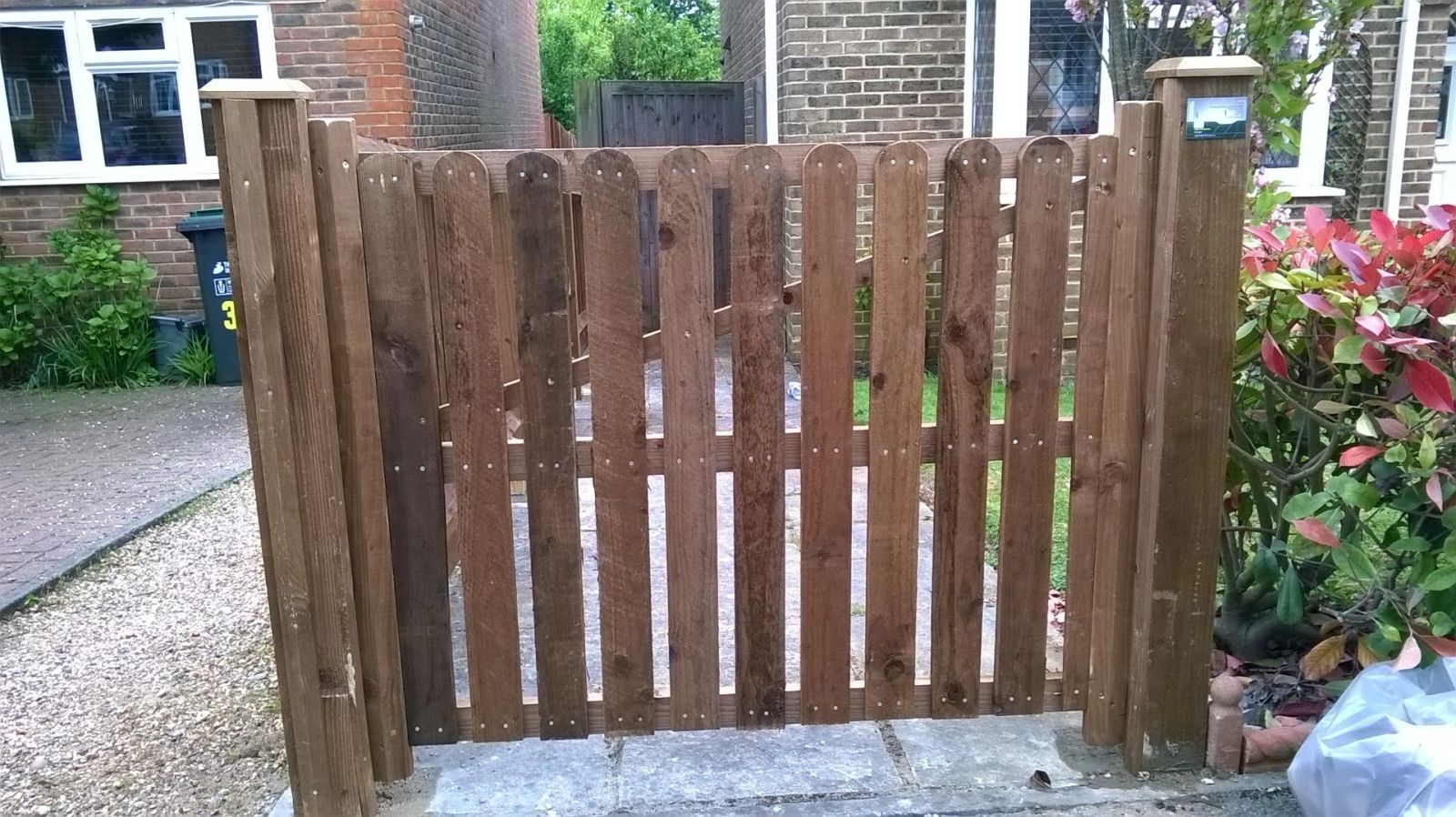
bespoke wooden gate installed by Capital Fencing in Borehamwood (WD6)
Borehamwood · WD6

Side return gate across Borehamwood — Hertsmere Borough

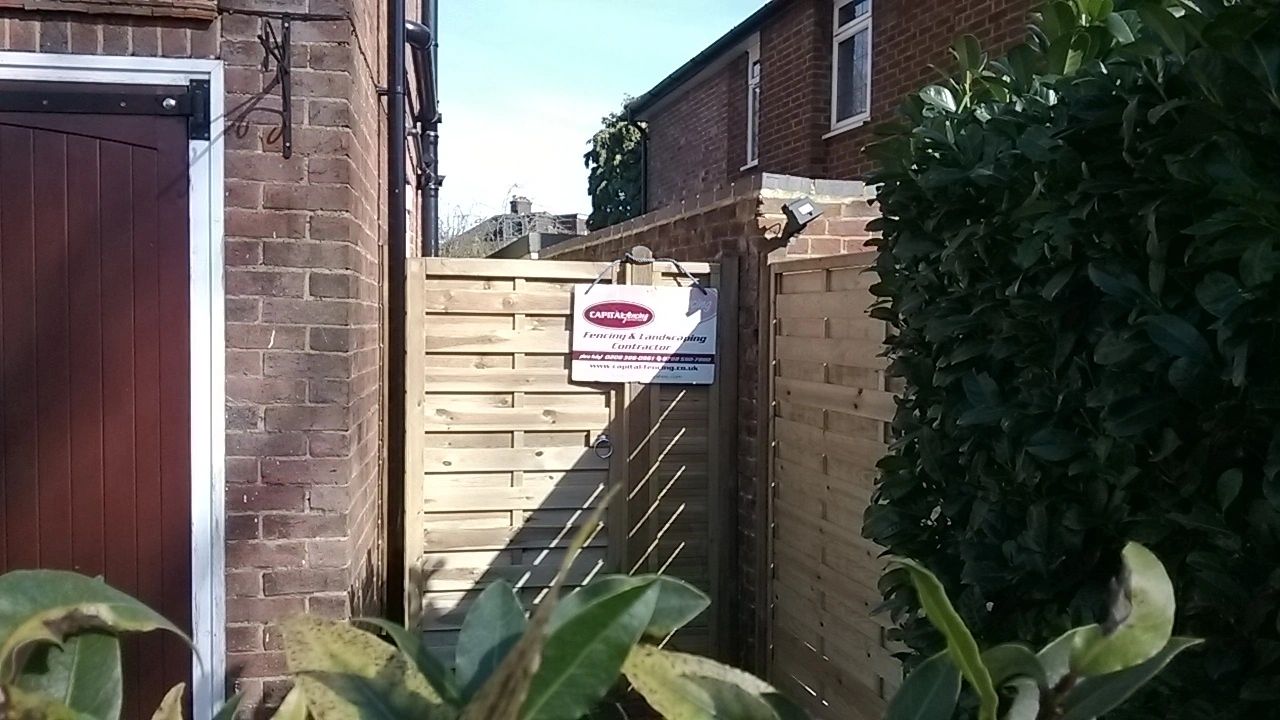
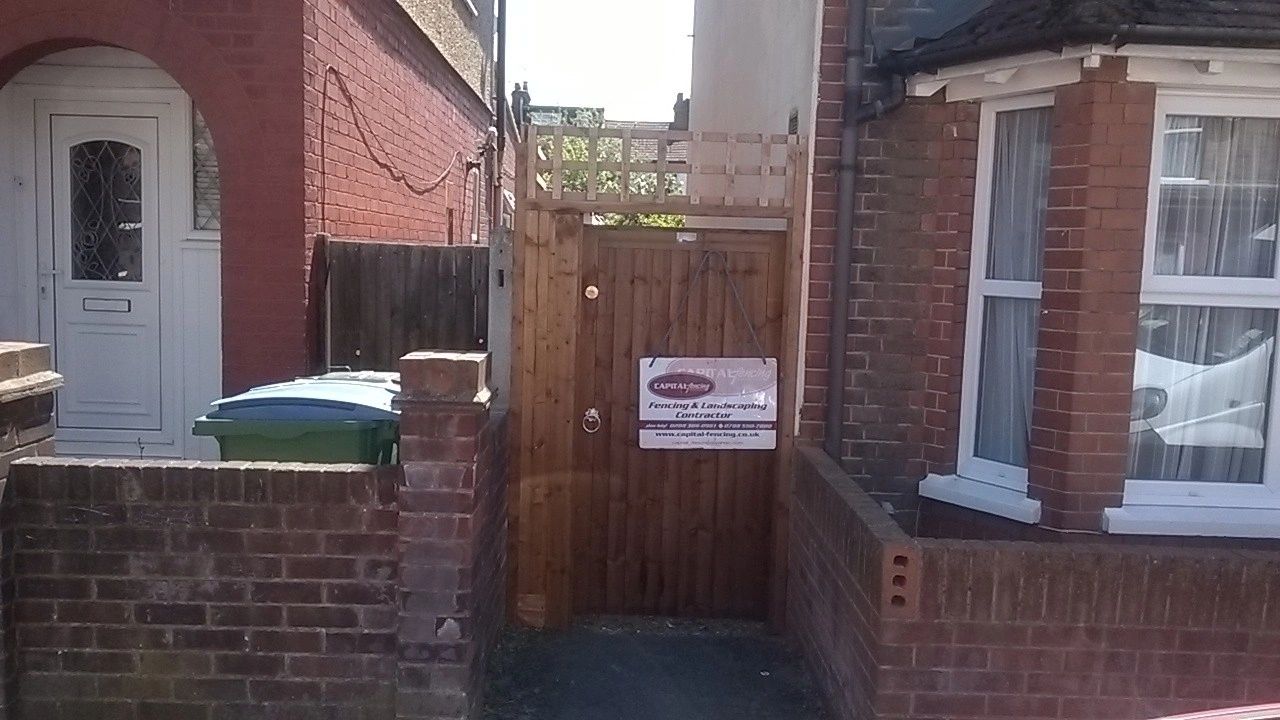
Capital Fencing installs side-return gates across Borehamwood and out toward bushey and barnet. What separates a side-return gates job from a standard boundary is the detail: hardwood side gate between a rendered wall and a brick pier, 780mm opening, drop-bolt into a concrete slab socket. That's the work, not the marketing. Roads such as Manor Way and Cardinal Avenue are typical of the local layout. BBC Elstree Centre is a useful local reference point. The Manor Way estate has a continuous rear boundary line running across a large number of plots, a legacy of its uniform post-war construction.

Capital Fencing installs side-return gates across Borehamwood and out toward bushey and barnet. What separates a side-return gates job from a standard boundary is the detail: hardwood side gate between a rendered wall and a brick pier, 780mm opening, drop-bolt into a concrete slab socket. That's the work, not the marketing. Roads such as Manor Way and Cardinal Avenue are typical of the local layout. BBC Elstree Centre is a useful local reference point. The Manor Way estate has a continuous rear boundary line running across a large number of plots, a legacy of its uniform post-war construction.

Why this spec, for London terraces and semis with a narrow alley between the house and the neighbouring wall

  • framed builds don't drop the way board-and-batten side gates do in year two
  • adjustable hinges handle the seasonal timber movement every London side gate experiences
  • made to the exact opening — no packing pieces, no gaps for burglars or foxes

Typical side-return gates briefs in Borehamwood

  • hardwood side gate between a rendered wall and a brick pier, 780mm opening, drop-bolt into a concrete slab socket
  • matched pedestrian and bin-store gate serving a shared side alley between two flats
Default spec

How we build side-return gates in Borehamwood

44mm framed hardwood or planed softwood, tongue-and-groove infill, adjustable ball-race hinges, closing stop and drop-bolt. On Borehamwood jobs we adjust for limited rear access on the older estates means materials usually have to come through the house.

Property mix locally: mix of post-war terraces, 1960s low-rise estates and new-build apartments near the studios. Typical gardens: small to mid-size rear plots, often south-facing on the Elstree side. Postcodes we regularly service: WD6.

What goes wrong

Common failure modes on side-return gates

  • fitting a full-weight hardwood gate on domestic pin hinges — drops within six months
  • not shooting a drop-bolt into a concrete socket — kicked or pried open too easily

Side Return Gates FAQs — Borehamwood

Is a drop-bolt necessary as well as a lock?

On side-return gates jobs in Borehamwood (WD6), our default answer is: 44mm framed hardwood or planed softwood, tongue-and-groove infill, adjustable ball-race hinges, closing stop and drop-bolt. For context: adjustable hinges handle the seasonal timber movement every London side gate experiences. Measured, quoted and installed by the same small crew.

Do you handle the wall fixing on both sides?

Across Borehamwood we spec around limited rear access on the older estates means materials usually have to come through the house, so on side-return gates that usually means iroko hardwood on galvanised ironmongery for 15+ year service. The honest trade-off is fitting a full-weight hardwood gate on domestic pin hinges — drops within six months — which is exactly what our default spec designs out.

Can you match the gate to my existing side-return fencing?

Hertsmere Borough coverage means we can survey most WD6 addresses inside a week — London terraces and semis with a narrow alley between the house and the neighbouring wall. The honest trade-off is fitting a full-weight hardwood gate on domestic pin hinges — drops within six months — which is exactly what our default spec designs out.

How do you stop a side gate dropping over time?

Practically: hardwood side gate between a rendered wall and a brick pier, 780mm opening, drop-bolt into a concrete slab socket. That's the Borehamwood version of this job, not a generic one. For context: adjustable hinges handle the seasonal timber movement every London side gate experiences. Measured, quoted and installed by the same small crew.

Can bin-store and pedestrian access share one gate?

On side-return gates jobs in Borehamwood (WD6), our default answer is: 44mm framed hardwood or planed softwood, tongue-and-groove infill, adjustable ball-race hinges, closing stop and drop-bolt. We'll walk you through framed builds don't drop the way board-and-batten side gates do in year two on the site visit before you commit.

Recent side return gates work
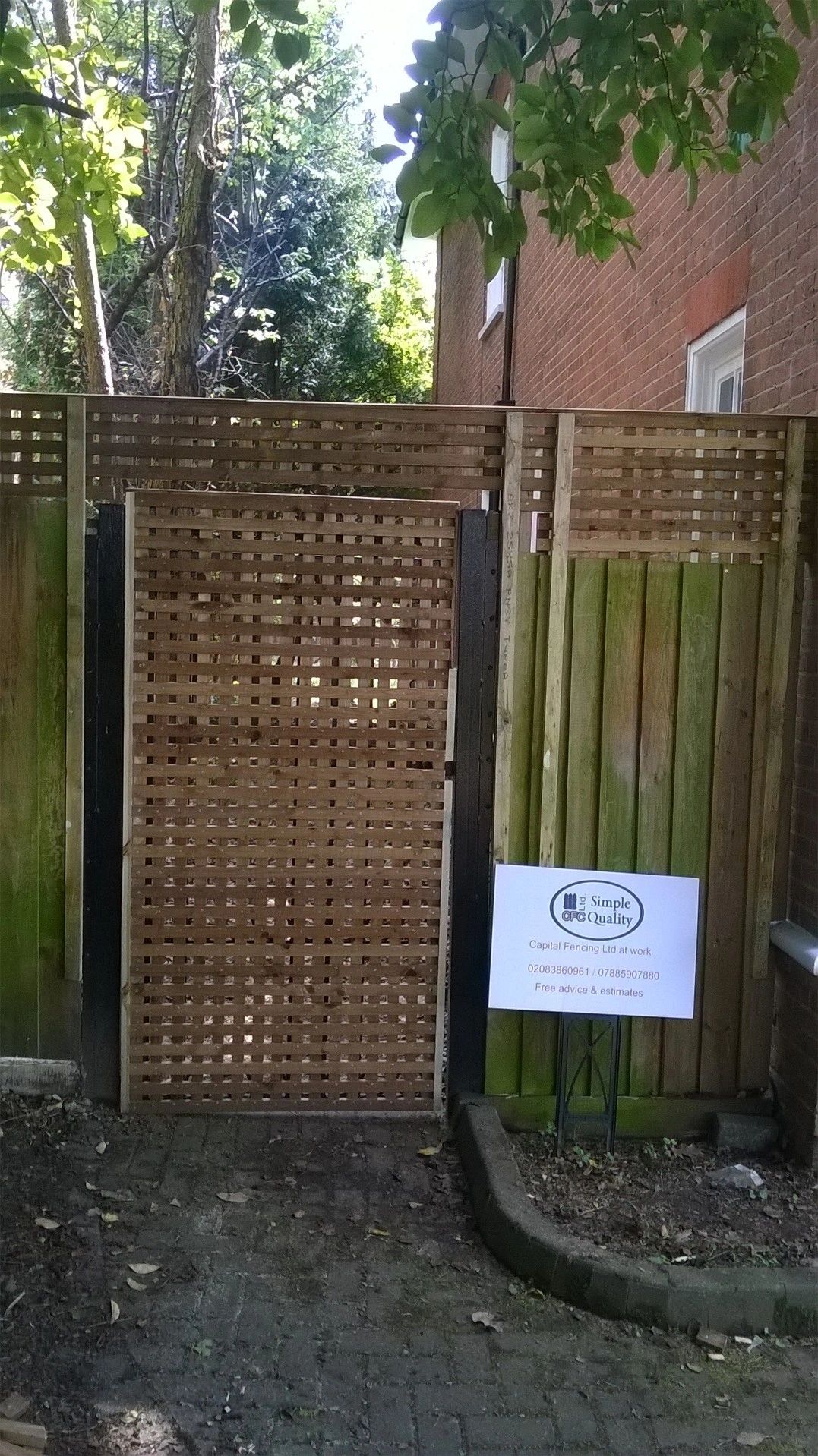
bespoke wooden gate installed by Capital Fencing in Borehamwood (WD6)double driveway gates installed by Capital Fencing in Borehamwood (WD6)hardwood side gate installed by Capital Fencing in Borehamwood (WD6)metal entrance gate installed by Capital Fencing in Borehamwood (WD6)

How we approach side return gates on Borehamwood properties

Trellis toppers failing under wind load separately from the fence

A trellis topper adds height and surface area above a solid panel, which increases the wind load the whole assembly has to resist even though the panel below might be perfectly sound, and toppers are a common point of failure in gusty conditions.

Where a topper has failed repeatedly on an exposed boundary, a lower-solidity design or additional bracing to the topper's own fixings is worth considering rather than replacing the same topper style each time it fails.

Schedules of condition before nearby works

A schedule of condition is a dated record, often with photographs, of a boundary structure's state before nearby building work begins, used to settle any later dispute about damage caused during that work.

Where a neighbour is undertaking significant building work close to a shared boundary, requesting this kind of record beforehand is reasonable and protects both parties.

This is distinct from a full party wall agreement but is often produced as part of the wider party wall process where one applies.

New build plots and pre-agreed boundary specifications

New build properties are often sold with a specific boundary treatment already agreed as part of the planning permission for the wider development, sometimes written into individual plot transfers.

Replacing a developer-installed fence with something different can, in some cases, breach these plot-specific terms even after the development has been fully sold and the developer has moved on.

Checking the original plot transfer documents, or the wider planning permission for the estate, is worth doing before assuming a new build boundary can simply be swapped for something else.

Repositioning a post slightly off its original line

Where an original post position has proven to be a recurring failure point — sitting in a wet hollow, or close to a tree root that keeps disturbing it — repositioning it a short distance along the run can solve a problem that repeated resets in the same spot haven't.

This needs agreement on the boundary line first if the shift is more than a token amount, since moving a post changes where the fence physically sits relative to the boundary rather than just repairing it in place.

Post caps and end-grain protection

A timber post's end grain sits at the top, cut across the fibres, and that exposed grain draws in water far faster than the treated face of the post, which is why an unprotected post top is often the first place rot takes hold.

A weathered or pyramid-cut post cap sheds water off the end grain instead of letting it pool, and a cap that oversails the post slightly also keeps water from tracking down the sides at the joint.

It's a small, low-cost detail that's frequently skipped on budget jobs, and its absence is a reliable way to predict which posts in an older fence will need replacing first.

Fence panels built around a recessed bin store

A bin store built into or against a fence line needs its own ventilation gaps, since enclosed bin storage without airflow concentrates moisture and odour against the adjoining fence panels far more than open storage would.

The panel section forming the back or side of a bin store also takes more direct contact wear — bins being wheeled in and out, lids catching the timber — than the rest of the run, so a slightly more robust board or a protective kick panel at the contact height extends its life.

These wear patterns are worth designing for at the outset rather than treating the bin store section as identical to the rest of the boundary run.

Tamper-evident caps over external fixing bolts

A plastic or metal tamper-evident cap fitted over an external bolt head shows visible signs of damage if someone has attempted to remove it, giving a maintenance team an early visual signal that a section of fence has been interfered with even where nothing has actually come loose.

This is a low-cost addition on a run where fixings are otherwise exposed, and it's most useful on a boundary that isn't checked in person every day, where interference could otherwise go unnoticed for some time.

Using profile boards at corners

Profile boards — a horizontal board fixed between two pegs set back from the actual corner — let a string line be set, removed and reinstated at the exact same point throughout a job without disturbing the corner itself.

They're most useful where a run turns through an angle, since the intersecting lines from two boards mark the true corner point independently of any post already dug.

Leaving the boards in place until the last post is set and checked avoids the common error of the line creeping slightly as pegs get knocked or the string is re-tied.

Positioning posts relative to existing paving slabs

A post position that lands directly on or straddling an existing paving slab or patio edge either means lifting and relaying that slab, or nudging the post along the line to land in a joint or open ground instead.

Where lifting a slab is unavoidable, checking what's bedded underneath — a solid mortar base rather than loose sand — before committing to reinstating it in the same spot avoids an unpleasant surprise partway through.

On a patio the client wants kept intact, agreeing acceptable post positions against the actual slab layout at the survey stage avoids a decision being made on the day between two imperfect options.

Digging a post hole beside a mature root plate

Close to a mature tree, the first spade or auger pass often meets structural roots rather than clear soil, and cutting a root over roughly 25mm diameter can affect the tree's stability as well as its health.

Hand-digging with a spade and fork lets roots be worked around and exposed gradually, which an auger or mechanical borer can't do since it cuts through whatever's in its path without warning.

Where a root genuinely blocks the only sensible post position, moving the post sideways along the line by a short distance is almost always preferable to severing a major root to keep to the original spacing.

Capping and end-grain protection

End grain absorbs moisture far faster than the face of a timber board, so an uncapped top rail or exposed post top takes in water long before the rest of the gate shows any sign of decay.

Fitting a capping strip or weathered top cut sheds water away from that end grain and noticeably extends the life of an otherwise sound gate.

Powder-coat pre-treatment

Powder coating is only as durable as the surface preparation beneath it, and steel that hasn't been degreased, and often chemically pre-treated with a phosphate or chromate conversion coating, will let the powder coat lift and blister within a season or two.

On galvanised steel specifically, a specialist pre-treatment is needed because standard powder coat doesn't bond reliably to a plain zinc surface without it, which is why powder-coated galvanised railings are a distinct product from simply galvanised steel painted afterwards.

Once properly applied and cured, the powder coat itself is a hard, continuous barrier finish that resists chipping better than wet paint, though any breach down to bare metal will corrode locally without a way to self-heal.

Rights of access to maintain a boundary

Some older deeds include an explicit right for a neighbour to enter adjoining land to maintain their side of a boundary structure, but this isn't automatic everywhere and shouldn't be assumed.

Where no such right exists in the paperwork, entering a neighbour's garden to repair or replace a fence normally needs their permission, arranged directly rather than taken for granted.

The Access to Neighbouring Land Act 1992 provides a separate, more formal route for essential works where agreement can't be reached, though it's aimed at more serious situations than routine fence replacement.

Threshold and step detailing under a gate

Where a gate crosses a change in ground level, a threshold detail — a shaped cill, a small step, or a sloped paving strip — needs designing in so the gate can swing freely without a permanent gap left underneath for drafts, debris or small pets to pass through.

Retrofitting a threshold detail to an existing gate is more limited than designing it in from the start, since the gate's swing arc is already fixed by its hinges.

Urban heat and timber movement

Fencing against south-facing brick walls, paved courtyards or close to parked vehicles in dense urban plots experiences more extreme daily temperature swings than the same timber in an open garden, due to heat absorbed and re-radiated by hard surfaces.

That repeated expansion and contraction can open joints in panels and loosen fixings faster than in a more moderate microclimate, particularly on darker-stained timber that absorbs more heat.

Stainless or coated fixings and slightly looser panel-to-post tolerances both help absorb this movement without splitting timber over successive summers.

Flying freeholds and unusual boundary shapes

A flying freehold occurs where part of one property, such as a room, overhangs part of another below it, and can produce boundary arrangements in the garden that don't follow an obviously straight or logical line.

Properties with this kind of unusual legal history sometimes have correspondingly unusual title plan boundaries in the garden area, which are worth checking carefully rather than assumed from the visible layout.

Where a garden boundary looks like it doesn't match the physical shape of the buildings above, that's a sign worth investigating with the title documents before fencing work begins.

Marker tape and underground cable protection during fencing works

Even where a cable route has been avoided by shifting post positions, a warning marker tape laid above the cable at a shallower depth than the cable itself gives a visual and physical warning to anyone digging near the line in future.

This is a low-cost addition worth doing whenever a post line runs close to a known service, since a fence contractor working carefully today doesn't guarantee the same care from whoever digs near that boundary years later.

When a neighbour won't allow access for a repair from their side

Some repairs are far more easily done working from one side of the boundary than the other, and if that's the neighbour's side and they decline access, the repair has to be planned working entirely from the client's own garden instead.

This can mean extra propping, working at an awkward angle, or in some cases a different repair method altogether, and it's worth agreeing with the client upfront rather than assuming access will be granted on the day.

Kiln-dried versus green timber movement

Green (wet, unseasoned) timber is cheaper and easier to nail without splitting, but it shrinks noticeably as it dries in situ, which opens gaps between overlapping boards and can loosen fixings within the first year.

Kiln-dried timber has already lost most of that moisture before it reaches site, so it holds its dimensions far better once fixed, at a higher material cost.

Closeboard fencing traditionally tolerates green feather-edge boards reasonably well because the overlap absorbs some shrinkage, but a tight tongue-and-groove or slatted panel is far less forgiving and benefits from kiln-dried stock.

Working safely on a tall or elevated fence repair

A repair on a taller run, or one set on a retaining wall or raised bank, sometimes needs a working platform or trestles rather than simply working from a stepladder against the fence itself.

Where a repair is above head height along its full length, planning safe access before starting reduces both the time on site and the risk of further damage to the fence being used as a support.

Timber species and seasonal movement differences

Softwood gate frames move more with seasonal humidity changes than a hardwood equivalent, which is why a softwood gate that fitted well in summer can bind noticeably by winter, while a well-seasoned hardwood frame shows less variation.

Understanding which timber a gate is built from helps set realistic expectations for how much seasonal adjustment it will need rather than treating every gate the same way.

Hedge pressure on a fence line

An unmanaged hedge planted close to a boundary fence pushes against the panel or rail as it thickens, and that steady lateral pressure can bow a panel or rack a post over several seasons even without any storm involved.

Cutting the hedge back from the fence line at repair time reduces the chance of the same section failing again shortly after.

Side Return Gates across WD6 is a regular run for us. We'll quote honestly, tell you if side-return gates isn't the right answer for your site, and book the job in within a week or two of a signed quote. measured, quoted and installed by the same small crew. Roads such as Allum Lane and Theobald Street are typical of the local layout. Aberford Park is a useful local reference point. Allum Lane and Furzehill Road plots back onto one another in the estate's original layout.

Get In Touch

Get My Free Quote — 24h Response

No callout fee · Free site visit · Friendly local team covering London & Hertfordshire.

Call us
07885907880
or 02036484746
Email
capital_fencing@yahoo.com
WhatsApp
Message us anytime
Area
London & Hertfordshire
Payment
Card payments accepted

Pay by debit or credit card, bank transfer or cash once the work and price are agreed. No deposit taken online.

Request a Free Quote

We'll get back to you within 24 hours.

Free Site Visit No Callout Fee
Call WhatsAppQuote