Who's responsible for a shared gate
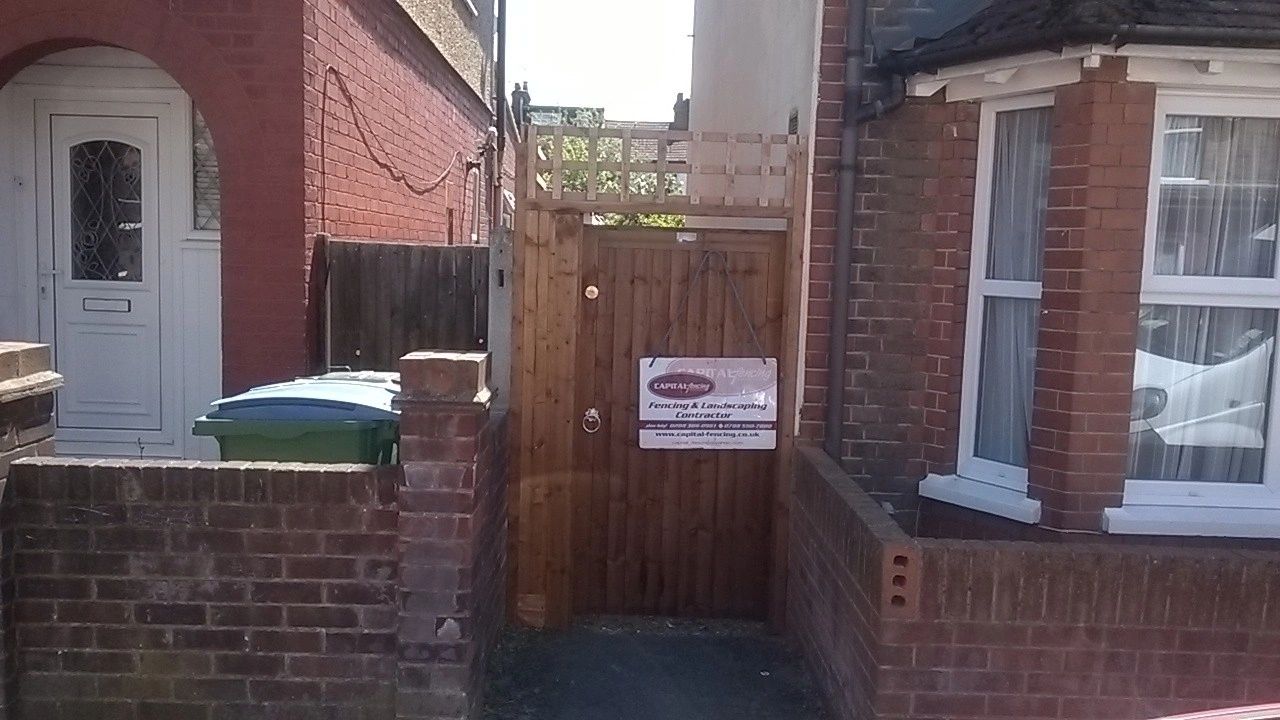
A gate on a shared access lane or a party boundary can raise the same ownership questions as a fence, and it's worth confirming responsibility with a neighbour before paying for a repair or replacement on a gate that isn't solely on your own property.
This comes up often on older estates with shared rear access lanes serving several gardens.
Specification driven by an insurer's boundary requirements
Some commercial and high-value premises have boundary security requirements set by an insurance policy — a minimum fence height, mesh type or lock standard — that the fencing spec has to meet regardless of what would otherwise be chosen.
Where a specific requirement applies, it's worth getting it in writing from the policy documents before quoting, since fitting to a general standard when a stricter one is required can leave a gap the client didn't expect.
Powder coating versus galvanising for steel security fencing
Hot-dip galvanising bonds a zinc layer to the steel that self-heals minor scratches through sacrificial corrosion, making it the more durable base finish for an exposed or coastal boundary.
Powder coating adds colour and a smoother surface but relies on the coating staying intact — galvanised-then-powder-coated steel combines both, giving corrosion protection under a decorative finish, and is the usual spec where appearance matters as much as longevity.
Post-repair maintenance intervals
A repaired section benefits from a check at roughly the same interval as the rest of the fence — typically an annual look at fixings, timber condition and any leaning — rather than being assumed sound indefinitely once fixed.
Newly fitted timber and concrete are also worth a closer check after their first full winter, since that's when a repair that wasn't quite right tends to show it.
Diagonal bracing struts on gate posts
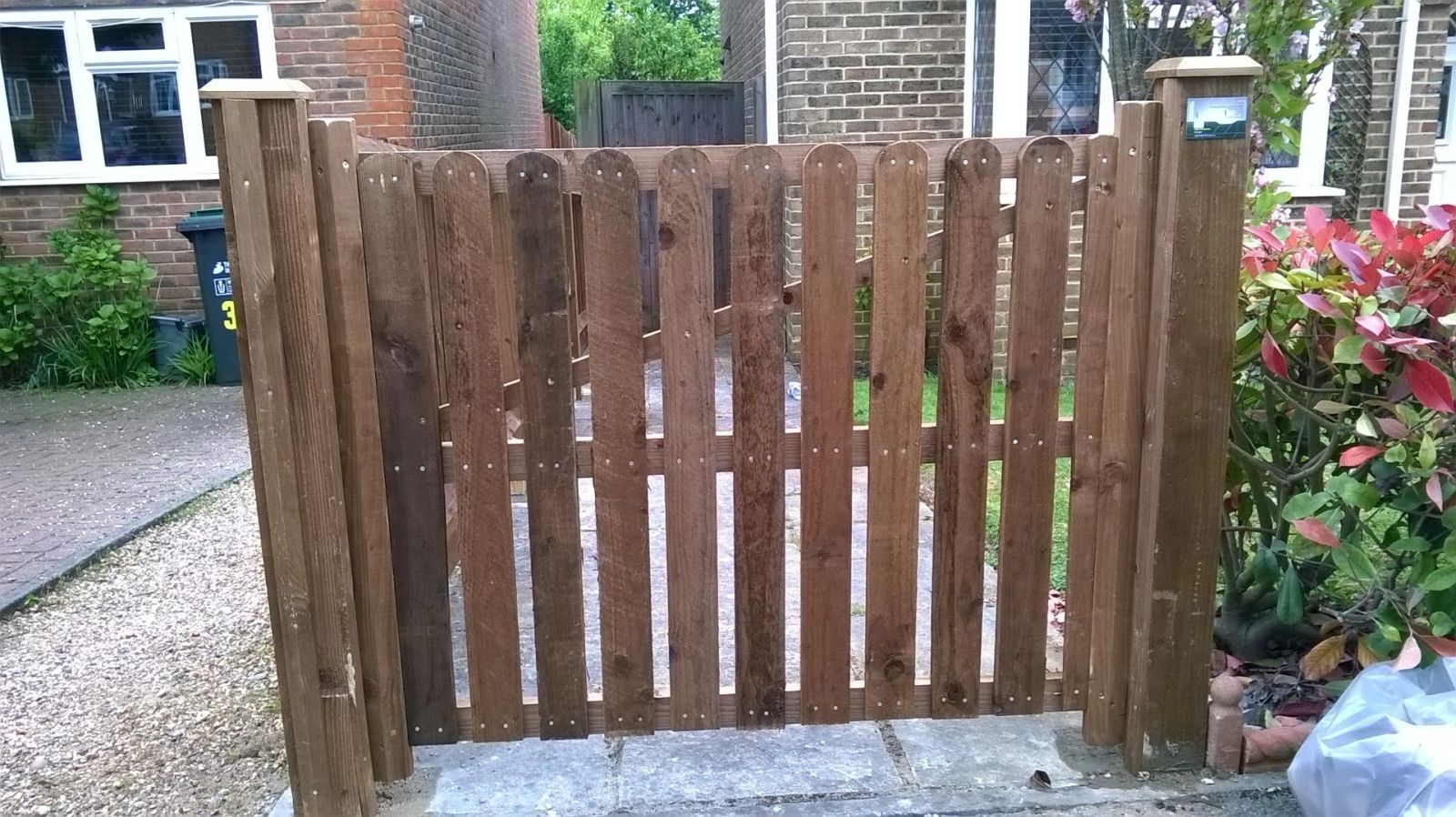
A diagonal timber or metal strut run from partway up a gate post back to a buried anchor or second post resists the twisting and leaning force a heavy gate exerts on its hinge post over time, particularly on wide or heavy gates.
Without bracing, that twisting load is carried entirely by the post's own embedment in the ground, which can gradually work the post out of true even where the concrete footing itself remains intact.
Bracing is generally specified based on gate weight and width rather than applied universally, since a light pedestrian gate rarely generates enough leverage to need it while a wide vehicle gate almost always does.
Stainless fixings near a road
Fixings on a gate close to a public road pick up more airborne grit, salt spray in winter and general moisture than one set back in a garden, which accelerates corrosion on standard galvanised screws and bolts.
Stainless steel fixings cost more but resist this environment noticeably better, and are worth specifying on any roadside gate repair.
Where neighbours disagree on sharing a repair cost
A boundary fence repair is sometimes split between neighbours by informal agreement, but there's no automatic legal requirement for a neighbour to contribute unless the deeds specifically say so, and disagreement over cost-sharing is common enough to plan for.
In practice it's simpler to quote the repair to whichever party is instructing the work and let that client resolve any cost-sharing conversation separately, rather than trying to split an invoice between two parties who haven't agreed terms.
Resin bleed from softwood
Softwoods such as pine and spruce contain resin pockets that can continue to weep sticky sap for months after installation, especially on timber that's been kiln-dried quickly or exposed to strong summer sun.
Resin bleed shows up as a darkened, tacky patch on the surface and can telegraph through paint or stain if the timber isn't left to stabilise, or if a sealer coat isn't applied over the affected area first.
It's a cosmetic issue rather than a durability one, and it typically resolves itself as the timber fully seasons, though staining over an active resin pocket without treating it first often needs redoing.
Carrying out a final walk-round check before calling a job complete
A final check along the full run — hinges swinging freely, caps seated, fixings tight, gravel boards sitting flush — catches small issues that are quick to fix on the day but awkward to revisit once tools and materials have left site.
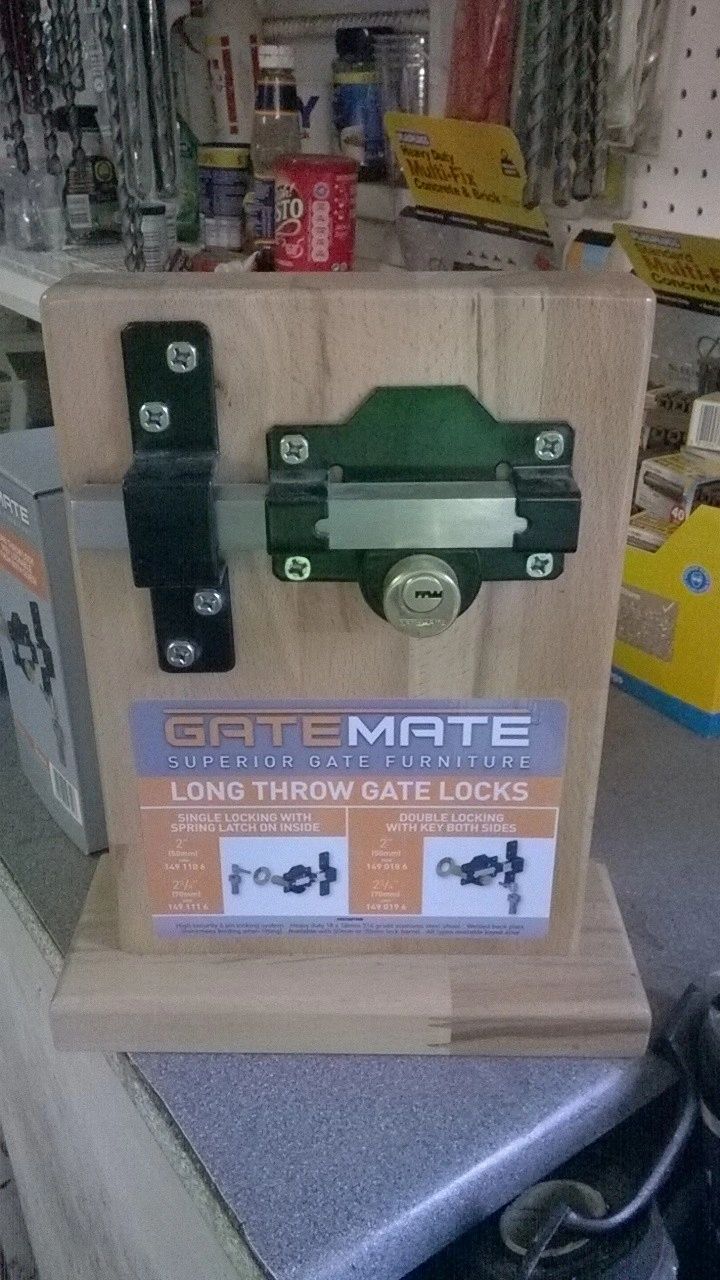
Checking gate latches and bolts actually engage properly under normal use, not just that they look fitted, avoids a callback for something that would have taken moments to adjust while still on site.
A brief look at the surrounding area — cleared spoil, protected surfaces returned to their original state, tools accounted for — is as much a part of finishing the job properly as the fence itself.
Shared private water sources crossing a boundary
Some older rural properties share a private water supply, such as a well or borehole, with pipework running across one or more boundaries under a recorded easement.
Fencing work that might disturb this kind of shared supply pipe needs particular care, since interrupting it can affect a neighbour's water supply entirely, not just a garden feature.
Checking the title for any recorded private water supply arrangement is worth doing on older rural properties before any boundary groundworks proceed.
Sequencing a multi-day install
A typical multi-day fence installation runs old fence removal and waste clearance first, then post setting with time for concrete to go off, then panels, gravel boards and capping once posts are firm enough to take a load.
Rushing panels onto posts before the concrete has cured enough — particularly in cold weather when curing slows down — is a common cause of a fence leaning within its first few weeks.
On a longer run it often makes sense to work in sections so part of the boundary is never left fully open overnight, rather than removing the entire old fence before any new posts are in.
Fastener embedment depth in timber
A fixing's holding strength in timber depends heavily on how far its threaded or ring-shanked section penetrates into the receiving timber, not just its total length, since a screw mostly passing through a thin outer board contributes little grip in that board alone.
General guidance for screwed timber connections aims for at least the full thread length engaged in the receiving member, which for a typical fencing fixing means selecting screw length based on both boards' combined thickness rather than the visible board alone.
Under-length fixings that barely reach the receiving timber are a common, easily overlooked cause of boards or rails working loose within a season, particularly where a shorter screw was substituted for convenience during fitting.
Checking the repair before signing off
Once a repair is finished we open and close the gate repeatedly to check it swings cleanly and latches first time, since a gate that only closes properly on the first attempt in calm conditions can still catch once it's windy or the ground has moved slightly.
We also check the diagonal brace, where fitted, is taking the load evenly rather than pulling to one side.
Quick-set post mix versus mixed concrete
A quick-set post concrete cures within a few hours and is convenient for a single-post repair where the fence needs to take load again quickly, but a standard mixed concrete generally gives a denser, longer-lasting footing for a larger job.
For a repair affecting several posts along a run, mixed concrete is usually the more durable choice even though it takes longer to reach working strength.
Reading a title plan's boundary responsibility marks
Land Registry title plans sometimes show a T-mark against a boundary line, indicating which owner is responsible for maintaining that section — though many properties, especially older ones, have no such marks and the deeds are simply silent.
Where marks exist they're a strong steer but not always conclusive, and where they're absent, ownership defaults to being agreed between neighbours or, in a genuine dispute, determined by a boundary surveyor.
Getting a copy of the title plan before quoting a replacement fence is a five-minute step that avoids rebuilding a boundary neither party is formally responsible for.
Dealing with a post hole that keeps collapsing in loose or sandy soil
Loose or sandy soil can slump back into a freshly dug post hole before concrete goes in, which is more of a problem on a repair — where the hole is often reopening ground already disturbed by the original failure — than on undisturbed ground.
A sleeve, shuttering, or a wider hole packed with a drier mix that doesn't rely on firm hole walls to hold its shape can get a repair post set securely even where the surrounding soil won't hold a clean-sided hole.
Rotating spike toppings as a climb deterrent
A rotating spike topping uses a free-spinning tube studded with blunt spikes along the top of a wall or fence, so that a hand or foot pressing down on it spins rather than gripping, which defeats a climbing attempt without the injury risk of a fixed razor product.
It's most often fitted to a boundary wall in a residential or light-commercial setting where a coil topping would look too industrial, and it needs periodic checking that the rotating mechanism hasn't seized with paint overspray or corrosion.
Checking post plumb tolerance after installation
A post that's slightly off plumb when first set can be adjusted while the concrete is still workable, but once cured the only fix is breaking out and resetting it, so plumb is checked with a spirit level in two directions before the pour rather than assumed from a quick visual check.
A run of posts each slightly off plumb in the same direction is usually a sign of a systematic setting-out error rather than individual mistakes, and is worth catching after the first two or three posts rather than the whole run.
Self-closing pedestrian gates
A self-closing hinge or spring closer on a pedestrian gate stops it being left open by accident, which matters on a boundary where the fence is only as secure as the gate that's routinely used.
On a school, nursery or pool boundary a self-closing, self-latching gate is often a specific requirement rather than an optional extra, and the closer needs enough force to shut fully without slamming.
Matching materials on a part-run repair
Where one or two panels need replacing, we match the existing profile and height as closely as current stock allows, and we're upfront if an older or discontinued profile can't be matched exactly rather than pretending it can.
Concrete gravel boards are often worth fitting in place of the original timber ones at repair time, since they take the brunt of ground moisture that caused the original failure.
Bottom rail profiles that trap standing water
A flat-topped bottom rail on a timber gate can hold a film of standing water after rain rather than shedding it, and this repeated wetting is a common cause of rot starting at the bottom rail well before the rest of the gate shows any deterioration.
A weathered or sloped top edge on a replacement bottom rail sheds water more effectively than a flat profile, extending the life of that component specifically.
Inspecting fixing points for early corrosion during routine maintenance
Corrosion on a galvanised security fence typically shows first at cut ends, weld points and fixing holes where the zinc coating has been broken during manufacture or installation, rather than along an untouched length of rail or mesh.
A routine inspection checks these specific points rather than relying on a general look along the fence line, since a fixing bolt corroding from the inside can look sound from the outside until it fails under load.