London & Hertfordshire Free Site Visit
bespoke wooden gate installed by Capital Fencing in Hitchin (SG4)
Hitchin · SG4 / SG5

Side Return Gates, Hitchin: match-what-you-have spec for market-town centre with Tudor and Georgian buildings

Capital Fencing installs side-return gates across Hitchin and out toward letchworth and stevenage. What separates a side-return gates job from a standard boundary is the detail: hardwood side gate between a rendered wall and a brick pier, 780mm opening, drop-bolt into a concrete slab socket. That's the work, not the marketing. Roads such as Westmill Lane and Cambridge Road are typical of the local layout. Priory Park is a useful local reference point. Hitchin's town-centre conservation area shapes a lot of frontage work — painted picket and traditional close-board only.

Capital Fencing installs side-return gates across Hitchin and out toward letchworth and stevenage. What separates a side-return gates job from a standard boundary is the detail: hardwood side gate between a rendered wall and a brick pier, 780mm opening, drop-bolt into a concrete slab socket. That's the work, not the marketing. Roads such as Westmill Lane and Cambridge Road are typical of the local layout. Priory Park is a useful local reference point. Hitchin's town-centre conservation area shapes a lot of frontage work — painted picket and traditional close-board only.

What goes wrong

Common failure modes on side-return gates

  • fitting a full-weight hardwood gate on domestic pin hinges — drops within six months
  • not shooting a drop-bolt into a concrete socket — kicked or pried open too easily
Default spec

How we build side-return gates in Hitchin

44mm framed hardwood or planed softwood, tongue-and-groove infill, adjustable ball-race hinges, closing stop and drop-bolt. On Hitchin jobs we adjust for hitchin's conservation areas mean the planning team checks anything visible from the street.

Property mix locally: market-town centre with Tudor and Georgian buildings, Victorian terraces on the Walsworth side, and 1930s semis to the west. Typical gardens: varied — small courtyards in the centre, deep rear gardens in Walsworth, sloping plots toward Walsworth Common. Postcodes we regularly service: SG4, SG5.

Why this spec, for London terraces and semis with a narrow alley between the house and the neighbouring wall

  • framed builds don't drop the way board-and-batten side gates do in year two
  • adjustable hinges handle the seasonal timber movement every London side gate experiences
  • made to the exact opening — no packing pieces, no gaps for burglars or foxes

Typical side-return gates briefs in Hitchin

  • tongue-and-groove side gate framed on adjustable ball-race hinges to cope with seasonal timber movement
  • matched pedestrian and bin-store gate serving a shared side alley between two flats

Side Return Gates FAQs — Hitchin

Can you match the gate to my existing side-return fencing?

On side-return gates jobs in Hitchin (SG4), our default answer is: 44mm framed hardwood or planed softwood, tongue-and-groove infill, adjustable ball-race hinges, closing stop and drop-bolt. The honest trade-off is fitting a full-weight hardwood gate on domestic pin hinges — drops within six months — which is exactly what our default spec designs out.

Do you handle the wall fixing on both sides?

Across Hitchin we spec around hitchin's conservation areas mean the planning team checks anything visible from the street, so on side-return gates that usually means iroko hardwood on galvanised ironmongery for 15+ year service. We'll walk you through framed builds don't drop the way board-and-batten side gates do in year two on the site visit before you commit.

How wide can a single side gate span before it needs a wheel?

North Hertfordshire District coverage means we can survey most SG4 addresses inside a week — London terraces and semis with a narrow alley between the house and the neighbouring wall. For context: adjustable hinges handle the seasonal timber movement every London side gate experiences. Measured, quoted and installed by the same small crew.

How do you stop a side gate dropping over time?

Practically: hardwood side gate between a rendered wall and a brick pier, 780mm opening, drop-bolt into a concrete slab socket. That's the Hitchin version of this job, not a generic one. For context: adjustable hinges handle the seasonal timber movement every London side gate experiences. Measured, quoted and installed by the same small crew.

Softwood or hardwood for a London side gate?

On side-return gates jobs in Hitchin (SG4), our default answer is: 44mm framed hardwood or planed softwood, tongue-and-groove infill, adjustable ball-race hinges, closing stop and drop-bolt. We'll walk you through framed builds don't drop the way board-and-batten side gates do in year two on the site visit before you commit.

Recent side return gates work
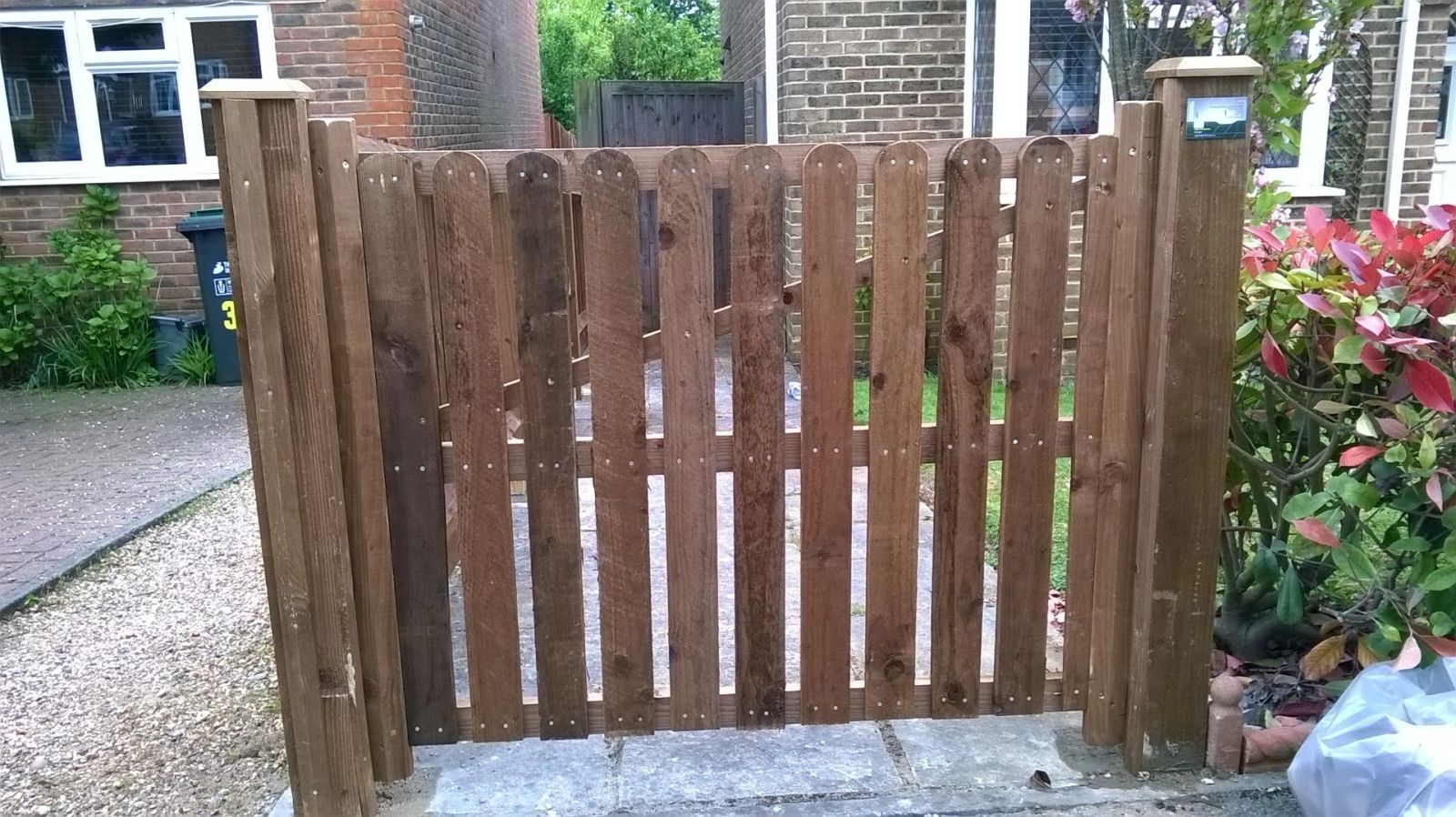
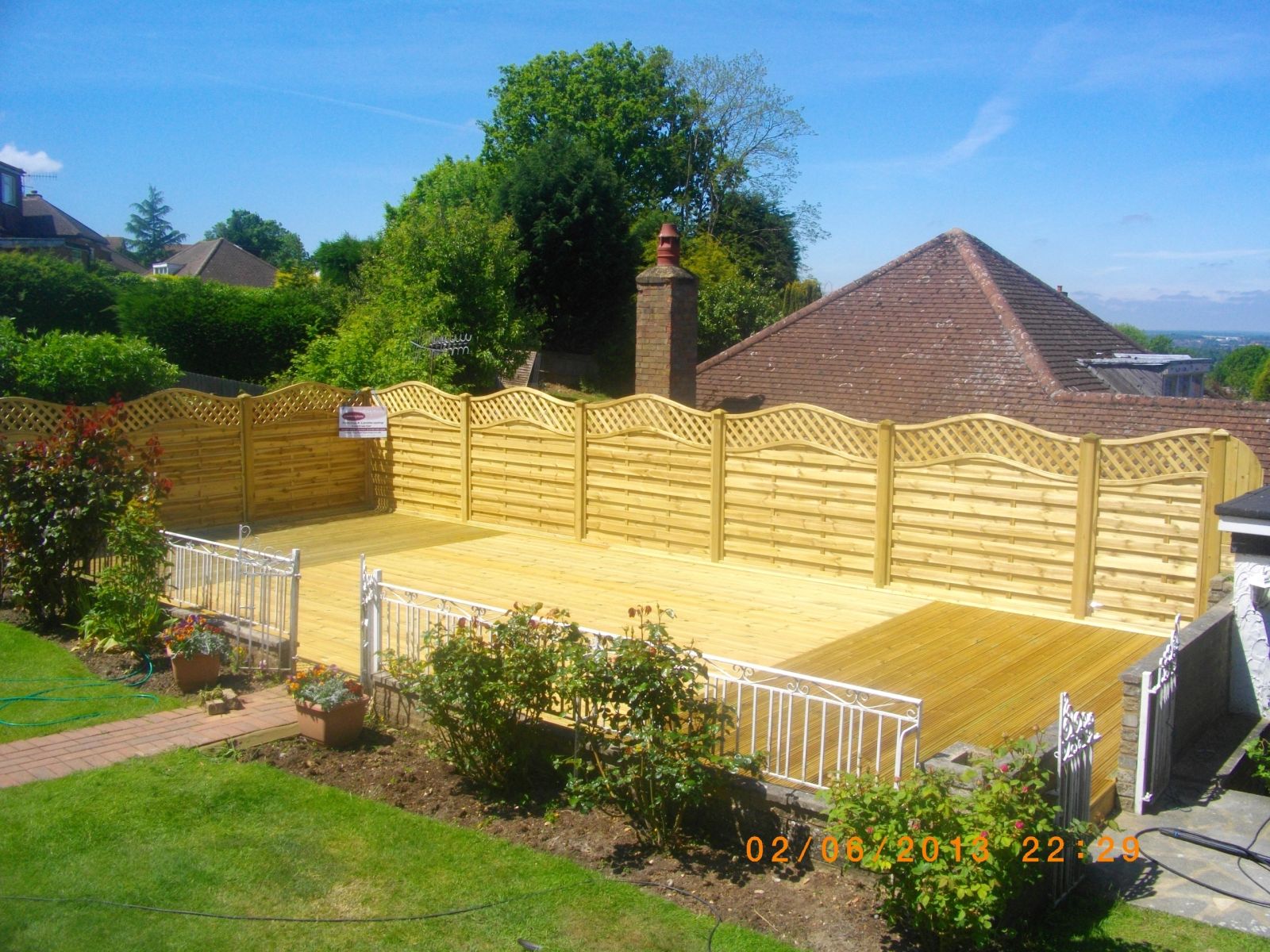
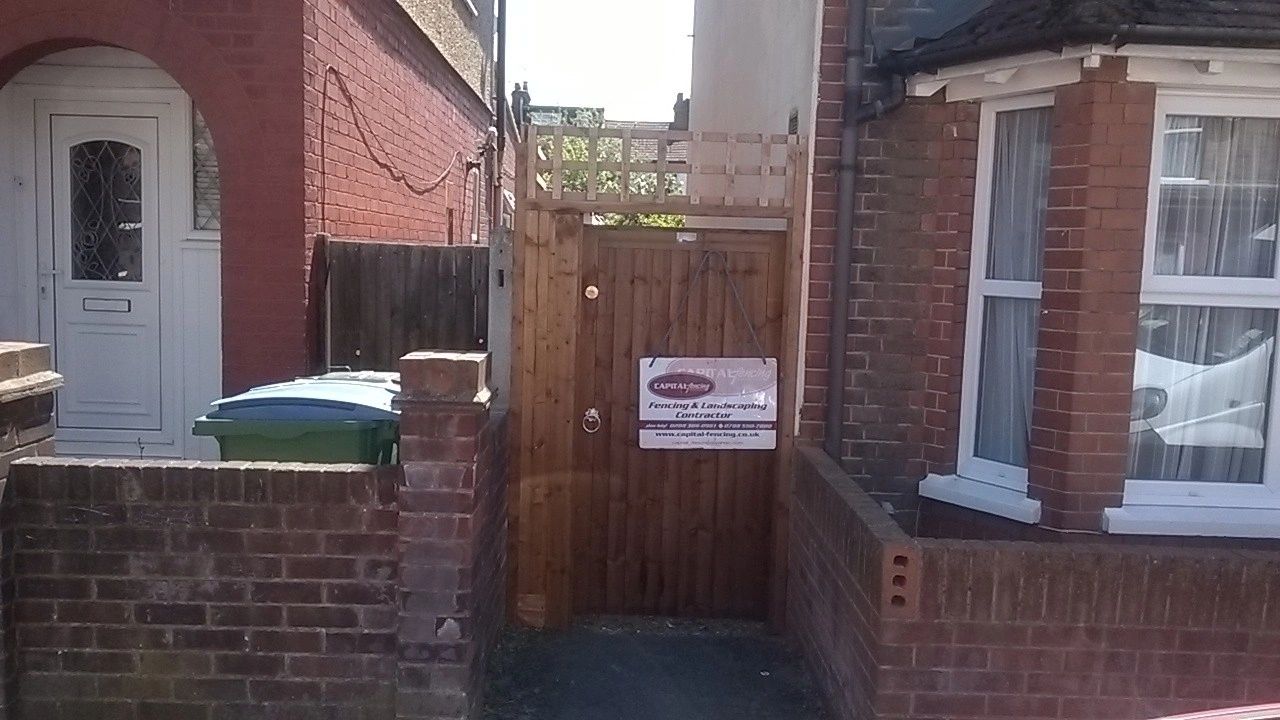
bespoke wooden gate installed by Capital Fencing in Hitchin (SG4)double driveway gates installed by Capital Fencing in Hitchin (SG4)hardwood side gate installed by Capital Fencing in Hitchin (SG4)metal entrance gate installed by Capital Fencing in Hitchin (SG4)

Side Return Gates in Hitchin: the practical detail

Access constraints on a repair job

A repair to a single post or panel deep in a rear garden with no side access still needs materials and tools carried through rather than dropped at the boundary, which is worth factoring into the timeline on a tight terraced plot.

On a multi-property repair — several gardens sharing a rear boundary — coordinating access across neighbours can be the more awkward part of the job than the repair itself.

Tree roots as a cause of fence failure

Roots growing under or against a post base can lift or crack a footing over several years, and a repair in that position sometimes needs the post offset slightly rather than reset in exactly the same spot.

Where a protected tree is involved, any groundwork near it is checked against that protection before a repair goes ahead.

Post cap material and function

A post cap's primary function is shedding rainwater away from the post's end grain, which is the most absorbent and vulnerable part of a timber post, rather than being purely decorative.

A pyramid or bevelled profile sheds water faster than a flat cap, reducing the time water sits pooled on the timber surface after rain, which matters more on a flat-topped post than people often assume.

Metal, plastic and timber caps all achieve the same water-shedding function to varying degrees, but a cracked or ill-fitting cap that lets water track down between the cap and the post can trap moisture worse than no cap at all.

Timber moisture content testing

A pin-type moisture meter measures electrical resistance between two probes pushed into the timber's surface, giving a reasonably reliable reading of moisture content near the surface but not necessarily reflecting the core of a thick section.

Fencing timber delivered at above roughly 20% moisture content is more prone to significant post-installation shrinkage and movement than timber closer to its long-term equilibrium moisture content for outdoor use.

Because timber left stacked outdoors and uncovered reabsorbs moisture from rain and humidity, a moisture reading taken on delivery can differ significantly from the same stack a fortnight later if it hasn't been kept covered.

Boundary fencing for HMOs and multi-occupancy buildings

Houses in multiple occupation often have higher footfall through shared external areas than a single-family home, which points toward more durable gate hardware and fencing specified for frequent use rather than the lighter fittings suited to a quiet family garden.

Bin and cycle storage for several households sharing one plot needs more space and more robust screening than a single-household equivalent, and is worth planning at the same time as any boundary work.

Landlords managing several such properties often prefer a single consistent spec across their portfolio, both for cost predictability and so that future repairs use readily available standard parts.

Repairing a post damaged by a worn drop bolt receiver

A drop bolt on a double gate is driven into a socket set in the ground or in an adjoining post, and repeated slamming or a poorly aligned bolt can gradually damage the timber or crack the concrete around that socket.

Repair usually involves a new or repositioned socket set into sound material rather than simply refitting the same worn receiver, since a loose socket lets the bolt rattle and wear further even after the immediate damage is patched.

Working around overhead power or telecoms lines during repair

A post repair beneath an overhead service line limits how tall equipment or extended tools can be used safely, and any post reset in that position needs the same overhead clearance considered as it would during a new installation.

Where a line runs close to the repair, checking clearance and, if needed, contacting the network operator before starting is worth doing even for what looks like a routine single-post job.

Copper-based timber preservatives

Modern timber preservatives commonly use copper compounds as the primary biocide, since copper is effective against fungal decay and is less toxicologically hazardous than the older chromated copper arsenate formulations largely phased out for domestic use.

Copper-treated timber can accelerate corrosion in fixings made from certain metals, particularly plain steel and some aluminium alloys, in a similar way to oak's tannic acid reaction, which is why treated timber often specifies compatible fixing types.

Hot-dip galvanised and stainless steel fixings both perform acceptably with copper-treated timber, whereas untreated mild steel or some aluminium fixings can corrode noticeably faster in direct, damp contact with it.

Post-mix curing times

Fast-setting post-mix concrete typically reaches a workable set within 10-30 minutes, holding a post upright without props, but its full design strength isn't reached for several days afterwards, and lateral loads applied too soon can shift the post before it's cured.

Standard site-mixed concrete cures more slowly than fast-setting post-mix but generally achieves a denser, less porous final material, which some contractors prefer for structural gate posts subject to repeated racking loads.

Cold weather slows the curing chemistry considerably in both cases, and concrete placed close to freezing can be seriously weakened if it freezes before curing, which is why exposed posts set in winter often need extra time before load is applied.

Cantilever gate counterbalance rollers

A cantilever sliding gate has no ground track and instead relies on internal rollers running along a supporting beam set into the ground either side of the opening, with a counterbalanced section extending behind the gate to carry its weight.

Because there's no track to keep clear, faults on this type are more often traced to the internal rollers or the foundation beam settling than to surface debris.

Concealed versus visible fixings on heavier gates

A heavier timber or metal gate can be hung with either visible surface-mounted hinges or concealed fixings recessed into the frame, and the concealed option gives a cleaner appearance but is harder to inspect and adjust once installed.

Choosing between the two is partly aesthetic and partly practical, since a gate that's likely to need periodic adjustment is often better served by accessible, visible hardware.

Coordinating a dropped kerb with a new vehicle security gate

A new vehicle gate needs a dropped kerb or existing crossover in the right position before it's ordered, since a gate that opens onto a kerb face rather than a level crossover will scrape or jam on every use.

Where no dropped kerb exists, this is a highway authority matter separate from the fencing work itself and needs its own approval and lead time, which is worth flagging early so the gate installation isn't delayed waiting on it.

Distinguishing checking from structural splitting

Surface checking, fine drying cracks confined to the outer face of a timber section, is cosmetic and doesn't usually run deep enough to compromise a post or rail's strength.

A structural split runs further into or along the timber, sometimes right through a section, and can significantly reduce the effective load-bearing area at that point, particularly if it passes through a fixing or joint.

The practical test is depth and location: a shallow surface check away from any fixing is rarely a concern, while any split intersecting a bolt hole, mortice or bearing point is worth assessing before continued use.

Cane bolts on double gates

A cane bolt is a long sliding bolt dropped into a separate ground socket some distance below the gate, giving more holding leverage against wind or knock than a short drop bolt on a wide double-gate leaf.

They're common on wider vehicle gates where a standard drop bolt alone doesn't give enough resistance to the leaf swinging in wind.

Concrete post reinforcement

Precast concrete fence posts are reinforced internally with steel rods or mesh running the post's length, which gives the otherwise brittle concrete the tensile strength to resist bending loads from wind pressure on the panels it holds.

The reinforcement needs adequate concrete cover on all sides to stop moisture reaching the steel and causing it to rust and expand, a process that can crack the post from the inside out over time, known as spalling.

A concrete post with reinforcement bar visible or rust-staining at the surface has usually already lost some of its cover and is worth replacing before the cracking spreads further along its length.

Locks: nightlatch, deadlock, padlock hasps

A nightlatch-style mechanism, a mortice deadlock built into the gate frame, or a simple padlock-and-hasp arrangement each offer a different balance of convenience and resistance to forcing on an outdoor gate.

A mortice lock recessed into a timber frame is more weather-protected than a surface-mounted hasp, but needs a soundly built frame section to sit in.

Lap panels versus closeboard durability

Overlap (lap) panels are factory-assembled from thin horizontal slats stapled to a light timber frame, which makes them cheap and quick to fit but noticeably shorter-lived than boarded fencing.

The thin slats and lightweight frame flex in wind and the staples pull through over a handful of seasons, especially on an exposed run, whereas closeboard's thicker feather-edge boards and nailed arris rails tolerate the same movement without failing.

Lap panels suit a budget-driven job with modest exposure; anywhere wind-loaded or expected to last well past a decade is better specified as closeboard from the outset.

Hitting shallow services and CAT scanning

Electricity, gas and water connections into a house are often shallower than people expect, sometimes under 300mm in an older garden, well within reach of a hand auger let alone a mechanical one.

A cable avoidance tool (CAT scan) before digging a new post line is standard practice near any suspected service run, and is far cheaper than the cost and risk of striking a live cable or a gas pipe.

Where a scan can't rule out a service with confidence, hand-digging trial holes to confirm depth and position before committing to auger the rest of the line is the safer approach.

Evidence photos for a repair or claim

Dated photographs of the damage taken before any clearance or repair work starts give a clearer record of the original condition than photos taken partway through the job.

Wide shots showing the whole run alongside close-ups of the specific failure point are generally more useful as a record than close-ups alone.

Post anchor sockets versus set-in posts

A bolt-down or drive-in post anchor holds a timber post entirely above ground level, isolating the post's end grain from the direct soil and moisture contact it would face if simply set into a concreted hole.

Because the post itself never touches the ground, anchor-mounted posts largely avoid the ground-line rot that's the single most common failure point for concreted posts, though the anchor and its fixings become the new focus for corrosion.

Anchors do transfer more concentrated leverage into a smaller fixing area at the base than a post set deep in concrete, so they generally need a correspondingly larger or deeper concrete footing beneath them for the same wind load.

Utility marker posts near a boundary line

Small yellow, blue or red marker posts near a boundary often indicate a buried gas, water or telecoms service running close to or along the line, placed there by the relevant utility company.

These markers are a useful early warning but aren't a precise map, so it's still worth requesting formal utility plans from the relevant providers before digging post holes nearby.

Damaging a utility service while digging can be both costly to repair and, in the case of gas or high-voltage cabling, genuinely dangerous, which is why checking first matters more than the fence design itself.

Gravel boards in timber and concrete

A gravel board sits at the base of a fence, between the ground and the lowest board or panel, taking the ground contact and splash-back so the panels above it don't have to.

A timber gravel board is cheaper and easier to cut to length but is the component most likely to need replacing within a few years, since it sits closest to damp ground; a concrete gravel board costs more up front but essentially removes that recurring repair.

Either type should sit slightly proud of finished ground level with a stone bed beneath it, rather than being buried, so water can drain away instead of sitting against the timber or panel edge.

Side Return Gates across SG4, SG5 is a regular run for us. We'll quote honestly, tell you if side-return gates isn't the right answer for your site, and book the job in within a week or two of a signed quote. measured, quoted and installed by the same small crew. Roads such as Bancroft and Bedford Road are typical of the local layout. Priory Park is a useful local reference point. Walsworth and Westmill estates on the outskirts are mostly 1960s semis with predictable plot sizes.

Get In Touch

Get My Free Quote — 24h Response

No callout fee · Free site visit · Friendly local team covering London & Hertfordshire.

Call us
07885907880
or 02036484746
Email
capital_fencing@yahoo.com
WhatsApp
Message us anytime
Area
London & Hertfordshire
Payment
Card payments accepted

Pay by debit or credit card, bank transfer or cash once the work and price are agreed. No deposit taken online.

Request a Free Quote

We'll get back to you within 24 hours.

Free Site Visit No Callout Fee
Call WhatsAppQuote