London & Hertfordshire Free Site Visit
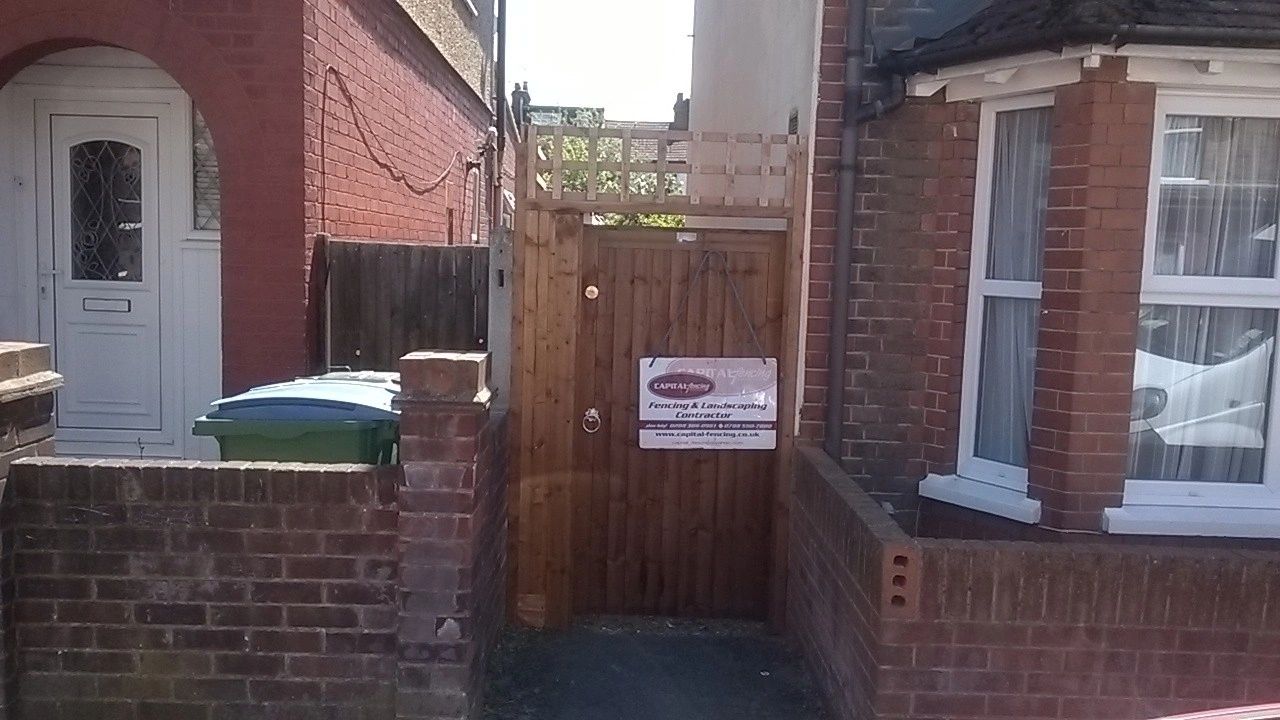
bespoke wooden gate installed by Capital Fencing in Hitchin (SG4)
Hitchin · SG4 / SG5

Driveway Double Gates in Hitchin (SG4)

We approach driveway double gates in Hitchin from the failure end backwards. Not levelling the closing point — one leaf drags on the drive within a year — that's the single most common thing we're called back to fix, and it's the first thing our spec addresses. Roads such as Westmill Lane and Highbury Road are typical of the local layout. Butts Close is a useful local reference point. North Hertfordshire District Council is the planning authority and maintains the town-centre conservation area around Bancroft and Tilehouse Street.

We approach driveway double gates in Hitchin from the failure end backwards. Not levelling the closing point — one leaf drags on the drive within a year — that's the single most common thing we're called back to fix, and it's the first thing our spec addresses. Roads such as Westmill Lane and Highbury Road are typical of the local layout. Butts Close is a useful local reference point. North Hertfordshire District Council is the planning authority and maintains the town-centre conservation area around Bancroft and Tilehouse Street.

Typical driveway double gates briefs in Hitchin

  • matched pedestrian gate alongside 3.6m double vehicle gates on a corner-plot driveway
  • 4.0m composite-faced double gates prepared for underground automation

Why this spec, for homes with off-street parking wanting matched double vehicle gates, manual or automated

  • measured on site off the actual brick piers, not a builder's plan set
  • prepared for future automation even when you're not fitting it yet — cabling ducts under the drive, hinges rated for it
  • matched pedestrian gate carried in the same visit so alignment and finish are identical
Default spec

How we build driveway double gates in Hitchin

44mm framed, tongue-and-groove or composite infill, hot-dip galvanised or stainless ironmongery, sized to the actual masonry opening not the drawing. On Hitchin jobs we adjust for hitchin's conservation areas mean the planning team checks anything visible from the street.

Property mix locally: market-town centre with Tudor and Georgian buildings, Victorian terraces on the Walsworth side, and 1930s semis to the west. Typical gardens: varied — small courtyards in the centre, deep rear gardens in Walsworth, sloping plots toward Walsworth Common. Postcodes we regularly service: SG4, SG5.

Where driveway double gates isn't the right answer

  • spans over 4m where a cantilever slider is a better answer than a two-leaf swing
  • sloping driveways where full-close geometry isn't achievable without a rising hinge system

Driveway Double Gates FAQs — Hitchin

What's the widest span before double gates need a wheel or cantilever?

On driveway double gates jobs in Hitchin (SG4), our default answer is: 44mm framed, tongue-and-groove or composite infill, hot-dip galvanised or stainless ironmongery, sized to the actual masonry opening not the drawing. The honest trade-off is not levelling the closing point — one leaf drags on the drive within a year — which is exactly what our default spec designs out.

How much clearance do you leave under a driveway gate?

Across Hitchin we spec around hitchin's conservation areas mean the planning team checks anything visible from the street, so on driveway double gates that usually means iroko hardwood on galvanised ironmongery. The honest trade-off is not levelling the closing point — one leaf drags on the drive within a year — which is exactly what our default spec designs out.

Can pedestrian and vehicle gates share the same finish and ironmongery?

North Hertfordshire District coverage means we can survey most SG4 addresses inside a week — homes with off-street parking wanting matched double vehicle gates, manual or automated. For context: prepared for future automation even when you're not fitting it yet — cabling ducts under the drive, hinges rated for it. Structural spans and post depths calculated, not guessed.

Do you fit into existing brick piers or install new?

Practically: 3.0m opening hardwood double gates on ball-race hinges with drop bolt and top slide bolt. That's the Hitchin version of this job, not a generic one. The honest trade-off is not levelling the closing point — one leaf drags on the drive within a year — which is exactly what our default spec designs out.

Can wooden driveway gates be automated later?

On driveway double gates jobs in Hitchin (SG4), our default answer is: 44mm framed, tongue-and-groove or composite infill, hot-dip galvanised or stainless ironmongery, sized to the actual masonry opening not the drawing. For context: prepared for future automation even when you're not fitting it yet — cabling ducts under the drive, hinges rated for it. Structural spans and post depths calculated, not guessed.

Recent driveway double gates work
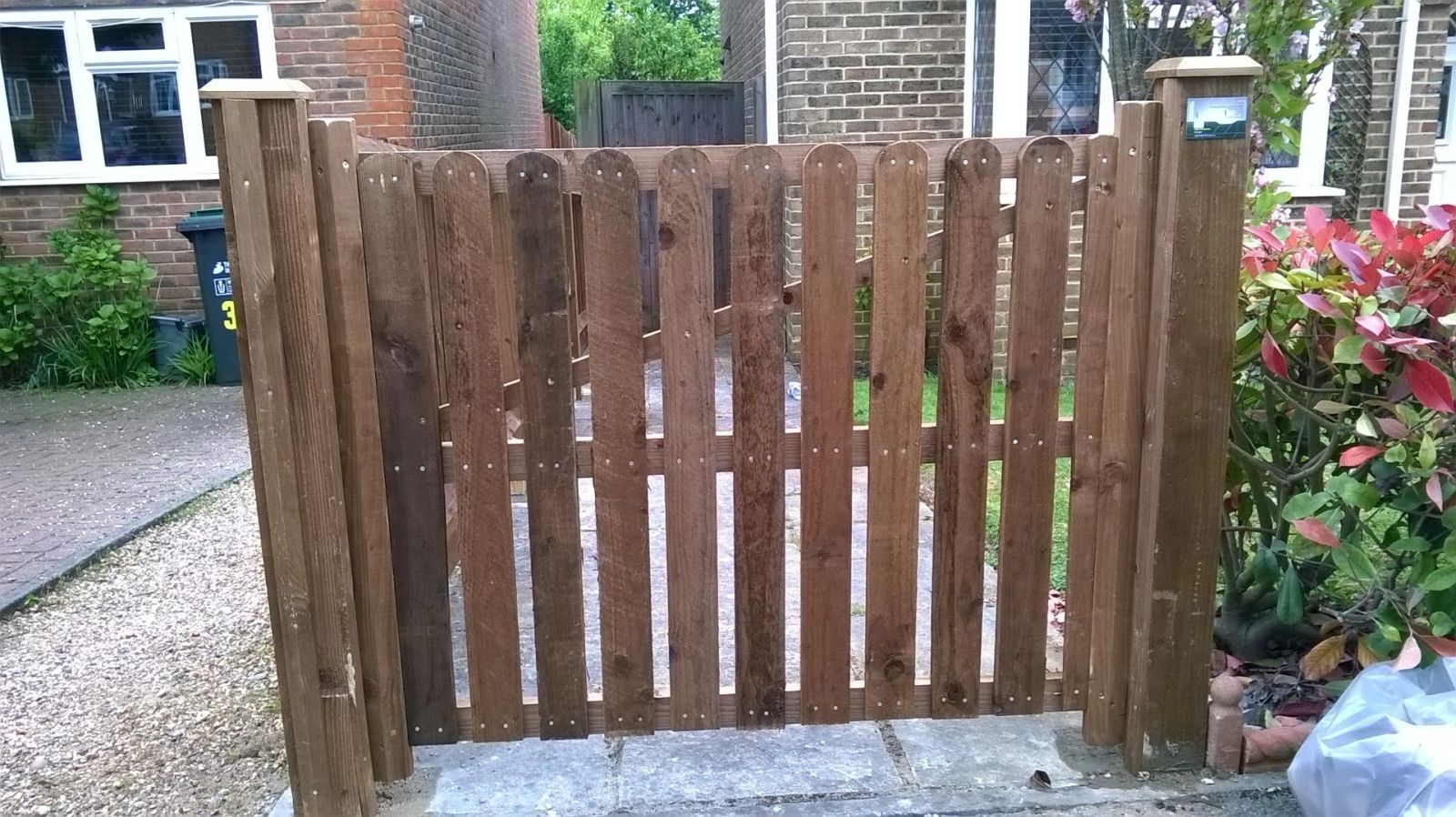
bespoke wooden gate installed by Capital Fencing in Hitchin (SG4)double driveway gates installed by Capital Fencing in Hitchin (SG4)hardwood side gate installed by Capital Fencing in Hitchin (SG4)metal entrance gate installed by Capital Fencing in Hitchin (SG4)

Local considerations across Hitchin and letchworth

Who's responsible for a shared gate

A gate on a shared access lane or a party boundary can raise the same ownership questions as a fence, and it's worth confirming responsibility with a neighbour before paying for a repair or replacement on a gate that isn't solely on your own property.

This comes up often on older estates with shared rear access lanes serving several gardens.

Trees and roots near a gate opening

Root growth near a gate post can lift the post slightly over time, which throws off the gate's swing even when the hinges and gate face are otherwise sound — we check for this before assuming the fault is purely in the ironmongery.

Where a protected tree sits close to a gate opening, any post repair nearby is checked against that protection first.

Drainage at the base of the run

Standing water at a post base is one of the fastest ways to undermine an otherwise sound fixing, whether that's a low spot that collects rainfall or a boundary that sits below the level of the garden either side.

Where drainage is poor we build in a fall away from the post or add a soakaway detail rather than setting concrete into water and hoping it clears.

Treatment class for decking joists versus visible boards

Decking joists sit closer to the ground and often in less ventilated conditions than the visible boards above them, so they generally warrant the same ground-contact-rated treatment class used for fence posts rather than the lighter treatment sometimes sufficient for above-ground fence panels.

It's a detail that's easy to overlook when the visible decking timber is specified carefully but the substructure is treated as an afterthought, even though joist failure is a structural safety issue in a way that panel weathering isn't.

Confirming the treatment class of joist timber specifically, not just assuming 'decking timber' covers the whole structure to the same standard, avoids a substructure that fails well before the visible boards show any sign of ageing.

Quiet hours and noise considerations for works

Most local authorities publish informal guidance or byelaws on acceptable working hours for noisy construction activity, often something like weekday daytime hours with reduced or no work on Sundays.

While a single day of fence post digging rarely needs a formal noise permit of the kind larger construction sites require, persistent early or late working can still attract a noise complaint under general nuisance law.

Checking the council's standard hours guidance, and simply letting immediate neighbours know when noisier work like post drilling will happen, tends to avoid most complaints before they start.

Arris rail sheared clean at the mortice joint

The morticed pocket cut into a post to take an arris rail end is a weak point in the post itself, and a rail under sustained load can shear off flush at that joint rather than splitting along its own length.

Repair options are a surface-mounted rail bracket that bypasses the damaged mortice entirely, or in more serious cases a new post section, since re-cutting a fresh mortice into an already-weakened post rarely holds long.

Marker tape and underground cable protection during fencing works

Even where a cable route has been avoided by shifting post positions, a warning marker tape laid above the cable at a shallower depth than the cable itself gives a visual and physical warning to anyone digging near the line in future.

This is a low-cost addition worth doing whenever a post line runs close to a known service, since a fence contractor working carefully today doesn't guarantee the same care from whoever digs near that boundary years later.

Fence panels built around a recessed bin store

A bin store built into or against a fence line needs its own ventilation gaps, since enclosed bin storage without airflow concentrates moisture and odour against the adjoining fence panels far more than open storage would.

The panel section forming the back or side of a bin store also takes more direct contact wear — bins being wheeled in and out, lids catching the timber — than the rest of the run, so a slightly more robust board or a protective kick panel at the contact height extends its life.

These wear patterns are worth designing for at the outset rather than treating the bin store section as identical to the rest of the boundary run.

Cill board water-shedding function

A cill or capping rail fitted along the top of a panel fence sheds rainwater clear of the panel's top edge, in the same way a window cill sheds water clear of a wall, reducing the time the top edge of boards stays saturated.

Without a cill, the end grain along the top of vertical boards absorbs water directly and repeatedly, which is a common cause of premature rot starting specifically at the top of a panel rather than the base.

A cill with a slight forward overhang and a drip groove on its underside sheds water further clear of the face below it than a flush-fitted cill, reducing streak staining on the boards beneath.

Knot loosening in structural timber

Knots are the base of a branch embedded in the trunk, and as timber dries the knot itself shrinks less than the surrounding wood, which can leave it loose or eventually cause it to drop out and leave a hole.

A live knot, still bonded to the surrounding fibres, is far less of a concern than a dead knot with a dark ring around it, which indicates the branch had already died before the tree grew over it and bonds poorly.

On load-bearing sections like arris rails, a cluster of large or dead knots near a fixing point is worth avoiding, since it reduces the effective cross-section carrying the load at that point.

Repairing post damage caused by an added light fitting or wiring

A post drilled to carry a solar light, festoon wiring or a mounted fitting has extra penetration points that can let water into the timber, accelerating rot at a spot that wouldn't otherwise be a weak point on that post.

Repair means addressing both the rot and, ideally, resealing or relocating the fitting so the same penetration doesn't cause the same damage again once the post section has been renewed.

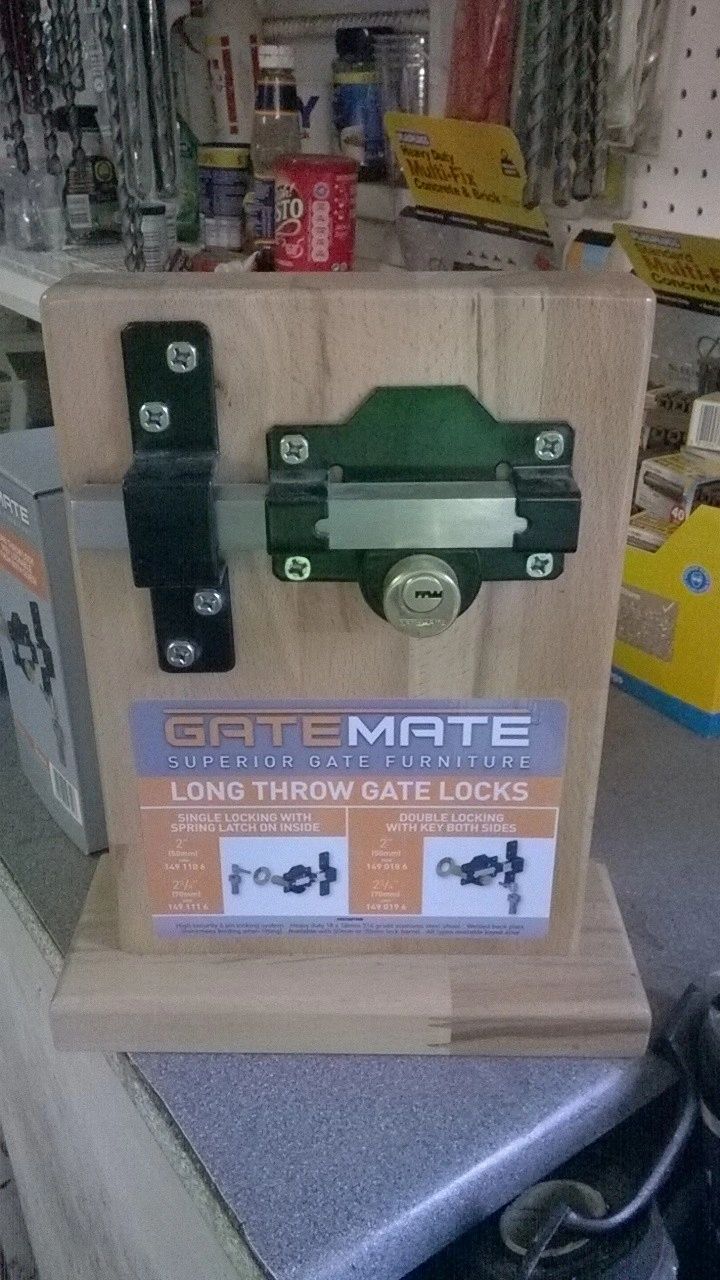
Key-alike locking across multiple gates

Where a property has several gates, key-alike cylinders let one key operate all of them instead of carrying a separate key for each, which is a straightforward upgrade at the point locks are being replaced anyway.

This needs cylinders sourced as a matched set from the outset rather than retrofitted individually afterwards.

Laminated engineered timber posts

Laminated posts are built up from several thinner timber sections glued face to face under pressure, which can even out natural defects like knots across the section and produce a straighter, more dimensionally stable post than a single sawn piece of the same size.

Because the lamination process distributes any given defect across a smaller proportion of the overall section, a laminated post is generally less likely to fail suddenly at a single knot or grain irregularity than solid sawn timber.

The adhesive bond line itself becomes a potential weak point if it's exposed to sustained moisture without an appropriate exterior-rated glue, so laminated posts intended for outdoor use need adhesives specifically rated for damp exposure rather than interior-grade bonding.

Checking for secondary damage after a fence has fallen flat

Once a section of fence has actually fallen rather than just leaning, it's worth checking what it fell onto or against — a shed, a parked car, planting — since secondary damage from the fall is sometimes the more significant repair cost.

The fallen section itself also needs assessing for whether any timber is still reusable, since a fall can snap fixings without necessarily destroying the panel or boards, which affects how much of the repair is replacement versus refitting.

Safety edges and force limits on automated gates

Automated gates are expected to operate within recognised safety standards covering force limits and trapping-point protection, generally addressed through pressure-sensitive edges, photocells or a torque-limited motor rather than relying on the gate design alone.

This is specialist automation-engineer territory; on the gate itself, we make sure there are no obvious additional trapping points created by the leaf design before automation is fitted.

Repairing a fence near a tree protected by a Tree Preservation Order

Digging a new post hole or footing close to a protected tree's root zone can be restricted even where the fence itself needs no permission, since the restriction is about protecting the tree's roots rather than the fence.

Where root heave from a nearby tree has caused the damage being repaired, it's worth checking whether the tree is protected before digging anywhere near it, since hand-digging around roots or repositioning the post slightly may be required instead of a standard footing.

How ground type affects a repair

Clay ground that's shifted with the seasons is a common underlying cause of a post working loose even where storm damage gets the blame, so a repair on clay sometimes needs a deeper reset than the original installation used.

Where ground has settled unevenly across a run, we check whether that settlement is still ongoing before repairing, since fixing into ground that's still moving risks the same failure recurring.

Wire-mesh and chain-link repairs

A localised tear or sag in chain-link or wire mesh can usually be patched by re-tensioning the line wire and re-clipping the mesh, rather than replacing the whole run, provided the posts and straining wire are sound.

Where corrosion has spread along the mesh rather than staying localised, patching becomes false economy and a full re-mesh of that bay is the more durable option.

Capping profile and how it sheds versus holds water

A flat-topped capping board holds a thin film of water after rain for longer than a capping profile with a rounded or angled top designed specifically to shed water to one side.

This difference seems minor but compounds over years, since the flat profile spends far more cumulative hours saturated, accelerating both rot and the lichen and algae growth that thrive on damp horizontal surfaces.

Choosing a weathered or torus capping profile over a plain flat board is a small upfront cost that measurably extends the component's realistic service life.

Maintaining ground sockets for gate drop bolts

A drop bolt socket set into the ground or a hardstanding surface collects grit, leaves and standing water over time, and a socket that isn't kept clear will stop the bolt seating fully, leaving a gate leaf that looks locked but isn't actually secured at that point.

Clearing and lightly lubricating the socket as part of routine maintenance is a small task that prevents a far more disruptive failure where a socket has to be dug out and reset after becoming completely blocked.

Coordinating fencing work with other trades on a shared site

On a job where fencing follows landscaping, paving or groundworks by another trade, confirming final levels and boundary positions with that other trade before digging starts avoids fence posts being set to a level that then changes once the remaining groundwork is finished.

Where fencing is scheduled before paving, agreeing which side of the post line the paving will finish against prevents a post ending up embedded in what should have been a clear paving joint.

Simple sequencing conversations at the outset, rather than each trade working to its own assumptions, avoid the more expensive alternative of one trade's finished work being disturbed by the next.

Matching a railing gate to adjacent railings

A gate set into a run of metal railings needs its bar spacing, finial style and rail heights to match the railings either side, otherwise the opening reads as an obvious later addition rather than part of the original run.

Repro railing gate sections are available in standard spacings, but an older or bespoke railing run sometimes needs a gate made to match rather than bought off the shelf.

Homes with off-street parking wanting matched double vehicle gates, manual or automated — that's who this page is for. In Hitchin and out to North Hertfordshire District, we run the driveway double gates spec that survives hitchin's conservation areas mean the planning team checks anything visible from the street. Roads such as Bancroft and Cambridge Road are typical of the local layout. Priory Park is a useful local reference point. The town sits in a chalk valley with the River Hiz running through the centre, so the streets nearest the water lie lower than Windmill Hill behind them.

Get In Touch

Get My Free Quote — 24h Response

No callout fee · Free site visit · Friendly local team covering London & Hertfordshire.

Call us
07885907880
or 02036484746
Email
capital_fencing@yahoo.com
WhatsApp
Message us anytime
Area
London & Hertfordshire
Payment
Card payments accepted

Pay by debit or credit card, bank transfer or cash once the work and price are agreed. No deposit taken online.

Request a Free Quote

We'll get back to you within 24 hours.

Free Site Visit No Callout Fee
Call WhatsAppQuote