Post fixing for a security-rated boundary
A security fence lives or dies on the post fixing, not the panel — a run that can be rocked loose at the base gives an intruder a lever the panel design can't fix. We set posts into concrete to a depth that matches the height and loading of the run, not a single stock depth for every job.
Where ground is soft or made-up, post spacing is tightened rather than left at a standard interval, because a wider gap between fixings is exactly the weak point a determined push targets first.
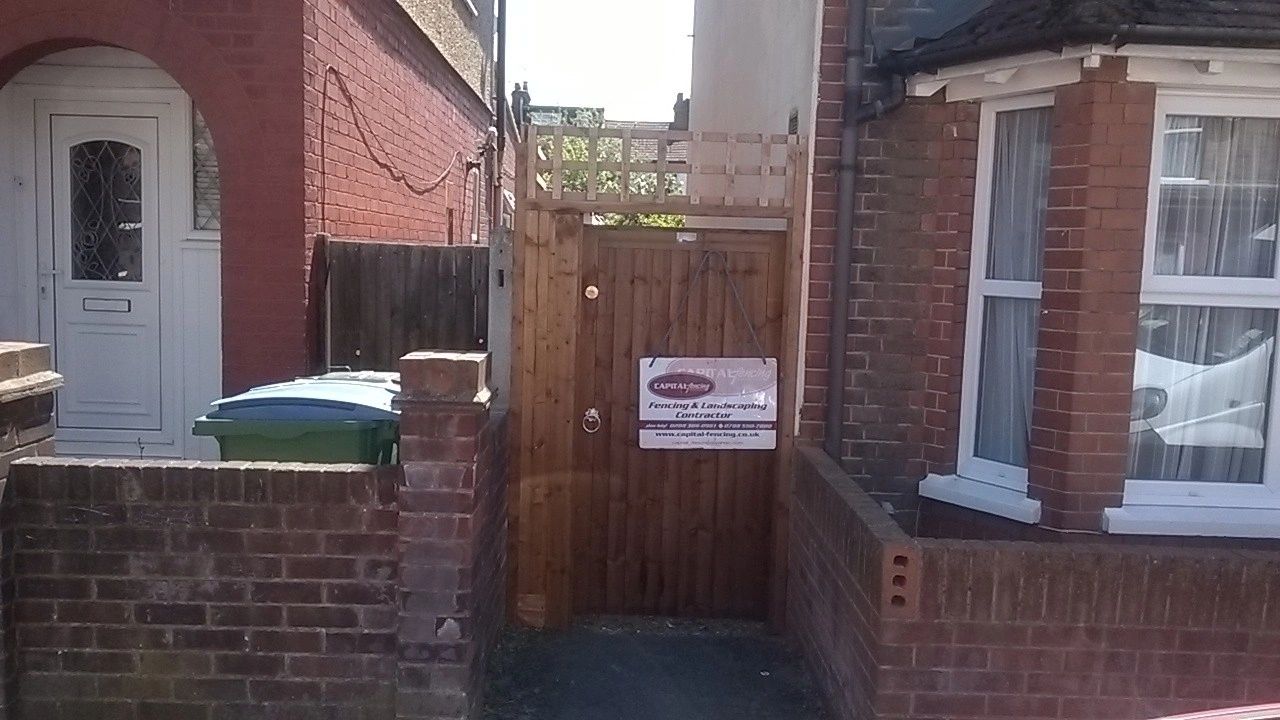
Securing a rear alley boundary behind terraced housing
A rear alley boundary sees different pressure to a front garden fence, because it's typically unwatched, runs the full length of several properties, and is the route used to approach a back door or shed unseen from the street.
Consistent height and topping along the whole alley matters more here than on an individual plot, since a single weaker section among several stronger ones simply redirects the attempt rather than stopping it.
Drainage at the base of the run
Standing water at a post base is one of the fastest ways to undermine an otherwise sound fixing, whether that's a low spot that collects rainfall or a boundary that sits below the level of the garden either side.
Where drainage is poor we build in a fall away from the post or add a soakaway detail rather than setting concrete into water and hoping it clears.
Spoil volume and removal
Digging a full run of post holes generates more spoil than most clients expect, particularly on clay where the dug material swells in volume compared with its compacted state in the ground.
Spoil that can't be spread thinly elsewhere on the plot without smothering lawn or borders usually needs skip or licensed grab-lorry removal, which should be agreed and costed before the dig starts rather than after a pile has built up on the lawn.
Heavy clay spoil left on grass for more than a day or two will usually kill it, so covering or removing arisings promptly matters if the lawn is staying.
Frost heave in shallow footings
A post base set too shallow, or poured in ground that later saturates, can be lifted slightly by frost heave as ice forms and expands beneath it, then settles unevenly once it thaws.
This is most noticeable on posts set less than the recommended depth for their height, where the concrete base itself sits within the top layer of ground most affected by winter freezing.
Once a post has heaved even a few millimetres out of true, the movement tends to repeat each winter, which is why it is worth digging to the depth appropriate for the post height rather than the minimum that will stand up in summer.
Letterplates fitted into gate doors
A letterplate is occasionally fitted into a solid garden or side gate door serving as a secondary entrance, and its position needs to clear internal ledges, braces or a deadlock case before cutting the opening.
Weather sealing around a letterplate in an exterior gate door matters more than on a covered porch door, since the opening faces the weather directly with no canopy above it.
Windbreak netting as an interim exposure measure
On a newly exposed plot, such as after a neighbouring hedge or building is removed, temporary windbreak netting fixed to the existing fence can reduce load on the structure while a longer-term solution like replanting or upgrading the fence itself is arranged.
This is a genuinely useful stop-gap rather than a permanent fix, since netting left up long-term degrades in UV and adds its own wind resistance once it starts to fray and catch more air than when new.
It buys time to plan a proper specification change rather than leaving a suddenly-exposed fence to fail before a permanent upgrade can be arranged.
Checking wall coping condition before fixing into it
Coping stones or brick-on-edge capping along the top of a garden wall are often loosely bedded rather than solidly fixed, so drilling or clamping a fence post bracket into coping without checking it first can dislodge the coping itself.
A quick check by hand-pressure on each coping unit along the intended fixing line identifies any that are already loose, which is worth doing before committing to that wall as a fixing point at all.
Where coping is sound, spreading the fixing load across a bracket plate rather than a single point fixing reduces the chance of cracking the coping under wind load on the panels above.
Checking joist bearing sits level across uneven support pads
Deck support posts or pads set at even so-slightly different heights throw the whole joist run out of level, which shows on the finished deck as a barely perceptible but persistent lean across its width.
Checking each support with a long level laid across several posts at once, rather than checking each post in isolation, catches a gradual drift in height across the run that individual checks would miss.
Packing shims under a joist to correct a low support point is an acceptable fix for a small discrepancy, but it isn't a substitute for getting the support posts themselves right in the first place on a new build.
Slamming post and gate stops
The slamming post on the latch side takes a repeated impact load every time the gate closes, and a stop fitted to it prevents the gate over-swinging past its closed position and straining the hinges on the return.
A missing or worn stop is a common, low-cost cause of a gate that gradually racks out of square from repeated over-travel.
Helical pile foundations for a commercial security run
A helical pile is screwed into the ground using hydraulic or mechanical torque rather than being set in an excavated and concreted hole, giving a foundation that can be installed quickly on a site where digging is disruptive or where ground conditions are variable along the run.
Load capacity is checked by torque readings taken during installation rather than assumed from a standard depth, which makes helical piling useful on a site where soil type changes noticeably across the length of the boundary.
Snagging checklist items on a completed security run
A snagging check on a finished security boundary covers gate alignment and latch engagement, gap sizes at ground level and junctions, fixing torque on any tamper-proof bolts, and that capping or gravel boards sit flush along the whole run.
Any item that's marginal on day one — a slightly sticking latch, a small ground gap — is worth fixing immediately rather than left as a wear item, since these are exactly the points a determined attempt will test first.
Overhanging branches and the right to prune
A landowner has the right to cut back branches or roots that cross the boundary from a neighbour's tree, up to the boundary line, without needing the tree owner's permission, but the cut material technically remains the tree owner's property and should be offered back.
That right doesn't extend to entering the neighbour's land to do the work without consent, and it's overridden where the tree is protected by a Tree Preservation Order or sits within a conservation area, in which case council notice is needed first.
Cutting back further than necessary to clear the boundary, or in a way that damages the tree's health, can itself expose the pruning party to a claim, so proportionate, boundary-line-only cutting is the safer approach.
Keep wear from repeated latch impact
A keep takes the direct impact of the latch bar every time the gate closes, and over years of use the keep's opening can wear wider than the bar, letting the latch rattle loose even when the latch mechanism itself is fine.
Replacing a worn keep is usually far cheaper than replacing the latch it serves, so it's worth checking the keep first on an older gate with a loose-feeling latch.
Boundary rules in National Parks and AONBs
Properties within a National Park or an Area of Outstanding Natural Beauty can have reduced permitted development rights for boundary structures, reflecting the additional planning protection these areas carry.
Material and colour choices are often more tightly guided in these areas too, even where the height itself would otherwise be permitted.
The relevant National Park authority or council planning department is the right first point of contact for confirming what applies before ordering materials.
Deck board gapping to allow seasonal movement
Timber deck boards expand slightly when they absorb moisture and contract as they dry, so boards laid without a small gap between them can cup, bow or push against each other as conditions change through the year.
The correct gap depends on the moisture content of the timber at the time of laying — kiln-dried boards laid tight in winter may need a slightly wider gap than the same boards laid already at a higher moisture content in summer.
Composite boards move with temperature rather than moisture and have their own manufacturer-specified gap and expansion allowance, particularly at butt joints and against fixed edging.
Concealed versus visible fixings on heavier gates
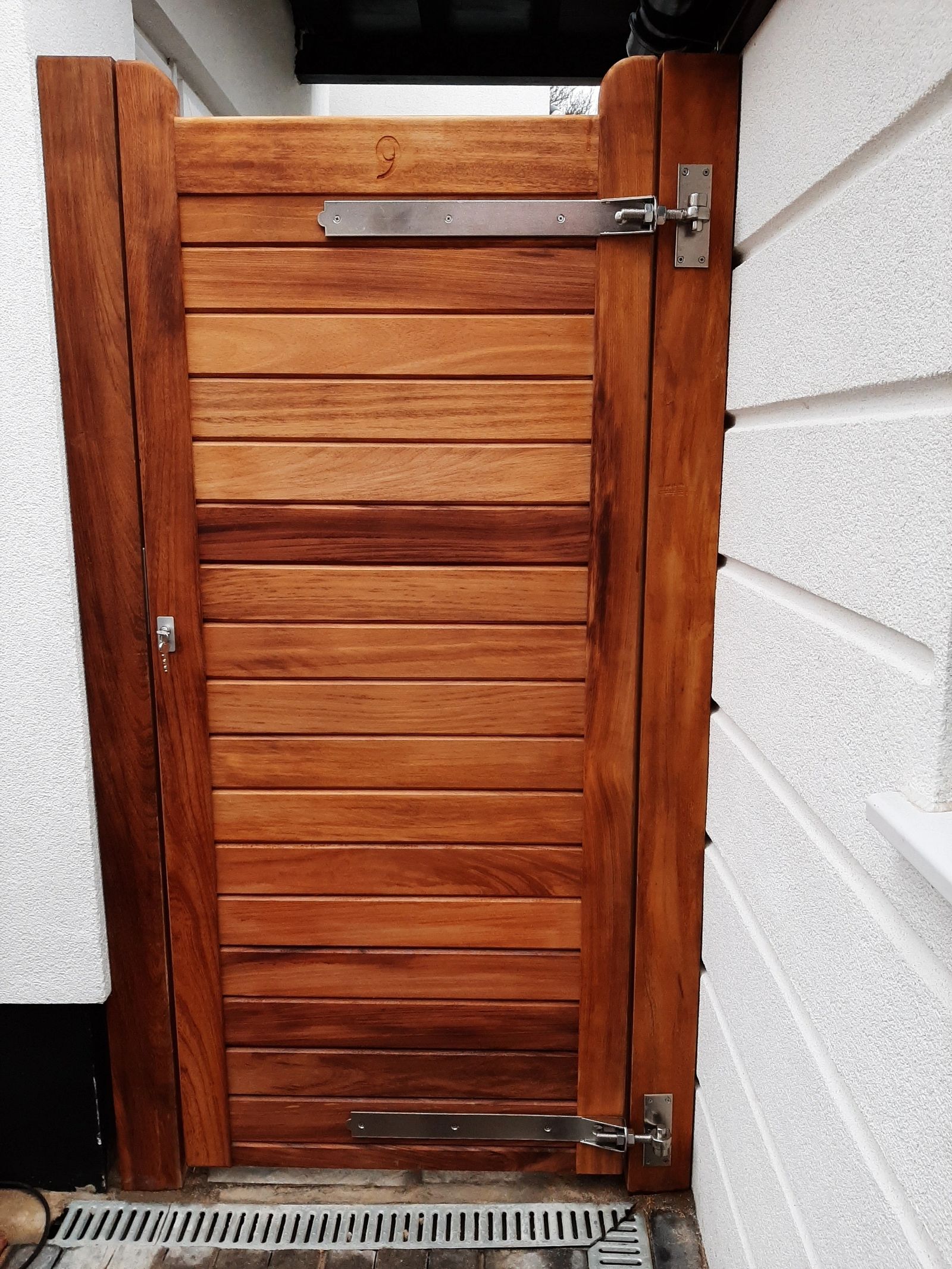
A heavier timber or metal gate can be hung with either visible surface-mounted hinges or concealed fixings recessed into the frame, and the concealed option gives a cleaner appearance but is harder to inspect and adjust once installed.
Choosing between the two is partly aesthetic and partly practical, since a gate that's likely to need periodic adjustment is often better served by accessible, visible hardware.
Fitting post caps correctly to shed water
A post cap that doesn't fully overhang the post's top edge on all sides leaves a lip where water can track back under the cap and sit on the end grain, defeating much of its purpose.
Pyramid or weathered profile caps shed water faster than a flat cap, which matters more on an exposed post than a sheltered one, though either performs better than no cap at all on a cut post top.
Caps fixed with a single central nail can work loose and rock in wind, letting water in at the edges; a bead of exterior adhesive under the cap in addition to fixings gives a more weathertight result.
Mesh apertures and wire gauge
A mesh fence's aperture, the size of each gap between wires, and its wire gauge, the wire's diameter, together determine how much it restricts sightlines, resists intrusion and how heavy the finished panel is.
A smaller aperture with a heavier gauge wire gives better security and a more solid appearance, but adds weight and wind load that the supporting posts and foundations need to be sized for.
Wire gauge is often expressed in millimetres in current UK specifications rather than the older imperial standard wire gauge numbers, and mixing the two systems when comparing products can lead to ordering the wrong strength mesh.
Line wire spacing on a chain-link run
Chain-link relies on horizontal line wires threaded through the mesh at intervals to stop it sagging or being pushed out of shape between posts; wider spacing saves wire but lets the mesh bow more under a leaning load.
A security-rated chain-link run typically tightens this spacing compared with a low-cost agricultural install, along with a straining wire top and bottom rather than just one line.
Run-off from a neighbour's hardstanding
A neighbouring driveway, patio or other hard surface that slopes toward a shared boundary sends its rainfall run-off directly onto the adjoining plot rather than allowing it to soak away locally, and that concentrated flow is often worse than ordinary rainfall on open ground.
A fence sitting in the path of that run-off can see its base saturated far more often than the rest of the same run, shortening the life of posts and gravel boards at that point specifically.
Where this is a known issue, a shallow channel or permeable strip along the fence line intercepts the flow before it reaches the timber, rather than leaving the fence itself to act as the only barrier.
New-build boundary snagging
Developer-installed boundary fencing on new-build estates is sometimes built to a minimum standard rather than the long-term spec an owner might choose themselves, and can show its first faults — sagging gates, shallow-set posts — within the first couple of years.
Where a fence is still within the developer's defects period, it's worth raising problems through that route before commissioning separate replacement work.
Once outside the defects period, upgrading a builder-grade boundary to a more durable spec is one of the more common jobs we see on estates a few years old.