London & Hertfordshire Free Site Visit
bespoke wooden gate installed by Capital Fencing in Potters Bar (EN6)
Potters Bar · EN6

Security & Access Gates in Potters Bar (EN6)

Security & Access Gates in Potters Bar is a specific brief for us — residential and small-commercial clients wanting secure access — anti-lift hinges, deadlocking, prep for entry systems. The default local answer isn't a stock catalogue drop: it's steel or hardwood framed, anti-lift ball-race hinges, deadlocking hardware, cabling duct pre-run to the intercom position. On Potters Bar sites we also spec around many gardens border the green belt — the brief usually needs sturdy stock-proof boundary work, which is where a lot of security access gates jobs quietly fail two years in. Roads such as Mimms Hall Road and The Walk are typical of the local layout. Potters Bar station is a useful local reference point. The town's housing is predominantly inter-war semi-detached, built as the area developed following the arrival of the railway.

Security & Access Gates in Potters Bar is a specific brief for us — residential and small-commercial clients wanting secure access — anti-lift hinges, deadlocking, prep for entry systems. The default local answer isn't a stock catalogue drop: it's steel or hardwood framed, anti-lift ball-race hinges, deadlocking hardware, cabling duct pre-run to the intercom position. On Potters Bar sites we also spec around many gardens border the green belt — the brief usually needs sturdy stock-proof boundary work, which is where a lot of security access gates jobs quietly fail two years in. Roads such as Mimms Hall Road and The Walk are typical of the local layout. Potters Bar station is a useful local reference point. The town's housing is predominantly inter-war semi-detached, built as the area developed following the arrival of the railway.

Typical security access gates briefs in Potters Bar

  • matched pedestrian and vehicle gates cabled for GSM intercom and keypad entry
  • hardwood driveway gates with anti-lift hinges, key-lockable drop bolt and prep for intercom cabling
Default spec

How we build security access gates in Potters Bar

steel or hardwood framed, anti-lift ball-race hinges, deadlocking hardware, cabling duct pre-run to the intercom position. On Potters Bar jobs we adjust for many gardens border the green belt — the brief usually needs sturdy stock-proof boundary work.

Property mix locally: 1930s semis, post-war detached homes around Cranborne Road, and infill developments near Little Heath. Typical gardens: generous rear gardens — often deep enough for decking plus a separate utility area. Postcodes we regularly service: EN6.

Why this spec, for residential and small-commercial clients wanting secure access — anti-lift hinges, deadlocking, prep for entry systems

  • anti-lift hinge geometry as standard — a swing gate should not lift off the pins
  • prep work done for automation and access control even when it's phased for later
  • we co-ordinate with the intercom, mag-lock or GSM installer so cabling routes are right first time
What goes wrong

Common failure modes on security access gates

  • domestic hinges on a security gate — trivially lifted off
  • no separate escape release on a mag-locked pedestrian gate — building-control issue on an occupied premises

Security & Access Gates FAQs — Potters Bar

What lock hardware do you use as standard?

On security access gates jobs in Potters Bar (EN6), our default answer is: steel or hardwood framed, anti-lift ball-race hinges, deadlocking hardware, cabling duct pre-run to the intercom position. We'll walk you through anti-lift hinge geometry as standard — a swing gate should not lift off the pins on the site visit before you commit.

How do you handle escape release on a mag-locked gate?

Across Potters Bar we spec around many gardens border the green belt — the brief usually needs sturdy stock-proof boundary work, so on security access gates that usually means hardwood on galvanised anti-lift hinges. We'll walk you through anti-lift hinge geometry as standard — a swing gate should not lift off the pins on the site visit before you commit.

Do you prep for future automation without installing it now?

Hertsmere Borough coverage means we can survey most EN6 addresses inside a week — residential and small-commercial clients wanting secure access — anti-lift hinges, deadlocking, prep for entry systems. The honest trade-off is domestic hinges on a security gate — trivially lifted off — which is exactly what our default spec designs out.

Can you fit anti-lift hinges on a wooden gate?

Practically: hardwood driveway gates with anti-lift hinges, key-lockable drop bolt and prep for intercom cabling. That's the Potters Bar version of this job, not a generic one. We'll walk you through anti-lift hinge geometry as standard — a swing gate should not lift off the pins on the site visit before you commit.

Are hardwood gates as secure as steel?

On security access gates jobs in Potters Bar (EN6), our default answer is: steel or hardwood framed, anti-lift ball-race hinges, deadlocking hardware, cabling duct pre-run to the intercom position. We'll walk you through anti-lift hinge geometry as standard — a swing gate should not lift off the pins on the site visit before you commit.

Recent security & access gates work
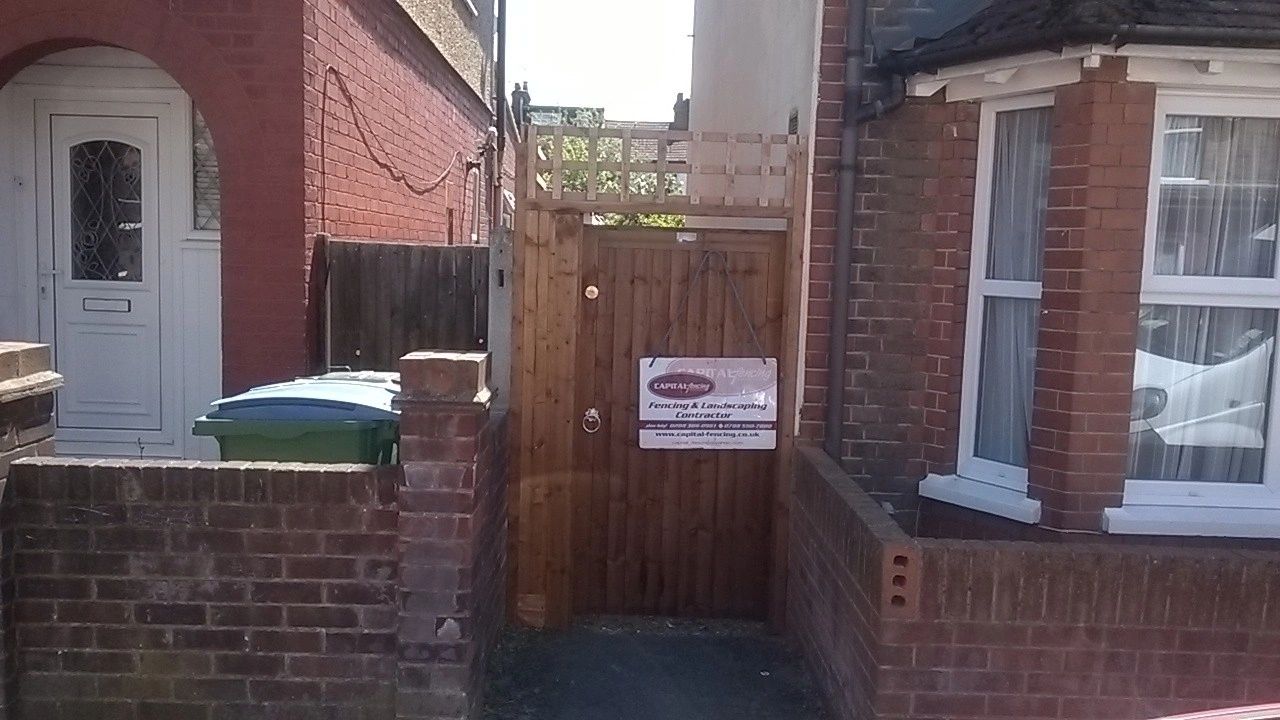
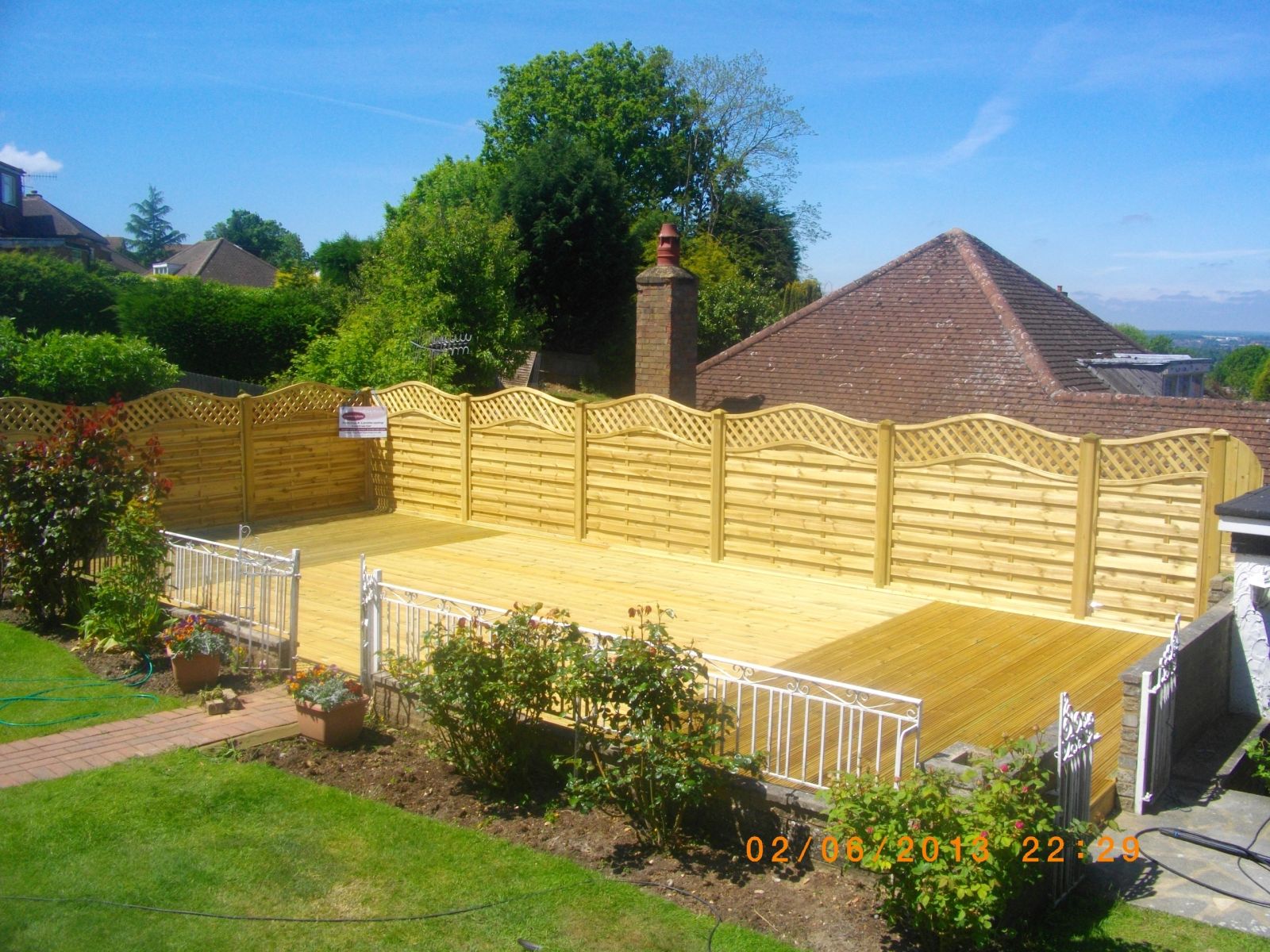
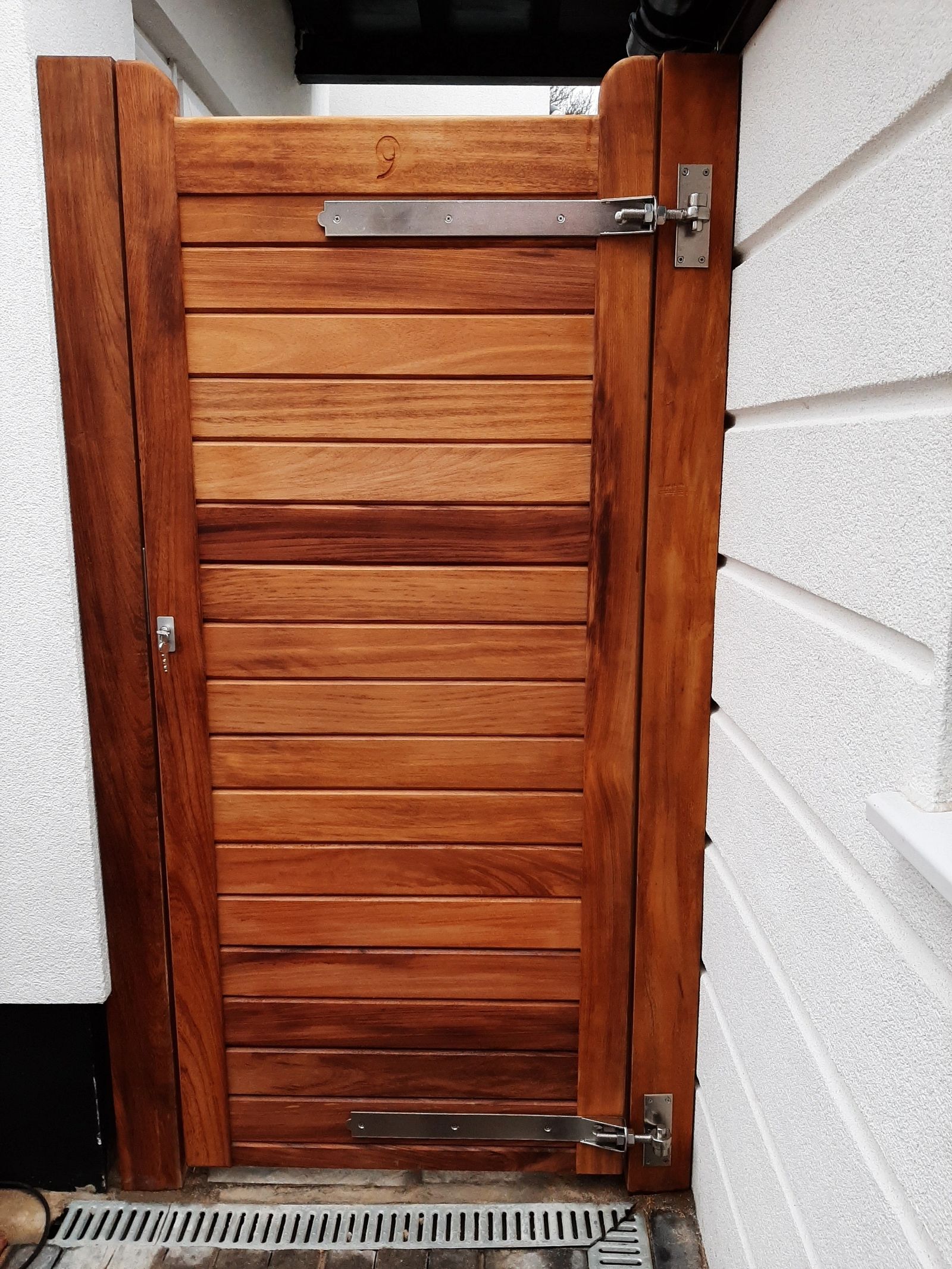
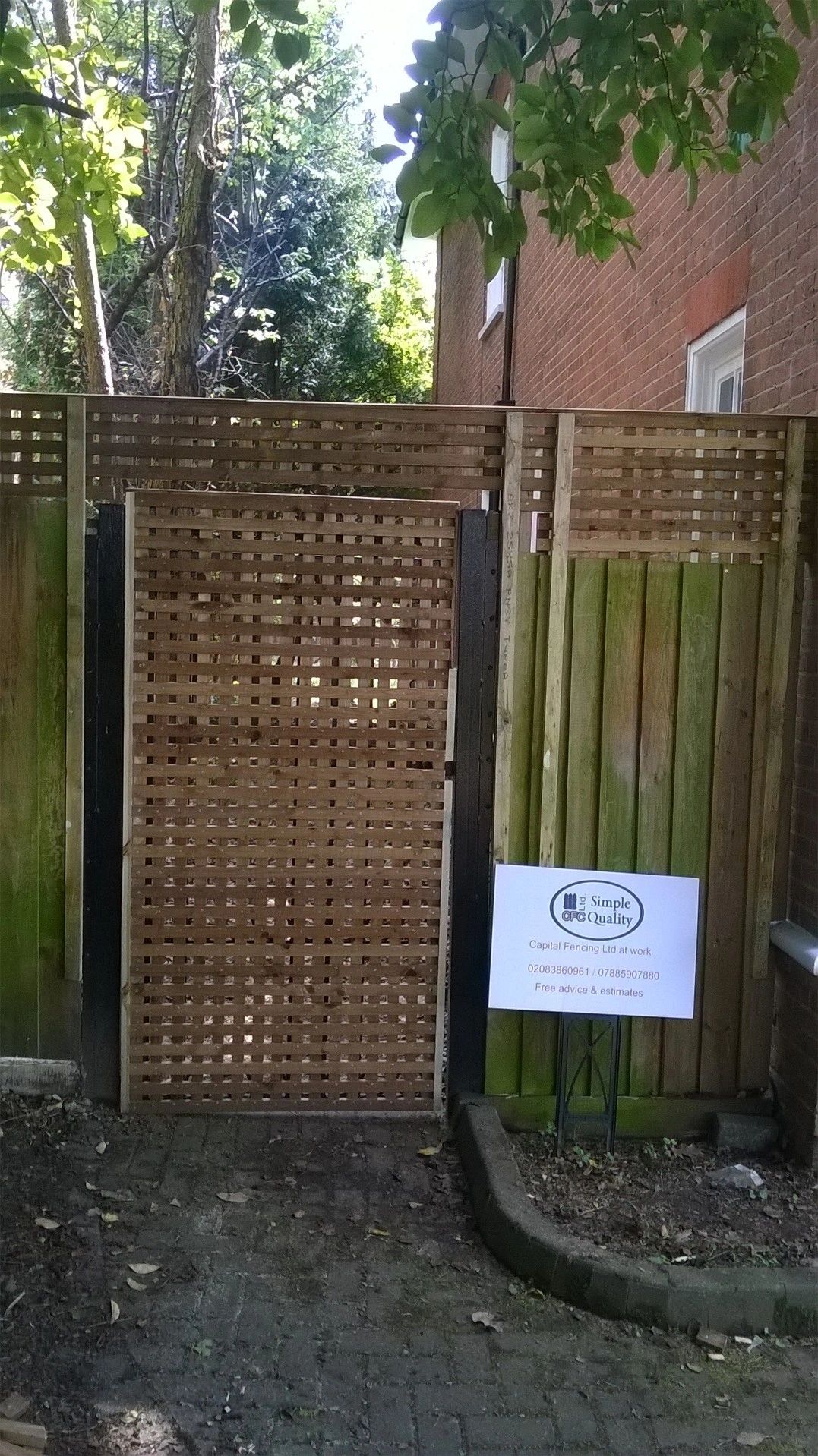
bespoke wooden gate installed by Capital Fencing in Potters Bar (EN6)double driveway gates installed by Capital Fencing in Potters Bar (EN6)hardwood side gate installed by Capital Fencing in Potters Bar (EN6)metal entrance gate installed by Capital Fencing in Potters Bar (EN6)

Before you book security & access gates in Potters Bar

Fencing a flat roof access route

A flat roof reachable from a bin store roof, a low extension or a drainpipe is a common route into upper floors, and a fence or roof-edge barrier addressing that specific climb path is often more effective than adding height to the main boundary.

Anti-climb detailing is applied to whatever gives the first foothold in the climb sequence — a wheelie bin store roof, a low wall, a pergola — rather than only to the perimeter line itself.

Hinge-post fixing and why it fails first

The hinge post carries the full weight of a gate every time it swings, and over years that repeated leverage is what pulls fixings loose or racks a timber frame out of square, far more than the latch side ever does.

A repair that only addresses the visible sag without checking the hinge post fixing itself tends to be a short-lived fix.

Maintenance that prevents the next repair

Most repairs we're called out for could have been caught earlier with a simple seasonal check — a post that's started to lean, a gravel board showing early rot, or a hinge that's begun to sag are all cheaper to address before they fail outright.

We'll flag anything else on the boundary that looks like it's heading the same way while we're on site for an unrelated repair.

Ground clearance for airflow

Leaving a consistent gap, typically 50-75mm, between the underside of a fence panel or gate and the ground lets air circulate around the bottom rail, which is usually the first part of a timber fence to rot.

That clearance also stops the panel wicking moisture directly from wet grass or standing puddles after rain, something ground contact makes almost unavoidable over time.

On sites with soft or uneven ground, a gravel board fitted below the panel achieves the same protection while keeping the panel itself off the soil entirely.

Level changes revealed during a repair

Taking down a damaged section sometimes reveals that the ground level has changed since the original fence went up — through landscaping, subsidence or built-up paths — which affects how the replacement section should be set.

Where a level change is found, it's addressed as part of the repair rather than reinstating the fence at the original, now-inaccurate, ground line.

Recording an informal boundary agreement properly

Where neighbours agree a boundary line that differs slightly from, or clarifies, what the deeds show, that agreement carries far more weight if it's put in writing and signed by both parties rather than left as a verbal understanding.

A formal boundary agreement can, in some cases, be registered with HM Land Registry against both titles, which protects the arrangement for future owners of either property.

Even a simple written note with an agreed sketch, dated and signed by both neighbours, is worth far more later than relying on memory of a conversation years afterwards.

Scribing a gravel board to uneven ground

Ground level rarely runs perfectly straight between two posts, so a gravel board cut square often leaves a gap under one end and digs into the ground at the other unless it's scribed to follow the actual contour.

Scribing means holding the board in position, marking the ground profile onto its face, and cutting along that line so the board's bottom edge follows the undulation rather than an assumed flat datum.

On concrete gravel boards this isn't possible after casting, so uneven ground either needs the board bedded on a shaped mortar bed or a timber board used instead where the ground profile is particularly irregular.

Resin anchor fixings for a bolted baseplate post

A resin anchor sets a threaded stud into a drilled hole in existing concrete or masonry using a two-part chemical resin, giving a strong fixing for a bolted baseplate post where excavating a new footing isn't practical, such as on an existing hardstanding.

Anchor depth and resin cure time both need to match the manufacturer's data for the load expected, and a resin anchor installed into damp or dusty concrete without proper hole cleaning will pull out well below its rated capacity.

Granular base layers under post concrete

A layer of compacted hardcore, crushed stone or pea gravel placed in the bottom of a post hole before concrete gives the post something firm to bear on and stops it sinking slightly as the concrete cures.

On free-draining ground that granular layer also gives water somewhere to go rather than pooling under the post base, which matters most where the water table sits close to the surface.

Skipping this layer on soft or waterlogged ground is a common reason a post that was plumb on installation day settles a few degrees out of true over its first winter.

Post-mix density versus site-mixed concrete

Fast-setting bagged post-mix concrete is formulated to set rapidly with minimal water, but the resulting cured density and long-term strength are generally lower than a properly proportioned and compacted site-mixed concrete of the same nominal grade.

For a typical garden fence post carrying modest lateral load, post-mix's faster setting and convenience usually outweighs the modest strength difference, but for a heavily loaded gate post or long fence run, site-mixed concrete is sometimes specified for the added margin.

Both approaches depend on adequate hole diameter and depth relative to the post's exposed height, since undersized footings undermine either concrete type equally regardless of which mix is used.

Powder coating and galvanising

Galvanising bonds a zinc coating to steel, usually by hot-dip, giving corrosion protection that works even if the surface is scratched because the surrounding zinc sacrifices itself to protect the exposed steel.

Powder coating is a decorative and additional protective layer baked onto the metal, giving a wide choice of colour and a harder finish than paint, but on its own over bare steel it doesn't offer the same self-healing protection as galvanising.

The durable combination for steel gates and railings is galvanising first, powder coating over the top, rather than powder coating alone, which is worth checking on a quote where both are mentioned separately.

Scoping a repair linked to an insurance claim

Where a repair follows an insured event, the scope of work is agreed and documented before starting, since insurers typically require a clear description of what failed and what's being replaced rather than a general like-for-like statement.

Photographs and a written note of the failure are kept alongside the repair record, which is useful if further questions come up later in the claims process.

Ecology checks and protected species on boundary sites

Removing a mature hedge, dense scrub or an old fence with ivy growth can disturb species protected under the Wildlife and Countryside Act, and on larger or commercial sites a preliminary ecological appraisal is often required before consent is granted for the works.

Bats in particular can roost in gaps behind old fascia boards, dense ivy or timber sheds attached to a boundary, and disturbing a roost is an offence regardless of whether it was known about in advance.

Where a boundary feature shows signs of established wildlife use, a short ecological check before removal is a reasonable precaution on any job larger than a routine domestic fence swap.

Cane bolt leverage on wide leaves

The long shaft of a cane bolt gives more leverage against a wide gate leaf twisting in wind than a short bolt fixed close to the bottom rail, which is why they're specified on wider double-gate leaves rather than narrow pedestrian gates.

A cane bolt still needs a properly prepared ground socket to work, and a shaft dropped onto uneven paving without a socket wears quickly and loses its holding grip.

Post shoe drainage detailing

A metal post shoe supports a timber post above a concrete or paved surface, and the shoe's base plate needs a way for water to drain away rather than pooling directly under the post's end grain.

Shoes with a raised or perforated base, rather than a flat solid plate, let water that does reach the post's foot drain or evaporate rather than sitting trapped between metal and timber.

Even a well-designed shoe underperforms if it's set into a low point that collects surface water, so the surrounding ground or paving level, not just the shoe detail itself, needs to shed water away from the post base.

Boundary work near underpinning or subsidence repairs

A property that's had underpinning or subsidence repair work sometimes has ground disturbance extending into the garden near the boundary, which can affect where a new fence line can safely be dug without disturbing settled ground.

Where underpinning is recent, it's worth checking with whoever carried out the structural work before digging post holes nearby, since the settlement process can continue for some time after the visible repair is finished.

Cracking in an existing boundary wall running close to a subsidence-affected building is sometimes an early symptom worth reporting rather than just repairing cosmetically.

Fixing new fencing to existing walls and piers

Bolting a new fence panel or post bracket to an existing wall or brick pier depends on the wall's own condition — a soft or unstable pier can't safely take the lateral load a fence puts on a fixing point.

Where a wall is sound, resin-fixed bolts into brick or masonry give a secure end point without a new post footing; where it isn't, a freestanding post just inside the wall line is the safer option.

Welded frame connections against bolted panel-to-post brackets

A fully welded panel-to-post connection gives a rigid, tamper-resistant joint that's difficult to remove without cutting equipment, but it also removes the option to unbolt and replace a single damaged panel without disturbing the whole run.

A bolted bracket connection, ideally using one-way or tamper-resistant bolts, keeps future repair simpler while still resisting casual removal, which is generally the better trade-off on a longer run where occasional panel replacement is more likely than on a short, high-security compound.

Using a scaffold tower or podium for repairs on a tall or high-level run

A repair above roughly head height, such as capping or bracing on a tall acoustic fence or a boundary on sloping ground, needs a proper working platform rather than a stepladder, both for safety and to allow two hands free for fixing.

On a tall run this can mean the access equipment takes longer to set up and move along the fence than the repair itself, which is worth factoring into how a job like this is planned and priced.

Hinge pin wear and greasing

A band-and-gudgeon or heavy tee hinge relies on a pin bearing surface that wears over years of use, and a worn pin lets the gate drop slightly at that hinge even when the fixings into the post are still sound.

Greasing the pin periodically slows this wear considerably, and on an older gate that's started to drop, checking pin wear before assuming a post or fixing fault saves an unnecessary repair.

A spec checklist for comparing quotes

Two quotes at very different prices for what looks like the same fence often differ in the parts that aren't obvious from a headline description — post type and spacing, gravel board material, rail count, use class of treatment, and whether waste removal is included.

Worth confirming explicitly: post material and size, number of arris rails for the height quoted, gravel board type, treatment use class of ground-contact timber, fixing corrosion class, and whether post caps and capping rail are included as standard.

A written spec covering those points, rather than just a total price and a photo of a similar job, is the practical way to compare quotes on equal terms rather than discovering the difference once the fence is already up.

Nesting birds in vegetation on a fence line

Dense hedging, ivy or overgrown trellis attached to a fence can hold active bird nests during the spring and summer nesting season, and disturbing a nest in use is an offence regardless of how routine the fence repair itself is.

Where a repair requires cutting back vegetation that might be nesting habitat, checking for active nests first and, if found, delaying that part of the work until the nest is no longer in use is the straightforward way to stay compliant.

On security access gates in Potters Bar you get the same crew from first site visit to hand-over. That's the whole model — small team, engineered-to-load spec, written quote before we start. Roads such as Mutton Lane and Barnet Road are typical of the local layout. Oakmere Park is a useful local reference point. Potters Bar sits just inside the M25 at Junction 24, on the boundary between Hertfordshire and Greater London.

Get In Touch

Get My Free Quote — 24h Response

No callout fee · Free site visit · Friendly local team covering London & Hertfordshire.

Call us
07885907880
or 02036484746
Email
capital_fencing@yahoo.com
WhatsApp
Message us anytime
Area
London & Hertfordshire
Payment
Card payments accepted

Pay by debit or credit card, bank transfer or cash once the work and price are agreed. No deposit taken online.

Request a Free Quote

We'll get back to you within 24 hours.

Free Site Visit No Callout Fee
Call WhatsAppQuote