London & Hertfordshire Free Site Visit
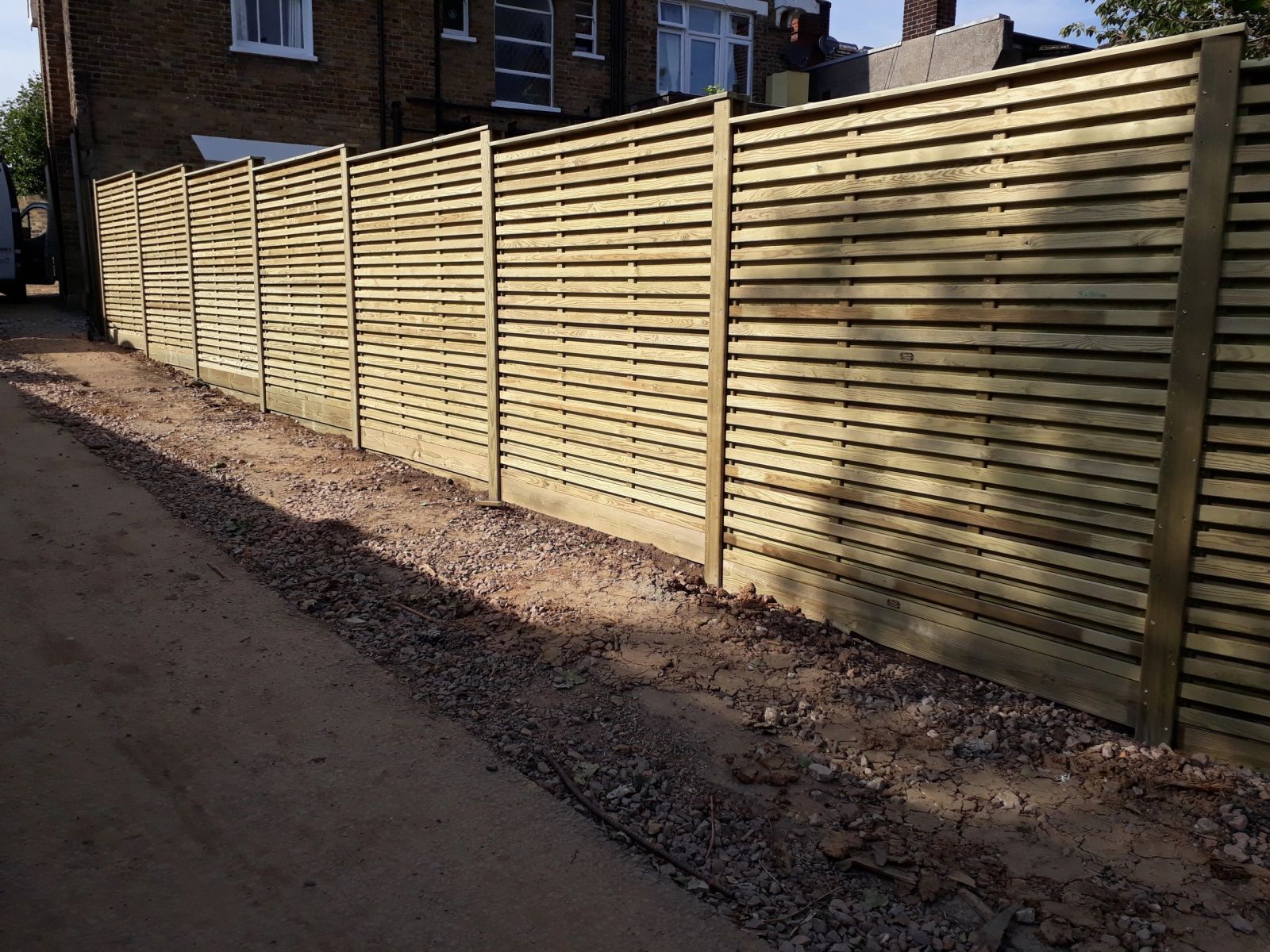
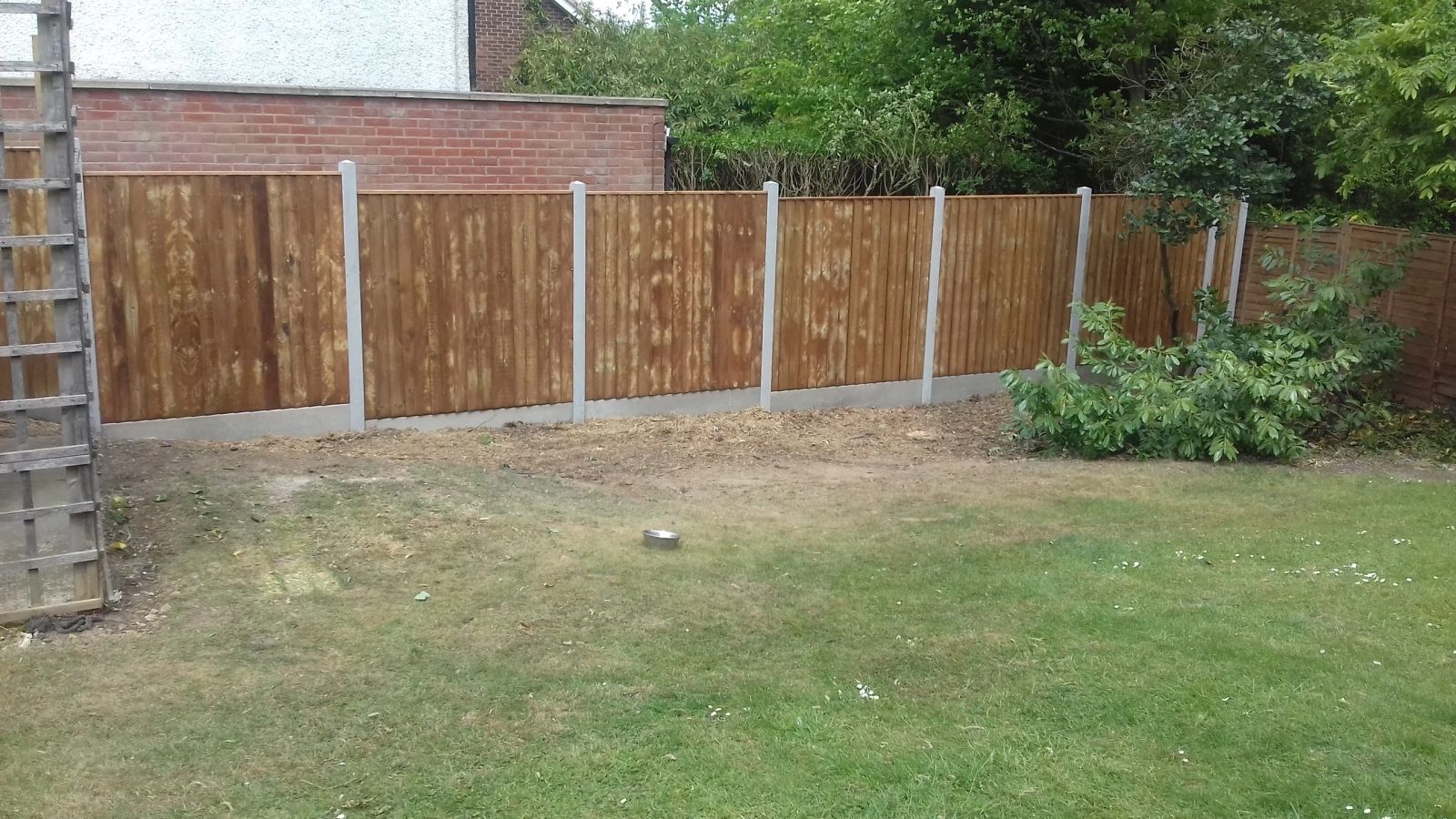
closeboard fence run installed by Capital Fencing in Hitchin (SG4)
Hitchin · SG4 / SG5

Sloping Garden Fencing, Hitchin: engineered-to-load spec for market-town centre with Tudor and Georgian buildings

We approach sloping-garden fencing in Hitchin from the failure end backwards. Using panels on any slope over 300mm across the bay — the panel drops one end and rots at the sunken corner — that's the single most common thing we're called back to fix, and it's the first thing our spec addresses. Roads such as Westmill Lane and Nightingale Road are typical of the local layout. Hitchin Market Square is a useful local reference point. Hitchin's town-centre conservation area shapes a lot of frontage work — painted picket and traditional close-board only.

We approach sloping-garden fencing in Hitchin from the failure end backwards. Using panels on any slope over 300mm across the bay — the panel drops one end and rots at the sunken corner — that's the single most common thing we're called back to fix, and it's the first thing our spec addresses. Roads such as Westmill Lane and Nightingale Road are typical of the local layout. Hitchin Market Square is a useful local reference point. Hitchin's town-centre conservation area shapes a lot of frontage work — painted picket and traditional close-board only.

Typical sloping-garden fencing briefs in Hitchin

  • retaining sleepers under fencing to level a garden with a two-course drop to the neighbour
  • racked feather-edge run tracking a gentle slope without visible stagger
Default spec

How we build sloping-garden fencing in Hitchin

closeboard on 100×100 pressure-treated posts, stepped in 150mm gravel-board increments or racked where the slope is gentle enough. On Hitchin jobs we adjust for hitchin's conservation areas mean the planning team checks anything visible from the street.

Property mix locally: market-town centre with Tudor and Georgian buildings, Victorian terraces on the Walsworth side, and 1930s semis to the west. Typical gardens: varied — small courtyards in the centre, deep rear gardens in Walsworth, sloping plots toward Walsworth Common. Postcodes we regularly service: SG4, SG5.

Why this spec, for homeowners with gardens that fall or rise across the boundary — stepped or racked builds

  • stepped builds keep the fence line legally correct even where the ground doesn't cooperate
  • closeboard suits stepping better than panel — no wasted panels cut to slope
  • sleeper-and-fence combined lines mean one contractor for what's usually two trades
What goes wrong

Common failure modes on sloping-garden fencing

  • using panels on any slope over 300mm across the bay — the panel drops one end and rots at the sunken corner
  • not draining behind sleeper retainers — the ground pushes the fence out within two seasons

Sloping Garden Fencing FAQs — Hitchin

How do you keep water off the low end of a stepped run?

On sloping-garden fencing jobs in Hitchin (SG4), our default answer is: closeboard on 100×100 pressure-treated posts, stepped in 150mm gravel-board increments or racked where the slope is gentle enough. We'll walk you through stepped builds keep the fence line legally correct even where the ground doesn't cooperate on the site visit before you commit.

Do I need retaining sleepers before the fence?

Across Hitchin we spec around hitchin's conservation areas mean the planning team checks anything visible from the street, so on sloping-garden fencing that usually means closeboard on stepped gravel boards. We'll walk you through stepped builds keep the fence line legally correct even where the ground doesn't cooperate on the site visit before you commit.

Can you match a neighbour's stepped boundary starting point?

North Hertfordshire District coverage means we can survey most SG4 addresses inside a week — homeowners with gardens that fall or rise across the boundary — stepped or racked builds. For context: closeboard suits stepping better than panel — no wasted panels cut to slope. Structural spans and post depths calculated, not guessed.

Who is liable when the ground falls onto a neighbour's plot?

Practically: stepped closeboard down a 900mm fall across a 15m rear boundary. That's the Hitchin version of this job, not a generic one. For context: closeboard suits stepping better than panel — no wasted panels cut to slope. Structural spans and post depths calculated, not guessed.

Should a fence follow the slope or step down it?

On sloping-garden fencing jobs in Hitchin (SG4), our default answer is: closeboard on 100×100 pressure-treated posts, stepped in 150mm gravel-board increments or racked where the slope is gentle enough. We'll walk you through stepped builds keep the fence line legally correct even where the ground doesn't cooperate on the site visit before you commit.

Recent sloping garden fencing work
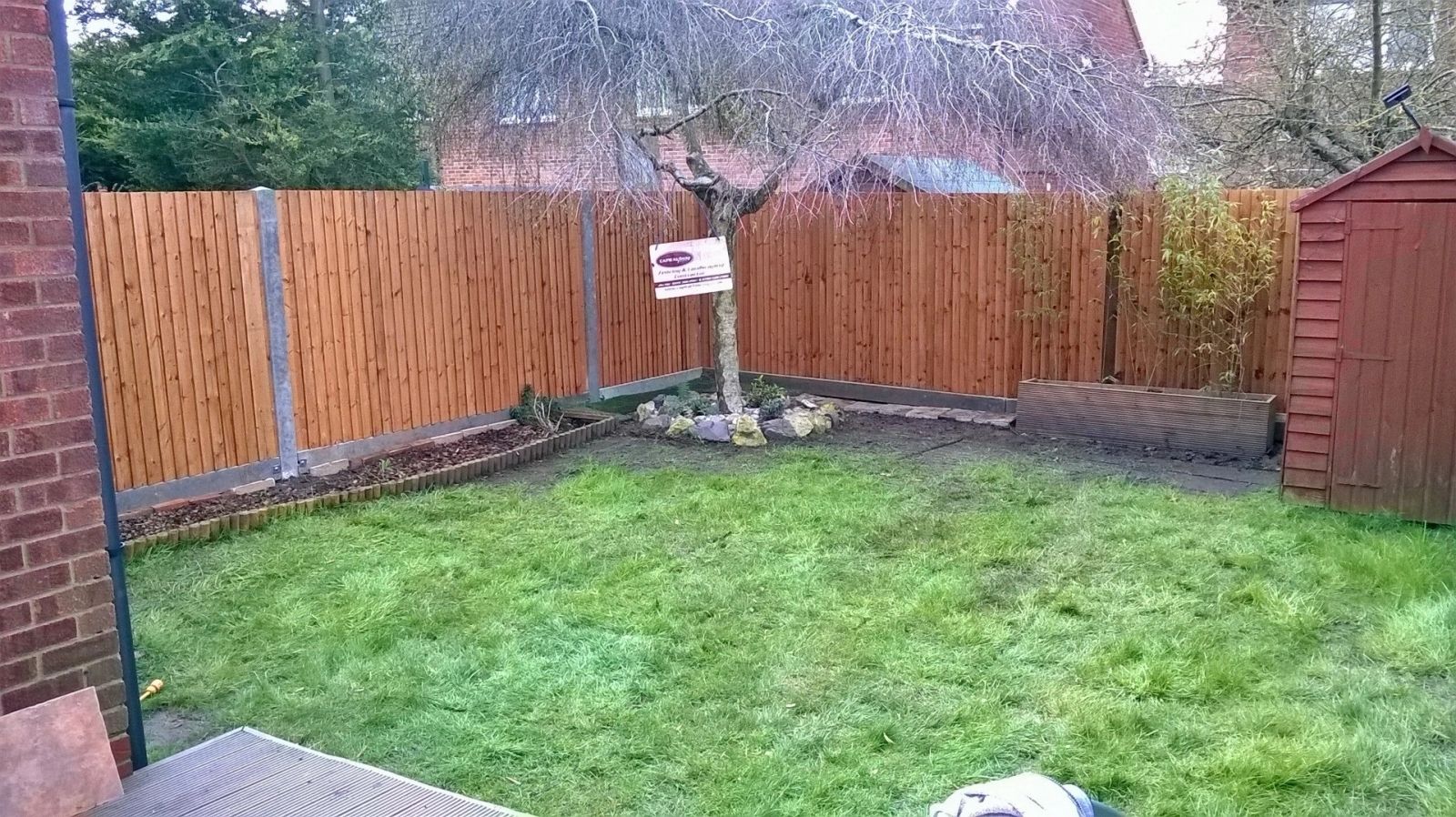
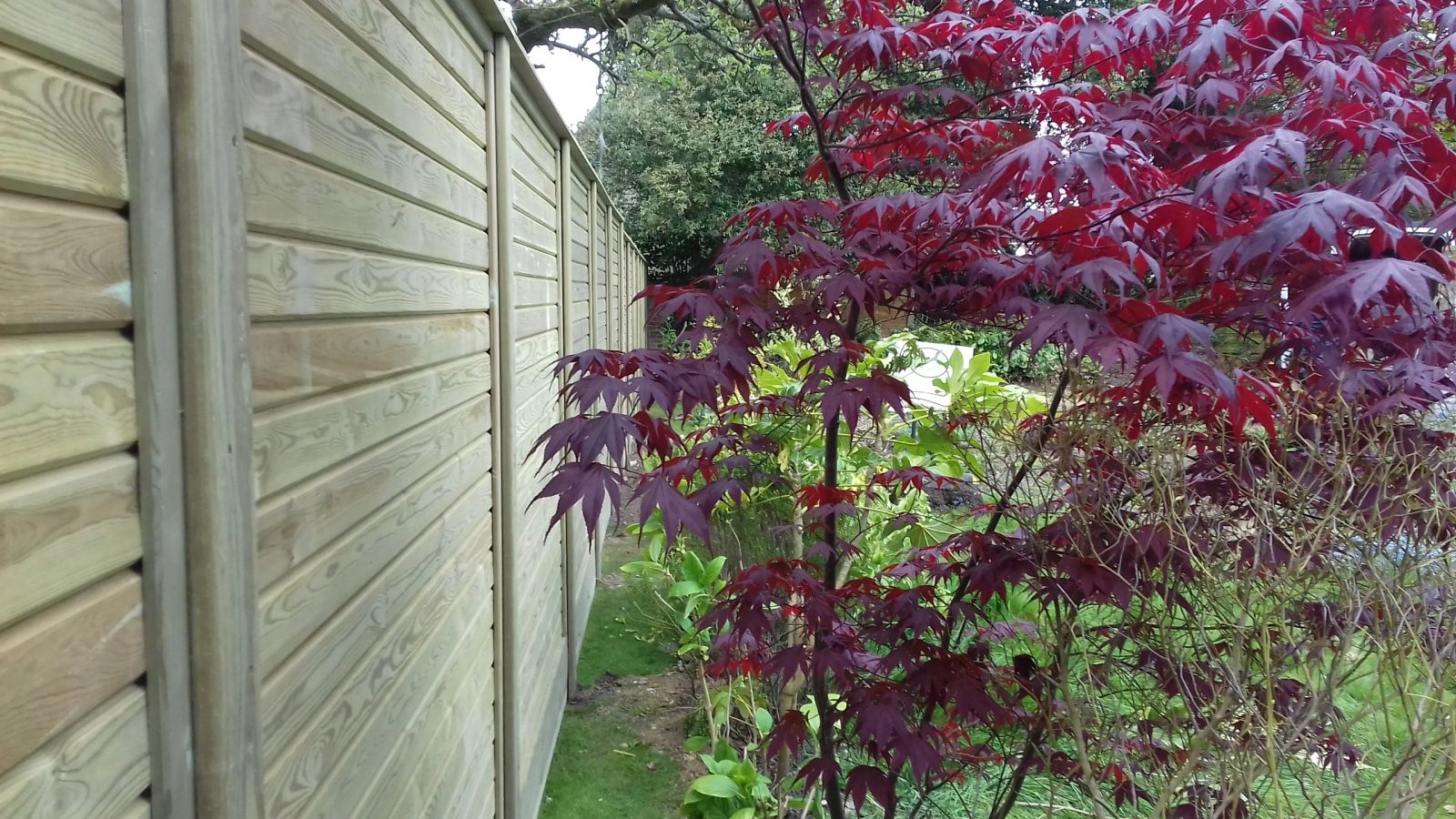
closeboard fence run installed by Capital Fencing in Hitchin (SG4)panel fence install installed by Capital Fencing in Hitchin (SG4)trellis-topped fence installed by Capital Fencing in Hitchin (SG4)bespoke decorative fence installed by Capital Fencing in Hitchin (SG4)

Sloping Garden Fencing in Hitchin: the practical detail

Access through a house for a rear repair

Where a rear garden has no side access, materials and tools sometimes have to be carried through the house itself, which needs agreeing with the client in advance and protecting flooring and doorways along the route.

This is more common on terraced properties than detached ones, and it's worth factoring into how a repair is scheduled and priced.

Water ingress at the bottom rail

The bottom rail of a gate sits closest to splash-back from the ground and holds moisture longer than any other part of the frame, making it the most common place for rot to start on an otherwise sound gate.

Where a repair addresses bottom-rail rot, raising ground clearance slightly or improving drainage underneath is worth doing at the same time to slow the same failure recurring.

Bollards and hostile-vehicle basics

Bollards protect a pedestrian area or building frontage from vehicle incursion and are specified separately from the fence line itself, usually to a recognised impact rating for the vehicle speed and mass expected.

Fixed, removable and retractable bollards each suit different access patterns — removable bollards are common where delivery vehicles need occasional access through an otherwise protected frontage.

Sliding versus swing gate security

A sliding gate needs a clear track run alongside the opening and doesn't sweep into the site, which suits a tight yard or a gate that has to sit flush with a boundary wall; a swing gate needs clearance to open but is generally simpler to fix and repair.

For security, a sliding gate is harder to force from a stationary position because the load runs along a track rather than through a single hinge post, but its track and rollers need regular clearing to keep operating.

Fencing compared with a boundary wall

A masonry boundary wall generally costs more and takes longer to build than an equivalent length of timber fencing, but needs far less routine maintenance over its lifetime and can outlast several generations of fence replacement.

Walls also carry their own structural considerations — foundation depth, movement joints on longer runs, and retaining requirements on a sloping plot — that a fence largely avoids.

Mixing the two, a low wall topped with railings or a timber panel, is a common way to get some of a wall's permanence and kerb appeal without the full cost of a wall along an entire boundary.

Storing timber and concrete materials on site before use

Timber left stacked directly on wet ground or grass for several days can pick up moisture and staining before it's even installed, so raising a stack on bearers and covering it loosely — allowing air to circulate rather than sealing it under plastic — keeps it in better condition.

Bagged cement stored outdoors needs keeping dry and off the ground, since a bag that's absorbed moisture can partially set inside the bag and become unusable before it's even opened.

Where a job runs over several days, agreeing a sensible on-site storage spot with the client — away from a drive that's needed daily, or a lawn that shouldn't be walked over repeatedly — avoids the storage itself becoming a source of friction.

Sliding versus swing gate mechanisms

A swing gate needs clear space to open into, whether that's the driveway itself or the street, while a sliding gate runs parallel to the boundary and suits plots where that swing space isn't available.

Sliding gates need a level, unobstructed track run at least as long as the gate itself, plus a foundation for the track and rollers that copes with the gate's full weight — cutting corners here is the most common cause of a sliding gate that jams.

Swing gates are generally simpler to install and service, which is worth weighing against a sliding gate's space-saving advantage on a tight or sloping driveway.

Cat-proofing with angled overhangs

Cats are agile climbers rather than diggers, so containment relies on preventing a solid grip at the top of the fence rather than closing ground-level gaps, typically with an angled overhang or rotating roller bar fitted along the top.

These systems work by tipping the cat back into the garden as it reaches the top rather than physically blocking the climb, and need a consistent, unbroken run along the full boundary to be effective, since a single untreated gate or low section undoes the rest.

Overhang brackets add a small amount of extra load and a slight increase in overall height, both of which are worth checking against permitted development limits before fitting.

What a like-for-like quote comparison should include

Two quotes for what looks like the same job can differ significantly once post spacing, timber grade, gravel board inclusion, waste removal and warranty terms are properly compared line by line rather than just as a single headline figure.

A cheaper quote that's silent on post spacing or omits gravel boards and waste removal often isn't actually cheaper once those items are added back in to match a more detailed competing quote.

Asking each quote to specify the same checklist of items — materials, spacing, base type, removal, and what's covered afterwards — is the most reliable way to compare on a level footing.

Certificates of lawfulness for existing boundary structures

A Certificate of Lawfulness of Existing Use or Development can formally confirm that an existing boundary structure was lawfully built, which is useful where there's uncertainty or a dispute about historic permissions.

This is different from planning permission itself — it's a factual confirmation of lawful status, often sought before a property sale to resolve a conveyancing query.

Where a long-standing boundary fence's planning history is unclear, applying for this kind of certificate can settle the question more reliably than relying on assumption.

Carrying 2.4m panels through a domestic hallway

A standard 2.4m fence panel is longer than most internal hallways are wide, so it has to be carried end-on through doorways and pivoted at corners rather than moved flat, which takes two people to control safely.

Door frames, light switches and stair newels are the most common casualties of moving long panels through a house, so a dry run to identify pinch points before committing to carrying a stack of panels through saves repeated near-misses.

Where a hallway genuinely can't take a full panel around a tight corner, the practical fallback is building the run from shorter featheredge boards fixed in place rather than trying to force a pre-built panel through.

Surface preparation before re-coating

Re-coating over an existing failed or flaking finish without preparation traps whatever is underneath — old paint fragments, algae, or degraded stain — and the new coat fails at the same points within a season.

A light sand or wire-brush pass to remove loose material, followed by a full dry-out period, gives a fresh coat something sound to key into rather than a film sitting over compromised timber.

Timing matters as much as preparation: coating damp timber traps moisture under the new film and is one of the most common reasons a re-coat fails faster than the original application.

Slotted versus morticed concrete posts

Slotted concrete posts have a continuous groove cast into two or four faces so panels slide down into the slot from above, which makes them fast to erect but means every panel in a run has to come out to replace one in the middle.

Morticed concrete posts have discrete rectangular pockets for arris rail ends instead, matching closeboard or panel construction where individual boards or panels can be replaced without disturbing the rest of the run.

The choice is largely dictated by the fencing system being used — panel fencing wants slotted posts, boarded fencing wants morticed — rather than being a free preference at quote stage.

Overhead cables and clearance for gate operation

A gate installed beneath or near an overhead service cable needs its swing or opening path checked against that cable's height and any sag, particularly for a wider vehicle gate that might otherwise catch a low cable at its highest point of travel.

This is a straightforward site check to make before installation, since moving a gate's position after cables have been identified as a clearance problem is far more disruptive than checking beforehand.

Picket profiles and spacing

Picket fencing is defined as much by the top profile of each paling — pointed, rounded, flat or 'gothic' — as by the gap between them, and both are usually specified rather than left to whatever the yard has in stock.

A tighter spacing, close to the paling's own width, gives a more solid boundary marker and better contains small pets; a wider spacing is more open and traditionally cottage-garden in character but does less to define a boundary.

Picket is a low-privacy, low-height fence by design, generally under a metre, and isn't a substitute for a taller closeboard or panel run where genuine screening is the aim.

Acoustic and noise-reducing boundaries

A garden backing onto a busy road, railway line or commercial yard can benefit from a boundary built with sound reduction in mind, though a garden fence will never fully block road noise the way a proper acoustic barrier does.

Solid, gap-free construction matters more than material choice — close-boarded overlap timber with no sightlines through it performs noticeably better than a picket or slatted style, and any gaps at the base undo much of the benefit.

Denser materials and added mass, such as a composite core or an additional inner skin, do help further, but the single biggest factor is simply eliminating gaps and sightlines through the run.

Terraced gardens and stepped runs

A garden cut into level terraces, common on steeper plots across the Chilterns fringe, usually means the fence has to step down at each change of level rather than run as one continuous raked line.

Each stepped section needs its own post pair set level within that section, with the horizontal joint between sections finished cleanly rather than leaving an open triangular gap under the lower panel.

Where the terraces are formed by retaining walls rather than simple grading, the fence posts typically sit on top of the wall structure and need fixings suited to masonry rather than a standard earth-set post.

Who maintains a grass verge next to a boundary

A grass verge between a garden boundary and the road is often owned and maintained by the local council as part of the adopted highway, rather than by the adjoining property owner.

This affects where a fence can legally be positioned, since building onto highway land, even a seemingly unused verge, generally needs authorisation.

Where the extent of a verge and its ownership isn't obvious, the local highway authority can usually confirm it against their adopted highway records.

Zinc-aluminium coatings

Zinc-aluminium alloy coatings, sold under various trade names, combine zinc's sacrificial protection with aluminium's more stable barrier properties, generally giving longer service life than pure zinc galvanising in the same environment.

They're commonly used on wire products and fixings destined for coastal or heavily salted road environments, where standard galvanising alone corrodes faster than inland applications.

The trade-off is that these coatings are usually applied by wire-drawing or continuous coil coating processes rather than batch hot-dip immersion, which limits them to certain product types rather than large fabricated steelwork.

Algae growth on north-facing panels

A boundary that faces north, or sits in the permanent shade of a tall building or dense hedge, stays damp for far longer after rain than a south-facing run, which is exactly the condition green algae needs to establish.

Algae on timber is mostly cosmetic in the early stages but makes the surface noticeably slippery, which matters where a fence line doubles as an informal foothold near steps or a sloped path.

A dilute biocidal wash applied before restaining is more effective long-term than staining directly over algae, which simply seals damp organic growth beneath the new coating.

Retail yards and car parks

Fencing around a retail unit's rear yard or customer car park usually has to satisfy insurer requirements for secured perimeters as well as simple boundary marking, particularly where stock or delivery cages are stored outside.

Vehicle impact is a real consideration in a car park boundary, and posts near a marked bay or turning circle are often specified heavier or protected by a bollard rather than relying on the fence itself to survive a low-speed shunt.

Work here is usually scheduled around trading hours and delivery windows, since blocking a rear yard during a delivery slot can hold up a retailer's whole day.

Soakaways near a fence line

A soakaway needs to sit at least 5m from a building under current guidance, and positioning one close to a boundary risks saturating the neighbour's ground as well as your own client's.

Digging a new post hole into or immediately alongside an existing soakaway compromises its performance and can undermine a post set on top of what's really just loose rubble fill.

Where a soakaway's exact position isn't recorded, a slow-draining or consistently damp patch along the fence line is often the only visible clue before digging starts.

Whether the brief is stepped closeboard down a 900mm fall across a 15m rear boundary or racked feather-edge run tracking a gentle slope without visible stagger, we quote it from a site visit, not a photo. Hitchin is inside our core working patch and most jobs are booked in inside a fortnight. Roads such as Bedford Road and Tilehouse Street are typical of the local layout. Priory Park is a useful local reference point. Hitchin's town-centre conservation area shapes a lot of frontage work — painted picket and traditional close-board only.

Get In Touch

Get My Free Quote — 24h Response

No callout fee · Free site visit · Friendly local team covering London & Hertfordshire.

Call us
07885907880
or 02036484746
Email
capital_fencing@yahoo.com
WhatsApp
Message us anytime
Area
London & Hertfordshire
Payment
Card payments accepted

Pay by debit or credit card, bank transfer or cash once the work and price are agreed. No deposit taken online.

Request a Free Quote

We'll get back to you within 24 hours.

Free Site Visit No Callout Fee
Call WhatsAppQuote