
How it's done
Building Decking Around a Tree: How It Is Done
Last updated
The short answer
Decking can be built around a tree by framing a box around the trunk and leaving a generous gap that allows the trunk to widen and move in the wind. Footings are placed clear of the main roots rather than cut through them. Check first whether the tree is protected, as trees in conservation areas or under a preservation order need consent before work that could harm them.
Official guidance: Planning Portal: decking
At a glance
- Possible?
- Yes, with a framed opening
- Key detail
- A wide, adjustable gap at the trunk
- Footings
- Placed between roots, not through them
- Check first
- Tree preservation orders and conservation areas
A tree in the middle of a planned deck is not a reason to give up on the idea. The deck has to be framed around the trunk and roots, leaving room for growth.
Many North London and Hertfordshire gardens are built around a mature tree that gives shade and privacy, and it is often right where the flattest, most useful space is. A deck that wraps around the trunk can make that spot usable without losing the tree.
The work is different from an open deck because the frame cannot run in straight lines, the ground is full of roots and the tree keeps growing after the deck is finished. This guide walks through the main decisions.
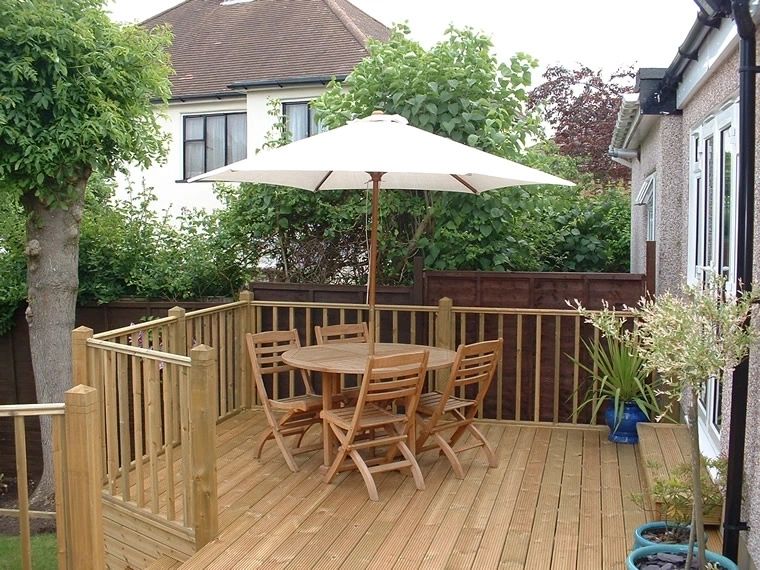
Framing an opening for the trunk
The joists are interrupted around the trunk and joined by short trimmer joists to form a square or many sided opening. The boards then stop at that frame. Because the frame carries the cut board ends, the edge around the tree stays firm underfoot rather than flexing.
Leaving room for the tree to grow
Trunks widen over the years and sway in strong wind. A tight hole that looks neat on day one can split boards or lift the frame a few seasons later. We leave a clear gap and often fix the innermost boards so they can be unscrewed and trimmed back as the trunk gets bigger.
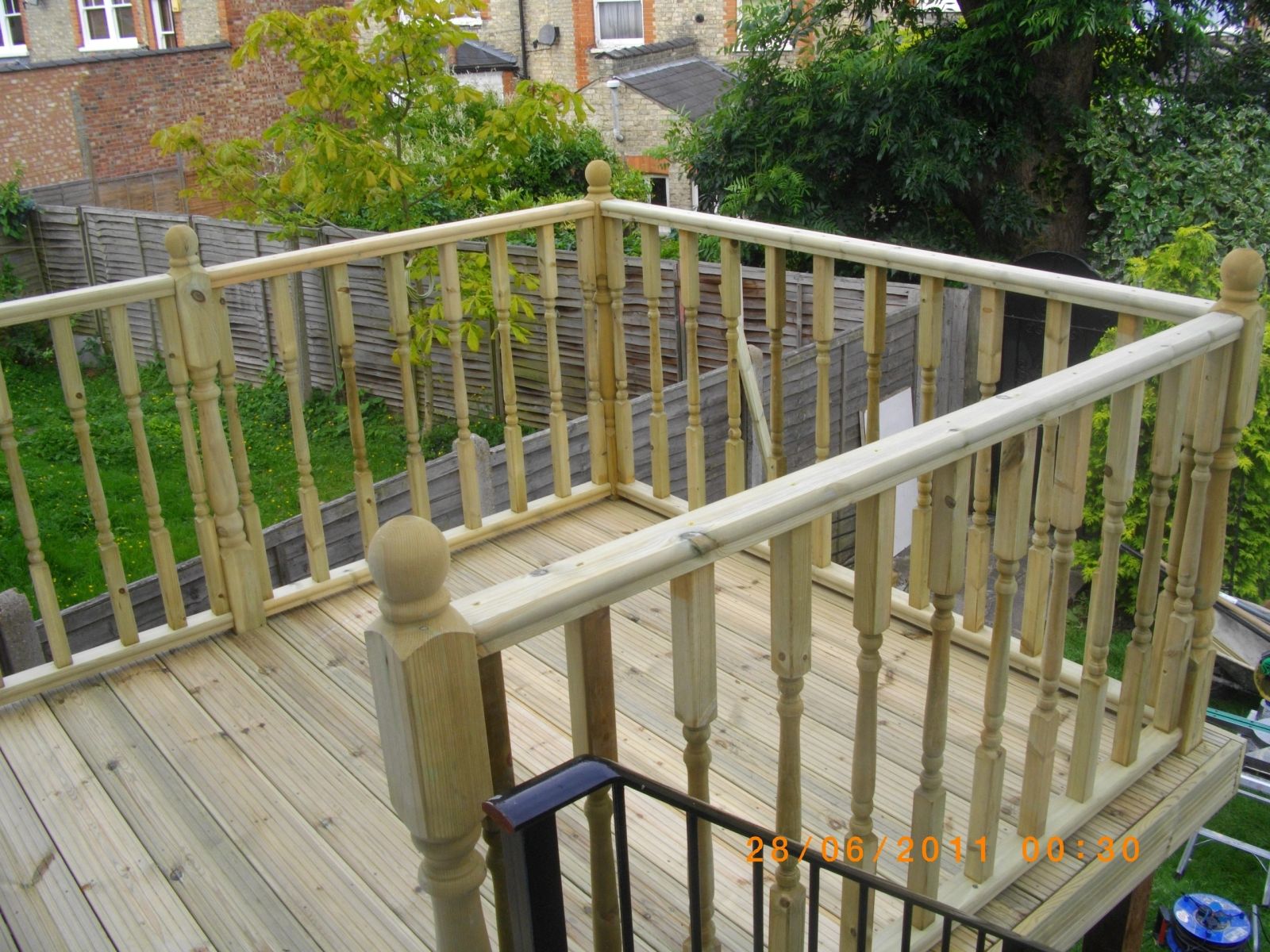
Working around roots
Large roots near the surface are what keep a tree standing and feed it. Rather than cutting them to fit a regular post grid, footings are shifted into the spaces between roots, and longer joist spans or extra beams bridge across. Where roots are close to the surface, a deck may need to sit a little higher than you first imagined.
- Footings moved to clear main roots
- Beams used to bridge root zones
- No concrete poured over large roots
- Ground levels around the trunk left as they are
Protected trees and consent
Some trees are covered by a tree preservation order, and most trees in a conservation area also have legal protection. In those cases you generally need to tell or ask your local council before work that could damage the tree, including digging close to it. GOV.UK has guidance on tree preservation orders and trees in conservation areas. If you are not sure whether your tree is protected, ask the council before work is booked.
Leaves, sap and shade
A deck under a tree collects leaves, seeds and sap, and parts of it stay shaded and damp for longer. Those conditions suit some materials better than others. Our guides to deck boards and to looking after decking explain how grip and cleaning differ between timber and composite, which matters more under a canopy.
Seating and benches round the trunk
A popular finish is a low bench or a raised edge built around the opening, which hides the gap and gives somewhere to sit in the shade. It has to be built so it does not press against the bark, for the same reasons as the boards themselves.
Raised or ground level decks
A ground level deck near a tree is often limited by roots close to the surface, because there is little depth for the frame. Lifting the deck a little gives room for joists to pass over roots and leaves air below, which helps the timber dry. Raised decks can bring planning questions, so our decking planning guide is worth a read before deciding on height.
Drainage under the canopy
Rain dripping from branches falls in a ring around the canopy rather than evenly. The ground below a deck should drain freely so water does not collect around the footings or the base of the trunk. Leaving the soil open beneath, with a weed membrane rather than a sealed surface, lets water soak away as it did before.
Getting an estimate
Send photos of the tree, the ground around it and the area you want decked, with rough measurements. Mention if you know of any protection on the tree. We confirm levels and footing positions at a visit once you are ready to go ahead, and set everything out in a written quote.
Frequently asked
How big a gap should decking leave around a tree?
It depends on the size and age of the tree. The aim is a clear gap all round that allows for movement and growth, with inner boards that can be trimmed back later.
Will building a deck harm my tree?
It can if roots are cut or the ground around the trunk is covered in concrete. Framing between roots and keeping the soil level unchanged reduces the risk.
Do I need permission to build a deck around a tree?
If the tree is protected by a preservation order or stands in a conservation area, you may need council consent for work that could affect it. Check with the council first.
Can a deck go right up to the trunk?
It should not. Boards pressed against bark can rub, trap moisture and get pushed apart as the trunk grows.
Tree where you want a deck?
Send a few photos of the trunk and the space around it and we will suggest how the frame could work.