
How it's done
Hedgehog Friendly Fencing: Keeping a Route Through
Last updated
The short answer
To make a new fence hedgehog friendly, leave one small opening at ground level, usually in a gravel board or under a short section, positioned near planting and lined up with a route on your neighbour's side. Kept small, it lets hedgehogs pass while stopping most pets. It does not weaken the fence and can be added to an existing one.
At a glance
- What to leave
- One small gap at ground level
- Best spot
- Near planting, away from gate posts
- Pets
- Keep the opening small and check it
- Existing fences
- Often possible by swapping a board
Hedgehogs travel between gardens at night, and a solid new fence can close a route they have used for years. A small ground level gap keeps it open.
Older fences often have gaps at the bottom where boards have rotted or soil has dropped away. Hedgehogs use those gaps to move from garden to garden looking for food. When a new fence goes in with tight gravel boards along the whole run, those routes disappear.
More customers now ask us to leave a way through. This guide explains how that is usually done, how it fits with the rest of the fence, and the trade offs to think about if you also have a dog or want a solid look.
Why a new fence can block wildlife
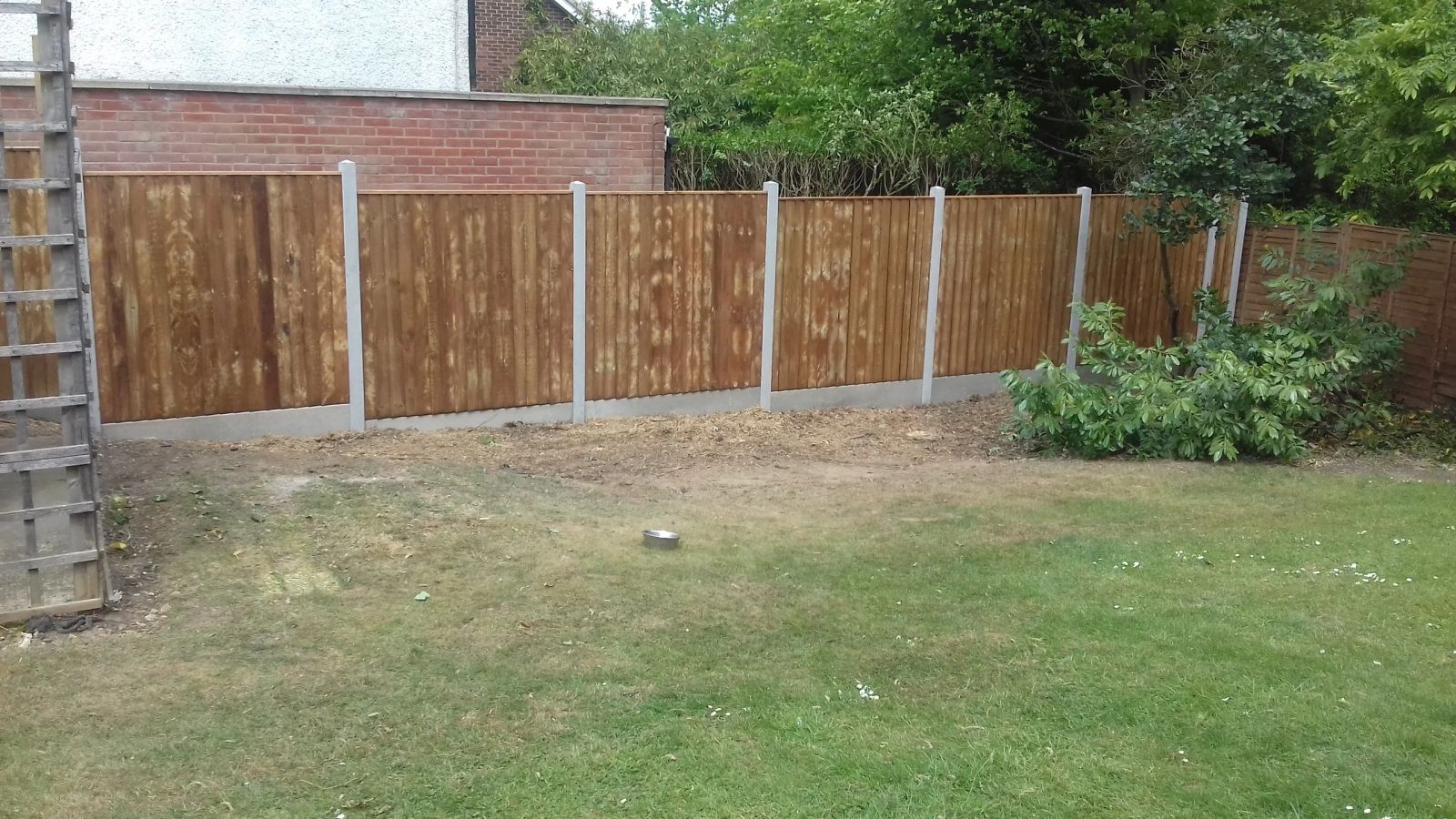
A modern fence with concrete posts and gravel boards is built to sit tight to the ground so that it lasts and keeps out draughts and weeds. That is good for the fence, but it means small animals cannot pass underneath. Across a row of gardens, a few replacements can cut off a whole route.
The simple fix: a small gap
The usual answer is a small opening at ground level, either cut into a gravel board or left between the board and the ground at one point. Wildlife groups recommend a hole small enough to stop most pets but big enough for a hedgehog. Agree the position with your neighbour so it lines up with a route on their side too.
Where to put the gap
Near a border, shrub or hedge works better than in the middle of an open lawn, because animals prefer to move under cover. Avoid putting it right beside a gate post or where water drains along the fence line. One gap per boundary is usually enough.
- Close to planting rather than open lawn
- Away from gate posts and hinges
- Not in a spot where water collects
- Matched with a route on the neighbour's side
Gravel boards and gaps
Concrete gravel boards cannot be cut neatly on site, so a gap usually means using a timber board at that point or leaving a short section where the board sits slightly higher. Timber boards can have a hole cut and the edges treated. Our guide to concrete or timber gravel boards explains the wider choice.
If you have a dog
A dog that digs will find any gap. Keep the opening small, put it where the dog spends least time, and check it after the first few weeks. If the dog keeps working at it, the gap may need to move or be made smaller. Our dog proof fencing guide covers the bigger picture.
Other ways to help along a boundary
Leaving a little planting at the foot of the fence gives cover. Avoid netting that animals can get tangled in, and check under decking and in log piles before work starts. Where we are removing an old fence, we look along the base before we dig.
Asking for it in your quote
Tell us when you send photos that you would like a wildlife gap and roughly where. We will include it in the written estimate so it is not missed on the day. It makes no real difference to how long the fence lasts.
Gates and side returns
A gate is often the easiest place to leave a route open, because the gap under a side gate already exists. Keeping the gap modest stops pets slipping out while letting small wildlife pass. If you want the gate tight to the ground for security, a gap can be left in the fence nearby instead.
On a side return between two houses, a wildlife gap at the front and one at the back can connect the street side to the gardens, though this is a matter of choice and depends on how secure you need the side access to be.
Keeping the gap working
Leaves and soil can block a ground level opening over the autumn. A quick check when you clear the garden keeps it clear. If a neighbour fills it in, have a friendly word, because a route only works when both sides leave it open.
Want a wildlife gap included?
Mark roughly where on your photos and we will build it into the written estimate so it is not missed.
Frequently asked
Will a hedgehog gap weaken my fence?
No. A small opening in a gravel board does not affect how the posts and panels hold up.
Can a fox use the same gap?
A gap kept small is too tight for most foxes and cats. A larger hole would let them through.
Do I need my neighbour to agree?
If the fence is yours, it is your choice, but a gap only helps if there is a way on from their side, so it is worth a chat.
Can you add a gap to my existing fence?
Often, yes, by swapping one gravel board or adjusting the base at one point. Photos of the bottom of the fence help us say.