
How it's done
What Is Pressure Treated Timber? A Plain Guide
Last updated
The short answer
Pressure treated timber has had preservative forced deep into the wood in a sealed cylinder, so it resists rot far better than wood that has only been dipped or sprayed. Tanalised is a common name for it. Posts need treatment suitable for ground contact, and cut ends should be brushed with preservative.
At a glance
- What it is
- Preservative forced into the wood under pressure
- Also called
- Tanalised timber
- Colour
- Green or brown tint, fades to grey
- Watch for
- Untreated cut ends and posts not rated for the ground
Pressure treatment pushes preservative deep into the wood rather than painting it on the outside, which is why it matters more than the colour of the board.
Almost every timber fence, gate frame and deck joist we fit is made from pressure treated softwood. You will also see it sold as tanalised timber, after a well known treatment brand. Customers often ask what it actually means, whether it still needs painting, and why some boards are green and others brown.
This guide answers those questions so you can read a quote or a timber label and know what you are being offered.
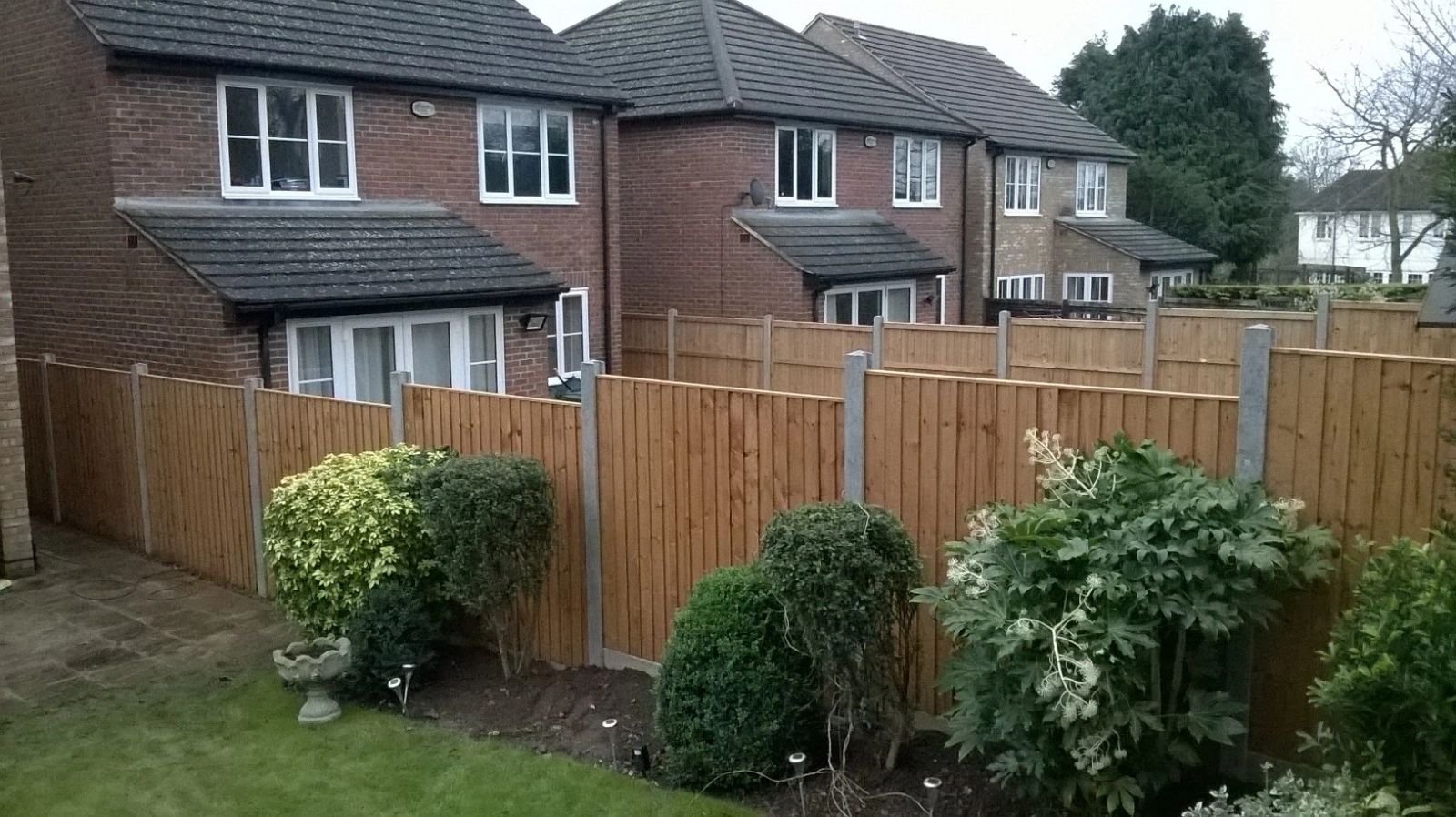
How the treatment is done
The timber is loaded into a sealed cylinder. Air is drawn out of the wood, preservative is flooded in, and pressure forces it into the cells. The result is protection that goes well below the surface, rather than a coating that can wear or chip away.
How deep it goes depends on the species and the treatment level. Some timbers take treatment readily; others resist it in the heartwood, so the outer layer is better protected than the centre.
Pressure treated against dip treated
Dip treated timber has been dunked or sprayed so the preservative only sits on the outside. It is common on cheaper panels and looks similar when new, but once the surface is scratched, split or cut the untreated wood beneath is exposed. Pressure treated timber holds up far better, which is why it is what we use for posts, rails and frames.
Green, brown and what the colour tells you
The green tint comes from the preservative itself. Brown treated timber has a dye added at the same time so it looks more like a stained fence. Colour on its own does not tell you how well the wood is protected; the treatment level does. Both fade to a silvery grey over time if left uncoated.
Treated for the ground, or above it
Timber that will sit in soil or concrete needs a higher level of treatment than boards that stay above ground and dry out between showers. A post treated only for above ground use will rot at the base much sooner. When comparing quotes, it is fair to ask whether the posts are treated for ground contact.
- Posts and gravel board supports: treated for ground contact
- Rails, boards and panels: treated for use above ground
- Deck joists close to the ground: treat as the wetter case
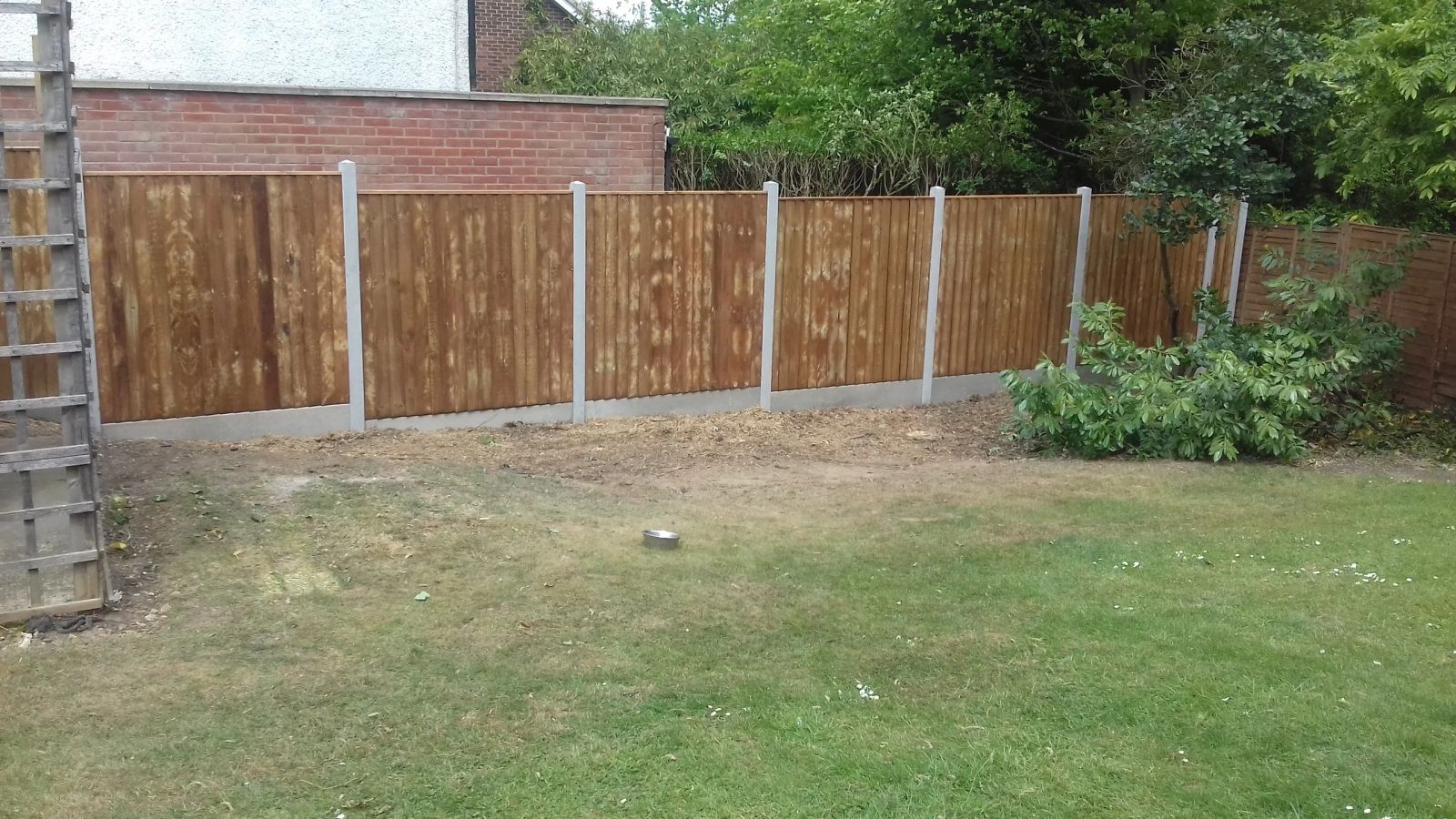
Cut ends and drilled holes
Every time a treated post is cut to height or a rail is trimmed, the fresh end can expose wood the treatment did not fully reach. We brush an end grain preservative onto cuts as we work. If you ever cut or drill treated timber yourself, do the same, because cut ends are where rot often starts.
Gravel boards and the base of the fence
The bottom of a fence is where water, soil and grass meet the timber, so it is the part that tests the treatment hardest. A gravel board along the base, in treated timber or concrete, keeps the panels and boards clear of the ground. When it eventually wears, it can be replaced without touching the fence above. Our guide on concrete or timber gravel boards explains the choice between them.
Keeping soil and plants from banking up against the boards also helps. Earth piled against a fence keeps the wood damp all year, and even well treated timber lasts longer when it can dry out between showers.
Hardwood, softwood and treatment
Pressure treatment is mainly used on softwoods such as pine and spruce, which would rot quickly outdoors without it. Durable hardwoods like iroko, which we use for some gates, are naturally resistant and are not usually pressure treated in the same way. That is one reason hardwood gates and softwood fences are priced and looked after differently.
When you compare timber in two quotes, ask which species it is and how it was treated, rather than going by colour or a brand name alone. A brief description in writing makes the comparison fair.
Does it still need painting or staining?
Not for protection against rot, but a coating still helps. It slows the greying, reduces splitting as the wood wets and dries, and changes the colour if you want one. New treated timber can be quite wet, so letting it dry out for a while before the first coat usually gives a better finish. Our fence painting cost guide explains how a coating job is priced.
Want to know what timber you are being quoted?
Our written estimates name the posts, rails and boards we plan to use, so you can see what treatment you are paying for.
Frequently asked
Is tanalised timber the same as pressure treated?
Tanalised is a brand name that has become a common word for pressure treated timber. The important part is the pressure process and the treatment level, not the label.
Why does new treated timber feel wet?
The preservative is water based and the timber has often not dried fully after treatment. It dries out over the following weeks.
Can I burn offcuts of treated timber?
It is best not to burn treated wood on a garden fire or in a stove. Dispose of it as waste instead.
Is treated timber safe near plants?
Treated timber is widely used for raised beds and fences. If you plan to grow food right against it, a liner between soil and wood is a common precaution.