
Comparisons
Steel Framed Timber Gates: Why Choose One?
Last updated
The short answer
A steel framed timber gate uses a fabricated metal structure with wooden boards as its visible infill. It can suit wider or frequently used leaves where a traditional timber frame needs a different structural approach. The complete weight still requires suitable hinges and posts, and both the steel finish and timber need care.
At a glance
- Structure
- Rigid fabricated steel frame
- Visible finish
- Natural timber boards and grain
- Useful for
- Some wider or heavily used gates
- Still essential
- Corrosion protection and timber aftercare
A steel frame provides a rigid structure while timber boards give the visible finish. The combination suits some wider gates but still needs sound supports and care for both materials.
Some openings ask a great deal of a traditional all timber gate. The leaf may be wide, the boards heavy or the intended use frequent. A steel frame with timber infill separates the structural job from the visible finish.
That combination is not automatically better for every garden gate. It brings its own weight, fabrication and maintenance details. This guide explains where it is useful and what should be specified before one is made.
What the two materials each do
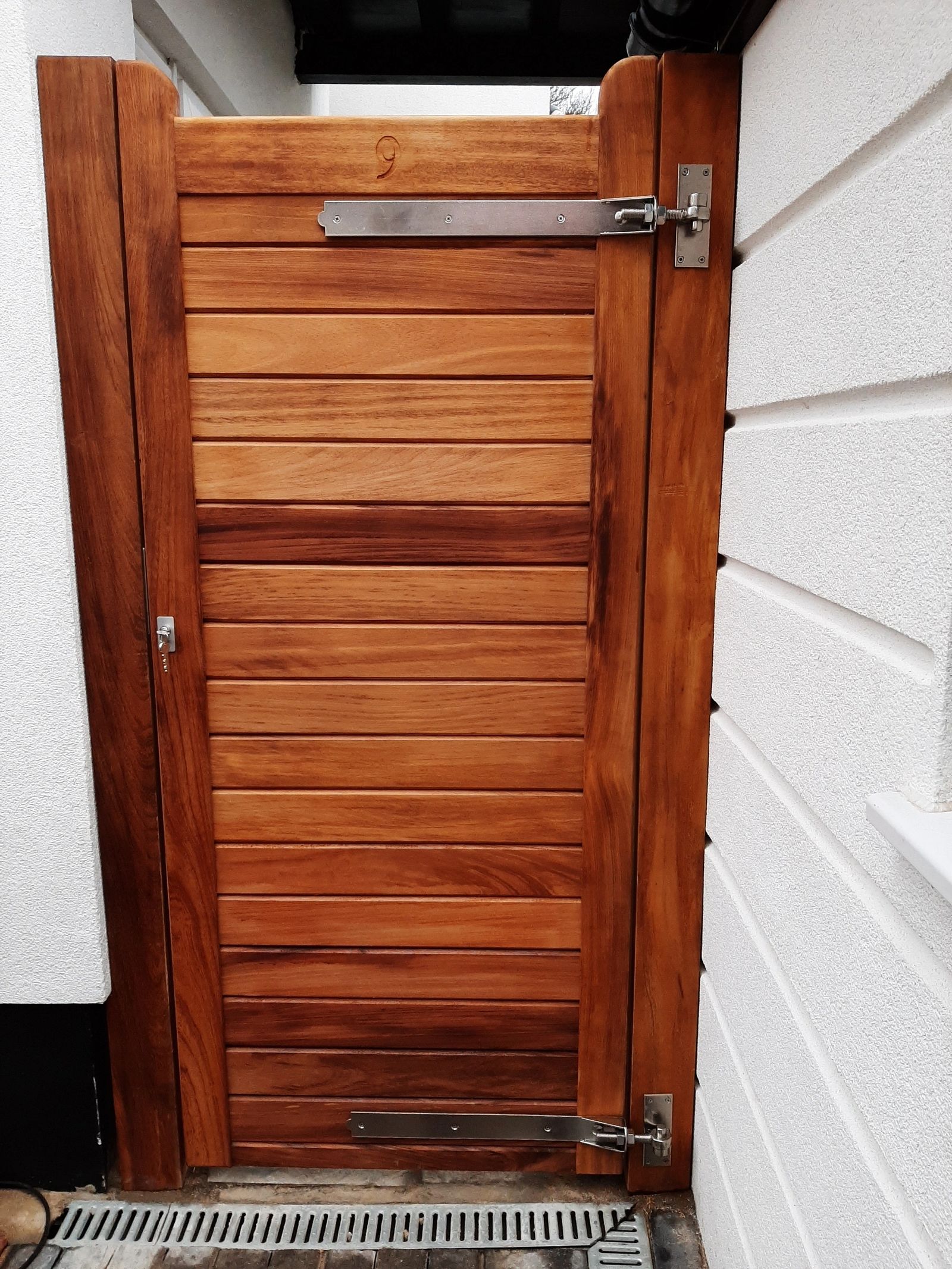
The steel frame forms the perimeter and structural members of the gate. Timber boards are fixed within or to that frame to provide privacy, colour and texture. From the front it may read as a wooden gate, while the strength comes from the fabricated skeleton behind it.
This makes the design particularly useful where the appearance of timber is wanted without relying entirely on timber joints to keep a large leaf square.
Resisting sag and distortion
A properly designed and welded frame resists racking, the process by which a rectangular gate turns into a parallelogram under its own weight. Hinge points can be built into that structure rather than depending on boards alone.
The frame is not a cure for weak posts or poor installation. A rigid leaf transfers its loads directly into the hinges and support, which must be selected and based accordingly.
Where the combination is useful
Steel framed timber is worth considering for wider driveway leaves, solid gates with frequent use, or designs where a slim metal frame needs a natural facing. It can also coordinate with metal railings while keeping the warmer appearance of boards.
For a small pedestrian gate, traditional timber joinery may already be entirely suitable. Choosing a fabricated frame should respond to a real structural or design requirement rather than adding complexity for its own sake.
Weight and hardware
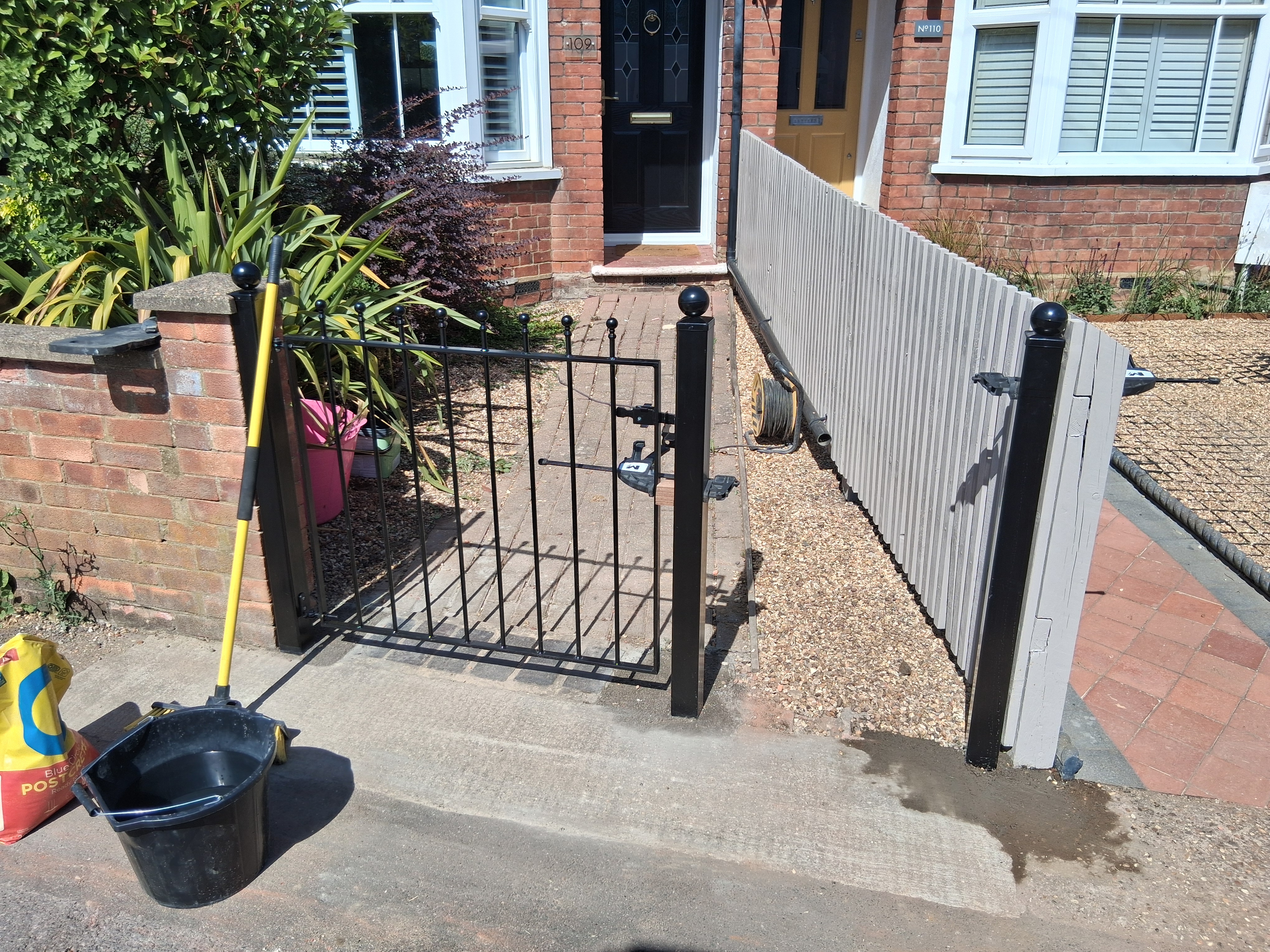
The steel and boards together determine the leaf weight. Hinges, stops, latches and posts must all be rated and positioned for that assembly. On a pair of gates, the meeting detail and drop bolts need equal attention.
If automation is possible later, the operator forces and mounting points should be considered during fabrication. Retrofitting equipment to an unplanned frame can lead to awkward brackets or insufficient support.
Protecting the steel
The completed frame needs an appropriate corrosion protection system. Galvanising and powder coating are commonly used for outdoor steel work, with particular attention to welds, drainage and any areas altered on site.
Bare or damaged steel should not be hidden behind the timber and forgotten. Board fixings and frame openings need to be arranged so water is not unnecessarily trapped against vulnerable connections.
Looking after the timber infill
The boards remain timber even though the frame is metal. Their exposed faces, end grain and lower edges need suitable protection for the species and finish. They also need room to respond to moisture without being constrained so tightly that they split or buckle.
Individual boards can often be replaced if damaged, provided the fixing design allows access. That is one practical advantage of separating the facing from the structural frame.
Appearance from both sides
One side may show more of the frame than the other, so ask to understand both faces before commissioning the gate. Frame colour, board spacing, capping and hinge positions all contribute to whether the result looks deliberate.
The gate can also be coordinated with a fence without pretending the two constructions are identical. Matching timber species and board orientation often does more for the overall appearance than hiding every metal component.
What a useful quotation includes
The quote should describe the frame, protective finish, timber infill, hardware and support posts rather than just calling the item a wooden gate. Any automation preparation and making good around the opening should be clear too.
Photographs and rough opening sizes are enough to begin the conversation. Final measurements and support conditions are then confirmed before fabrication, because a rigid made to measure frame leaves little room for guessing the opening.
Frequently asked
Is a steel framed gate better than an all wooden gate?
It is better suited to some wider or more demanding designs, but not automatically necessary for a small gate. The opening, leaf and intended use should decide.
Does the timber still need treating?
Yes. The boards still weather and move as timber. A suitable finish and attention to exposed ends remain important even though the main frame is steel.
Will a steel framed gate be heavier?
It can be, depending on the frame sections and infill. The complete weight must be allowed for when selecting hinges, posts and any automation.
Can individual boards be replaced?
Usually, if the frame and fixing arrangement are designed for access. That can make local damage easier to address without replacing the structural leaf.
Need a wooden look on a demanding opening?
Send the width, height and photos of both supports. We will explain whether a fabricated frame with timber infill suits the gate.