
Tongue and Groove Fencing: Specification Guide
Tongue and groove boards interlock edge-to-edge for a completely solid, gap-free fence face — the premium option where total privacy and a smooth finish both matter.
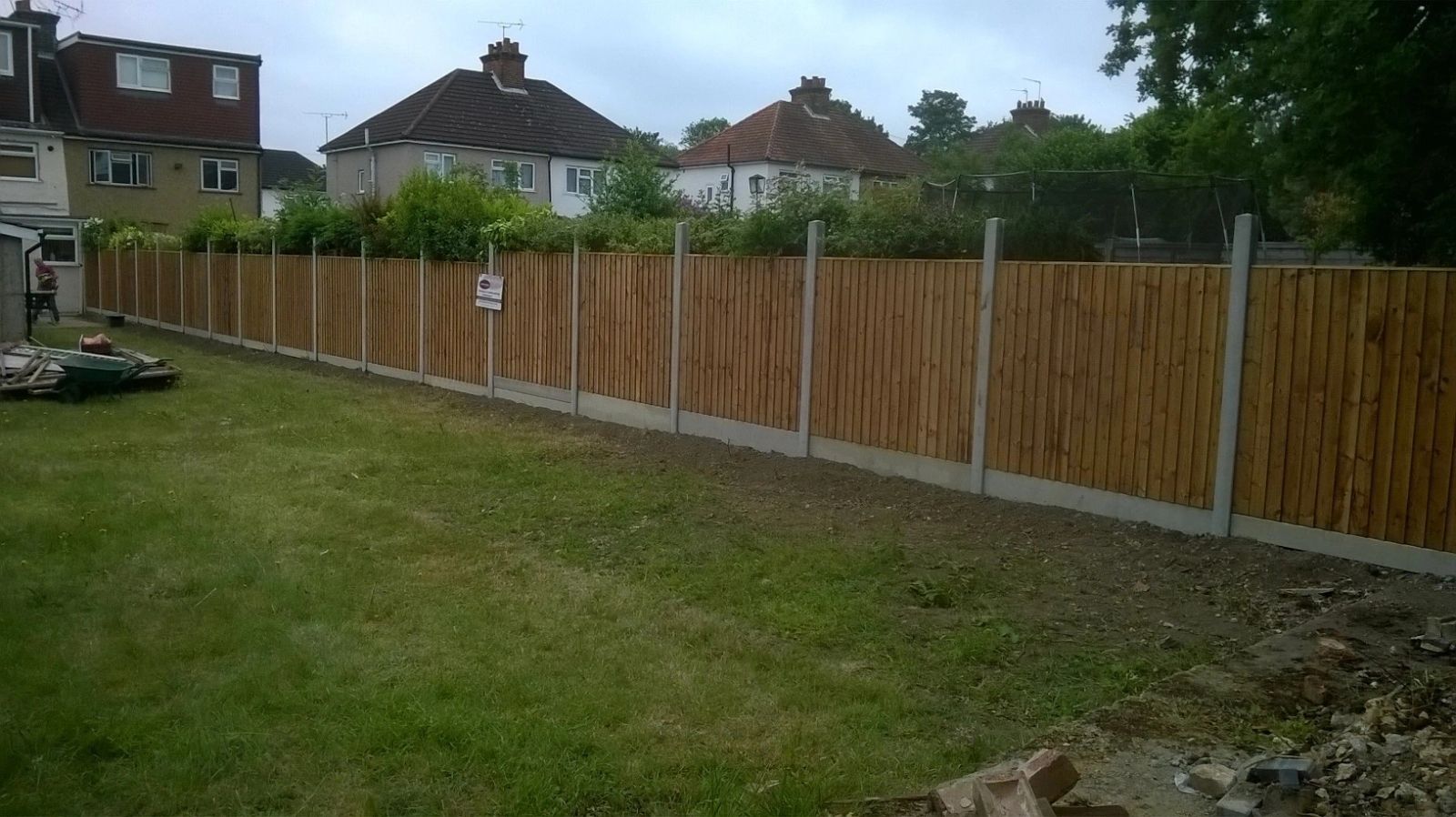
Tongue and groove fencing uses machined boards that interlock along their edges, unlike closeboard's overlapping feather-edge boards. The result is a flatter, more formal face with genuinely zero sightline gaps, which is why it's specified so often for front boundaries and gardens that back directly onto a footpath.
It costs more per metre than closeboard because the boards are machined rather than simply tapered, and it needs slightly more careful handling to allow for seasonal movement without the joints binding.
Checklist before you buy
- Confirm whether the quote is framed T&G panels or boards direct to rails
- Ask which face (if any) shows the frame — some buyers want it hidden
- Check timber grade — pressure-treated softwood vs hardwood options
- Confirm post spec matches closeboard-grade loading, not lighter panel posts
- Ask about expected settling gaps in the first winter
Board profile and how the joint works
Each board has a tongue machined on one edge and a groove on the other, so boards lock together vertically without the overlap a closeboard fence relies on. This gives a flush, uniform face on both sides — useful where the fence will be seen from both a garden and a neighbour's side.
Because the boards interlock rather than overlap, they need a small manufacturing tolerance for shrinkage; boards installed bone-dry in summer can show hairline gaps by winter as the timber settles, which is normal and not a fault.
Panel framing versus a continuous run
T&G boards are fixed into a framed panel rather than run board-by-board between posts the way closeboard is. That framed-panel approach is what stops the interlocking joints binding or racking as the fence moves, but it also means panels are made to fixed widths and a run rarely divides perfectly — expect a cut or narrower end panel on most boundary lengths.
Where the fence backs onto a footpath or shared alley, we specify the frame on the inward-facing side only, so from the public side the boards read as a single flat, joint-free plane with nothing to grip or climb.
Using T&G as cladding, not just fencing
The same interlocking boards are equally common as vertical cladding on garden offices, bin stores and outbuilding walls, fixed to a batten frame rather than a fence post line — worth specifying together with a boundary if you want the shed or office wall to visually match the fence around it.
Where it earns its cost, and where it doesn't
T&G is worth the premium where the fence is highly visible — a front boundary, a garden office wall, a boundary you'll see from indoors every day — because the flat, joint-free face reads as a considered finish rather than a budget boundary.
It's not worth it purely for security or a long rear boundary where nobody will see the individual boards up close; closeboard achieves the same privacy for less, and is quicker to repair if a board is damaged.
Frequently asked
Why doesn't a T&G run divide evenly into full-width panels?
Panels are made to fixed widths, so most boundary lengths need one cut or narrower end panel — we plan the layout so it falls somewhere inconspicuous, usually a corner.
Can T&G boards be used as cladding rather than fencing?
Yes, the same boards are commonly fixed to a batten frame as vertical cladding on garden offices and bin stores, giving a matching finish to a T&G boundary.
Do tongue and groove boards warp?
Less than flat boards because the interlocking edge restrains movement, but any timber can cup or bow if it dries unevenly — buying well-seasoned stock reduces this.
Which side of a T&G fence shows the frame?
We specify the frame on whichever side you choose — usually the inward-facing garden side on boundaries seen from a public footpath, keeping the public face completely flat.
Does tongue and groove fencing need painting?
Not structurally, but staining or painting protects the finish and is worth doing every 3–4 years on softwood, similar to closeboard.