London & Hertfordshire Free Site Visit
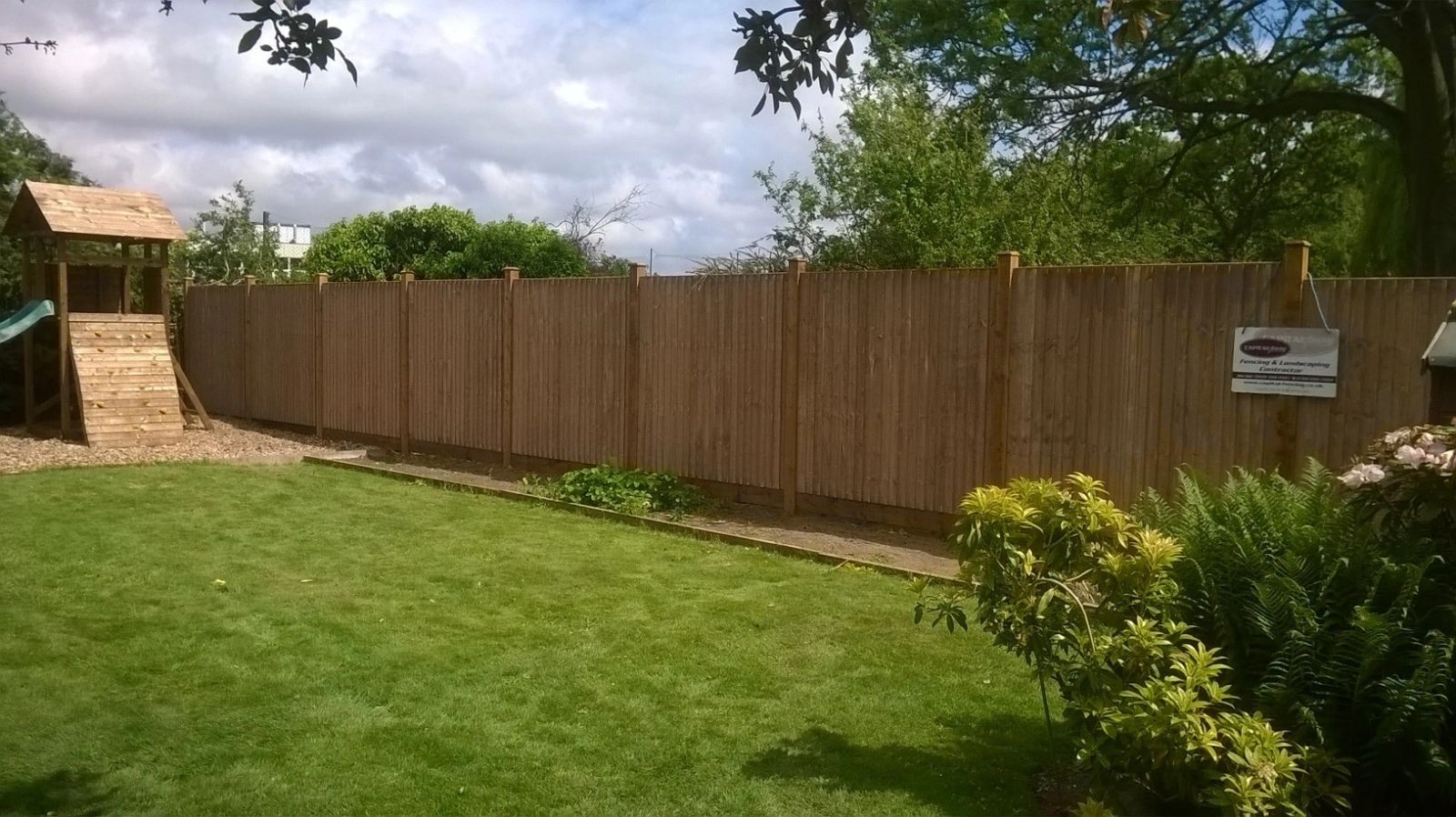
closeboard fence run installed by Capital Fencing in St Albans (AL1)
St Albans · AL1 / AL2 / AL3 / AL4

Closeboard Fencing for Victorian terraces in St Albans

Built on site rather than dropped in, closeboard follows ground that moves. That matters in St Albans, where mature gardens rarely runs level for more than a few metres, and a panel-based boundary would leave stepped gaps at the bottom. We're a small, time-served closeboard fencing crew working out of London and Herts, and St Albans is a regular week for us. Most briefs here come down to long rear boundaries where privacy and durability beat panel replacement cycles — and honestly, whether closeboard fencing is the right answer at all before we quote. Recent work on London Road and Folly Lane. We orient jobs off St Albans Cathedral.

Built on site rather than dropped in, closeboard follows ground that moves. That matters in St Albans, where mature gardens rarely runs level for more than a few metres, and a panel-based boundary would leave stepped gaps at the bottom. We're a small, time-served closeboard fencing crew working out of London and Herts, and St Albans is a regular week for us. Most briefs here come down to long rear boundaries where privacy and durability beat panel replacement cycles — and honestly, whether closeboard fencing is the right answer at all before we quote. Recent work on London Road and Folly Lane. We orient jobs off St Albans Cathedral.

Typical spec

How we build closeboard fencing in St Albans

Vertical feather-edge boards on arris rails with pressure-treated posts. Standard build: 150×22mm feather-edge boards, 3-rail arris, 100×100mm pressure-treated posts. On St Albans jobs we adjust for extensive conservation areas mean fence heights and materials need to match the streetscape.

Property mix locally: Victorian terraces, Edwardian villas in Marshalswick, and Tudor / Georgian properties near the cathedral. Typical gardens: mature gardens, often with established hedging that needs lifting before fencing goes in. Postcodes we regularly service: AL1, AL2, AL3, AL4.

Common St Albans briefs

  • long rear boundaries where privacy and durability beat panel replacement cycles
  • boundaries backing onto footpaths or alleys where security is the brief
Honest trade-offs

Where closeboard fencing isn't the right answer

  • needs re-treating every 3–4 years to keep the boards tight
  • labour is heavier than dropping panels, so day-rate cost is higher

We'll say so on the site visit — a wasted quote helps nobody.

Why closeboard fencing works here

  • individual boards are cheap and quick to replace when damaged
  • no visible fixings on the show side — cleaner look than lap panels
  • properly specced arris-rail runs last 15–20 years

Closeboard Fencing FAQs — St Albans

How often should closeboard fencing be re-treated?

Gravel boards do the wearing here — the boards never touch soil, which is what kills timber fences in St Albans first. We allow for mature gardens when setting out in St Albans. Practically, that means no visible fixings on the show side — cleaner look than lap panels — and we're upfront that needs re-treating every 3–4 years to keep the boards tight.

Can you fit a trellis top to closeboard?

Individual damaged boards are replaceable, so a storm in St Albans costs you one board rather than a full bay. Survey slots across AL1 are usually inside a week. Practically, that means no visible fixings on the show side — cleaner look than lap panels — and we're upfront that needs re-treating every 3–4 years to keep the boards tight.

Can you build closeboard on a slope?

Where a St Albans boundary falls, we step the rails and keep the capping level bay to bay so the line reads straight from the house. We work this patch weekly, from Porters Wood out toward hatfield. Practically, that means no visible fixings on the show side — cleaner look than lap panels — and we're upfront that needs re-treating every 3–4 years to keep the boards tight.

What post depth do you use for closeboard?

Where a St Albans boundary falls, we step the rails and keep the capping level bay to bay so the line reads straight from the house. For victorian terraces in AL1, that is where the cost sits. Practically, that means no visible fixings on the show side — cleaner look than lap panels — and we're upfront that needs re-treating every 3–4 years to keep the boards tight.

Can a single damaged board be replaced?

Gravel boards do the wearing here — the boards never touch soil, which is what kills timber fences in St Albans first. We allow for mature gardens when setting out in St Albans. Worth weighing individual boards are cheap and quick to replace when damaged against labour is heavier than dropping panels, so day-rate cost is higher before you commit.

Recent closeboard fencing work
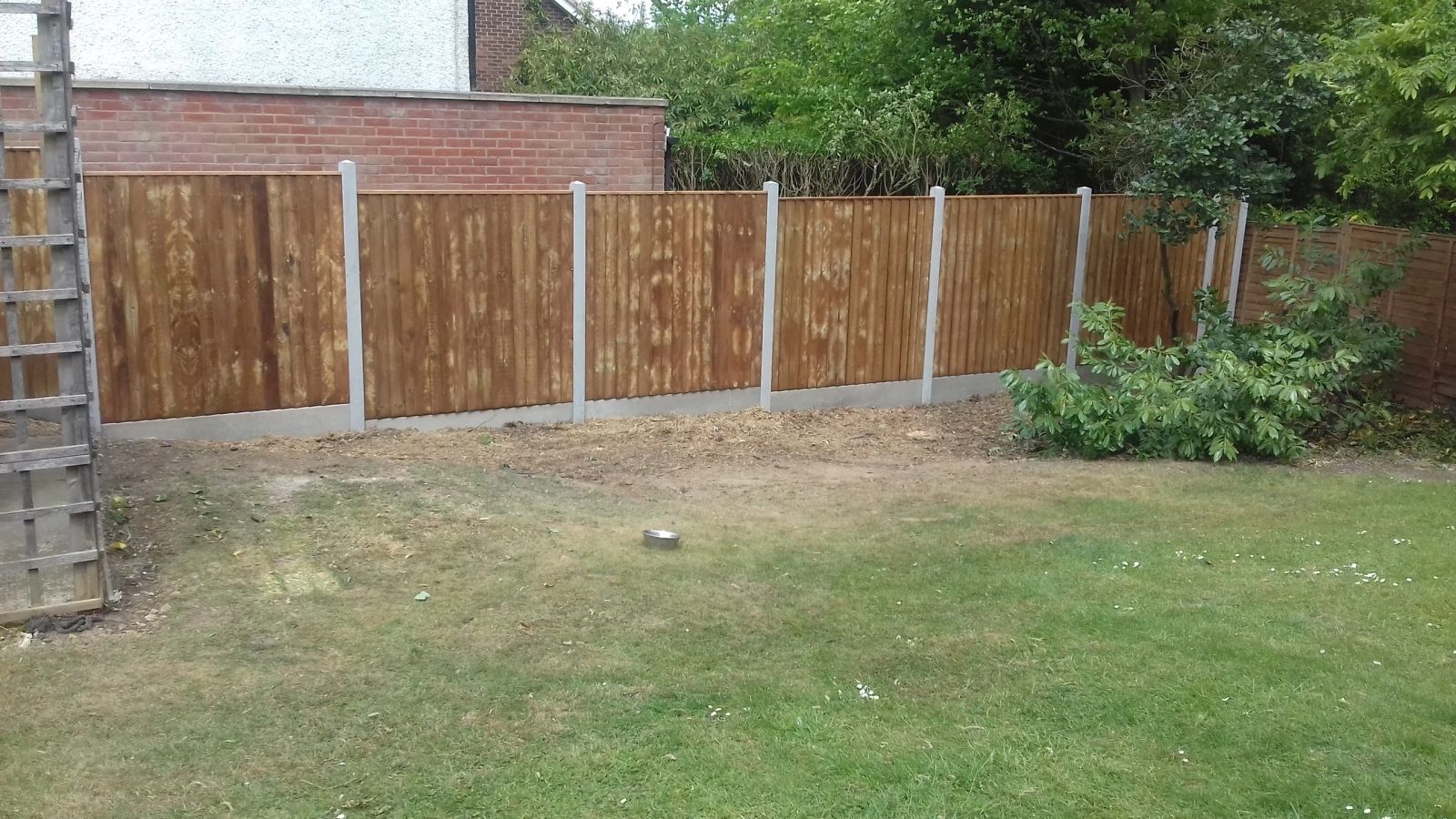
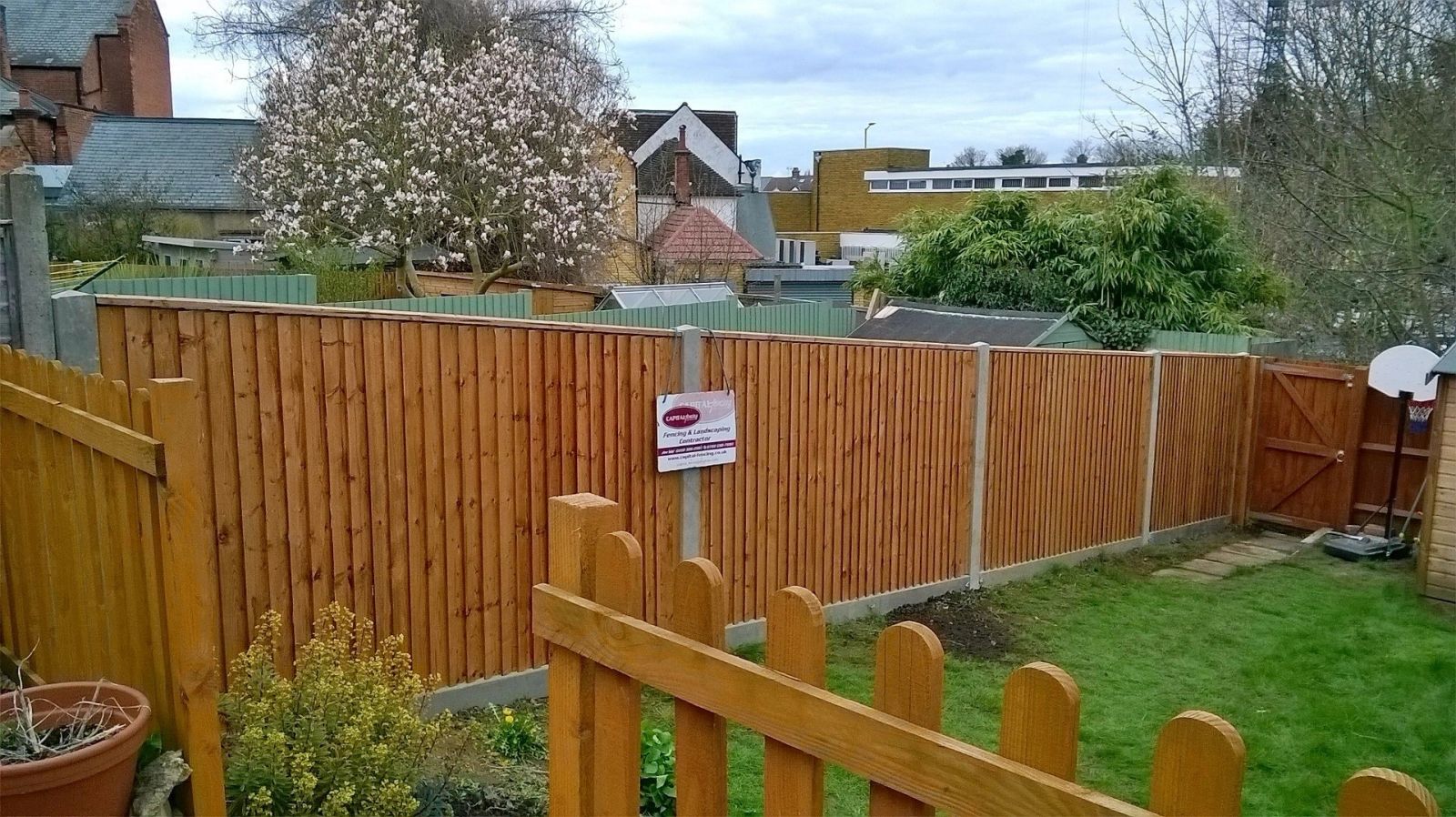
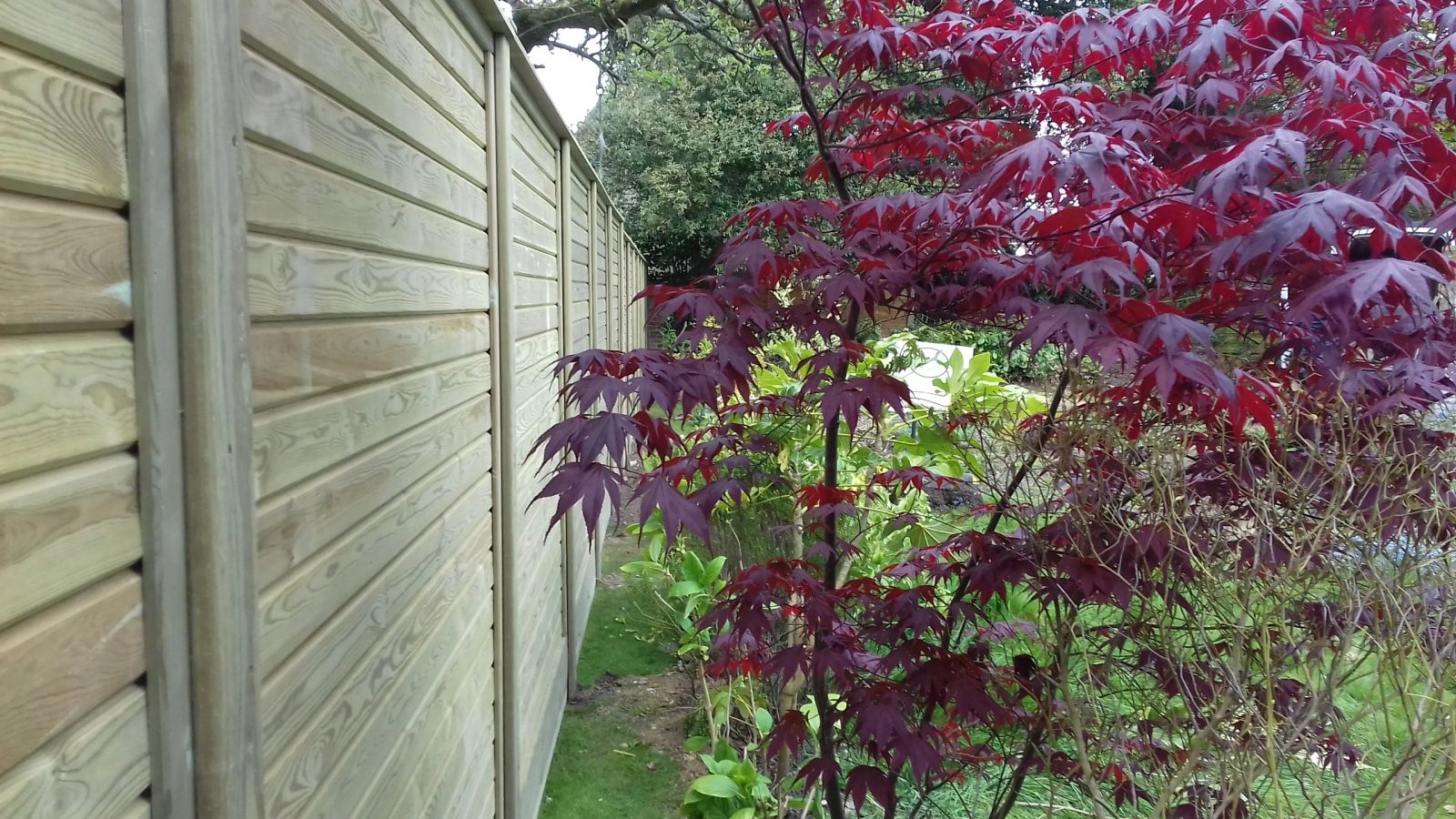
closeboard fence run installed by Capital Fencing in St Albans (AL1)panel fence install installed by Capital Fencing in St Albans (AL1)trellis-topped fence installed by Capital Fencing in St Albans (AL1)bespoke decorative fence installed by Capital Fencing in St Albans (AL1)

Local considerations across St Albans and hatfield

Tall fences, shading and neighbour relations

A tall boundary fence can significantly shade a neighbouring garden depending on orientation, and while there's no general legal right to a set amount of sunlight in a garden, an unusually tall or dark structure close to a shared boundary is a common source of neighbour friction.

Slatted, louvred or partially open designs let some light and air through while still giving privacy, which is often a reasonable middle ground where a fully solid fence would cause a shading complaint.

Discussing height and design with an affected neighbour before building, even where there's no legal requirement to, tends to avoid a dispute that a technically-compliant fence wouldn't otherwise resolve.

Staining versus painting: different maintenance cycles

A translucent or semi-transparent stain penetrates the timber surface and wears gradually, so re-application every two to three years is a top-up rather than a full strip-back, and overlap patches between old and new coats blend reasonably well.

Opaque exterior paint or solid-colour masonry-style coatings sit on the surface as a film, which looks crisper initially but is prone to flaking and cracking as the timber moves seasonally, and once it starts to fail it usually needs full removal rather than a top coat.

Clients choosing paint for a specific colour should budget for that more disruptive maintenance cycle rather than assuming it behaves like a stain with a different finish.

Checking compressible seals for lost resilience

A compressible foam or rubber seal used at panel joints loses some of its resilience over years of repeated compression and UV exposure, eventually failing to close the gap as effectively as when it was new.

Periodic replacement of these seals, rather than assuming they'll last the life of the panel, keeps the joint performing as intended rather than allowing a slow, easily missed decline in the run's overall sealing.

Exposed plots and wind funnelling between buildings

Wind doesn't just hit a fence head-on — gaps between buildings, especially in newer estate layouts with narrow side passages, can funnel and accelerate wind locally well beyond the general forecast for the area.

A fence positioned at the end of such a gap can see significantly higher loading than an identical run a few metres away in the lee of a building.

Recognising these funnelling positions at quote stage, and specifying heavier posts or a part-open panel design there, is more reliable than treating an entire plot as uniformly exposed or sheltered.

Drainage channels behind a long acoustic run

A long, solid acoustic run without any breaks can act as a dam for surface water running across a sloped garden, causing pooling on the uphill side that wasn't a problem with a more open fence.

A drainage channel or a low-level gap fitted with a flap or grille at the lowest point of the run lets water through without significantly compromising the acoustic seal higher up the panel.

Post-war estates and uniform frontages

Post-war council and private estates were often built with a consistent low front boundary — dwarf wall, hedge or short picket — as part of the original street design, and some retain a restrictive covenant or estate management scheme controlling what can replace it.

Swapping a low picket for a tall close-boarded front fence on these estates can breach the covenant even where planning permission wouldn't be needed under general permitted development rules.

It's worth checking the original conveyance or asking the estate's management company before ordering material, since covenant breaches are a civil matter between neighbours or the management company rather than something the council enforces.

Panel rattle and fixings

A panel that isn't fully seated or tightly fixed can move slightly in wind, producing a rattle that's both annoying in its own right and a sign that a joint has opened enough to let sound leak through.

Checking and re-tightening fixings periodically, especially after the first year as timber settles, keeps both the acoustic seal and the panel's structural fit sound.

Frost heave in shallow footings

A post base set too shallow, or poured in ground that later saturates, can be lifted slightly by frost heave as ice forms and expands beneath it, then settles unevenly once it thaws.

This is most noticeable on posts set less than the recommended depth for their height, where the concrete base itself sits within the top layer of ground most affected by winter freezing.

Once a post has heaved even a few millimetres out of true, the movement tends to repeat each winter, which is why it is worth digging to the depth appropriate for the post height rather than the minimum that will stand up in summer.

Preservative retention levels

Retention describes the quantity of preservative chemical actually held within the timber after treatment, usually expressed in kilograms per cubic metre, and is a more meaningful durability measure than the treatment process alone.

Higher retention is specified for higher-risk applications such as ground-contact posts than for above-ground rails, reflecting the greater and more sustained moisture exposure a buried timber faces.

Retention can only be verified by laboratory analysis of a sample core, so in practice specifiers rely on the treatment plant's use-class certification rather than visually inspecting the finished timber, since colour alone doesn't indicate how much preservative penetrated.

Checking a post for twist before concreting

A post can be perfectly plumb on both faces yet still be twisted along its length, which only becomes apparent once a rail or panel is offered up and doesn't sit flush against the face it's meant to fix to.

Sighting down the length of a post before it's set, rather than only checking it once braced upright, catches a twist that's much harder to correct once concrete has gone off around the base.

Timber posts sawn from a slightly twisted length of stock are the usual cause, so it's worth setting aside a visibly twisted post for a less critical position, such as a short infill panel, rather than a gate post or corner.

Balustrades and handrails on raised decking

Decking raised more than around 600mm above the ground typically needs a balustrade under Building Regulations Part K, with baluster gaps narrow enough that a 100mm sphere can't pass through, to stop a child slipping between rails.

Handrail height and the strength of the newel post fixings both matter more on a raised structure than a ground-level deck, since the loads involved in someone leaning on a rail are higher than most people assume.

Steps down from a raised deck need their own handrail treatment where the rise is significant, and non-slip tread nosing is worth specifying for anywhere used year-round.

Dry-mix versus wet-mix concrete for post bases

A dry mix — post-fixing concrete poured dry into the hole around a braced post and left to draw moisture from the surrounding ground — sets over a day or two and suits smaller domestic posts in reasonably moist soil.

A wet mix, gauged and mixed with water before placing, gives more control over strength and is generally preferred for larger posts, gate posts under lateral load, or very dry, free-draining ground where a dry mix may not draw enough moisture to cure properly.

Wet mix also allows proper tamping to remove air pockets around the post, which a dry mix poured in stages can't achieve to the same degree.

Resealing joints on an acoustic run

Timber movement over successive seasons can open a joint that was tight at installation, and resealing or refitting that joint restores the barrier's continuity rather than leaving a small gap to worsen.

This check is worth doing as part of a periodic maintenance visit rather than only after noise is noticeably getting through, since a small early gap is easier to fix than a run that's shifted significantly.

Setting gate posts before the rest of a fence run

Gate posts carry more load and need tighter tolerances on spacing and plumb than intermediate fence posts, so they're normally set and checked first, with the rest of the run measured out relative to the confirmed gate opening rather than the other way round.

Where a gate is ordered to a bespoke size, its exact opening width has to be locked in before that section of the run is built, since a fence panel either side can absorb small adjustments far more easily than a made-to-measure gate can.

A gate post is also usually set with extra depth or a wider concrete base than a standard fence post, given the additional leverage a swinging gate applies, so it needs its own dig rather than being treated the same as its neighbours.

Closeboard in St Albans is quoted by the metre with board, rail and post grades stated. It costs more in labour than panels and pays that back in service life and repairability. We keep the closeboard fencing process simple for St Albans clients: site visit, written quote, agreed start date, then in and out cleanly. No subcontracted labour, no chasing for an invoice at the end. Recent work on Folly Lane and Beaconsfield Road. We orient jobs off St Albans City station.

Get In Touch

Get My Free Quote — 24h Response

No callout fee · Free site visit · Friendly local team covering London & Hertfordshire.

Call us
07885907880
or 02036484746
Email
capital_fencing@yahoo.com
WhatsApp
Message us anytime
Area
London & Hertfordshire
Payment
Card payments accepted

Pay by debit or credit card, bank transfer or cash once the work and price are agreed. No deposit taken online.

Request a Free Quote

We'll get back to you within 24 hours.

Free Site Visit No Callout Fee
Call WhatsAppQuote