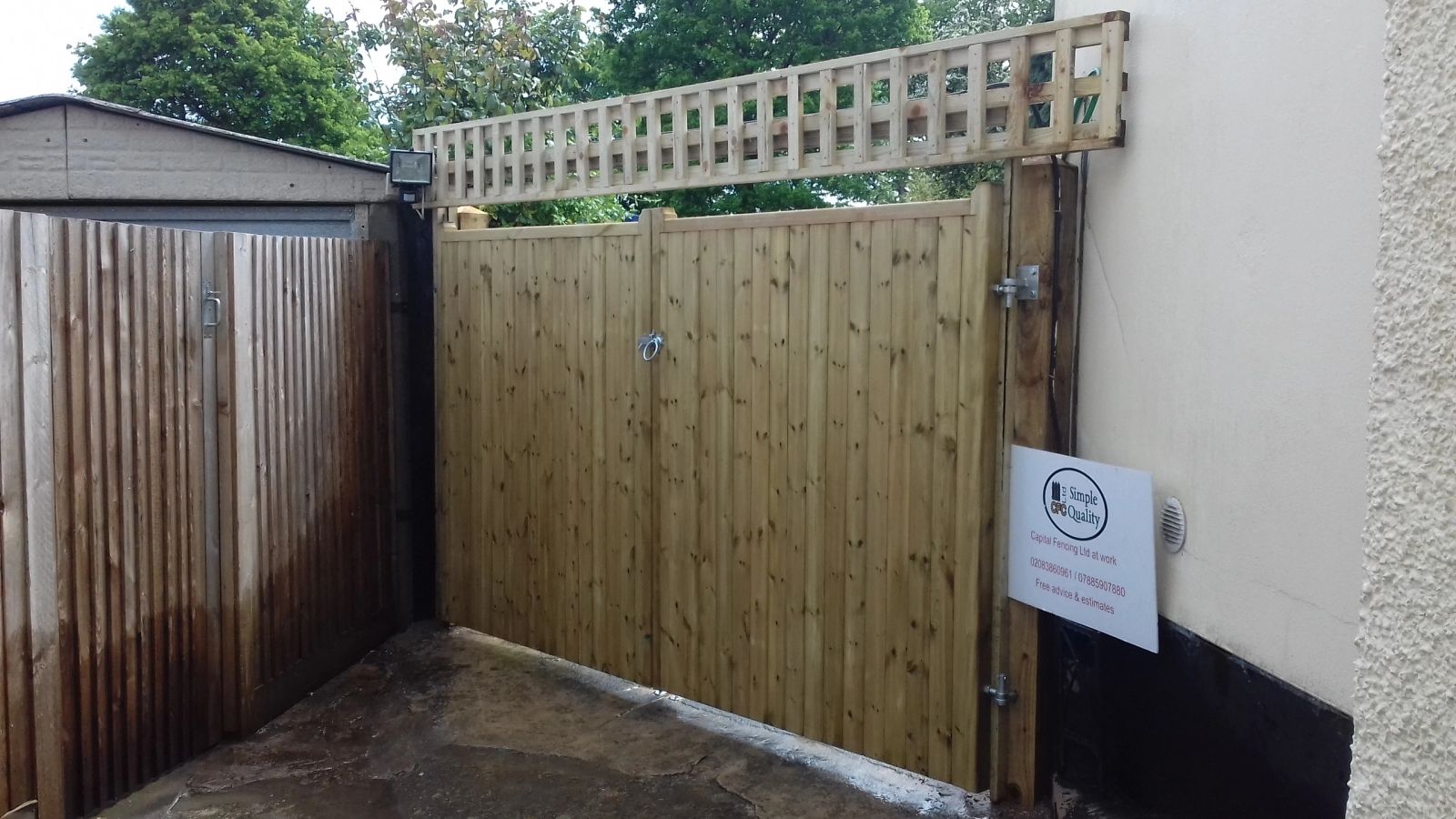
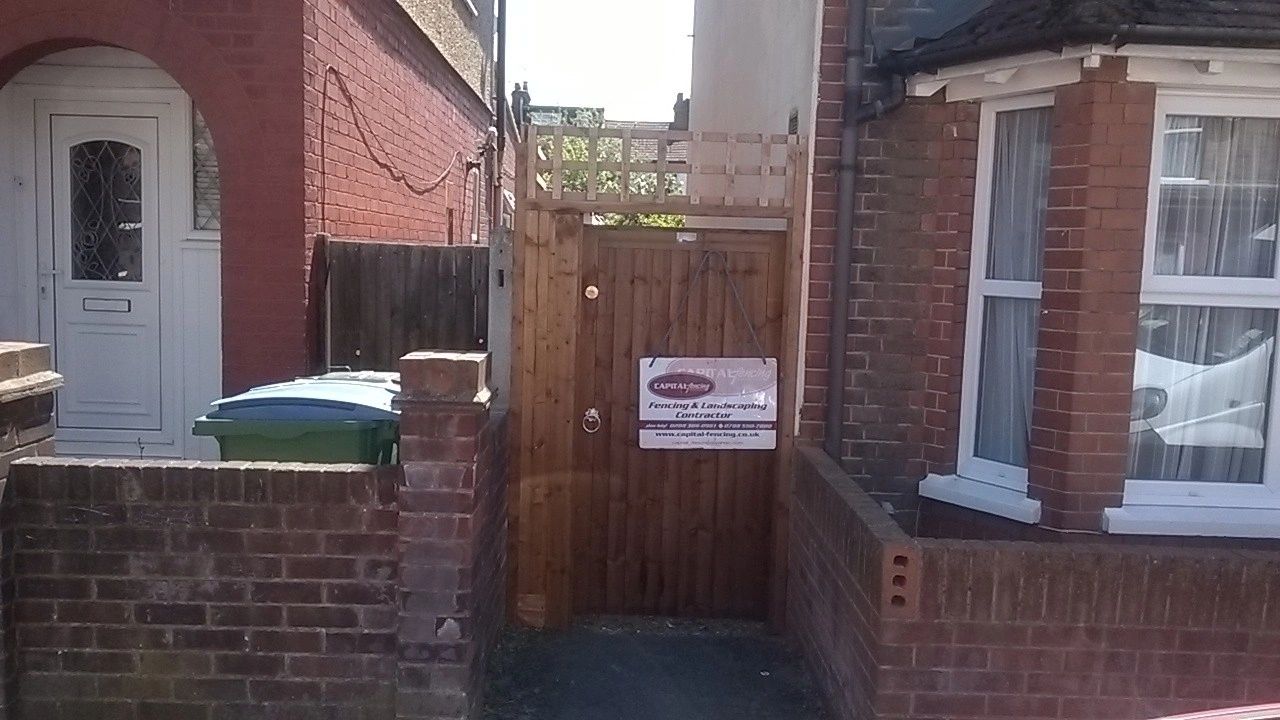
Padlock and hasp standards
Padlocks are commonly rated to a recognised standard covering resistance to cutting, drilling and picking, and a high-security hasp is only as good as the padlock fitted to it — pairing a budget padlock with a heavy-duty hasp undermines the whole fitting.
A closed-shackle or shrouded hasp design protects the padlock body from bolt-croppers, which is the more common attack on an exposed gate than picking.
Oak tannin staining on fixings
Oak contains a high concentration of tannic acid, which reacts with iron to produce a dark blue-black stain that can streak down a post or rail from any ferrous fixing left in contact with damp oak.
The same reaction corrodes ordinary mild steel fixings faster than it would in most other timbers, which is why stainless steel or silicon bronze fixings are the usual specification for oak gates and structural oak work.
Staining is largely cosmetic and doesn't weaken the timber, but on a visible feature gate it's often the deciding factor in paying the difference for stainless fixings over galvanised ones.
Storm damage to a boundary fence and insurance
Standard buildings insurance policies frequently exclude fences from cover for storm damage, or cover them only up to a modest specified limit, which surprises many homeowners after a bad storm.
Where a fence is shared or ownership is unclear, storm damage can also raise the question of whose policy, if either, is expected to respond.
Checking a policy's specific wording on fences and gates before relying on it for storm repair avoids finding out about exclusions only after a claim is made.
Building for flood-prone gardens
Gardens on a known flood plain or with a history of standing water after heavy rain benefit from fence bases designed to let water pass through rather than dam against a solid panel, which can otherwise add pressure to a fence line during a flood event.
Gravel boards set to allow some drainage, and hardware chosen to resist prolonged wet exposure, both reduce the aftermath clean-up and repair cycle that repeat flooding causes.
It's also worth checking the Environment Agency's flood risk mapping for a specific plot before finalising a spec, since risk varies a great deal even within the same postcode.
Powder-coat pre-treatment
Powder coating is only as durable as the surface preparation beneath it, and steel that hasn't been degreased, and often chemically pre-treated with a phosphate or chromate conversion coating, will let the powder coat lift and blister within a season or two.
On galvanised steel specifically, a specialist pre-treatment is needed because standard powder coat doesn't bond reliably to a plain zinc surface without it, which is why powder-coated galvanised railings are a distinct product from simply galvanised steel painted afterwards.
Once properly applied and cured, the powder coat itself is a hard, continuous barrier finish that resists chipping better than wet paint, though any breach down to bare metal will corrode locally without a way to self-heal.
Restrictive covenants on open-plan frontages
Many post-war estates were built with an explicit covenant in the title deeds preventing front garden fences or walls above a low height, intended to preserve an open-plan street appearance.
These covenants are private legal obligations between landowners rather than planning rules, and breaching one can in principle be enforced by whoever holds the benefit of the covenant, sometimes a management company.
Checking the title register for this kind of restriction before fitting a front boundary fence avoids finding out about it after the work is done.
Segregating timber and concrete waste
Treated timber, plain untreated offcuts and broken concrete are usually classed and processed differently at a waste facility, so keeping them in separate piles or skip compartments on site can reduce disposal cost and avoid a mixed load being rejected.
Old concrete post bases and gravel boards are inert waste and can sometimes be crushed and reused as hardcore rather than sent to landfill, which is worth checking with the waste carrier before assuming it all goes in one load.
Metal fittings — old hinges, bolts, wire ties — pulled out during a strip-down are usually worth separating too, since scrap metal is handled through a different route to general construction waste.
Safety on a gate that's failed near a road
A driveway gate that's dropped or come off its hinges next to a road or shared path is treated as a priority repair, since a swinging or fallen gate in that position is a hazard to passers-by as well as an inconvenience.
We make a failed gate safe on the first visit where it poses any immediate risk, even if the full repair follows separately.
Replacing a single damaged board
Where only one or two boards on a gate face have split or rotted and the frame itself is sound, those boards can usually be replaced individually rather than remaking the whole gate.
Matching the profile and thickness of the original boards matters for both appearance and how the new timber takes up moisture alongside the old.
Surface-water run-off across a boundary
Where one garden sits higher than its neighbour, or has a hard surface that sheds rain quickly, surface water often crosses the boundary line rather than staying on the plot it fell on.
A solid close-boarded fence with gravel boards set into the ground can act as an unintended dam, backing water up against the base and accelerating rot in the boards nearest the high side.
A small gap under the boards, or a French drain running parallel to the fence line, lets water pass through without saturating the timber, and is worth raising with a client before installation rather than after a wet winter.
Choosing between razor wire and barbed tape toppings
Barbed tape has a flat steel strip with stamped barbed edges wound into a coil, giving a denser and more visually aggressive deterrent than traditional twisted barbed wire, which is now used less often on new commercial work.
Both carry a real injury risk and are generally reserved for boundaries without public pedestrian access, since a topping that could injure a passer-by on a footpath side raises liability concerns a lower-risk topping avoids.