London & Hertfordshire Free Site Visit
softwood garden decking installed by Capital Fencing in Hatfield (AL9)
Hatfield · AL9 / AL10

Looking for Hardwood Decking in Hatfield? Local Specialist Serving Welwyn Hatfield Borough

Density is the whole story with hardwood: it is harder to cut, needs pre-drilling and hardwood-rated screws, and it silvers rather than greys. In Hatfield gardens it is specified where the deck is a feature, not just a surface. We're a small, time-served hardwood decking crew working out of London and Herts, and Hatfield is a regular week for us. Most briefs here come down to premium rear gardens where a natural silver-grey patina is the desired finish — and honestly, whether hardwood decking is the right answer at all before we quote. Recent work on St Albans Road West and Briars Lane. We orient jobs off University of Hertfordshire campus.

Density is the whole story with hardwood: it is harder to cut, needs pre-drilling and hardwood-rated screws, and it silvers rather than greys. In Hatfield gardens it is specified where the deck is a feature, not just a surface. We're a small, time-served hardwood decking crew working out of London and Herts, and Hatfield is a regular week for us. Most briefs here come down to premium rear gardens where a natural silver-grey patina is the desired finish — and honestly, whether hardwood decking is the right answer at all before we quote. Recent work on St Albans Road West and Briars Lane. We orient jobs off University of Hertfordshire campus.

Typical spec

How we build hardwood decking in Hatfield

Yellow balau, ipe or iroko boards on treated softwood or hardwood joists. Standard build: 21mm yellow balau or 19mm ipe, secret-fix or countersunk, hardwood-rated screws. On Hatfield jobs we adjust for uniform new-build estates mean visual consistency across runs is important to keep frontages looking right.

Property mix locally: post-war new-town estates, university accommodation, and Old Hatfield's period cottages. Typical gardens: compact rectangular plots, mostly level, often shared with neighbour-owned fences. Postcodes we regularly service: AL9, AL10.

Why hardwood decking works here

  • genuine 25-year plus service life on yellow balau or ipe when detailed properly
  • richer natural colour and grain than any composite
  • can be sanded and re-oiled indefinitely

Common Hatfield briefs

  • commissioned landscape schemes where the deck is a design feature, not just a floor
  • premium rear gardens where a natural silver-grey patina is the desired finish

Hardwood Decking FAQs — Hatfield

How does hardwood compare to composite for slip resistance?

Every hardwood board is pre-drilled — driving straight into balau splits ends and loses you boards on a Hatfield job. We work this patch weekly, from Hatfield Business Park out toward welwyn garden city. Worth weighing genuine 25-year plus service life on yellow balau or ipe when detailed properly against requires annual oiling to keep the honey colour — otherwise silvers naturally before you commit.

Can I let hardwood decking silver naturally?

Stainless fixings only: plated screws stain a hardwood face within a season in Hatfield. For post-war new-town estates in AL9, that is where the cost sits. Worth weighing genuine 25-year plus service life on yellow balau or ipe when detailed properly against requires annual oiling to keep the honey colour — otherwise silvers naturally before you commit.

How do you handle end-grain sealing on hardwood decks?

Every hardwood board is pre-drilled — driving straight into balau splits ends and loses you boards on a Hatfield job. We allow for compact rectangular plots when setting out in Hatfield. Worth weighing genuine 25-year plus service life on yellow balau or ipe when detailed properly against requires annual oiling to keep the honey colour — otherwise silvers naturally before you commit.

Can you build a hardwood deck on top of an existing concrete slab?

Every hardwood board is pre-drilled — driving straight into balau splits ends and loses you boards on a Hatfield job. Survey slots across AL9 are usually inside a week. Worth weighing genuine 25-year plus service life on yellow balau or ipe when detailed properly against requires annual oiling to keep the honey colour — otherwise silvers naturally before you commit.

What joist spacing do you use for hardwood boards?

Stainless fixings only: plated screws stain a hardwood face within a season in Hatfield. We work this patch weekly, from Hatfield Business Park out toward welwyn garden city. In short: genuine 25-year plus service life on yellow balau or ipe when detailed properly, though requires annual oiling to keep the honey colour — otherwise silvers naturally.

Recent hardwood decking work
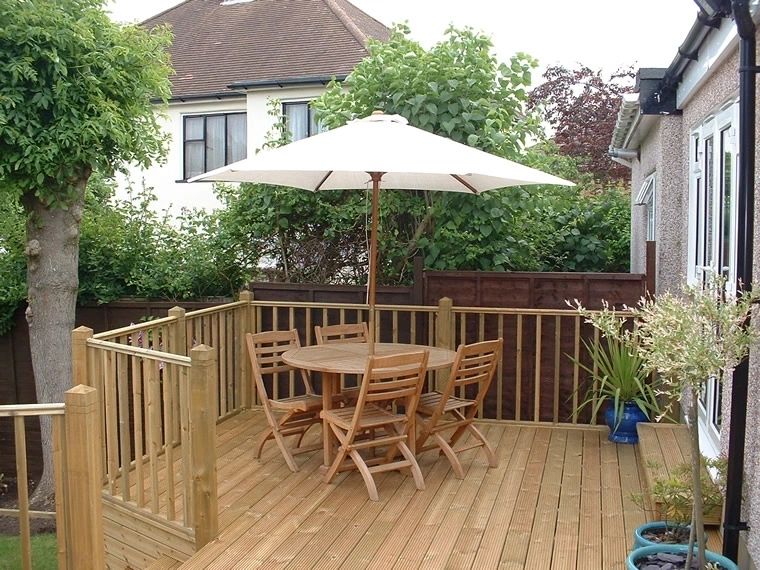
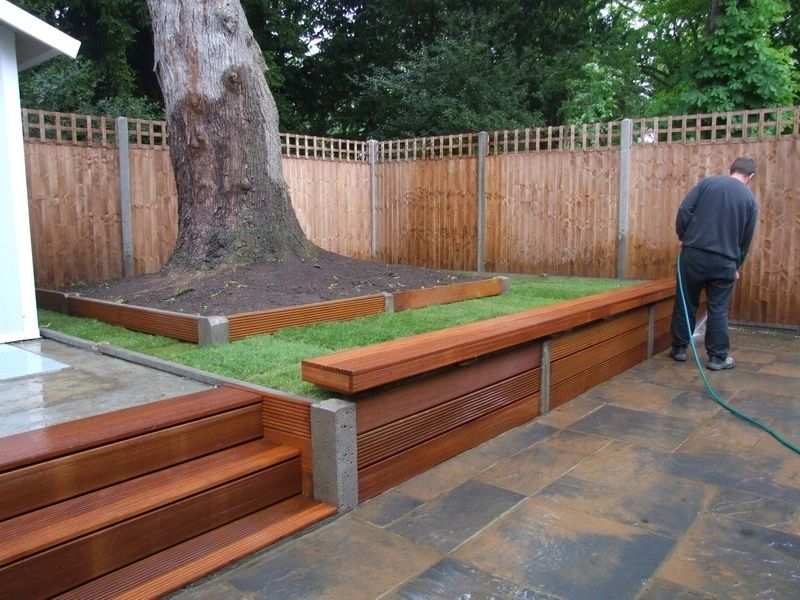
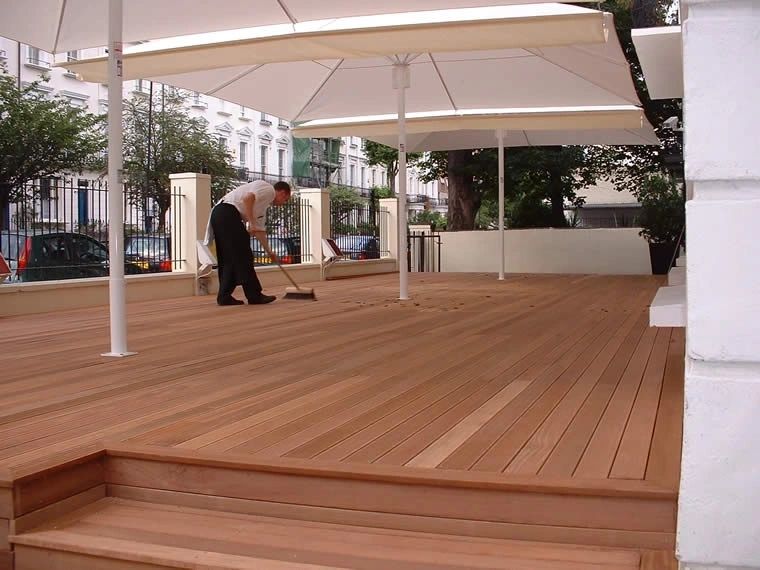
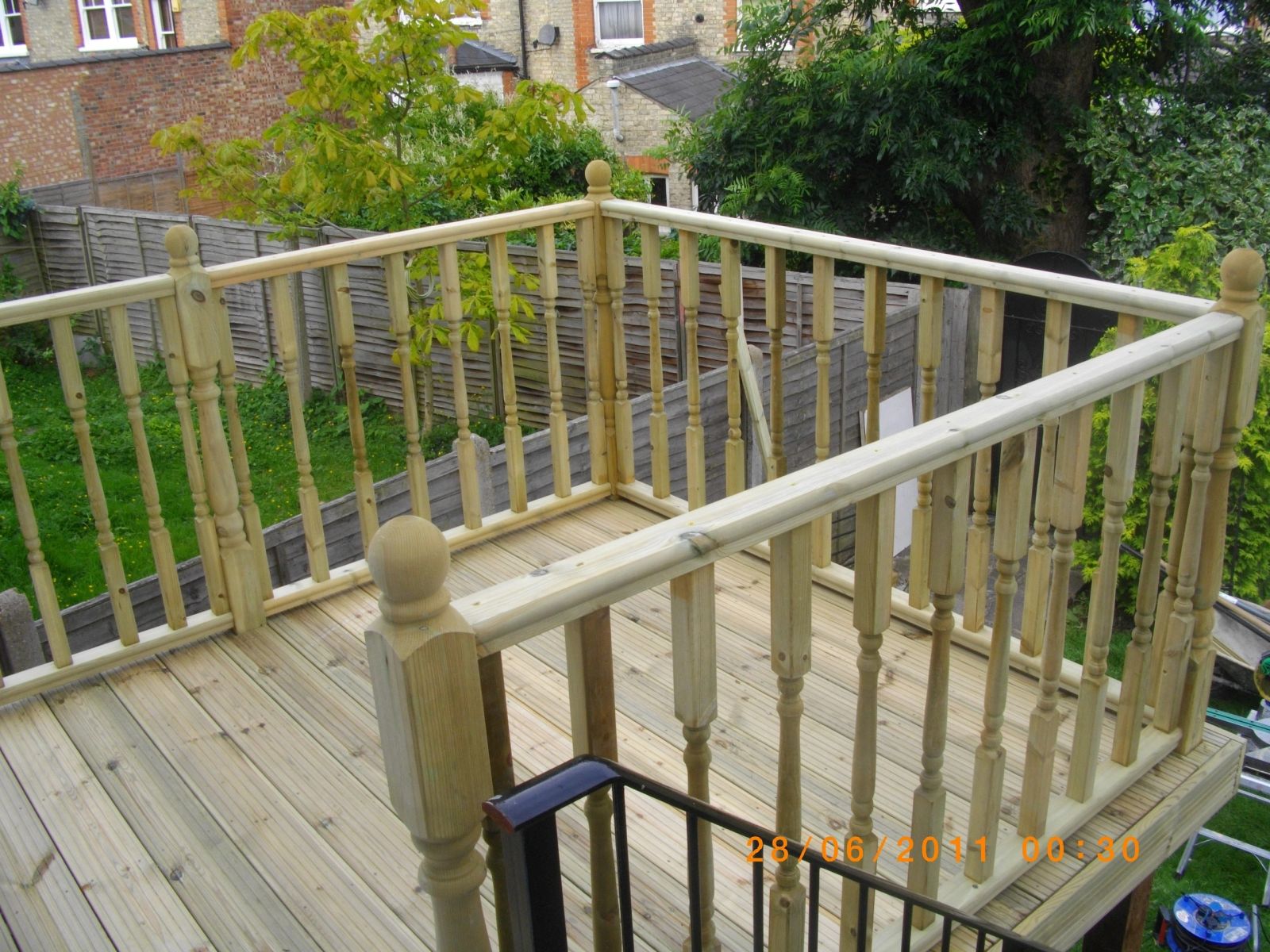
softwood garden decking installed by Capital Fencing in Hatfield (AL9)hardwood deck install installed by Capital Fencing in Hatfield (AL9)composite decking installed by Capital Fencing in Hatfield (AL9)raised garden deck installed by Capital Fencing in Hatfield (AL9)

Site notes: hardwood decking in AL9

Height rules when replacing a damaged section

A repair that keeps the fence at its existing height rarely needs a fresh planning check, but if a client wants to increase height while replacing a damaged section, the same permitted development limits apply as a new boundary.

This comes up most often on a front boundary, where the allowed height is lower than at the side or rear.

The general boundaries rule explained

Land Registry title plans in England and Wales normally show only the 'general boundary' of a property, meaning the line on the plan is indicative rather than a precise, surveyed measurement to the centimetre.

That's why a title plan alone rarely settles an argument about whether a fence sits a few inches one way or the other.

For most domestic fencing this doesn't matter, but where a dispute is brewing it's worth knowing the plan wasn't drawn to resolve exactly that kind of question.

Boundaries against a railway embankment

A boundary running along a railway embankment is very often owned and maintained by the railway infrastructure operator rather than the adjoining householder, and any work close to the operator's land, including digging near its toe or crest, usually needs prior notice or permission.

Embankment ground can also be made up of variable historic fill rather than natural strata, since many were built up from spoil during original construction, which affects both digging and the stability assumptions for post bases near the base of the slope.

Access for materials and machinery along these boundaries is frequently restricted, so confirming land ownership and any operator consent needed is a necessary step before quoting the work.

Concrete, timber and steel posts compared

Concrete posts don't rot, warp or need re-treating, which makes them the default for a long-life boundary, but they're heavier to handle, harder to cut on site, and can crack if struck hard rather than bending.

Timber posts are lighter, easier to notch and fix ironmongery to, and match a fully timber run visually, but they're the first component to fail through rot even when the boards above them are sound.

Steel posts (box section or RSJ) suit gates, very exposed runs or where a slim sightline matters, and they're galvanised or powder-coated rather than treated, but they need a compatible fixing method for timber infill panels rather than simple nailing.

Covenants restricting side and rear fence height

Some estates carry covenants limiting side or rear boundary fence height below the normal 2m permitted development figure, often to preserve sightlines or a particular street character.

These restrictions are private and enforced separately from planning law, meaning a fence could comply fully with planning rules and still breach the estate's covenant.

It's worth checking the title register for this kind of restriction on any estate where neighbouring gardens seem to share an unusually consistent boundary height.

Rights of access to maintain a boundary

Some older deeds include an explicit right for a neighbour to enter adjoining land to maintain their side of a boundary structure, but this isn't automatic everywhere and shouldn't be assumed.

Where no such right exists in the paperwork, entering a neighbour's garden to repair or replace a fence normally needs their permission, arranged directly rather than taken for granted.

The Access to Neighbouring Land Act 1992 provides a separate, more formal route for essential works where agreement can't be reached, though it's aimed at more serious situations than routine fence replacement.

Working over a neighbour's flowerbed

Repairing a shared boundary sometimes means working from the neighbour's side, particularly where the fence faces that way or access from the owner's side is blocked, and that access should be agreed with the neighbour before work starts.

Protecting planting beds and lawn on the working side during the repair avoids turning a fence job into a wider dispute over incidental damage.

Restrictive covenants on newer estates

Many post-war and modern estates carry restrictive covenants in the original transfer deeds that go beyond planning law, commonly limiting fence height, requiring a specific style, or banning solid boundary treatments on front gardens entirely to preserve open-plan sightlines.

These covenants are a private legal matter between landowner and the estate's management company or original developer, so full planning permission being unnecessary doesn't mean the fence is automatically allowed.

Breach of covenant is usually enforced by a neighbour, resident's association or management company rather than the council, and can result in a requirement to remove the work at the owner's cost, so checking the title register for covenants before ordering is worthwhile on any estate build.

Mediation as a step before a formal boundary dispute

Community and property mediation services exist specifically to help neighbours resolve disagreements, including boundary and fencing disputes, without going straight to solicitors or court.

Mediation is generally faster and considerably cheaper than formal legal action, and can preserve a working relationship between neighbours who will, after all, remain neighbours.

Where a boundary disagreement is becoming entrenched, raising the idea of mediation early is often more productive than escalating straight to legal correspondence.

Boundary ownership evidence and T-marks

A 'T' mark on a title plan, pointing inward from the boundary line towards a particular plot, is the traditional (though not universal) convention indicating that plot owns and is responsible for that boundary structure.

Where both sides of a boundary carry a T, or neither does, the deeds are silent and ownership defaults to whatever can be evidenced by other means — old photographs, the position of fence posts, or long-standing maintenance history.

T-marks aren't a legal guarantee and can be missing or wrong on older plans, so where a boundary is disputed it's worth treating the mark as a starting point for discussion rather than conclusive proof.

Corner plots and highway sightlines

A boundary fronting a road used by vehicles is limited to 1m under permitted development, but corner plots have a second constraint: the highway authority's visibility splay, which can require even lower boundary treatment near a junction so drivers can see pedestrians and oncoming traffic.

These splays are measured as a triangle from a set point back along both roads and are sometimes fixed by a planning condition on the original build rather than by the general permitted development rules.

A solid fence built to the letter of the 1m rule can still be a highway safety problem on a tight corner, so it's worth checking the local plan or asking planning before finalising height on a corner boundary.

HMO licensing and boundary obligations

A licensed House in Multiple Occupation can carry specific conditions relating to the external areas of the property, including secure and well-maintained boundary fencing, safe means of escape through a rear garden, and bin storage screened from the street.

Licensing officers inspecting the property will check the condition of boundary structures as part of the wider fire safety and amenity standards, and a broken or unsafe fence can be flagged as a licence condition breach requiring remedy within a set period.

Landlords of licensed HMOs should treat boundary repair requests from the council's licensing team as time-limited compliance matters rather than routine maintenance to schedule at leisure.

Thermal cracking in concrete post caps

Concrete post caps and copings can develop fine cracks from repeated freeze-thaw cycling, where water absorbed into small surface pores expands as it freezes and gradually widens existing microcracks.

A denser, lower-porosity concrete mix, or one finished with a sealant, absorbs less water in the first place and is correspondingly more resistant to this kind of frost damage than a porous, untreated finish.

Once a crack has formed, it tends to widen faster in subsequent winters, since the enlarged crack itself now holds more water than the original surface pores did, which is why early repair matters more than it might first appear.

Party fence wall versus an ordinary boundary fence

A 'party fence wall' has a specific meaning under the Party Wall etc. Act 1996 — a structure that stands astride the boundary line, jointly used by both properties, which is distinct from a garden fence panel that simply happens to mark a boundary.

Most timber panel fencing sits on one owner's land and isn't a party structure in that legal sense, even where it visually marks the boundary line.

Genuine party wall situations are more likely with masonry garden walls straddling the line, and those can bring the Act's notice procedures into play, which is worth checking before work starts.

Oil it and it holds its colour; leave it and it silvers evenly. Either is fine, and we will tell you honestly what each looks like after two Hertfordshire winters. Whether you're on a period street near Hatfield Business Park or a newer estate toward welwyn garden city, hardwood decking in Hatfield is a service we run every week — booked in, on time, and left tidy. Recent work on St Albans Road West and French Horn Lane. We orient jobs off Galleria.

Get In Touch

Get My Free Quote — 24h Response

No callout fee · Free site visit · Friendly local team covering London & Hertfordshire.

Call us
07885907880
or 02036484746
Email
capital_fencing@yahoo.com
WhatsApp
Message us anytime
Area
London & Hertfordshire
Payment
Card payments accepted

Pay by debit or credit card, bank transfer or cash once the work and price are agreed. No deposit taken online.

Request a Free Quote

We'll get back to you within 24 hours.

Free Site Visit No Callout Fee
Call WhatsAppQuote