Trees, roots and protected planting near a secure line
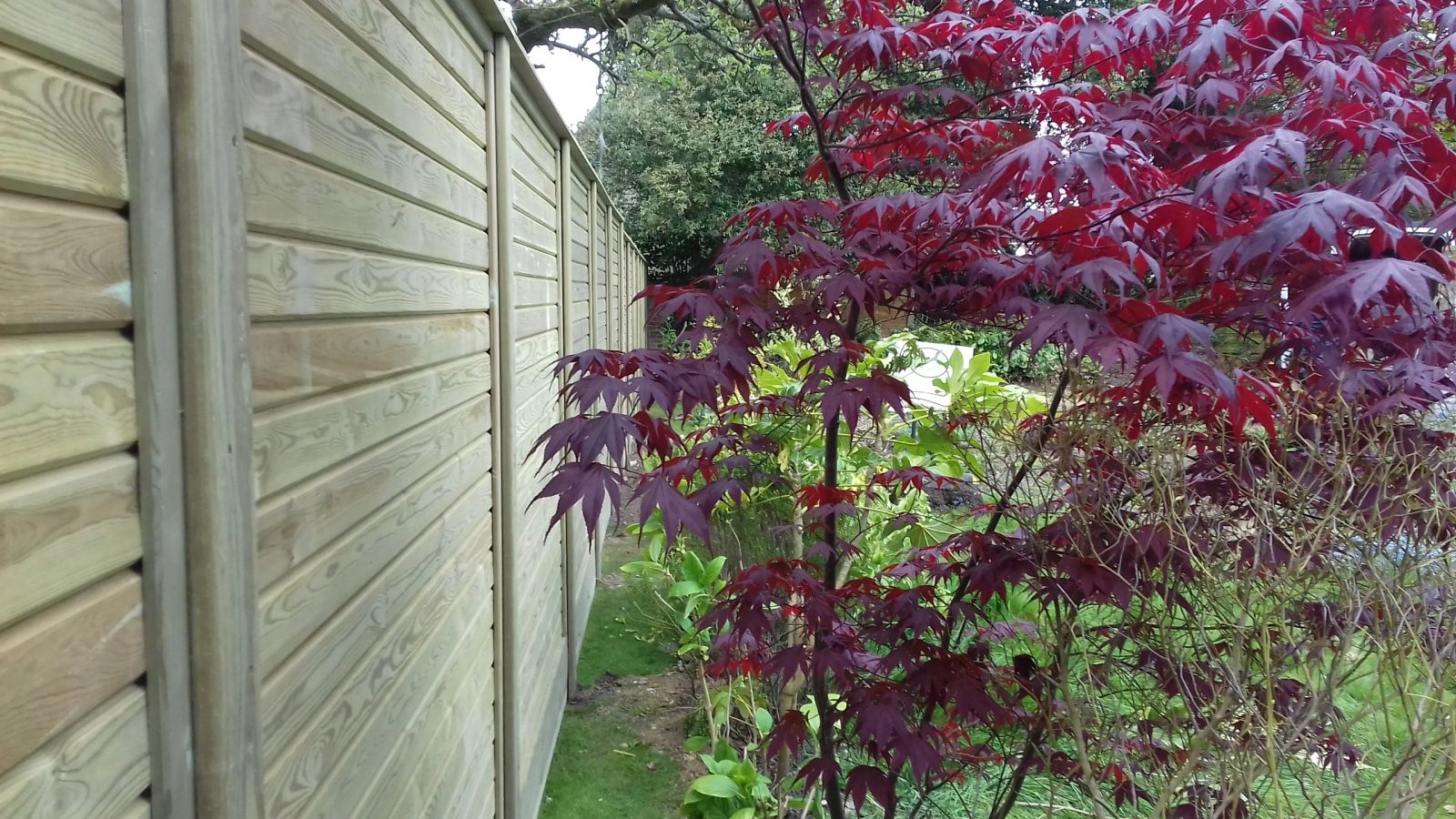
Mature trees on or near a boundary change post positions more than most clients expect — a protected tree's root protection area can rule out a straight post line altogether, and we offset posts around roots rather than cutting through them.
Where a tree is covered by a preservation order, work near it is checked against that restriction before any post hole is dug.
Brace direction on a braced timber gate
A diagonal brace on a ledged-and-braced gate has to run from the bottom hinge corner up to the top latch corner to work in compression rather than tension, and a brace fitted the wrong way round does almost nothing to stop the frame dropping.
This is a common fault on older self-built gates, and correcting brace direction is sometimes enough to fix a sagging gate without replacing any timber.
Converting a single gate to double
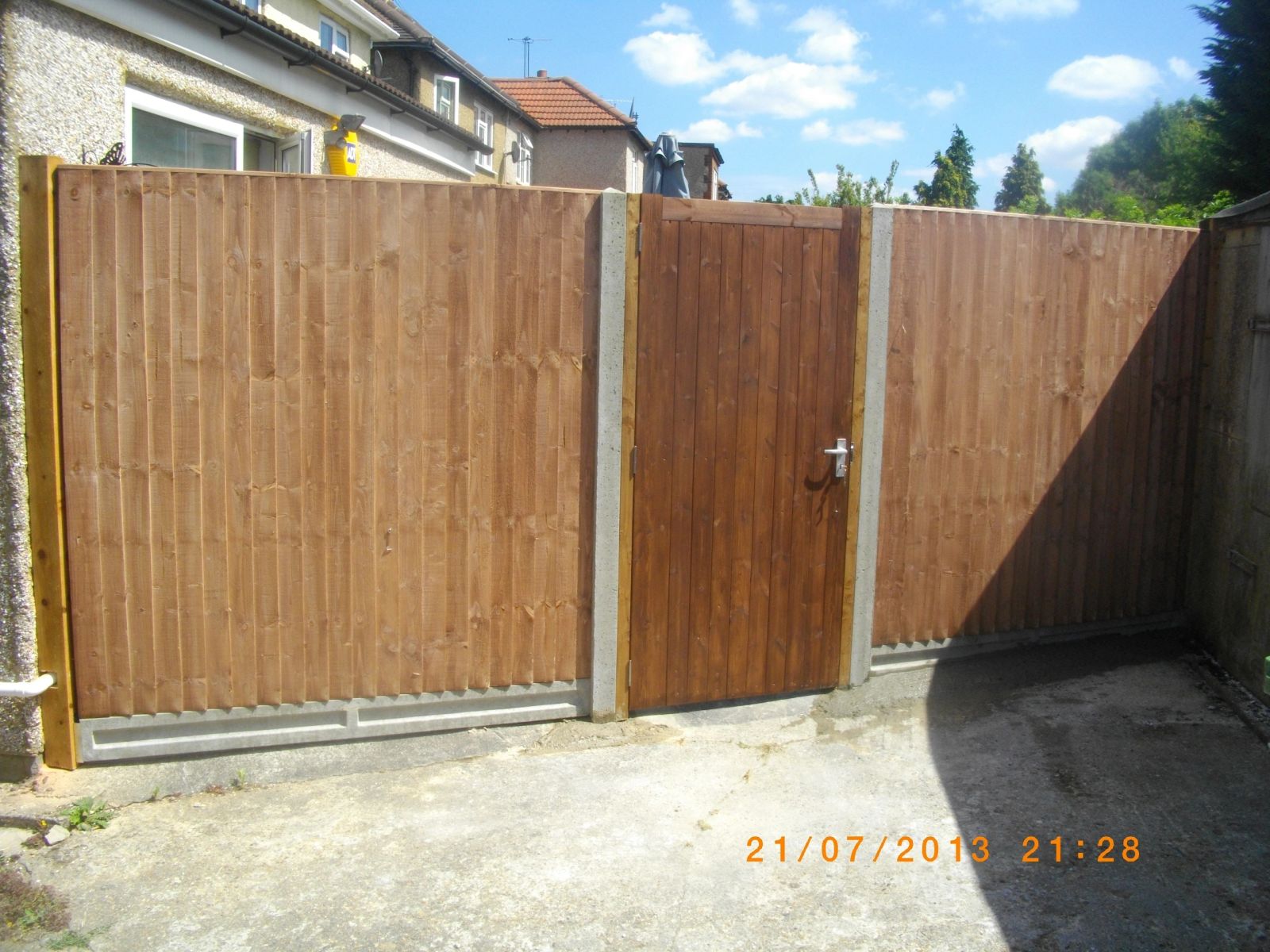
Widening a single gate opening into a double-leaf gate usually needs a new or repositioned hanging post partway across the opening as well as a slamming post on each outer side, rather than simply hanging two narrower leaves off the existing posts.
This is more involved than a straightforward repair and is worth planning against the full opening width before committing to a leaf size.
Boundary ownership constraints
Before specifying a heavier acoustic build, boundary ownership is checked against the title plan, since replacing a shared fence with something taller and more substantial without agreement can create a dispute even where the work itself is sound.
Where ownership is unclear or disputed, a fence sits back on the applicant's own land rather than assuming rights over a boundary that isn't clearly theirs.
EV charging cables and boundary fence gates
Where an electric vehicle charge point is fitted near a boundary, cable routing sometimes needs to cross under or through a gate or fence gap, which is worth considering at the design stage rather than retrofitting a channel later.
Trailing a charging cable across a public footway to reach a car isn't permitted in most areas without specific council-approved cable channel provision, which is a separate matter from the fence itself.
Checking the council's position on any cable crossing a footway, alongside the fence and gate design, avoids two separate problems being discovered one after the other.
Post top crown-cutting for water shedding
A crown cut, a shallow diagonal saw cut across the top of a fence post, sheds rainwater to one side rather than letting it pool flat on the post's exposed end grain.
It's a lower-cost alternative to fitting a separate post cap and can be combined with an end-grain preservative treatment applied to the freshly cut surface for extra protection.
A flat-topped post left uncapped and uncut is the most exposed detail on an otherwise well-treated post, since the end grain there absorbs water directly with nothing to divert it.
Steel post for a heavy timber gate
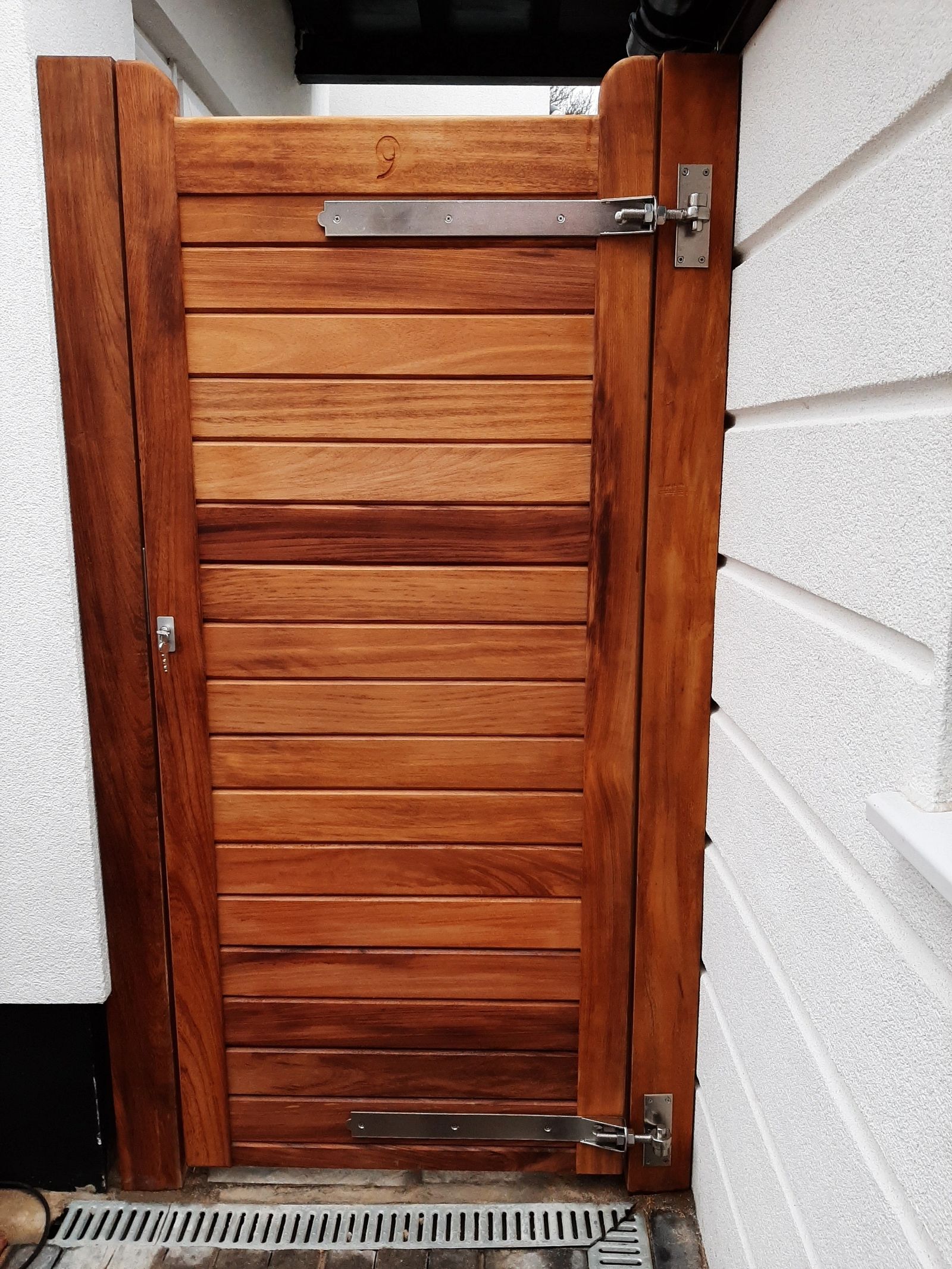
A wide or solid-faced timber gate can be heavy enough that a timber hanging post, even oversized, isn't stiff enough to resist long-term leverage, in which case a concreted steel post with a welded or bolted hinge plate gives a stiffer fixing.
This is more common on wide driveway gates than standard pedestrian gates, where the extra cost of a steel post is offset by significantly less long-term sag.
Go-kart track and small-engine noise
A go-kart track produces a high-revving small-engine noise that's tonal and carries well, similar in character to motorcycle noise but more continuous during a session, making it a demanding source for a garden barrier to soften.
Because the noise repeats in laps rather than as a single pass, a barrier's benefit is felt as a lower peak on each lap rather than a change to the overall duration of a session.
Automation compatibility checks and specialist referral
Before a gate is automated, its weight, swing clearance and frame rigidity need to suit the motor type being considered, and a gate that's sound for manual use isn't automatically suitable for automation without checking.
We check the gate itself is fit for automation and refer the motor, control-board and sensor installation to a specialist automation engineer.
Aligning a drop bolt on double gates
A drop bolt on the leading edge of one leaf of a double gate needs a matching socket set into the ground or a fixed plate below it, and that socket has to be positioned after the gates are hung and checked closed, not marked out in advance from a plan.
Ground movement or a slight settling of the gate posts over the following months can throw the bolt out of alignment with its socket, which is why some installers set the socket in a slightly oversized recess rather than a tight-fitting hole.
Where the ground under the gate is loose gravel or soft earth, a concrete socket set flush with the surface holds alignment far better over time than a bolt simply pushed into bare ground.
Checking a gate opening is square before building the gate
An opening that looks square by eye can still be a few centimetres out corner to corner, which only becomes obvious once a gate built to the nominal width won't hang without binding on one side.
Measuring both diagonals of the opening and comparing them is a quick way to confirm square — equal diagonals mean a true rectangle, unequal diagonals mean the posts have drifted out of parallel or the opening has racked.
Where an opening is slightly out of square and can't easily be corrected by resetting a post, building the gate with a small taper to match the actual opening is usually more practical than forcing the posts back into an exact rectangle.