London & Hertfordshire Free Site Visit
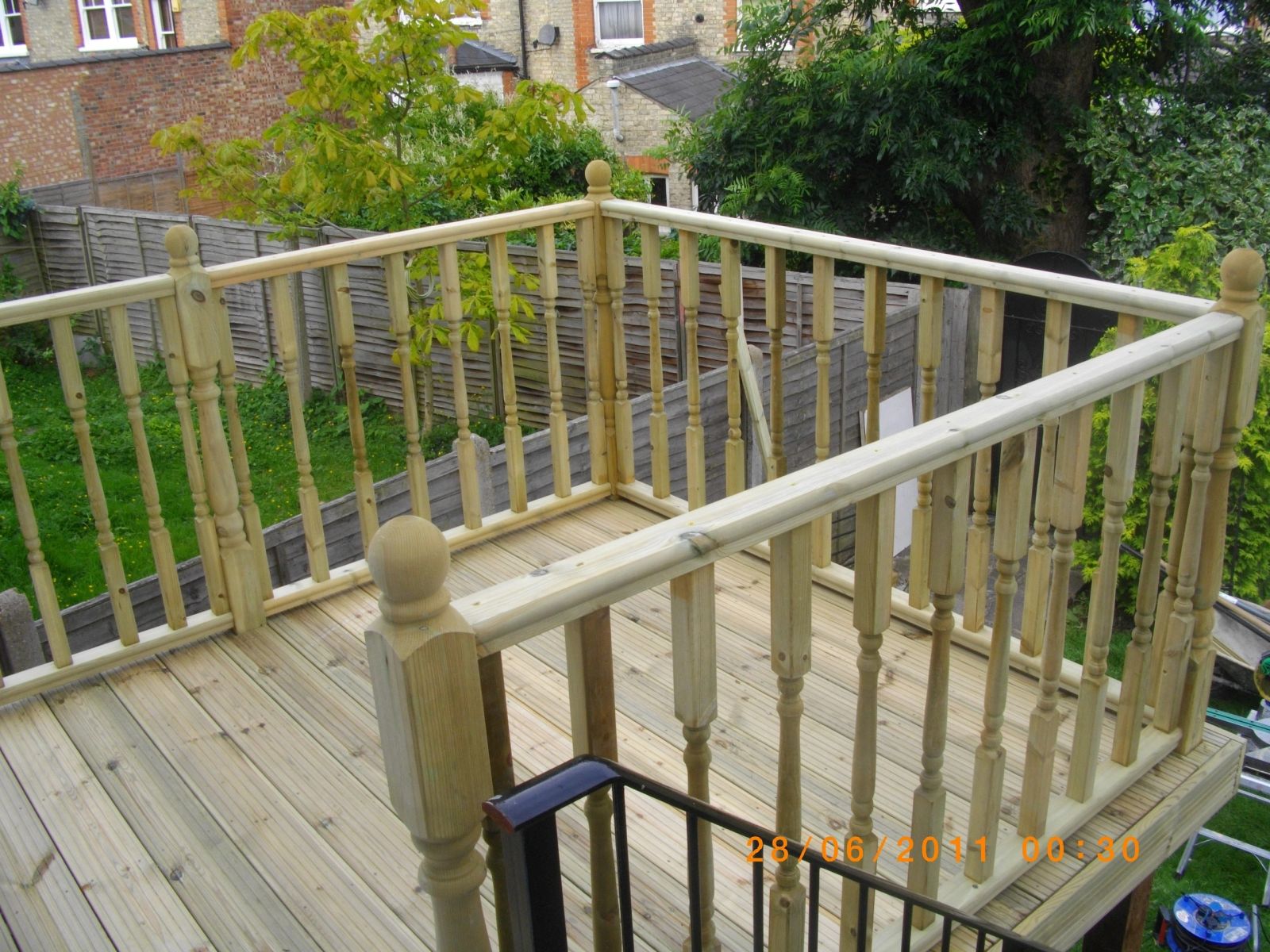
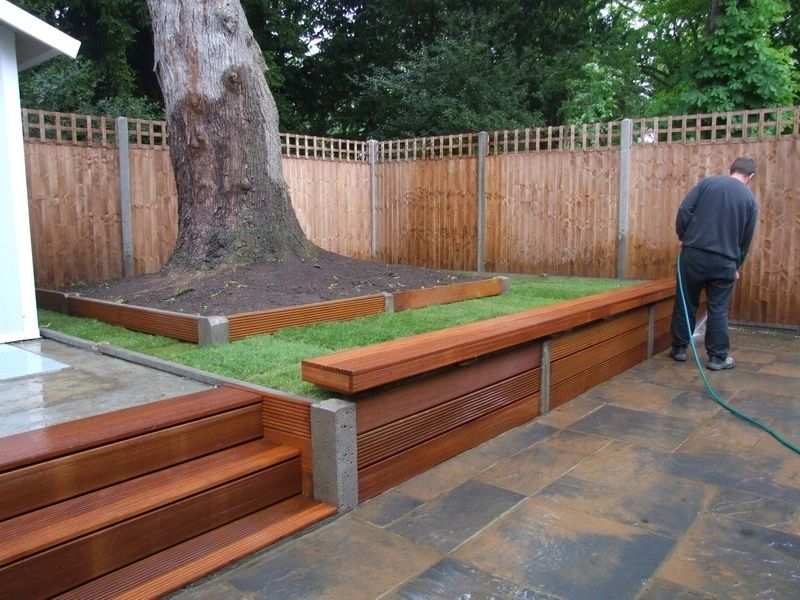
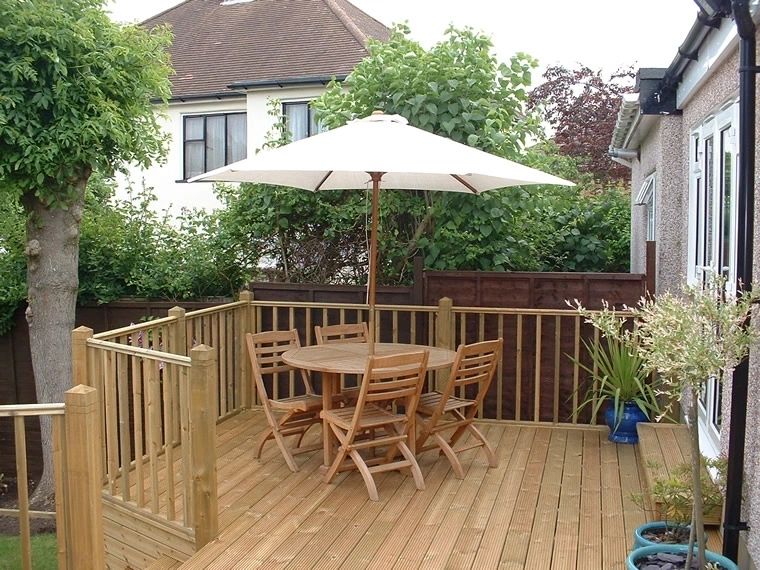
softwood garden decking installed by Capital Fencing in Welwyn Garden City (AL7)
Welwyn Garden City · AL7 / AL8

Hardwood Decking Installers Across Welwyn Garden City & hatfield

Hardwood decking is the choice when you want real timber and are happy to look after it. Yellow balau, ipe or iroko, secret-fixed or countersunk, on a frame built to carry a much denser board than softwood — that is the Welwyn Garden City hardwood spec. Hardwood Decking in Welwyn Garden City isn't a bolt-on for us — it's a day-in, day-out install. We cover AL7 / AL8 and the streets running toward A1000 / B197, and we know before we arrive that welwyn garden city has design covenants — front fences typically restricted in height and style. That's the first thing that shapes the spec, not the last. Recent work on Digswell Road and Applecroft Road. We orient jobs off Parkway central beeches.

Hardwood decking is the choice when you want real timber and are happy to look after it. Yellow balau, ipe or iroko, secret-fixed or countersunk, on a frame built to carry a much denser board than softwood — that is the Welwyn Garden City hardwood spec. Hardwood Decking in Welwyn Garden City isn't a bolt-on for us — it's a day-in, day-out install. We cover AL7 / AL8 and the streets running toward A1000 / B197, and we know before we arrive that welwyn garden city has design covenants — front fences typically restricted in height and style. That's the first thing that shapes the spec, not the last. Recent work on Digswell Road and Applecroft Road. We orient jobs off Parkway central beeches.

Common Welwyn Garden City briefs

  • premium rear gardens where a natural silver-grey patina is the desired finish
  • poolside and coastal-style decks needing hardwood durability without composite plastic feel

Why hardwood decking works here

  • genuine 25-year plus service life on yellow balau or ipe when detailed properly
  • richer natural colour and grain than any composite
  • can be sanded and re-oiled indefinitely
Typical spec

How we build hardwood decking in Welwyn Garden City

Yellow balau, ipe or iroko boards on treated softwood or hardwood joists. Standard build: 21mm yellow balau or 19mm ipe, secret-fix or countersunk, hardwood-rated screws. On Welwyn Garden City jobs we adjust for welwyn garden city has design covenants — front fences typically restricted in height and style.

Property mix locally: the original Garden City Movement housing — neo-Georgian semis and short terraces with consistent frontages. Typical gardens: rear gardens hidden behind tall established hedgerows; many properties sit on the original 1920s grid. Postcodes we regularly service: AL7, AL8.

Hardwood Decking FAQs — Welwyn Garden City

Which hardwood lasts longest for decking in the UK climate?

Stainless fixings only: plated screws stain a hardwood face within a season in Welwyn Garden City. We work this patch weekly, from Broadwater Road out toward hatfield. Worth weighing genuine 25-year plus service life on yellow balau or ipe when detailed properly against requires annual oiling to keep the honey colour — otherwise silvers naturally before you commit.

What joist spacing do you use for hardwood boards?

Every hardwood board is pre-drilled — driving straight into balau splits ends and loses you boards on a Welwyn Garden City job. For the original garden city movement housing — neo-georgian semis and short terraces with consistent frontages in AL7, that is where the cost sits. Worth weighing genuine 25-year plus service life on yellow balau or ipe when detailed properly against requires annual oiling to keep the honey colour — otherwise silvers naturally before you commit.

How does hardwood compare to composite for slip resistance?

Every hardwood board is pre-drilled — driving straight into balau splits ends and loses you boards on a Welwyn Garden City job. We allow for rear gardens hidden behind tall established hedgerows; many properties sit on the original 1920s grid when setting out in Welwyn Garden City. Practically, that means richer natural colour and grain than any composite — and we're upfront that material cost is significantly higher than softwood and often composite.

Can I let hardwood decking silver naturally?

Every hardwood board is pre-drilled — driving straight into balau splits ends and loses you boards on a Welwyn Garden City job. Survey slots across AL7 are usually inside a week. Practically, that means richer natural colour and grain than any composite — and we're upfront that material cost is significantly higher than softwood and often composite.

Can you build a hardwood deck on top of an existing concrete slab?

Board gaps are set for the fitting season, because a hardwood deck laid tight in winter has nowhere to go in July. We work this patch weekly, from Broadwater Road out toward hatfield. Practically, that means richer natural colour and grain than any composite — and we're upfront that material cost is significantly higher than softwood and often composite.

Recent hardwood decking work
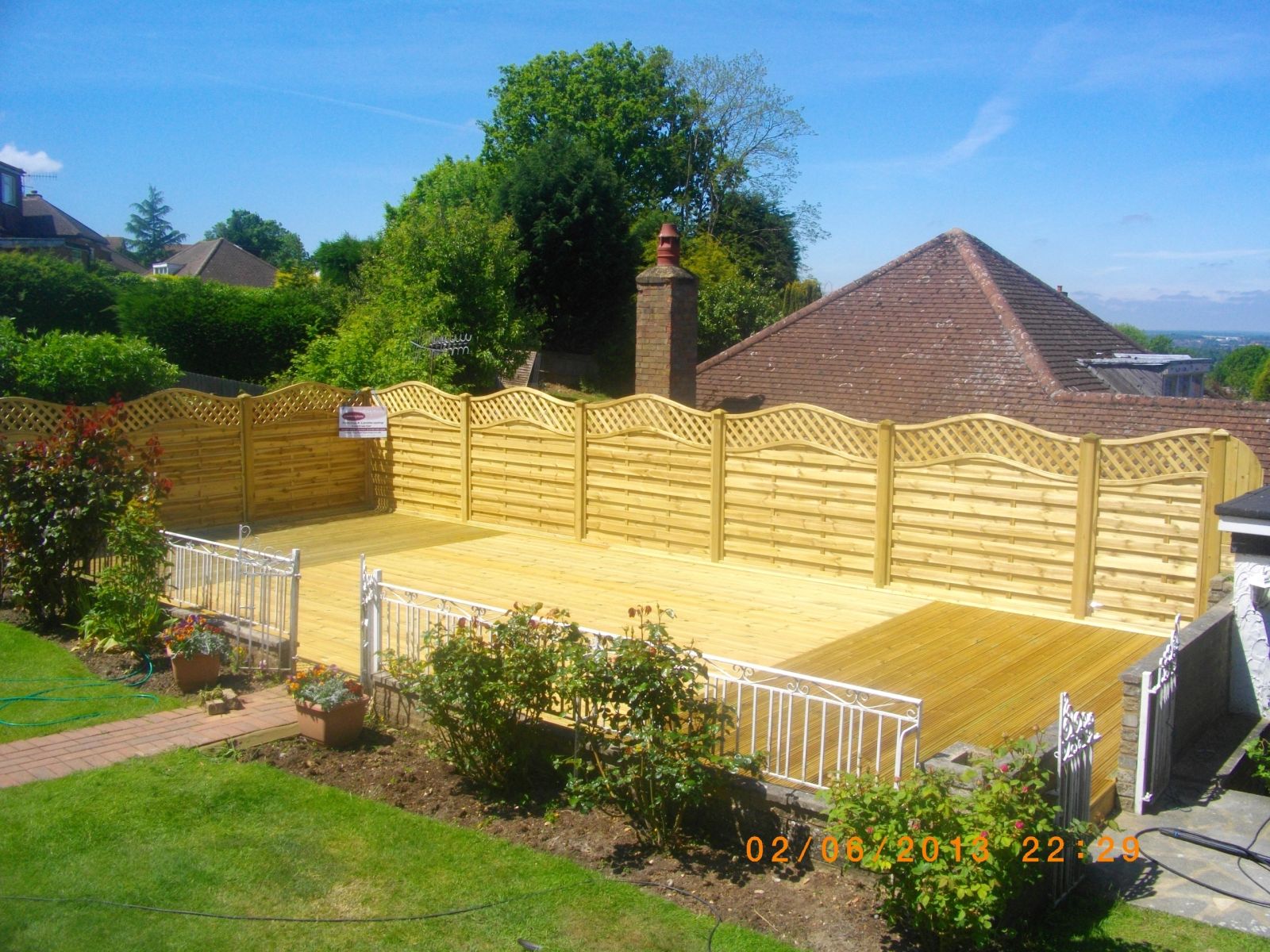
softwood garden decking installed by Capital Fencing in Welwyn Garden City (AL7)hardwood deck install installed by Capital Fencing in Welwyn Garden City (AL7)composite decking installed by Capital Fencing in Welwyn Garden City (AL7)raised garden deck installed by Capital Fencing in Welwyn Garden City (AL7)

Before you book hardwood decking in Welwyn Garden City

Maintenance that prevents the next repair

Most repairs we're called out for could have been caught earlier with a simple seasonal check — a post that's started to lean, a gravel board showing early rot, or a hinge that's begun to sag are all cheaper to address before they fail outright.

We'll flag anything else on the boundary that looks like it's heading the same way while we're on site for an unrelated repair.

Aftercare guidance for the first season

Newly set posts need their first winter to fully settle, and a slight tightening of gate hinges or latch alignment after the first few months of seasonal movement is normal rather than a sign of poor work.

Untreated or lightly treated timber benefits from an owner-applied preservative or stain within the first year, particularly on end grain and cut edges exposed during installation, since factory treatment doesn't reach every surface once a panel's been cut to fit.

Clearing leaves and debris from the base of gravel boards each autumn, where they trap moisture against the timber, is a simple habit that measurably extends the life of a fence beyond what the initial installation alone determines.

Composite versus timber

Composite decking and fencing boards trade a higher upfront cost for lower ongoing maintenance — no annual staining or oiling, and better resistance to rot in permanently damp or shaded spots where timber struggles.

The trade-off is that composite doesn't weather the way timber does; it stays close to its original colour rather than silvering or taking on the character some clients want, and off-cuts and end sections need cutting and capping carefully to stop moisture getting into the core.

For a boundary fence that's mostly out of sight, timber with a reapplied treatment every few years is often the more economical long-term choice; for a heavily-used deck, composite's lower maintenance burden usually wins out.

What a repair sign-off covers

Once a repair is complete we check the repaired section moves and sits correctly against the rest of the run, not just that the immediate damage is fixed, since a post reset slightly out of line can put uneven strain on the panels either side.

We also leave the client with a clear note of what was replaced and what, if anything, is worth watching over the next year or two.

Gravel-board clearance over uneven ground

A gravel board sitting flush with the soil on one section of a run can end up buried a couple of inches by the time the ground rises further along an uneven boundary, trapping moisture against timber that was specified to sit clear of the soil.

Stepping the board height slightly at each post, rather than running one continuous level line, keeps a consistent clearance above grade along the whole run.

Concrete gravel boards tolerate this ground contact better than timber ones, which is one reason they're specified as standard on plots with visibly uneven levels.

Splicing a new post section onto a sound base

Splicing joins a new length of post timber onto the sound lower section of an existing post using a scarfed or halved joint reinforced with bolts or a metal splice plate, used where the base and footing are solid but the post has failed higher up.

It suits posts damaged by impact or by a snapped rail rather than posts failed by rot, since a spliced joint relies on both pieces being genuinely sound timber to hold load reliably.

Screw pull-out values in timber

A screw's resistance to being pulled straight out of timber depends on thread depth, shank diameter and the density of the timber it's driven into, with denser hardwoods offering significantly higher pull-out resistance than softwoods for the same screw.

Coarse-thread screws designed for softwood construction generally have deeper, wider-spaced threads than fine-thread screws intended for hardwood or metal, since softwood's lower density needs more thread engagement to achieve comparable grip.

Pre-drilling a pilot hole reduces the risk of splitting dense or knotty timber but also slightly reduces ultimate pull-out resistance compared with a screw self-tapping fully into undrilled timber, which is a trade-off worth balancing against the specific timber and screw.

Repair-versus-replace decision based on how many posts have failed

Where only one or two posts in a run have failed, individual repair is usually the more sensible option, but once roughly a third or more of the posts along a run show the same rot or movement, a full run replacement often ends up more reliable and no more disruptive.

Counting failed posts as a proportion of the run, rather than judging each one in isolation, gives a clearer basis for that decision than reacting to whichever post has failed most recently.

Evidence photos for a repair or claim

Dated photographs of the damage taken before any clearance or repair work starts give a clearer record of the original condition than photos taken partway through the job.

Wide shots showing the whole run alongside close-ups of the specific failure point are generally more useful as a record than close-ups alone.

Handling older timber treated with preservatives no longer in use

Timber treated with older preservative formulations that have since been withdrawn or restricted can still be present in fences installed some years ago, and cutting or sanding that timber during a repair can release different residues than modern treated timber would.

Where a fence is old enough that its original treatment is uncertain, working with good ventilation, gloves and dust control, and disposing of offcuts as general waste rather than burning them, is the sensible default.

Timber post taper and strength distribution

A sawn timber post is typically a constant cross-section along its length, whereas the bending moment from wind load on the attached panel is greatest at ground level and reduces toward the top, meaning the post's strength margin isn't evenly used along its height.

This is why increasing embedment depth or post section size, rather than simply extending post height, is generally the more effective way to improve resistance to wind-induced snapping at ground level.

A post that fails from wind load almost always fails at or just below ground level rather than partway up its exposed length, reflecting where the bending stress genuinely concentrates.

Protecting galvanised coatings on fixings during a repair

Cutting, drilling or hammering a galvanised bracket or bolt during a repair can chip through the zinc coating and expose bare steel underneath, which then corrodes faster at exactly that damaged point than the surrounding coated surface.

Touching up any damaged area with a cold galvanising compound at the time of repair is a small step that meaningfully extends the life of the fixing, rather than leaving bare steel to start rusting immediately.

Converted flats and shared bin storage

Houses converted into two or three flats often have a shared bin store or side passage boundary that wasn't part of the original single-dwelling fence layout, and responsibility for repair can be unclear where the freeholder retains the passage but individual flats use it daily.

A gate onto a shared bin store needs to be wide enough for wheelie bins to pass without lifting them over a threshold, and a self-closing latch is worth specifying so the gate isn't left open between collections.

Where flats were converted without formal division of the garden, it's worth clarifying in writing which flat is responsible for which section of boundary before starting any replacement work.

Allotment and paddock ground

Allotment and paddock boundaries are often on ground that's been cultivated, grazed or left rough for decades, with a topsoil layer that's deeper and looser than a typical garden lawn but can also conceal old cultivation debris, buried irrigation pipe or fencing stobs from previous boundaries.

Paddock ground grazed by livestock compacts unevenly, with poached, churned patches near gateways sitting very differently underfoot from the firmer ground a few metres away.

Post specifications on this kind of ground usually need to account for stock leaning or rubbing on the fence line, which is a different load case from a garden boundary that just needs to withstand weather and general wear.

Hardwood decking in Welwyn Garden City is quoted by species and thickness, with the fixing method stated — secret-fix costs more in labour and leaves a clean board face. Hardwood Decking across AL7, AL8 is one of our regular runs. We'll quote honestly, tell you if hardwood decking isn't the right answer for your garden, and book the job in within a week or two of a signed quote. Recent work on Pentley Park and Digswell Road. We orient jobs off Sherrardswood.

Get In Touch

Get My Free Quote — 24h Response

No callout fee · Free site visit · Friendly local team covering London & Hertfordshire.

Call us
07885907880
or 02036484746
Email
capital_fencing@yahoo.com
WhatsApp
Message us anytime
Area
London & Hertfordshire
Payment
Card payments accepted

Pay by debit or credit card, bank transfer or cash once the work and price are agreed. No deposit taken online.

Request a Free Quote

We'll get back to you within 24 hours.

Free Site Visit No Callout Fee
Call WhatsAppQuote