London & Hertfordshire Free Site Visit
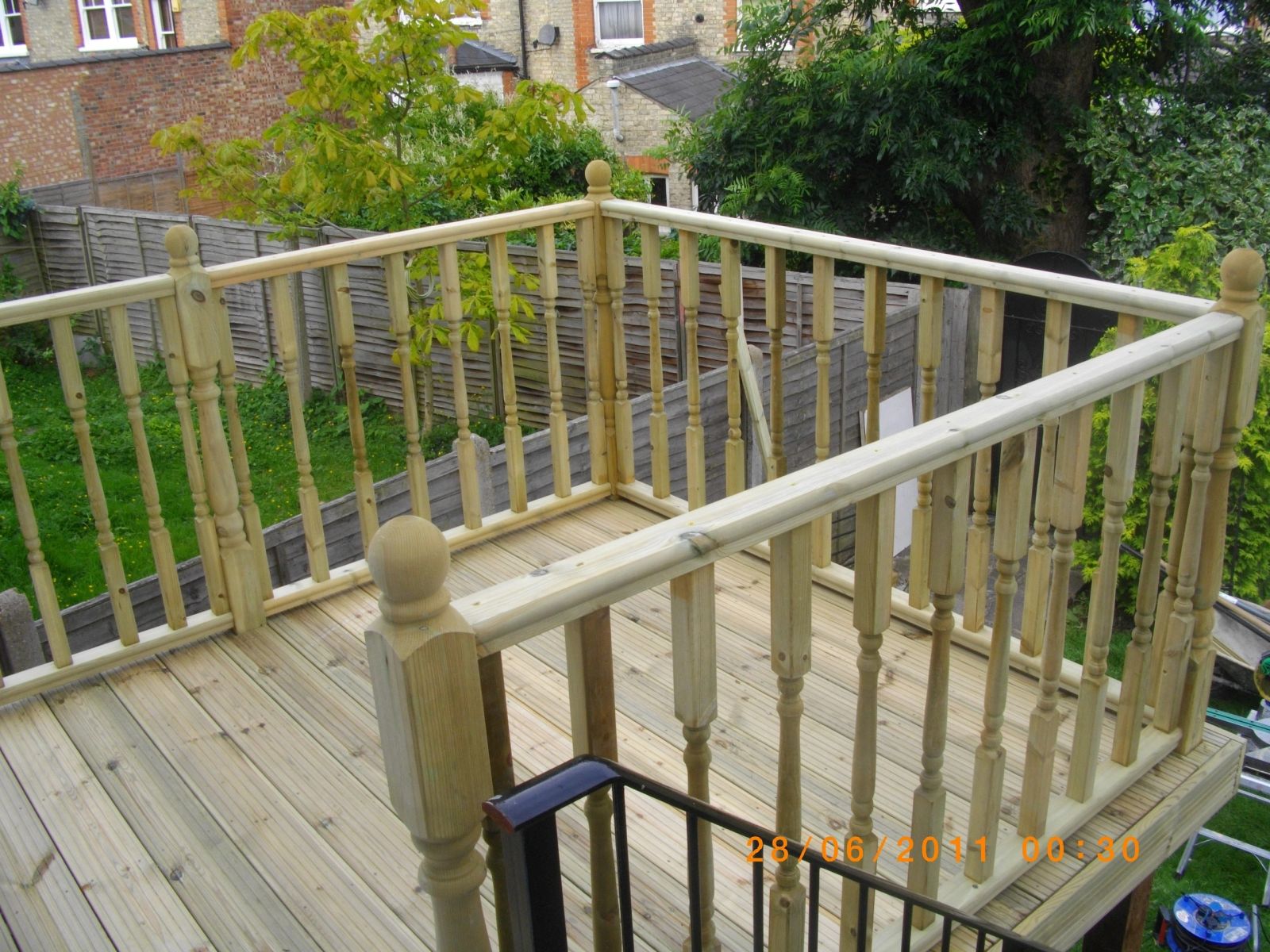
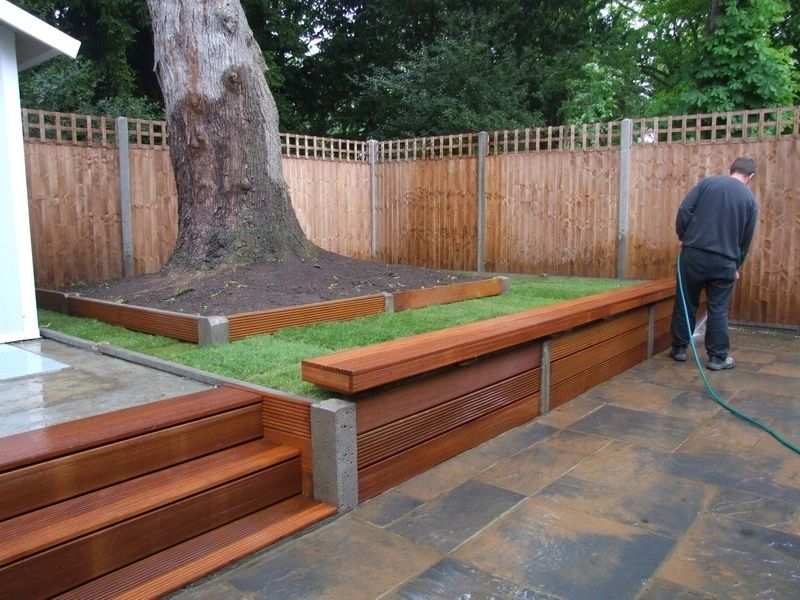
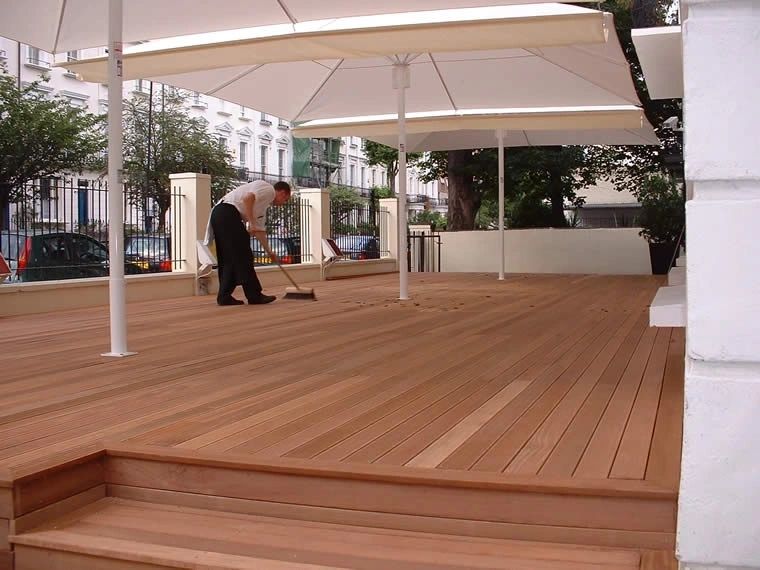
softwood garden decking installed by Capital Fencing in Ware (SG12)
Ware · SG12

Hardwood Decking for Georgian and Victorian properties in the centre in Ware

Hardwood decking is the choice when you want real timber and are happy to look after it. Yellow balau, ipe or iroko, secret-fixed or countersunk, on a frame built to carry a much denser board than softwood — that is the Ware hardwood spec. If you're weighing hardwood decking for a property in Ware, the housing stock — Georgian and Victorian properties in the centre, with newer suburban estates around Wengeo Lane — sets most of the answer. On long thin riverside plots — many drop down to the New River and need retaining work, yellow balau, ipe or iroko boards on treated softwood or hardwood joists generally makes sense for premium rear gardens where a natural silver-grey patina is the desired finish. Where it doesn't, we say so. Recent work on Watton Road and Crane Mead. We orient jobs off Ware station.

Hardwood decking is the choice when you want real timber and are happy to look after it. Yellow balau, ipe or iroko, secret-fixed or countersunk, on a frame built to carry a much denser board than softwood — that is the Ware hardwood spec. If you're weighing hardwood decking for a property in Ware, the housing stock — Georgian and Victorian properties in the centre, with newer suburban estates around Wengeo Lane — sets most of the answer. On long thin riverside plots — many drop down to the New River and need retaining work, yellow balau, ipe or iroko boards on treated softwood or hardwood joists generally makes sense for premium rear gardens where a natural silver-grey patina is the desired finish. Where it doesn't, we say so. Recent work on Watton Road and Crane Mead. We orient jobs off Ware station.

Why hardwood decking works here

  • genuine 25-year plus service life on yellow balau or ipe when detailed properly
  • richer natural colour and grain than any composite
  • can be sanded and re-oiled indefinitely
Honest trade-offs

Where hardwood decking isn't the right answer

  • board movement means secret-fix systems need careful spec
  • requires annual oiling to keep the honey colour — otherwise silvers naturally

We'll say so on the site visit — a wasted quote helps nobody.

Typical spec

How we build hardwood decking in Ware

Yellow balau, ipe or iroko boards on treated softwood or hardwood joists. Standard build: 21mm yellow balau or 19mm ipe, secret-fix or countersunk, hardwood-rated screws. On Ware jobs we adjust for riverside plots can hit the water table within two spades — concrete-set posts and proper drainage are essential.

Property mix locally: Georgian and Victorian properties in the centre, with newer suburban estates around Wengeo Lane. Typical gardens: long thin riverside plots — many drop down to the New River and need retaining work. Postcodes we regularly service: SG12.

Common Ware briefs

  • poolside and coastal-style decks needing hardwood durability without composite plastic feel
  • commissioned landscape schemes where the deck is a design feature, not just a floor

Hardwood Decking FAQs — Ware

How do you handle end-grain sealing on hardwood decks?

Board gaps are set for the fitting season, because a hardwood deck laid tight in winter has nowhere to go in July. We work this patch weekly, from Star Street out toward hertford. Worth weighing genuine 25-year plus service life on yellow balau or ipe when detailed properly against requires annual oiling to keep the honey colour — otherwise silvers naturally before you commit.

Do I need to oil hardwood decking every year?

Every hardwood board is pre-drilled — driving straight into balau splits ends and loses you boards on a Ware job. For georgian and victorian properties in the centre in SG12, that is where the cost sits. Practically, that means richer natural colour and grain than any composite — and we're upfront that material cost is significantly higher than softwood and often composite.

Which hardwood lasts longest for decking in the UK climate?

Board gaps are set for the fitting season, because a hardwood deck laid tight in winter has nowhere to go in July. We allow for long thin riverside plots — many drop down to the New River and need retaining work when setting out in Ware. Worth weighing genuine 25-year plus service life on yellow balau or ipe when detailed properly against requires annual oiling to keep the honey colour — otherwise silvers naturally before you commit.

How does hardwood compare to composite for slip resistance?

Every hardwood board is pre-drilled — driving straight into balau splits ends and loses you boards on a Ware job. Survey slots across SG12 are usually inside a week. In short: genuine 25-year plus service life on yellow balau or ipe when detailed properly, though requires annual oiling to keep the honey colour — otherwise silvers naturally.

What joist spacing do you use for hardwood boards?

Every hardwood board is pre-drilled — driving straight into balau splits ends and loses you boards on a Ware job. We work this patch weekly, from Star Street out toward hertford. In short: genuine 25-year plus service life on yellow balau or ipe when detailed properly, though requires annual oiling to keep the honey colour — otherwise silvers naturally.

Recent hardwood decking work
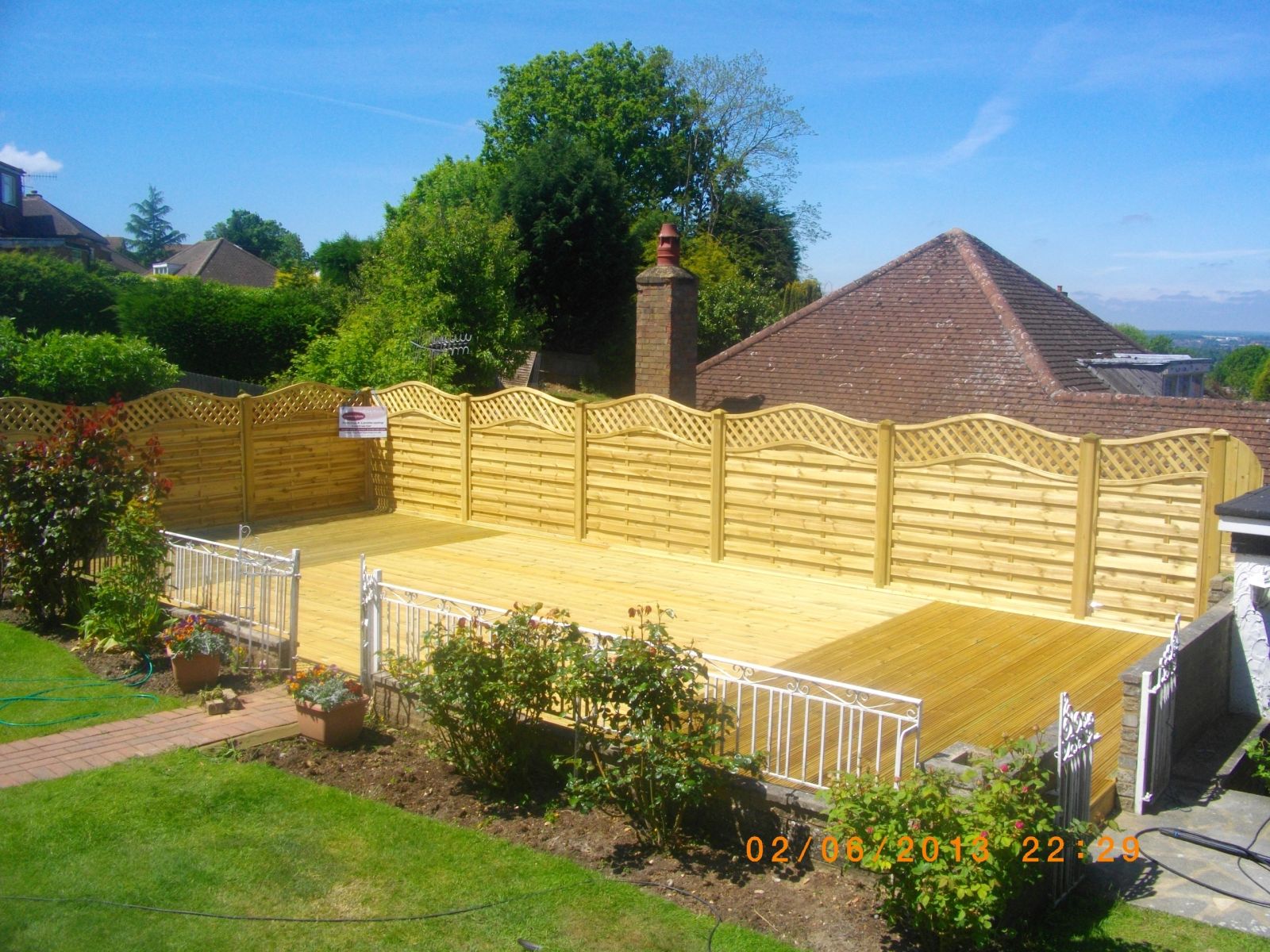
softwood garden decking installed by Capital Fencing in Ware (SG12)hardwood deck install installed by Capital Fencing in Ware (SG12)composite decking installed by Capital Fencing in Ware (SG12)raised garden deck installed by Capital Fencing in Ware (SG12)

Hardwood Decking in Ware: the practical detail

Adverse possession and long-standing boundary drift

Where a fence has sat in the same slightly-wrong position for many years without objection, the land enclosed on the wrong side can sometimes be claimed through adverse possession, though registered land now has a stricter process than the old twelve-year rule for unregistered land.

A successful claim generally needs factual possession (using the land as an owner would, such as fencing it in and maintaining it) plus an intention to possess, sustained over the qualifying period, and the registered owner gets a chance to object once an application is made.

Replacing an old fence exactly on its existing (rather than legally correct) line can inadvertently continue a possession claim, so where a genuine discrepancy is known it's worth raising it with the neighbour rather than quietly perpetuating it.

Checking a panel is square before final fixing

A panel that's racked slightly out of square, even by a small amount, becomes obvious once several are fitted in a row and the tops don't line up evenly.

Measuring both diagonals of the panel frame before fixing, the same check used on gate openings, confirms it's true and worth doing before the first fixing goes in rather than after, when the panel is harder to shift.

A panel forced square against an out-of-true post rather than corrected itself tends to spring back out of shape once the fixings are removed for any future repair, so it's worth addressing the actual cause rather than just clamping it straight.

North-facing boundaries and slower drying

A north-facing boundary receives little or no direct sun through autumn and winter, so rainfall sits on the timber and in the surrounding ground noticeably longer than on a south-facing equivalent.

This affects concrete curing time as well as timber drying — a post base poured on a north-facing run in cold weather takes longer to reach working strength and shouldn't be loaded or backfilled early just because a south-facing base nearby has already set.

Over the life of the fence, the practical effect is usually a shorter repaint or restain interval on the shaded side than the rest of the same boundary.

Composite wood-polymer ratios

Wood-plastic composite fencing boards are made from a blend of wood fibre and polymer, and the ratio between the two materially affects the finished product's stiffness, weight and how closely it resembles real timber grain.

A higher wood-fibre content generally gives a more timber-like appearance and feel but can also make the board more absorbent and slightly more prone to swelling at cut edges than a polymer-dominant mix.

Composite boards from different manufacturers aren't interchangeable even when nominally similar in size, since differing ratios change how the board expands with temperature and how it should be fixed and spaced.

Deck boards against a shaded wall building up algae

A deck built hard against a shaded wall, fence, or dense planting on one side often shows a distinct band of algae growth along that edge well before the rest of the deck, since it dries far more slowly after rain.

This uneven wear pattern is normal rather than a sign of a substandard board, but it does mean that edge needs cleaning more often to keep slip resistance consistent across the whole deck.

Where possible, leaving even a narrow gap between the deck edge and an adjoining wall or dense hedge improves airflow along that edge and reduces how quickly algae establishes there.

Latch and drop-bolt corrosion over a gate's lifecycle

A gate latch or drop bolt sees repeated mechanical wear on top of weather exposure, and standard zinc-plated steel components typically show surface corrosion and stiffening action within a few years of regular outdoor use.

Stainless steel or marine-grade fittings cost more initially but avoid the seized or snapped bolt that is one of the most common minor gate failures, particularly on a drop bolt that isn't operated daily and can seize unnoticed.

An annual light oiling of moving parts, alongside the general hinge check, keeps a latch mechanism working smoothly well beyond the point a neglected one would start sticking.

Suspending a parking bay for a delivery

Where a residential street has marked parking bays, a resident or contractor may need to apply to the council to formally suspend a bay for the duration of a delivery or a working van.

Suspensions are usually charged per bay per day and typically need a few working days' notice, so they're worth arranging well ahead of a fencing or decking job rather than on the morning of delivery.

Parking in a suspended bay without paying the fee, or using a bay that hasn't been suspended at all, can result in a parking charge notice regardless of the reason for being there.

Offsetting the string line to protect it during digging

A string line pulled exactly along the intended post centre line gets in the way of digging and is easily knocked or buried in spoil, so many installers set it slightly to one side and measure across to it rather than digging directly beneath it.

A fixed offset distance, checked and noted once at the start, lets every post position be measured consistently from the same reference without needing the string itself to survive undisturbed through a full day of digging.

Re-checking the offset periodically through the day catches the line if it's been nudged, since a small unnoticed shift partway through a run throws every subsequent post slightly off true.

Ring-shank versus smooth nails

Ring-shank nails have a series of raised rings machined into the shank, which bite into surrounding timber fibres as they're driven and resist being pulled back out far more effectively than a plain smooth shank.

That extra grip matters on fencing components subject to repeated movement from wind load, such as feather-edge boards on rails, where smooth nails can gradually work loose over several seasons of flexing.

The trade-off is that ring-shank nails are harder to remove cleanly for repairs, often splitting the timber around them rather than sliding out, whereas smooth nails can usually be levered free without damaging the board.

Step riser heights on a raised deck

Steps down from a raised deck work best with consistent riser heights throughout the flight, since an irregular step height is a common trip hazard, particularly where the top or bottom step differs slightly from the others.

Building regulations guidance for steps in a domestic setting generally favours risers in the range of roughly 150-170mm with adequate going (tread depth), though garden steps have more flexibility than an internal staircase.

Where a deck sits at a height that doesn't divide evenly into consistent risers, it's better to adjust the deck height slightly at the design stage than to build one oddly-sized step to make up the difference.

Choosing post hole diameter for the post size

A hole cut too close to the post's own width leaves no room for concrete to fully surround it, which weakens the base and gives water a direct channel down alongside the timber rather than a solid seal.

A generally quoted rule is a hole roughly three times the post's width, so a 100mm post wants in the region of a 300mm diameter hole, adjusted upward on poor ground or for taller, more heavily loaded posts such as gate posts.

Oversized holes aren't free either — they use more concrete and take longer to backfill and haunch neatly, so the aim is the right diameter for the post and ground rather than simply digging as wide as convenient.

Timing the work seasonally

Fencing and decking can be installed year-round, but ground conditions change the practicalities: concrete cures more slowly in cold weather and shouldn't be poured in a hard frost, while waterlogged winter ground makes post holes collapse before they can be set.

Late spring and summer give the most predictable digging conditions and the fastest concrete cure times, which is also when demand is highest and lead times stretch out.

Autumn and early winter bookings, ground conditions allowing, are often the quickest to schedule and let a new timber fence weather in before the following summer.

Timber sourcing and certification schemes

FSC and PEFC certification track timber back through the supply chain to a managed, legally-harvested source, and UK public sector specifications increasingly require one or the other for any structural or landscaping timber.

For a domestic fence this isn't a legal requirement, but certified stock gives a paper trail on sourcing that some clients specifically ask for, particularly on larger commercial or estate contracts where corporate sustainability policy applies.

Certification is about the chain of custody rather than the treatment or grade of the wood, so it sits alongside, not instead of, checking the timber is correctly treated for its intended use class.

Checking wall coping condition before fixing into it

Coping stones or brick-on-edge capping along the top of a garden wall are often loosely bedded rather than solidly fixed, so drilling or clamping a fence post bracket into coping without checking it first can dislodge the coping itself.

A quick check by hand-pressure on each coping unit along the intended fixing line identifies any that are already loose, which is worth doing before committing to that wall as a fixing point at all.

Where coping is sound, spreading the fixing load across a bracket plate rather than a single point fixing reduces the chance of cracking the coping under wind load on the panels above.

Hardwood decking in Ware is quoted by species and thickness, with the fixing method stated — secret-fix costs more in labour and leaves a clean board face. We keep the hardwood decking process simple for Ware clients: site visit, written quote, agreed start date, then in and out cleanly. No subcontracted labour, no chasing for an invoice at the end. Recent work on High Street and Crane Mead. We orient jobs off New River.

Get In Touch

Get My Free Quote — 24h Response

No callout fee · Free site visit · Friendly local team covering London & Hertfordshire.

Call us
07885907880
or 02036484746
Email
capital_fencing@yahoo.com
WhatsApp
Message us anytime
Area
London & Hertfordshire
Payment
Card payments accepted

Pay by debit or credit card, bank transfer or cash once the work and price are agreed. No deposit taken online.

Request a Free Quote

We'll get back to you within 24 hours.

Free Site Visit No Callout Fee
Call WhatsAppQuote