London & Hertfordshire Free Site Visit
softwood garden decking installed by Capital Fencing in Hertford (SG13)
Hertford · SG13 / SG14

Hardwood Decking in Hertford: What Works on long

Hardwood moves, and pretending otherwise is how gaps end up uneven. We set board gaps for the season we are fitting in and fix with hardwood-rated stainless so nothing bleeds rust into a Hertford board face. Capital Fencing installs hardwood decking across Hertford and out to ware and hoddesdon. East Hertfordshire District coverage plus proximity to A1(M) J4 (Hatfield) means most quotes are on your inbox within 48 hours of a site visit. Recent work on Bengeo Street and North Crescent. We orient jobs off Hertford East station goods yard.

Hardwood moves, and pretending otherwise is how gaps end up uneven. We set board gaps for the season we are fitting in and fix with hardwood-rated stainless so nothing bleeds rust into a Hertford board face. Capital Fencing installs hardwood decking across Hertford and out to ware and hoddesdon. East Hertfordshire District coverage plus proximity to A1(M) J4 (Hatfield) means most quotes are on your inbox within 48 hours of a site visit. Recent work on Bengeo Street and North Crescent. We orient jobs off Hertford East station goods yard.

Common Hertford briefs

  • premium rear gardens where a natural silver-grey patina is the desired finish
  • commissioned landscape schemes where the deck is a design feature, not just a floor

Why hardwood decking works here

  • genuine 25-year plus service life on yellow balau or ipe when detailed properly
  • richer natural colour and grain than any composite
  • can be sanded and re-oiled indefinitely
Typical spec

How we build hardwood decking in Hertford

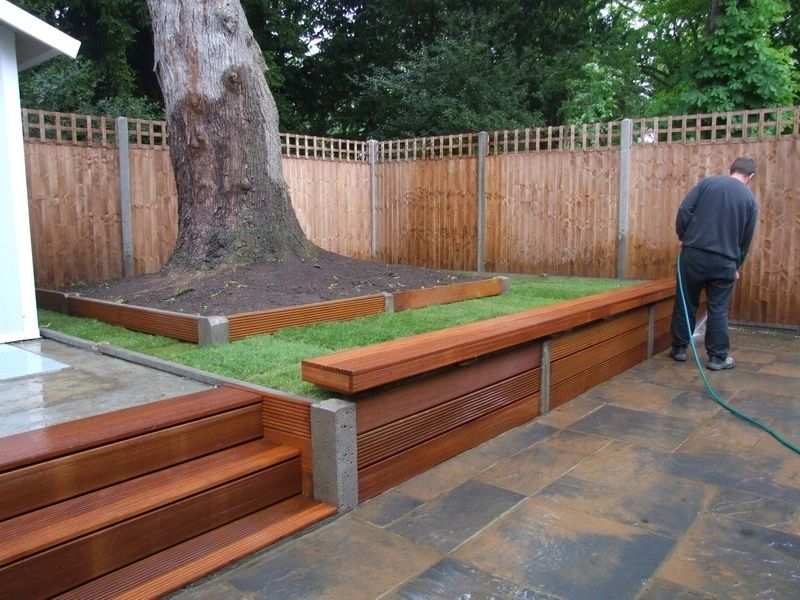
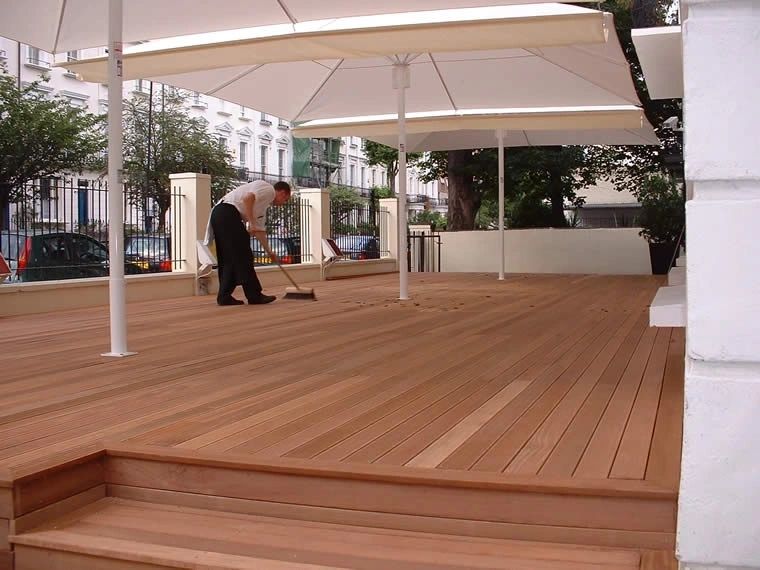
Yellow balau, ipe or iroko boards on treated softwood or hardwood joists. Standard build: 21mm yellow balau or 19mm ipe, secret-fix or countersunk, hardwood-rated screws. On Hertford jobs we adjust for conservation areas and listed buildings around the castle restrict heights and finishes.

Property mix locally: Georgian and Victorian townhouses in the centre, with newer estates on the Bengeo and Sele Farm sides. Typical gardens: long, sloping plots dropping toward the River Lea — terracing and retaining work are often part of the job. Postcodes we regularly service: SG13, SG14.

Hardwood Decking FAQs — Hertford

What joist spacing do you use for hardwood boards?

Stainless fixings only: plated screws stain a hardwood face within a season in Hertford. We work this patch weekly, from Mead Lane industrial estate out toward ware. In short: genuine 25-year plus service life on yellow balau or ipe when detailed properly, though requires annual oiling to keep the honey colour — otherwise silvers naturally.

Can I let hardwood decking silver naturally?

Board gaps are set for the fitting season, because a hardwood deck laid tight in winter has nowhere to go in July. For georgian and victorian townhouses in the centre in SG13, that is where the cost sits. Worth weighing genuine 25-year plus service life on yellow balau or ipe when detailed properly against requires annual oiling to keep the honey colour — otherwise silvers naturally before you commit.

How do you handle end-grain sealing on hardwood decks?

Board gaps are set for the fitting season, because a hardwood deck laid tight in winter has nowhere to go in July. We allow for long when setting out in Hertford. In short: genuine 25-year plus service life on yellow balau or ipe when detailed properly, though requires annual oiling to keep the honey colour — otherwise silvers naturally.

How does hardwood compare to composite for slip resistance?

Every hardwood board is pre-drilled — driving straight into balau splits ends and loses you boards on a Hertford job. Survey slots across SG13 are usually inside a week. Worth weighing genuine 25-year plus service life on yellow balau or ipe when detailed properly against requires annual oiling to keep the honey colour — otherwise silvers naturally before you commit.

Which hardwood lasts longest for decking in the UK climate?

Stainless fixings only: plated screws stain a hardwood face within a season in Hertford. We work this patch weekly, from Mead Lane industrial estate out toward ware. Practically, that means richer natural colour and grain than any composite — and we're upfront that material cost is significantly higher than softwood and often composite.

Recent hardwood decking work
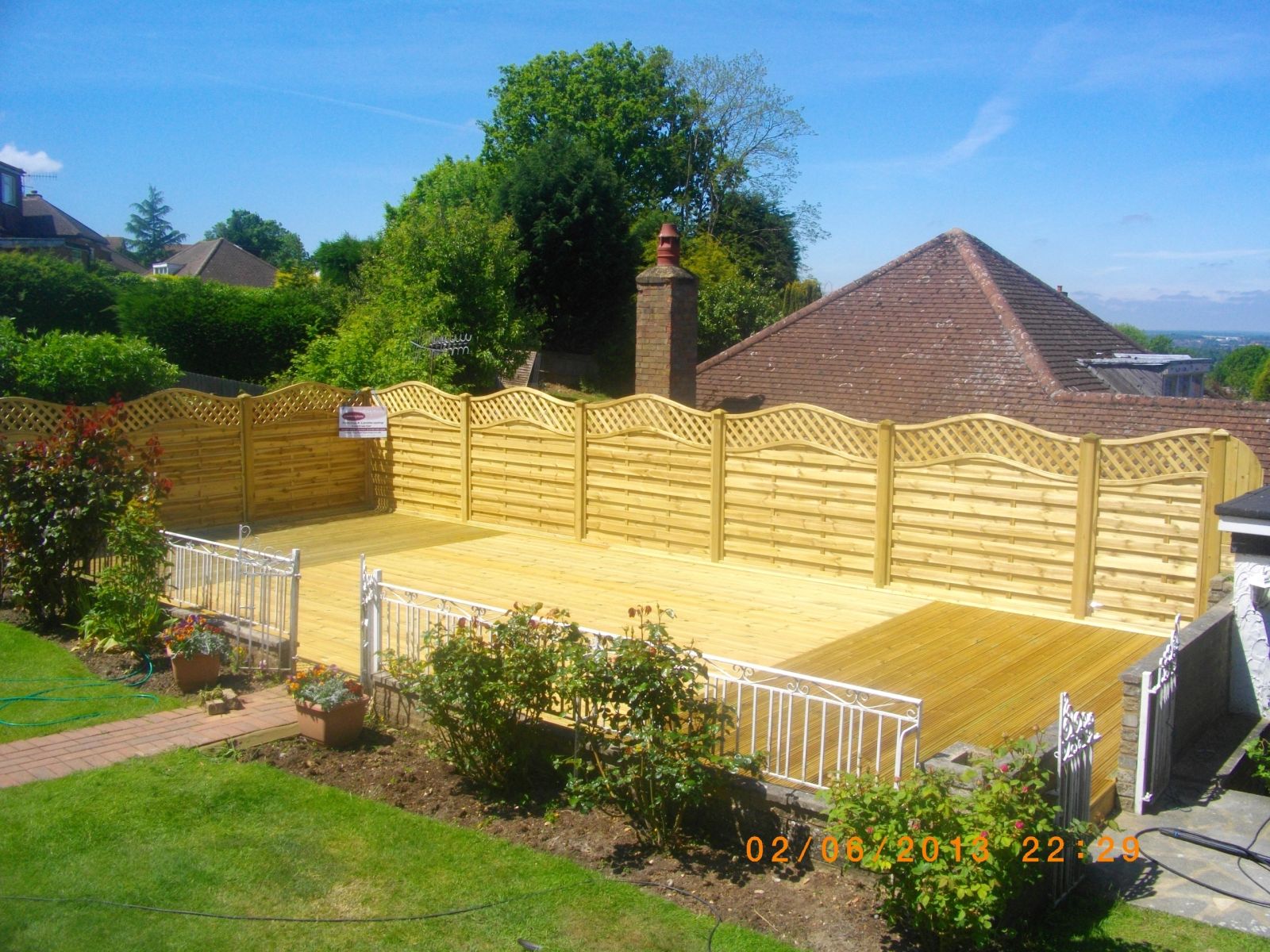
softwood garden decking installed by Capital Fencing in Hertford (SG13)hardwood deck install installed by Capital Fencing in Hertford (SG13)composite decking installed by Capital Fencing in Hertford (SG13)raised garden deck installed by Capital Fencing in Hertford (SG13)

What actually matters for hardwood decking around Hertford

Block management and communal consultation

Managing agents for blocks of flats are usually required to consult leaseholders on works above a set cost threshold under a Section 20 process, which applies to significant boundary or fencing works charged through the service charge.

That consultation period adds real time to a project timeline compared with a private garden job, so it's worth building the notice period into the schedule rather than assuming work can start once a quote is accepted.

Communal boundary decisions also tend to involve balancing several flats' differing views on privacy, light and appearance, which a single homeowner job never has to negotiate.

Being clear about what a repair does and doesn't cover

A repair addresses the specific failure identified at survey, and it's worth being explicit with the client about what wasn't included, particularly where a run has other sections showing early signs of the same problem.

Setting that expectation at the point of agreeing the work avoids confusion later if an unrelated section of the same boundary fails independently.

Tall fences, shading and neighbour relations

A tall boundary fence can significantly shade a neighbouring garden depending on orientation, and while there's no general legal right to a set amount of sunlight in a garden, an unusually tall or dark structure close to a shared boundary is a common source of neighbour friction.

Slatted, louvred or partially open designs let some light and air through while still giving privacy, which is often a reasonable middle ground where a fully solid fence would cause a shading complaint.

Discussing height and design with an affected neighbour before building, even where there's no legal requirement to, tends to avoid a dispute that a technically-compliant fence wouldn't otherwise resolve.

Moisture content before staining or treating

Applying stain or preservative to timber that's still wet from recent rain or from fresh pressure treatment traps moisture under the coating rather than sealing it out, reducing how long the treatment lasts.

Repairs are timed, where possible, to let new or rain-affected timber dry to a suitable moisture level before any coating is applied.

Using a scaffold tower or podium for repairs on a tall or high-level run

A repair above roughly head height, such as capping or bracing on a tall acoustic fence or a boundary on sloping ground, needs a proper working platform rather than a stepladder, both for safety and to allow two hands free for fixing.

On a tall run this can mean the access equipment takes longer to set up and move along the fence than the repair itself, which is worth factoring into how a job like this is planned and priced.

Retail yards and car parks

Fencing around a retail unit's rear yard or customer car park usually has to satisfy insurer requirements for secured perimeters as well as simple boundary marking, particularly where stock or delivery cages are stored outside.

Vehicle impact is a real consideration in a car park boundary, and posts near a marked bay or turning circle are often specified heavier or protected by a bollard rather than relying on the fence itself to survive a low-speed shunt.

Work here is usually scheduled around trading hours and delivery windows, since blocking a rear yard during a delivery slot can hold up a retailer's whole day.

Stainless steel grades near salted roads

Grade 304 stainless steel resists general corrosion well but can develop surface pitting when regularly exposed to chloride from de-icing salt spray thrown up by passing traffic.

Grade 316 stainless includes molybdenum, which significantly improves resistance to chloride pitting, and is the more appropriate specification for fixings and fittings on roadside fencing subject to winter gritting.

The cost difference between the two grades is usually small relative to the fitting itself, so specifying 316 near a heavily gritted road is generally worth it for the extended service life alone.

What a site survey covers

A proper site survey checks the boundary line against the deed plan where available, probes ground conditions at a few points along the run, and confirms access for both delivery vehicles and hand-carried materials.

It should also flag anything that changes cost before it becomes a surprise later — buried services, a shared boundary needing neighbour agreement, overhead cables limiting how tall equipment can be used, or a slope needing a stepped rather than level run.

A survey that skips any of these and goes straight to a headline price is the most common reason a quote changes significantly once work actually starts.

Dealing with buried debris uncovered while digging out a repair footing

Old post stubs, broken glass, hardcore or builder's rubble from a previous era of the garden's use sometimes turn up when digging out a footing for repair, particularly on older plots that have been through several changes of use.

Where this happens, it's worth clearing enough of the obstruction to get a clean footing rather than working around it, and flagging anything unexpected — old drainage, buried cabling, unusually large rubble — to the client before continuing.

Deciding between stepping and raking a panel run

Stepped panels stay level themselves and drop in increments post to post, leaving a small triangular gap under each panel that grows towards the low end of a run; raked panels are cut at an angle so the top edge follows the slope continuously with no gap.

Stock panels can be stepped without alteration, but raking almost always means cutting a panel's top rail and infill to an angle on site, which only works with materials that can be cut and re-fixed cleanly, such as featheredge or slatted boards.

A steep, uneven slope generally favours stepping for speed and future repairability; a long, gentle and even gradient often looks better raked, since the steps would otherwise be very shallow and visually fussy.

Hardwood options for gates

Gates take more racking stress than a fixed fence panel, opening and closing on a single edge, which is why hardwoods such as oak or iroko are often specified for gates even where the adjoining fence is softwood.

Oak's natural durability means it can be left untreated and will weather to silver-grey, but it also moves seasonally and can stain surrounding masonry with tannin run-off in wet weather, which is worth flagging before it's fitted next to a pale render or paving.

Hardwood gate frames are usually built with mortice-and-tenon joints rather than the simple nailed or bracketed joints acceptable on a softwood panel, since the joint has to resist years of racking without loosening.

Planning enforcement risk of over-height fences

A fence built above permitted development limits without consent is a breach of planning control, and councils generally have four years from substantial completion to take enforcement action against an operational breach like an over-height structure.

Enforcement typically starts with an informal request to reduce the height or apply retrospectively, escalating to a formal enforcement notice with an appeal right and, ultimately, prosecution for non-compliance if ignored.

A complaint from a neighbour is the most common trigger for enforcement action on garden boundaries, so an unauthorised over-height fence can sit unchallenged for years and then become an active case very quickly once someone reports it.

Strainer posts and wire tensioning loads

A strainer, or straining post, anchors the end of a tensioned wire or mesh run and needs to resist a sustained pulling load along the line of the fence, which is a materially different stress to the mostly lateral wind load an intermediate post experiences.

Strainer posts are typically set deeper, in a larger concrete footing, or braced with a diagonal strut back to a second post, specifically to resist this sustained pull rather than an occasional gust.

Under-specifying a strainer post relative to the wire tension applied is a common cause of an entire fence run gradually leaning inward from one end, since the strainer post itself moves rather than the wire actually loosening.

Handling a live boundary dispute discovered during a repair

Sometimes a repair call-out uncovers that neighbours actively disagree about where the boundary line sits, which is a different situation to simply not knowing who's responsible for maintenance, and it needs resolving before any post is reset rather than worked around.

In that situation the sensible step is pausing repair work on the disputed section until the neighbours have agreed the line, since resetting a post on a disputed line can itself become evidence in the dispute.

Oil it and it holds its colour; leave it and it silvers evenly. Either is fine, and we will tell you honestly what each looks like after two Hertfordshire winters. Hardwood Decking across SG13, SG14 is one of our regular runs. We'll quote honestly, tell you if hardwood decking isn't the right answer for your garden, and book the job in within a week or two of a signed quote. Recent work on Hagsdell Road and Queens Road. We orient jobs off McMullen brewery site.

Get In Touch

Get My Free Quote — 24h Response

No callout fee · Free site visit · Friendly local team covering London & Hertfordshire.

Call us
07885907880
or 02036484746
Email
capital_fencing@yahoo.com
WhatsApp
Message us anytime
Area
London & Hertfordshire
Payment
Card payments accepted

Pay by debit or credit card, bank transfer or cash once the work and price are agreed. No deposit taken online.

Request a Free Quote

We'll get back to you within 24 hours.

Free Site Visit No Callout Fee
Call WhatsAppQuote