London & Hertfordshire Free Site Visit
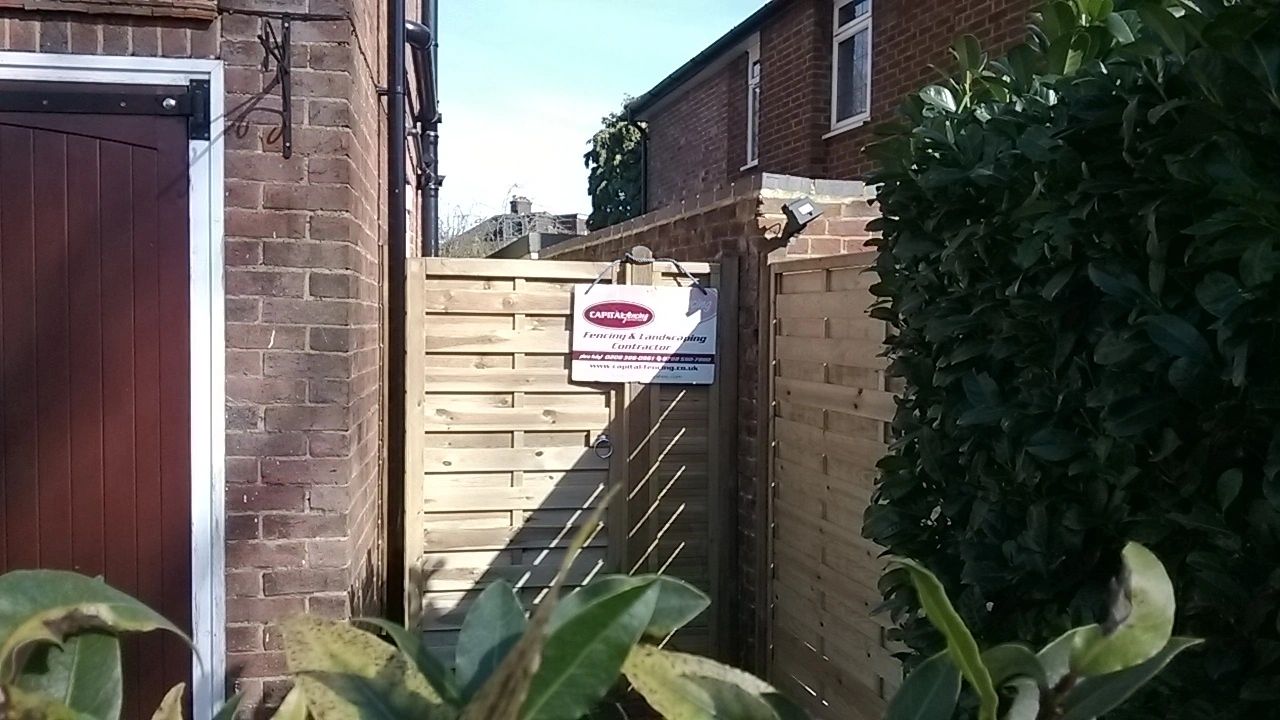
bespoke wooden gate installed by Capital Fencing in Hackney (E5)
Hackney · E5 / E8 / E9 / N1 / N16

Wooden Gates Installers Across Hackney & islington

Most gate problems in Hackney are hinge and post problems. We size the post to the leaf weight, set it deep, and hang on adjustable ironmongery so the gate can be trued up later without re-hanging it. Hackney sits inside our core patch — E5 and the surrounding North London area. On wooden gates, that means we've already seen how victorian terraces across stoke newington and de beauvoir, plus post-war estates around homerton and london fields behaves over a service life, and we spec accordingly. Recent work on Lower Clapton Road and Amhurst Road. We orient jobs off Victoria Park (west edge).

Most gate problems in Hackney are hinge and post problems. We size the post to the leaf weight, set it deep, and hang on adjustable ironmongery so the gate can be trued up later without re-hanging it. Hackney sits inside our core patch — E5 and the surrounding North London area. On wooden gates, that means we've already seen how victorian terraces across stoke newington and de beauvoir, plus post-war estates around homerton and london fields behaves over a service life, and we spec accordingly. Recent work on Lower Clapton Road and Amhurst Road. We orient jobs off Victoria Park (west edge).

Common Hackney briefs

  • side gates matching a closeboard or panel boundary
  • pedestrian gates set into a brick pier or existing wall opening

Why wooden gates works here

  • warm, matches most period and modern properties without looking industrial
  • easily re-sanded and re-oiled to refresh the finish every few years
  • hardwood options like iroko regularly outlast the ironmongery
Typical spec

How we build wooden gates in Hackney

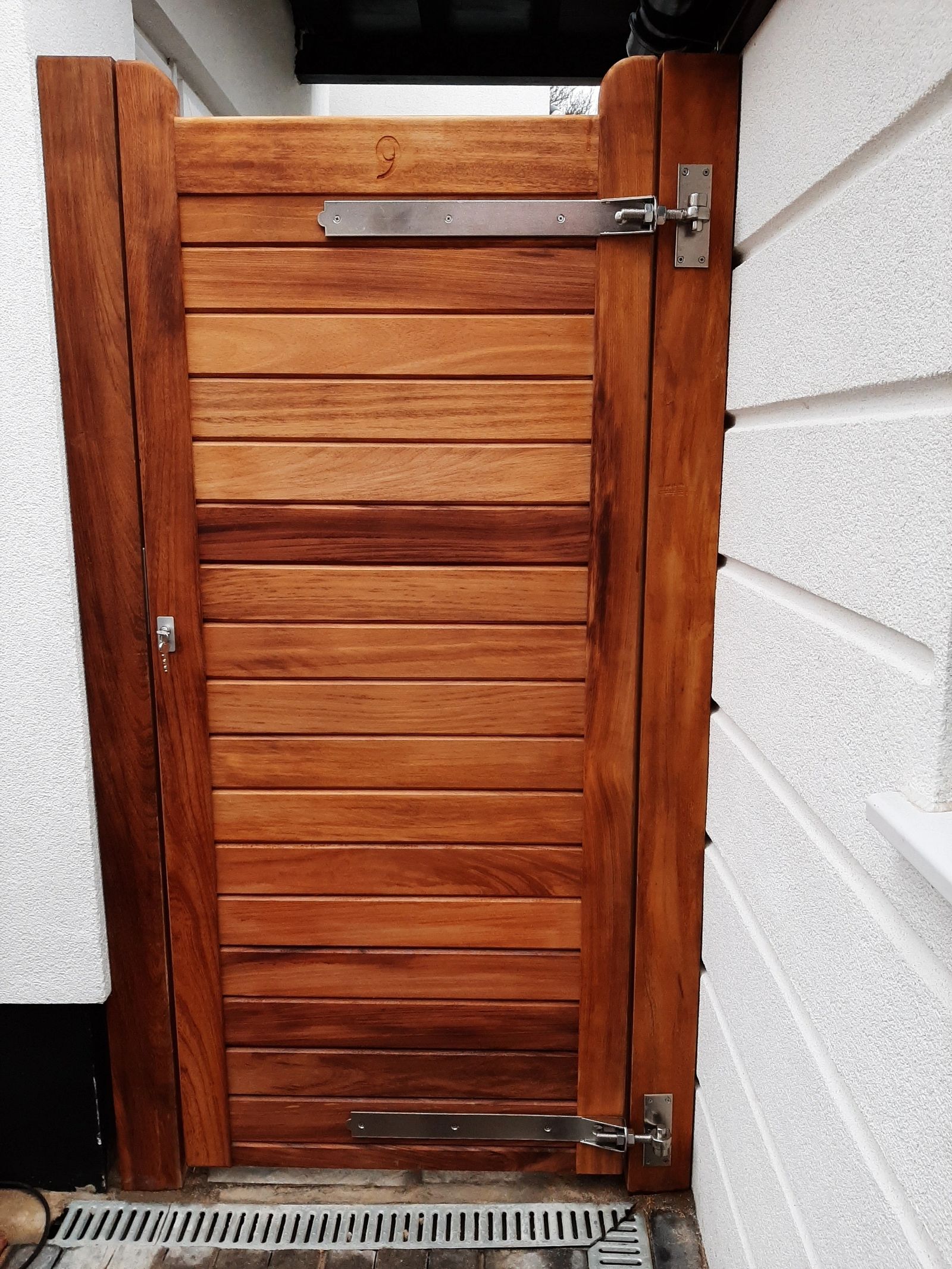
Iroko hardwood, oak or planed softwood on hot-dip galvanised ironmongery. Standard build: 44mm framed, tongue-and-groove infill, adjustable ball-race hinges, drop bolt to slabs. On Hackney jobs we adjust for many boundaries are shared with three or four neighbours on victorian back-to-backs — clear ownership marks matter.

Property mix locally: Victorian terraces across Stoke Newington and De Beauvoir, plus post-war estates around Homerton and London Fields. Typical gardens: small rear gardens with mature planting; several plots border the Regent's Canal or Hackney Marshes. Postcodes we regularly service: E5, E8, E9, N1, N16.

Wooden Gates FAQs — Hackney

Softwood or hardwood — which lasts longer in the London weather?

Leaf weight drives the post size — an undersized post is the most common reason a Hackney gate stops closing. For victorian terraces across stoke newington and de beauvoir in E5, that is where the cost sits. In short: warm, matches most period and modern properties without looking industrial, though timber moves seasonally — expect small alignment adjustments in year one.

Can wooden gates be automated?

End grain gets sealed before hanging, because a gate bottom rail in Hackney sits in splash-back all winter. We allow for small rear gardens with mature planting; several plots border the Regent's Canal or Hackney Marshes when setting out in Hackney. Practically, that means easily re-sanded and re-oiled to refresh the finish every few years — and we're upfront that softwood side gates need re-treating annually to avoid black spot.

Do you build gates to match an existing fence?

Leaf weight drives the post size — an undersized post is the most common reason a Hackney gate stops closing. Survey slots across E5 are usually inside a week. Practically, that means easily re-sanded and re-oiled to refresh the finish every few years — and we're upfront that softwood side gates need re-treating annually to avoid black spot.

How do you finish wooden gates to resist rot?

End grain gets sealed before hanging, because a gate bottom rail in Hackney sits in splash-back all winter. We work this patch weekly, from Kingsland Road out toward islington. Worth weighing warm, matches most period and modern properties without looking industrial against timber moves seasonally — expect small alignment adjustments in year one before you commit.

What ironmongery do you fit as standard?

Adjustable hinges mean the gate can be re-trued in ten minutes years later, without touching the frame. For victorian terraces across stoke newington and de beauvoir in E5, that is where the cost sits. Practically, that means easily re-sanded and re-oiled to refresh the finish every few years — and we're upfront that softwood side gates need re-treating annually to avoid black spot.

Recent wooden gates work
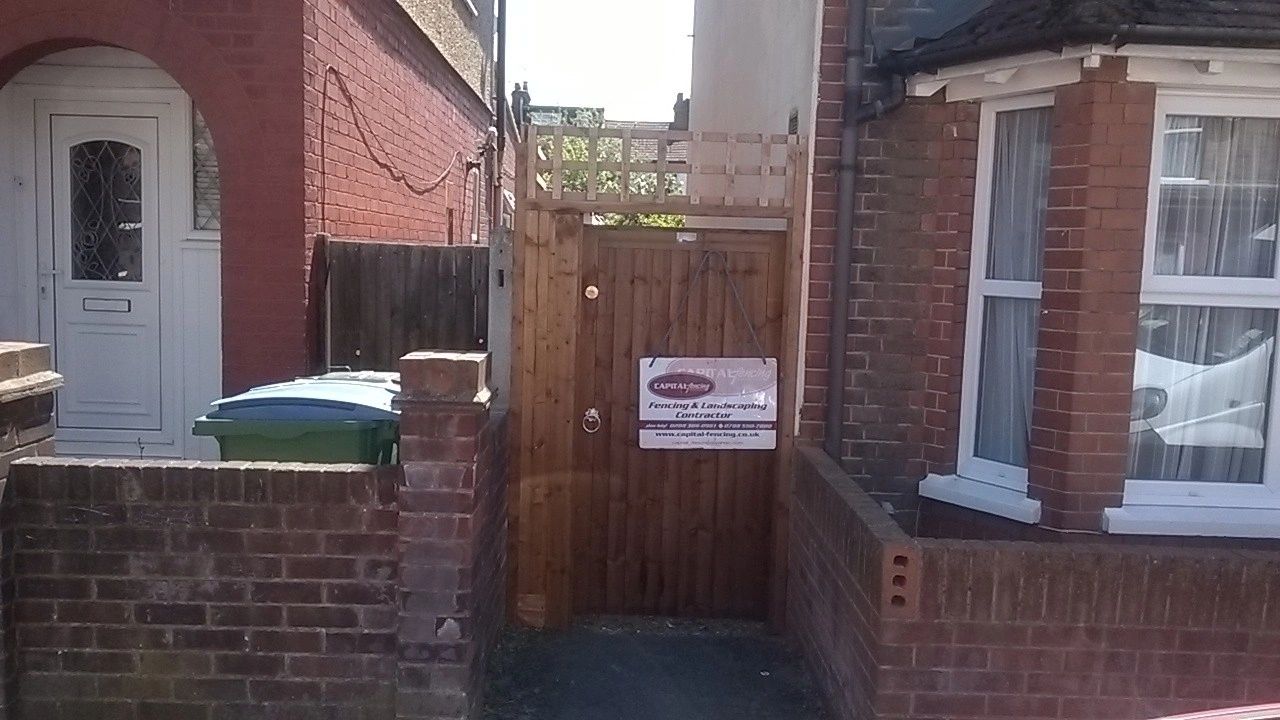
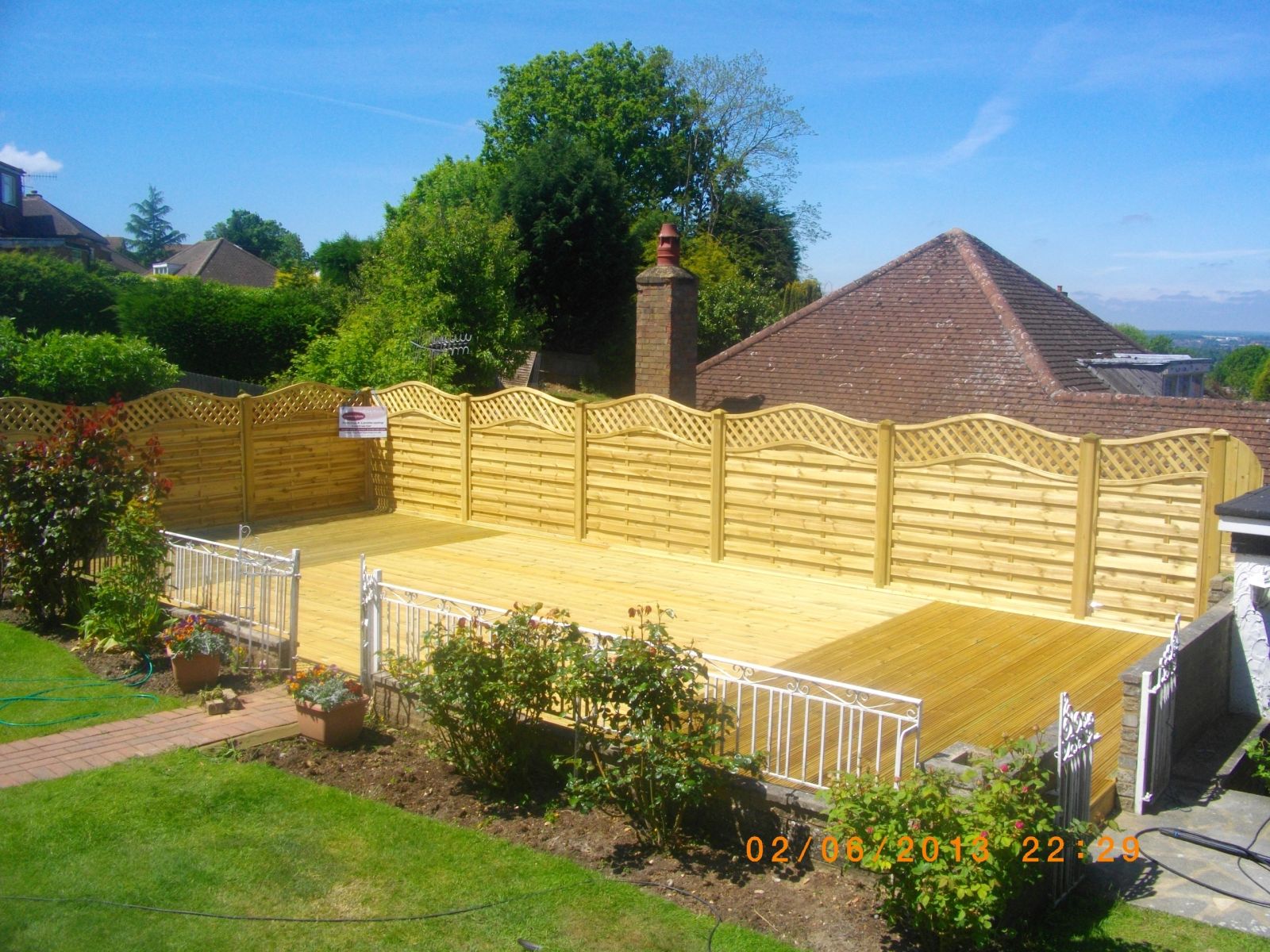
bespoke wooden gate installed by Capital Fencing in Hackney (E5)double driveway gates installed by Capital Fencing in Hackney (E5)hardwood side gate installed by Capital Fencing in Hackney (E5)metal entrance gate installed by Capital Fencing in Hackney (E5)

What actually matters for wooden gates around Hackney

Side-return gates and narrow access

A gate across a narrow side return between two properties often has very little clearance either side, which limits hinge type and swing direction and can rule out a wide double gate in favour of a single leaf.

We measure the full return width and any obstructions along the swing arc before recommending a hinge position on this kind of opening.

Stumps in the fence line

An old hedge or tree stump sitting directly on the new fence line needs grinding or digging out before a post can go in, since a post set against or on top of decaying root wood will eventually settle as that timber breaks down.

Stump grinding leaves a mix of wood chip and soil that compacts poorly, so backfilling a post hole in that material generally needs a wider excavation and imported hardcore rather than reusing the arisings.

Where a stump is close to but not on the line, it's often quicker to shift the post position slightly than to fully remove a large root system.

Low-voltage lighting built into decking

Recessed low-voltage deck lights, usually built into the timber before boards are laid, extend a deck's usable hours into the evening without the trip hazard of surface-mounted fittings.

Cable routes need planning before the substructure is closed in, since retrofitting lighting into a finished deck usually means lifting boards rather than a simple add-on.

Outdoor low-voltage systems still need a transformer and cabling installed to the relevant electrical safety standard, even though the voltage itself is lower than mains.

Block management and communal consultation

Managing agents for blocks of flats are usually required to consult leaseholders on works above a set cost threshold under a Section 20 process, which applies to significant boundary or fencing works charged through the service charge.

That consultation period adds real time to a project timeline compared with a private garden job, so it's worth building the notice period into the schedule rather than assuming work can start once a quote is accepted.

Communal boundary decisions also tend to involve balancing several flats' differing views on privacy, light and appearance, which a single homeowner job never has to negotiate.

Dog-proofing details at ground level and gaps

Dogs test a fence at ground level far more than at height, so gaps under gravel boards, worn hollows on sloping ground, or wide overlaps between adjacent panels are the points most likely to let a determined dog through or under.

A close-fitting concrete gravel board set with minimal gap to the ground, rather than a timber board that can warp and lift, closes off the most common escape route without changing the overall fence design.

For persistent diggers, a buried mesh apron or paving strip just inside the fence line at ground level stops excavation without needing to alter the visible fence at all.

Japanese knotweed and invasive plants on a boundary

Japanese knotweed and other invasive non-native plants listed under the Wildlife and Countryside Act don't have to be removed by law, but it's an offence to allow them to spread into the wild or onto neighbouring land, and their green waste can't simply go into a normal garden waste bin.

Knotweed growing along or across a boundary is a common source of dispute and even litigation between neighbours, since an untreated infestation on one side can spread roots several metres and undermine fence posts or hard surfaces.

Any excavation near known knotweed needs specialist handling and disposal at a licensed site, since disturbing the rhizome without proper containment is one of the most effective ways to spread it further.

Curing time before hanging panels or gates

Post-fixing concrete reaches a usable strength within a day or two but continues gaining strength for weeks afterwards, which is why manufacturers usually specify a minimum wait — commonly around 24-48 hours in mild weather — before loading a post with a panel.

Hanging a heavy gate is a bigger test of an early-cured base than fixing a lightweight panel, since the gate applies a constant leverage on the post rather than a static side load, so gate posts generally want the longer end of any recommended cure window.

Cold weather slows the chemical reaction that hardens concrete significantly, so a cure time that's fine in summer may need extending in winter before it's safe to load the post.

Splash-back staining from adjacent paving

A fence running alongside a patio, path or driveway picks up rain splash-back off the hard surface, which carries fine grit and, on older paving, residual cement dust that leaves a pale tide-mark along the lowest boards.

This band of discolouration is separate from general weathering and won't fade with the rest of the timber, since it is a surface deposit rather than UV bleaching.

A gravel strip or planting border between paving and fence line reduces the splash distance, and a periodic wash-down of just the lower boards keeps the tide-mark from building up permanently.

Powder coating and galvanising

Galvanising bonds a zinc coating to steel, usually by hot-dip, giving corrosion protection that works even if the surface is scratched because the surrounding zinc sacrifices itself to protect the exposed steel.

Powder coating is a decorative and additional protective layer baked onto the metal, giving a wide choice of colour and a harder finish than paint, but on its own over bare steel it doesn't offer the same self-healing protection as galvanising.

The durable combination for steel gates and railings is galvanising first, powder coating over the top, rather than powder coating alone, which is worth checking on a quote where both are mentioned separately.

Restaurants and pub gardens

Boundary fencing around a pub garden or restaurant terrace often does double duty as noise and light screening for neighbouring residential properties, and its height and permeability can be a condition attached to the premises licence rather than a free choice.

Trading hours mean access for fencing work is usually easiest early morning before service starts, since a garden in active use for covers can't have posts being dug mid-lunch.

Where outdoor seating sits close to the boundary, fixings and post positions need checking against any licensed seating plan so the finished fence doesn't reduce covers below what the licence allows.

Garden levels raised by decking or patios

A raised deck or built-up patio on one side of a boundary can leave the finished surface level noticeably higher than the fence's original ground-level reference, sometimes reducing the effective fence height as seen from that side.

Where a neighbour raises their ground level after a fence is already installed, drainage that previously ran away from the fence can be redirected toward it, so it's worth checking finished levels on both sides before agreeing a new fence height or base detail.

A fence installed at the same time as a client's own raised patio should account for the new level from the outset, rather than being set to the pre-existing grade and later needing extension.

Driveway gate sizing and swing arc

A driveway gate needs its swing arc checked against the car actually parked behind it, not just the opening width, since a gate that clears a small hatchback can still clash with a larger estate or a roof box.

Outward-opening gates onto a public footway are generally avoided because they can obstruct pedestrians and pushchairs, which is why most residential driveway gates are hung to open inward onto the drive itself.

Sliding gates are a practical alternative on a short or sloping driveway where there isn't room for a swing arc, though they need a level track run and enough side clearance to slide fully open.

Rights of way and access easements

An easement giving a neighbour or utility a right of way across part of a garden — commonly a rear access strip or shared side passage — survives a change of ownership and restricts what can be built across it, including fences and gates.

A gate across an easement is sometimes acceptable if it's left unlocked or a key is provided to the dominant owner, but a solid fence that blocks the route entirely is a breach even if the current beneficiary rarely uses it.

The Land Registry title register will usually record a formal easement, so it's worth checking before fencing off any access strip that looks unused, since 'unused' and 'extinguished' are legally different things.

Security lighting and cameras near a shared boundary

Security lighting or CCTV cameras fitted to a boundary fence can raise both nuisance and, for cameras capturing a neighbour's property, data protection considerations under UK GDPR if used inappropriately.

Positioning cameras to minimise capturing a neighbour's garden or windows, and using shielded lighting that doesn't spill excessively onto adjoining land, generally avoids most disputes before they start.

Where a neighbour raises a specific concern about a camera or light on a shared boundary, addressing it directly is usually simpler than waiting for a formal complaint to the council or Information Commissioner's Office.

Side gates, double gates and driveway pairs all get the same treatment — hot-dip galvanised ironmongery, adjustable hinges, and a drop bolt into a slab where it is needed. Hackney clients get the same crew from first visit to hand-over. That's the whole model — one small team, wooden gates done properly, work agreed in writing before it starts. Recent work on Kingsland Road and Mare Street. We orient jobs off Victoria Park (west edge).

Get In Touch

Get My Free Quote — 24h Response

No callout fee · Free site visit · Friendly local team covering London & Hertfordshire.

Call us
07885907880
or 02036484746
Email
capital_fencing@yahoo.com
WhatsApp
Message us anytime
Area
London & Hertfordshire
Payment
Card payments accepted

Pay by debit or credit card, bank transfer or cash once the work and price are agreed. No deposit taken online.

Request a Free Quote

We'll get back to you within 24 hours.

Free Site Visit No Callout Fee
Call WhatsAppQuote