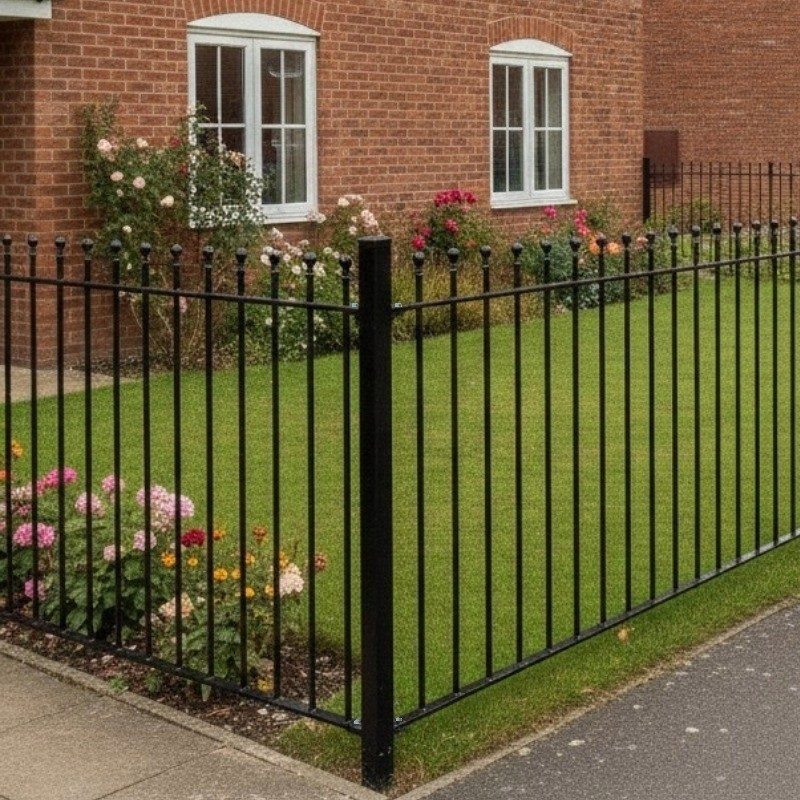
Hertsmere Borough Council is the local authority for Bushey (WD23); the housing stock leans toward large detached and semi-detached homes around bushey heath, with older cottages in bushey village, and gardens tend to be deep, mature gardens — many sloping with mature trees and substantial existing planting. What tends to drive the spec on a Bushey job is bushey heath conservation area limits front boundary heights and prohibits certain panel styles. Anti-twist shoulder details on post fixings: Some post shoe and anchor systems include a shaped shoulder or collar that grips the post's cross-section rather than relying purely on friction from clamping bolts, resisting the post twisting in the fitting under sustained wind load. Without that shoulder detail, a smooth-sided post held only by bolted clamp plates can gradually rotate within the fitting as repeated gusts work it slightly each time, loosening the bolts further with each cycle. Getting pre-application planning advice for boundary work: Most local planning authorities offer a paid pre-application advice service, which can give a reasonably reliable steer on whether a specific boundary proposal needs formal permission before committing to it.
Property: large detached and semi-detached homes around Bushey Heath, with older cottages in Bushey Village
Gardens: deep, mature gardens — many sloping with mature trees and substantial existing planting
Bushey Heath conservation area limits front boundary heights and prohibits certain panel styles
Under Hertsmere Borough Council, covering WD23. Nearest arterial: A411 / A4140, M1 J5 / A41. Served from Bushey (Overground). Local commercial anchors: Bushey Hall Road.
Streets we regularly work on: Bushey Hall Road, Park Avenue, Falconer Road, Sparrows Herne. Local anchors: Bushey station, Bushey Hall, Bushey Museum.
Bushey divides between Bushey Heath, with larger detached plots on higher, sloping ground, and Bushey Village, with Edwardian and Arts and Crafts terraces within a conservation area. Bushey Hall and the surrounding parkland reflect the area's history as a country estate before suburban development. The area sits close to the M1, and gardens on the highest ground have views toward the motorway corridor.
Practical points for boundary work in Bushey
Anti-twist shoulder details on post fixings
Some post shoe and anchor systems include a shaped shoulder or collar that grips the post's cross-section rather than relying purely on friction from clamping bolts, resisting the post twisting in the fitting under sustained wind load.
Without that shoulder detail, a smooth-sided post held only by bolted clamp plates can gradually rotate within the fitting as repeated gusts work it slightly each time, loosening the bolts further with each cycle.
This detail matters more on taller, more exposed posts carrying larger panel or gate areas, where the leverage from wind load is greatest, than on short, low-level fencing where twisting force is comparatively small.
Getting pre-application planning advice for boundary work
Most local planning authorities offer a paid pre-application advice service, which can give a reasonably reliable steer on whether a specific boundary proposal needs formal permission before committing to it.
This is particularly useful for larger, taller, or unusually positioned boundary structures where the answer isn't obviously covered by the standard permitted development rules.
While it isn't free, the cost is generally modest compared with building something that later needs to be altered or removed following enforcement action.
Copper-based timber preservatives
Modern timber preservatives commonly use copper compounds as the primary biocide, since copper is effective against fungal decay and is less toxicologically hazardous than the older chromated copper arsenate formulations largely phased out for domestic use.
Copper-treated timber can accelerate corrosion in fixings made from certain metals, particularly plain steel and some aluminium alloys, in a similar way to oak's tannic acid reaction, which is why treated timber often specifies compatible fixing types.
Hot-dip galvanised and stainless steel fixings both perform acceptably with copper-treated timber, whereas untreated mild steel or some aluminium fixings can corrode noticeably faster in direct, damp contact with it.
Timber species and on-site workability
Workability describes how easily a timber can be sawn, planed, nailed and screwed without splitting, tearing or blunting tools excessively, and it varies considerably between species independent of durability or strength.
Straight-grained, moderate-density softwoods like redwood pine are generally easier to work on site than dense hardwoods or highly figured timber with interlocked or wavy grain, which can tear out during cutting or planing.
A timber chosen purely for durability or appearance without considering workability can significantly slow on-site fitting, particularly where a lot of site cutting and drilling is needed rather than factory-machined components.
Decking oil versus fence stain maintenance cycles
Decking oil is formulated to cope with foot traffic and standing water in a way that a vertical fence stain isn't, and typically needs reapplying annually on a well-used deck compared with the two-to-three year cycle for a fence.
The horizontal surface of a deck also collects standing water and UV exposure differently to a vertical panel face, wearing unevenly in high-traffic paths compared with less-used corners.
Clients used to a fence's maintenance rhythm sometimes underestimate how much more frequently a deck's finish needs attention, which is worth setting expectations on at the time of installation.
Pet-proofing a garden boundary
Dogs that dig will often go under a fence line rather than over it, so a gravel board or buried mesh apron at the base does more to keep a determined digger in than extra height above ground.
Gaps at gate thresholds and where a fence meets a wall or building are the most common escape points, and are worth checking specifically rather than assuming a continuous fence line is actually continuous at ground level.
Smaller or younger dogs and cats can fit through gaps that look too small to be a concern, so picket or trellis-style boundaries usually need a solid section or mesh backing if pet containment is the priority.
Copper-based timber preservatives — what does that mean for a job in Bushey?
Modern timber preservatives commonly use copper compounds as the primary biocide, since copper is effective against fungal decay and is less toxicologically hazardous than the older chromated copper arsenate formulations largely phased out for domestic use. Copper-treated timber can accelerate corrosion in fixings made from certain metals, particularly plain steel and some aluminium alloys, in a similar way to oak's tannic acid reaction, which is why treated timber often specifies compatible fixing types. Hot-dip galvanised and stainless steel fixings both perform acceptably with copper-treated timber, whereas untreated mild steel or some aluminium fixings can corrode noticeably faster in direct, damp contact with it.
What's the most common issue you plan around in Bushey?
Bushey Heath conservation area limits front boundary heights and prohibits certain panel styles.
What areas of Bushey do you cover?
We cover all of Bushey (WD23), under Hertsmere Borough Council.
How does "decking oil versus fence stain maintenance cycles" affect fencing or decking work in Bushey?
Decking oil is formulated to cope with foot traffic and standing water in a way that a vertical fence stain isn't, and typically needs reapplying annually on a well-used deck compared with the two-to-three year cycle for a fence. The horizontal surface of a deck also collects standing water and UV exposure differently to a vertical panel face, wearing unevenly in high-traffic paths compared with less-used corners. Clients used to a fence's maintenance rhythm sometimes underestimate how much more frequently a deck's finish needs attention, which is worth setting expectations on at the time of installation.
What should I know about timber species and on-site workability in Bushey?
A timber chosen purely for durability or appearance without considering workability can significantly slow on-site fitting, particularly where a lot of site cutting and drilling is needed rather than factory-machined components. Workability describes how easily a timber can be sawn, planed, nailed and screwed without splitting, tearing or blunting tools excessively, and it varies considerably between species independent of durability or strength. Straight-grained, moderate-density softwoods like redwood pine are generally easier to work on site than dense hardwoods or highly figured timber with interlocked or wavy grain, which can tear out during cutting or planing.
How does "pet-proofing a garden boundary" affect fencing or decking work in Bushey?
Smaller or younger dogs and cats can fit through gaps that look too small to be a concern, so picket or trellis-style boundaries usually need a solid section or mesh backing if pet containment is the priority. Dogs that dig will often go under a fence line rather than over it, so a gravel board or buried mesh apron at the base does more to keep a determined digger in than extra height above ground. Gaps at gate thresholds and where a fence meets a wall or building are the most common escape points, and are worth checking specifically rather than assuming a continuous fence line is actually continuous at ground level.
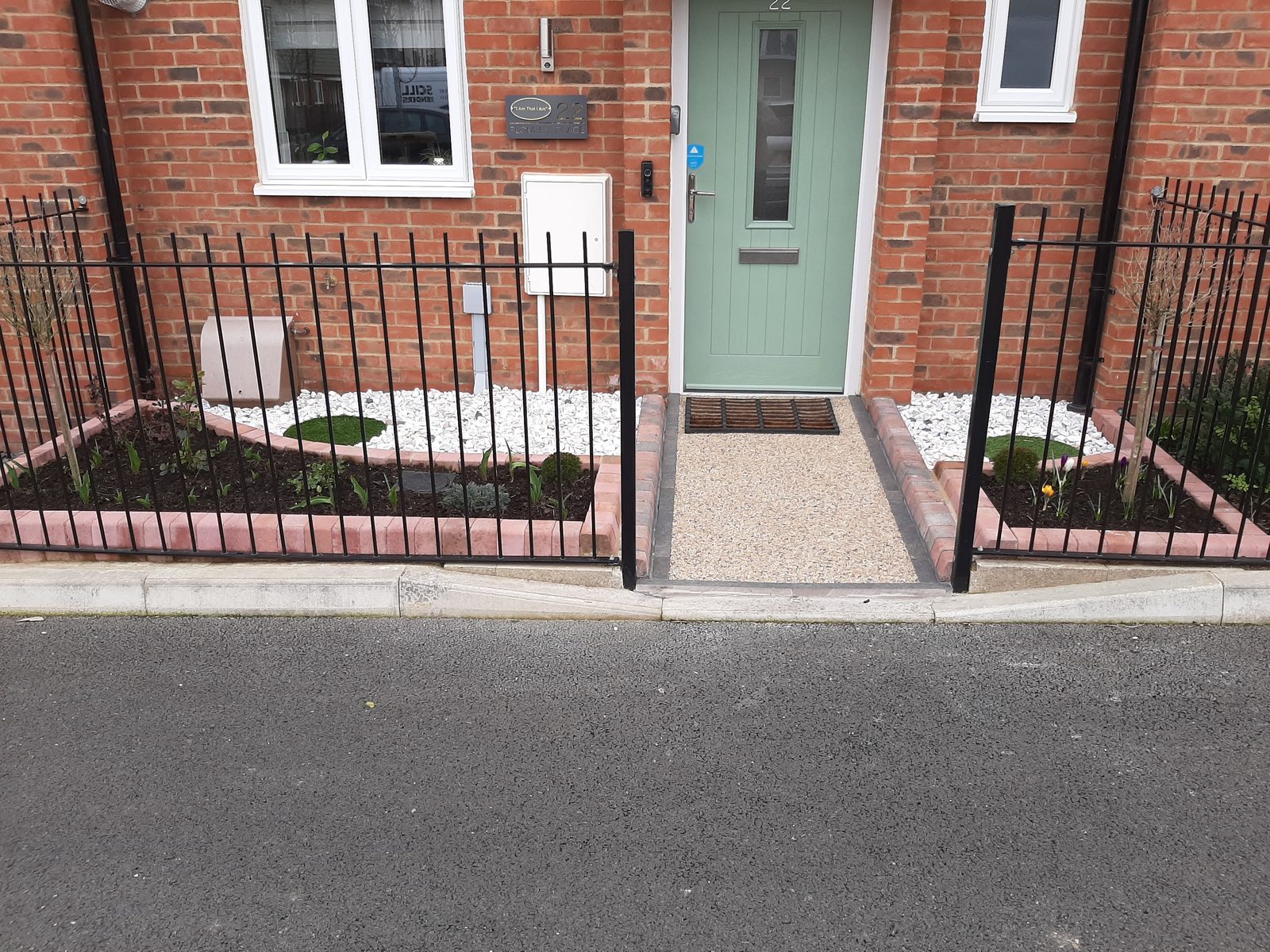
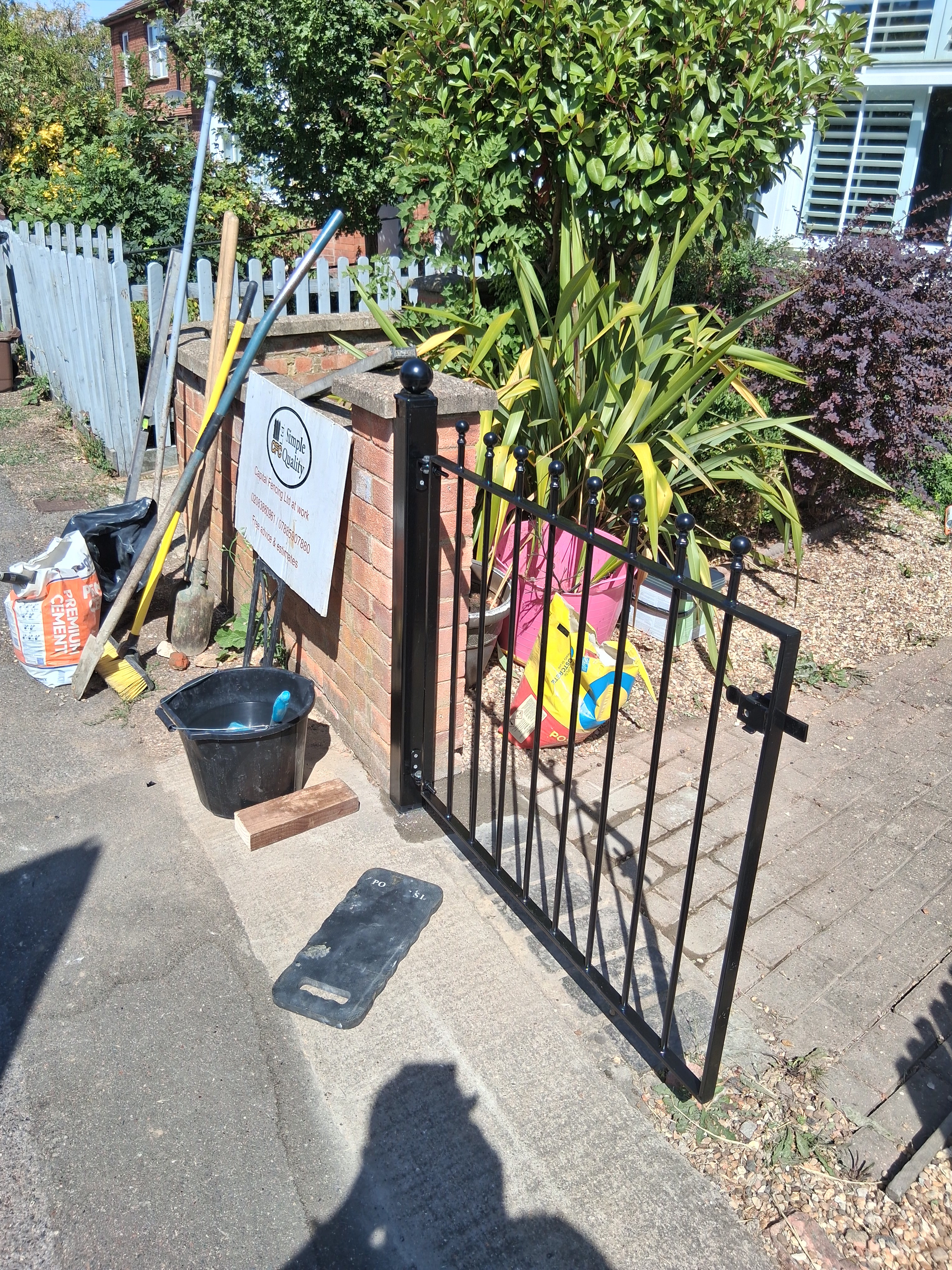
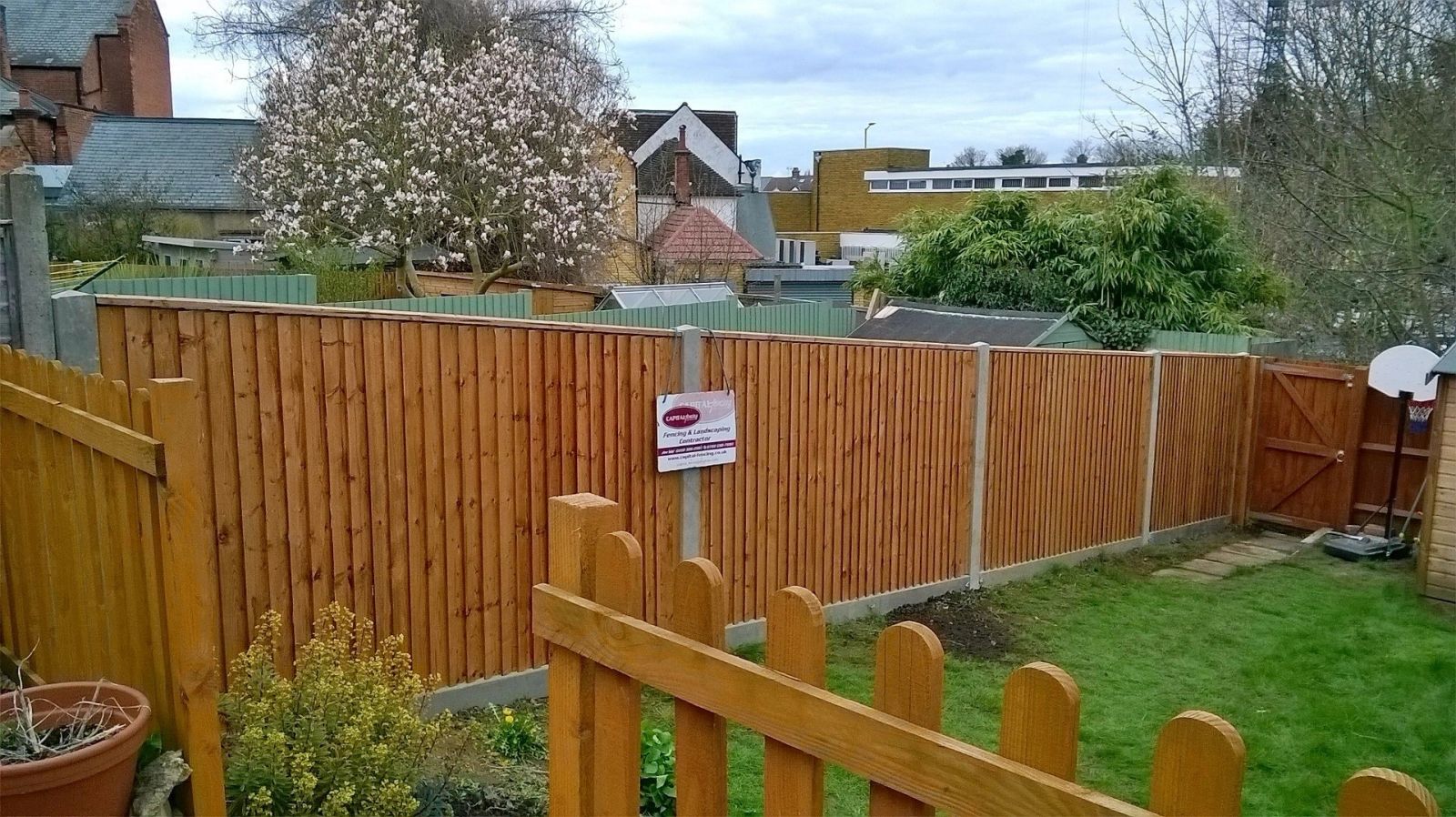
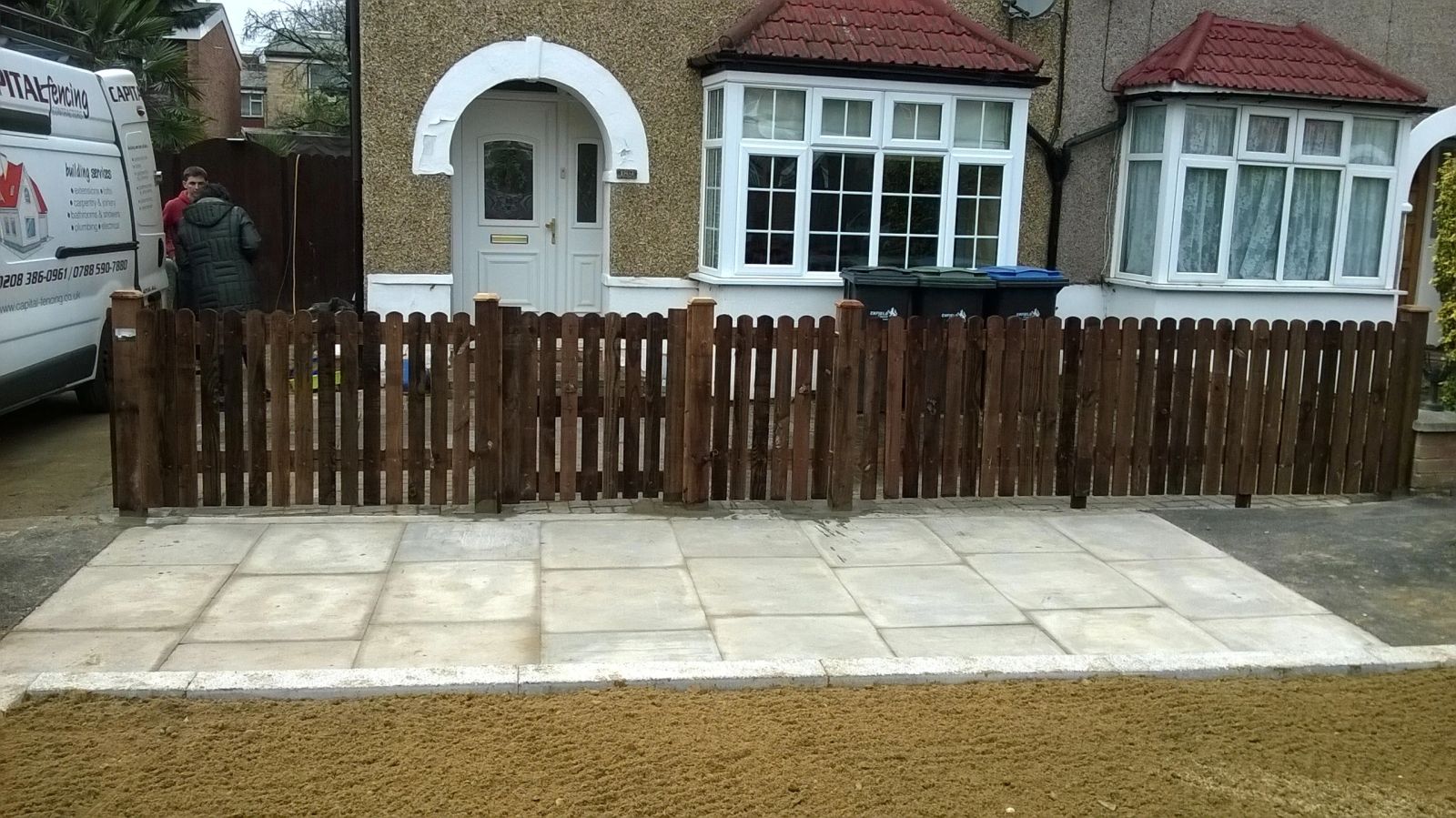
Some of our projects
Getting a crew here is straightforward: A411 / A4140 links through, M1 J5 / A41 isn't far, and Bushey (Overground) serves the area. Copper-based timber preservatives: Modern timber preservatives commonly use copper compounds as the primary biocide, since copper is effective against fungal decay and is less toxicologically hazardous than the older chromated copper arsenate formulations largely phased out for domestic use. Copper-treated timber can accelerate corrosion in fixings made from certain metals, particularly plain steel and some aluminium alloys, in a similar way to oak's tannic acid reaction, which is why treated timber often specifies compatible fixing types. Timber species and on-site workability: Workability describes how easily a timber can be sawn, planed, nailed and screwed without splitting, tearing or blunting tools excessively, and it varies considerably between species independent of durability or strength.
Get In Touch
Get My Free Quote — 24h Response
No callout fee · Free site visit · Friendly local team covering London & Hertfordshire.