London & Hertfordshire Free Site Visit
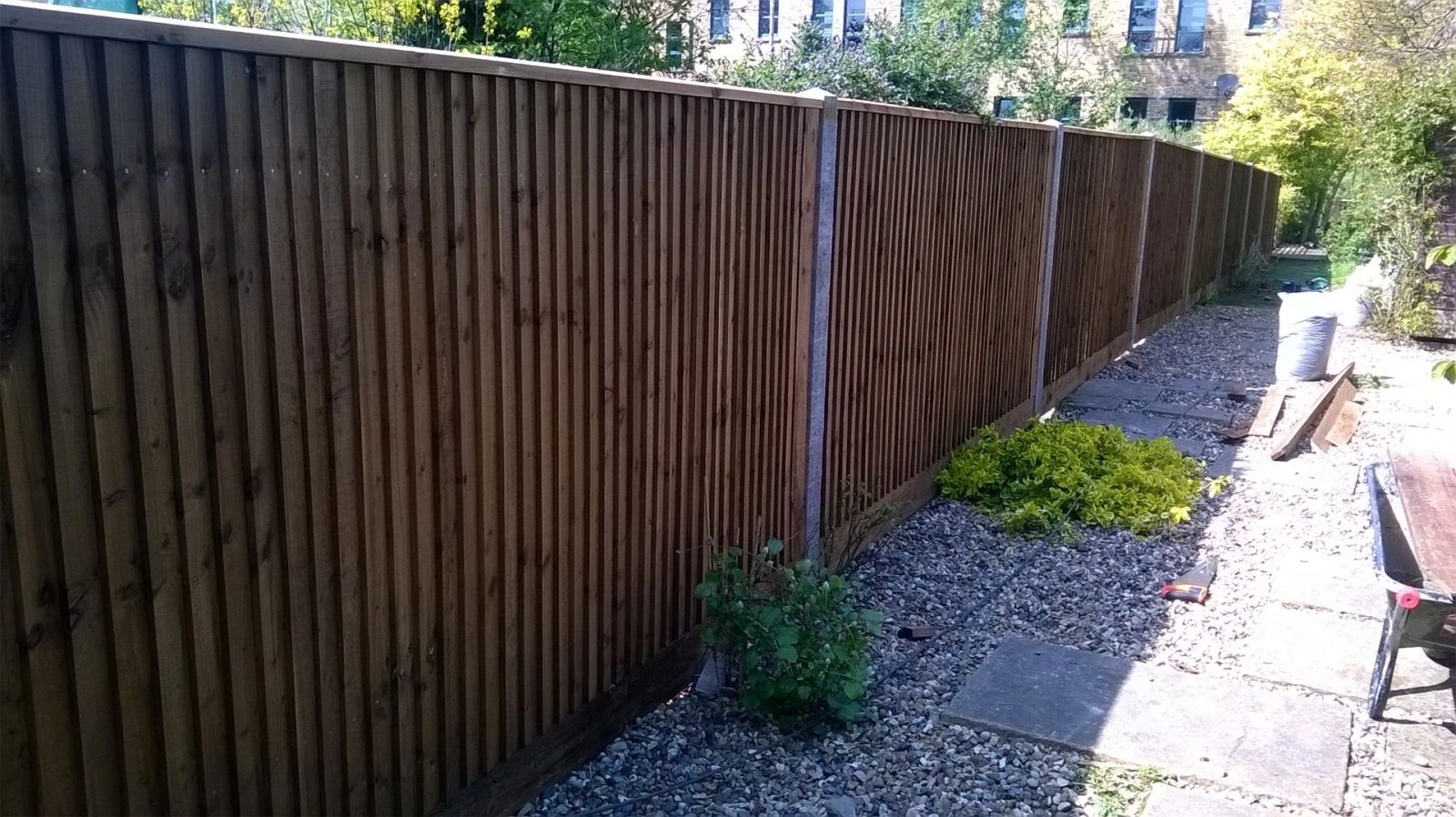
closeboard fence run installed by Capital Fencing in Bushey (WD23)
Bushey · WD23

Conservation Area Fencing in Bushey (WD23)

We approach conservation-area fencing in Bushey from the failure end backwards. Installing anything visible from a public road above 1m at the front without permission — the notice arrives inside a month — that's the single most common thing we're called back to fix, and it's the first thing our spec addresses. Roads such as Park Avenue and Falconer Road are typical of the local layout. Bushey Museum is a useful local reference point. Bushey divides between Bushey Heath, with larger detached plots on higher, sloping ground, and Bushey Village, with Edwardian and Arts and Crafts terraces within a conservation area.

We approach conservation-area fencing in Bushey from the failure end backwards. Installing anything visible from a public road above 1m at the front without permission — the notice arrives inside a month — that's the single most common thing we're called back to fix, and it's the first thing our spec addresses. Roads such as Park Avenue and Falconer Road are typical of the local layout. Bushey Museum is a useful local reference point. Bushey divides between Bushey Heath, with larger detached plots on higher, sloping ground, and Bushey Village, with Edwardian and Arts and Crafts terraces within a conservation area.

Typical conservation-area fencing briefs in Bushey

  • estate railings on a low brick wall replacing a non-compliant close-panel installed by a previous owner
  • period-style close-board rear boundary using hand-painted white or heritage green rather than dip-treated brown
Default spec

How we build conservation-area fencing in Bushey

painted softwood picket, oak-post estate railings or low brick-and-rail — heights kept to 1m front / 1.8m rear per PD guidance. On Bushey jobs we adjust for bushey heath conservation area limits front boundary heights and prohibits certain panel styles.

Property mix locally: large detached and semi-detached homes around Bushey Heath, with older cottages in Bushey Village. Typical gardens: deep, mature gardens — many sloping with mature trees and substantial existing planting. Postcodes we regularly service: WD23.

we check the property's designation, cross-reference the local design guide, and where required prepare drawings for a Certificate of Lawfulness or planning submission.

Why this spec, for owners in a designated conservation area or fronting a listed building — material and height rules apply

  • designs matched to the immediate street rather than a generic catalogue drop-in
  • material choices align with council conservation-area design guides — we've worked through most of them
  • we handle the neighbour and council conversation, not just the physical work
What goes wrong

Common failure modes on conservation-area fencing

  • installing anything visible from a public road above 1m at the front without permission — the notice arrives inside a month
  • using pressure-treated brown timber on a heritage frontage — flagged by neighbours before it's flagged by planning

Conservation Area Fencing FAQs — Bushey

Do I need planning permission to change a conservation-area boundary?

On conservation-area fencing jobs in Bushey (WD23), our default answer is: painted softwood picket, oak-post estate railings or low brick-and-rail — heights kept to 1m front / 1.8m rear per PD guidance. The honest trade-off is installing anything visible from a public road above 1m at the front without permission — the notice arrives inside a month — which is exactly what our default spec designs out.

How high can a front boundary be in a conservation area?

Across Bushey we spec around bushey heath conservation area limits front boundary heights and prohibits certain panel styles, so on conservation-area fencing that usually means hand-painted softwood picket. We check the property's designation, cross-reference the local design guide, and where required prepare drawings for a Certificate of Lawfulness or planning submission.

Can I use closeboard in a conservation area?

Hertsmere Borough coverage means we can survey most WD23 addresses inside a week — owners in a designated conservation area or fronting a listed building — material and height rules apply. For context: material choices align with council conservation-area design guides — we've worked through most of them. We handle the council conversation as part of the job, not as an after-thought.

Can you match paint colours to the neighbouring frontage?

Practically: painted softwood picket front boundary matched to a neighbouring listed row. That's the Bushey version of this job, not a generic one. We check the property's designation, cross-reference the local design guide, and where required prepare drawings for a Certificate of Lawfulness or planning submission.

How long does conservation-area consent take?

On conservation-area fencing jobs in Bushey (WD23), our default answer is: painted softwood picket, oak-post estate railings or low brick-and-rail — heights kept to 1m front / 1.8m rear per PD guidance. We check the property's designation, cross-reference the local design guide, and where required prepare drawings for a Certificate of Lawfulness or planning submission.

Recent conservation area fencing work
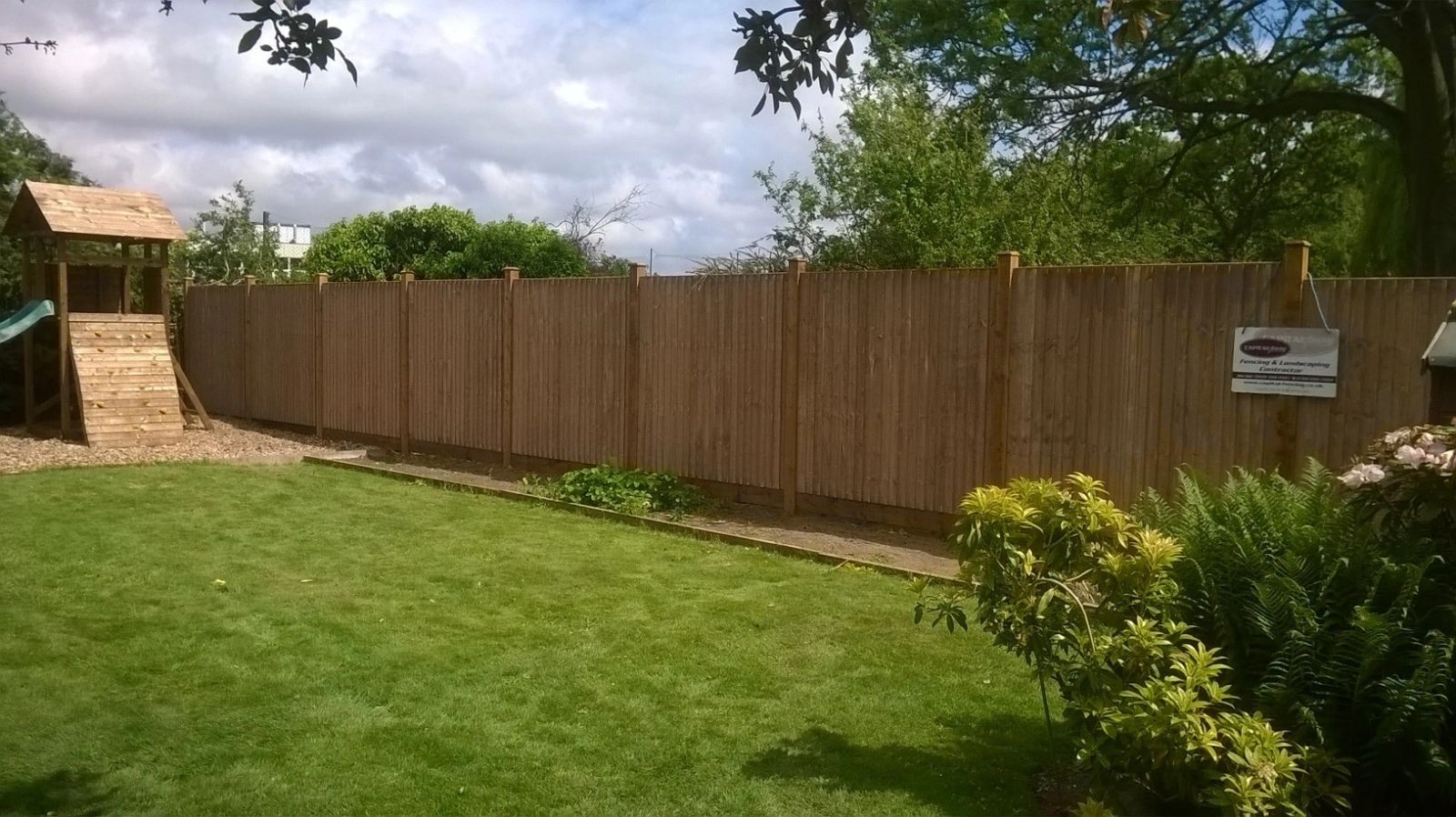
closeboard fence run installed by Capital Fencing in Bushey (WD23)panel fence install installed by Capital Fencing in Bushey (WD23)trellis-topped fence installed by Capital Fencing in Bushey (WD23)bespoke decorative fence installed by Capital Fencing in Bushey (WD23)

Site notes: conservation area fencing in WD23

Constraints on gates near listed buildings or in conservation areas

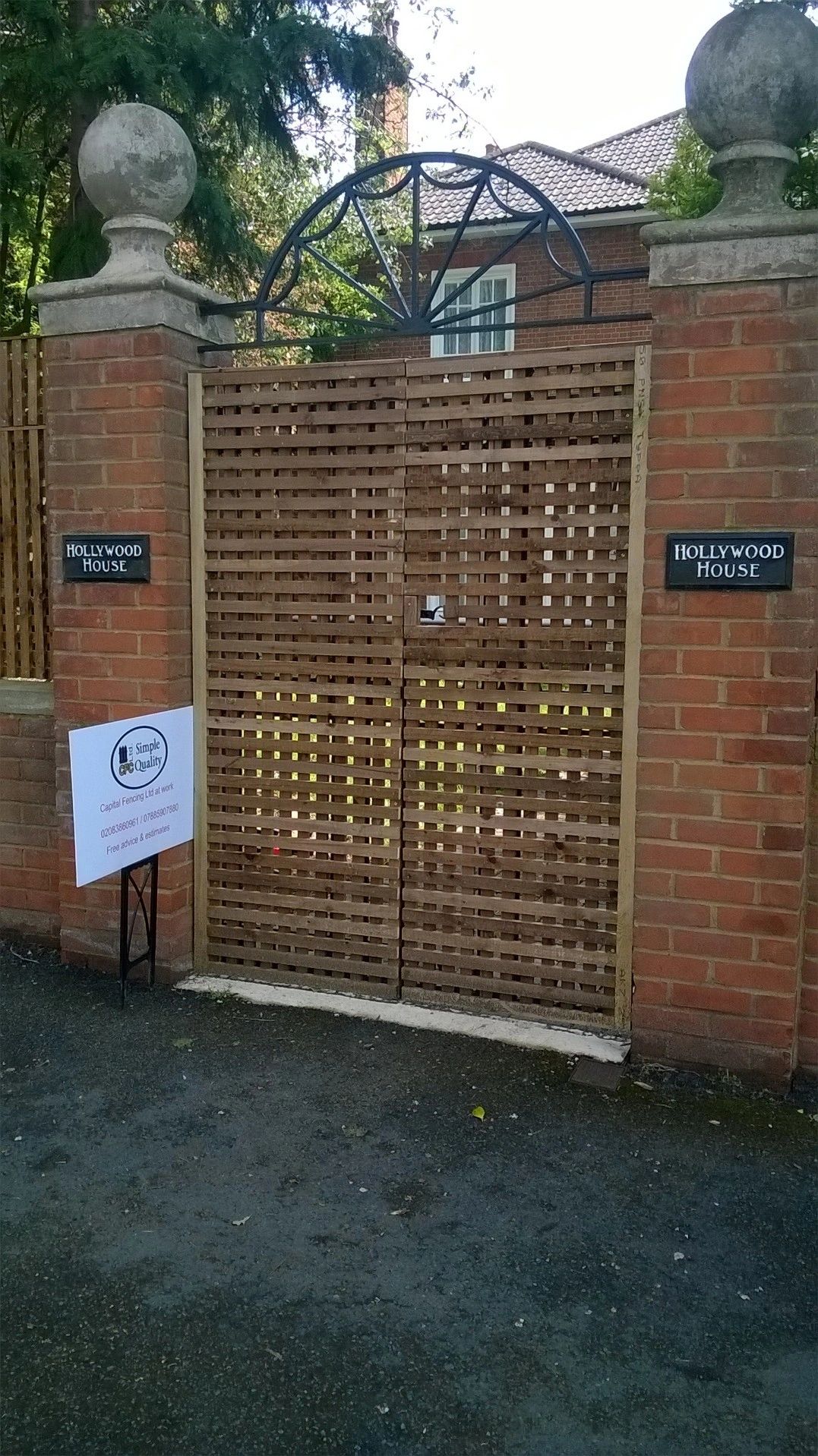
A gate forming part of the boundary treatment of a listed building, or sited within a conservation area, may need consent before being altered or replaced, particularly where the change affects the property's appearance from a public viewpoint.

Checking whether any such designation applies to a site before specifying a replacement gate avoids work that later needs to be reversed or amended.

Anti-climb toppings and their legal limits

Rotating spikes, barbed wire and razor coils are all restricted on a domestic or public-facing boundary because they can injure someone who isn't the intended target, and case law treats an unreasonably dangerous topping as an occupier's liability risk rather than a deterrent.

Where a topping is genuinely needed, angled anti-climb brackets carrying plain or barbed wire set back from a public path are the usual compromise, with height and setback checked against the boundary's use before anything is fitted.

Screws versus nails and fixing corrosion classes

Nails are faster to drive and flex slightly with timber movement, which suits high-volume boarding work like closeboard fencing; screws hold better under the racking loads a gate or a panel on an exposed run experiences, at the cost of more time to fit.

Fixings are corrosion-rated much like timber is use-classed, and a fixing rated for indoor or sheltered use will rust and stain the timber around it within a season or two if used outdoors.

Galvanised or coated fixings suit most external fencing work, but anywhere the fixing is in near-permanent wet contact — gravel boards, ground-level brackets — a higher corrosion class is worth the small extra cost over standard bright or galvanised fixings.

Diagnosing a fence problem before quoting

A repair quote starts with identifying which of the usual failure points is actually responsible — post, panel, gravel board or a full run — because pricing a full replacement for what's actually a single post repair costs the client far more than necessary.

We probe timber at ground level and check the whole run for related stress, not just the section that's obviously failed.

Bin and bike access considerations

A gate used regularly to move bins or bikes through needs enough clear width and a low enough threshold that wheels don't catch, which is a different design priority to a gate that's mostly left closed.

Where this is the main use of a side gate, we factor it into leaf width and threshold detail at repair or replacement time rather than defaulting to a standard pedestrian gate size.

Obstruction offences under the Highways Act

The Highways Act 1980 makes it an offence to obstruct a public highway, including the footway, without lawful authority, which is the underlying reason fencing, skips or materials on a pavement need proper authorisation.

This applies regardless of whether the obstruction is temporary for a delivery or intended as a permanent boundary feature encroaching onto highway land.

Where any part of planned boundary work might extend onto or over a public footway or verge, checking with the highway authority first avoids a straightforward enforcement issue later.

Temporary propping versus a permanent repair

A gate that's failed suddenly, such as a snapped hinge or a post knocked out of the ground, sometimes needs a temporary prop or fixing to secure the opening safely until a permanent repair can be carried out, particularly where the opening needs to remain secure overnight.

It's worth being clear with a client about which stage a repair is at, since a temporary fix isn't intended to be left in place long-term.

Dealing with an encroaching fence line

An 'encroaching' fence is one built further onto a neighbouring property than the true boundary allows, sometimes discovered only when a new survey or sale brings the discrepancy to light.

Resolving this is usually a conversation first — checking the title plans together and agreeing a way forward — rather than an immediate confrontation, since older fences are often innocently mispositioned rather than deliberately encroaching.

Where agreement can't be reached informally, this becomes a legal boundary dispute best handled with professional advice rather than unilateral action by either side.

Post caps and their role beyond weatherproofing

A post cap sheds water off the end grain of a timber post or the open top of a hollow steel post, but on a security run it also removes a foothold or handhold that an open post top would otherwise offer.

Domed or sloped caps are harder to grip than a flat cap, which is worth specifying on posts near a gate or corner where climbing is most likely to be attempted.

Pet-proofing a garden boundary

Dogs that dig will often go under a fence line rather than over it, so a gravel board or buried mesh apron at the base does more to keep a determined digger in than extra height above ground.

Gaps at gate thresholds and where a fence meets a wall or building are the most common escape points, and are worth checking specifically rather than assuming a continuous fence line is actually continuous at ground level.

Smaller or younger dogs and cats can fit through gaps that look too small to be a concern, so picket or trellis-style boundaries usually need a solid section or mesh backing if pet containment is the priority.

Managing noise during a security fence installation

Post-hole augering, breaking out old concrete footings and cutting steel palisade to length all generate noise that's worth flagging to neighbours or site occupants in advance, particularly on a compound or commercial job with fixed working hours nearby.

Where a site has noise-sensitive neighbours, sequencing louder tasks earlier in the working day and confining cutting to one area reduces the disruption without slowing the job significantly.

Latch and drop-bolt corrosion over a gate's lifecycle

A gate latch or drop bolt sees repeated mechanical wear on top of weather exposure, and standard zinc-plated steel components typically show surface corrosion and stiffening action within a few years of regular outdoor use.

Stainless steel or marine-grade fittings cost more initially but avoid the seized or snapped bolt that is one of the most common minor gate failures, particularly on a drop bolt that isn't operated daily and can seize unnoticed.

An annual light oiling of moving parts, alongside the general hinge check, keeps a latch mechanism working smoothly well beyond the point a neglected one would start sticking.

Tree roots and root protection areas

A tree's root protection area is calculated from its stem diameter and generally extends well beyond the canopy spread, meaning a fence line can fall inside it even where the tree itself looks distant.

Excavation within a root protection area should avoid cutting roots over around 25mm diameter where possible, using hand tools and routing the post line slightly off-square if that avoids a structural root.

For a fence contractor this usually means agreeing a no-dig or reduced-depth post solution on the affected section rather than a standard auger run across the whole boundary.

Suspending a parking bay for a delivery

Where a residential street has marked parking bays, a resident or contractor may need to apply to the council to formally suspend a bay for the duration of a delivery or a working van.

Suspensions are usually charged per bay per day and typically need a few working days' notice, so they're worth arranging well ahead of a fencing or decking job rather than on the morning of delivery.

Parking in a suspended bay without paying the fee, or using a bay that hasn't been suspended at all, can result in a parking charge notice regardless of the reason for being there.

Delivery access and material drop-off

Fencing materials are heavy and awkward rather than especially bulky individually, but a full job's worth of posts, panels and gravel boards still needs a genuine drop-off point close to the work area rather than a kerbside stack carried the full plot length.

On restricted streets, agreeing a specific delivery slot with the supplier avoids a lorry blocking a road during school run or peak hours, which is often the point neighbours complain about a job rather than the noise of the work itself.

Where a driveway can take a small vehicle, checking headroom and turning space in advance saves a delivery being refused on the day and materials having to be hand-carried instead.

Matching a discontinued panel style

Panel profiles and slat widths change between manufacturers and over time, so a boundary installed a decade or more ago may use a profile that's no longer produced.

Where an exact match isn't available, the closest equivalent height and style is used and the mismatch is pointed out honestly rather than presented as an exact replacement.

Post-repair adjustment after settling

A newly concreted or reset gate post can settle slightly in the weeks after installation, particularly in looser or made-up ground, which can throw a freshly hung gate's swing or latch alignment out again.

A follow-up adjustment to hinges or the latch keep after the post has settled is normal practice rather than a sign the original repair was done incorrectly.

Repairing where two adjoining fence styles meet at a corner

A corner where one owner's closeboard fence meets a neighbour's panel fence is a common awkward point for repair, since damage at the corner post can affect both runs but only one owner may be instructing the work.

Where only one side is being repaired, the corner post and its fixings into both runs need checking so the finished repair doesn't leave the untouched neighbouring fence with a weaker connection than before.

Hot-dip galvanising thickness

Hot-dip galvanising coats steel in a layer of zinc by immersing it in a molten zinc bath, and the resulting coating thickness is largely governed by the steel's own thickness, since thicker sections react with the zinc for longer and build a heavier layer.

British Standard BS EN ISO 1461 sets minimum coating thickness by section thickness rather than a single blanket figure, which is why a heavy structural post gains a thicker, longer-lasting coating than thin wire mesh galvanised in the same process.

The coating protects sacrificially as well as by barrier, meaning even where it's scratched the surrounding zinc corrodes preferentially and continues to protect the exposed steel underneath, at least until that local zinc reserve is used up.

Checking a post is plumb in two planes

A post checked with a spirit level on only one face can still be leaning across the run even though it looks vertical along it, so plumb needs confirming on two adjacent faces at right angles before concrete goes in.

This matters most on corner and gate posts, where a lean invisible from the main run direction becomes obvious the moment a gate is hung and doesn't swing true.

Rechecking plumb again just before the concrete starts to go off catches any post nudged out of position while backfilling or bracing, since that's a common point for a post to drift slightly unnoticed.

Land Registry title plans and their limits

Land Registry title plans are based on Ordnance Survey mapping and are deliberately described as showing 'general boundaries' rather than the precise legal line, typically accurate to a scale where a boundary can shift by up to half a metre without contradicting the plan.

That means a title plan is rarely enough on its own to settle exactly where a fence should sit to the centimetre, particularly on older plots where boundaries have drifted gradually over decades of replacement.

A determined boundary application can fix a precise legal line where a dispute genuinely needs it, but for most routine fence replacements, agreeing the line by eye with reference to the existing structure and the general boundary plan is the practical approach.

Matching fence specification to a site-specific threat assessment

Not every commercial boundary needs the same specification — a compound holding cash or controlled substances warrants a different height, mesh and topping to a low-value storage yard, and starting a quote from a fixed catalogue spec rather than the specific threat can lead to over- or under-specifying the job.

A short threat assessment covering what's inside the boundary, who has legitimate access, and what's happened on similar sites nearby gives a more defensible basis for the chosen spec than a generic default.

Conservation Area Fencing across WD23 is a regular run for us. We'll quote honestly, tell you if conservation-area fencing isn't the right answer for your site, and book the job in within a week or two of a signed quote. we handle the council conversation as part of the job, not as an after-thought. Roads such as Sparrows Herne and Park Avenue are typical of the local layout. Bushey Hall is a useful local reference point. The area sits close to the M1, and gardens on the highest ground have views toward the motorway corridor.

Get In Touch

Get My Free Quote — 24h Response

No callout fee · Free site visit · Friendly local team covering London & Hertfordshire.

Call us
07885907880
or 02036484746
Email
capital_fencing@yahoo.com
WhatsApp
Message us anytime
Area
London & Hertfordshire
Payment
Card payments accepted

Pay by debit or credit card, bank transfer or cash once the work and price are agreed. No deposit taken online.

Request a Free Quote

We'll get back to you within 24 hours.

Free Site Visit No Callout Fee
Call WhatsAppQuote