London & Hertfordshire Free Site Visit

Bushey Heath: Fencing & Decking Within Bushey

Bushey Heath (WD23) is a distinct pocket within bushey, under Hertsmere Borough Council — large detached homes set back behind front gardens, gardens deep mature gardens, often with established trees and sloping terraces. The recurring factor on jobs here is bushey heath conservation area constrains front-garden boundary heights. Freeholder consent for leasehold flats: Where a garden or yard is demised under a long lease rather than owned outright, the lease itself often requires the freeholder's written consent before any structural alteration, and a new fence, wall or gate can count as an alteration even in a small private yard. Some leases route this through a managing agent who needs formal notice and a fee before works start, and skipping that step can technically breach the lease even where the work itself is uncontroversial. Sizing a driveway gate: A single driveway gate needs enough swing clearance to open fully without catching a kerb, a parked car, or a slope in the drive itself, which is worth checking with a tape measure rather than assuming a standard width will fit.

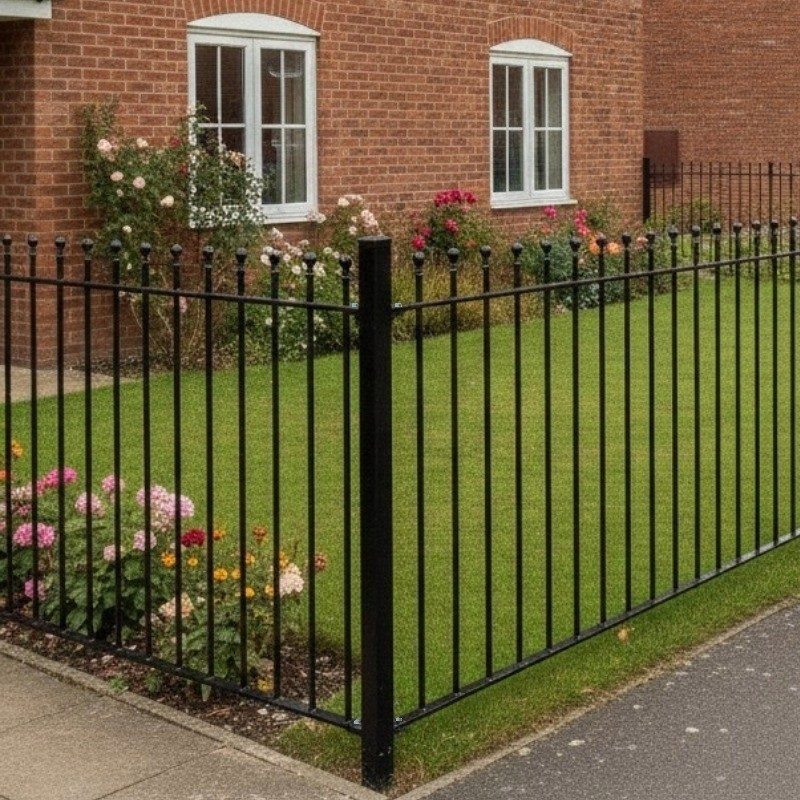
Capital Fencing project in Bushey Heath, WD23Capital Fencing project in Bushey Heath, WD23Capital Fencing project in Bushey Heath, WD23
WD23

Bushey Heath is part of our Bushey coverage under Hertsmere Borough Council, with its own property mix and its own recurring brief.

Property & garden in Bushey Heath

Property: large detached homes set back behind front gardens

Gardens: deep mature gardens, often with established trees and sloping terraces

Bushey Heath Conservation Area constrains front-garden boundary heights

Nearest arterial: A4140, M1 J5. Served from Stanmore (Jubilee line). Nearby commercial anchors: High Road parade.

Practical points for boundary work in Bushey Heath

Freeholder consent for leasehold flats

Where a garden or yard is demised under a long lease rather than owned outright, the lease itself often requires the freeholder's written consent before any structural alteration, and a new fence, wall or gate can count as an alteration even in a small private yard.

Some leases route this through a managing agent who needs formal notice and a fee before works start, and skipping that step can technically breach the lease even where the work itself is uncontroversial.

It's worth reading the relevant clause of the lease, or asking the managing agent directly, rather than assuming that owning the flat gives unrestricted rights over its garden boundary.

Sizing a driveway gate

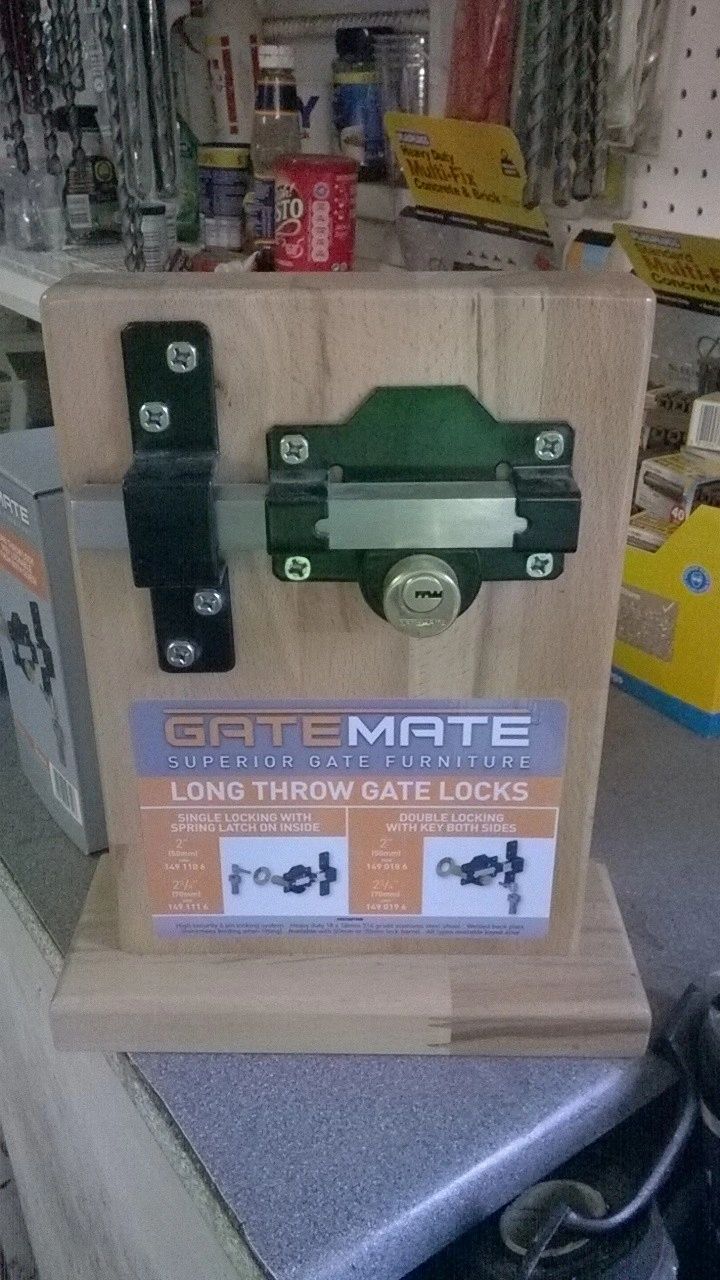
A single driveway gate needs enough swing clearance to open fully without catching a kerb, a parked car, or a slope in the drive itself, which is worth checking with a tape measure rather than assuming a standard width will fit.

Double gates spread the load and swing arc across two leaves, which suits wider openings and reduces the strain on any one hinge post, but need a solid centre stop or drop bolt so the leaves meet cleanly and don't rack under wind load.

Automation, if it's wanted, changes the gate's structural requirements too — motorised gates need a rigid, properly braced frame and adequate foundations for the motor mounts, which is worth specifying before the gate is built rather than retrofitting later.

Checking existing boundary alignment before a like-for-like rebuild

Rebuilding a fence on the line of an existing one assumes that existing line was accurate, which isn't always the case — old fences can have drifted from the true boundary over successive repairs and replacements.

A quick check against any available reference, such as a boundary marker, an adjoining wall, or a neighbour's fence that's known to be accurate, is worth doing before assuming the old line should simply be copied.

Where a discrepancy is found, it's a conversation for the client and neighbour to have before rebuilding, since quietly correcting or quietly perpetuating a boundary error both carry consequences beyond the fencing job itself.

Using profile boards at corners

Profile boards — a horizontal board fixed between two pegs set back from the actual corner — let a string line be set, removed and reinstated at the exact same point throughout a job without disturbing the corner itself.

They're most useful where a run turns through an angle, since the intersecting lines from two boards mark the true corner point independently of any post already dug.

Leaving the boards in place until the last post is set and checked avoids the common error of the line creeping slightly as pegs get knocked or the string is re-tied.

Why replacement panels sometimes need different post spacing to the originals

Panel sizing has changed slightly over past decades, and a fence originally built to an older standard width may not have a modern replacement panel that fits the existing post spacing exactly.

This becomes relevant on a partial repair where only some panels are being replaced and the remaining posts are staying in place, since a small mismatch can mean trimming a new panel down or accepting a slightly wider or narrower final bay.

It's worth measuring the actual existing post-to-post distance rather than assuming a 'standard' width will match, particularly on an older fence being partially rather than fully replaced.

Matching joist centres to the deck board chosen

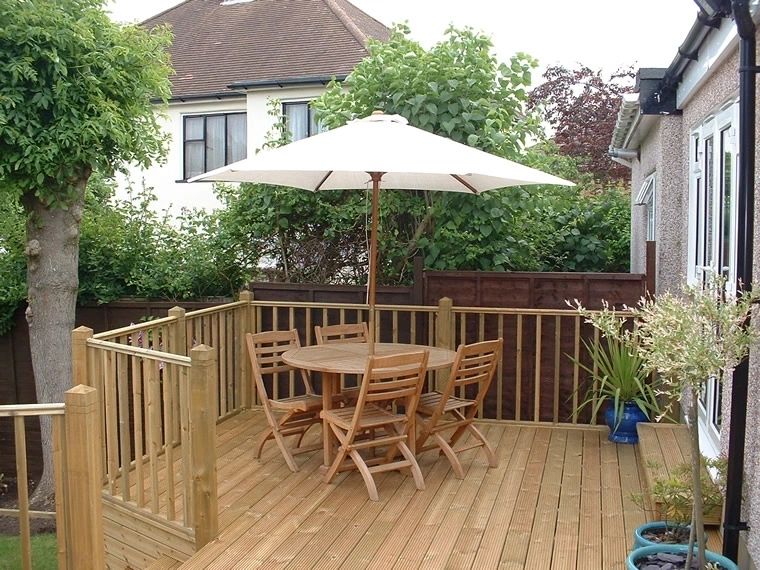
Choosing the decking board before finalising joist centres avoids a common sequencing mistake, since a thinner or more flexible board specified after the substructure is already built may need joists closer together than what's already in the ground.

Board thickness, species and orientation (laid along or across the joists) all interact, so a change to any one of them partway through a project can mean revisiting the joist layout rather than just swapping the board.

Getting board specification confirmed before ordering joist timber is a small step that avoids costly rework on a part-built substructure.

Services in Bushey Heath

Free quote for Bushey Heath

Send your postcode and a couple of photos — we'll get back with a written quote.

Bushey Heath — frequently asked

What's the typical garden like in Bushey Heath?

Deep mature gardens, often with established trees and sloping terraces is typical, alongside large detached homes set back behind front gardens.

What should I know about why replacement panels sometimes need different post spacing to the originals in Bushey Heath?

Panel sizing has changed slightly over past decades, and a fence originally built to an older standard width may not have a modern replacement panel that fits the existing post spacing exactly. This becomes relevant on a partial repair where only some panels are being replaced and the remaining posts are staying in place, since a small mismatch can mean trimming a new panel down or accepting a slightly wider or narrower final bay. It's worth measuring the actual existing post-to-post distance rather than assuming a 'standard' width will match, particularly on an older fence being partially rather than fully replaced.

What should I know about using profile boards at corners in Bushey Heath?

They're most useful where a run turns through an angle, since the intersecting lines from two boards mark the true corner point independently of any post already dug. Leaving the boards in place until the last post is set and checked avoids the common error of the line creeping slightly as pegs get knocked or the string is re-tied. Profile boards — a horizontal board fixed between two pegs set back from the actual corner — let a string line be set, removed and reinstated at the exact same point throughout a job without disturbing the corner itself.

Does checking existing boundary alignment before a like-for-like rebuild come up much on jobs around Bushey Heath?

Rebuilding a fence on the line of an existing one assumes that existing line was accurate, which isn't always the case — old fences can have drifted from the true boundary over successive repairs and replacements. A quick check against any available reference, such as a boundary marker, an adjoining wall, or a neighbour's fence that's known to be accurate, is worth doing before assuming the old line should simply be copied. Where a discrepancy is found, it's a conversation for the client and neighbour to have before rebuilding, since quietly correcting or quietly perpetuating a boundary error both carry consequences beyond the fencing job itself.

Is Bushey Heath within your standard travel area?

Yes — Bushey Heath is served from Stanmore (Jubilee line), off A4140, and is inside our regular working patch.

What should I know about matching joist centres to the deck board chosen in Bushey Heath?

Getting board specification confirmed before ordering joist timber is a small step that avoids costly rework on a part-built substructure. Choosing the decking board before finalising joist centres avoids a common sequencing mistake, since a thinner or more flexible board specified after the substructure is already built may need joists closer together than what's already in the ground. Board thickness, species and orientation (laid along or across the joists) all interact, so a change to any one of them partway through a project can mean revisiting the joist layout rather than just swapping the board.

Reached off A4140, near Stanmore (Jubilee line). Checking existing boundary alignment before a like-for-like rebuild: Rebuilding a fence on the line of an existing one assumes that existing line was accurate, which isn't always the case — old fences can have drifted from the true boundary over successive repairs and replacements. A quick check against any available reference, such as a boundary marker, an adjoining wall, or a neighbour's fence that's known to be accurate, is worth doing before assuming the old line should simply be copied. Using profile boards at corners: Profile boards — a horizontal board fixed between two pegs set back from the actual corner — let a string line be set, removed and reinstated at the exact same point throughout a job without disturbing the corner itself.

Get In Touch

Get My Free Quote — 24h Response

No callout fee · Free site visit · Friendly local team covering London & Hertfordshire.

Request a Free Quote

We'll get back to you within 24 hours.

Free Site Visit No Callout Fee
Call WhatsAppQuote