Practical points for boundary work in Enfield Town
Historic boundary stones and markers
Older rural and some urban boundaries occasionally retain historic boundary stones, iron markers or other physical features predating modern title plans, sometimes referenced directly in old deeds.
These features can carry real evidential weight in establishing a long-accepted boundary line, particularly where later documents are vague or contradictory.
Where such a marker exists, it's worth photographing and noting its position before any fencing work potentially disturbs or removes it.
Protecting a driveway surface during on-site concrete mixing
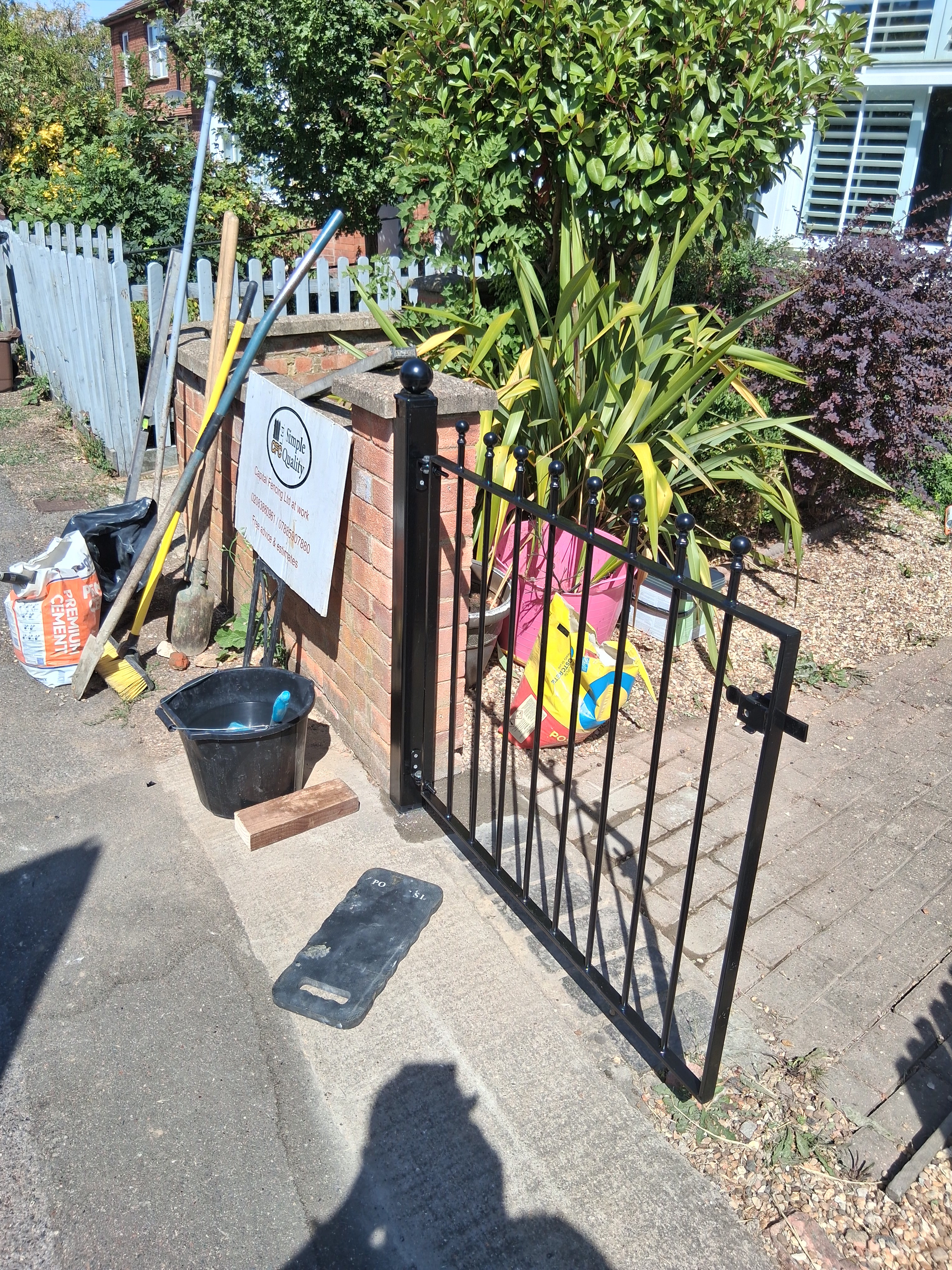
Mixing concrete directly on a resin-bound, block-paved or stamped concrete driveway risks permanent staining if spilt mix isn't cleared immediately, since cement staining bonds into a porous surface far more readily than it wipes off.
A mixing board or tray, and a bucket of clean water kept nearby to rinse tools and any spillage straight away, are simple precautions that cost little time compared with the alternative of professionally cleaning a stained driveway afterwards.
Where a mixer is used rather than hand-mixing, positioning it so any spill or overflow lands on a protected area rather than the finished surface is worth doing before the first batch rather than after the first mess.
Small gaps for garden wildlife
A small gap, roughly 13cm square, cut into the base of a fence panel lets hedgehogs and other small wildlife move between connected gardens without needing to climb or dig, which matters where fencing has fragmented a previously open row of gardens.
This kind of gap doesn't meaningfully weaken a fence's structure or security when it's cut cleanly and positioned away from a post, and can be added to an existing fence as well as specified on a new one.
Where a client has an interest in garden wildlife, it's a low-cost addition worth mentioning at quote stage rather than something usually offered unprompted.
Storm damage to a boundary fence and insurance
Standard buildings insurance policies frequently exclude fences from cover for storm damage, or cover them only up to a modest specified limit, which surprises many homeowners after a bad storm.
Where a fence is shared or ownership is unclear, storm damage can also raise the question of whose policy, if either, is expected to respond.
Checking a policy's specific wording on fences and gates before relying on it for storm repair avoids finding out about exclusions only after a claim is made.
Deck height relative to the house damp-proof course
Building guidance generally recommends decking be kept at least 150mm below the house's damp-proof course, since a deck built level with or above the DPC risks bridging it and allowing damp to track into the house wall.
This is a common issue on a sloping plot where the natural ground level near the house is already close to the DPC, leaving very little room to build a deck without breaching that clearance.
Where the clearance genuinely can't be achieved without lowering the deck excessively, a drained gap or a change in construction detail near the house wall is a better solution than ignoring the clearance altogether.
Hedgerows as a boundary feature
Some countryside and village hedgerows are protected under the Hedgerow Regulations 1997, which can restrict removing an 'important' hedgerow even where it marks a private boundary.
This mainly affects longer, older hedges in rural or semi-rural locations rather than typical suburban garden hedges, but the distinction isn't always obvious without checking.
Where a fence is planned to replace or run alongside a hedge, it's worth confirming with the council whether the hedgerow itself has any protected status before removal work begins.