Enfield falls under Enfield Council, covering EN1, EN2, EN3 — property here runs to interwar semis, 1960s estates and pockets of georgian housing around forty hill, with gardens typically medium-depth gardens that often back onto alleyways — access is the deciding factor. The recurring factor on jobs here is high winds funnelled down the lea valley regularly knock over weaker panel fences. Latch and drop-bolt corrosion over a gate's lifecycle: A gate latch or drop bolt sees repeated mechanical wear on top of weather exposure, and standard zinc-plated steel components typically show surface corrosion and stiffening action within a few years of regular outdoor use. Stainless steel or marine-grade fittings cost more initially but avoid the seized or snapped bolt that is one of the most common minor gate failures, particularly on a drop bolt that isn't operated daily and can seize unnoticed. Sherardised nails and fixings: Sherardising coats small steel fixings in zinc through a low-temperature diffusion process using zinc dust rather than a molten bath, giving a matt grey, evenly distributed coating well suited to fasteners with fine threads.
Local knowledge
What shapes a Enfield job
Property: interwar semis, 1960s estates and pockets of Georgian housing around Forty Hill
Gardens: medium-depth gardens that often back onto alleyways — access is the deciding factor
high winds funnelled down the Lea Valley regularly knock over weaker panel fences
Under Enfield Council, covering EN1, EN2, EN3. Nearest arterial: A10 Great Cambridge Road, M25 J25 (Waltham Cross). Served from Enfield Town (West Anglia line). Local commercial anchors: Brimsdown industrial estate, Innova Park.
Streets we regularly work on: Baker Street, Silver Street, Carterhatch Lane, Hertford Road. Local anchors: Enfield Town Park, Lee Valley Park, Forty Hall.
Enfield spans a wide area from the Victorian terraces of EN1 town centre through the mature suburbs of EN2 to the industrial estates near Brimsdown in EN3, close to the Lee Valley. Forty Hall, a Grade I listed Jacobean mansion, sits within its own historic parkland on the town's northern edge. Enfield Town Park and the wider Lee Valley Regional Park both fall within the borough.
Practical points for boundary work in Enfield
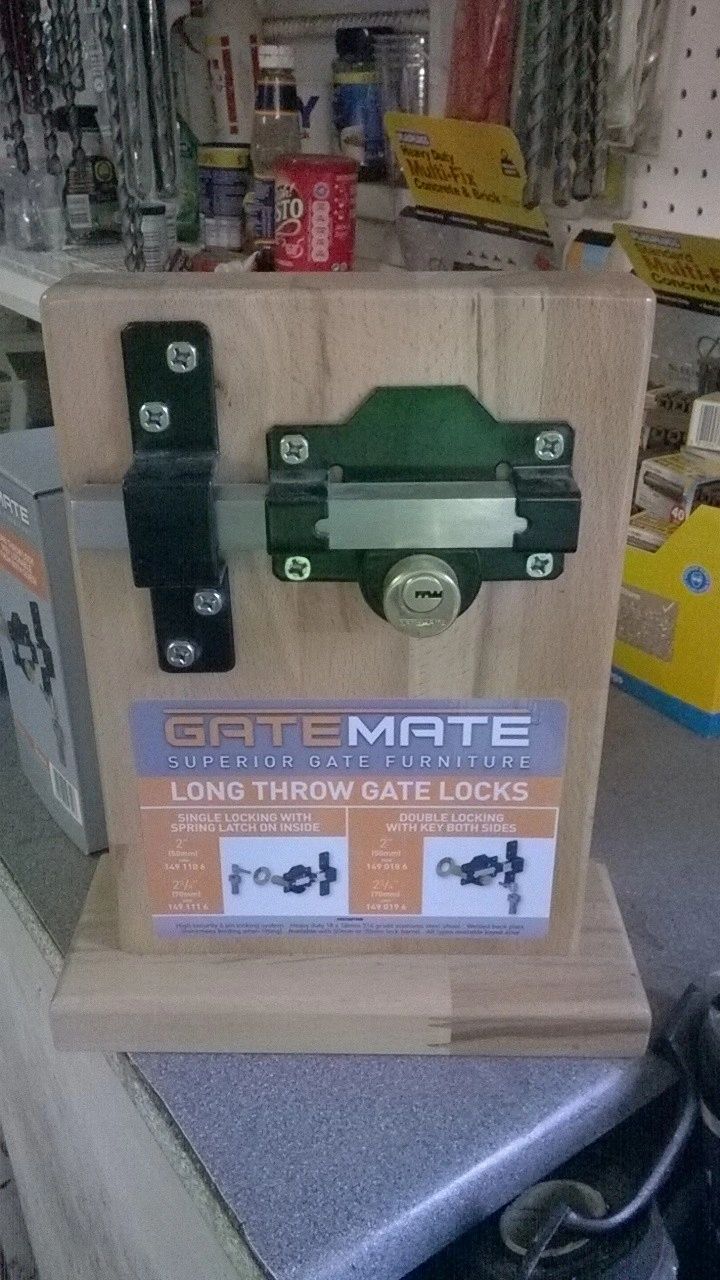
Latch and drop-bolt corrosion over a gate's lifecycle
A gate latch or drop bolt sees repeated mechanical wear on top of weather exposure, and standard zinc-plated steel components typically show surface corrosion and stiffening action within a few years of regular outdoor use.
Stainless steel or marine-grade fittings cost more initially but avoid the seized or snapped bolt that is one of the most common minor gate failures, particularly on a drop bolt that isn't operated daily and can seize unnoticed.
An annual light oiling of moving parts, alongside the general hinge check, keeps a latch mechanism working smoothly well beyond the point a neglected one would start sticking.
Sherardised nails and fixings
Sherardising coats small steel fixings in zinc through a low-temperature diffusion process using zinc dust rather than a molten bath, giving a matt grey, evenly distributed coating well suited to fasteners with fine threads.
Because the process doesn't build up excess zinc at edges and threads the way hot-dip galvanising can, sherardised nails and screws keep a cleaner, more precise fit than galvanised equivalents of the same size.
The coating is thinner than typical hot-dip galvanising, so sherardised fixings are generally specified for above-ground, moderate-exposure use rather than permanent ground contact.
Building decking over an existing patio or hardstanding
Decking built directly over a sound existing patio saves the cost and disruption of breaking out the old surface, provided the substructure can be securely fixed to it and a fall is built in for drainage rather than trapping water underneath.
A patio with a slope toward the house, rather than away from it, needs correcting in the decking substructure rather than simply built over as-is, since a deck can't fix a drainage problem it's built directly on top of.
Ventilation gaps around the edge of a deck built over solid paving matter just as much as one built over soil, since trapped moisture and poor airflow cause the same rot risk to the substructure timber either way.
Lifetime comparison of hedging and fencing as a boundary
A well-established hedge can outlast several generations of timber fencing with no post replacement or re-treatment cycle, but it needs regular cutting to stay within bounds and takes several years to reach an effective screening height from new planting.
A fence gives an immediate, defined boundary and predictable height but carries an ongoing maintenance and eventual replacement cost that a mature hedge doesn't.
Many gardens end up with a mixed solution — a fence for the immediate boundary definition with hedging planted alongside it to soften the appearance and eventually take over some of the screening role.
Keeping treated timber offcuts away from food-growing areas
Offcuts of pressure-treated fencing timber shouldn't be left lying in or used to edge a vegetable bed or fruit cage, since preservative can leach out of cut ends into adjacent soil over time.
Keeping offcuts on a hard surface or sheeting rather than directly on a border during the works avoids this becoming an issue even temporarily while the job is ongoing.
Where a client specifically wants to reuse leftover timber for raised beds, it's worth flagging that treated fencing stock isn't the right material for that purpose regardless of how convenient the offcuts seem.
Weld mesh and chain link
Weld mesh panels are a rigid grid of welded steel wire, usually galvanised and often polyester-coated, and they hold their shape under impact far better than chain link, which is why they're common on boundaries needing a firmer physical barrier.
Chain link is a diamond-pattern woven wire fixed to line wires and posts rather than a rigid panel, which makes it cheaper and easier to tension over long or uneven runs but more prone to sagging or distorting under repeated pressure.
Neither offers meaningful privacy on its own, so both are frequently paired with hedging or slatted infill where visual screening is also wanted alongside the containment.
Does building decking over an existing patio or hardstanding come up much on jobs around Enfield?
Decking built directly over a sound existing patio saves the cost and disruption of breaking out the old surface, provided the substructure can be securely fixed to it and a fall is built in for drainage rather than trapping water underneath. A patio with a slope toward the house, rather than away from it, needs correcting in the decking substructure rather than simply built over as-is, since a deck can't fix a drainage problem it's built directly on top of. Ventilation gaps around the edge of a deck built over solid paving matter just as much as one built over soil, since trapped moisture and poor airflow cause the same rot risk to the substructure timber either way.
Weld mesh and chain link — what does that mean for a job in Enfield?
Neither offers meaningful privacy on its own, so both are frequently paired with hedging or slatted infill where visual screening is also wanted alongside the containment. Weld mesh panels are a rigid grid of welded steel wire, usually galvanised and often polyester-coated, and they hold their shape under impact far better than chain link, which is why they're common on boundaries needing a firmer physical barrier. Chain link is a diamond-pattern woven wire fixed to line wires and posts rather than a rigid panel, which makes it cheaper and easier to tension over long or uneven runs but more prone to sagging or distorting under repeated pressure.
Is Enfield within your standard travel area?
Yes — Enfield is served from Enfield Town (West Anglia line), off A10 Great Cambridge Road, and is inside our regular working patch.
What's the typical garden like in Enfield?
Medium-depth gardens that often back onto alleyways — access is the deciding factor is typical, alongside interwar semis, 1960s estates and pockets of georgian housing around forty hill.
Does lifetime comparison of hedging and fencing as a boundary come up much on jobs around Enfield?
Many gardens end up with a mixed solution — a fence for the immediate boundary definition with hedging planted alongside it to soften the appearance and eventually take over some of the screening role. A well-established hedge can outlast several generations of timber fencing with no post replacement or re-treatment cycle, but it needs regular cutting to stay within bounds and takes several years to reach an effective screening height from new planting. A fence gives an immediate, defined boundary and predictable height but carries an ongoing maintenance and eventual replacement cost that a mature hedge doesn't.
Keeping treated timber offcuts away from food-growing areas — what does that mean for a job in Enfield?
Offcuts of pressure-treated fencing timber shouldn't be left lying in or used to edge a vegetable bed or fruit cage, since preservative can leach out of cut ends into adjacent soil over time. Keeping offcuts on a hard surface or sheeting rather than directly on a border during the works avoids this becoming an issue even temporarily while the job is ongoing. Where a client specifically wants to reuse leftover timber for raised beds, it's worth flagging that treated fencing stock isn't the right material for that purpose regardless of how convenient the offcuts seem.
We work this patch off A10 Great Cambridge Road, close to M25 J25 (Waltham Cross), via Enfield Town (West Anglia line). Building decking over an existing patio or hardstanding: Decking built directly over a sound existing patio saves the cost and disruption of breaking out the old surface, provided the substructure can be securely fixed to it and a fall is built in for drainage rather than trapping water underneath. A patio with a slope toward the house, rather than away from it, needs correcting in the decking substructure rather than simply built over as-is, since a deck can't fix a drainage problem it's built directly on top of. Lifetime comparison of hedging and fencing as a boundary: A well-established hedge can outlast several generations of timber fencing with no post replacement or re-treatment cycle, but it needs regular cutting to stay within bounds and takes several years to reach an effective screening height from new planting.
Get In Touch
Get My Free Quote — 24h Response
No callout fee · Free site visit · Friendly local team covering London & Hertfordshire.