London & Hertfordshire Free Site Visit
Fencing and gates coverage in Southgate, Enfield

Southgate: Fencing & Decking Within Enfield

Sitting inside enfield and administered by Enfield Council, Southgate (N14) has its own character: 1930s art-deco semis on cat hill and large detached homes toward oakwood park, gardens generous mid to deep rear gardens, mostly flat. What tends to drive the spec on a Southgate job is art-deco house lines mean owners want clean-line panel styles rather than closeboard rustic. Public liability considerations on a shared boundary: Work that takes place on or near a shared boundary inherently affects two properties, which is one reason contractors carry public liability insurance covering damage or injury arising from the works, generally quite separate from any specific job guarantee. Clients are entitled to ask to see a contractor's current public liability certificate before work starts, and for jobs involving excavation near a neighbour's structure or a shared wall it's reasonable practice to confirm cover explicitly rather than assume it. Round post versus square-sawn post sections: A round, or half-round, post retains more of the log's original strength-giving fibre continuity around its circumference than a square-sawn post cut from the same log, since sawing removes material and can cut across some outer fibres.

N14

Southgate is part of our Enfield coverage under Enfield Council, with its own property mix and its own recurring brief.

Streets we regularly work on here: Cannon Hill, Waterfall Road, Alderman's Hill, Chase Road. Local anchors: Southgate tube station (Charles Holden Grade II), Grovelands Park, Oakwood Park.

Southgate is notable for its Art Deco character, including the Grade II listed Southgate underground station designed by Charles Holden. The 1930s housing around Cannon Hill and Waterfall Road follows the wide-frontage plot layout typical of the period. Alderman's Hill slopes down toward Grovelands Park, giving several gardens a noticeable gradient.

Property & garden in Southgate

Property: 1930s art-deco semis on Cat Hill and large detached homes toward Oakwood Park

Gardens: generous mid to deep rear gardens, mostly flat

art-deco house lines mean owners want clean-line panel styles rather than closeboard rustic

Nearest arterial: A111 Chase Road, M25 J24 (10 min). Served from Southgate (Piccadilly line). Nearby commercial anchors: The Broadway, Chase Side.

Practical points for boundary work in Southgate

Public liability considerations on a shared boundary

Work that takes place on or near a shared boundary inherently affects two properties, which is one reason contractors carry public liability insurance covering damage or injury arising from the works, generally quite separate from any specific job guarantee.

Clients are entitled to ask to see a contractor's current public liability certificate before work starts, and for jobs involving excavation near a neighbour's structure or a shared wall it's reasonable practice to confirm cover explicitly rather than assume it.

This is a generic industry consideration rather than a claim about any particular policy, and the details of cover, exclusions and limits vary between insurers and should be checked directly with the provider.

Round post versus square-sawn post sections

A round, or half-round, post retains more of the log's original strength-giving fibre continuity around its circumference than a square-sawn post cut from the same log, since sawing removes material and can cut across some outer fibres.

Square-sawn posts are easier to fix panels and brackets to flush, since flat faces align with flat rail ends, whereas round posts often need a notched or curved bracket to seat components securely.

Round fencing stock is more common in agricultural post-and-rail and stock fencing where raw strength per log matters most, while square-sawn posts dominate garden and boundary fencing where flush fixing detail matters more.

Decking board profiles and grooves

Timber decking boards commonly come grooved (ribbed) on the top face for grip, reversible to a smooth face for a more contemporary look, or with a rounded profile that sheds water more readily but offers less traction underfoot.

Grooved boards trap dirt and moisture in the channels more than a smooth or rounded profile, so they need more regular brushing or washing to avoid becoming slippery with algae, particularly in shaded, damp positions.

Composite boards are usually extruded with a fixed groove or embossed texture rather than milled, and the profile is generally part of a wider system with matching edge trims rather than a feature that can be mixed freely between board types.

The highway 1m rule in practice

The 1m permitted development limit applies to any boundary that fronts a highway used by vehicular traffic, which in practice includes most adopted roads and many unadopted estate roads that carry regular car use, not just classified A and B roads.

A footpath-only right of way at the front of a plot doesn't trigger the lower limit on its own, but councils interpret 'used by vehicles' broadly, so a shared driveway serving several houses usually counts.

Where it's unclear, checking with the local planning authority before building is cheaper than a retrospective application after a 1.8m fence goes up on what turns out to be a vehicular frontage.

Talking to neighbours before you start

A shared boundary fence, even one that's entirely your responsibility to maintain, sits next to someone else's garden — giving a neighbour advance notice of the height, style and timing of the work heads off most disputes before they start.

Where a fence straddles the boundary line exactly, both parties technically have an interest in it, and a quick written note agreeing who's paying for what avoids a much longer argument later if it needs replacing again.

This isn't a formal Party Wall Act process — that applies to structures like walls between buildings — but the same basic courtesy of clear, written communication before work starts applies just as well to garden boundaries.

Dog-proofing details at ground level and gaps

Dogs test a fence at ground level far more than at height, so gaps under gravel boards, worn hollows on sloping ground, or wide overlaps between adjacent panels are the points most likely to let a determined dog through or under.

A close-fitting concrete gravel board set with minimal gap to the ground, rather than a timber board that can warp and lift, closes off the most common escape route without changing the overall fence design.

For persistent diggers, a buried mesh apron or paving strip just inside the fence line at ground level stops excavation without needing to alter the visible fence at all.

Services in Southgate

Southgate — frequently asked

What's the typical garden like in Southgate?

Generous mid to deep rear gardens, mostly flat is typical, alongside 1930s art-deco semis on cat hill and large detached homes toward oakwood park.

Is Southgate within your standard travel area?

Yes — Southgate is served from Southgate (Piccadilly line), off A111 Chase Road, and is inside our regular working patch.

Talking to neighbours before you start — what does that mean for a job in Southgate?

This isn't a formal Party Wall Act process — that applies to structures like walls between buildings — but the same basic courtesy of clear, written communication before work starts applies just as well to garden boundaries. A shared boundary fence, even one that's entirely your responsibility to maintain, sits next to someone else's garden — giving a neighbour advance notice of the height, style and timing of the work heads off most disputes before they start. Where a fence straddles the boundary line exactly, both parties technically have an interest in it, and a quick written note agreeing who's paying for what avoids a much longer argument later if it needs replacing again.

Does decking board profiles and grooves come up much on jobs around Southgate?

Composite boards are usually extruded with a fixed groove or embossed texture rather than milled, and the profile is generally part of a wider system with matching edge trims rather than a feature that can be mixed freely between board types. Timber decking boards commonly come grooved (ribbed) on the top face for grip, reversible to a smooth face for a more contemporary look, or with a rounded profile that sheds water more readily but offers less traction underfoot. Grooved boards trap dirt and moisture in the channels more than a smooth or rounded profile, so they need more regular brushing or washing to avoid becoming slippery with algae, particularly in shaded, damp positions.

What should I know about the highway 1m rule in practice in Southgate?

A footpath-only right of way at the front of a plot doesn't trigger the lower limit on its own, but councils interpret 'used by vehicles' broadly, so a shared driveway serving several houses usually counts. Where it's unclear, checking with the local planning authority before building is cheaper than a retrospective application after a 1.8m fence goes up on what turns out to be a vehicular frontage. The 1m permitted development limit applies to any boundary that fronts a highway used by vehicular traffic, which in practice includes most adopted roads and many unadopted estate roads that carry regular car use, not just classified A and B roads.

What should I know about dog-proofing details at ground level and gaps in Southgate?

A close-fitting concrete gravel board set with minimal gap to the ground, rather than a timber board that can warp and lift, closes off the most common escape route without changing the overall fence design. For persistent diggers, a buried mesh apron or paving strip just inside the fence line at ground level stops excavation without needing to alter the visible fence at all. Dogs test a fence at ground level far more than at height, so gaps under gravel boards, worn hollows on sloping ground, or wide overlaps between adjacent panels are the points most likely to let a determined dog through or under.

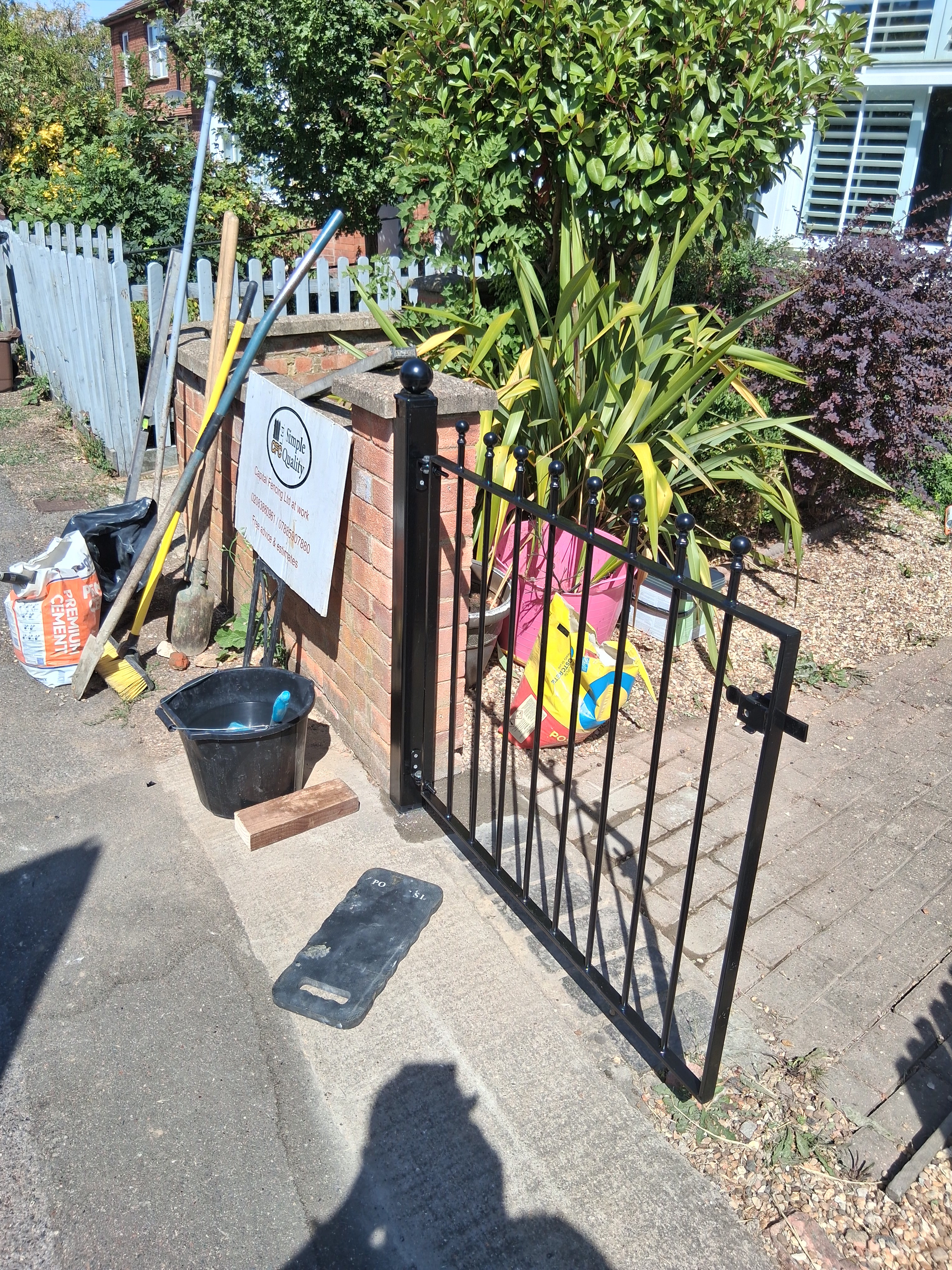
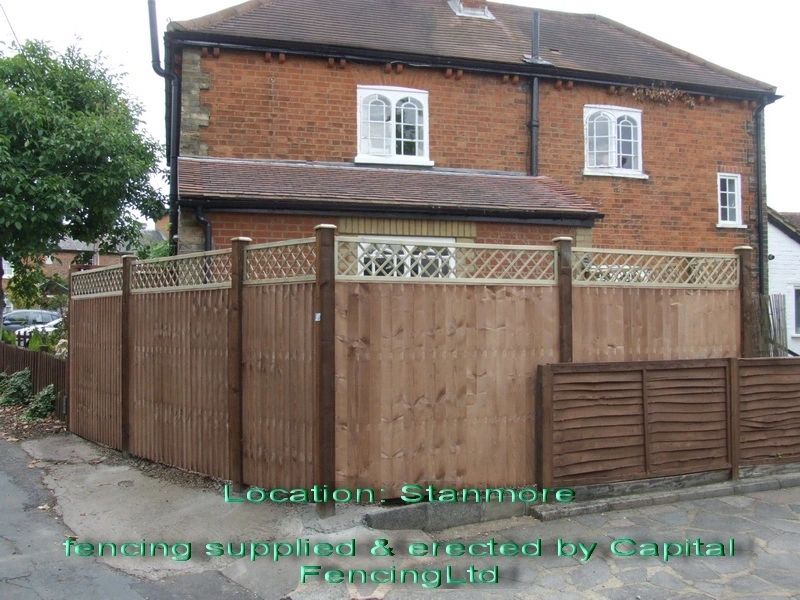
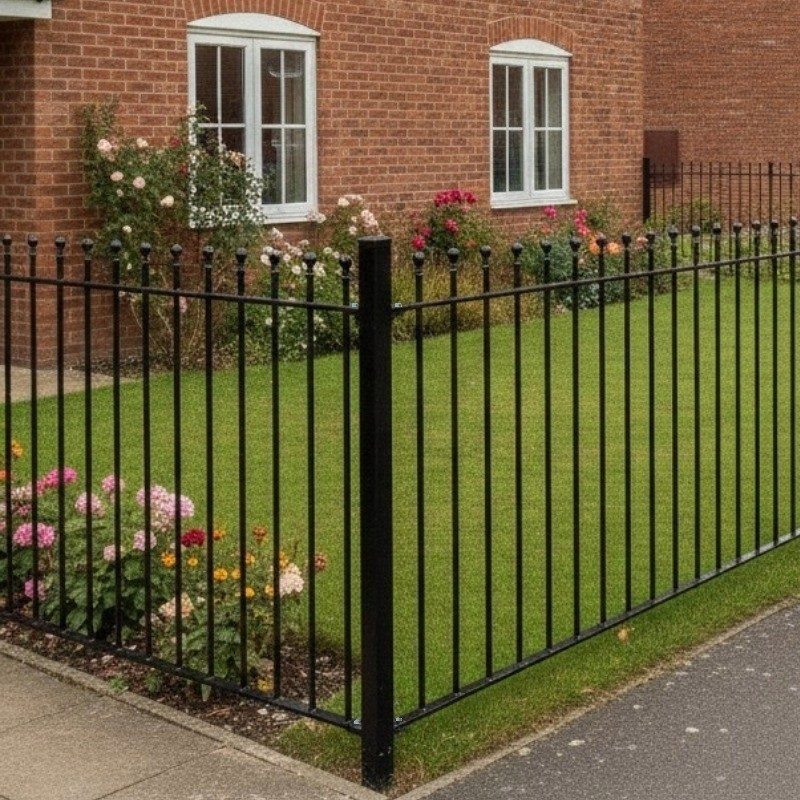
Capital Fencing project in Southgate, N14Capital Fencing project in Southgate, N14Capital Fencing project in Southgate, N14

Access is via A111 Chase Road, with Southgate (Piccadilly line) close by. Decking board profiles and grooves: Timber decking boards commonly come grooved (ribbed) on the top face for grip, reversible to a smooth face for a more contemporary look, or with a rounded profile that sheds water more readily but offers less traction underfoot. Grooved boards trap dirt and moisture in the channels more than a smooth or rounded profile, so they need more regular brushing or washing to avoid becoming slippery with algae, particularly in shaded, damp positions. The highway 1m rule in practice: The 1m permitted development limit applies to any boundary that fronts a highway used by vehicular traffic, which in practice includes most adopted roads and many unadopted estate roads that carry regular car use, not just classified A and B roads.

Get In Touch

Get My Free Quote — 24h Response

No callout fee · Free site visit · Friendly local team covering London & Hertfordshire.

Request a Free Quote

We'll get back to you within 24 hours.

Free Site Visit No Callout Fee
Call WhatsAppQuote