London & Hertfordshire Free Site Visit
Fencing and gates coverage in Finchley Central, Finchley

Finchley Central: Fencing & Decking Within Finchley

Sitting inside finchley and administered by Barnet Council, Finchley Central (N3) has its own character: edwardian terraces and 1930s semis, with modern flats near the station, gardens mid-size rear gardens with rear alley access on many streets. What tends to drive the spec on a Finchley Central job is rental conversions across n3 mean landlord-grade durable closeboard is the most-asked spec. DBS-relevant site rules on sensitive sites: Sites such as schools, nurseries and some healthcare premises commonly require anyone attending, including contractors, to hold or provide evidence of an enhanced DBS check, or to be directly supervised at all times if they don't. This is a site management requirement set by the school or institution rather than a universal legal rule for tradespeople in general, and requirements vary between individual sites and local authority policies. Gate widths for cycle access: A side gate wide enough for a wheelbarrow isn't automatically wide enough for a cargo bike or a bike with panniers, which is worth checking against the actual bikes a household owns rather than a generic standard width.

N3

Finchley Central is part of our Finchley coverage under Barnet Council, with its own property mix and its own recurring brief.

Property & garden in Finchley Central

Property: Edwardian terraces and 1930s semis, with modern flats near the station

Gardens: mid-size rear gardens with rear alley access on many streets

rental conversions across N3 mean landlord-grade durable closeboard is the most-asked spec

Nearest arterial: A1000 Ballards Lane, A406. Served from Finchley Central (Northern line). Nearby commercial anchors: Ballards Lane, Hendon Lane.

Practical points for boundary work in Finchley Central

DBS-relevant site rules on sensitive sites

Sites such as schools, nurseries and some healthcare premises commonly require anyone attending, including contractors, to hold or provide evidence of an enhanced DBS check, or to be directly supervised at all times if they don't.

This is a site management requirement set by the school or institution rather than a universal legal rule for tradespeople in general, and requirements vary between individual sites and local authority policies.

Where a job is known in advance to be on this type of site, confirming the DBS or supervision requirement before booking the work avoids a contractor turning up unable to proceed on the day.

Gate widths for cycle access

A side gate wide enough for a wheelbarrow isn't automatically wide enough for a cargo bike or a bike with panniers, which is worth checking against the actual bikes a household owns rather than a generic standard width.

Cycle storage tucked behind a side gate also needs a gate that can be propped open safely while wheeling a bike through, rather than one that swings shut under its own weight mid-manoeuvre.

Where cycle access is a genuine daily-use requirement, a slightly wider opening at quote stage is a cheap addition compared with widening an existing narrow gate later.

Ivy growth as a structural load

Established ivy doesn't just sit on a fence for appearance — its woody stems and aerial roots add real dead weight, and a mature growth can add the equivalent of several boards' worth of load to a panel over years of unchecked growth.

Ivy also holds moisture directly against the timber or brickwork it covers, which accelerates rot or mortar erosion underneath even though the visible growth looks healthy.

Removing mature ivy from a fence intended to stay in place needs care, since cutting the base and letting it die back gradually avoids suddenly exposing timber that has been softened by long-term dampness underneath.

Exposed plots and wind funnelling between buildings

Wind doesn't just hit a fence head-on — gaps between buildings, especially in newer estate layouts with narrow side passages, can funnel and accelerate wind locally well beyond the general forecast for the area.

A fence positioned at the end of such a gap can see significantly higher loading than an identical run a few metres away in the lee of a building.

Recognising these funnelling positions at quote stage, and specifying heavier posts or a part-open panel design there, is more reliable than treating an entire plot as uniformly exposed or sheltered.

Raised beds built directly against a fence

A raised planting bed built with its back edge against a fence line keeps damp soil and mulch in permanent contact with the lowest boards or gravel board, which accelerates rot at exactly the point most vulnerable to moisture.

Lining the inside face of the bed against the fence with a damp-proof membrane, rather than backfilling soil directly onto the timber, reduces this contact without changing the visible design.

This detail is easy to miss at the planning stage since the bed and the fence are often specified and built by different trades without either flagging the interaction.

Overhanging roofline drip lines onto a boundary

A fence running close to a house or outbuilding without gutters, or with a gutter that overshoots during heavy rain, can sit directly under a concentrated drip line that soaks one section of the run far more than the rest.

Over time this shows up as a localised patch of accelerated rot or algae growth that doesn't match the general weathering pattern of the rest of the boundary.

Where this can't be resolved by fixing the guttering itself, a slightly increased offset from the wall or a more resistant board section at that specific point avoids repeat localised failure.

Services in Finchley Central

Finchley Central — frequently asked

Does overhanging roofline drip lines onto a boundary come up much on jobs around Finchley Central?

A fence running close to a house or outbuilding without gutters, or with a gutter that overshoots during heavy rain, can sit directly under a concentrated drip line that soaks one section of the run far more than the rest. Over time this shows up as a localised patch of accelerated rot or algae growth that doesn't match the general weathering pattern of the rest of the boundary. Where this can't be resolved by fixing the guttering itself, a slightly increased offset from the wall or a more resistant board section at that specific point avoids repeat localised failure.

What's the typical garden like in Finchley Central?

Mid-size rear gardens with rear alley access on many streets is typical, alongside edwardian terraces and 1930s semis, with modern flats near the station.

What's the most common issue you plan around in Finchley Central?

Rental conversions across N3 mean landlord-grade durable closeboard is the most-asked spec.

Exposed plots and wind funnelling between buildings — what does that mean for a job in Finchley Central?

Recognising these funnelling positions at quote stage, and specifying heavier posts or a part-open panel design there, is more reliable than treating an entire plot as uniformly exposed or sheltered. Wind doesn't just hit a fence head-on — gaps between buildings, especially in newer estate layouts with narrow side passages, can funnel and accelerate wind locally well beyond the general forecast for the area. A fence positioned at the end of such a gap can see significantly higher loading than an identical run a few metres away in the lee of a building.

Is ivy growth as a structural load something you plan for in Finchley Central?

Removing mature ivy from a fence intended to stay in place needs care, since cutting the base and letting it die back gradually avoids suddenly exposing timber that has been softened by long-term dampness underneath. Established ivy doesn't just sit on a fence for appearance — its woody stems and aerial roots add real dead weight, and a mature growth can add the equivalent of several boards' worth of load to a panel over years of unchecked growth. Ivy also holds moisture directly against the timber or brickwork it covers, which accelerates rot or mortar erosion underneath even though the visible growth looks healthy.

Does raised beds built directly against a fence come up much on jobs around Finchley Central?

Lining the inside face of the bed against the fence with a damp-proof membrane, rather than backfilling soil directly onto the timber, reduces this contact without changing the visible design. This detail is easy to miss at the planning stage since the bed and the fence are often specified and built by different trades without either flagging the interaction. A raised planting bed built with its back edge against a fence line keeps damp soil and mulch in permanent contact with the lowest boards or gravel board, which accelerates rot at exactly the point most vulnerable to moisture.

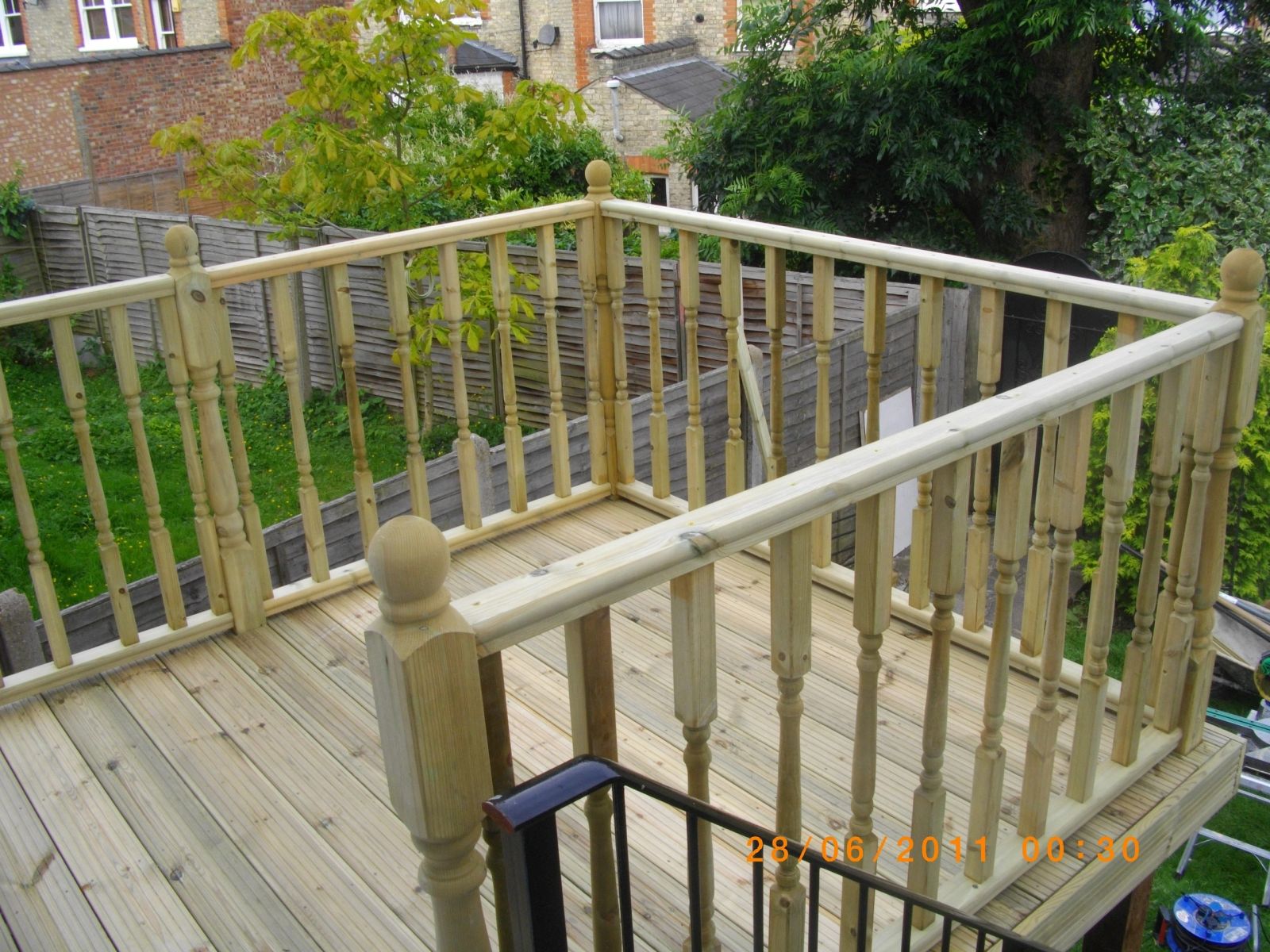
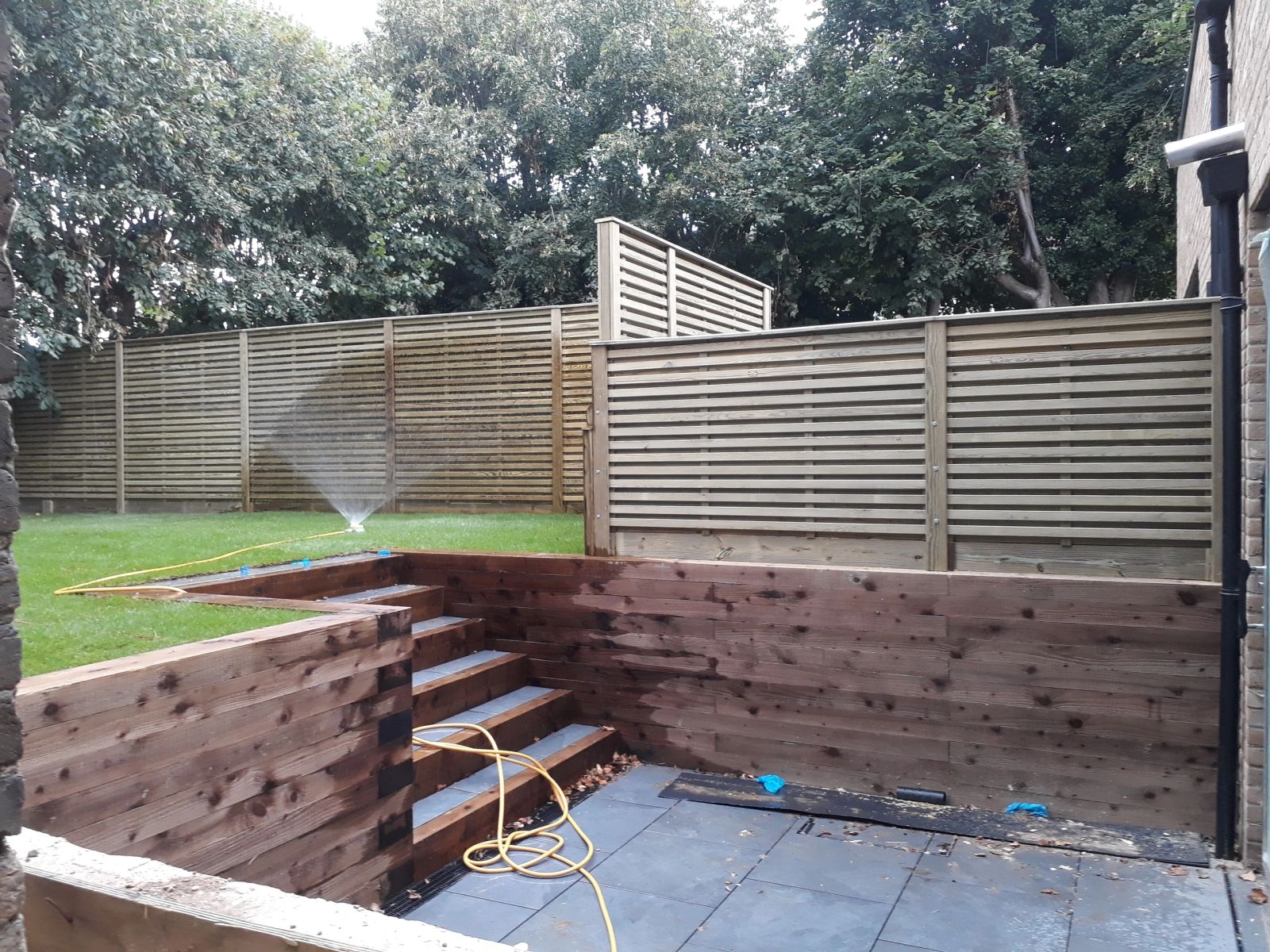
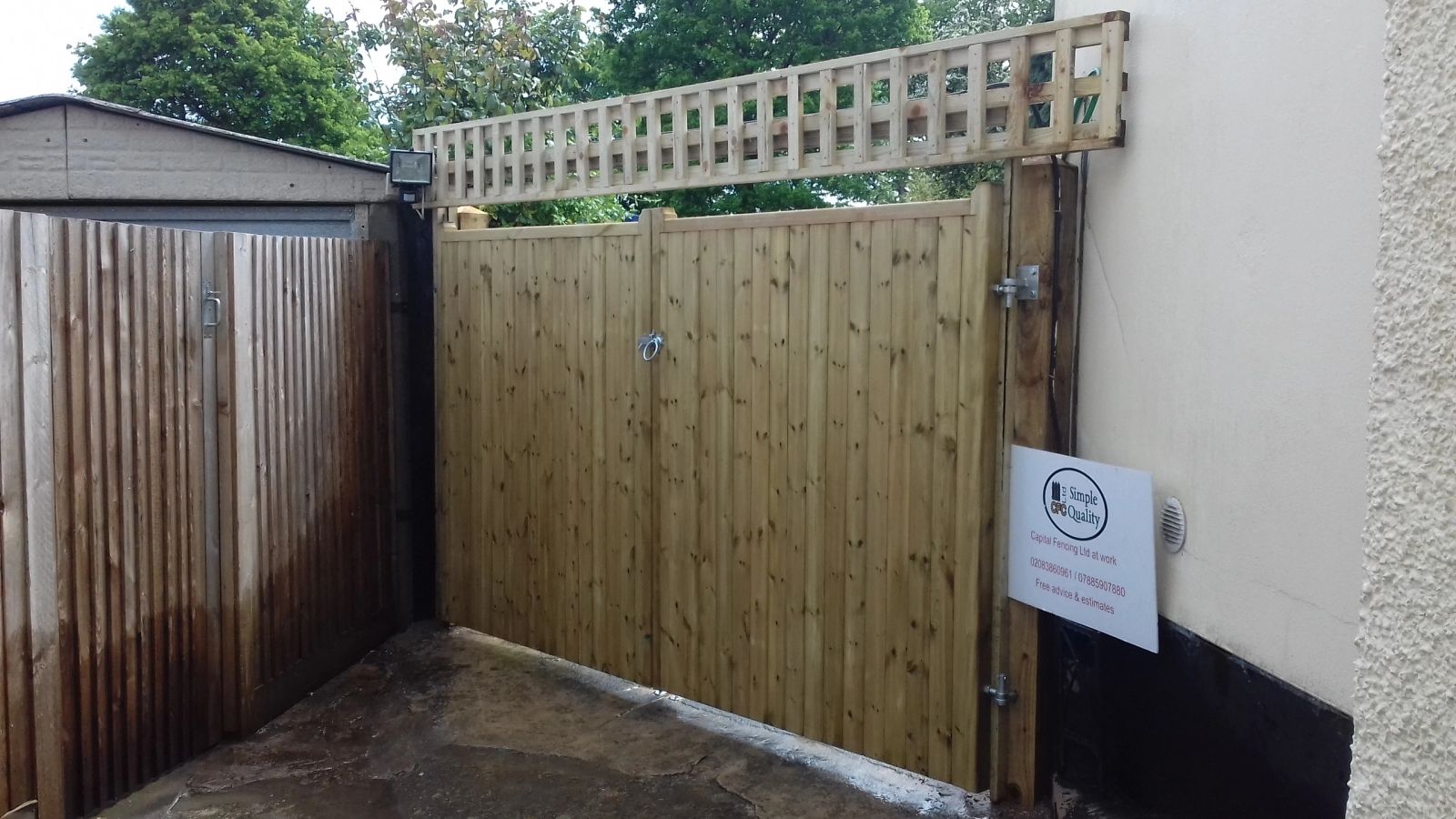
Capital Fencing project in Finchley Central, N3Capital Fencing project in Finchley Central, N3Capital Fencing project in Finchley Central, N3

Access is via A1000 Ballards Lane, with Finchley Central (Northern line) close by. Ivy growth as a structural load: Established ivy doesn't just sit on a fence for appearance — its woody stems and aerial roots add real dead weight, and a mature growth can add the equivalent of several boards' worth of load to a panel over years of unchecked growth. Ivy also holds moisture directly against the timber or brickwork it covers, which accelerates rot or mortar erosion underneath even though the visible growth looks healthy. Exposed plots and wind funnelling between buildings: Wind doesn't just hit a fence head-on — gaps between buildings, especially in newer estate layouts with narrow side passages, can funnel and accelerate wind locally well beyond the general forecast for the area.

Get In Touch

Get My Free Quote — 24h Response

No callout fee · Free site visit · Friendly local team covering London & Hertfordshire.

Request a Free Quote

We'll get back to you within 24 hours.

Free Site Visit No Callout Fee
Call WhatsAppQuote