London & Hertfordshire Free Site Visit

North Finchley: Fencing & Decking Within Finchley

Postcode N12 takes in North Finchley, a pocket of finchley under Barnet Council where edwardian terraces and 1930s semis around woodside park predominates and gardens run deep rear gardens, mostly flat with london clay underfoot. Locally, the detail that shapes most quotes is clay-soil movement is the main reason older fences fail here — concrete-set posts only. Alley-gating orders on rear access lanes: Some councils and police teams run formal alley-gating schemes, fitting lockable gates across shared rear alleys behind terraced housing under a specific legal order to reduce burglary and fly-tipping, with keys issued to residents whose properties back onto the lane. Where such an order already exists, individual residents generally can't add their own separate gate or fence across the same alley without going through the same scheme, since the order regulates access for everyone on the row, not just one household. Moss build-up on shaded paths beside a north boundary fence: A path or step running alongside a permanently shaded north-facing fence often develops moss faster than the same surface elsewhere in the garden, since the fence itself blocks low winter sun that would otherwise help the surface dry.

Book a site visit in North Finchley

A short walk-round lets us measure, spec and quote in writing before you commit.

Garden boundary work in North Finchley
N12

North Finchley is part of our Finchley coverage under Barnet Council, with its own property mix and its own recurring brief.

Property & garden in North Finchley

Property: Edwardian terraces and 1930s semis around Woodside Park

Gardens: deep rear gardens, mostly flat with London clay underfoot

clay-soil movement is the main reason older fences fail here — concrete-set posts only

Nearest arterial: A1000 / A406, A406 North Circular. Served from Woodside Park (Northern line). Nearby commercial anchors: Tally Ho Corner, Ballards Lane.

Practical points for boundary work in North Finchley

Alley-gating orders on rear access lanes

Some councils and police teams run formal alley-gating schemes, fitting lockable gates across shared rear alleys behind terraced housing under a specific legal order to reduce burglary and fly-tipping, with keys issued to residents whose properties back onto the lane.

Where such an order already exists, individual residents generally can't add their own separate gate or fence across the same alley without going through the same scheme, since the order regulates access for everyone on the row, not just one household.

Where no scheme exists but residents want one, the request usually starts with the council's community safety or highways team, since a privately-installed gate across a public right of way without authorisation can be ordered removed.

Moss build-up on shaded paths beside a north boundary fence

A path or step running alongside a permanently shaded north-facing fence often develops moss faster than the same surface elsewhere in the garden, since the fence itself blocks low winter sun that would otherwise help the surface dry.

This isn't strictly a fence maintenance issue but is worth mentioning to clients, since a fence replacement project is often the moment a client is already thinking about that part of the garden and receptive to fixing a related slip hazard at the same time.

A lighter, more open fence design along that boundary, where privacy allows, can let in enough additional light to measurably reduce moss growth on the path beside it.

Concrete spurs as a lifetime-extension repair

Where a timber post has rotted at ground level but the panels and the rest of the run remain sound, bolting a concrete spur alongside the rotten section rather than replacing the whole post is a common and effective partial repair.

The spur takes over the structural role at ground level while the timber above the rot line, which is usually still sound, continues to carry the panel fixings.

This repair only works while enough sound timber remains above the rotten section to bolt through; once rot has progressed too far up the post, spurring no longer gives a reliable fix and full post replacement is the honest answer.

Curing time before hanging panels or gates

Post-fixing concrete reaches a usable strength within a day or two but continues gaining strength for weeks afterwards, which is why manufacturers usually specify a minimum wait — commonly around 24-48 hours in mild weather — before loading a post with a panel.

Hanging a heavy gate is a bigger test of an early-cured base than fixing a lightweight panel, since the gate applies a constant leverage on the post rather than a static side load, so gate posts generally want the longer end of any recommended cure window.

Cold weather slows the chemical reaction that hardens concrete significantly, so a cure time that's fine in summer may need extending in winter before it's safe to load the post.

Leylandii hedges and root competition near posts

A mature leylandii hedge planted close to a boundary develops a dense, shallow root mat that competes directly with a post base for space and moisture, often making standard post-hole digging difficult without cutting through live roots.

Leylandii also draws a large amount of water from the surrounding soil in summer, which can locally dry and shrink clay soil right along the fence line even where the wider garden isn't especially exposed.

Where a hedge is being kept, offsetting posts slightly from the direct root zone, or hand-digging around larger roots rather than augering through them, extends post life without needing to remove established planting.

Soakaways near a fence line

A soakaway needs to sit at least 5m from a building under current guidance, and positioning one close to a boundary risks saturating the neighbour's ground as well as your own client's.

Digging a new post hole into or immediately alongside an existing soakaway compromises its performance and can undermine a post set on top of what's really just loose rubble fill.

Where a soakaway's exact position isn't recorded, a slow-draining or consistently damp patch along the fence line is often the only visible clue before digging starts.

Services in North Finchley

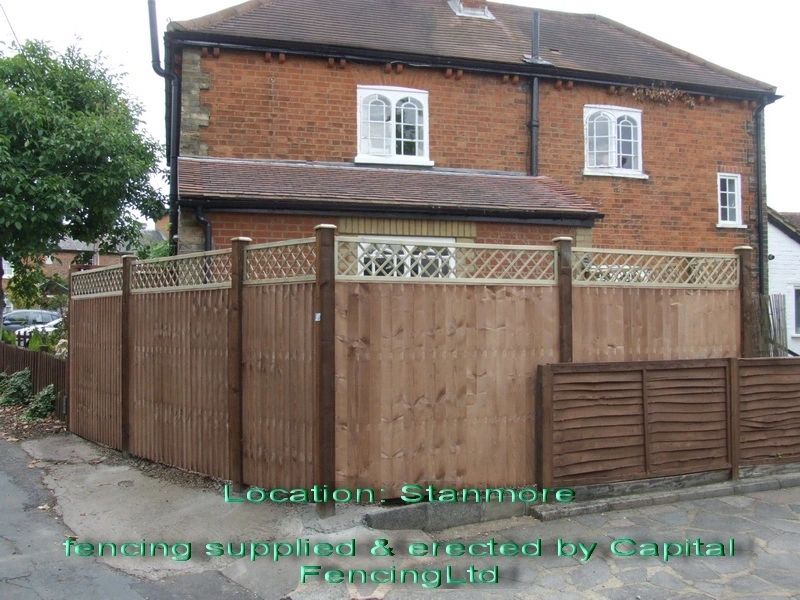
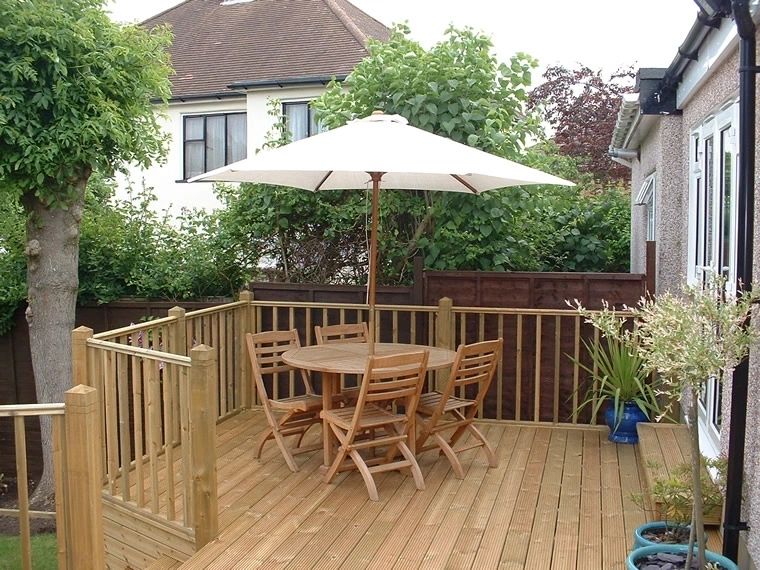
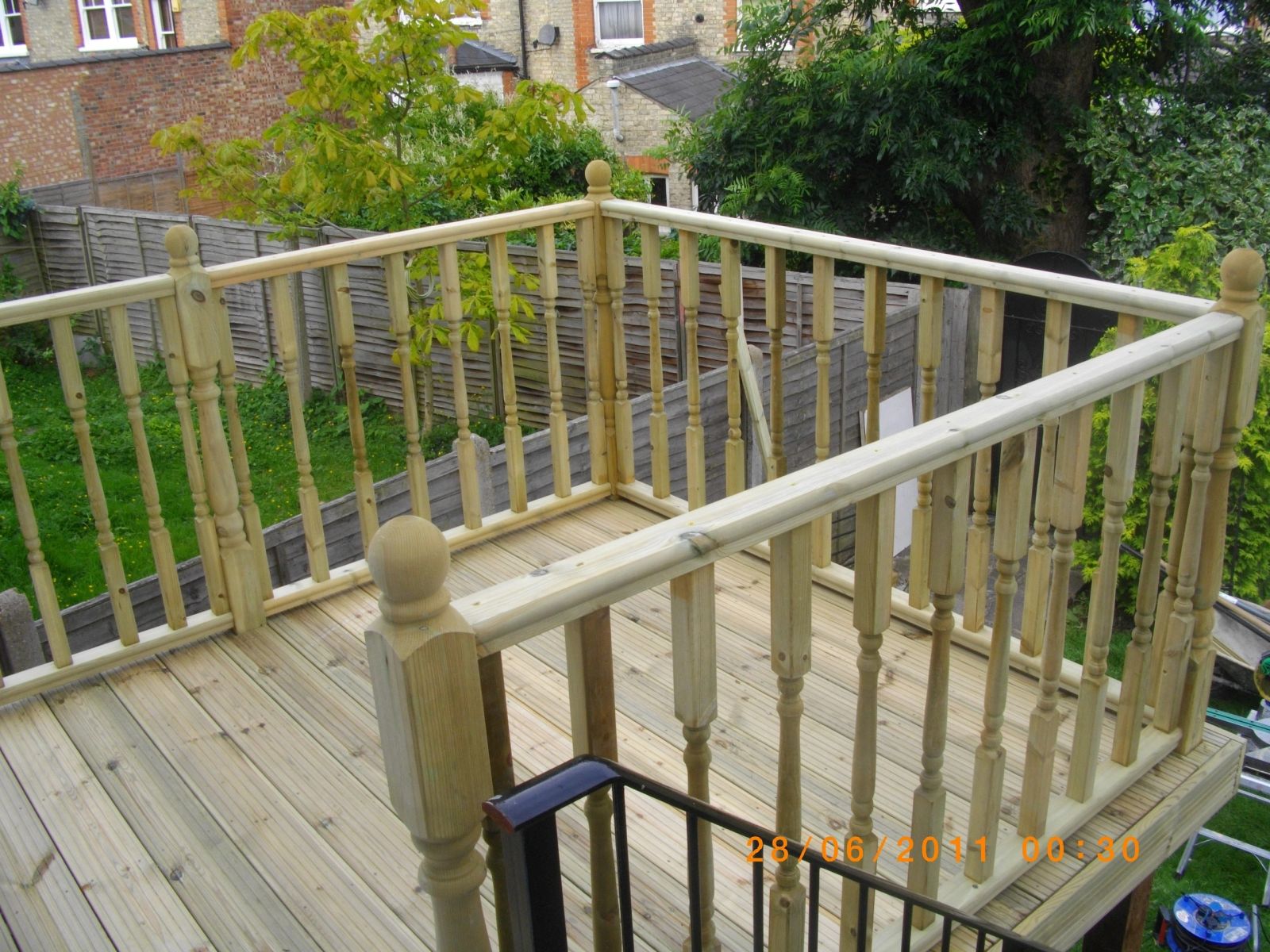
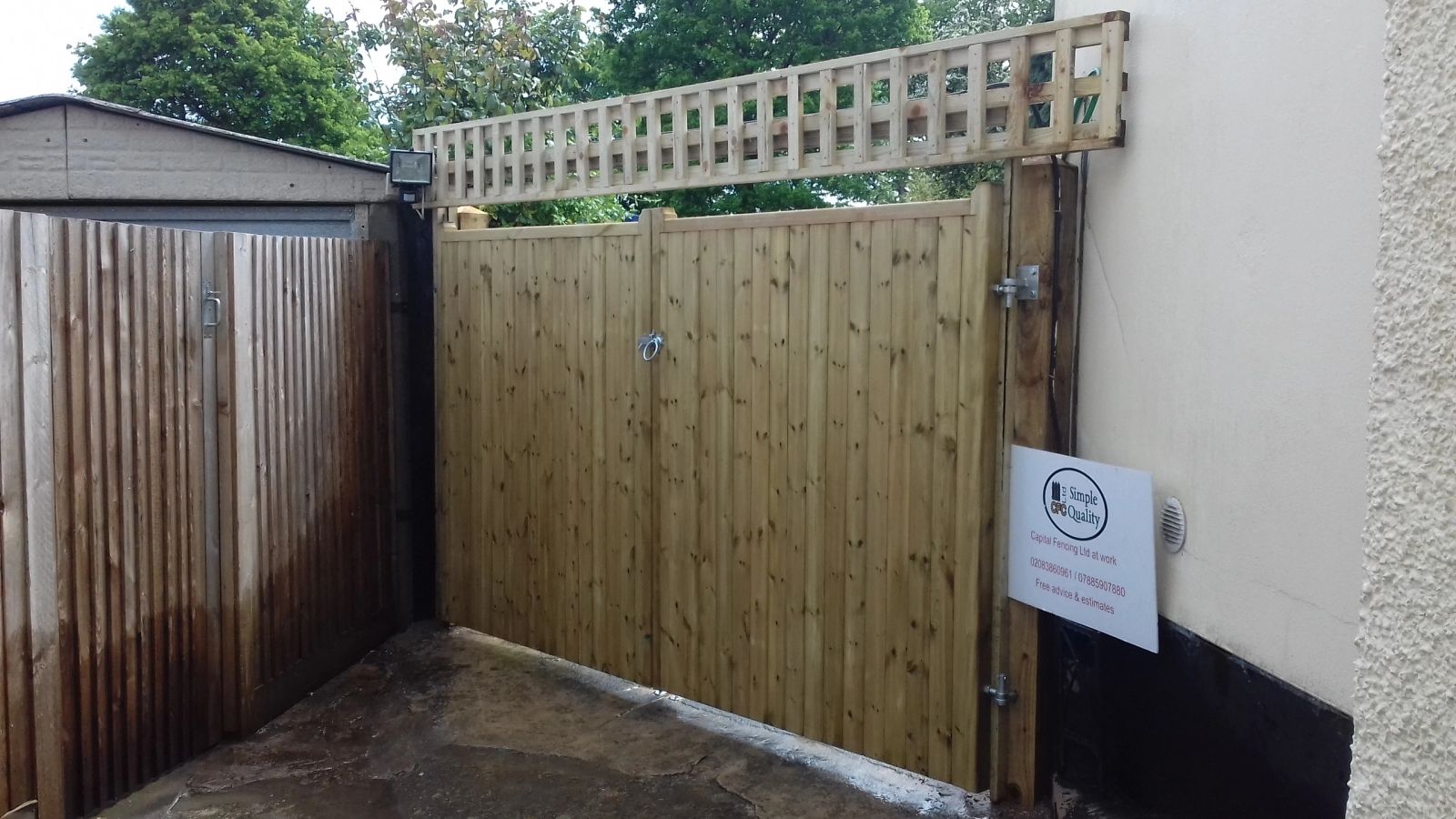
Capital Fencing project in North Finchley, N12Capital Fencing project in North Finchley, N12Capital Fencing project in North Finchley, N12

North Finchley — frequently asked

How does "concrete spurs as a lifetime-extension repair" affect fencing or decking work in North Finchley?

Where a timber post has rotted at ground level but the panels and the rest of the run remain sound, bolting a concrete spur alongside the rotten section rather than replacing the whole post is a common and effective partial repair. The spur takes over the structural role at ground level while the timber above the rot line, which is usually still sound, continues to carry the panel fixings. This repair only works while enough sound timber remains above the rotten section to bolt through; once rot has progressed too far up the post, spurring no longer gives a reliable fix and full post replacement is the honest answer.

Leylandii hedges and root competition near posts — what does that mean for a job in North Finchley?

A mature leylandii hedge planted close to a boundary develops a dense, shallow root mat that competes directly with a post base for space and moisture, often making standard post-hole digging difficult without cutting through live roots. Leylandii also draws a large amount of water from the surrounding soil in summer, which can locally dry and shrink clay soil right along the fence line even where the wider garden isn't especially exposed. Where a hedge is being kept, offsetting posts slightly from the direct root zone, or hand-digging around larger roots rather than augering through them, extends post life without needing to remove established planting.

What's the typical garden like in North Finchley?

Deep rear gardens, mostly flat with London clay underfoot is typical, alongside edwardian terraces and 1930s semis around woodside park.

Do you cover finchley beyond just North Finchley?

Yes — North Finchley sits within our wider finchley coverage.

Is soakaways near a fence line something you plan for in North Finchley?

A soakaway needs to sit at least 5m from a building under current guidance, and positioning one close to a boundary risks saturating the neighbour's ground as well as your own client's. Digging a new post hole into or immediately alongside an existing soakaway compromises its performance and can undermine a post set on top of what's really just loose rubble fill. Where a soakaway's exact position isn't recorded, a slow-draining or consistently damp patch along the fence line is often the only visible clue before digging starts.

Curing time before hanging panels or gates — what does that mean for a job in North Finchley?

Post-fixing concrete reaches a usable strength within a day or two but continues gaining strength for weeks afterwards, which is why manufacturers usually specify a minimum wait — commonly around 24-48 hours in mild weather — before loading a post with a panel. Hanging a heavy gate is a bigger test of an early-cured base than fixing a lightweight panel, since the gate applies a constant leverage on the post rather than a static side load, so gate posts generally want the longer end of any recommended cure window. Cold weather slows the chemical reaction that hardens concrete significantly, so a cure time that's fine in summer may need extending in winter before it's safe to load the post.

Reached off A1000 / A406, near Woodside Park (Northern line). Concrete spurs as a lifetime-extension repair: Where a timber post has rotted at ground level but the panels and the rest of the run remain sound, bolting a concrete spur alongside the rotten section rather than replacing the whole post is a common and effective partial repair. The spur takes over the structural role at ground level while the timber above the rot line, which is usually still sound, continues to carry the panel fixings. Curing time before hanging panels or gates: Post-fixing concrete reaches a usable strength within a day or two but continues gaining strength for weeks afterwards, which is why manufacturers usually specify a minimum wait — commonly around 24-48 hours in mild weather — before loading a post with a panel.

Get In Touch

Get My Free Quote — 24h Response

No callout fee · Free site visit · Friendly local team covering London & Hertfordshire.

Request a Free Quote

We'll get back to you within 24 hours.

Free Site Visit No Callout Fee
Call WhatsAppQuote