London & Hertfordshire Free Site Visit
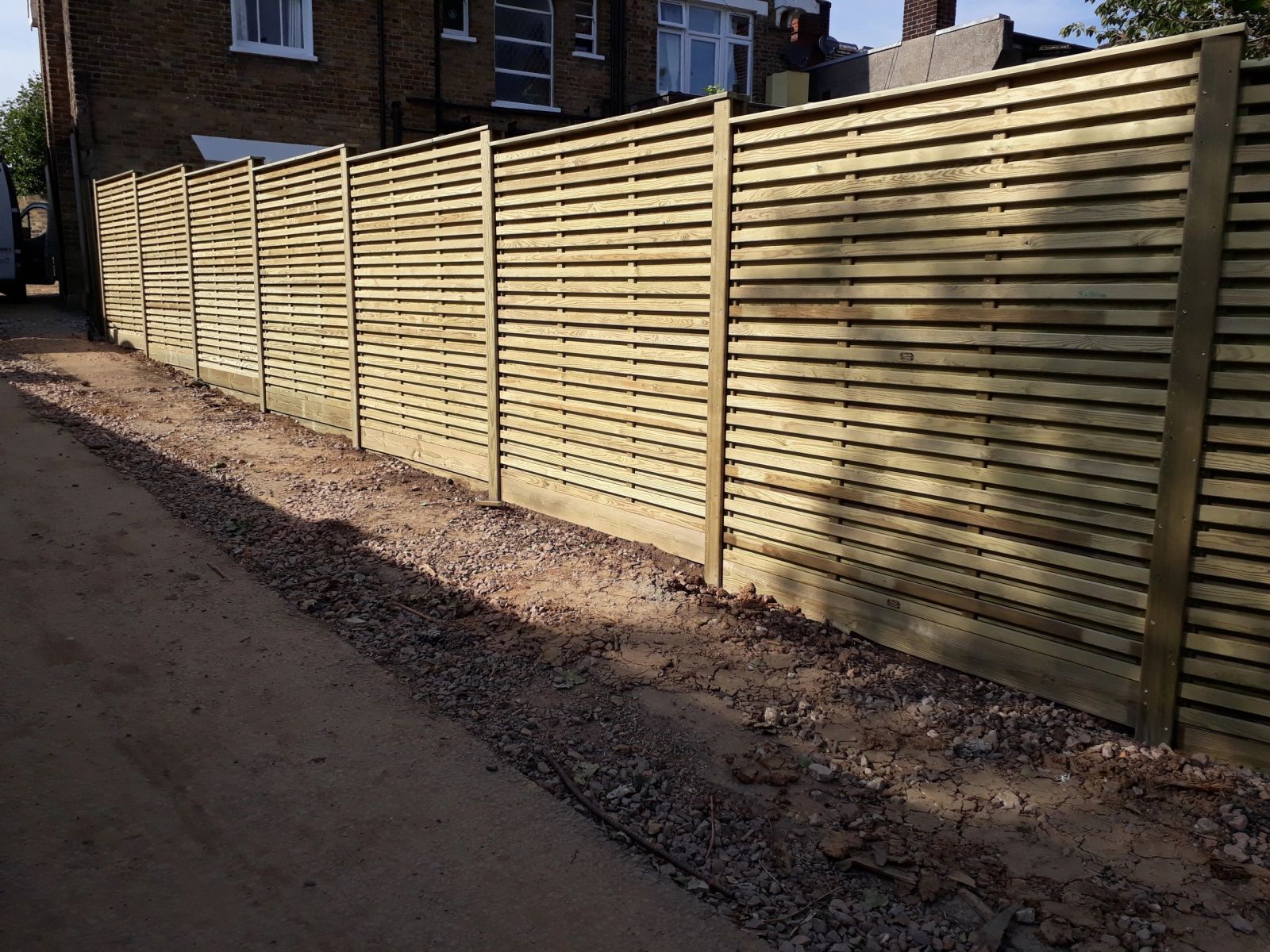
closeboard fence run installed by Capital Fencing in Stevenage (SG1)
Stevenage · SG1 / SG2

Dog-Proof Fencing in Stevenage — Built for how the finish sits next to the neighbour's existing boundary

Dog-Proof Fencing in Stevenage is a specific brief for us — dog owners needing a boundary a dog can't dig under, climb or push through. The default local answer isn't a stock catalogue drop: it's 1.8m closeboard, no gaps under 40mm, 150mm concrete kicker or 300mm buried mesh apron, closing gate with drop-bolt into a socket. On Stevenage sites we also spec around shared-with-neighbour fence runs are the norm — quotes need to cover boundary checks first, which is where a lot of dog-proof fencing jobs quietly fail two years in. Roads such as Six Hills Way and High Street (Old Town) are typical of the local layout. Roebuck retail park is a useful local reference point. Six Hills Way runs alongside the Six Hills, a scheduled ancient monument comprising a row of Roman-era burial mounds.

Dog-Proof Fencing in Stevenage is a specific brief for us — dog owners needing a boundary a dog can't dig under, climb or push through. The default local answer isn't a stock catalogue drop: it's 1.8m closeboard, no gaps under 40mm, 150mm concrete kicker or 300mm buried mesh apron, closing gate with drop-bolt into a socket. On Stevenage sites we also spec around shared-with-neighbour fence runs are the norm — quotes need to cover boundary checks first, which is where a lot of dog-proof fencing jobs quietly fail two years in. Roads such as Six Hills Way and High Street (Old Town) are typical of the local layout. Roebuck retail park is a useful local reference point. Six Hills Way runs alongside the Six Hills, a scheduled ancient monument comprising a row of Roman-era burial mounds.

Typical dog-proof fencing briefs in Stevenage

  • 1.8m solid boundary with anti-climb top so a larger breed can't jump or scramble
  • closeboard set into a shallow concrete kicker so a small breed can't dig underneath

Why this spec, for dog owners

  • no gaps at ground level — the single most common escape point on standard fencing
  • hinges and drop-bolts sized so a dog leaning on the gate can't work it open
  • buried mesh apron stops digging without spoiling the finished look above ground
Default spec

How we build dog-proof fencing in Stevenage

1.8m closeboard, no gaps under 40mm, 150mm concrete kicker or 300mm buried mesh apron, closing gate with drop-bolt into a socket. On Stevenage jobs we adjust for shared-with-neighbour fence runs are the norm — quotes need to cover boundary checks first.

Property mix locally: post-war planned housing across Chells, Shephall and Bedwell, plus older properties in Stevenage Old Town. Typical gardens: modest rectangular plots, typically flat, with rear access alleyways on the planned estates. Postcodes we regularly service: SG1, SG2.

Where dog-proof fencing isn't the right answer

  • very small terrier breeds that can squeeze under 40mm — full mesh apron is the right answer
  • conservation frontages where a mesh apron is not permitted; a brick kicker course is the alternative

Dog-Proof Fencing FAQs — Stevenage

Is a buried mesh apron worth the extra cost?

On dog-proof fencing jobs in Stevenage (SG1), our default answer is: 1.8m closeboard, no gaps under 40mm, 150mm concrete kicker or 300mm buried mesh apron, closing gate with drop-bolt into a socket. For context: hinges and drop-bolts sized so a dog leaning on the gate can't work it open. Measured, quoted and installed by the same small crew.

Are hit-and-miss fences OK for dog gardens?

Across Stevenage we spec around shared-with-neighbour fence runs are the norm — quotes need to cover boundary checks first, so on dog-proof fencing that usually means closeboard with kicker plate. We'll walk you through no gaps at ground level — the single most common escape point on standard fencing on the site visit before you commit.

How do I stop a dog digging under the fence?

Stevenage Borough coverage means we can survey most SG1 addresses inside a week — dog owners needing a boundary a dog can't dig under, climb or push through. We'll walk you through no gaps at ground level — the single most common escape point on standard fencing on the site visit before you commit.

What height fence will stop a Labrador jumping?

Practically: closeboard set into a shallow concrete kicker so a small breed can't dig underneath. That's the Stevenage version of this job, not a generic one. The honest trade-off is leaving standard 100mm gap between gate and paving — a determined terrier is through it in a week — which is exactly what our default spec designs out.

Do you fit anti-climb toppers on residential boundaries?

On dog-proof fencing jobs in Stevenage (SG1), our default answer is: 1.8m closeboard, no gaps under 40mm, 150mm concrete kicker or 300mm buried mesh apron, closing gate with drop-bolt into a socket. The honest trade-off is leaving standard 100mm gap between gate and paving — a determined terrier is through it in a week — which is exactly what our default spec designs out.

Recent dog-proof fencing work
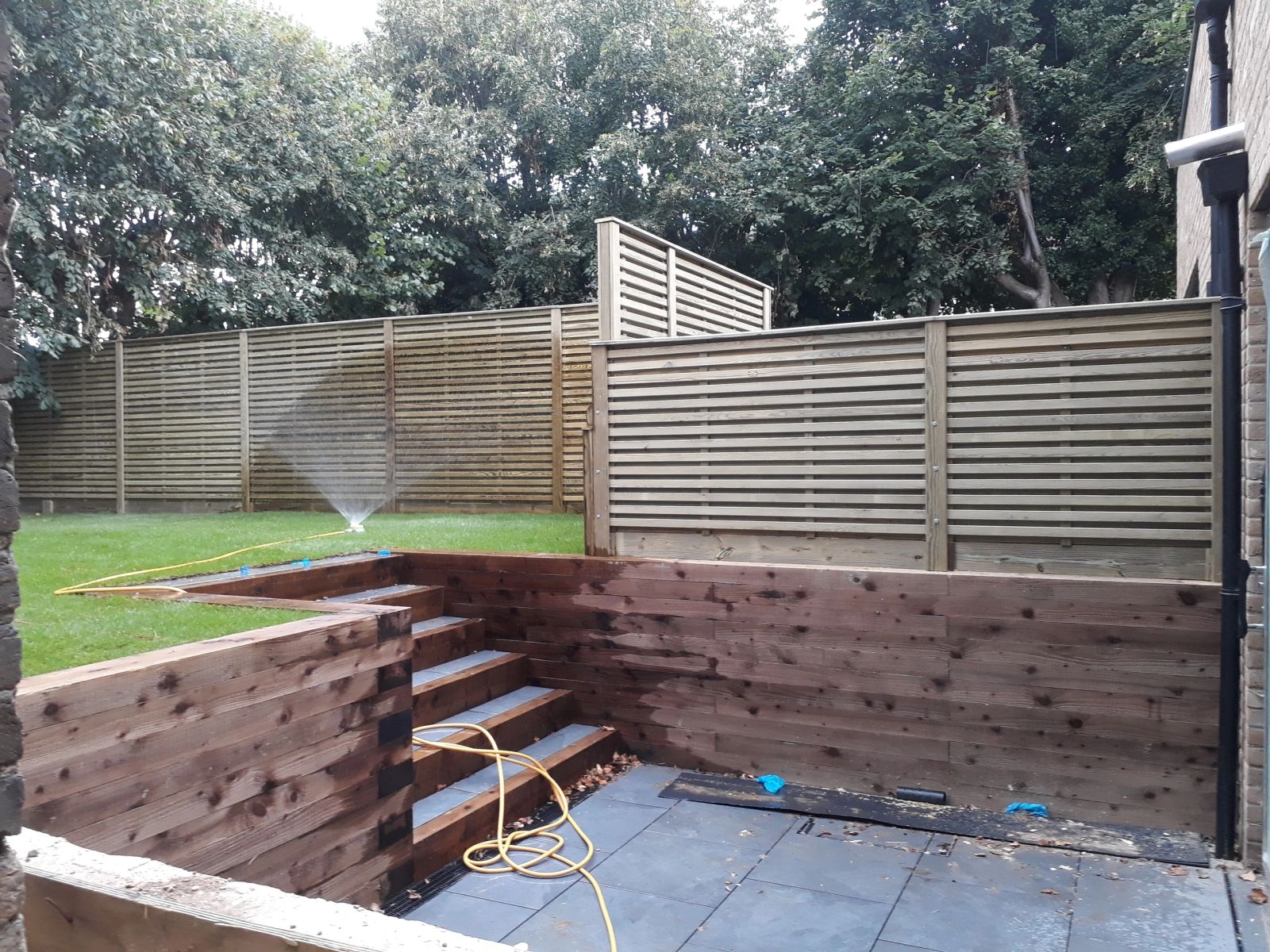
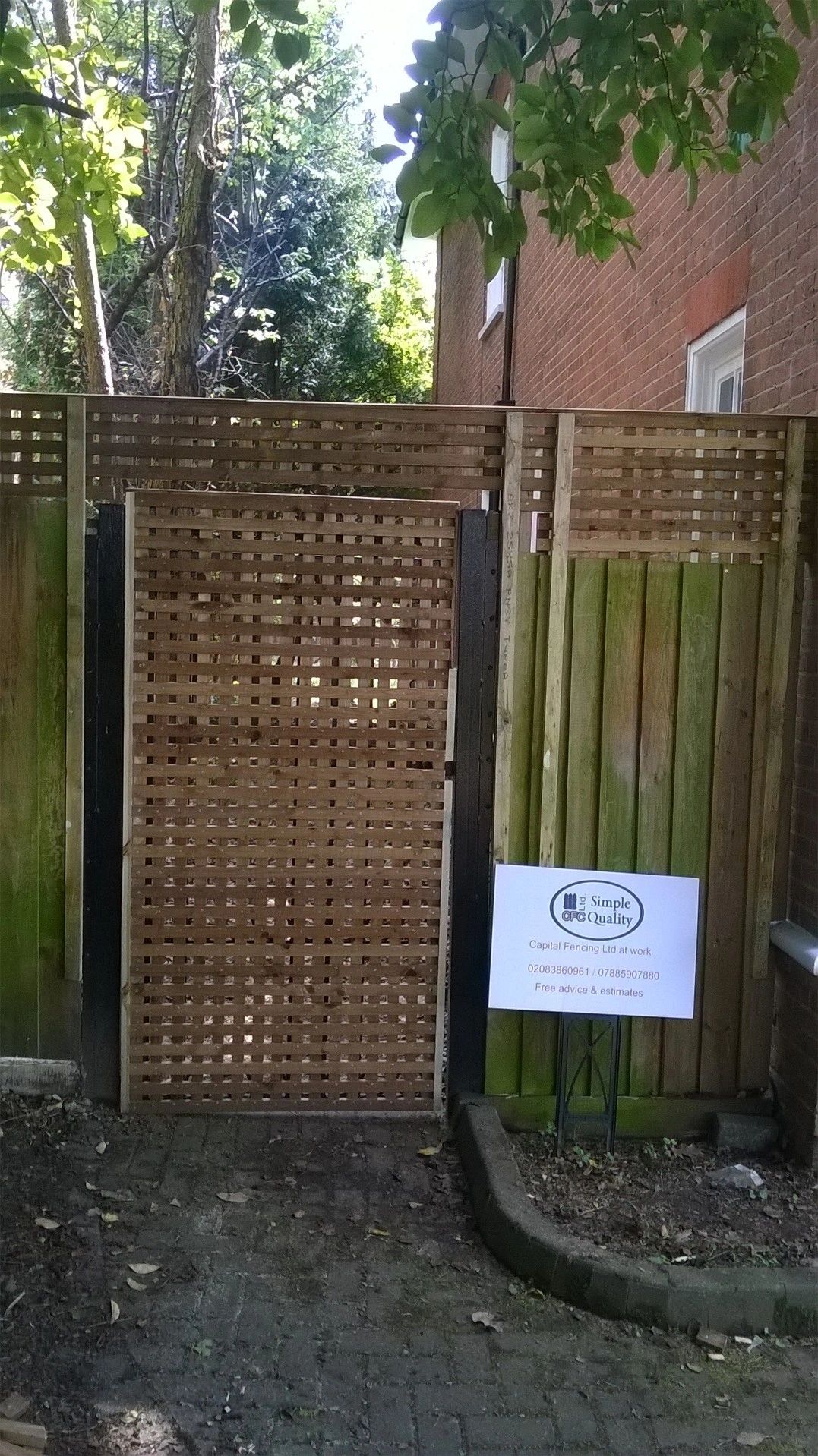
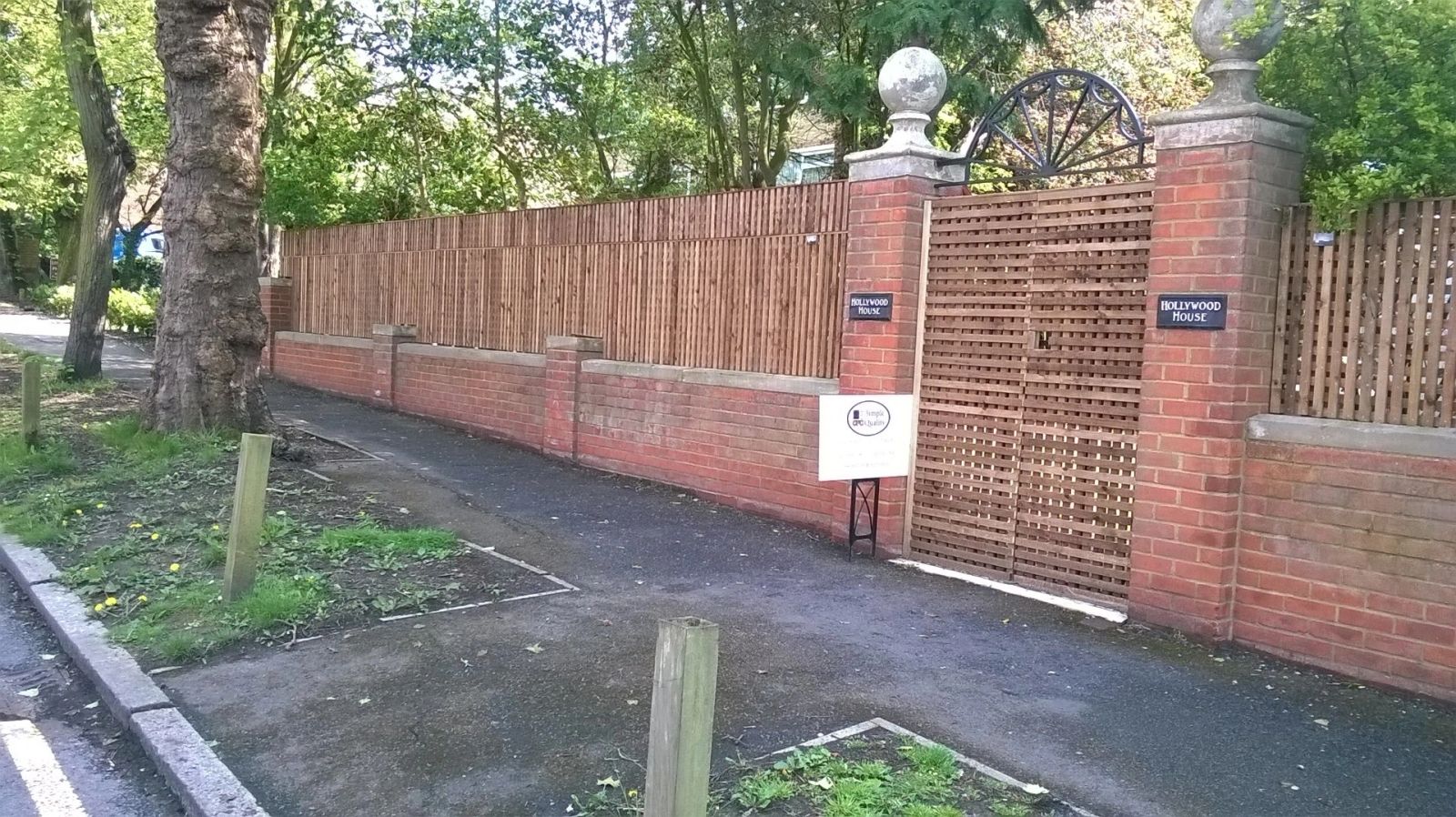
closeboard fence run installed by Capital Fencing in Stevenage (SG1)panel fence install installed by Capital Fencing in Stevenage (SG1)trellis-topped fence installed by Capital Fencing in Stevenage (SG1)bespoke decorative fence installed by Capital Fencing in Stevenage (SG1)

Dog-Proof Fencing in Stevenage: the practical detail

Gap spacing between vertical gate members

Vertical bar or baluster spacing on a gate used where young children have access needs to be close enough to prevent a child's head or body passing through or becoming trapped, which is a different consideration from the finger-trap risk at a closing edge.

This spacing consideration applies most obviously to railing and mesh gates, but also to a boarded gate that's developed gaps between boards as the timber has shrunk.

Brace direction on a braced timber gate

A diagonal brace on a ledged-and-braced gate has to run from the bottom hinge corner up to the top latch corner to work in compression rather than tension, and a brace fitted the wrong way round does almost nothing to stop the frame dropping.

This is a common fault on older self-built gates, and correcting brace direction is sometimes enough to fix a sagging gate without replacing any timber.

Slide bolts and staple alignment

A slide bolt needs its guide staples and keep perfectly in line along the bolt's travel, since even a slight misalignment makes the bolt bind partway rather than sliding freely, which is often mistaken for a stiff or rusted bolt.

Re-aligning the staples after a gate has settled or a post has moved usually resolves this without needing to replace the bolt hardware itself.

Driveway gate sizing and swing arc

A driveway gate needs its swing arc checked against the car actually parked behind it, not just the opening width, since a gate that clears a small hatchback can still clash with a larger estate or a roof box.

Outward-opening gates onto a public footway are generally avoided because they can obstruct pedestrians and pushchairs, which is why most residential driveway gates are hung to open inward onto the drive itself.

Sliding gates are a practical alternative on a short or sloping driveway where there isn't room for a swing arc, though they need a level track run and enough side clearance to slide fully open.

Sheeting plants and borders during fencing works

Established shrubs and borders close to a fence line are easily damaged by dropped tools, spoil heaps or simply being walked over repeatedly during a multi-day job, so temporary boards or breathable sheeting laid over beds reduces incidental damage.

Concrete dust and cement splash can scorch foliage if it settles on leaves and isn't rinsed off promptly, which is worth flagging before mixing starts next to a prized border.

Where a plant genuinely sits in the way of a post position, agreeing with the client in advance whether it's moved, worked around, or the post offset avoids an awkward decision made on the spot mid-dig.

Seasonal restrictions on hedge and vegetation clearance

Clearing vegetation or a hedge to make way for a fence during bird nesting season, broadly March to August, risks disturbing an active nest, which is a wildlife offence regardless of whether the fencing work itself is otherwise unrestricted.

A quick visual check for active nests before cutting back growth is standard practice, and where a nest is found the sensible step is working around it rather than pushing ahead with clearance.

Outside nesting season, most routine hedge cutting ahead of fencing work has no seasonal restriction, though thicker or more established hedgerows may still need the checks covered elsewhere for protected hedgerows.

Setting out a straight run with string lines

A straight fence line starts with two fixed end points and a string line pulled taut between them, usually run just above where the posts will sit rather than at ground level where it snags on grass or debris.

On a long run the string sags under its own weight, so an intermediate profile or peg is needed every few bays to keep the sight line true rather than trusting a single span.

Any post that's set even 10-15mm off that line becomes visible once panels go in, because the eye picks up a wander in a boundary far more readily than a small step in level.

Overhanging branches crossing a boundary line

A property owner generally has the right to cut back branches or roots that cross the boundary from a neighbour's tree, up to the boundary line, though the cut material technically still belongs to the tree's owner and should be offered back.

This self-help right doesn't apply where the tree is protected by a Tree Preservation Order or sits in a conservation area, in which case permission is needed before cutting.

Where a fence line is being planned near an overhanging tree, checking the tree's protected status first avoids inadvertently carrying out unauthorised work.

How a restrictive covenant is actually enforced

A restrictive covenant on a title is enforced privately by whoever holds its benefit — often a neighbour, a management company, or occasionally the original developer — rather than by the council.

This means a fence can be entirely lawful under planning rules and still breach a private covenant, with enforcement coming through a civil claim rather than council action.

Checking who benefits from a known covenant, and whether they're likely to object, is worth doing before assuming a technically 'planning-compliant' fence is automatically fine.

Planning enforcement risk of over-height fences

A fence built above permitted development limits without consent is a breach of planning control, and councils generally have four years from substantial completion to take enforcement action against an operational breach like an over-height structure.

Enforcement typically starts with an informal request to reduce the height or apply retrospectively, escalating to a formal enforcement notice with an appeal right and, ultimately, prosecution for non-compliance if ignored.

A complaint from a neighbour is the most common trigger for enforcement action on garden boundaries, so an unauthorised over-height fence can sit unchallenged for years and then become an active case very quickly once someone reports it.

Knot loosening in structural timber

Knots are the base of a branch embedded in the trunk, and as timber dries the knot itself shrinks less than the surrounding wood, which can leave it loose or eventually cause it to drop out and leave a hole.

A live knot, still bonded to the surrounding fibres, is far less of a concern than a dead knot with a dark ring around it, which indicates the branch had already died before the tree grew over it and bonds poorly.

On load-bearing sections like arris rails, a cluster of large or dead knots near a fixing point is worth avoiding, since it reduces the effective cross-section carrying the load at that point.

Access through a house for a rear repair

Where a rear garden has no side access, materials and tools sometimes have to be carried through the house itself, which needs agreeing with the client in advance and protecting flooring and doorways along the route.

This is more common on terraced properties than detached ones, and it's worth factoring into how a repair is scheduled and priced.

Data protection basics for boundary CCTV

Domestic CCTV covering only a homeowner's own property is generally exempt from full UK GDPR obligations, but that exemption narrows considerably once cameras capture a neighbour's garden, shared paths, or public areas.

Where wider coverage is genuinely needed, clear signage and being able to explain why footage is captured helps if a neighbour raises a concern with the Information Commissioner's Office.

Positioning cameras to focus tightly on a homeowner's own boundary and property, rather than sweeping across a neighbour's space, is the simplest way to avoid this becoming an issue.

Dog-proofing details at ground level and gaps

Dogs test a fence at ground level far more than at height, so gaps under gravel boards, worn hollows on sloping ground, or wide overlaps between adjacent panels are the points most likely to let a determined dog through or under.

A close-fitting concrete gravel board set with minimal gap to the ground, rather than a timber board that can warp and lift, closes off the most common escape route without changing the overall fence design.

For persistent diggers, a buried mesh apron or paving strip just inside the fence line at ground level stops excavation without needing to alter the visible fence at all.

Using a post hole auger effectively

A petrol or manual auger clears loose, stone-free ground far faster than hand-digging, but it works by shearing soil rather than levering it, so it struggles the moment it meets a root, a buried stone or compacted rubble.

Lifting the auger clear and clearing spoil from the flutes every 150-200mm of depth keeps it cutting efficiently; forcing it deeper without clearing spoil just packs the hole and stalls the motor.

On heavy clay an auger can also polish and seal the hole's sides, which reduces drainage around the base — a quick scoring of the sides with a spade before concreting helps break that glazed surface.

Safety edges and force limits on automated gates

Automated gates are expected to operate within recognised safety standards covering force limits and trapping-point protection, generally addressed through pressure-sensitive edges, photocells or a torque-limited motor rather than relying on the gate design alone.

This is specialist automation-engineer territory; on the gate itself, we make sure there are no obvious additional trapping points created by the leaf design before automation is fitted.

Chalk ground in south Hertfordshire

South Hertfordshire sits over Chiltern chalk in places, ground that's generally stable and free-draining but can be extremely hard and slow to auger once you're through a thin topsoil layer.

Chalk doesn't shrink and swell the way clay does, so posts set in it are less prone to seasonal loosening, though a shattered or fractured chalk band can still leave voids that need packing rather than assuming solid bearing.

Where chalk is close to the surface, hand tools or a breaker attachment are sometimes quicker than persisting with a standard auger.

Protecting a boundary fence during nearby building work

Where building work, an extension or a loft conversion is happening on an adjoining property, existing boundary fences and their footings are sometimes shifted, undermined or damaged by machinery or excavation.

It's reasonable to raise this in advance with a neighbour undertaking major building work, ideally recording the fence's condition beforehand with photographs.

Where a party wall notice has been served for related works, that process can sometimes address boundary condition issues as part of a schedule of condition, which is worth asking about.

A boundary at the bottom of a slope

A fence line at the foot of a slope collects both surface run-off and, on clay, a slower seepage of water moving through the ground itself, so the ground here is often wetter and softer than the rest of the plot.

Post bases in this position benefit from a raised free-draining collar rather than concrete flush with the surrounding grade, keeping standing water away from the timber-to-concrete joint.

It's also worth checking whether the fence itself is inadvertently damming water that would otherwise continue draining downhill off the plot entirely.

Tree roots and Tree Preservation Orders

Mature trees close to a boundary do two things to a fence: their roots can heave a post out of true over several years, and if the tree is protected by a Tree Preservation Order or sits in a conservation area, digging within its root protection area needs care and sometimes council sign-off.

Where roots are already present we'll usually hand-dig around them rather than auger through, and set the post slightly off the direct line if that avoids cutting a structural root.

It's worth checking with the local authority's tree officer before any excavation near a TPO tree, since unauthorised root damage carries the same penalties as felling the tree itself.

What happens if a boundary structure needs planning permission

Where a proposed fence, wall or gate exceeds permitted development limits, a standard planning application goes to the local authority, who assess it against the same character and amenity considerations as any other householder application.

A refusal can be appealed to the Planning Inspectorate, though that process takes months rather than weeks, which is worth factoring into any timeline for a boundary structure that's likely to need consent.

It's almost always faster and cheaper to design within permitted development limits from the outset than to plan around needing consent, unless there's a strong reason the extra height or coverage is necessary.

When a Party Wall Act notice might apply

The Party Wall etc. Act 1996 mainly concerns shared walls between buildings and excavations near a neighbour's structure, and doesn't generally apply to an ordinary timber garden fence.

It can become relevant where work involves a masonry party fence wall genuinely astride the boundary, or excavation for posts close enough to a neighbour's foundations to fall within the Act's distance rules.

Where there's doubt about whether notice is needed, a party wall surveyor or solicitor can confirm this far more reliably than guessing on site.

Dog-Proof Fencing across SG1, SG2 is a regular run for us. We'll quote honestly, tell you if dog-proof fencing isn't the right answer for your site, and book the job in within a week or two of a signed quote. measured, quoted and installed by the same small crew. Roads such as Six Hills Way and Shephall Way are typical of the local layout. Six Hills tumuli is a useful local reference point. The pedestrian underpass network built into the New Town design means much of Bedwell and Chells has limited rear vehicle access.

Get In Touch

Get My Free Quote — 24h Response

No callout fee · Free site visit · Friendly local team covering London & Hertfordshire.

Call us
07885907880
or 02036484746
Email
capital_fencing@yahoo.com
WhatsApp
Message us anytime
Area
London & Hertfordshire
Payment
Card payments accepted

Pay by debit or credit card, bank transfer or cash once the work and price are agreed. No deposit taken online.

Request a Free Quote

We'll get back to you within 24 hours.

Free Site Visit No Callout Fee
Call WhatsAppQuote