London & Hertfordshire Free Site Visit
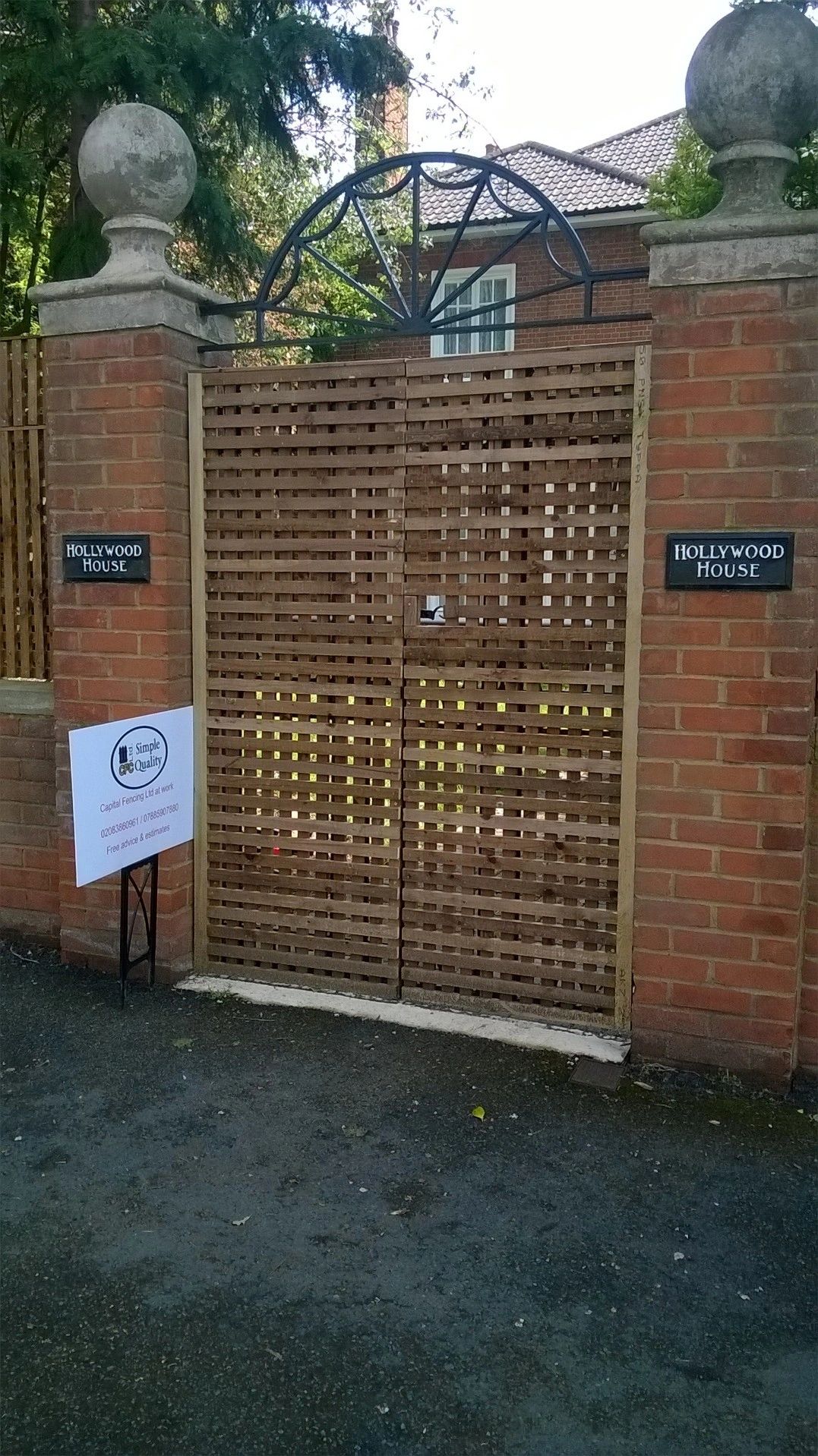
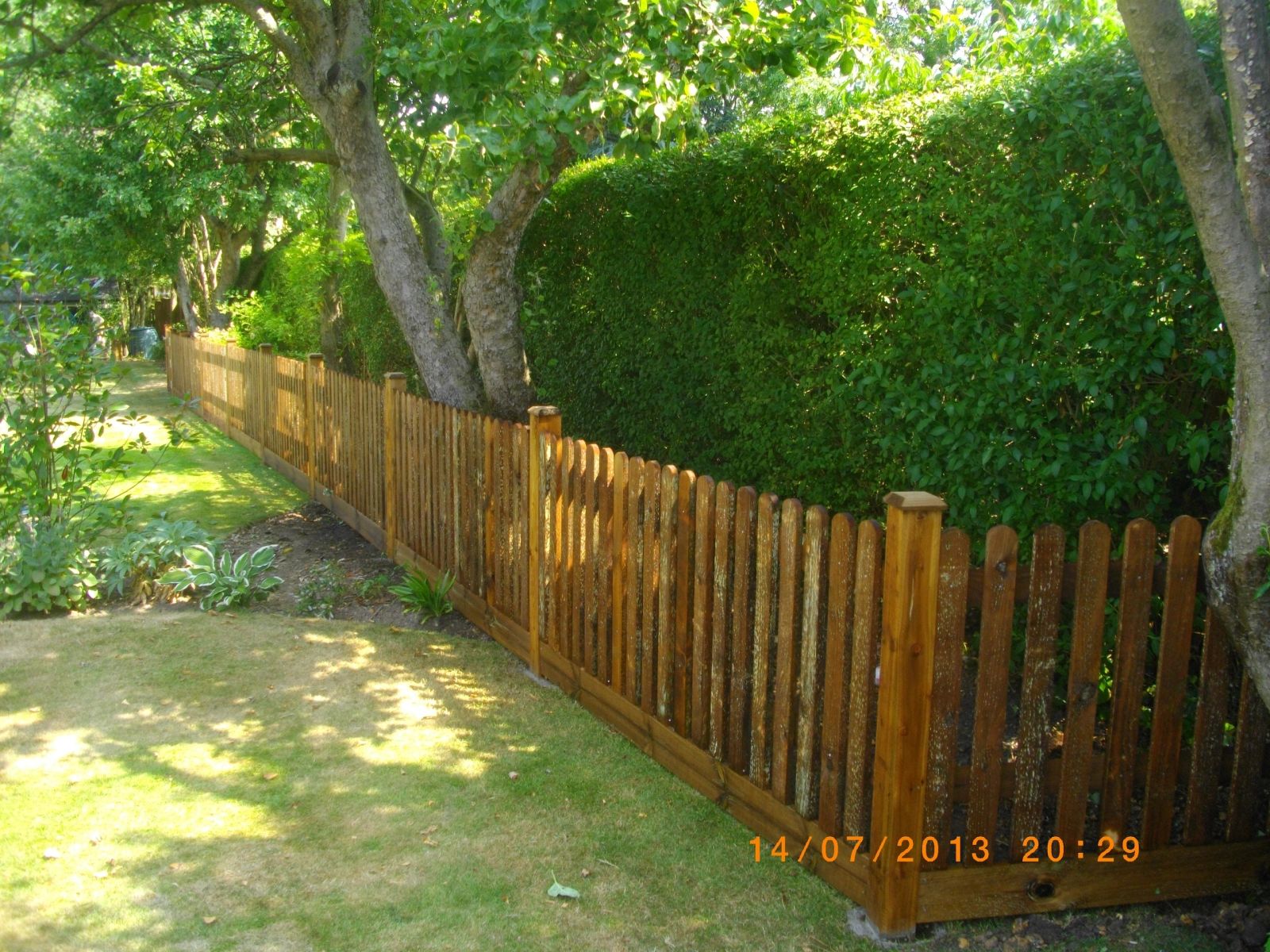
closeboard fence run installed by Capital Fencing in Edgware (HA8)
Edgware · HA8

Conservation area fencing across Edgware — Barnet

Conservation Area Fencing in Edgware is a specific brief for us — owners in a designated conservation area or fronting a listed building — material and height rules apply. The default local answer isn't a stock catalogue drop: it's painted softwood picket, oak-post estate railings or low brick-and-rail — heights kept to 1m front / 1.8m rear per PD guidance. On Edgware sites we also spec around side-return access on edgware semis is genuinely narrow — long panels often have to come up over the garage, which is where a lot of conservation-area fencing jobs quietly fail two years in. Roads such as Edgwarebury Lane and Whitchurch Lane are typical of the local layout. Canons Park is a useful local reference point. Edgware developed rapidly after the Northern line was extended to the area in the 1920s, and much of its housing dates from that period of suburban expansion.

Conservation Area Fencing in Edgware is a specific brief for us — owners in a designated conservation area or fronting a listed building — material and height rules apply. The default local answer isn't a stock catalogue drop: it's painted softwood picket, oak-post estate railings or low brick-and-rail — heights kept to 1m front / 1.8m rear per PD guidance. On Edgware sites we also spec around side-return access on edgware semis is genuinely narrow — long panels often have to come up over the garage, which is where a lot of conservation-area fencing jobs quietly fail two years in. Roads such as Edgwarebury Lane and Whitchurch Lane are typical of the local layout. Canons Park is a useful local reference point. Edgware developed rapidly after the Northern line was extended to the area in the 1920s, and much of its housing dates from that period of suburban expansion.

What goes wrong

Common failure modes on conservation-area fencing

  • installing anything visible from a public road above 1m at the front without permission — the notice arrives inside a month
  • using pressure-treated brown timber on a heritage frontage — flagged by neighbours before it's flagged by planning
Default spec

How we build conservation-area fencing in Edgware

painted softwood picket, oak-post estate railings or low brick-and-rail — heights kept to 1m front / 1.8m rear per PD guidance. On Edgware jobs we adjust for side-return access on edgware semis is genuinely narrow — long panels often have to come up over the garage.

Property mix locally: 1930s semis built around the Tube extension, plus newer flats near the town centre. Typical gardens: rectangular suburban gardens, mostly flat, often with mature fruit trees. Postcodes we regularly service: HA8.

we check the property's designation, cross-reference the local design guide, and where required prepare drawings for a Certificate of Lawfulness or planning submission.

Why this spec, for owners in a designated conservation area or fronting a listed building — material and height rules apply

  • designs matched to the immediate street rather than a generic catalogue drop-in
  • material choices align with council conservation-area design guides — we've worked through most of them
  • we handle the neighbour and council conversation, not just the physical work

Typical conservation-area fencing briefs in Edgware

  • estate railings on a low brick wall replacing a non-compliant close-panel installed by a previous owner
  • painted softwood picket front boundary matched to a neighbouring listed row

Conservation Area Fencing FAQs — Edgware

Can I use closeboard in a conservation area?

On conservation-area fencing jobs in Edgware (HA8), our default answer is: painted softwood picket, oak-post estate railings or low brick-and-rail — heights kept to 1m front / 1.8m rear per PD guidance. For context: material choices align with council conservation-area design guides — we've worked through most of them. We handle the council conversation as part of the job, not as an after-thought.

Do I need planning permission to change a conservation-area boundary?

Across Edgware we spec around side-return access on edgware semis is genuinely narrow — long panels often have to come up over the garage, so on conservation-area fencing that usually means hand-painted softwood picket. We check the property's designation, cross-reference the local design guide, and where required prepare drawings for a Certificate of Lawfulness or planning submission.

How high can a front boundary be in a conservation area?

Barnet coverage means we can survey most HA8 addresses inside a week — owners in a designated conservation area or fronting a listed building — material and height rules apply. For context: material choices align with council conservation-area design guides — we've worked through most of them. We handle the council conversation as part of the job, not as an after-thought.

How long does conservation-area consent take?

Practically: painted softwood picket front boundary matched to a neighbouring listed row. That's the Edgware version of this job, not a generic one. The honest trade-off is installing anything visible from a public road above 1m at the front without permission — the notice arrives inside a month — which is exactly what our default spec designs out.

Do you provide drawings for a Certificate of Lawfulness?

On conservation-area fencing jobs in Edgware (HA8), our default answer is: painted softwood picket, oak-post estate railings or low brick-and-rail — heights kept to 1m front / 1.8m rear per PD guidance. We check the property's designation, cross-reference the local design guide, and where required prepare drawings for a Certificate of Lawfulness or planning submission.

Recent conservation area fencing work
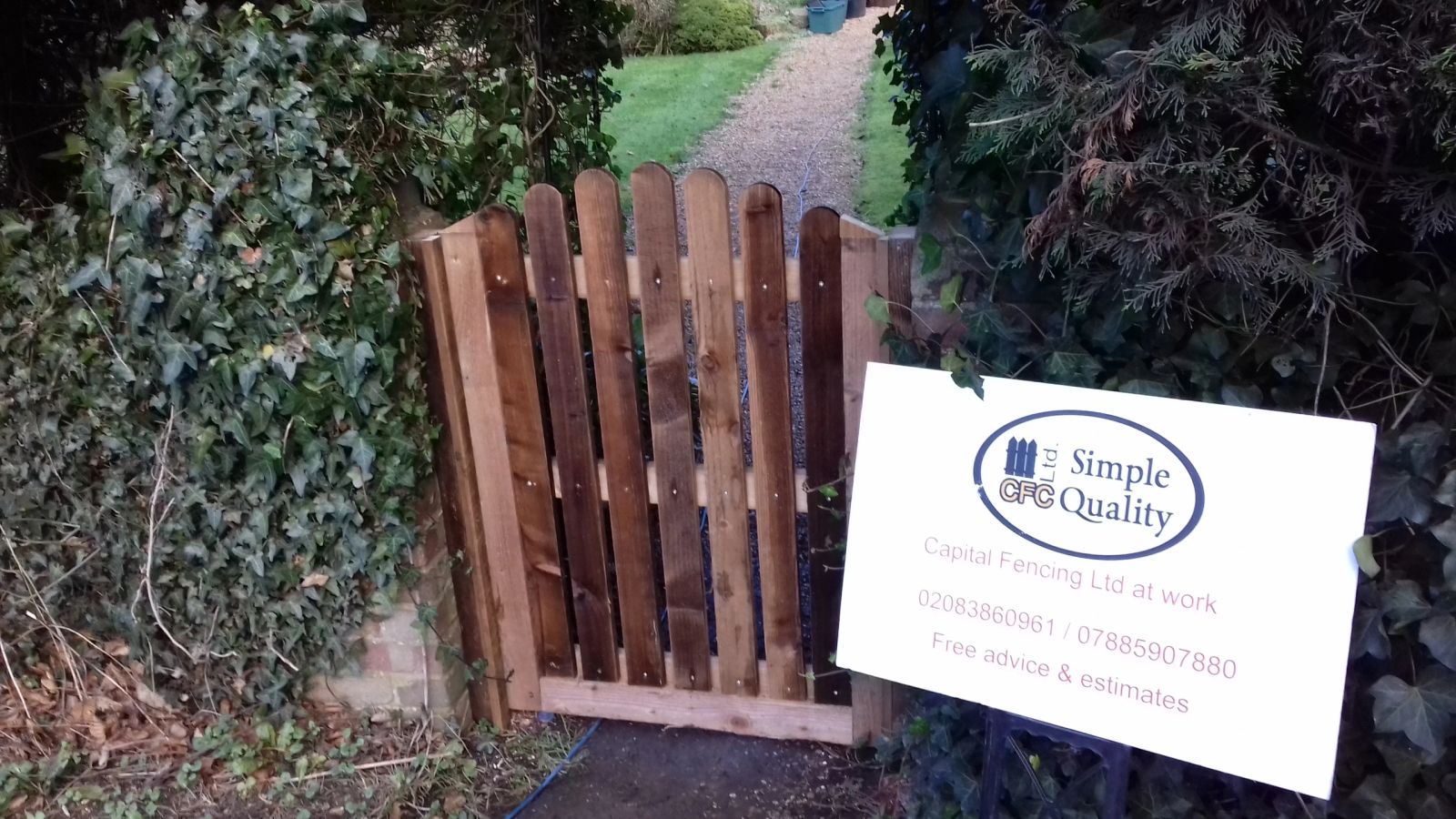
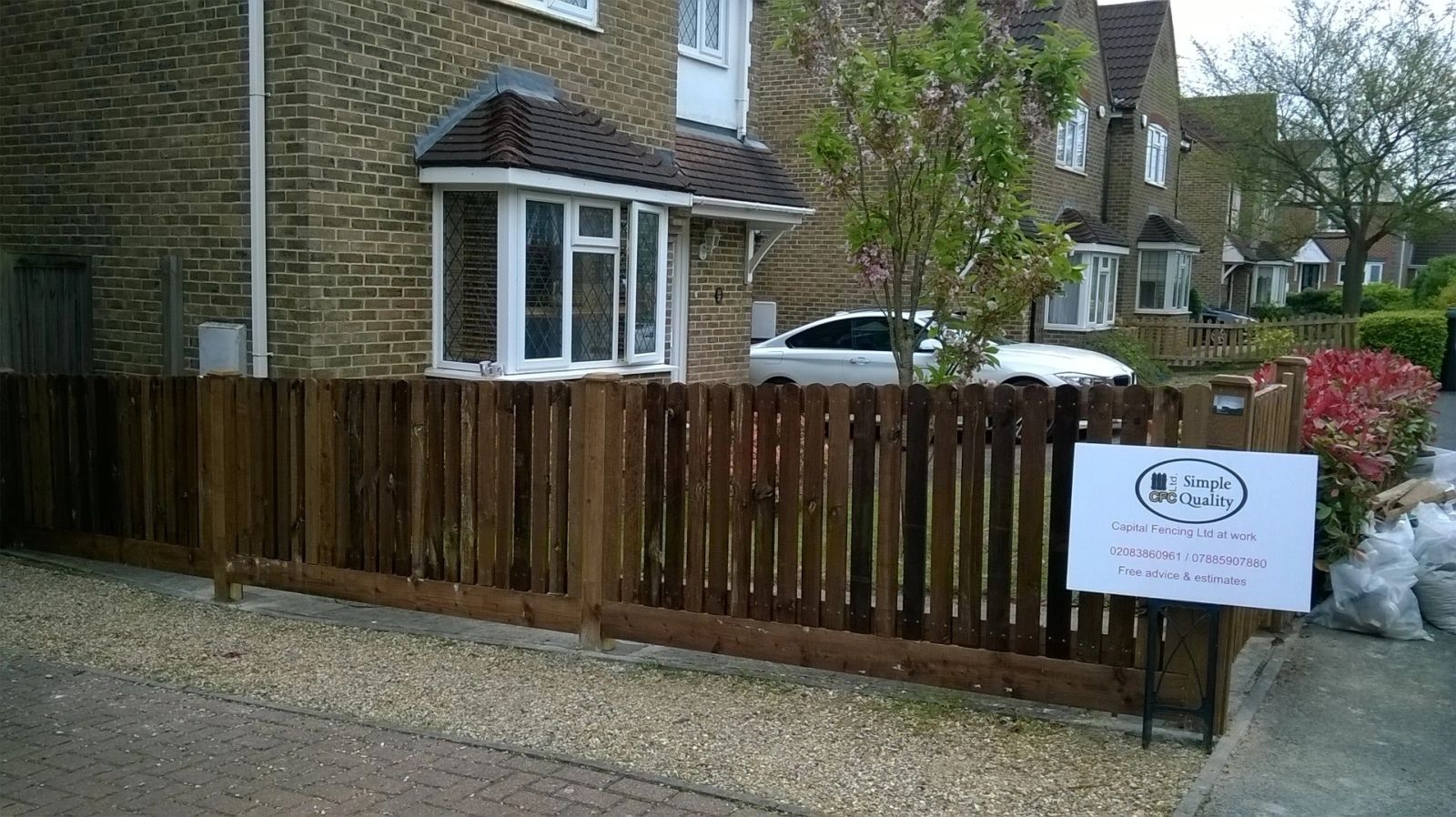
closeboard fence run installed by Capital Fencing in Edgware (HA8)panel fence install installed by Capital Fencing in Edgware (HA8)trellis-topped fence installed by Capital Fencing in Edgware (HA8)bespoke decorative fence installed by Capital Fencing in Edgware (HA8)

What actually matters for conservation area fencing around Edgware

Stainless fixings near a road

Fixings on a gate close to a public road pick up more airborne grit, salt spray in winter and general moisture than one set back in a garden, which accelerates corrosion on standard galvanised screws and bolts.

Stainless steel fixings cost more but resist this environment noticeably better, and are worth specifying on any roadside gate repair.

Repairing a spot damaged repeatedly by a dog

A dog that digs at the base of a fence or chews at exposed board edges tends to concentrate damage at one recurring spot rather than spreading it along the whole run, which makes a localised repair — a buried mesh skirt, a metal kick-plate — more effective than a general fence upgrade.

Addressing the underlying cause, such as blocking the specific gap the dog is trying to reach through, matters as much as the physical repair, since a repaired section without that change is often damaged again in the same place.

Low bottom rails as a trip hazard

A gate's bottom rail set slightly proud of the finished ground or paving level can become a trip hazard, particularly at a frequently used pedestrian entrance, and this is worth checking as part of a repair rather than only assessing the gate's swing and hardware.

Adjusting the ground level either side or resetting the gate's hung height can resolve this without altering the gate's construction.

Letting-agent instructions and access arrangements

Work instructed through a letting agent rather than directly by the owner usually needs a written authorisation confirming who can approve variations to the quote, since the agent isn't always the person paying the invoice.

Key access for an occupied rental needs proper notice to the tenant under the tenancy agreement, typically at least 24 hours, and arranging a lockbox or agent-held key avoids a wasted visit if the tenant isn't home.

Where a fence sits between a let property and an owner-occupied neighbour, it's worth the agent confirming which side is instructing and paying before quoting, to avoid a dispute over cost once the job is done.

Handling scope changes discovered once a repair is underway

A repair quoted from an initial inspection sometimes turns out larger once work starts — a post probed as sound at the surface but soft further down, or a neighbouring post found to be equally close to failure.

Agreeing a clear process for confirming any change in scope with the client before continuing, rather than proceeding on assumption, avoids disputes about what was and wasn't included in the original repair.

A spec checklist for comparing quotes

Two quotes at very different prices for what looks like the same fence often differ in the parts that aren't obvious from a headline description — post type and spacing, gravel board material, rail count, use class of treatment, and whether waste removal is included.

Worth confirming explicitly: post material and size, number of arris rails for the height quoted, gravel board type, treatment use class of ground-contact timber, fixing corrosion class, and whether post caps and capping rail are included as standard.

A written spec covering those points, rather than just a total price and a photo of a similar job, is the practical way to compare quotes on equal terms rather than discovering the difference once the fence is already up.

Frost heave effects on shallow-set posts

Frost heave occurs when water in saturated soil freezes and expands, lifting the ground surface and any shallowly set post embedded in it, sometimes by several millimetres each freeze-thaw cycle over a winter.

Posts set below the typical frost penetration depth for the region are far less affected, since the freezing zone that drives heave rarely reaches that far down, which is one reason recommended minimum depths are deeper in areas with harder winters.

A post that's visibly risen slightly over a hard winter, without any sign of the concrete cracking, has often been affected by heave rather than a failed footing, and it can sometimes settle back as the ground thaws.

Outbuildings close to a boundary and separate rules

Garden rooms, sheds and other outbuildings have their own distinct permitted development rules on height and proximity to a boundary, which are different from the rules governing fences, walls and gates.

It's a common mix-up to apply fence height limits to an outbuilding, or vice versa, when checking what's allowed near a boundary line.

Where a fence and a new outbuilding are being planned together near the same boundary, it's worth checking each against its own specific permitted development category.

Mixed hedge-and-fence boundaries and shared responsibility

Many boundaries in practice aren't purely fence or purely hedge but a fence backed by an established hedge on one or both sides, which complicates simple assumptions about who maintains what.

Deeds rarely specify hedge maintenance in the same way they specify fence ownership, so in practice it tends to be agreed informally between neighbours, which is worth clarifying in writing before installing a new fence against an existing hedge.

A fence installed too close to an existing hedge on the boundary line can also restrict future access for cutting that hedge from one side, which is worth flagging before positioning posts.

Choosing between razor wire and barbed tape toppings

Barbed tape has a flat steel strip with stamped barbed edges wound into a coil, giving a denser and more visually aggressive deterrent than traditional twisted barbed wire, which is now used less often on new commercial work.

Both carry a real injury risk and are generally reserved for boundaries without public pedestrian access, since a topping that could injure a passer-by on a footpath side raises liability concerns a lower-risk topping avoids.

Downpipe discharge points near a fence base

A downpipe discharging directly onto open ground near a fence line, rather than into a proper drain or soakaway, concentrates a large volume of roof water at one specific point along the boundary during heavy rain.

Over time this creates a permanently saturated patch that behaves like a high water table locally, even though the rest of the garden drains normally.

Redirecting the discharge with a short length of pipe or a small soakaway a metre or two from the fence line resolves the issue far more effectively than trying to compensate with a more resistant post base.

When a failed post means replacing the gate too

A hanging post that's rotted at ground level usually needs full replacement rather than repair, and because the gate is bolted directly to that post, the gate itself often has to come off and be reassessed for damage during the process even if the gate was previously sound.

This is worth explaining clearly to a client who's expecting a simple post swap, since the gate's own hinges and fixings may need attention at the same time.

The highway 1m rule in practice

The 1m permitted development limit applies to any boundary that fronts a highway used by vehicular traffic, which in practice includes most adopted roads and many unadopted estate roads that carry regular car use, not just classified A and B roads.

A footpath-only right of way at the front of a plot doesn't trigger the lower limit on its own, but councils interpret 'used by vehicles' broadly, so a shared driveway serving several houses usually counts.

Where it's unclear, checking with the local planning authority before building is cheaper than a retrospective application after a 1.8m fence goes up on what turns out to be a vehicular frontage.

Gaps at party walls and stepped brickwork

Where a fence meets a party wall or a stepped brick boundary, an ill-fitting junction leaves a gap that undoes the security of the whole run, so infill panels or a scribed timber closer are cut to follow the step rather than left square.

On an older terrace the brickwork step is rarely uniform along its length, so each junction is measured on site instead of assuming a standard offset.

Decking substructures on clay

Timber decking built directly on shallow clay can move as the ground shrinks and swells seasonally, which shows up as a joist that's level in summer and slightly proud or dipped in winter.

Deeper post supports, or a raised deck design that isn't reliant on ground-bearing pads sitting in the active clay zone, avoid most of that seasonal movement.

Ventilation underneath the deck matters just as much as the foundation — a low, boxed-in deck with poor airflow traps moisture against the joists regardless of how well the posts are set.

Dealing with buried debris uncovered while digging out a repair footing

Old post stubs, broken glass, hardcore or builder's rubble from a previous era of the garden's use sometimes turn up when digging out a footing for repair, particularly on older plots that have been through several changes of use.

Where this happens, it's worth clearing enough of the obstruction to get a clean footing rather than working around it, and flagging anything unexpected — old drainage, buried cabling, unusually large rubble — to the client before continuing.

Checking an unstable adjacent structure before repairing the fence against it

Where a fence panel is fixed to or sits hard against a garden wall, shed or outbuilding that's itself showing signs of movement, repairing the fence without addressing the structure it depends on risks the same failure recurring.

This is worth flagging to a client as a separate issue rather than working around it silently, since a fence repair fixed to an unstable wall is only as reliable as that wall.

Restaurants and pub gardens

Boundary fencing around a pub garden or restaurant terrace often does double duty as noise and light screening for neighbouring residential properties, and its height and permeability can be a condition attached to the premises licence rather than a free choice.

Trading hours mean access for fencing work is usually easiest early morning before service starts, since a garden in active use for covers can't have posts being dug mid-lunch.

Where outdoor seating sits close to the boundary, fixings and post positions need checking against any licensed seating plan so the finished fence doesn't reduce covers below what the licence allows.

Where neighbours disagree on sharing a repair cost

A boundary fence repair is sometimes split between neighbours by informal agreement, but there's no automatic legal requirement for a neighbour to contribute unless the deeds specifically say so, and disagreement over cost-sharing is common enough to plan for.

In practice it's simpler to quote the repair to whichever party is instructing the work and let that client resolve any cost-sharing conversation separately, rather than trying to split an invoice between two parties who haven't agreed terms.

Upgrading security at a farm gateway

A farm gateway is a common target for rural theft of machinery, fuel and livestock, and a five-bar field gate on its own offers little more than a visual boundary marker, so a security upgrade typically adds a padlockable hasp, a stronger hinge set and sometimes a second inner gate as a layered deterrent.

Positioning a gate slightly back from the road with a locked field gate behind an open highway gate can slow a vehicle-based theft attempt without obstructing the farmer's own daily access.

Matching a new run to an existing style

Matching an extension or repair to an existing fence starts with identifying the actual system in use — panel type, post type, rail count, board profile — rather than assuming any similarly-priced product from a different range will look consistent alongside it.

Weathered timber and faded composite are both difficult to match exactly with new material, so a visible seam between old and new sections is often unavoidable and worth agreeing with the client at quote stage rather than promising an invisible join.

Where a manufacturer has changed a profile or a colour range since the original was fitted, matching sometimes means re-doing a full run rather than extending it, which is worth flagging before ordering a small top-up quantity.

Over-boarding as an alternative to board-by-board replacement

Over-boarding fixes new feather-edge boards directly over an existing run rather than stripping and replacing individual damaged boards, which suits a run with widespread but shallow weathering rather than a handful of severe failures.

It doesn't fix a failing arris rail or post underneath, so it's only appropriate once the frame behind the boards has been checked and confirmed sound, otherwise the extra weight of a second layer of boards can accelerate a frame that was already borderline.

On conservation-area fencing in Edgware you get the same crew from first site visit to hand-over. That's the whole model — small team, planning-aware spec, written quote before we start. Roads such as High Street and Whitchurch Lane are typical of the local layout. Edgware bus station is a useful local reference point. Canons Park, on the town's edge, was once part of the grounds of Canons House and retains covenants affecting some streets.

Get In Touch

Get My Free Quote — 24h Response

No callout fee · Free site visit · Friendly local team covering London & Hertfordshire.

Call us
07885907880
or 02036484746
Email
capital_fencing@yahoo.com
WhatsApp
Message us anytime
Area
London & Hertfordshire
Payment
Card payments accepted

Pay by debit or credit card, bank transfer or cash once the work and price are agreed. No deposit taken online.

Request a Free Quote

We'll get back to you within 24 hours.

Free Site Visit No Callout Fee
Call WhatsAppQuote