Electrified topping wire basics
An electrified topping wire adds a pulsed low-current deterrent above an existing fence line and is installed to specific clearance and signage rules rather than fitted freely, since it counts as a controlled hazard.
Specialist installers handle the energiser and wiring; the fencing contractor's role is limited to providing insulated brackets and a structurally sound top line for the wire to run along.
Clearing debris from a sliding gate track
Leaves, gravel and windblown litter collect in a ground-level sliding gate track over time, and a build-up is one of the most common reasons a gate that used to run smoothly starts binding or stalling partway along its travel.
Regular clearing of the track, particularly after autumn leaf fall or after a period of wind, prevents debris from being repeatedly crushed into the track and becoming harder to remove.
Protecting lawn edges along a new fence line
Digging post holes and levelling ground along a boundary inevitably disturbs a strip of lawn either side of the new line, and that strip is worth marking out and treating as a working area from the start rather than letting the disturbed area creep wider as the job progresses.
Turf lifted carefully in one piece before digging starts can sometimes be relaid afterwards rather than reseeded, which gives a faster-recovering edge than bare soil left to regrow from seed.
Where reseeding is the only realistic option, timing the final reinstatement for a season when grass seed actually establishes reliably avoids a bare strip sitting exposed for months after the fencing itself is finished.
Applying for a Land Registry boundary determination
Where a boundary's exact position is genuinely disputed, it's possible to apply to HM Land Registry for a 'determined boundary', which involves a formal survey and legally fixes the line rather than leaving it as a general indication.
This process is comparatively rare for domestic disputes because of the cost and evidence involved, and is normally a last resort after direct discussion has failed.
Most everyday fence replacement work never needs this, but it exists as a formal route for the minority of cases where agreement genuinely can't be reached.
Footway licences for materials on a pavement
Storing fencing materials, a small skip, or scaffolding on a public footway, even briefly, can require a licence from the council responsible for that stretch of highway.
This is separate from any parking suspension for a vehicle, and covers the physical obstruction of pedestrian space rather than the road itself.
On narrow residential pavements it's worth checking the council's footway licence requirements ahead of a delivery, since blocking a pushchair or wheelchair route without authorisation can draw a complaint.
High water table and post-base concrete
On a plot where the water table sits close to the surface, a post hole can start filling with groundwater before the post is even positioned, which stops a wet concrete mix from curing properly around the base.
The usual fix is a free-draining pea shingle or hardcore base rather than solid concrete, letting water pass the post instead of holding it in permanent damp.
Pumping a hole dry immediately before setting the post is only a short-term measure if the water simply returns within minutes, and that's usually the signal to change the base specification rather than repeat the attempt.
Stabilising a pergola post that has started to rock
A pergola post rocks where its footing has cracked or where the post itself has begun rotting at the base, and because pergola posts often carry a roof structure rather than just a fence line, a rocking post carries more consequence if ignored.
Repair generally means breaking out and repouring the footing with the post braced upright and level while the concrete cures, and checking the beam fixings at the top of the post at the same time, since a post reset out of plumb strains the joinery above it.
Resin anchor fixings for a bolted baseplate post
A resin anchor sets a threaded stud into a drilled hole in existing concrete or masonry using a two-part chemical resin, giving a strong fixing for a bolted baseplate post where excavating a new footing isn't practical, such as on an existing hardstanding.
Anchor depth and resin cure time both need to match the manufacturer's data for the load expected, and a resin anchor installed into damp or dusty concrete without proper hole cleaning will pull out well below its rated capacity.
Gate hinge material and load ratings
Gate hinges are rated by the load they can bear without excessive wear or sag, and that rating depends on the hinge's material, its pin diameter and the bearing surface area between the moving parts.
A heavy timber gate on a lightweight hinge designed for a garden gate will wear the pin and bushing far faster than the same hinge on a lighter gate, eventually developing a visible droop at the latch side.
Stainless steel or greased bronze bushings resist wear better than plain steel-on-steel hinges, particularly on gates opened frequently, where repeated friction is the main driver of hinge wear rather than corrosion.
Windbreak netting as an interim exposure measure
On a newly exposed plot, such as after a neighbouring hedge or building is removed, temporary windbreak netting fixed to the existing fence can reduce load on the structure while a longer-term solution like replanting or upgrading the fence itself is arranged.
This is a genuinely useful stop-gap rather than a permanent fix, since netting left up long-term degrades in UV and adds its own wind resistance once it starts to fray and catch more air than when new.
It buys time to plan a proper specification change rather than leaving a suddenly-exposed fence to fail before a permanent upgrade can be arranged.
Temporary fencing while a permanent boundary is rebuilt
Removing an old boundary fence before the new one is built leaves a gap that matters for security, for keeping pets or children contained, and for site safety around an open excavation.
A simple temporary screen — netting on stakes, or hurdles wired together — bridges that gap without committing to a full second install, and is worth agreeing with the client if the job will span more than a day.
On a site backing onto a road, path or shared area, a temporary barrier around open post holes overnight is also a basic precaution against someone stepping into an unmarked hole in the dark.
Hitting shallow services and CAT scanning
Electricity, gas and water connections into a house are often shallower than people expect, sometimes under 300mm in an older garden, well within reach of a hand auger let alone a mechanical one.
A cable avoidance tool (CAT scan) before digging a new post line is standard practice near any suspected service run, and is far cheaper than the cost and risk of striking a live cable or a gas pipe.
Where a scan can't rule out a service with confidence, hand-digging trial holes to confirm depth and position before committing to auger the rest of the line is the safer approach.
Mesh apertures and wire gauge
A mesh fence's aperture, the size of each gap between wires, and its wire gauge, the wire's diameter, together determine how much it restricts sightlines, resists intrusion and how heavy the finished panel is.
A smaller aperture with a heavier gauge wire gives better security and a more solid appearance, but adds weight and wind load that the supporting posts and foundations need to be sized for.
Wire gauge is often expressed in millimetres in current UK specifications rather than the older imperial standard wire gauge numbers, and mixing the two systems when comparing products can lead to ordering the wrong strength mesh.
Appealing a refused boundary planning application
Where a planning application for a taller or otherwise non-permitted boundary structure is refused, there's a formal right of appeal to the Planning Inspectorate within a set time limit.
Appeals are considered on planning merit rather than personal circumstances, and can take several months to be decided, which is worth factoring into any timeline.
Getting professional planning advice before submitting an appeal often improves the prospects of addressing the reasons for the original refusal effectively.
Board overlap orientation relative to prevailing weather
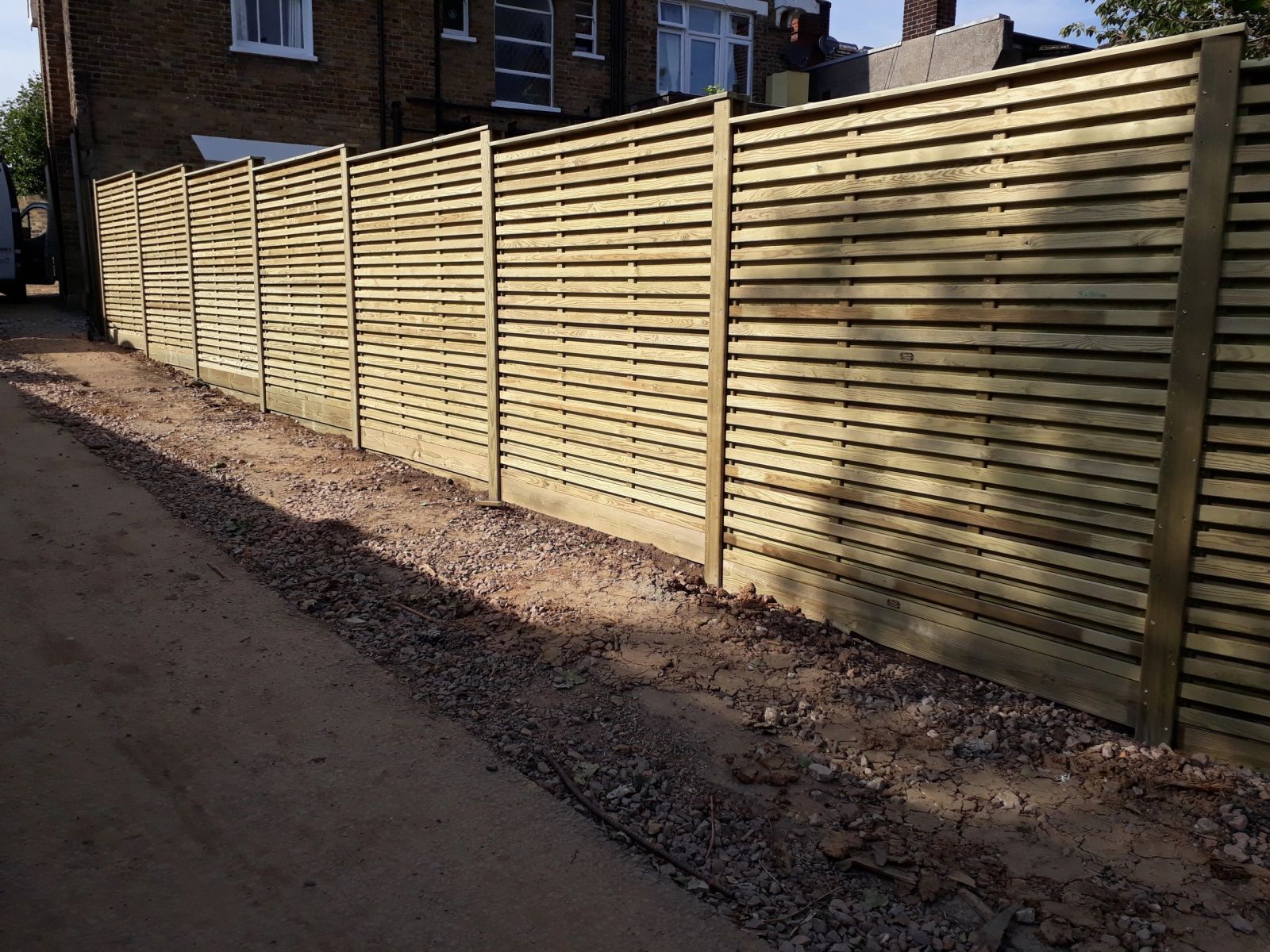
Featherboard and closeboard panels are built with each board overlapping the next, and the direction of that overlap affects how well the panel sheds driven rain — the leading edge of each board should face the prevailing wind and rain direction so water runs off rather than being driven behind the board.
This is straightforward to get right at manufacture but is occasionally reversed on a bespoke or site-built run, which shows up over time as faster localised rot on the boards facing the wrong way for the local prevailing weather.
Checking overlap direction against the site's known prevailing wind is a small detail worth confirming before a bespoke run is built rather than assuming a standard orientation will suit every site.
Water company build-over positions
Public sewers can run beneath private gardens, and water companies generally require notice, and sometimes formal approval, before any structure — including some fence post foundations — is built close to or over them.
The exact rules and required clearance distances vary by water company, but ignoring a known public sewer line when positioning posts risks a dispute or requirement to remove work later.
A free sewer map is normally available from the relevant water company, which is worth requesting before finalising post positions on any plot with an older or shared drainage system.
Repairing a damaged section of welded mesh panel
A localised dent or cut in a weld mesh panel can sometimes be patched by welding in a replacement section rather than replacing the whole panel, provided the damage doesn't extend to the panel's frame or fixing points.
Where damage is at a corner or fixing point rather than mid-panel, a full panel swap is usually more reliable than a patch repair, since a repaired fixing point is a more likely future failure than a repaired mesh field.
Reinforcing a hinge post weakened by gate movement
A gate hinge post takes repeated leverage every time the gate swings, which loosens its footing faster than a plain fence post nearby carrying no such load, and it's a common early failure point on a boundary that includes a gate.
Reinforcing usually means a larger post section, a deeper footing, or bracing back into the adjoining fence run, rather than simply resetting the same post size that already proved inadequate for the load.
Letterbox and parcel provision in a secure gate
A fully secured pedestrian gate can leave deliveries with nowhere to leave post or parcels, so a secure gate-mounted letterbox or a parcel box positioned outside the locked line is worth planning at design stage.
Positioning it so it can be reached without opening the gate keeps the boundary genuinely closed while still allowing routine deliveries.
Fence junctions above a retaining wall
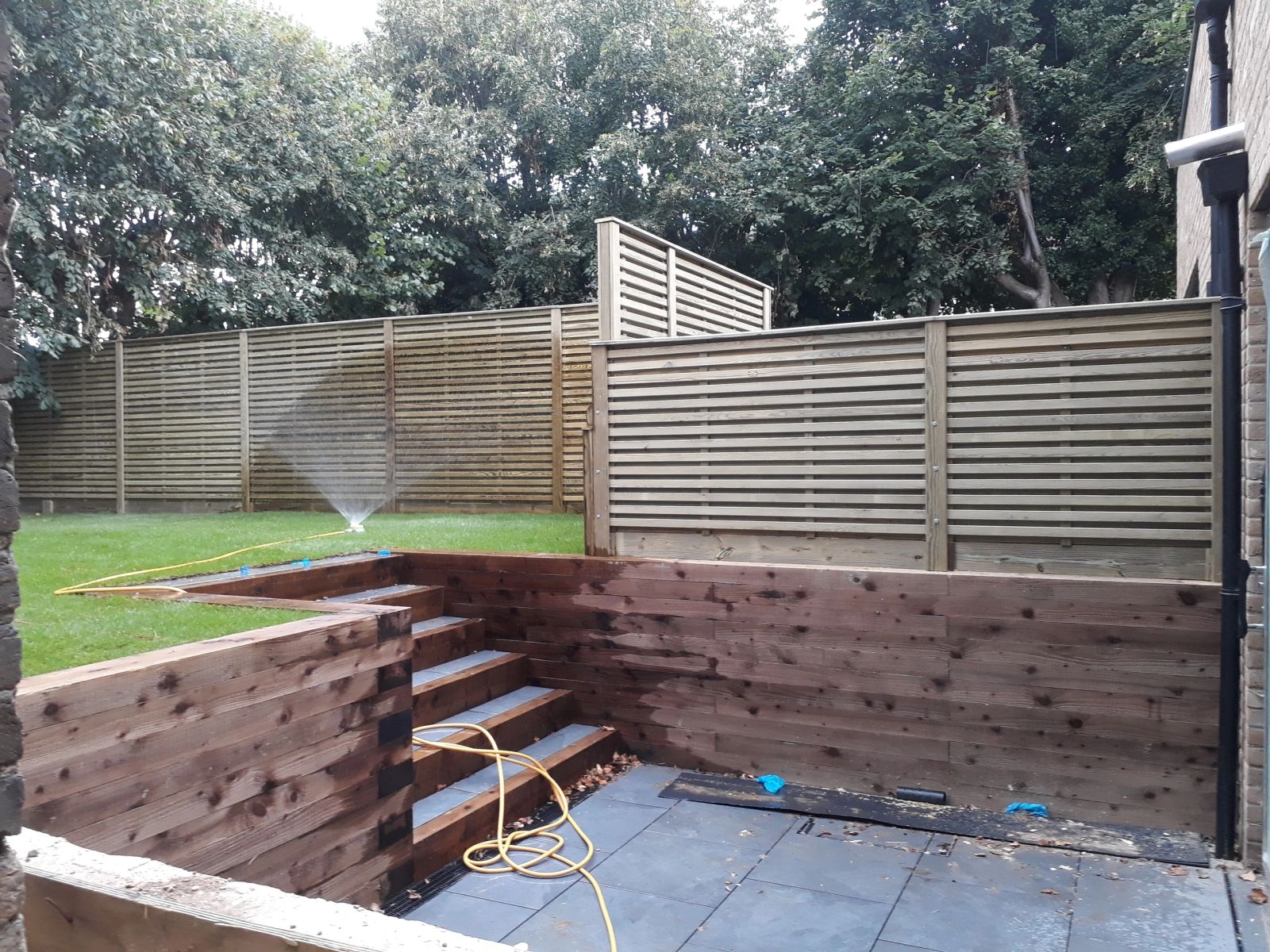
A fence sitting on top of a retaining wall adds lateral load the wall wasn't necessarily designed for, particularly on a taller solid-faced security screen catching wind, so the wall's condition and the fence's fixing method both need checking before installation rather than assumed to be compatible.
Where the wall can't safely take a bolted post, a freestanding post line set back slightly from the wall edge, tied back if needed, keeps the fence load off the retaining structure entirely.
Patching a section of mesh that has been cut or torn
A cut or torn section of chain-link or welded mesh is normally patched by weaving or wiring in a new panel of matching mesh gauge rather than trying to splice the damaged wires back together.
Matching wire gauge and mesh aperture matters for security fencing, since a patch in a coarser gauge than the surrounding mesh is both visibly obvious and a weaker point than the rest of the run.
Treatment standards and use classes for timber
British and European standards define timber 'use classes' according to exposure — Use Class 4 covers timber in ground contact, such as fence posts, and requires a deeper level of preservative treatment than Use Class 3 cladding or rails that are exposed to weather but not buried.
Specifying Use Class 3 timber for a post that goes into the ground is one of the most common causes of early rot failure, since the treatment simply isn't rated for sustained soil contact and moisture.
A reputable timber merchant should be able to confirm the use class and treatment certificate for structural components, and it's worth asking for it explicitly rather than assuming 'tanalised' automatically means suitable for ground contact.