London & Hertfordshire Free Site Visit
closeboard fence run installed by Capital Fencing in Stevenage (SG1)
Stevenage · SG1 / SG2

School fencing across Stevenage — Stevenage Borough

Capital Fencing installs school and nursery fencing across Stevenage and out toward hitchin and welwyn garden city. What separates a school and nursery fencing job from a standard boundary is the detail: bow-top mesh replacing tired timber around a nursery outdoor area. That's the work, not the marketing. Roads such as Bedwell Crescent and High Street (Old Town) are typical of the local layout. Stevenage station is a useful local reference point. Stevenage's New Town estates were built around cul-de-sac layouts, with many rear boundaries meeting at three-way corners typical of the 1950s masterplan.

Capital Fencing installs school and nursery fencing across Stevenage and out toward hitchin and welwyn garden city. What separates a school and nursery fencing job from a standard boundary is the detail: bow-top mesh replacing tired timber around a nursery outdoor area. That's the work, not the marketing. Roads such as Bedwell Crescent and High Street (Old Town) are typical of the local layout. Stevenage station is a useful local reference point. Stevenage's New Town estates were built around cul-de-sac layouts, with many rear boundaries meeting at three-way corners typical of the 1950s masterplan.

Default spec

How we build school and nursery fencing in Stevenage

1.2m or 1.8m bow-top or 358 weld-mesh, hot-dip galvanised then RAL powder-coated posts, self-closing gates with anti-finger-trap hinges. On Stevenage jobs we adjust for shared-with-neighbour fence runs are the norm — quotes need to cover boundary checks first.

Property mix locally: post-war planned housing across Chells, Shephall and Bedwell, plus older properties in Stevenage Old Town. Typical gardens: modest rectangular plots, typically flat, with rear access alleyways on the planned estates. Postcodes we regularly service: SG1, SG2.

we install to BS 1722-14 for bow-top and BS 1722-10 for weld-mesh, provide safeguarding-relevant sign-off notes, and can attend outside term time only.

Why this spec, for primary schools, nurseries and early-years settings

  • no horizontal rails at climbable heights — safeguarding-first geometry
  • hot-dip galvanised then powder-coated finishes carry a 25-year service life
  • welded rather than bolted joints so nothing works loose over a school year

Where school and nursery fencing isn't the right answer

  • conservation-area primary schools where planning restricts galvanised finish visible from the street
  • domestic-scale nurseries in a converted house where a timber boundary already meets Ofsted line-of-sight rules

Typical school and nursery fencing briefs in Stevenage

  • 1.8m weld-mesh on galvanised posts around a primary school MUGA
  • bow-top mesh replacing tired timber around a nursery outdoor area

School & Nursery Fencing FAQs — Stevenage

Do you supply RAMS and public-liability certificate ahead of works?

On school and nursery fencing jobs in Stevenage (SG1), our default answer is: 1.2m or 1.8m bow-top or 358 weld-mesh, hot-dip galvanised then RAL powder-coated posts, self-closing gates with anti-finger-trap hinges. We install to BS 1722-14 for bow-top and BS 1722-10 for weld-mesh, provide safeguarding-relevant sign-off notes, and can attend outside term time only.

Can pedestrian and vehicle gates share a controlled entry?

Across Stevenage we spec around shared-with-neighbour fence runs are the norm — quotes need to cover boundary checks first, so on school and nursery fencing that usually means bow-top 1.2m for EYFS boundaries. For context: hot-dip galvanised then powder-coated finishes carry a 25-year service life. Installed to BS 1722 standards, with fitter details available on request.

What height should nursery outdoor fencing be?

Stevenage Borough coverage means we can survey most SG1 addresses inside a week — primary schools, nurseries and early-years settings needing safeguarding-compliant boundaries. The honest trade-off is specifying decorative railings with climbable finials near a play area — trips a safeguarding audit every time — which is exactly what our default spec designs out.

Can the job be scheduled inside a half-term break?

Practically: bow-top mesh replacing tired timber around a nursery outdoor area. That's the Stevenage version of this job, not a generic one. The honest trade-off is specifying decorative railings with climbable finials near a play area — trips a safeguarding audit every time — which is exactly what our default spec designs out.

Do you install to BS 1722 for school fencing?

On school and nursery fencing jobs in Stevenage (SG1), our default answer is: 1.2m or 1.8m bow-top or 358 weld-mesh, hot-dip galvanised then RAL powder-coated posts, self-closing gates with anti-finger-trap hinges. We install to BS 1722-14 for bow-top and BS 1722-10 for weld-mesh, provide safeguarding-relevant sign-off notes, and can attend outside term time only.

Recent school & nursery fencing work
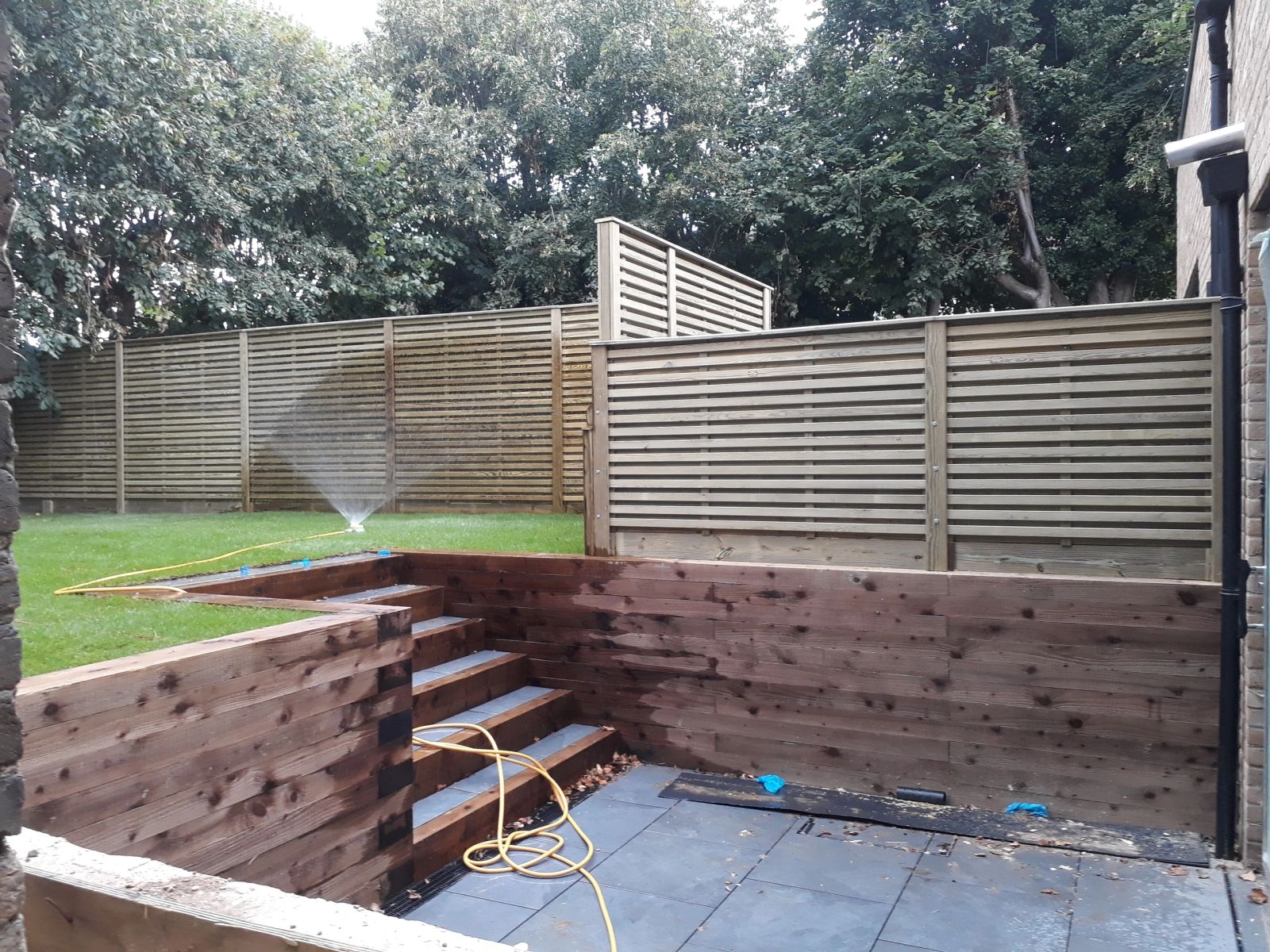
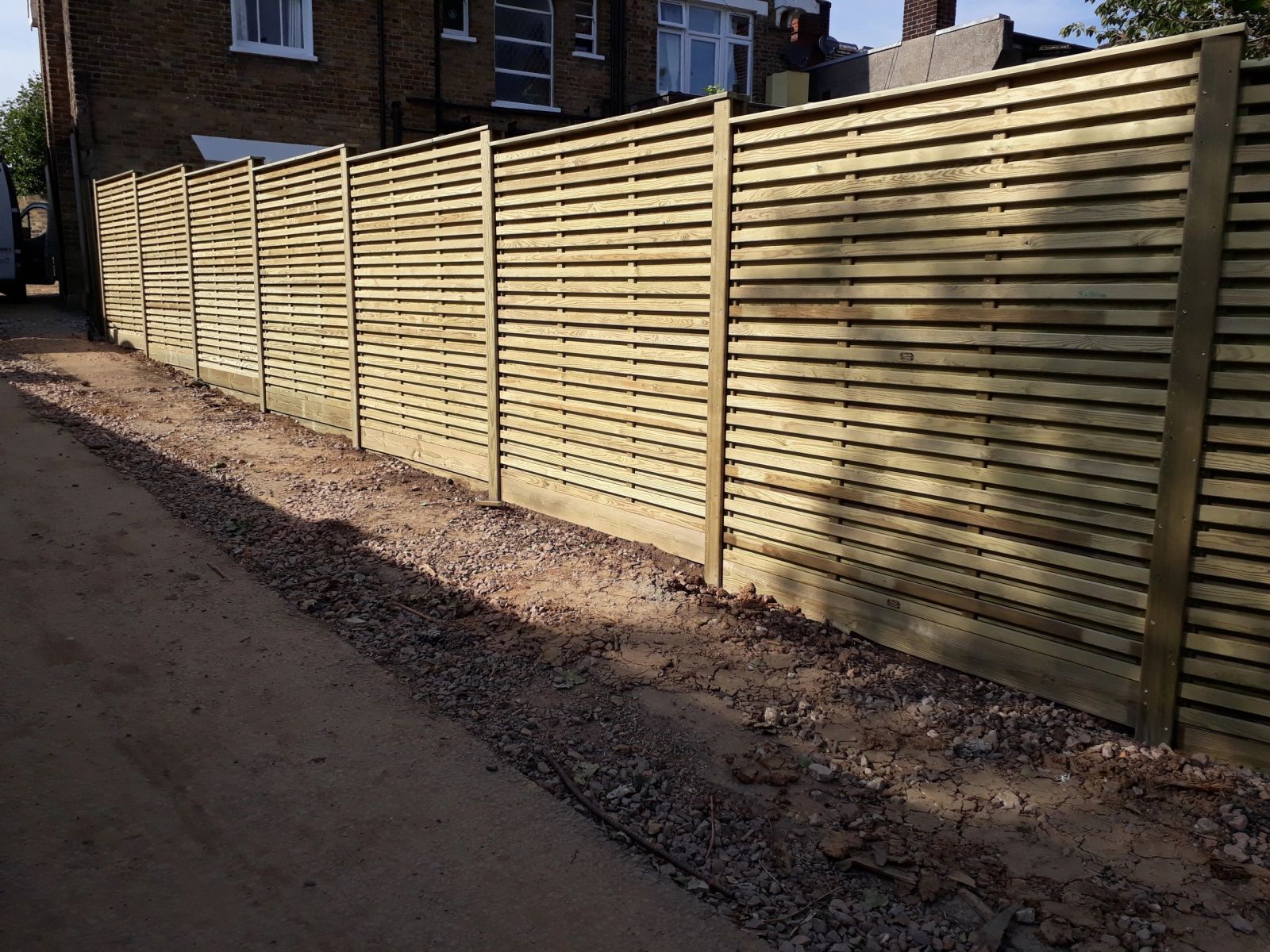
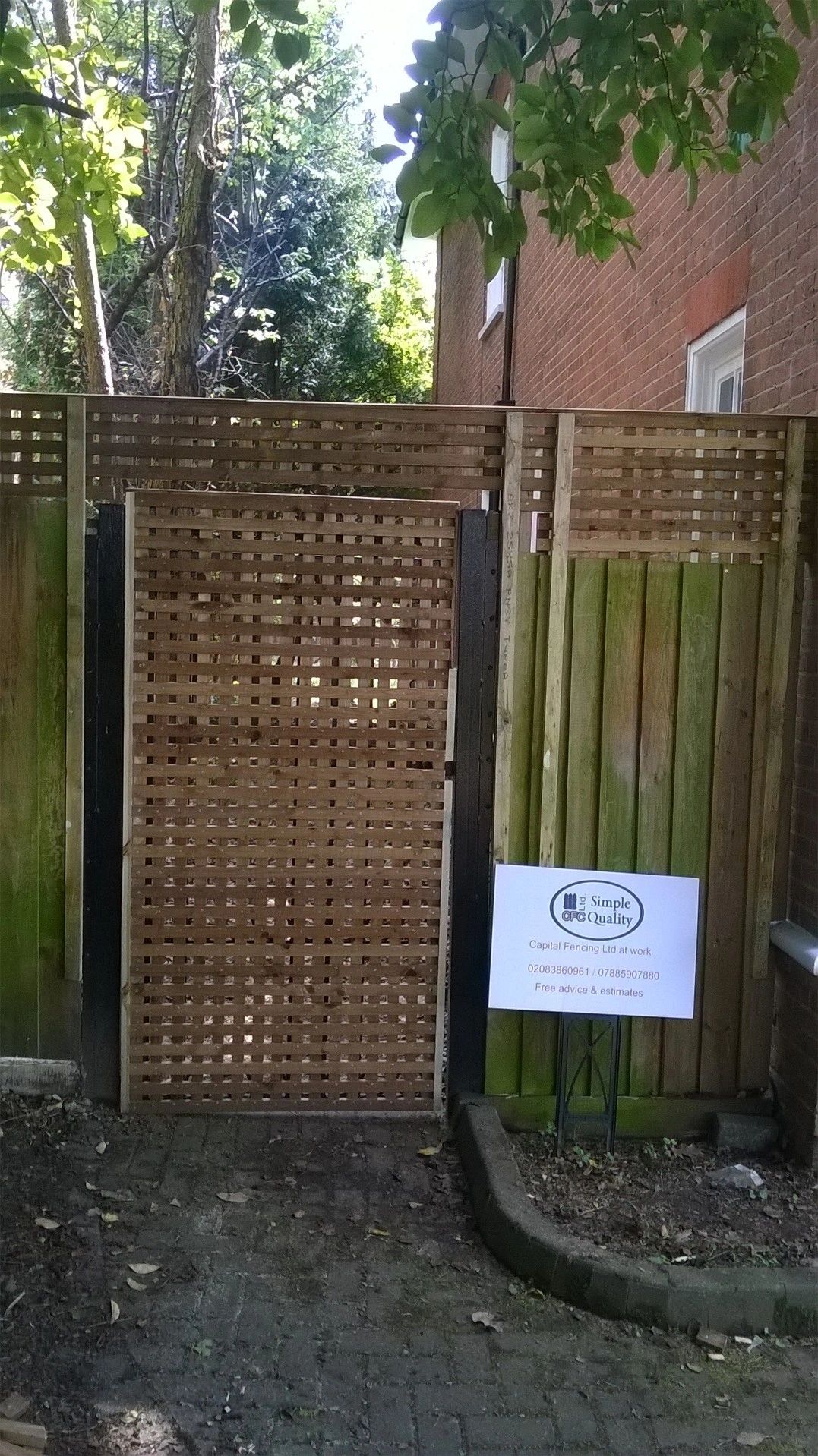
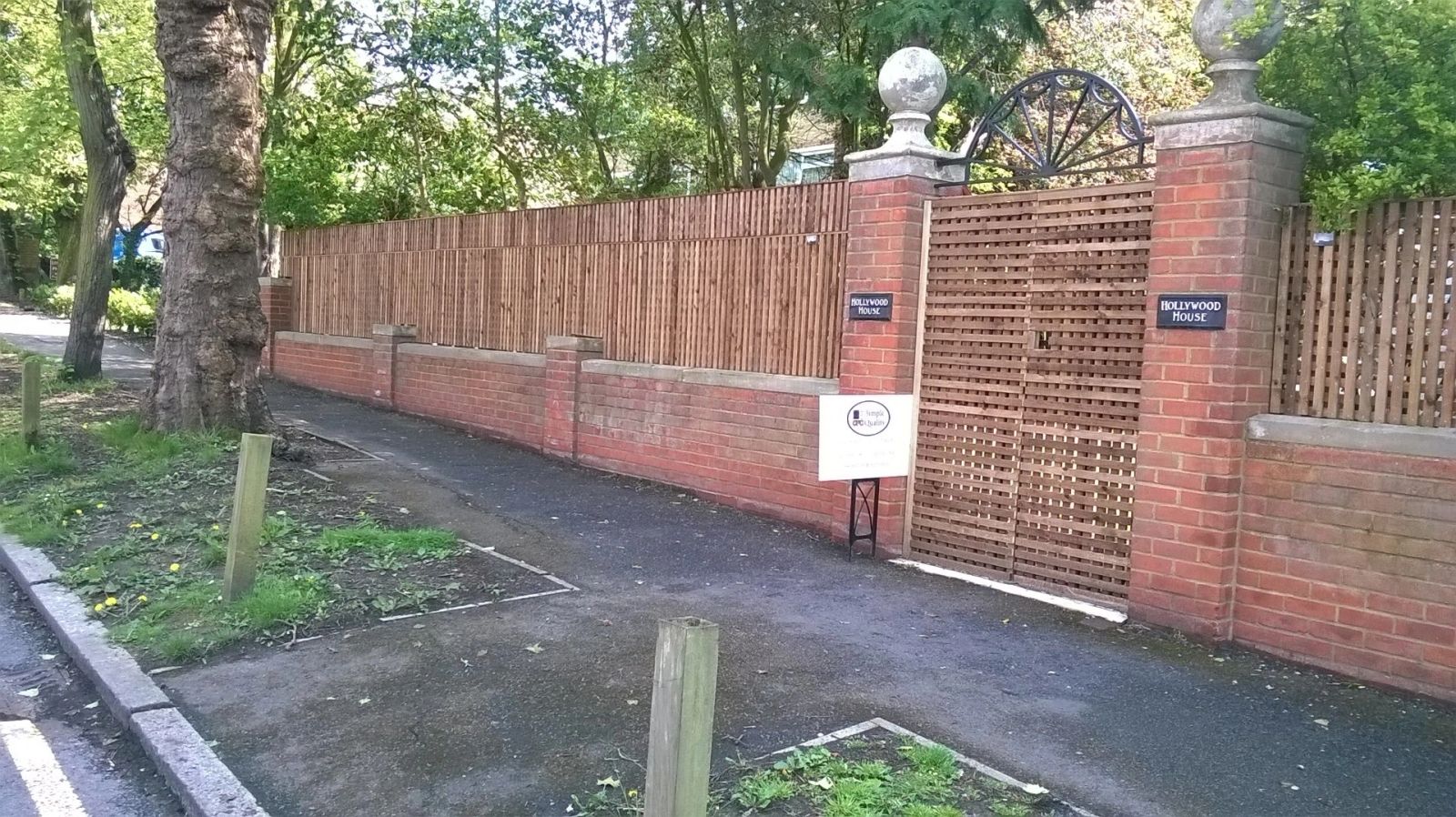
closeboard fence run installed by Capital Fencing in Stevenage (SG1)panel fence install installed by Capital Fencing in Stevenage (SG1)trellis-topped fence installed by Capital Fencing in Stevenage (SG1)bespoke decorative fence installed by Capital Fencing in Stevenage (SG1)

Site notes: school & nursery fencing in SG1

Perimeter fencing for a self-storage facility

A self-storage site's perimeter fence works alongside individual unit doors as a second layer of security, and is usually specified with a single controlled entry point so out-of-hours access can be logged or restricted even if some customers hold their own keys.

Height and topping on this type of perimeter tend toward the upper end of commercial practice because the contents behind any given unit door are unknown and the site is often unstaffed for long periods.

Pedestrian gate self-closing devices

A hydraulic or spring-loaded self-closing hinge brings a pedestrian gate back to a closed and latched position automatically, which is useful where a gate needs to stay shut for security or to keep a garden secure for children or pets.

These devices need occasional tension adjustment as they wear, and a gate that no longer closes fully is often a closer needing adjustment rather than a hinge fault.

Working safely on a roadside or public-facing boundary

A security fence often runs along a frontage that faces a pavement, a school run or a shared access road, so material storage, tool use and post-hole cover are managed to keep the public side of the works safe throughout.

On a commercial site this extends to keeping a fire route or loading bay clear while the new line goes in.

Estate gates hung from masonry piers

An estate-style gate is often hung from brick or stone piers rather than timber posts, which changes the repair approach entirely since a loose hinge fixing means re-drilling or resin-fixing into masonry rather than replacing a post.

Pier movement itself, from ground settlement or frost heave, can throw two gates out of alignment with each other even when both gates and their hinges are otherwise sound.

Striker plate material and post protection

A metal striker plate let into the post protects the timber from repeated latch impact and gives the latch bolt a hard, true surface to engage with, rather than relying on the post timber itself to take that wear.

A post without a striker plate develops a worn, rounded hole around the latch opening over time, which eventually stops the latch holding securely even if realigned.

Ledger board fixing to an existing wall

A ledger board bolted to an existing house wall to support one edge of a deck needs to be fixed through masonry into structural material, with a damp-proof membrane strip behind it and flashing above to stop water tracking into the wall build-up.

Fixing a ledger to a cavity wall needs care to avoid bridging the cavity or compressing insulation, and on a rendered or clad wall the fixings need to reach the structural leaf behind the finish rather than just gripping the surface material.

Where the wall build-up is unclear or the deck is heavily loaded, a free-standing beam and post arrangement independent of the house wall avoids the risk altogether.

Repairing an end post fixed against a house or garage wall

An end post bolted to masonry rather than set in its own footing fails differently — usually at the wall fixings rather than at ground level — and repair means checking whether the wall fixing itself has corroded or worked loose in the masonry.

Where the original fixing type has degraded, refitting with a heavier-duty or better-protected fixing is generally worth the small extra effort over simply replacing like-for-like into the same drilled holes.

Sliding gate track and roller wear

A sliding gate runs along a ground-mounted track or is carried on top rollers against a guide rail, and debris or corrosion in the track is one of the most common causes of a sliding gate becoming stiff or jamming partway through its travel.

Clearing and checking the track for level is usually the first step in diagnosing a sliding gate fault before assuming the rollers themselves need replacing.

Choosing ironmongery for a repaired gate

Galvanised heavy-duty hinges and latches cost little more than the light-duty fittings often supplied as standard, and they last considerably longer under repeated use, which makes an ironmongery upgrade one of the better-value additions at repair time.

Where a gate has electric automation, we handle the timber or metal gate itself and refer motor, control-board or sensor faults to a specialist automation engineer.

Feather-edge board overlap

Feather-edge boards are sawn to a tapered profile, thick along one edge and thin along the other, and are hung vertically with each board overlapping the thin edge of its neighbour by a consistent margin, typically 15-20mm.

Getting that overlap consistent matters more than it looks, since too little overlap opens sightlines and lets wind-driven rain through as the boards shrink, while too much wastes timber and adds unnecessary weight to the rails.

Because the boards taper, the overlap measurement is usually taken at the board's face rather than assumed from its nominal width, and a badly calibrated first board throws off the spacing for the rest of the run.

Balancing delivery scheduling with retail service yard security

A retail service yard often needs its security gate open for scheduled delivery windows through the day, which creates a predictable gap in the site's perimeter security that opportunist theft can exploit if the yard isn't otherwise supervised during those hours.

A visitor or delivery intercom paired with a smaller pedestrian gate lets staff manage vehicle access without leaving the main gate open for the full delivery window, reducing the time the yard is left unsecured.

Standard fence panel heights and why they matter

Fence panels are typically supplied in fixed height increments — commonly around 0.9m, 1.2m, 1.5m and 1.8m — which is worth knowing when planning a boundary near the 2m permitted development limit, since a gravel board on top of a full-height panel can tip a run over that limit without anyone intending it to.

Odd plot heights, sloping ground or a specific privacy requirement sometimes mean a bespoke panel height is the only way to get an exact fit, which costs more than off-the-shelf stock but avoids an awkward final course.

It's worth measuring the total height including any gravel board and capping before ordering, rather than just the panel itself, to avoid a nasty surprise at the planning-limit boundary.

Choosing a self-closing mechanism for pool or drive gates

A spring-loaded hinge, hydraulic closer, or gravity-hinge design (where the hinge itself is angled so the gate swings closed under its own weight) each achieve self-closing in a different way, with different maintenance needs and different feel in use.

Gravity hinges are mechanically simple and low-maintenance but rely on the gate post and hinge post staying accurately set, since any settling changes the closing behaviour.

Hydraulic or spring closers give a more consistent, adjustable close but are an additional mechanical component that itself needs occasional servicing or replacement over the gate's life.

Data protection basics for boundary CCTV

Domestic CCTV covering only a homeowner's own property is generally exempt from full UK GDPR obligations, but that exemption narrows considerably once cameras capture a neighbour's garden, shared paths, or public areas.

Where wider coverage is genuinely needed, clear signage and being able to explain why footage is captured helps if a neighbour raises a concern with the Information Commissioner's Office.

Positioning cameras to focus tightly on a homeowner's own boundary and property, rather than sweeping across a neighbour's space, is the simplest way to avoid this becoming an issue.

Post top crown-cutting for water shedding

A crown cut, a shallow diagonal saw cut across the top of a fence post, sheds rainwater to one side rather than letting it pool flat on the post's exposed end grain.

It's a lower-cost alternative to fitting a separate post cap and can be combined with an end-grain preservative treatment applied to the freshly cut surface for extra protection.

A flat-topped post left uncapped and uncut is the most exposed detail on an otherwise well-treated post, since the end grain there absorbs water directly with nothing to divert it.

Boundary fencing between church grounds and an adjoining graveyard

Church grounds fencing often has to distinguish between an actively used graveyard area, where ground disturbance for post holes needs careful checking against known burial plots, and a wider grounds boundary where standard fixing methods apply without restriction.

A lychgate or similar traditional entrance feature is frequently retained as the visual and ceremonial entry point even where a plainer security fence is added around the rest of the boundary for practical reasons.

Replacing a single damaged board

Where only one or two boards on a gate face have split or rotted and the frame itself is sound, those boards can usually be replaced individually rather than remaking the whole gate.

Matching the profile and thickness of the original boards matters for both appearance and how the new timber takes up moisture alongside the old.

Front boundary choices and kerb appeal

A front boundary is one of the first things anyone sees of a property, and low-key choices — a consistent gate style, tidy capping, a colour that complements the brickwork — do more for kerb appeal than an expensive but mismatched material choice.

Open or low front boundaries tend to suit properties where the frontage itself is attractive and worth showing off, while a higher, more solid front boundary suits a busier road or a desire for more privacy from passers-by.

It's worth thinking about a front boundary as a long-term fixture rather than following short-lived trends, since it's one of the more visible and slower-to-replace elements of a property's exterior.

Dog damage and low-level reinforcement

Repeated pushing, chewing or digging by a dog tends to damage the lowest section of a fence first, since that's the section within reach and the section closest to any dug-out gap at ground level.

Reinforcing the repaired section with a mesh liner or a kickboard behind the lower boards addresses the recurring cause rather than just replacing the damaged timber.

Spectator segregation fencing at a sports ground boundary

Beyond the outer perimeter, many sports grounds use internal segregation fencing to separate spectator areas, and this internal fencing is usually a different specification to the outer boundary, prioritising crowd safety and sightlines over anti-intrusion detailing.

Any internal fencing used for crowd control needs to allow rapid emergency evacuation, so gate positions and opening widths are checked against relevant safety guidance rather than set purely by the site's security brief.

Lifetime comparison of hedging and fencing as a boundary

A well-established hedge can outlast several generations of timber fencing with no post replacement or re-treatment cycle, but it needs regular cutting to stay within bounds and takes several years to reach an effective screening height from new planting.

A fence gives an immediate, defined boundary and predictable height but carries an ongoing maintenance and eventual replacement cost that a mature hedge doesn't.

Many gardens end up with a mixed solution — a fence for the immediate boundary definition with hedging planted alongside it to soften the appearance and eventually take over some of the screening role.

Brown versus green treatment pigments

The green or brown tint in pressure-treated softwood comes from a pigment or dye added to the preservative solution during treatment, largely as a visual indicator that the timber has been through the process rather than for any protective purpose.

Green pigments were historically more common but have become less fashionable, with brown or 'tanalised brown' now the more usual finish for fencing timber sold in the UK.

Because the colour is only pigment-deep in places, freshly cut ends and any surface planing during fitting will expose the paler, untreated-looking wood beneath, which is another reason to treat cut ends separately.

Whether the brief is bow-top mesh replacing tired timber around a nursery outdoor area or 1.8m weld-mesh on galvanised posts around a primary school MUGA, we quote it from a site visit, not a photo. Stevenage is inside our core working patch and most jobs are booked in inside a fortnight. Roads such as Chells Way and High Street (Old Town) are typical of the local layout. Stevenage Old Town is a useful local reference point. Stevenage Old Town, predating the New Town, sits within a conservation area with its own historic street pattern.

Get In Touch

Get My Free Quote — 24h Response

No callout fee · Free site visit · Friendly local team covering London & Hertfordshire.

Call us
07885907880
or 02036484746
Email
capital_fencing@yahoo.com
WhatsApp
Message us anytime
Area
London & Hertfordshire
Payment
Card payments accepted

Pay by debit or credit card, bank transfer or cash once the work and price are agreed. No deposit taken online.

Request a Free Quote

We'll get back to you within 24 hours.

Free Site Visit No Callout Fee
Call WhatsAppQuote