London & Hertfordshire Free Site Visit
closeboard fence run installed by Capital Fencing in Letchworth Garden City (SG6)
Letchworth Garden City · SG6

Dog proof fencing across Letchworth Garden City — North Hertfordshire District

If you're weighing dog-proof fencing for a property in Letchworth Garden City, the first thing that matters is how the finish sits next to the neighbour's existing boundary — not the material choice. Once that's settled, closeboard with kicker plate is where most of our dog-proof fencing work in SG6 lands, with hit-and-miss with a buried mesh apron on the bottom rail as a considered alternative. Roads such as Hillshott and Icknield Way are typical of the local layout. The Wynd shops is a useful local reference point. Letchworth Garden City was the first garden city, and its layout and architecture are protected through covenants overseen by the Letchworth Garden City Heritage Foundation.

If you're weighing dog-proof fencing for a property in Letchworth Garden City, the first thing that matters is how the finish sits next to the neighbour's existing boundary — not the material choice. Once that's settled, closeboard with kicker plate is where most of our dog-proof fencing work in SG6 lands, with hit-and-miss with a buried mesh apron on the bottom rail as a considered alternative. Roads such as Hillshott and Icknield Way are typical of the local layout. The Wynd shops is a useful local reference point. Letchworth Garden City was the first garden city, and its layout and architecture are protected through covenants overseen by the Letchworth Garden City Heritage Foundation.

Default spec

How we build dog-proof fencing in Letchworth Garden City

1.8m closeboard, no gaps under 40mm, 150mm concrete kicker or 300mm buried mesh apron, closing gate with drop-bolt into a socket. On Letchworth Garden City jobs we adjust for letchworth heritage foundation design rules dictate fence styles, heights and finishes on most streets.

Property mix locally: the world's first garden city — Arts and Crafts cottages, planned terraces and consistent street trees. Typical gardens: generous, leafy plots — many gardens contain protected trees with TPOs. Postcodes we regularly service: SG6.

Why this spec, for dog owners

  • no gaps at ground level — the single most common escape point on standard fencing
  • hinges and drop-bolts sized so a dog leaning on the gate can't work it open
  • buried mesh apron stops digging without spoiling the finished look above ground

Where dog-proof fencing isn't the right answer

  • very small terrier breeds that can squeeze under 40mm — full mesh apron is the right answer
  • conservation frontages where a mesh apron is not permitted; a brick kicker course is the alternative

Typical dog-proof fencing briefs in Letchworth Garden City

  • gap-free gate lines with a drop bolt and a low kicker plate to stop nose-under escapes
  • closeboard set into a shallow concrete kicker so a small breed can't dig underneath

Dog-Proof Fencing FAQs — Letchworth Garden City

How do I stop a dog digging under the fence?

On dog-proof fencing jobs in Letchworth Garden City (SG6), our default answer is: 1.8m closeboard, no gaps under 40mm, 150mm concrete kicker or 300mm buried mesh apron, closing gate with drop-bolt into a socket. The honest trade-off is leaving standard 100mm gap between gate and paving — a determined terrier is through it in a week — which is exactly what our default spec designs out.

How do you gap-proof a garden gate for a dog?

Across Letchworth Garden City we spec around letchworth heritage foundation design rules dictate fence styles, heights and finishes on most streets, so on dog-proof fencing that usually means closeboard with kicker plate. For context: hinges and drop-bolts sized so a dog leaning on the gate can't work it open. Measured, quoted and installed by the same small crew.

What height fence will stop a Labrador jumping?

North Hertfordshire District coverage means we can survey most SG6 addresses inside a week — dog owners needing a boundary a dog can't dig under, climb or push through. The honest trade-off is leaving standard 100mm gap between gate and paving — a determined terrier is through it in a week — which is exactly what our default spec designs out.

Do you fit anti-climb toppers on residential boundaries?

Practically: closeboard set into a shallow concrete kicker so a small breed can't dig underneath. That's the Letchworth Garden City version of this job, not a generic one. For context: hinges and drop-bolts sized so a dog leaning on the gate can't work it open. Measured, quoted and installed by the same small crew.

Are hit-and-miss fences OK for dog gardens?

On dog-proof fencing jobs in Letchworth Garden City (SG6), our default answer is: 1.8m closeboard, no gaps under 40mm, 150mm concrete kicker or 300mm buried mesh apron, closing gate with drop-bolt into a socket. The honest trade-off is leaving standard 100mm gap between gate and paving — a determined terrier is through it in a week — which is exactly what our default spec designs out.

Recent dog-proof fencing work
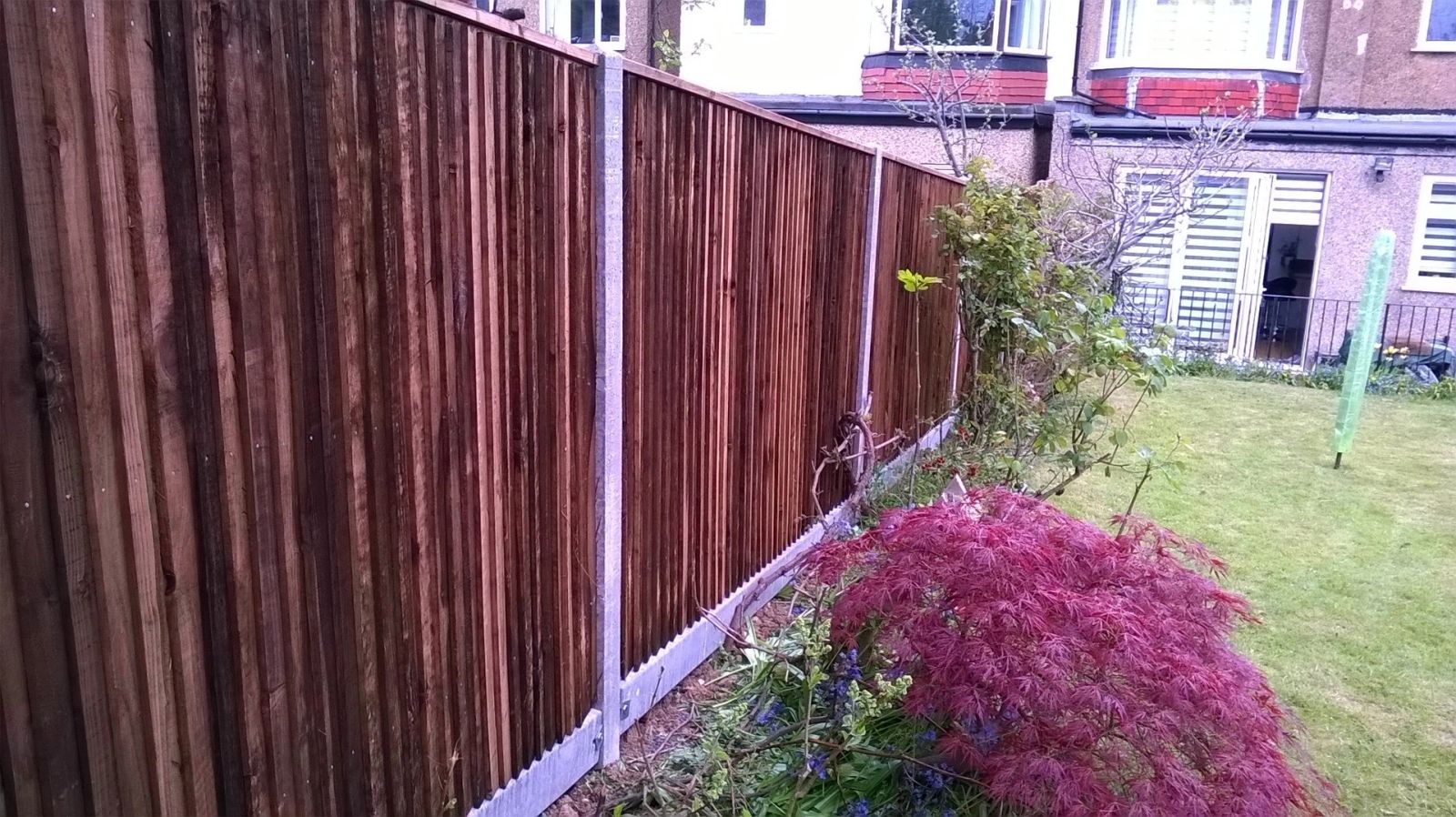
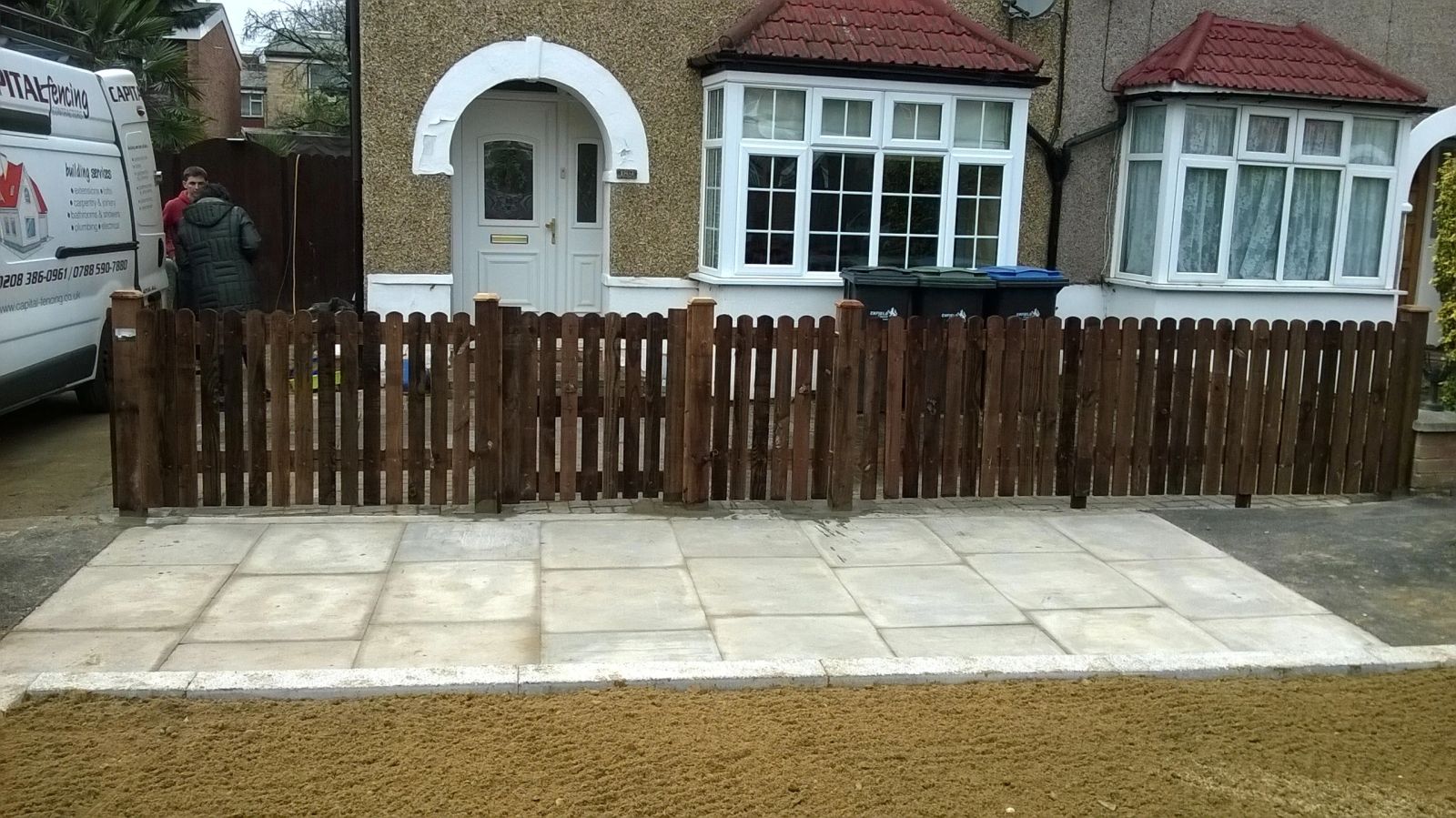
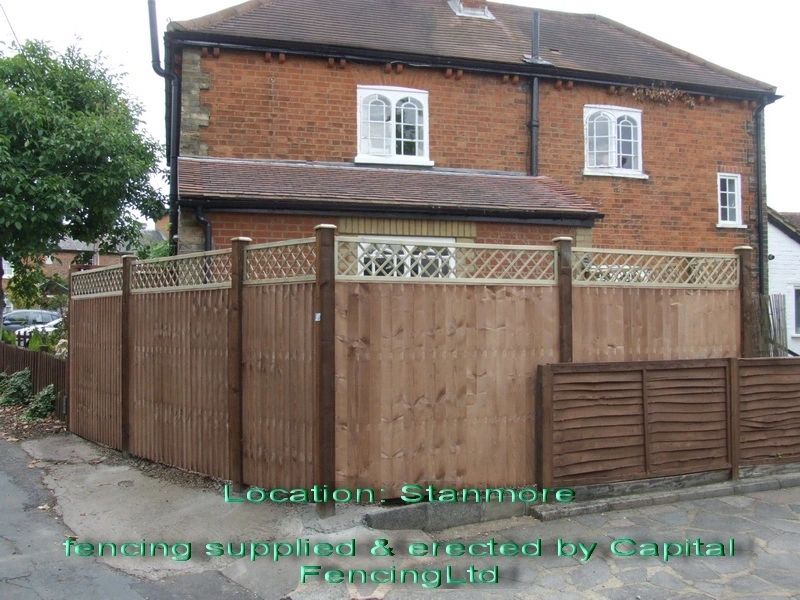
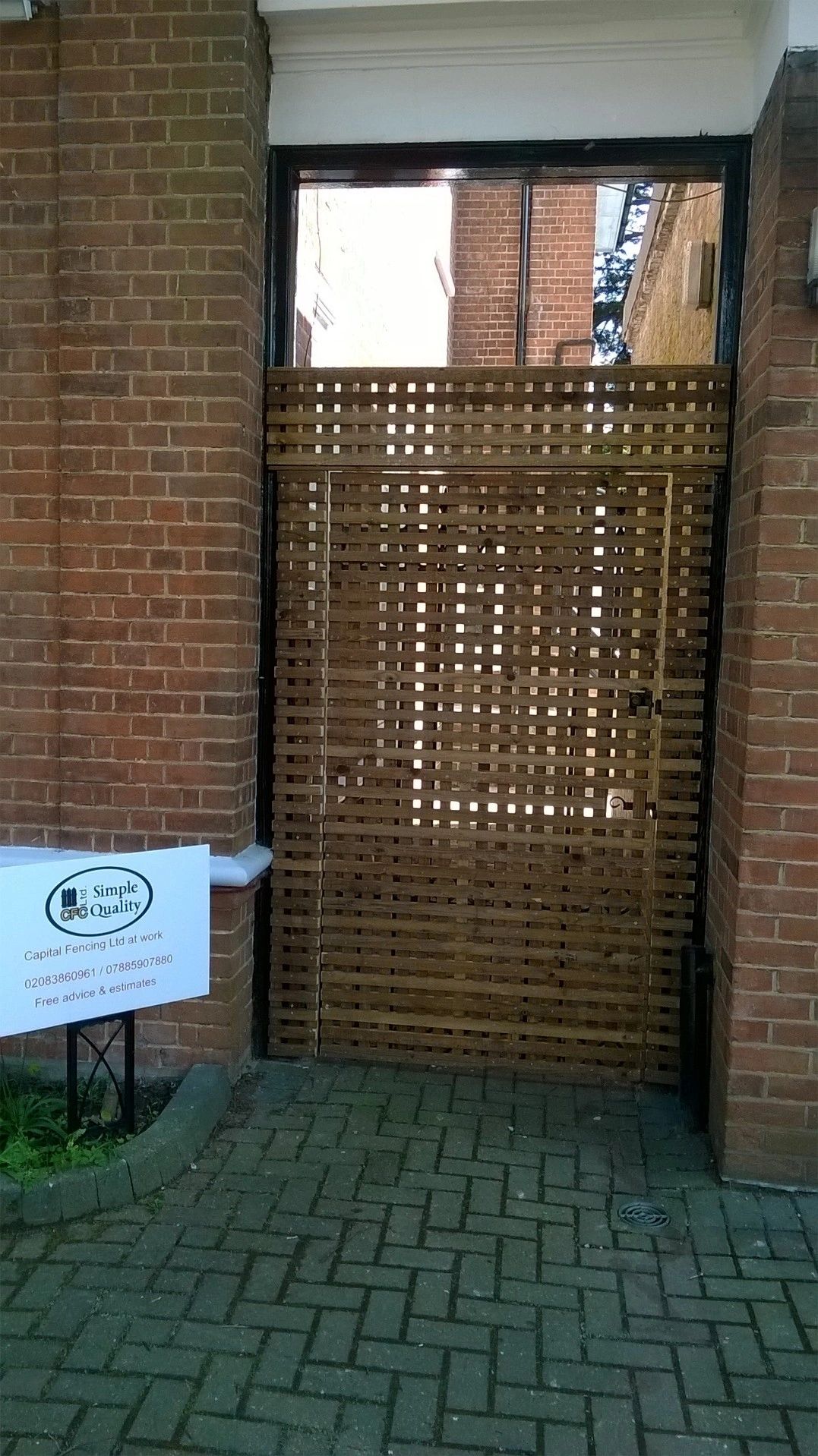
closeboard fence run installed by Capital Fencing in Letchworth Garden City (SG6)panel fence install installed by Capital Fencing in Letchworth Garden City (SG6)trellis-topped fence installed by Capital Fencing in Letchworth Garden City (SG6)bespoke decorative fence installed by Capital Fencing in Letchworth Garden City (SG6)

How we approach dog-proof fencing on Letchworth Garden City properties

Removing an old boundary before the new one goes in

Old fencing, damaged palisade or rusted mesh is cleared and taken off site as part of the job rather than left for the client to deal with, and any concrete post stumps are broken out where the new line needs a fresh, sound base rather than being built around old debris.

Where a section is genuinely sound we'll say so and reuse it rather than clearing it needlessly.

Trees, roots and protected planting near a secure line

Mature trees on or near a boundary change post positions more than most clients expect — a protected tree's root protection area can rule out a straight post line altogether, and we offset posts around roots rather than cutting through them.

Where a tree is covered by a preservation order, work near it is checked against that restriction before any post hole is dug.

Pedestrian gate self-closing devices

A hydraulic or spring-loaded self-closing hinge brings a pedestrian gate back to a closed and latched position automatically, which is useful where a gate needs to stay shut for security or to keep a garden secure for children or pets.

These devices need occasional tension adjustment as they wear, and a gate that no longer closes fully is often a closer needing adjustment rather than a hinge fault.

Post-repair maintenance intervals

A repaired section benefits from a check at roughly the same interval as the rest of the fence — typically an annual look at fixings, timber condition and any leaning — rather than being assumed sound indefinitely once fixed.

Newly fitted timber and concrete are also worth a closer check after their first full winter, since that's when a repair that wasn't quite right tends to show it.

Mixed hedge-and-fence boundaries and shared responsibility

Many boundaries in practice aren't purely fence or purely hedge but a fence backed by an established hedge on one or both sides, which complicates simple assumptions about who maintains what.

Deeds rarely specify hedge maintenance in the same way they specify fence ownership, so in practice it tends to be agreed informally between neighbours, which is worth clarifying in writing before installing a new fence against an existing hedge.

A fence installed too close to an existing hedge on the boundary line can also restrict future access for cutting that hedge from one side, which is worth flagging before positioning posts.

Why corner posts fail more often and need stronger repair specification

A corner post carries the combined load of two fence runs meeting at an angle rather than a single run passing through, so it's under more sustained stress than an intermediate post and often fails first on an ageing boundary.

Repairing a corner post is worth specifying to a slightly higher standard than a mid-run post — larger section, deeper footing, sometimes additional bracing — given the extra load it carries permanently rather than only occasionally.

Timber fence panel frame construction

A standard lap or overlap fence panel is built around a timber frame, typically with a mortice-and-tenon or simple butt-jointed corner, into which the individual overlapping boards are stapled or nailed.

The frame's own timber section size and joint quality do more to determine a panel's racking resistance in wind than the thin overlap boards themselves, since the boards carry little structural load on their own.

A panel with a lightweight, thin frame section will flex and rack under wind load even if the boards look identical to a panel built on a heavier frame, which is one reason nominally similar panels vary noticeably in longevity.

Lifetime comparison of hedging and fencing as a boundary

A well-established hedge can outlast several generations of timber fencing with no post replacement or re-treatment cycle, but it needs regular cutting to stay within bounds and takes several years to reach an effective screening height from new planting.

A fence gives an immediate, defined boundary and predictable height but carries an ongoing maintenance and eventual replacement cost that a mature hedge doesn't.

Many gardens end up with a mixed solution — a fence for the immediate boundary definition with hedging planted alongside it to soften the appearance and eventually take over some of the screening role.

Outbuildings casting permanent shade onto a fence run

A shed, greenhouse or garage built close to a boundary casts a fixed shadow over part of the adjoining fence run for some or all of the day, creating the same slower-drying conditions as a north-facing aspect regardless of the fence's actual orientation.

This localised shading is easy to overlook when assessing a whole boundary's exposure, since the rest of the run a few metres away may be in full sun.

It's worth treating the shaded section as its own microclimate for treatment and inspection purposes rather than assuming uniform conditions along the full length.

Thumb latch lever and bar wear

A thumb latch lifts an internal bar via a lever operated from one or both faces of the gate, and wear typically shows up as play at the pivot pin or a lever that no longer lifts the bar high enough to clear the keep.

Because the mechanism is simple, most thumb latch faults can be corrected by re-fixing the pivot or reshaping the bar's resting angle rather than replacing the whole latch.

Board thickness and deflection

A thin board fixed across a wide unsupported span will visibly bow or deflect under its own weight or a light push long before it's anywhere near breaking, because deflection increases sharply as thickness decreases.

Doubling a board's thickness roughly increases its stiffness eightfold for the same span, which is why panel manufacturers specify a maximum bay width for a given board thickness rather than treating thickness as purely a durability choice.

On wider bays it's usually cheaper overall to add an intermediate rail or reduce the bay width than to over-specify board thickness across the whole run to compensate.

Signage and lawful notices on a security boundary

Signage warning of CCTV, guard dogs or electric fencing has to be truthful and visible from the approach it's warning about — a sign for a feature that doesn't exist, or one hidden from view, offers no legal protection and can mislead.

Where a boundary carries a genuine hazard such as an electrified topping, specific warning signage at defined intervals is generally a legal requirement, not an optional extra.

Feather-edge board overlap

Feather-edge boards are sawn to a tapered profile, thick along one edge and thin along the other, and are hung vertically with each board overlapping the thin edge of its neighbour by a consistent margin, typically 15-20mm.

Getting that overlap consistent matters more than it looks, since too little overlap opens sightlines and lets wind-driven rain through as the boards shrink, while too much wastes timber and adds unnecessary weight to the rails.

Because the boards taper, the overlap measurement is usually taken at the board's face rather than assumed from its nominal width, and a badly calibrated first board throws off the spacing for the rest of the run.

Welded joint failure on metal gates

A cracked or failed weld at a metal gate's frame corner is usually a fatigue failure from repeated flexing rather than a one-off impact, particularly on a gate that's been slightly out of square for some time before the weld gave way.

Re-welding without first correcting the underlying rack or misalignment tends to fail again at the same point.

Concrete, timber and steel posts compared

Concrete posts don't rot, warp or need re-treating, which makes them the default for a long-life boundary, but they're heavier to handle, harder to cut on site, and can crack if struck hard rather than bending.

Timber posts are lighter, easier to notch and fix ironmongery to, and match a fully timber run visually, but they're the first component to fail through rot even when the boards above them are sound.

Steel posts (box section or RSJ) suit gates, very exposed runs or where a slim sightline matters, and they're galvanised or powder-coated rather than treated, but they need a compatible fixing method for timber infill panels rather than simple nailing.

Sports clubs

Sports club boundaries need to withstand impact from balls and players far more than an ornamental garden fence, which usually means heavier-gauge mesh or rebound-rated panel rather than standard closeboard along pitch-facing runs.

Ball-stop netting on posts set back from the fence line is a common addition where a pitch runs close to a public path or road, and post spacing for that netting is tighter than for a standard fence line.

Clubhouse car parks and pitch perimeters are also often used for match-day parking, so access for fencing work needs scheduling around the fixture calendar rather than assumed to be free every weekend.

Seasonal timing for fence repairs

Repairs undertaken in late autumn or winter often coincide with wetter ground and slower-curing concrete, which can extend how long a post takes to reach full strength before it should be loaded.

Where a repair isn't urgent, timing it for a drier period gives both the timber treatment and any concrete footing a better chance to cure properly before winter weather returns.

Keeping post positions clear of drainage gulleys and channels

A surface drainage channel or gulley running near the boundary needs to stay clear and functioning, so a post landing directly over or immediately beside one can block flow or make future clearing of the channel awkward.

Where the fence line has to cross a channel, spanning it with a slightly wider gap under the gravel board, rather than boxing the channel in completely, keeps it accessible for clearing leaves and debris.

It's worth running water through the channel before finishing the job, where practical, to confirm the new fence hasn't inadvertently altered how it drains.

Cill board water-shedding function

A cill or capping rail fitted along the top of a panel fence sheds rainwater clear of the panel's top edge, in the same way a window cill sheds water clear of a wall, reducing the time the top edge of boards stays saturated.

Without a cill, the end grain along the top of vertical boards absorbs water directly and repeatedly, which is a common cause of premature rot starting specifically at the top of a panel rather than the base.

A cill with a slight forward overhang and a drip groove on its underside sheds water further clear of the face below it than a flush-fitted cill, reducing streak staining on the boards beneath.

Timber decking board profiles

Grooved decking boards have a reeded or ribbed surface intended to improve underfoot grip, particularly when wet, compared with a smooth-planed board of the same species and treatment.

The grooves can also trap moisture, algae and debris more readily than a smooth board, meaning a grooved deck often needs more regular cleaning to keep the grip benefit from being offset by a slippery algal film.

Reversible boards with a smooth face on one side and grooved on the other let the fitted orientation be chosen, or later reversed once the first face weathers, extending the usable life of the same boards.

Consent needed near a formal flood defence

Land adjoining a designated main river or formal flood defence structure can require Environment Agency consent for works within a specified distance, which can include fence post foundations in some cases.

This is separate from general flood risk zone planning considerations and relates specifically to protecting the integrity of flood defence infrastructure.

Where a boundary sits close to a river, culvert or known flood defence structure, checking with the Environment Agency before groundworks begin is a reasonable precaution.

Spirit level versus laser level for checking a run

A spirit level checks a single post is plumb and a single panel is level, but confirming that an entire run stays level or follows a consistent fall over 20 or 30 metres is far quicker and more reliable with a rotating laser level set at a fixed height.

On a stepped run, a laser also makes it straightforward to confirm each step drops by the same consistent amount rather than checking each post in isolation and hoping the cumulative effect looks even.

A basic spirit level remains the more practical tool for quick checks during a single post's installation, since setting up a laser for every individual post would slow the job without adding useful accuracy at that scale.

Whether the brief is closeboard set into a shallow concrete kicker so a small breed can't dig underneath or 1.8m solid boundary with anti-climb top so a larger breed can't jump or scramble, we quote it from a site visit, not a photo. Letchworth Garden City is inside our core working patch and most jobs are booked in inside a fortnight. Roads such as Icknield Way and Nevells Road are typical of the local layout. The Wynd shops is a useful local reference point. Icknield Way follows the route of the ancient Icknield Way trackway, and chalk geology sits close to the surface along much of its length.

Get In Touch

Get My Free Quote — 24h Response

No callout fee · Free site visit · Friendly local team covering London & Hertfordshire.

Call us
07885907880
or 02036484746
Email
capital_fencing@yahoo.com
WhatsApp
Message us anytime
Area
London & Hertfordshire
Payment
Card payments accepted

Pay by debit or credit card, bank transfer or cash once the work and price are agreed. No deposit taken online.

Request a Free Quote

We'll get back to you within 24 hours.

Free Site Visit No Callout Fee
Call WhatsAppQuote