London & Hertfordshire Free Site Visit
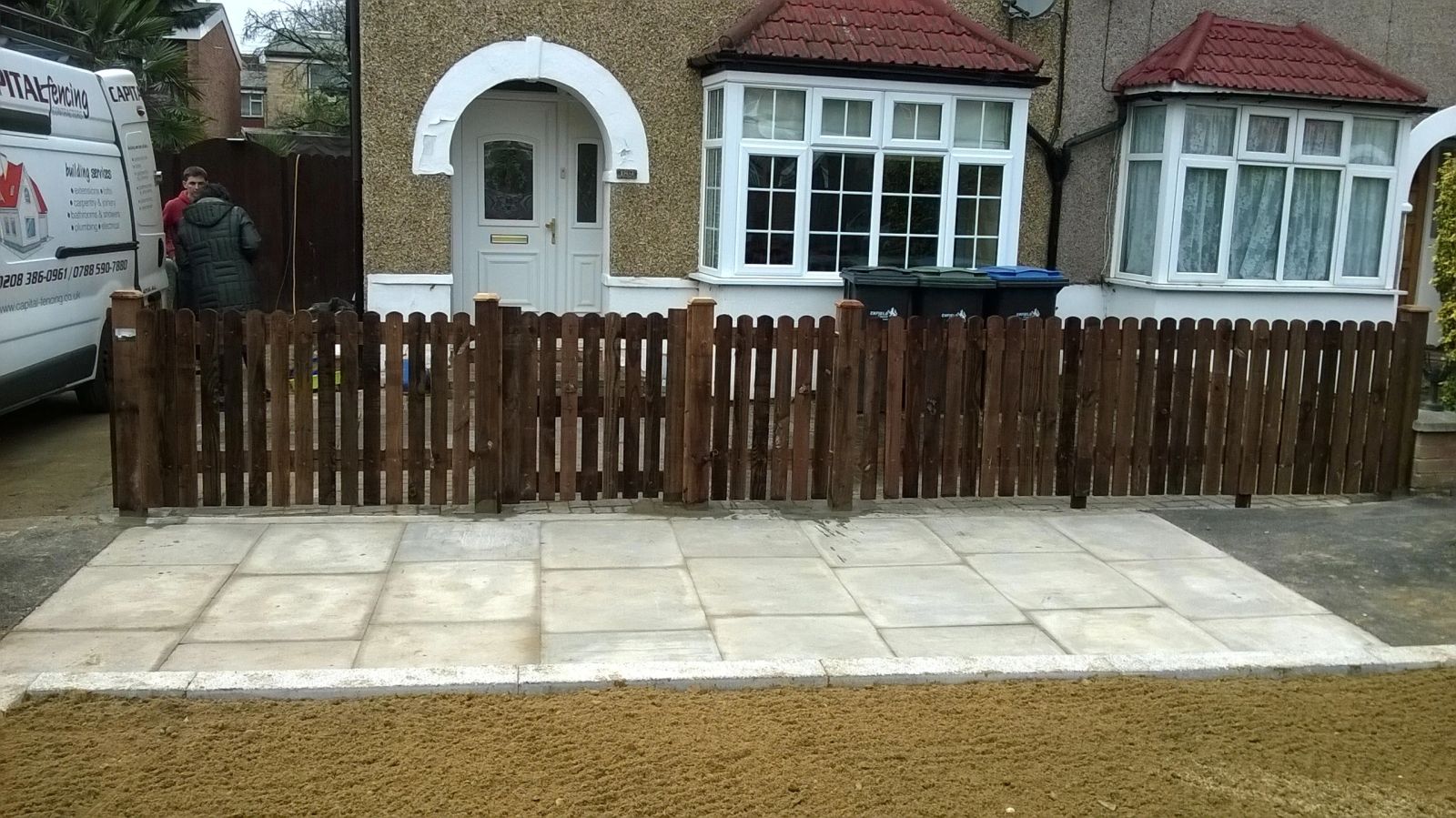
closeboard fence run installed by Capital Fencing in Letchworth Garden City (SG6)
Letchworth Garden City · SG6

Landlord Fencing in Letchworth Garden City — Built for tenancy turnaround windows and inventory sign-off

Landlord-grade fencing in Letchworth Garden City is one of our regular briefs — buy-to-let owners and letting agents needing durable boundaries between tenancies. On the world's first garden city — arts and crafts cottages with generous, the failure mode we see most often is the one we design out first. Roads such as Norton Way South and Sollershott West are typical of the local layout. The Wynd shops is a useful local reference point. Icknield Way follows the route of the ancient Icknield Way trackway, and chalk geology sits close to the surface along much of its length.

Landlord-grade fencing in Letchworth Garden City is one of our regular briefs — buy-to-let owners and letting agents needing durable boundaries between tenancies. On the world's first garden city — arts and crafts cottages with generous, the failure mode we see most often is the one we design out first. Roads such as Norton Way South and Sollershott West are typical of the local layout. The Wynd shops is a useful local reference point. Icknield Way follows the route of the ancient Icknield Way trackway, and chalk geology sits close to the surface along much of its length.

Default spec

How we build landlord-grade fencing in Letchworth Garden City

6ft closeboard on concrete posts with gravel boards, mid-rail capped, softwood side gate with padlock hasp. On Letchworth Garden City jobs we adjust for letchworth heritage foundation design rules dictate fence styles, heights and finishes on most streets.

Property mix locally: the world's first garden city — Arts and Crafts cottages, planned terraces and consistent street trees. Typical gardens: generous, leafy plots — many gardens contain protected trees with TPOs. Postcodes we regularly service: SG6.

we bill via one purchase order across a portfolio, provide before/after photos for the inventory clerk, and can be on and off site inside a tenancy void.

Why this spec, for buy-to-let owners and letting agents

  • individual boards or single panels can be swapped without touching the whole run
  • concrete posts and gravel boards keep the ground contact off the timber — that's where landlord fences usually fail
  • one crew, one price sheet across multiple properties — inventory-friendly for portfolio owners

Where landlord-grade fencing isn't the right answer

  • listed buildings and conservation frontages where painted picket or estate railings are the only compliant option
  • commercial forecourts needing bar-and-rail or palisade rather than domestic-grade timber

Typical landlord-grade fencing briefs in Letchworth Garden City

  • cheapest defensible spec that will still stand up to the next storm and inventory
  • matched fencing across three or four adjacent rental plots owned by one landlord

Landlord Fencing FAQs — Letchworth Garden City

What's the cheapest defensible spec you'd stand behind for a rental?

On landlord-grade fencing jobs in Letchworth Garden City (SG6), our default answer is: 6ft closeboard on concrete posts with gravel boards, mid-rail capped, softwood side gate with padlock hasp. The honest trade-off is cheapest lap panels racking in wind because posts were shallow — we always concrete to 600mm minimum on landlord work — which is exactly what our default spec designs out.

Do you invoice per property or per portfolio?

Across Letchworth Garden City we spec around letchworth heritage foundation design rules dictate fence styles, heights and finishes on most streets, so on landlord-grade fencing that usually means pressure-treated closeboard on concrete posts. We bill via one purchase order across a portfolio, provide before/after photos for the inventory clerk, and can be on and off site inside a tenancy void.

Who owns the fence — landlord or neighbour — and does it matter to the quote?

North Hertfordshire District coverage means we can survey most SG6 addresses inside a week — buy-to-let owners and letting agents needing durable boundaries between tenancies. We bill via one purchase order across a portfolio, provide before/after photos for the inventory clerk, and can be on and off site inside a tenancy void.

Do you handle the removal and skip for the old fence?

Practically: boundary run replaced between two tenancies inside a single working week. That's the Letchworth Garden City version of this job, not a generic one. For context: concrete posts and gravel boards keep the ground contact off the timber — that's where landlord fences usually fail. One crew, one price sheet, before-and-after photos as standard.

Can you turn a rental boundary around between tenancies?

On landlord-grade fencing jobs in Letchworth Garden City (SG6), our default answer is: 6ft closeboard on concrete posts with gravel boards, mid-rail capped, softwood side gate with padlock hasp. The honest trade-off is cheapest lap panels racking in wind because posts were shallow — we always concrete to 600mm minimum on landlord work — which is exactly what our default spec designs out.

Recent landlord fencing work
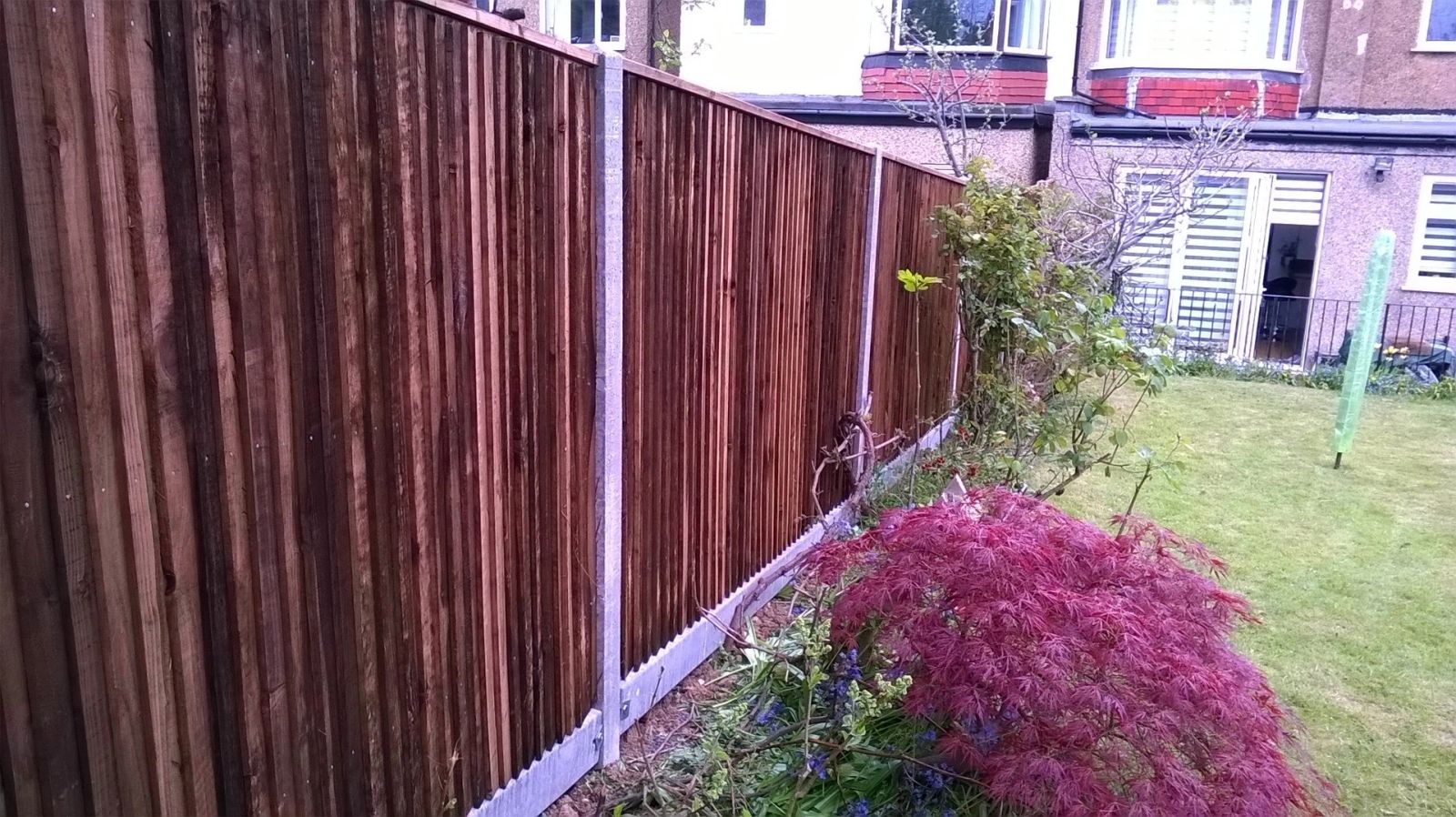
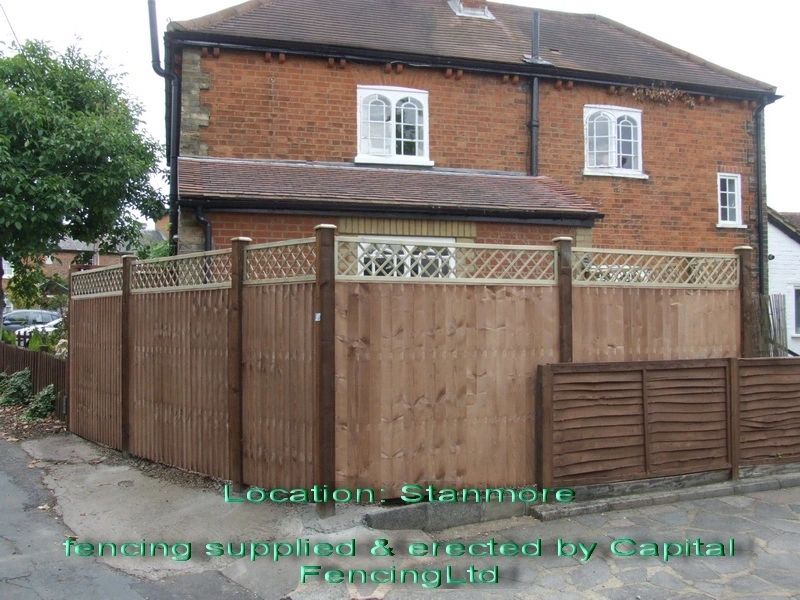
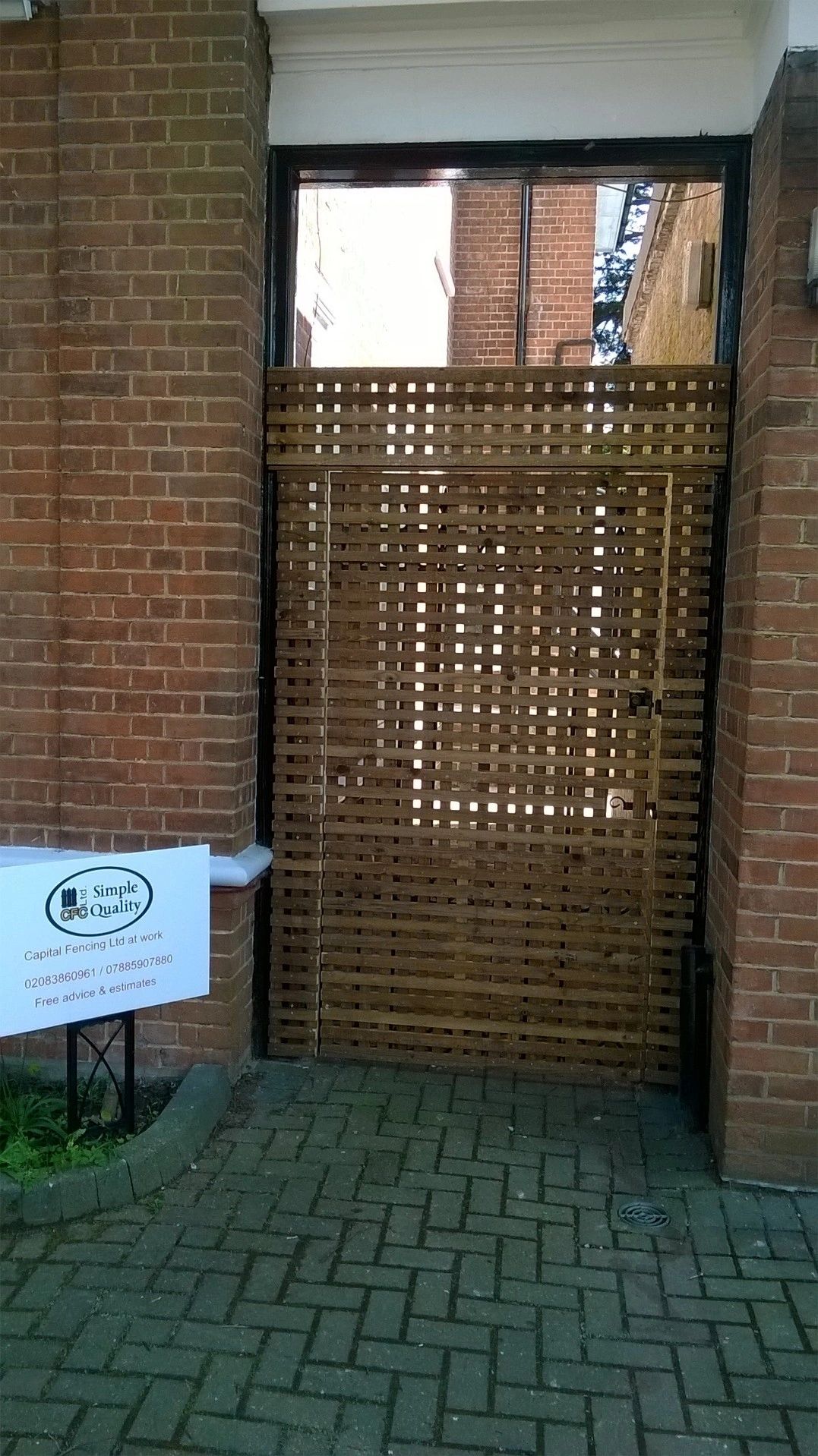
closeboard fence run installed by Capital Fencing in Letchworth Garden City (SG6)panel fence install installed by Capital Fencing in Letchworth Garden City (SG6)trellis-topped fence installed by Capital Fencing in Letchworth Garden City (SG6)bespoke decorative fence installed by Capital Fencing in Letchworth Garden City (SG6)

Before you book landlord fencing in Letchworth Garden City

Who's responsible for a shared gate

A gate on a shared access lane or a party boundary can raise the same ownership questions as a fence, and it's worth confirming responsibility with a neighbour before paying for a repair or replacement on a gate that isn't solely on your own property.

This comes up often on older estates with shared rear access lanes serving several gardens.

Pale spacing tolerance on a palisade run

Palisade pale gaps are set to a maximum spacing so a foot or hand can't find purchase between adjacent pales, and drift beyond that tolerance over a long run is usually a sign the pales were fixed by eye rather than gauged off a jig.

A gauge batten cut to the exact centre spacing keeps every bay consistent, which matters more on security runs than on a purely decorative fence because a single wider gap becomes the obvious point of attack.

Coordinating fence height with CCTV sightlines

A taller or more solid fence installed after cameras are in place can blind a sightline that used to cover the boundary, so camera angles should be checked before a height increase is finalised, not after.

Where both are being fitted together, camera mounting height and field of view are agreed against the fence design so the two work together rather than one undoing the other.

Consent needed near a formal flood defence

Land adjoining a designated main river or formal flood defence structure can require Environment Agency consent for works within a specified distance, which can include fence post foundations in some cases.

This is separate from general flood risk zone planning considerations and relates specifically to protecting the integrity of flood defence infrastructure.

Where a boundary sits close to a river, culvert or known flood defence structure, checking with the Environment Agency before groundworks begin is a reasonable precaution.

Powder coating and galvanising

Galvanising bonds a zinc coating to steel, usually by hot-dip, giving corrosion protection that works even if the surface is scratched because the surrounding zinc sacrifices itself to protect the exposed steel.

Powder coating is a decorative and additional protective layer baked onto the metal, giving a wide choice of colour and a harder finish than paint, but on its own over bare steel it doesn't offer the same self-healing protection as galvanising.

The durable combination for steel gates and railings is galvanising first, powder coating over the top, rather than powder coating alone, which is worth checking on a quote where both are mentioned separately.

Keeping post positions clear of drainage gulleys and channels

A surface drainage channel or gulley running near the boundary needs to stay clear and functioning, so a post landing directly over or immediately beside one can block flow or make future clearing of the channel awkward.

Where the fence line has to cross a channel, spanning it with a slightly wider gap under the gravel board, rather than boxing the channel in completely, keeps it accessible for clearing leaves and debris.

It's worth running water through the channel before finishing the job, where practical, to confirm the new fence hasn't inadvertently altered how it drains.

Seasonal timing for fence repairs

Repairs undertaken in late autumn or winter often coincide with wetter ground and slower-curing concrete, which can extend how long a post takes to reach full strength before it should be loaded.

Where a repair isn't urgent, timing it for a drier period gives both the timber treatment and any concrete footing a better chance to cure properly before winter weather returns.

Badger and wildlife legal considerations

Badgers and their setts are protected under wildlife legislation, so a repair near an active sett or badger path needs the presence of the animal considered before any digging or fixing work near that spot.

Where wildlife activity is suspected near a repair site, we recommend checking for protected status before altering ground close to the affected boundary.

Why replacement panels sometimes need different post spacing to the originals

Panel sizing has changed slightly over past decades, and a fence originally built to an older standard width may not have a modern replacement panel that fits the existing post spacing exactly.

This becomes relevant on a partial repair where only some panels are being replaced and the remaining posts are staying in place, since a small mismatch can mean trimming a new panel down or accepting a slightly wider or narrower final bay.

It's worth measuring the actual existing post-to-post distance rather than assuming a 'standard' width will match, particularly on an older fence being partially rather than fully replaced.

Dry-mix versus wet-mix concrete for post bases

A dry mix — post-fixing concrete poured dry into the hole around a braced post and left to draw moisture from the surrounding ground — sets over a day or two and suits smaller domestic posts in reasonably moist soil.

A wet mix, gauged and mixed with water before placing, gives more control over strength and is generally preferred for larger posts, gate posts under lateral load, or very dry, free-draining ground where a dry mix may not draw enough moisture to cure properly.

Wet mix also allows proper tamping to remove air pockets around the post, which a dry mix poured in stages can't achieve to the same degree.

Raised beds built directly against a fence

A raised planting bed built with its back edge against a fence line keeps damp soil and mulch in permanent contact with the lowest boards or gravel board, which accelerates rot at exactly the point most vulnerable to moisture.

Lining the inside face of the bed against the fence with a damp-proof membrane, rather than backfilling soil directly onto the timber, reduces this contact without changing the visible design.

This detail is easy to miss at the planning stage since the bed and the fence are often specified and built by different trades without either flagging the interaction.

Diagnosing squeaks and creaks in gate hardware

A squeak or creak from a gate is almost always dry friction at a hinge pin, pivot or roller rather than a structural fault, and it's worth locating the exact source by working the gate slowly through its swing rather than assuming which hinge is responsible.

Cleaning out old, dirt-laden grease before applying fresh lubricant gives a longer-lasting fix than simply oiling over grit that's already worked into the bearing surface.

Fence junctions above a retaining wall

A fence sitting on top of a retaining wall adds lateral load the wall wasn't necessarily designed for, particularly on a taller solid-faced security screen catching wind, so the wall's condition and the fence's fixing method both need checking before installation rather than assumed to be compatible.

Where the wall can't safely take a bolted post, a freestanding post line set back slightly from the wall edge, tied back if needed, keeps the fence load off the retaining structure entirely.

Nursery outdoor play area boundary detailing

An outdoor play boundary at a nursery needs a barrier young children genuinely can't climb or squeeze through, which usually rules out wide-aperture mesh and low horizontal rails in favour of vertical bar infill or tight-weave mesh with no climbable rung.

Gate latches are set at adult height and out of a small child's reach, and self-closing hardware is specified with enough force to shut the gate reliably without slamming hard enough to catch fingers.

Repairing a damaged section of welded mesh panel

A localised dent or cut in a weld mesh panel can sometimes be patched by welding in a replacement section rather than replacing the whole panel, provided the damage doesn't extend to the panel's frame or fixing points.

Where damage is at a corner or fixing point rather than mid-panel, a full panel swap is usually more reliable than a patch repair, since a repaired fixing point is a more likely future failure than a repaired mesh field.

Re-plumbing posts after ground movement

Seasonal clay movement can tilt a post a few degrees without breaking the footing outright, and re-plumbing involves breaking out enough of the old concrete to reset the post vertical rather than packing the gap and leaving the tilt.

Where movement is ongoing rather than a one-off event, re-plumbing without addressing drainage or ground preparation risks the same tilt recurring within a season or two.

Restaurants and pub gardens

Boundary fencing around a pub garden or restaurant terrace often does double duty as noise and light screening for neighbouring residential properties, and its height and permeability can be a condition attached to the premises licence rather than a free choice.

Trading hours mean access for fencing work is usually easiest early morning before service starts, since a garden in active use for covers can't have posts being dug mid-lunch.

Where outdoor seating sits close to the boundary, fixings and post positions need checking against any licensed seating plan so the finished fence doesn't reduce covers below what the licence allows.

Fence panels built around a recessed bin store

A bin store built into or against a fence line needs its own ventilation gaps, since enclosed bin storage without airflow concentrates moisture and odour against the adjoining fence panels far more than open storage would.

The panel section forming the back or side of a bin store also takes more direct contact wear — bins being wheeled in and out, lids catching the timber — than the rest of the run, so a slightly more robust board or a protective kick panel at the contact height extends its life.

These wear patterns are worth designing for at the outset rather than treating the bin store section as identical to the rest of the boundary run.

Planning enforcement notices on unauthorised boundaries

Councils have enforcement powers to require unauthorised boundary structures to be altered or removed, usually triggered by a neighbour's complaint or a routine site visit for unrelated work.

There are time limits on enforcement action for most breaches, though these vary by the type of breach and don't apply to work within a conservation area or affecting a listed building in the same way.

Responding promptly and cooperatively to any enforcement contact from a council generally leads to a better outcome than ignoring it.

Concrete spurs as a lifetime-extension repair

Where a timber post has rotted at ground level but the panels and the rest of the run remain sound, bolting a concrete spur alongside the rotten section rather than replacing the whole post is a common and effective partial repair.

The spur takes over the structural role at ground level while the timber above the rot line, which is usually still sound, continues to carry the panel fixings.

This repair only works while enough sound timber remains above the rotten section to bolt through; once rot has progressed too far up the post, spurring no longer gives a reliable fix and full post replacement is the honest answer.

Hitting shallow services and CAT scanning

Electricity, gas and water connections into a house are often shallower than people expect, sometimes under 300mm in an older garden, well within reach of a hand auger let alone a mechanical one.

A cable avoidance tool (CAT scan) before digging a new post line is standard practice near any suspected service run, and is far cheaper than the cost and risk of striking a live cable or a gas pipe.

Where a scan can't rule out a service with confidence, hand-digging trial holes to confirm depth and position before committing to auger the rest of the line is the safer approach.

Fencing above a basement lightwell or retaining structure

Where a boundary fence sits directly above a basement lightwell, sunken patio, or retaining wall with a significant drop on one side, the fence effectively doubles as a safety barrier and needs a height and gap specification suited to that fall risk rather than a standard garden boundary spec.

Post fixings in this situation often need to tie into the retaining structure itself rather than a simple ground-set post, which is a different engineering detail to a standard concrete-in post.

This is worth identifying clearly at survey stage, since treating it as a routine fence replacement without accounting for the drop below is a genuine safety oversight.

On landlord-grade fencing in Letchworth Garden City you get the same crew from first site visit to hand-over. That's the whole model — small team, portfolio-friendly spec, written quote before we start. Roads such as Wilbury Road and Broadway are typical of the local layout. Standalone Farm is a useful local reference point. Letchworth Garden City was the first garden city, and its layout and architecture are protected through covenants overseen by the Letchworth Garden City Heritage Foundation.

Get In Touch

Get My Free Quote — 24h Response

No callout fee · Free site visit · Friendly local team covering London & Hertfordshire.

Call us
07885907880
or 02036484746
Email
capital_fencing@yahoo.com
WhatsApp
Message us anytime
Area
London & Hertfordshire
Payment
Card payments accepted

Pay by debit or credit card, bank transfer or cash once the work and price are agreed. No deposit taken online.

Request a Free Quote

We'll get back to you within 24 hours.

Free Site Visit No Callout Fee
Call WhatsAppQuote