London & Hertfordshire Free Site Visit
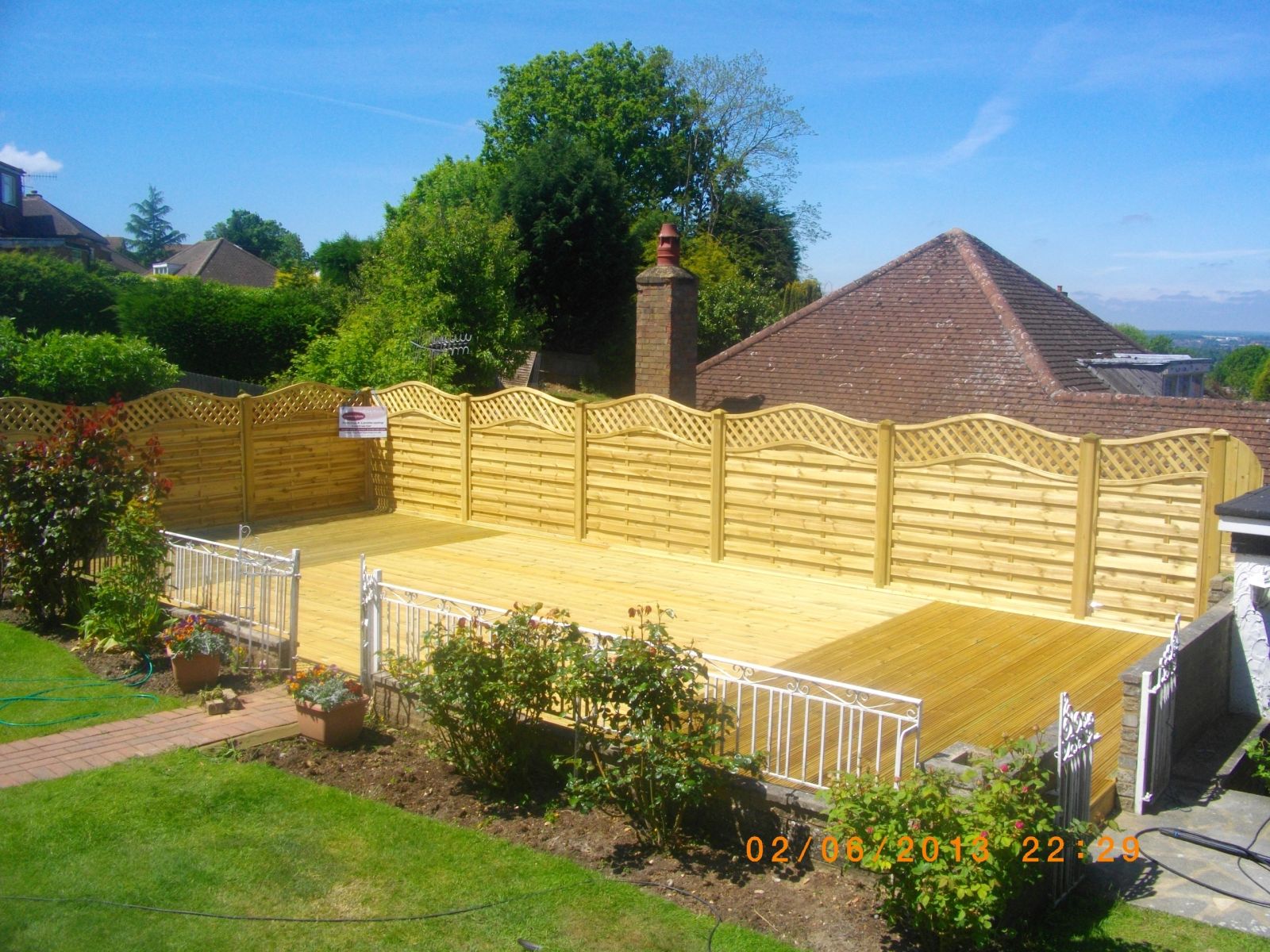
softwood garden decking installed by Capital Fencing in Letchworth Garden City (SG6)
Letchworth Garden City · North Hertfordshire District

Letchworth Garden City Decking Installers — Covering SG6

We install garden decking for homeowners across Letchworth Garden City, with regular work near Pixmore Industrial Estate. The right materials matter — softwood, yellow balau hardwood, Q-Deck composite all have their place depending on garden depth, ground levels and how exposed the boundary is. Icknield Way, Pixmore Way The Wynd shops Icknield Way follows the route of the ancient Icknield Way trackway, and chalk geology sits close to the surface along much of its length.

Also covering:HitchinStevenage

We install garden decking for homeowners across Letchworth Garden City, with regular work near Pixmore Industrial Estate. The right materials matter — softwood, yellow balau hardwood, Q-Deck composite all have their place depending on garden depth, ground levels and how exposed the boundary is. Icknield Way, Pixmore Way The Wynd shops Icknield Way follows the route of the ancient Icknield Way trackway, and chalk geology sits close to the surface along much of its length.

Letchworth Garden City decks — specced around letchworth heritage foundation design rules dictate fence styles

Free site visit, written quote, and a crew that installs what it quotes. Talk to us before you commit elsewhere. Wilbury Road, Norton Way South The Wynd shops Icknield Way follows the route of the ancient Icknield Way trackway, and chalk geology sits close to the surface along much of its length.

Typical Letchworth Garden City properties we work on

the world's first garden city — Arts and Crafts cottages, planned terraces and consistent street trees. The gardens behind them are generous, leafy plots — many gardens contain protected trees with TPOs.

That shapes the decking brief — every quote we write here factors in letchworth heritage foundation design rules dictate fence styles, heights and finishes on most streets.

On-the-ground in Letchworth Garden City

Local context for Letchworth Garden City

Letchworth Garden City was the first garden city, and its layout and architecture are protected through covenants overseen by the Letchworth Garden City Heritage Foundation. Sollershott West and Nevells Road form part of the original 1903 masterplan and are subject to the Foundation's design guidance. Hillshott's Arts and Crafts terraces date from the town's earliest development phase. Icknield Way follows the route of the ancient Icknield Way trackway, and chalk geology sits close to the surface along much of its length.

Streets in the area

  • Broadway
  • Norton Way South
  • Wilbury Road
  • Pixmore Way
  • Icknield Way
  • Sollershott West
  • Nevells Road
  • Hillshott

Local landmarks

  • Letchworth Garden City station
  • Howard Park
  • Standalone Farm
  • Broadway Cinema
  • The Wynd shops
Typical property

the world's first garden city — Arts and Crafts cottages, planned terraces and consistent street trees

Typical garden

generous, leafy plots — many gardens contain protected trees with TPOs

How we work in Letchworth Garden City

  1. 01
    Call or message
    Phone, WhatsApp or the form — quickest way to start a Letchworth Garden City job.
  2. 02
    Free site visit
    We measure up, talk through decking options, and note letchworth heritage foundation design rules dictate fence styles.
  3. 03
    Itemised quote
    Within 48 hours — materials, labour, removal, finish.
  4. 04
    Booked & built
    Usually within 1–2 weeks. Our own crew, no subcontracting.
  5. 05
    Walk-round & aftercare
    On-site walk-round at completion plus aftercare for Letchworth Garden City customers.

How we approach garden decking on Letchworth Garden City properties

Matching materials for a repair within a conservation area

A conservation area doesn't automatically restrict fence repairs, but where a specific material or style was originally required as a planning condition, a repair should match that condition rather than defaulting to a cheaper or more convenient modern alternative.

Checking any existing planning history for the property before sourcing repair materials avoids fitting something compliant with general fencing rules but not with a condition specific to that site.

Realistic panel replacement frequency on an exposed plot

A standard timber panel on a sheltered suburban plot might reasonably be expected to last a decade or more before replacement; the same panel on a genuinely exposed, wind-loaded boundary can fail in structural terms — cracked rails, a bowed or blown-out panel — well inside that timeframe regardless of treatment quality.

Setting client expectations around this at quote stage, rather than after an early failure, avoids the impression that a product or installation was faulty when the real cause is unmanaged exposure.

Where budget allows, specifying for the exposure from the outset is cheaper over the fence's life than replacing a standard panel repeatedly on the same exposed run.

Reflection off hard surrounding surfaces

A hard paved surface, a rendered wall or a glazed extension near a barrier can reflect sound back into a space the barrier was meant to protect, effectively creating a second path for noise that bypasses the barrier's benefit.

This is worth considering where a courtyard or patio has multiple hard, reflective surfaces close together, since the barrier alone may not achieve as much reduction as it would in a garden with more absorptive surfaces like planting or lawn.

Welded versus woven mesh

Welded mesh is formed from wires fused at each intersection, giving a rigid grid that holds its shape well and resists distortion under point loads such as someone leaning or climbing on it.

Woven mesh, including chain link, has wires interlaced rather than fused, which lets the whole panel flex and absorb impact rather than transferring load to a single joint, but it can also sag or distort more visibly over time.

Welded mesh is generally preferred where a crisp, rigid appearance matters, while woven mesh is favoured for larger open areas like sports enclosures where some give under impact is actually beneficial.

Questions to ask any fencing contractor

Worth asking directly: who owns the boundary being worked on, what happens if buried obstructions are found, and whether waste removal and disposal are included in the price rather than charged separately afterwards.

It's also reasonable to ask what post-setting method will be used for the specific ground conditions on site, since a contractor who hasn't looked at soil type before quoting depth and concrete volume is guessing rather than specifying.

Asking how a contractor handles a shared boundary with a neighbour who hasn't been consulted is a good test of whether they've thought through the ownership question at all, rather than just the fence itself.

Douglas fir for structural fencing timber

Douglas fir is a stronger, stiffer softwood than typical whitewood or redwood, with a pronounced grain pattern and moderate natural durability in its heartwood, making it a common choice for structural posts and gate framing rather than boarding.

Its resin content is generally lower than pine, which reduces the risk of resin bleed showing through a painted or stained finish.

Because of its strength-to-weight ratio it's often specified for longer unsupported spans, such as wide gate frames, where a lighter section still needs to resist twisting under its own weight.

Working off a ladder without scaffold on fencing jobs

Most domestic fencing and gate work is low enough to manage from stepladders rather than needing scaffold, but a ladder still needs a firm, level footing and, on soft ground, a board or plate under the feet to stop it sinking unevenly.

Working at the top of a tall gate post or over a wall with a ladder means keeping three points of contact and avoiding overreaching sideways, which is usually the point a ladder starts to slide rather than tip.

Where capping or a top rail needs fixing along an entire run at height, moving the ladder in short, frequent steps is safer and generally faster than overreaching from a single position to save moving it.

Keeps and hasps for padlocking

A keep holds a sliding or dropping latch bar, while a hasp is the separate hinged plate that a padlock passes through — the two are often confused but serve different jobs and aren't interchangeable on most gate designs.

Hasp screws are a common weak point since they're fitted from the accessible face; through-bolting a hasp gives more resistance to forcing than screws alone.

Powder-coat pre-treatment

Powder coating is only as durable as the surface preparation beneath it, and steel that hasn't been degreased, and often chemically pre-treated with a phosphate or chromate conversion coating, will let the powder coat lift and blister within a season or two.

On galvanised steel specifically, a specialist pre-treatment is needed because standard powder coat doesn't bond reliably to a plain zinc surface without it, which is why powder-coated galvanised railings are a distinct product from simply galvanised steel painted afterwards.

Once properly applied and cured, the powder coat itself is a hard, continuous barrier finish that resists chipping better than wet paint, though any breach down to bare metal will corrode locally without a way to self-heal.

Keeping a noise diary before specifying a barrier

A simple noise diary — noting when a noise occurs, roughly how loud it feels and what triggers it — gives a clearer picture of what a barrier needs to address than a general impression that a garden is noisy.

This kind of record helps focus the design on the specific times and sources that matter most, rather than specifying a barrier to an assumed constant noise that doesn't match the actual pattern of disturbance.

Barrier height relative to source and receiver height

The effective height of a barrier is judged relative to both the noise source and the listener — a fence that clears a car's exhaust height does far less for noise from an elevated railway or a first-floor extract fan.

Where the source sits above ground level, such as a raised road or a rooftop unit, a taller barrier or one positioned closer to the source is needed to keep the line of sight broken.
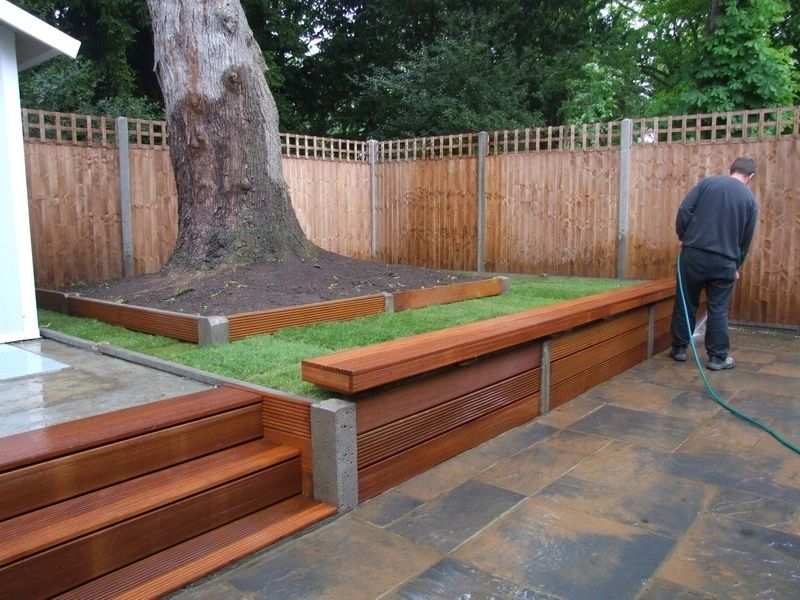
Recent decking work near Letchworth Garden City

softwood garden decking installed by Capital Fencing in Letchworth Garden City (SG6)
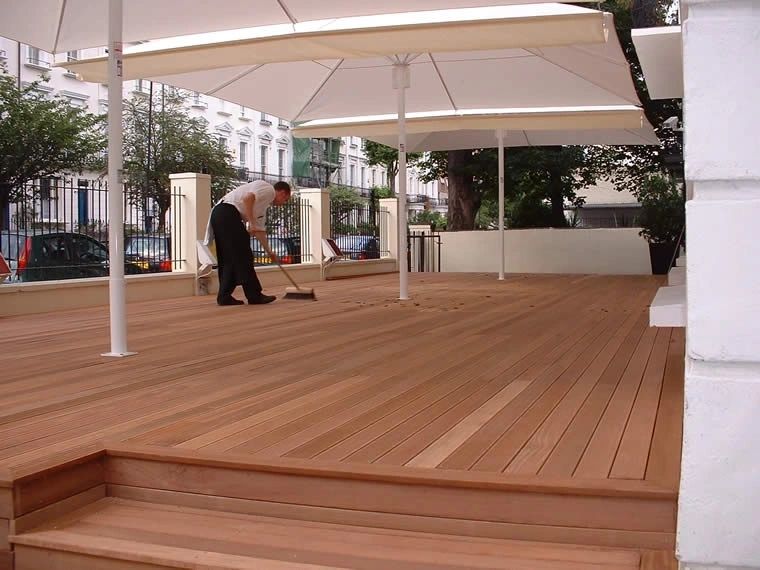
hardwood deck install installed by Capital Fencing in Letchworth Garden City (SG6)
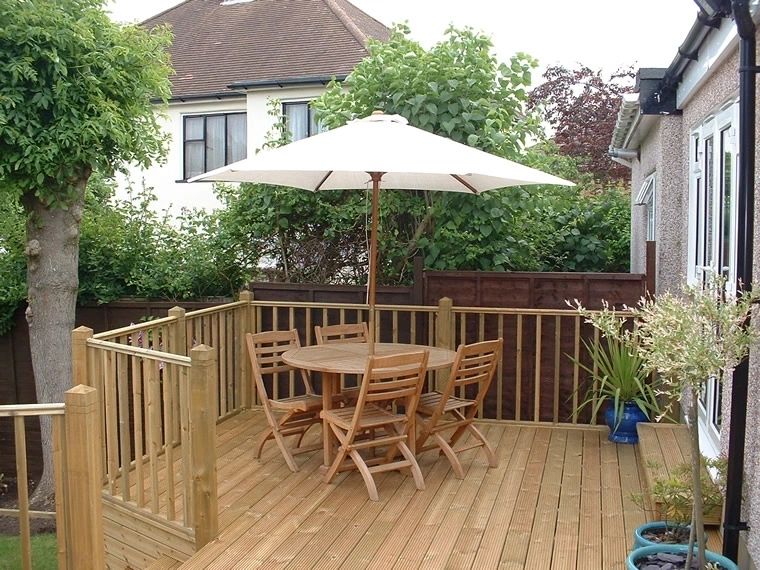
composite decking installed by Capital Fencing in Letchworth Garden City (SG6)
raised garden deck installed by Capital Fencing in Letchworth Garden City (SG6)
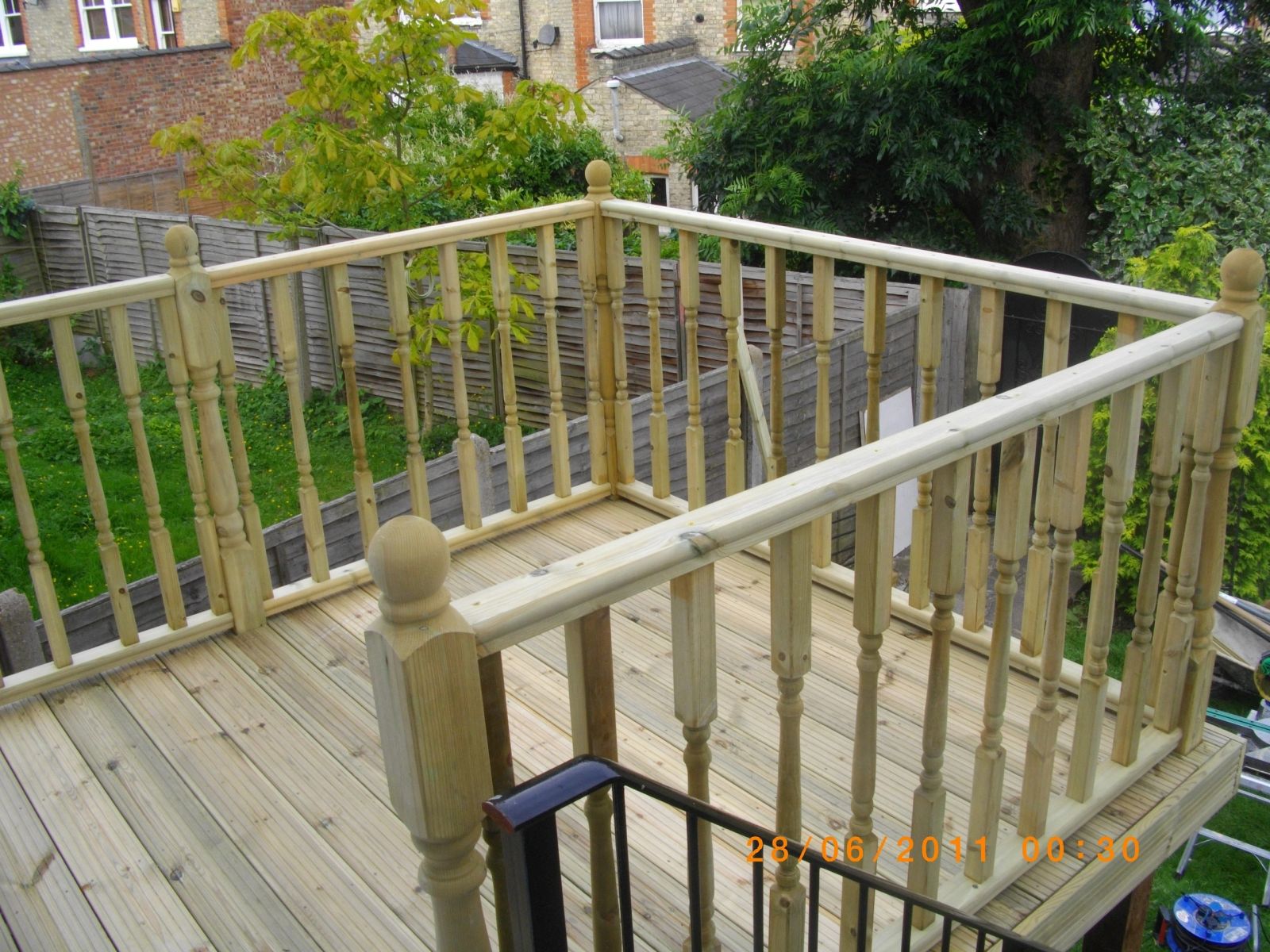
decking with steps and balustrade installed by Capital Fencing in Letchworth Garden City (SG6)

FAQ — decking in Letchworth Garden City

Do you remove the old decks as part of the job?+

Yes — removal, disposal and site clear-up are included as standard. We leave Letchworth Garden City gardens tidy at the end of every day. Sollershott West, Nevells Road The Wynd shops Sollershott West and Nevells Road form part of the original 1903 masterplan and are subject to the Foundation's design guidance.

How far from Letchworth Garden City do you cover?+

Comfortably across hitchin, stevenage and the wider Hertfordshire area. A1(M) J9 keeps the radius practical.

What materials do you recommend for decking in Letchworth Garden City?+

For most Letchworth Garden City jobs we lean toward softwood or yellow balau hardwood, but the brief decides — your garden style, generous, leafy plots — many gardens contain protected trees with TPOs, and how long you want it to last.

Do you need planning permission for decking in North Hertfordshire District?+

Standard rear-garden decking under 2m doesn't normally need permission, but Letchworth Garden City's conservation/heritage rules can change that. We'll flag it on the quote.

How quickly can you start a decking job in Letchworth Garden City?+

Most Letchworth Garden City jobs are quoted within 48 hours of a site visit and booked in within one to two weeks. We cover SG6 from a base that keeps response times tight.

Written Spec

Every Letchworth Garden City job starts with an itemised written quote, so nothing is assumed.

Local Coverage

Installing garden decking across Hertfordshire.

Own Crew

No subcontracted labour on site.

Tidy Finish

Letchworth Garden City gardens left clean at end of every day.

Nearby areas we cover from Letchworth Garden City

Within practical driving distance of Letchworth Garden City via A505 / A1(M) and A1(M) J9.

Related pages

In short — Garden Decking in Letchworth Garden City

the world's first garden city — Arts and Crafts cottages in Letchworth Garden City usually means generous, leafy plots — many gardens contain protected trees with TPOs — and a decking spec that has to track those levels. That's what we spec for across SG6. Broadway, Nevells Road The Wynd shops Letchworth Garden City was the first garden city, and its layout and architecture are protected through covenants overseen by the Letchworth Garden City Heritage Foundation.

Call WhatsAppQuote