London & Hertfordshire Free Site Visit
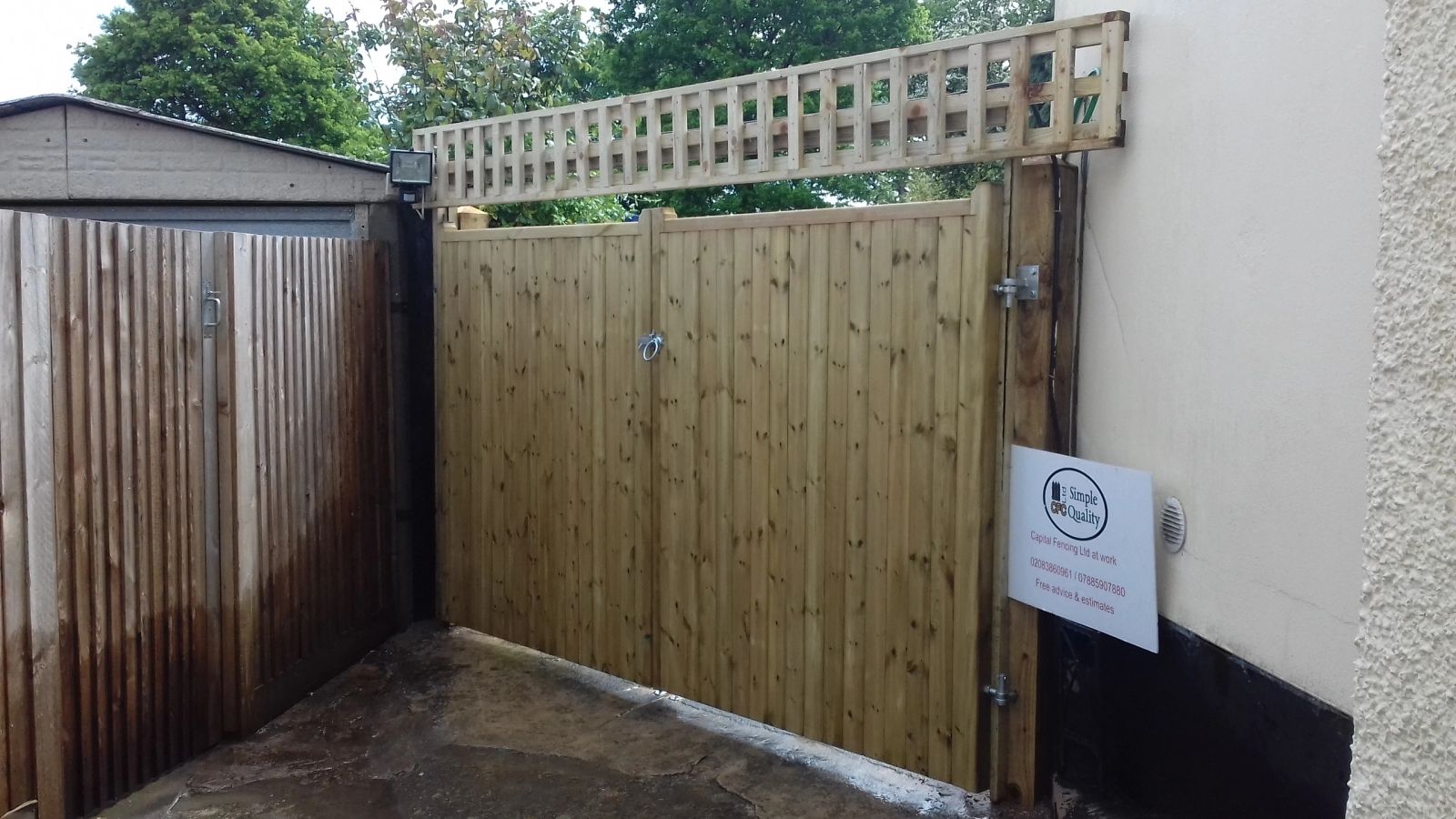
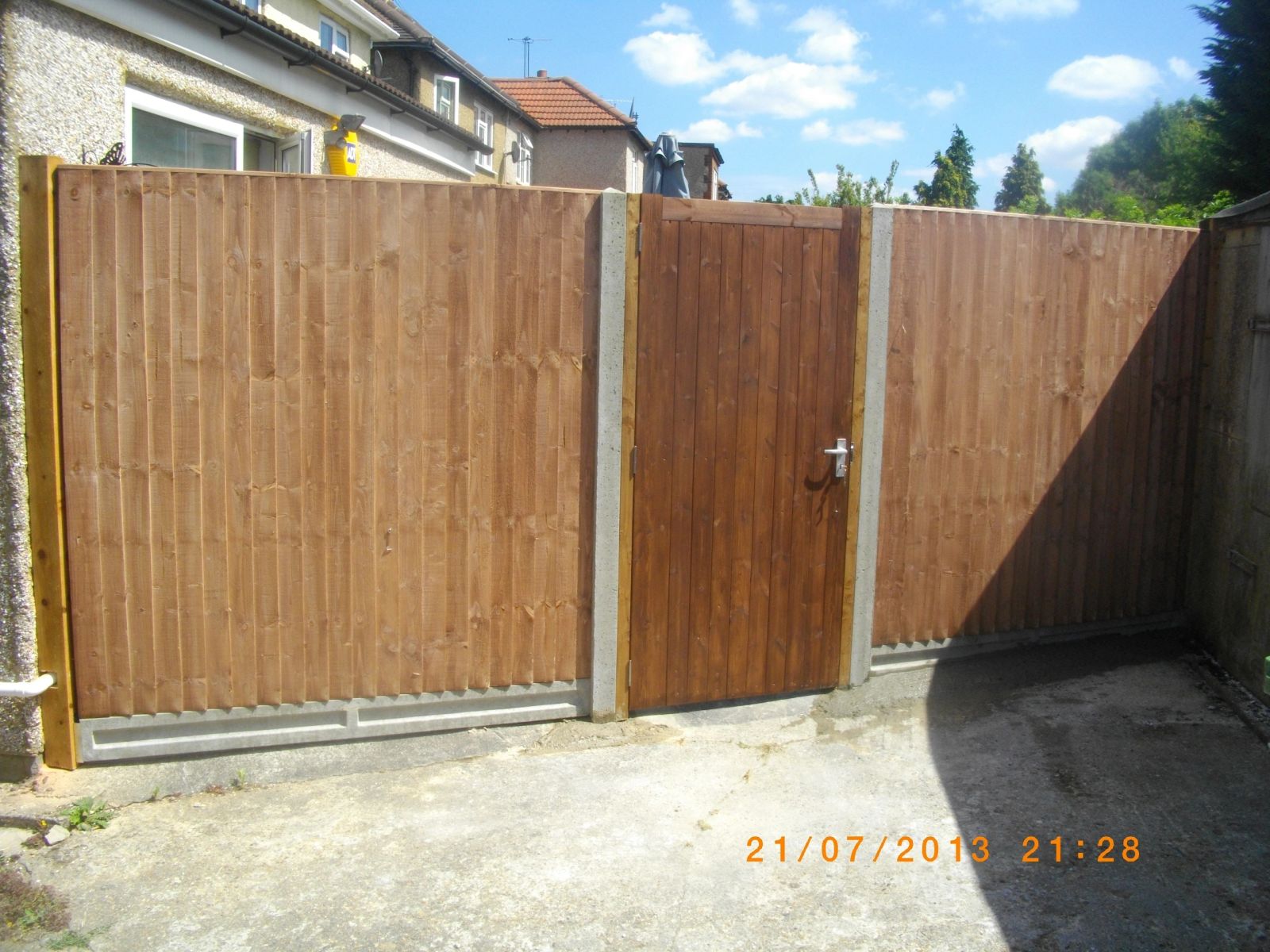
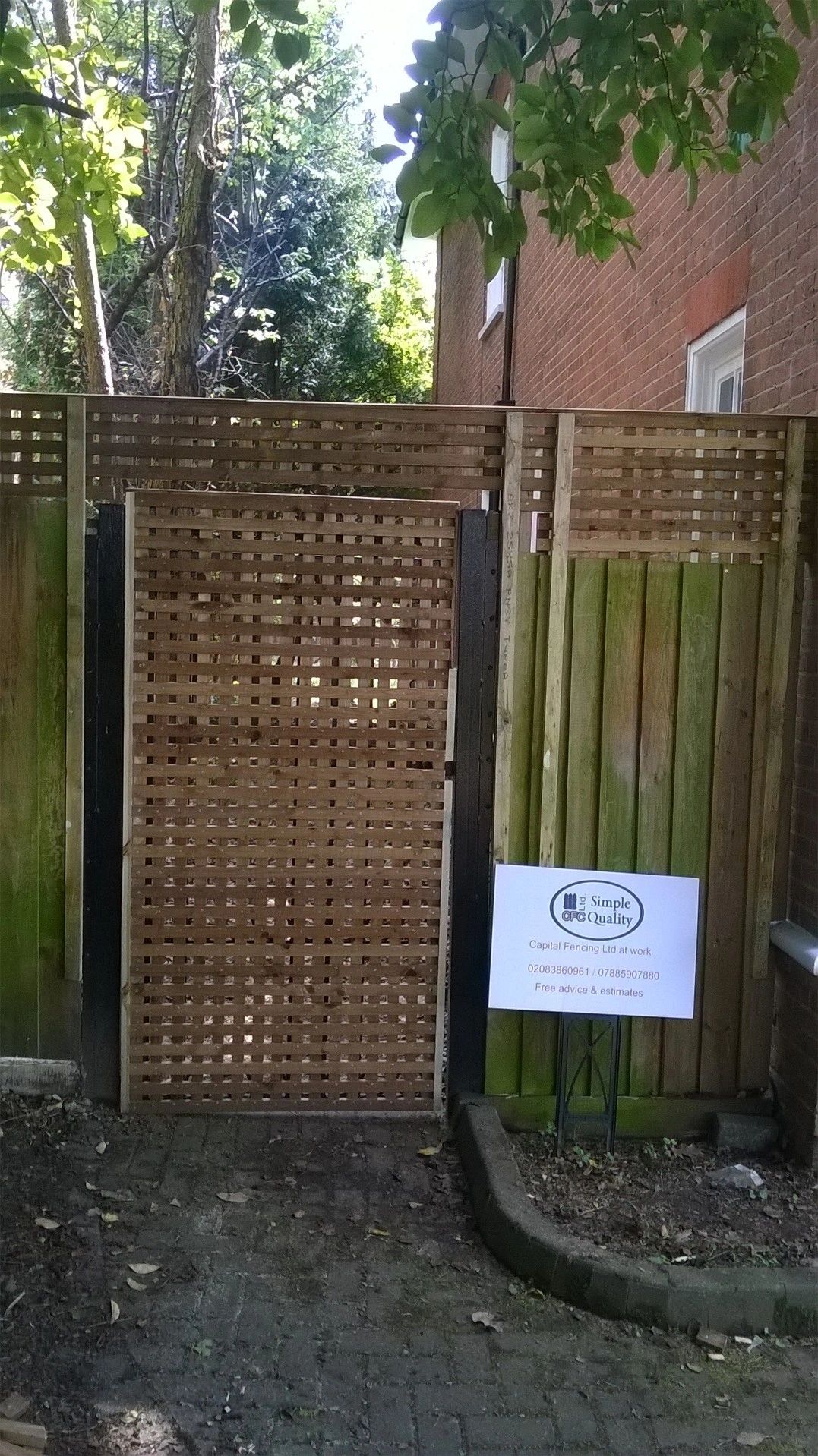
bespoke wooden gate installed by Capital Fencing in Islington (N1)
Islington · N1 / N5 / N7 / N19 / EC1

Driveway Double Gates in Islington — Built for how the structure performs under real use, not a showroom drawing

Capital Fencing installs driveway double gates across Islington and out toward camden and hackney. What separates a driveway double gates job from a standard boundary is the detail: 3.0m opening hardwood double gates on ball-race hinges with drop bolt and top slide bolt. That's the work, not the marketing. Roads such as Liverpool Road and Barnsbury Street are typical of the local layout. Union Chapel is a useful local reference point. Islington is largely built up with Georgian and Victorian terraced housing, much of it within conservation areas covering streets such as Barnsbury and Canonbury.

Capital Fencing installs driveway double gates across Islington and out toward camden and hackney. What separates a driveway double gates job from a standard boundary is the detail: 3.0m opening hardwood double gates on ball-race hinges with drop bolt and top slide bolt. That's the work, not the marketing. Roads such as Liverpool Road and Barnsbury Street are typical of the local layout. Union Chapel is a useful local reference point. Islington is largely built up with Georgian and Victorian terraced housing, much of it within conservation areas covering streets such as Barnsbury and Canonbury.

What goes wrong

Common failure modes on driveway double gates

  • not levelling the closing point — one leaf drags on the drive within a year
  • under-sized posts or brickwork — automation loads pull them out of plumb inside a season
Default spec

How we build driveway double gates in Islington

44mm framed, tongue-and-groove or composite infill, hot-dip galvanised or stainless ironmongery, sized to the actual masonry opening not the drawing. On Islington jobs we adjust for conservation-area consent plus tight rear-mews access makes bespoke gate and boundary work the norm.

Property mix locally: Georgian terraces around Barnsbury and Canonbury, Victorian streets in Highbury, and dense mansion blocks. Typical gardens: compact walled rear gardens with rear-mews access on parts of Barnsbury and De Beauvoir. Postcodes we regularly service: N1, N5, N7, N19, EC1.

Why this spec, for homes with off-street parking wanting matched double vehicle gates, manual or automated

  • measured on site off the actual brick piers, not a builder's plan set
  • prepared for future automation even when you're not fitting it yet — cabling ducts under the drive, hinges rated for it
  • matched pedestrian gate carried in the same visit so alignment and finish are identical

Typical driveway double gates briefs in Islington

  • 4.0m composite-faced double gates prepared for underground automation
  • 3.0m opening hardwood double gates on ball-race hinges with drop bolt and top slide bolt

Driveway Double Gates FAQs — Islington

Do you fit into existing brick piers or install new?

On driveway double gates jobs in Islington (N1), our default answer is: 44mm framed, tongue-and-groove or composite infill, hot-dip galvanised or stainless ironmongery, sized to the actual masonry opening not the drawing. The honest trade-off is not levelling the closing point — one leaf drags on the drive within a year — which is exactly what our default spec designs out.

How do you stop a heavy gate dropping on the closing point?

Across Islington we spec around conservation-area consent plus tight rear-mews access makes bespoke gate and boundary work the norm, so on driveway double gates that usually means iroko hardwood on galvanised ironmongery. For context: prepared for future automation even when you're not fitting it yet — cabling ducts under the drive, hinges rated for it. Structural spans and post depths calculated, not guessed.

Can wooden driveway gates be automated later?

Islington coverage means we can survey most N1 addresses inside a week — homes with off-street parking wanting matched double vehicle gates, manual or automated. The honest trade-off is not levelling the closing point — one leaf drags on the drive within a year — which is exactly what our default spec designs out.

What's the widest span before double gates need a wheel or cantilever?

Practically: 3.0m opening hardwood double gates on ball-race hinges with drop bolt and top slide bolt. That's the Islington version of this job, not a generic one. For context: prepared for future automation even when you're not fitting it yet — cabling ducts under the drive, hinges rated for it. Structural spans and post depths calculated, not guessed.

Softwood, hardwood or composite for double gates?

On driveway double gates jobs in Islington (N1), our default answer is: 44mm framed, tongue-and-groove or composite infill, hot-dip galvanised or stainless ironmongery, sized to the actual masonry opening not the drawing. We'll walk you through measured on site off the actual brick piers, not a builder's plan set on the site visit before you commit.

Recent driveway double gates work
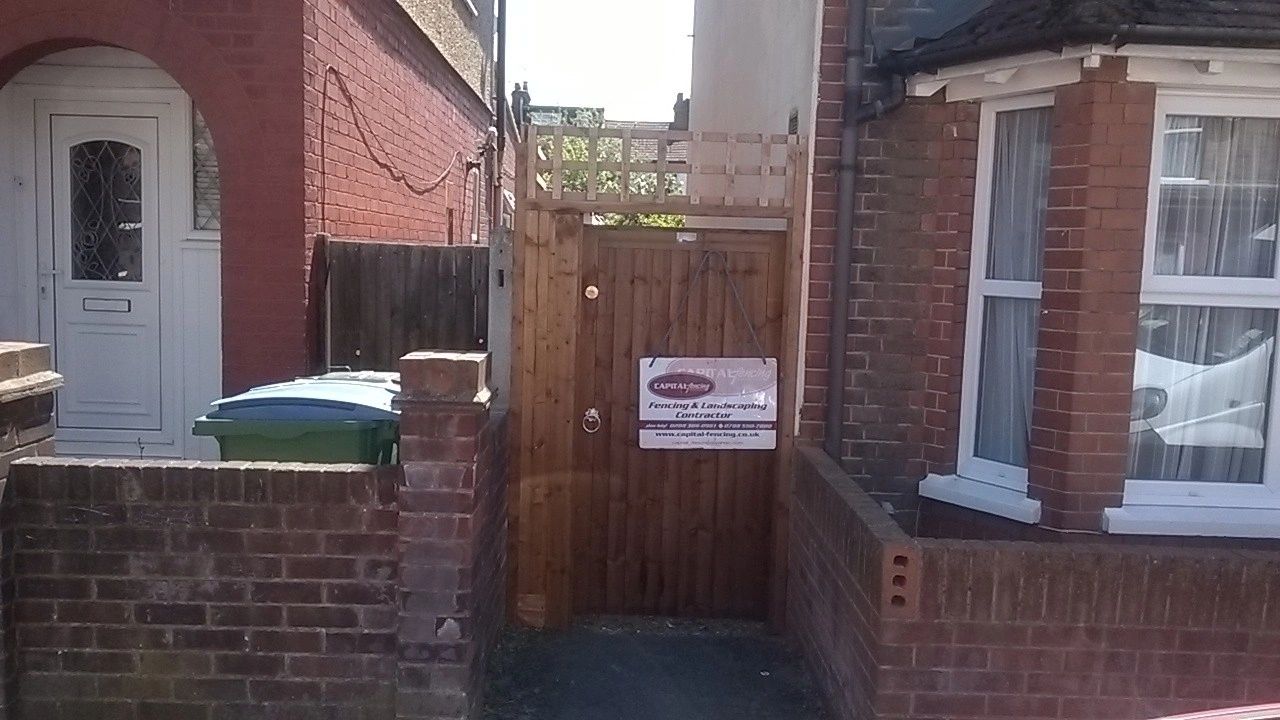
bespoke wooden gate installed by Capital Fencing in Islington (N1)double driveway gates installed by Capital Fencing in Islington (N1)hardwood side gate installed by Capital Fencing in Islington (N1)metal entrance gate installed by Capital Fencing in Islington (N1)

What actually matters for driveway double gates around Islington

Constraints on gates near listed buildings or in conservation areas

A gate forming part of the boundary treatment of a listed building, or sited within a conservation area, may need consent before being altered or replaced, particularly where the change affects the property's appearance from a public viewpoint.

Checking whether any such designation applies to a site before specifying a replacement gate avoids work that later needs to be reversed or amended.

LOLER-adjacent inspection duties on powered gates

Automated or powered gates fall under machinery safety regulations rather than lifting equipment rules directly, but the same discipline of scheduled inspection applies — force limiting, safety edges and photocell alignment on a powered gate need periodic checking, not a one-off commissioning test.

Where a fencing contractor supplies the mechanical gate leaf but not the automation, responsibility for these checks is usually split contractually, and it's worth confirming who's covering what before the gate goes live.

Post-hole spoil disposal

Digging out an old post footing produces broken concrete and soil that has to be removed from site rather than left in the garden, and old concrete in particular is heavier and bulkier than the volume of the original hole suggests.

Spoil disposal is factored into a repair from the outset, particularly on a job replacing several posts where the total volume of waste concrete adds up quickly.

Granular base layers under post concrete

A layer of compacted hardcore, crushed stone or pea gravel placed in the bottom of a post hole before concrete gives the post something firm to bear on and stops it sinking slightly as the concrete cures.

On free-draining ground that granular layer also gives water somewhere to go rather than pooling under the post base, which matters most where the water table sits close to the surface.

Skipping this layer on soft or waterlogged ground is a common reason a post that was plumb on installation day settles a few degrees out of true over its first winter.

Recycled plastic fence posts

Posts made from recycled plastic, sometimes blended with additives for UV resistance and rigidity, avoid timber's rot and insect vulnerability entirely, since the material has no organic content for fungi or insects to attack.

They tend to be more flexible than an equivalent timber section of the same size, which can be an advantage in absorbing impact but a disadvantage where rigidity is needed to resist sustained wind load without visible sway.

Their thermal expansion behaviour is closer to other polymer products than to timber, meaning fixings and adjoining materials need similar allowance for movement as with composite boards rather than being treated as a timber-equivalent product.

Hedgerow removal and nesting-bird season

Removing or cutting back a hedge to install a new boundary fence is generally best avoided between March and August, the main bird nesting season, since disturbing an active nest is an offence under the Wildlife and Countryside Act regardless of intent.

Some countryside and agricultural hedgerows are also protected under the Hedgerow Regulations, which can require notifying the local authority before removal even outside a garden setting.

A pre-work check of the hedge for active nests, and scheduling removal for autumn or winter where the timeline allows, avoids both the legal risk and the delay of having to stop mid-job.

Clarifying the '358' mesh naming convention

The '358' name commonly used for high-security welded mesh refers to its aperture dimensions of roughly 76mm by 12.5mm, formed from wire around 4mm thick, giving a mesh too small to get fingers or toes into as a climbing aid.

Different manufacturers use slightly different wire gauges and coating specifications under the same '358' description, so a spec sheet is worth checking rather than assuming all products sold under that name are identical.

Stain, oil and paint finishes compared

A stain sits mostly on the surface with some absorption, giving colour and some UV protection while still letting the timber's grain show through, and it typically needs reapplying every couple of years on an exposed fence.

An oil penetrates further into the timber and feeds it rather than just coating it, which suits open-grained hardwood decking and cladding, but it wears off through foot traffic and weathering faster than a stain on a vertical surface.

Paint gives the most complete colour coverage and hides the timber grain entirely, but it also traps moisture behind an intact film if the substrate isn't fully dry, and a failed paint film is harder to recover from than a faded stain, which just needs cleaning and recoating.

Sleeper edging and planters

Softwood landscape sleepers are pressure-treated to a ground-contact use class and are generally cheaper and more consistent in size than reclaimed hardwood railway sleepers, which vary in condition and may carry historic residues such as creosote unsuitable for areas near planting or seating.

Sleepers used for raised beds or low retaining edges are usually stacked and pinned with long timber screws or steel rebar driven through pre-drilled holes rather than simply stacked loose, since an unpinned stack can shift as the ground behind it settles.

Where a sleeper structure is also expected to retain a meaningful depth of soil rather than just edge a bed, it moves into proper retaining-wall territory with its own drainage and structural considerations.

Carrying 2.4m panels through a domestic hallway

A standard 2.4m fence panel is longer than most internal hallways are wide, so it has to be carried end-on through doorways and pivoted at corners rather than moved flat, which takes two people to control safely.

Door frames, light switches and stair newels are the most common casualties of moving long panels through a house, so a dry run to identify pinch points before committing to carrying a stack of panels through saves repeated near-misses.

Where a hallway genuinely can't take a full panel around a tight corner, the practical fallback is building the run from shorter featheredge boards fixed in place rather than trying to force a pre-built panel through.

Applying to modify or discharge an old covenant

Where an old restrictive covenant genuinely no longer serves a useful purpose, it's possible to apply to the Upper Tribunal (Lands Chamber) to have it modified or discharged, though this is a formal legal process rather than a quick fix.

This route is generally used where a covenant is preventing otherwise sensible work and informal agreement with whoever benefits from it can't be reached.

Given the legal complexity involved, this is very much a solicitor-led process rather than something to attempt without professional advice.

Slide bolts and staple alignment

A slide bolt needs its guide staples and keep perfectly in line along the bolt's travel, since even a slight misalignment makes the bolt bind partway rather than sliding freely, which is often mistaken for a stiff or rusted bolt.

Re-aligning the staples after a gate has settled or a post has moved usually resolves this without needing to replace the bolt hardware itself.

Height restrictions on a fence directly fronting a public footpath

A boundary that fronts directly onto a public footpath is often subject to a lower permitted height than a rear or side boundary under general planning rules, since a tall solid structure close to a pavement can affect sightlines and pedestrian safety.

Where security needs push toward a taller specification than the footpath frontage rule allows, planning permission is sought explicitly rather than assumed to fall under permitted development, and a mesh or picket design can sometimes reach greater height than a solid panel under the same visual-impact assessment.

Soakaways near a fence line

A soakaway needs to sit at least 5m from a building under current guidance, and positioning one close to a boundary risks saturating the neighbour's ground as well as your own client's.

Digging a new post hole into or immediately alongside an existing soakaway compromises its performance and can undermine a post set on top of what's really just loose rubble fill.

Where a soakaway's exact position isn't recorded, a slow-draining or consistently damp patch along the fence line is often the only visible clue before digging starts.

Sliding versus swing gate mechanisms

A swing gate needs clear space to open into, whether that's the driveway itself or the street, while a sliding gate runs parallel to the boundary and suits plots where that swing space isn't available.

Sliding gates need a level, unobstructed track run at least as long as the gate itself, plus a foundation for the track and rollers that copes with the gate's full weight — cutting corners here is the most common cause of a sliding gate that jams.

Swing gates are generally simpler to install and service, which is worth weighing against a sliding gate's space-saving advantage on a tight or sloping driveway.

End-of-terrace properties and long return boundaries

An end-of-terrace plot typically carries a much longer exposed side boundary than its mid-terrace neighbours, often running the full depth of the garden along a side street or footpath rather than backing onto another private garden.

That length changes the practical spec: more posts see wind and impact loading from the public side, and a long uninterrupted run benefits from a support post or two extra to control any bow developing over time.

Because the boundary faces a public route, it's also the fence most likely to need a more robust anti-climb consideration than an equivalent internal party fence.

Razor mesh panel systems for high-security compounds

A razor mesh panel embeds short, sharp folded barbs directly into the mesh weave itself rather than adding a separate topping coil, giving an anti-cut and anti-climb barrier across the whole panel height rather than only at the top.

These panels carry a higher injury risk than a standard mesh and are typically reserved for high-value compounds such as a fuel depot or a substation, kept well away from any pedestrian route.

Chain link wire coating options

Chain link fencing wire is available galvanised, or galvanised with an additional PVC coating bonded over the zinc, which adds a further weatherproof barrier and is available in a range of colours rather than plain galvanised silver.

The PVC coating also cushions the wire slightly, reducing the risk of the sharp cut ends common on plain galvanised chain link snagging clothing or skin.

Where the PVC coating is damaged or cut through, for example at a repair splice, the exposed galvanised wire beneath is still protected by the zinc, though it will weather to a different appearance than the surrounding coated wire.

Bat and bird nesting season timing

Wild bird nests are protected while in use under the Wildlife and Countryside Act, which in practice means hedge-cutting and dense vegetation clearance along a boundary is generally best avoided during the main nesting season, roughly March to August, unless the hedge has been checked and confirmed clear.

Bats are protected year-round, but works affecting their roosting sites — old sheds, mature trees with cavities, ivy-clad walls — carry particular risk in spring and autumn when bats are moving between summer and winter roosts.

On any boundary job involving significant vegetation or old structure removal, a quick visual check for active nests or signs of bat use before starting is a simple way to avoid inadvertently committing an offence.

Fast-setting post mix performance in cold, exposed conditions

Fast-setting post-fix concrete generates heat as it cures, which normally helps it set reliably even in cool weather, but on a genuinely exposed and cold site that heat can be carried away faster than it's generated, slowing or compromising the cure.

In these conditions a longer undisturbed curing period, or a mix formulated for cold-weather use, gives a more reliable result than assuming a fast-set product will behave the same as it would in a sheltered garden.

Posts loaded too soon after pouring on an exposed site — by wind rather than by the installer — are a genuine risk that doesn't apply in the same way to a sheltered, still garden.

Testing timber moisture content before deciding on a repair

A moisture meter reading on a post or board gives a more reliable picture of remaining life than appearance alone, since timber can look weathered but still be structurally sound, or look reasonably clean-faced while being saturated and soft just beneath the surface.

This is particularly useful where a client is unsure whether a section needs full replacement or can be left, since a moisture reading gives a specific figure to base that decision on rather than a subjective visual judgement.

Lifetime comparison of hedging and fencing as a boundary

A well-established hedge can outlast several generations of timber fencing with no post replacement or re-treatment cycle, but it needs regular cutting to stay within bounds and takes several years to reach an effective screening height from new planting.

A fence gives an immediate, defined boundary and predictable height but carries an ongoing maintenance and eventual replacement cost that a mature hedge doesn't.

Many gardens end up with a mixed solution — a fence for the immediate boundary definition with hedging planted alongside it to soften the appearance and eventually take over some of the screening role.

Homes with off-street parking wanting matched double vehicle gates, manual or automated — that's who this page is for. In Islington and out to Islington, we run the driveway double gates spec that survives conservation-area consent plus tight rear-mews access makes bespoke gate and boundary work the norm. Roads such as Cross Street and Highbury Grove are typical of the local layout. Regent's Canal (City Road basin) is a useful local reference point. The Regent's Canal passes through the borough via the City Road Basin, and Highbury Fields is one of its largest open spaces.

Get In Touch

Get My Free Quote — 24h Response

No callout fee · Free site visit · Friendly local team covering London & Hertfordshire.

Call us
07885907880
or 02036484746
Email
capital_fencing@yahoo.com
WhatsApp
Message us anytime
Area
London & Hertfordshire
Payment
Card payments accepted

Pay by debit or credit card, bank transfer or cash once the work and price are agreed. No deposit taken online.

Request a Free Quote

We'll get back to you within 24 hours.

Free Site Visit No Callout Fee
Call WhatsAppQuote