London & Hertfordshire Free Site Visit
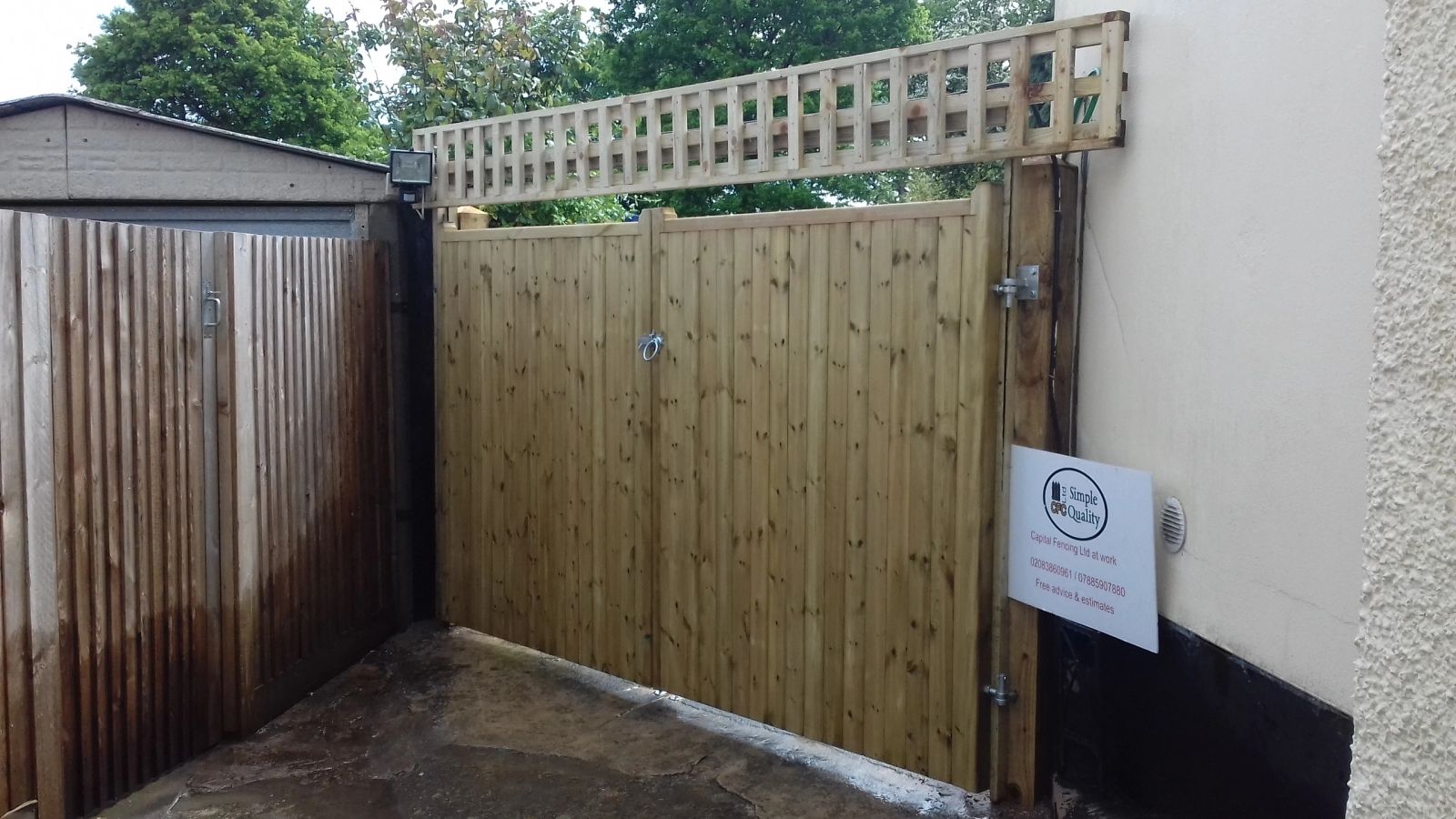
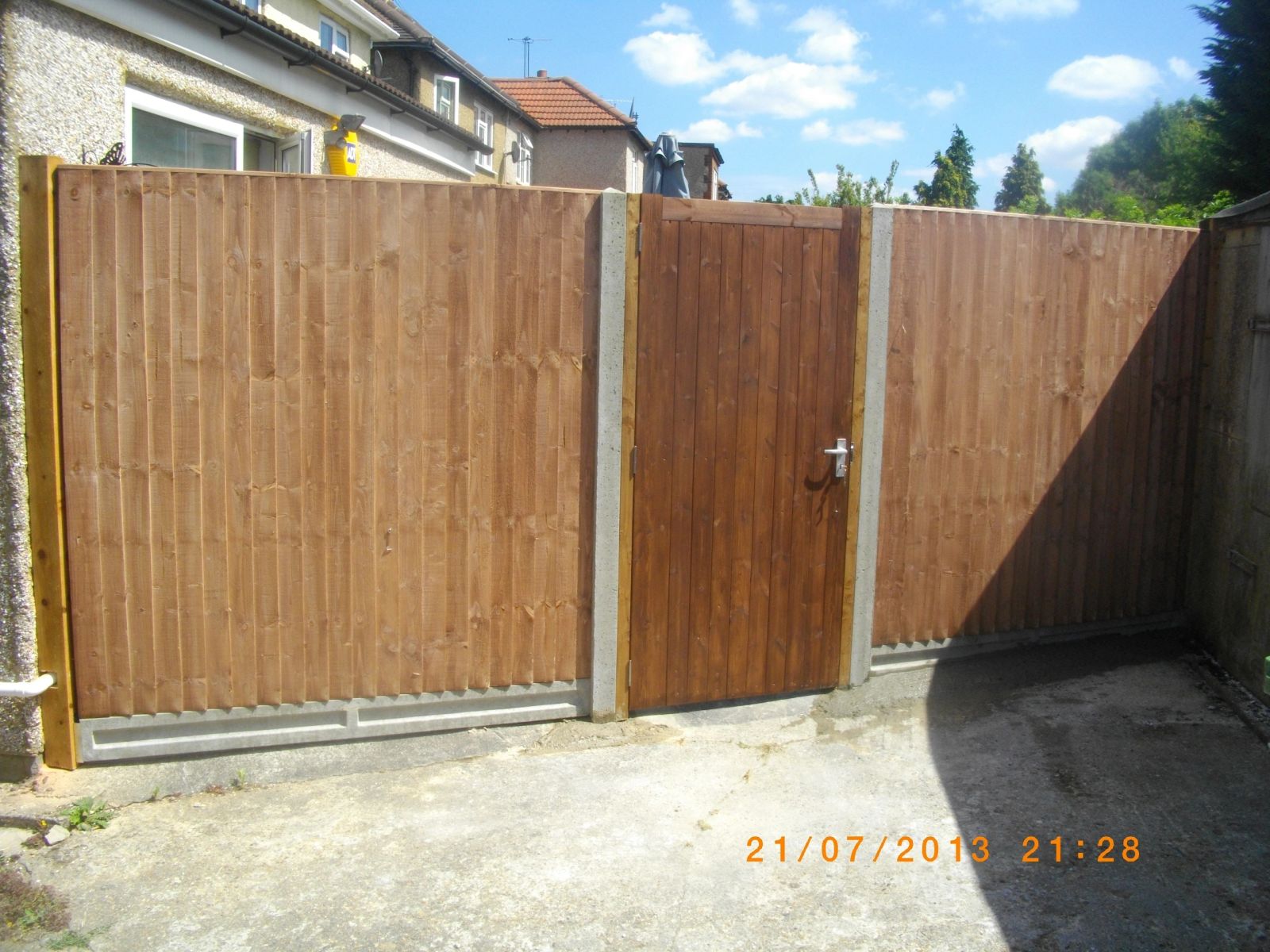
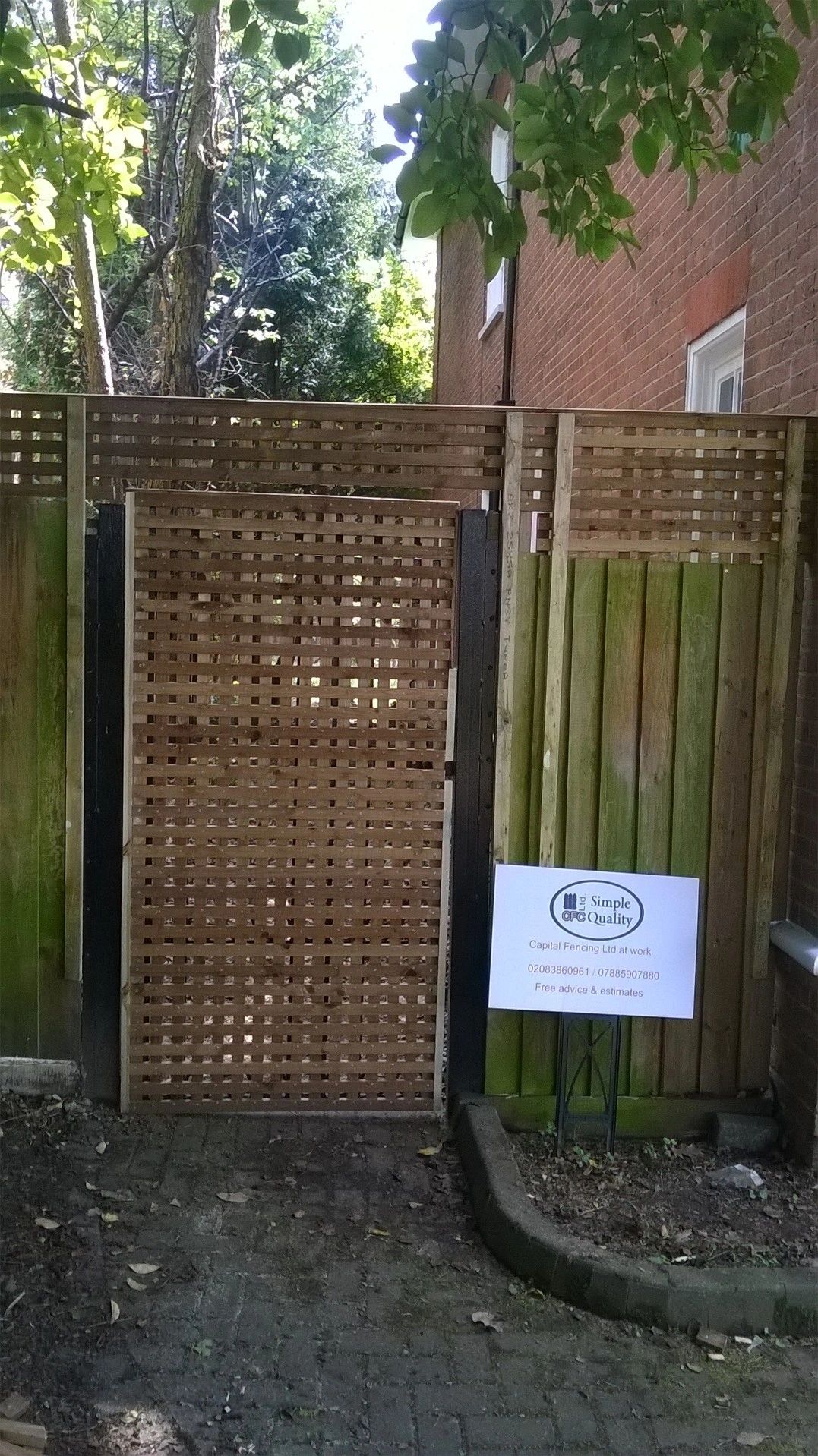
bespoke wooden gate installed by Capital Fencing in Islington (N1)
Islington · N1 / N5 / N7 / N19 / EC1

Pedestrian Side Gates, Islington: match-what-you-have spec for Georgian terraces around Barnsbury and Canonbury

We approach pedestrian side gates in Islington from the failure end backwards. Hinging off the last post of an old fence run — the post moves and the gate stops closing within weeks — that's the single most common thing we're called back to fix, and it's the first thing our spec addresses. Roads such as Highbury Grove and Canonbury Road are typical of the local layout. Emirates Stadium is a useful local reference point. Islington is largely built up with Georgian and Victorian terraced housing, much of it within conservation areas covering streets such as Barnsbury and Canonbury.

We approach pedestrian side gates in Islington from the failure end backwards. Hinging off the last post of an old fence run — the post moves and the gate stops closing within weeks — that's the single most common thing we're called back to fix, and it's the first thing our spec addresses. Roads such as Highbury Grove and Canonbury Road are typical of the local layout. Emirates Stadium is a useful local reference point. Islington is largely built up with Georgian and Victorian terraced housing, much of it within conservation areas covering streets such as Barnsbury and Canonbury.

What goes wrong

Common failure modes on pedestrian side gates

  • hinging off the last post of an old fence run — the post moves and the gate stops closing within weeks
  • specifying a decorative latch not rated for daily use — hardware fatigue inside a year
Default spec

How we build pedestrian side gates in Islington

single leaf on ball-race hinges, thumb-latch and dead-locking hardware, closing stop and drop-bolt where security is a priority. On Islington jobs we adjust for conservation-area consent plus tight rear-mews access makes bespoke gate and boundary work the norm.

Property mix locally: Georgian terraces around Barnsbury and Canonbury, Victorian streets in Highbury, and dense mansion blocks. Typical gardens: compact walled rear gardens with rear-mews access on parts of Barnsbury and De Beauvoir. Postcodes we regularly service: N1, N5, N7, N19, EC1.

Why this spec, for single-leaf pedestrian gates matched into existing fencing runs

  • carried in as a like-for-like match to what's already there — no visible new post
  • hinge and latch geometry sized for daily use rather than as a one-off decorative piece
  • installed with the closing stop and latch in one visit so nothing has to be revisited

Typical pedestrian side gates briefs in Islington

  • matched picket gate into a painted picket frontage
  • hardwood pedestrian gate through a brick garden wall opening

Pedestrian Side Gates FAQs — Islington

How do I keep the gate closed without a spring hinge?

On pedestrian side gates jobs in Islington (N1), our default answer is: single leaf on ball-race hinges, thumb-latch and dead-locking hardware, closing stop and drop-bolt where security is a priority. The honest trade-off is hinging off the last post of an old fence run — the post moves and the gate stops closing within weeks — which is exactly what our default spec designs out.

Can you match a new pedestrian gate into my existing fence?

Across Islington we spec around conservation-area consent plus tight rear-mews access makes bespoke gate and boundary work the norm, so on pedestrian side gates that usually means closeboard-matched softwood for behind-the-house lines. For context: hinge and latch geometry sized for daily use rather than as a one-off decorative piece. Measured, quoted and installed by the same small crew.

Can a pedestrian gate go through a brick wall opening?

Islington coverage means we can survey most N1 addresses inside a week — single-leaf pedestrian gates matched into existing fencing runs. The honest trade-off is hinging off the last post of an old fence run — the post moves and the gate stops closing within weeks — which is exactly what our default spec designs out.

Softwood or hardwood for a matched pedestrian gate?

Practically: single 900mm pedestrian gate cut into an existing closeboard run. That's the Islington version of this job, not a generic one. We'll walk you through carried in as a like-for-like match to what's already there — no visible new post on the site visit before you commit.

Do you fit the latch and any hardware on the same visit?

On pedestrian side gates jobs in Islington (N1), our default answer is: single leaf on ball-race hinges, thumb-latch and dead-locking hardware, closing stop and drop-bolt where security is a priority. For context: hinge and latch geometry sized for daily use rather than as a one-off decorative piece. Measured, quoted and installed by the same small crew.

Recent pedestrian side gates work
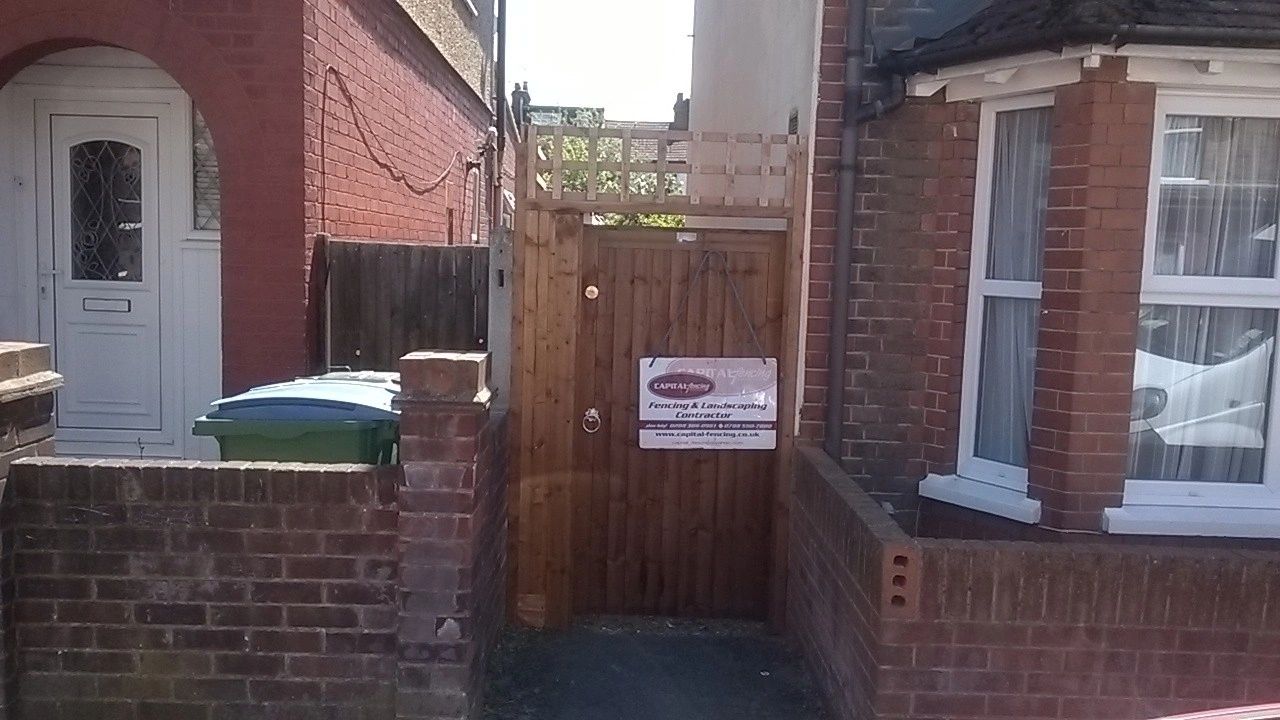
bespoke wooden gate installed by Capital Fencing in Islington (N1)double driveway gates installed by Capital Fencing in Islington (N1)hardwood side gate installed by Capital Fencing in Islington (N1)metal entrance gate installed by Capital Fencing in Islington (N1)

What actually matters for pedestrian side gates around Islington

Wildlife gaps for hedgehog movement

A small gap of around 130mm square cut into the base of a solid fence panel, sometimes called a hedgehog highway, lets hedgehogs move between connected gardens without needing to dig under or go around a continuous boundary.

This is increasingly requested by clients aware of declining hedgehog populations and is straightforward to incorporate into a new close-boarded panel, ideally agreed with the neighbouring property so the gaps line up on both sides of the boundary.

The gap doesn't compromise the fence's structural performance if it's cut cleanly within a single board rather than across a post or rail.

Seasonal ground heave

Ground heave is the upward or lateral movement of soil as it absorbs water and expands, most pronounced in clay-rich ground after a wet autumn following a dry summer.

A post that was plumb in August can be measurably out of true by the following spring purely from this cycle, without any external damage to the fence.

Where heave is a known issue on a plot, deeper posts and a looser granular surround give the soil room to move without directly loading the post, rather than locking post and ground rigidly together.

Over-boarding as an alternative to board-by-board replacement

Over-boarding fixes new feather-edge boards directly over an existing run rather than stripping and replacing individual damaged boards, which suits a run with widespread but shallow weathering rather than a handful of severe failures.

It doesn't fix a failing arris rail or post underneath, so it's only appropriate once the frame behind the boards has been checked and confirmed sound, otherwise the extra weight of a second layer of boards can accelerate a frame that was already borderline.

Composite colour fade realism

Composite boards do fade slightly in their first year or two of UV exposure before settling to a stable colour, which is a normal part of the material rather than a fault, but it means a newly added run will look a shade brighter than an older adjoining one for a while.

Darker composite colours fade proportionally more than lighter ones and also run hotter in direct sun, which can matter for boards used on south-facing screening close to seating areas.

Manufacturers typically quote colour consistency rather than a fixed fade-free guarantee, so matching an extension to an existing composite run several years old is unlikely to be an exact colour match regardless of the batch ordered.

Sheeting plants and borders during fencing works

Established shrubs and borders close to a fence line are easily damaged by dropped tools, spoil heaps or simply being walked over repeatedly during a multi-day job, so temporary boards or breathable sheeting laid over beds reduces incidental damage.

Concrete dust and cement splash can scorch foliage if it settles on leaves and isn't rinsed off promptly, which is worth flagging before mixing starts next to a prized border.

Where a plant genuinely sits in the way of a post position, agreeing with the client in advance whether it's moved, worked around, or the post offset avoids an awkward decision made on the spot mid-dig.

Digging out a post hole obstructed by established roots

A footing being reopened for repair sometimes has tree or shrub roots grown through or around it since the original installation, and cutting through a substantial root without checking what it belongs to risks damaging a protected tree or destabilising nearby planting.

Where roots are minor, careful digging around rather than through them lets the post go back in the same position; where a significant root has effectively taken over the footing, repositioning the post slightly is often the more practical repair.

Checking a gate opening is square before building the gate

An opening that looks square by eye can still be a few centimetres out corner to corner, which only becomes obvious once a gate built to the nominal width won't hang without binding on one side.

Measuring both diagonals of the opening and comparing them is a quick way to confirm square — equal diagonals mean a true rectangle, unequal diagonals mean the posts have drifted out of parallel or the opening has racked.

Where an opening is slightly out of square and can't easily be corrected by resetting a post, building the gate with a small taper to match the actual opening is usually more practical than forcing the posts back into an exact rectangle.

Wet rot versus dry rot fungi in fence timber

Wet rot fungi need sustained high moisture content to establish and spread, and are the more common cause of decay in buried or ground-contact fence posts that stay consistently damp.

Dry rot, despite the name, also needs moisture to establish initially but can then spread through drier surrounding material via root-like strands, making it more of a concern in enclosed, poorly ventilated timber structures than open-air fencing.

In practice, most fence post decay encountered on typical garden and boundary fencing is wet rot rather than dry rot, given the open, ventilated conditions most fencing timber sits in.

Temporary fencing while a permanent boundary is rebuilt

Removing an old boundary fence before the new one is built leaves a gap that matters for security, for keeping pets or children contained, and for site safety around an open excavation.

A simple temporary screen — netting on stakes, or hurdles wired together — bridges that gap without committing to a full second install, and is worth agreeing with the client if the job will span more than a day.

On a site backing onto a road, path or shared area, a temporary barrier around open post holes overnight is also a basic precaution against someone stepping into an unmarked hole in the dark.

Bin and bike access considerations

A gate used regularly to move bins or bikes through needs enough clear width and a low enough threshold that wheels don't catch, which is a different design priority to a gate that's mostly left closed.

Where this is the main use of a side gate, we factor it into leaf width and threshold detail at repair or replacement time rather than defaulting to a standard pedestrian gate size.

Balustrade requirements on raised decking

Building regulations generally expect a guarding balustrade wherever a raised deck has a drop of around 600mm or more, with a minimum height (typically around 900mm-1100mm depending on the situation) and gaps small enough that a 100mm sphere can't pass through.

That gap rule is specifically there to stop a small child getting a head or limb through the balustrade, so wide-slat contemporary balustrade designs need checking against it just as carefully as traditional close-spaced spindles.

A deck under that drop threshold doesn't need a balustrade by regulation, but a low kerb or edge trim is still worth considering as a visual cue to the edge, particularly at night.

Gate swing clearance where a dropped kerb serves vehicle access

A security gate installed behind a dropped kerb needs enough setback from the highway boundary that an opening gate leaf never swings into the public footway or carriageway, which local authorities generally require as a condition of the dropped kerb itself.

A sliding gate avoids this swing clearance problem entirely and is often the preferred choice where the plot is shallow, though it needs a clear running track free of obstruction along its full travel length.

Checking a panel is square before final fixing

A panel that's racked slightly out of square, even by a small amount, becomes obvious once several are fitted in a row and the tops don't line up evenly.

Measuring both diagonals of the panel frame before fixing, the same check used on gate openings, confirms it's true and worth doing before the first fixing goes in rather than after, when the panel is harder to shift.

A panel forced square against an out-of-true post rather than corrected itself tends to spring back out of shape once the fixings are removed for any future repair, so it's worth addressing the actual cause rather than just clamping it straight.

Exposed plots and wind funnelling between buildings

Wind doesn't just hit a fence head-on — gaps between buildings, especially in newer estate layouts with narrow side passages, can funnel and accelerate wind locally well beyond the general forecast for the area.

A fence positioned at the end of such a gap can see significantly higher loading than an identical run a few metres away in the lee of a building.

Recognising these funnelling positions at quote stage, and specifying heavier posts or a part-open panel design there, is more reliable than treating an entire plot as uniformly exposed or sheltered.

Letterbox and parcel provision in a secure gate

A fully secured pedestrian gate can leave deliveries with nowhere to leave post or parcels, so a secure gate-mounted letterbox or a parcel box positioned outside the locked line is worth planning at design stage.

Positioning it so it can be reached without opening the gate keeps the boundary genuinely closed while still allowing routine deliveries.

Setting gate posts before the rest of a fence run

Gate posts carry more load and need tighter tolerances on spacing and plumb than intermediate fence posts, so they're normally set and checked first, with the rest of the run measured out relative to the confirmed gate opening rather than the other way round.

Where a gate is ordered to a bespoke size, its exact opening width has to be locked in before that section of the run is built, since a fence panel either side can absorb small adjustments far more easily than a made-to-measure gate can.

A gate post is also usually set with extra depth or a wider concrete base than a standard fence post, given the additional leverage a swinging gate applies, so it needs its own dig rather than being treated the same as its neighbours.

Snapped concrete posts and slotted-panel swaps

A slotted concrete post system lets a panel be lifted out and a new one dropped in without disturbing the posts either side, which makes panel replacement quick, but the post itself is far less forgiving to repair once it's cracked or snapped.

A snapped concrete post is generally replaced outright rather than patched, since a repaired crack under load doesn't reliably hold the same weight as the original casting.

Land registered as a town or village green

Land formally registered as a town or village green carries strong legal protection against enclosure or obstruction, including from fencing, under the Commons Act 2006.

This status can sometimes apply to open spaces that don't look obviously like a traditional village green, following a successful community application to register them.

Checking the relevant register before fencing land bordering an open green space avoids inadvertently obstructing protected land.

Storm damage triage

After a storm, triage prioritises anything posing an immediate hazard — a fence leaning over a path, a snapped post near a driveway — ahead of cosmetic damage further along the same run.

A wider survey of the whole boundary is worth doing at the same visit, since storm stress often weakens bays that haven't visibly failed yet but are more likely to fail in the next event.

Capping rail replacement

A capping rail along the top of a panel run sheds rainwater off the panel faces and its own fixings are exposed to the most weathering on the whole fence, so it often needs replacing before the panels beneath show any damage.

Refitting capping with a slight overhang and a drip groove reduces water tracking back onto the panel face compared with a flush-fitted replacement.

Thumb latch lever and bar wear

A thumb latch lifts an internal bar via a lever operated from one or both faces of the gate, and wear typically shows up as play at the pivot pin or a lever that no longer lifts the bar high enough to clear the keep.

Because the mechanism is simple, most thumb latch faults can be corrected by re-fixing the pivot or reshaping the bar's resting angle rather than replacing the whole latch.

British Standards relevant to fencing

BS 1722 covers specifications for fences and gates across a range of types including chain link, wooden palisade, and estate fencing, setting out minimum post spacing, wire gauges and timber dimensions for each category.

These standards aren't legally mandatory on a private domestic job in the way building regulations are, but they're the reference point used in commercial specifications, school and public sector tenders, and by insurers assessing whether a boundary structure was reasonably built.

Where a job is speculatively described as 'to British Standard', it's worth confirming which specific part of BS 1722 is meant, since the standard covers a wide family of very different fence types.

Single-leaf pedestrian gates matched into existing fencing runs — that's who this page is for. In Islington and out to Islington, we run the pedestrian side gates spec that survives conservation-area consent plus tight rear-mews access makes bespoke gate and boundary work the norm. Roads such as Barnsbury Street and Cross Street are typical of the local layout. Islington Green is a useful local reference point. Islington is largely built up with Georgian and Victorian terraced housing, much of it within conservation areas covering streets such as Barnsbury and Canonbury.

Get In Touch

Get My Free Quote — 24h Response

No callout fee · Free site visit · Friendly local team covering London & Hertfordshire.

Call us
07885907880
or 02036484746
Email
capital_fencing@yahoo.com
WhatsApp
Message us anytime
Area
London & Hertfordshire
Payment
Card payments accepted

Pay by debit or credit card, bank transfer or cash once the work and price are agreed. No deposit taken online.

Request a Free Quote

We'll get back to you within 24 hours.

Free Site Visit No Callout Fee
Call WhatsAppQuote