Hitting shallow services and CAT scanning
Electricity, gas and water connections into a house are often shallower than people expect, sometimes under 300mm in an older garden, well within reach of a hand auger let alone a mechanical one.
A cable avoidance tool (CAT scan) before digging a new post line is standard practice near any suspected service run, and is far cheaper than the cost and risk of striking a live cable or a gas pipe.
Where a scan can't rule out a service with confidence, hand-digging trial holes to confirm depth and position before committing to auger the rest of the line is the safer approach.
Checking for buried services before digging out a failed post
A repair that involves digging out an old footing carries the same risk of hitting a buried cable or pipe as a brand-new installation, and that risk doesn't go away just because a post has stood in that spot for years already.
Using a cable and pipe locator before digging, and digging by hand rather than with power tools near any suspected service run, is standard practice on repair work close to a house, garage or existing utility connection.
Hand-digging near suspected buried services
Once a cable avoidance tool or utility plan indicates a service is likely nearby, digging switches from auger or mechanical methods to hand tools only, working down in shallow spits rather than one deep thrust.
A spade can still shear a shallow, poorly-buried cable, so the safer tool close to a marked service is a fork or trowel used to expose it by feel and sight before any spade work resumes.
If a cable or pipe is exposed, it's left supported and undamaged in the open trench rather than backfilled over, and the post position is adjusted if the service sits exactly where the hole needs to go.
Concrete cure time before a post can be loaded
A post set in fast-setting postcrete can usually take light loading within an hour or two, but a full concrete footing needs several days of cure before it should be relied on for the lateral loading a security fence or gate applies.
Fitting a heavy gate leaf to a post before its footing has properly cured can rock the post out of plumb before the concrete has reached working strength, which is a common avoidable cause of an early lean on a new installation.
When a failed post means replacing the gate too
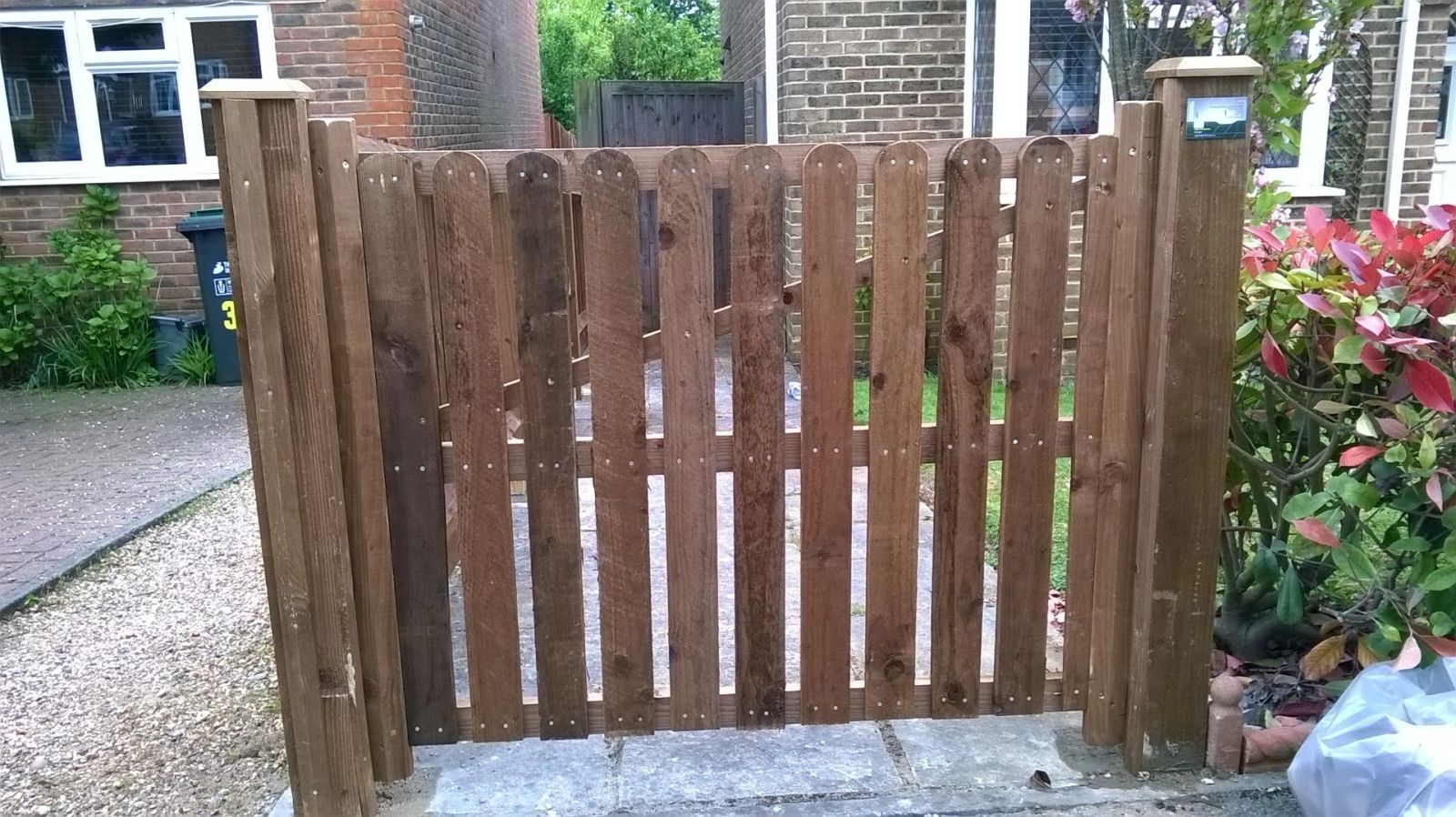
A hanging post that's rotted at ground level usually needs full replacement rather than repair, and because the gate is bolted directly to that post, the gate itself often has to come off and be reassessed for damage during the process even if the gate was previously sound.
This is worth explaining clearly to a client who's expecting a simple post swap, since the gate's own hinges and fixings may need attention at the same time.
Trellis toppers and wind load
A trellis topper adds height to an existing or new fence — commonly for climbing plants or extra privacy — and because it's open lattice rather than solid boarding it adds relatively little wind load for the height gained.
That's useful on boundaries close to the 2m permitted development limit, where a solid panel extension would push both height and wind loading up together, but it only works if the topper is genuinely open lattice rather than a solid infill dressed up as trellis.
Fixing a topper to an old or undersized post rather than the fence itself is the most common reason toppers come loose, since the extra leverage at height needs a post that was sized for it from the start.
Trellis toppers and additional wind load
Adding a trellis topper to increase privacy height also increases the wind load a fence has to carry, since even open lattice trellis catches more air than its slim appearance suggests, especially once climbing plants fill in the gaps.
Posts sized correctly for a 1.8m panel don't automatically have the reserve strength for panel-plus-trellis at 2.1m or more, particularly on an exposed run.
Where a taller finished height is wanted, it's worth specifying posts for the full combined height from the outset rather than treating the trellis as a lightweight afterthought bolted to the top.
Diagnosing rot at the ground line versus mid-post
Ground-line rot sits just below and just above soil level, where moisture cycles wet and dry fastest and fungal decay does most of its damage; a probe test at that band catches most failures before they're visible above ground.
Rot higher up the post, mid-height under a rail bracket or where a panel clip traps water, is a different failure mode caused by standing moisture rather than soil contact, and needs the fixing checked as well as the timber.
Wayleaves and easements crossing a boundary
Some plots have a legal wayleave or easement allowing a utility company access to overhead lines or buried infrastructure crossing the garden, which can restrict what's built directly above or around that strip of land.
A shared access easement giving a neighbour a right of way across part of a garden also affects fence planning, since blocking that route — even with an otherwise perfectly legal fence — can breach the easement's terms.
These details are usually in the property's title register rather than obvious on the ground, so it's worth checking before finalising a boundary line that crosses anything unusual.
Fence junctions above a retaining wall
A fence sitting on top of a retaining wall adds lateral load the wall wasn't necessarily designed for, particularly on a taller solid-faced security screen catching wind, so the wall's condition and the fence's fixing method both need checking before installation rather than assumed to be compatible.
Where the wall can't safely take a bolted post, a freestanding post line set back slightly from the wall edge, tied back if needed, keeps the fence load off the retaining structure entirely.
Checking an unstable adjacent structure before repairing the fence against it
Where a fence panel is fixed to or sits hard against a garden wall, shed or outbuilding that's itself showing signs of movement, repairing the fence without addressing the structure it depends on risks the same failure recurring.
This is worth flagging to a client as a separate issue rather than working around it silently, since a fence repair fixed to an unstable wall is only as reliable as that wall.
Long-run line setting with laser and string
A straight security run over a long distance is set out with a string line or laser level between end posts before any intermediate post is positioned, since a small error compounded over many bays leaves a visibly crooked line.
On an undulating site, a laser also confirms consistent post height above ground even where the ground itself rises and falls, keeping the top line level rather than following every dip.
Agreeing a shared contribution to a boundary fence
There's no automatic legal requirement in England for a neighbour to contribute to the cost of a boundary fence, even where both sides benefit from it, unless the deeds specifically say otherwise.
Many boundary fences are replaced by agreement between neighbours splitting the cost informally, but this is a private arrangement rather than something either side can compel.
Getting any agreed contribution, choice of style, and who instructs the contractor written down in an email beforehand avoids a common source of friction once the invoice arrives.
Preservative penetration envelope thickness
Pressure treatment doesn't necessarily saturate a timber section all the way through, and the depth of genuine preservative penetration, sometimes called the treatment envelope, can be shallower in dense or resistant species than the treated colour suggests.
Cutting a treated post in half reveals this directly, often showing a pale, untreated core surrounded by a darker treated outer band a few millimetres to a couple of centimetres deep depending on species and process.
This is the practical reason cut ends need separate end-grain treatment, since a fresh cut through the envelope exposes untreated core timber that the original pressure treatment never reached.
Small claims court as a route for fencing disputes
Straightforward disputes over the cost or condition of a shared boundary fence can, in principle, be pursued through the small claims track of the county court, which is designed to be accessible without needing a solicitor.
This route is generally reserved for lower-value, relatively clear-cut disagreements rather than complex boundary line disputes, which usually need more specialist legal input.
It's worth exhausting direct discussion and mediation options first, since even a successful small claim can be a slower and more stressful route than reaching agreement directly.
Strimmer damage at the fence-to-lawn edge
Repeated strimming right up against the base of gravel boards or post bases scars the timber surface and removes any protective coating exactly at the point most exposed to ground moisture.
A mowing strip of paving or gravel along the base of the fence line removes the need to strim that close, protecting both the timber finish and the lawn edge itself.
This is a small design addition worth suggesting on new installs, since the damage it prevents is otherwise mistaken for premature timber failure rather than a maintenance habit.
Choosing gate ironmongery
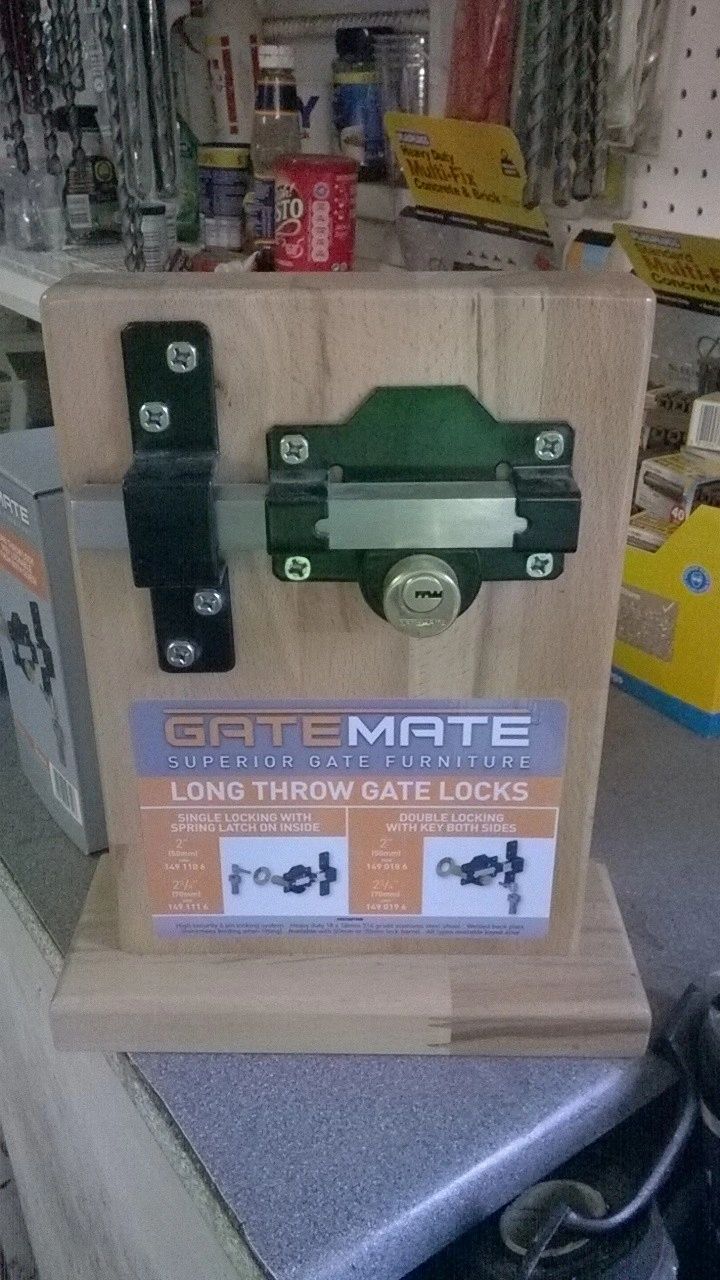
A gate is only as good as its hinges and latch — undersized hinges are the single most common reason a timber gate sags and starts dragging on the ground within a year or two.
Heavier gates, especially solid hardwood or wide driveway gates, need hinges rated for the actual weight rather than whatever came in the hardware pack, plus a diagonal bracing batten on the frame to stop it racking out of square.
Galvanised or stainless fixings are worth the small extra cost over standard zinc-plated ones anywhere exposed to weather, since a rusted hinge pin is a common and avoidable reason for an otherwise sound gate to fail.
Applying for a Land Registry boundary determination
Where a boundary's exact position is genuinely disputed, it's possible to apply to HM Land Registry for a 'determined boundary', which involves a formal survey and legally fixes the line rather than leaving it as a general indication.
This process is comparatively rare for domestic disputes because of the cost and evidence involved, and is normally a last resort after direct discussion has failed.
Most everyday fence replacement work never needs this, but it exists as a formal route for the minority of cases where agreement genuinely can't be reached.
How we measure and quote a job
A proper quote starts with a site visit rather than a phone estimate — measuring the actual run length, checking ground conditions with a probe or short trial dig, and confirming access before any numbers go on paper.
That's the only reliable way to catch the things that change a price: buried obstructions, a slope that needs stepping, a shared boundary that needs the neighbour's agreement, or a gate opening that's slightly out of square.
A written quote following that visit should specify post spacing, post and panel material, base type and any extras like gravel boards or capping, so there's nothing to renegotiate once the job starts.
Wildlife gaps for hedgehog movement
A small gap of around 130mm square cut into the base of a solid fence panel, sometimes called a hedgehog highway, lets hedgehogs move between connected gardens without needing to dig under or go around a continuous boundary.
This is increasingly requested by clients aware of declining hedgehog populations and is straightforward to incorporate into a new close-boarded panel, ideally agreed with the neighbouring property so the gaps line up on both sides of the boundary.
The gap doesn't compromise the fence's structural performance if it's cut cleanly within a single board rather than across a post or rail.
Screening bin storage without blocking access
A dedicated bin store or screening fence at the front of a property needs to balance neatness against practical access — bins still need to be wheeled out to the collection point on the correct day without catching on a narrow gate opening.
Local authority bin sizes vary, so it's worth checking actual collection bin dimensions before building a fixed screen enclosure that later turns out too small for a new bin type.
A slatted or louvred screen usually works better than solid panel for bin storage, since it hides the bins from view while still letting air circulate rather than trapping odour against a solid surface.
Powered auger versus hand-digging post holes
A petrol or hydraulic auger speeds up digging significantly on open, obstruction-free ground, but is the wrong tool near known services, tree roots or previous hardstanding, where it can't tell the difference between soil and something it shouldn't hit.
Access also decides the method — an auger needs room to manoeuvre and, for larger machines, a route wide enough to bring it onto site, which isn't always available on a narrow rear plot.
Hand-digging costs more in labour time but gives far more control in tight, obstructed or sensitive ground, which is why most quotes specify the method appropriate to the actual site rather than assuming the fastest option by default.