London & Hertfordshire Free Site Visit
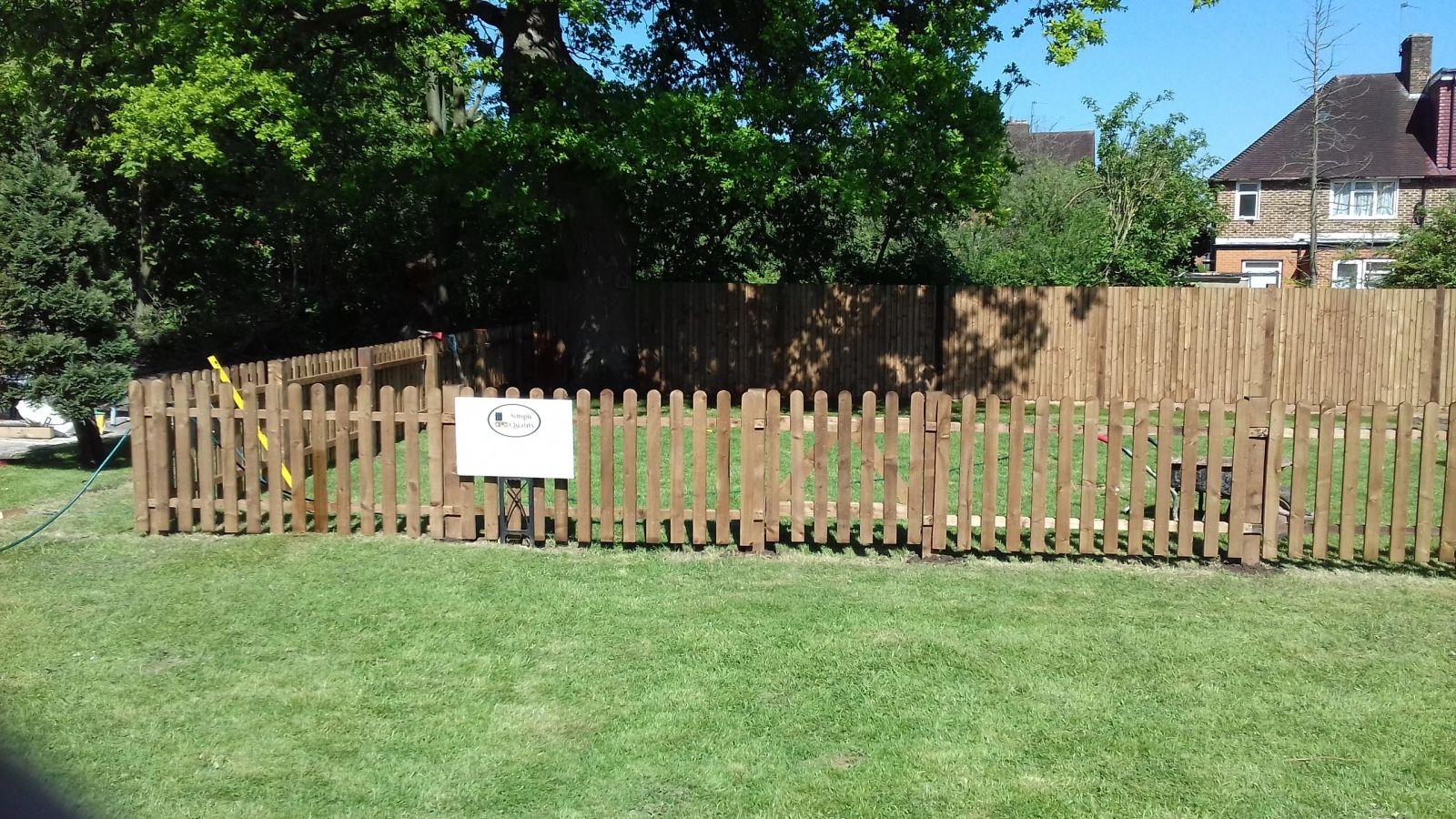
closeboard fence run installed by Capital Fencing in Welwyn Garden City (AL7)
Welwyn Garden City · AL7 / AL8

Landlord Fencing in Welwyn Garden City (AL7)

Capital Fencing installs landlord-grade fencing across Welwyn Garden City and out toward hatfield and hertford. What separates a landlord-grade fencing job from a standard boundary is the detail: boundary run replaced between two tenancies inside a single working week. That's the work, not the marketing. Roads such as Parkway and Handside Lane are typical of the local layout. Welwyn Garden City station is a useful local reference point. The Garden City Movement's design principles, associated with Ebenezer Howard, are still referenced informally by residents on streets such as Applecroft and Handside.

Capital Fencing installs landlord-grade fencing across Welwyn Garden City and out toward hatfield and hertford. What separates a landlord-grade fencing job from a standard boundary is the detail: boundary run replaced between two tenancies inside a single working week. That's the work, not the marketing. Roads such as Parkway and Handside Lane are typical of the local layout. Welwyn Garden City station is a useful local reference point. The Garden City Movement's design principles, associated with Ebenezer Howard, are still referenced informally by residents on streets such as Applecroft and Handside.

Default spec

How we build landlord-grade fencing in Welwyn Garden City

6ft closeboard on concrete posts with gravel boards, mid-rail capped, softwood side gate with padlock hasp. On Welwyn Garden City jobs we adjust for welwyn garden city has design covenants — front fences typically restricted in height and style.

Property mix locally: the original Garden City Movement housing — neo-Georgian semis and short terraces with consistent frontages. Typical gardens: rear gardens hidden behind tall established hedgerows; many properties sit on the original 1920s grid. Postcodes we regularly service: AL7, AL8.

we bill via one purchase order across a portfolio, provide before/after photos for the inventory clerk, and can be on and off site inside a tenancy void.

Why this spec, for buy-to-let owners and letting agents

  • individual boards or single panels can be swapped without touching the whole run
  • concrete posts and gravel boards keep the ground contact off the timber — that's where landlord fences usually fail
  • one crew, one price sheet across multiple properties — inventory-friendly for portfolio owners

Where landlord-grade fencing isn't the right answer

  • listed buildings and conservation frontages where painted picket or estate railings are the only compliant option
  • commercial forecourts needing bar-and-rail or palisade rather than domestic-grade timber

Typical landlord-grade fencing briefs in Welwyn Garden City

  • matched fencing across three or four adjacent rental plots owned by one landlord
  • cheapest defensible spec that will still stand up to the next storm and inventory

Landlord Fencing FAQs — Welwyn Garden City

Do you handle the removal and skip for the old fence?

On landlord-grade fencing jobs in Welwyn Garden City (AL7), our default answer is: 6ft closeboard on concrete posts with gravel boards, mid-rail capped, softwood side gate with padlock hasp. We bill via one purchase order across a portfolio, provide before/after photos for the inventory clerk, and can be on and off site inside a tenancy void.

Do you invoice per property or per portfolio?

Across Welwyn Garden City we spec around welwyn garden city has design covenants — front fences typically restricted in height and style, so on landlord-grade fencing that usually means pressure-treated closeboard on concrete posts. The honest trade-off is cheapest lap panels racking in wind because posts were shallow — we always concrete to 600mm minimum on landlord work — which is exactly what our default spec designs out.

Can before-and-after photos be provided for the inventory?

Welwyn Hatfield Borough coverage means we can survey most AL7 addresses inside a week — buy-to-let owners and letting agents needing durable boundaries between tenancies. For context: concrete posts and gravel boards keep the ground contact off the timber — that's where landlord fences usually fail. One crew, one price sheet, before-and-after photos as standard.

Can you match existing fencing across neighbouring rental plots?

Practically: boundary run replaced between two tenancies inside a single working week. That's the Welwyn Garden City version of this job, not a generic one. For context: concrete posts and gravel boards keep the ground contact off the timber — that's where landlord fences usually fail. One crew, one price sheet, before-and-after photos as standard.

What's the cheapest defensible spec you'd stand behind for a rental?

On landlord-grade fencing jobs in Welwyn Garden City (AL7), our default answer is: 6ft closeboard on concrete posts with gravel boards, mid-rail capped, softwood side gate with padlock hasp. We bill via one purchase order across a portfolio, provide before/after photos for the inventory clerk, and can be on and off site inside a tenancy void.

Recent landlord fencing work
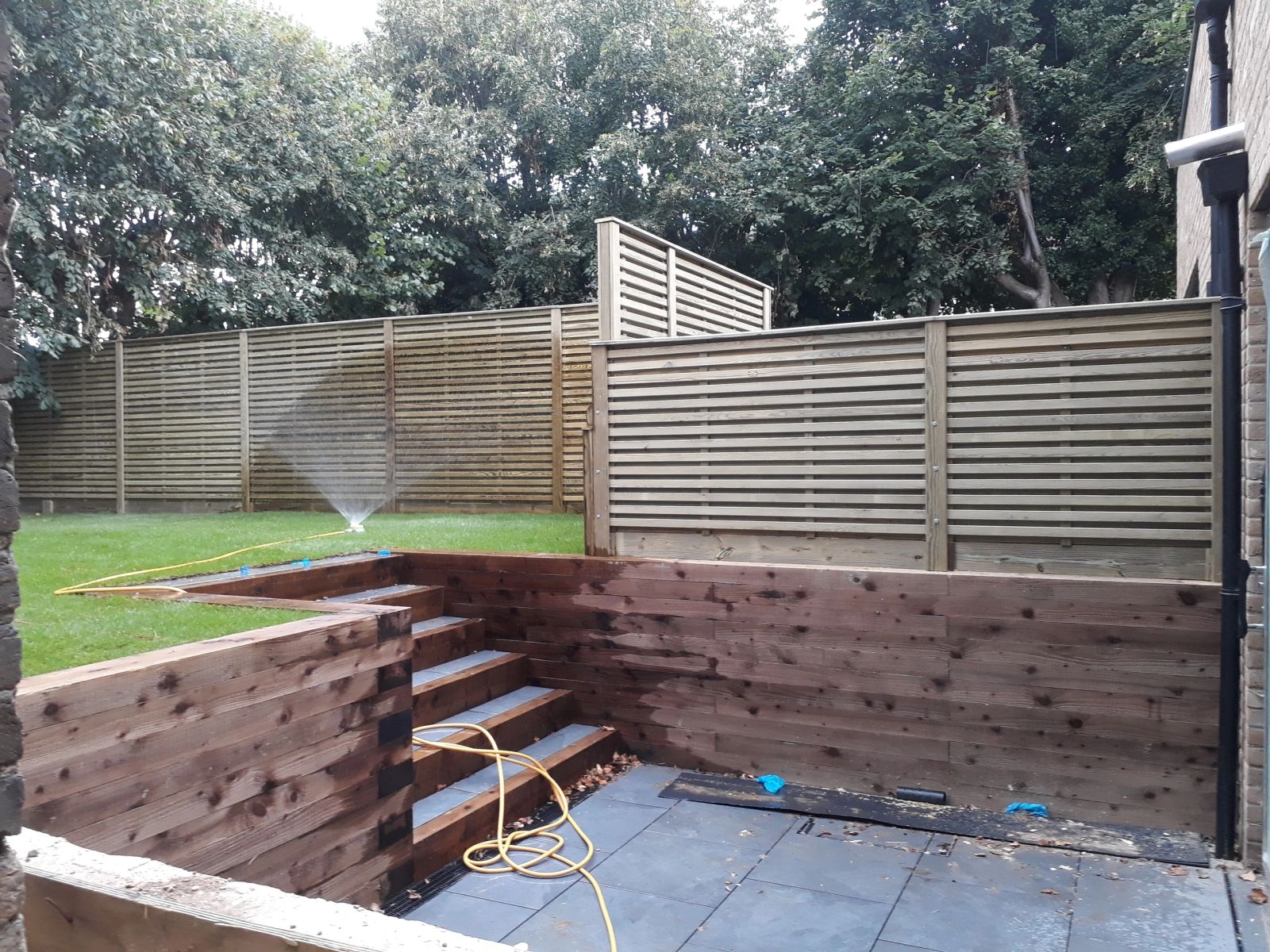
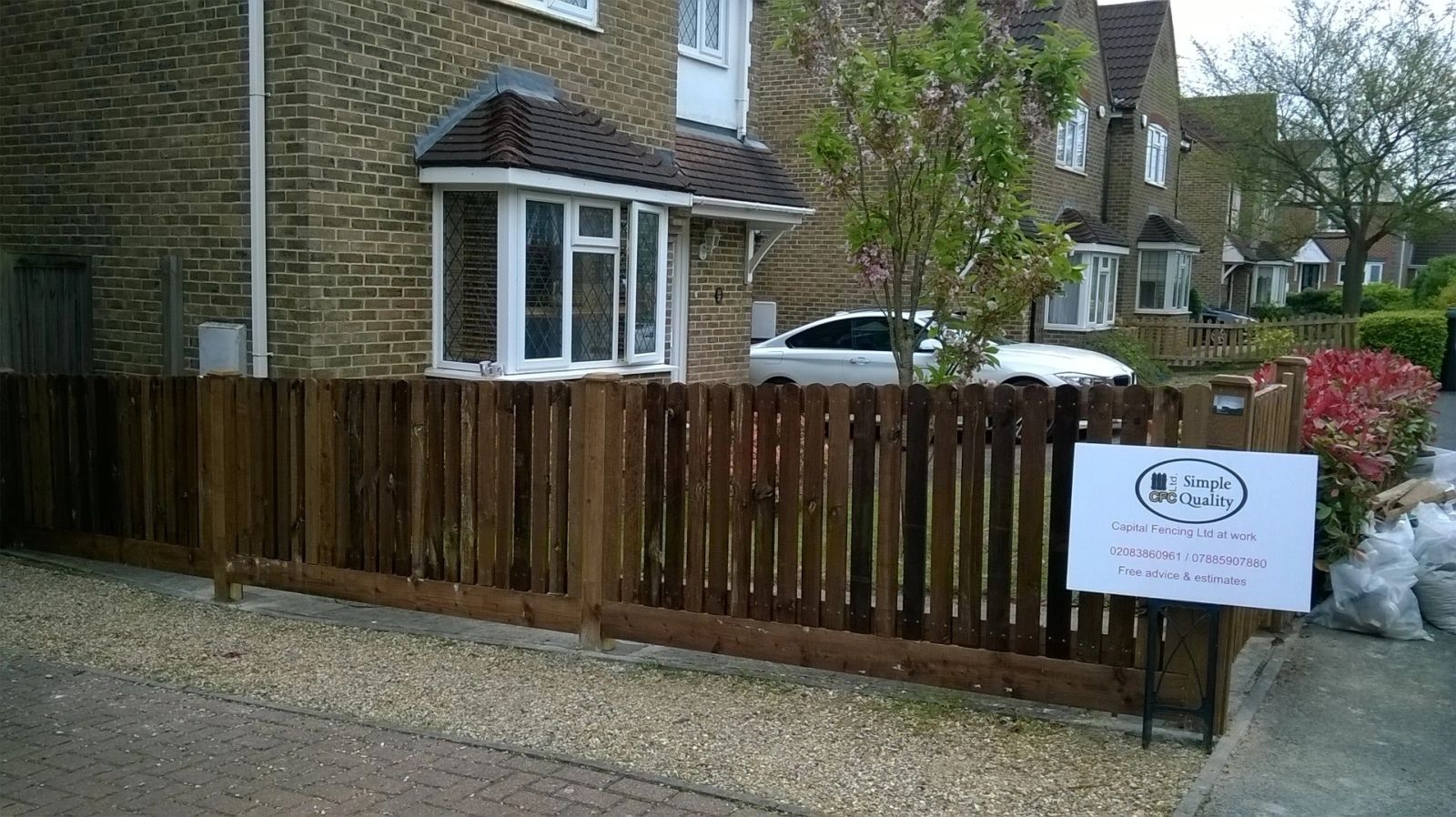
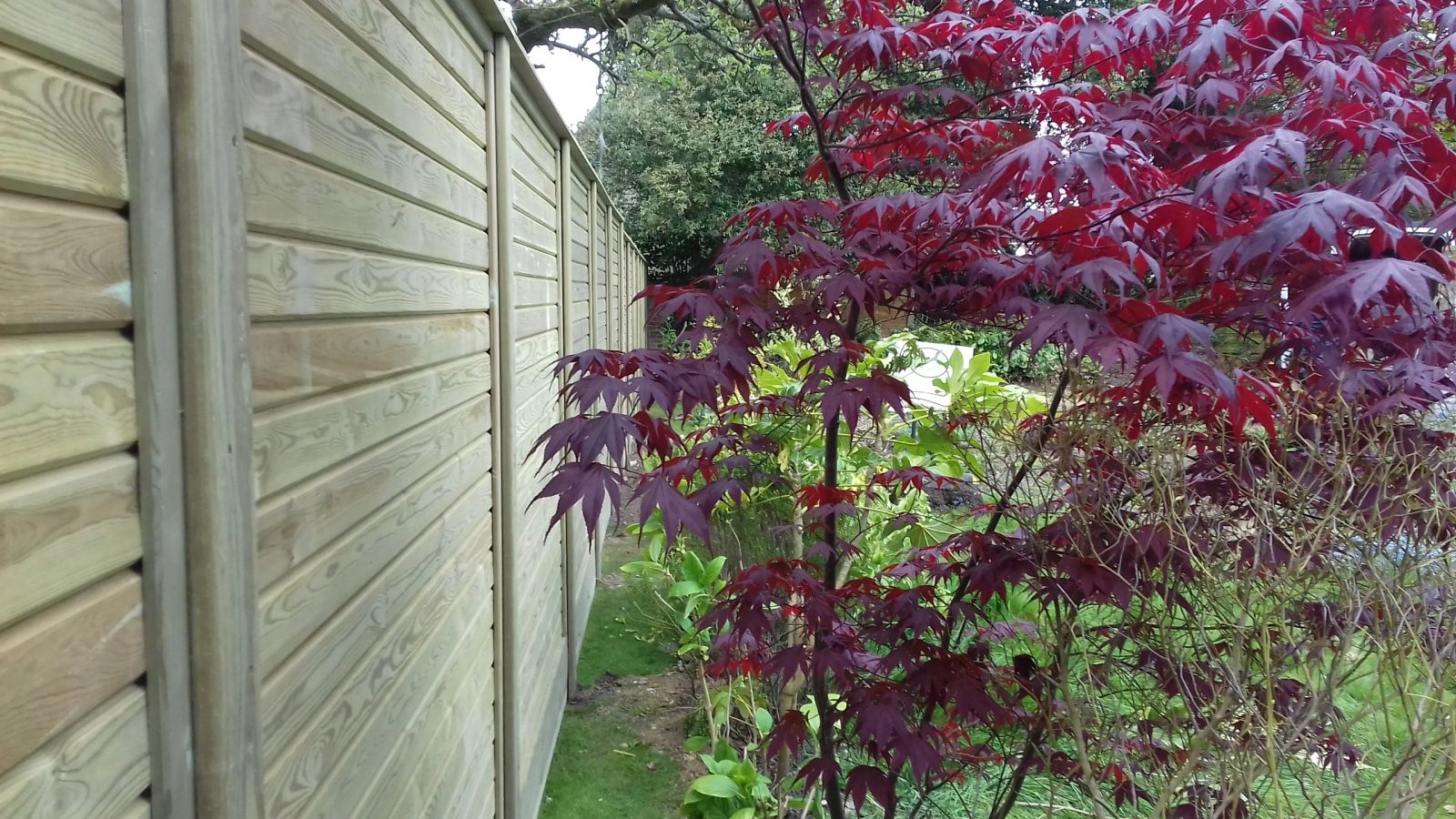
closeboard fence run installed by Capital Fencing in Welwyn Garden City (AL7)panel fence install installed by Capital Fencing in Welwyn Garden City (AL7)trellis-topped fence installed by Capital Fencing in Welwyn Garden City (AL7)bespoke decorative fence installed by Capital Fencing in Welwyn Garden City (AL7)

Before you book landlord fencing in Welwyn Garden City

Repairing a fence where only hand tools will fit

A narrow side passage or a fence set hard against a building can rule out power tools with any real footprint, meaning a repair has to be done with hand saws, hand augers and manual mixing rather than the equipment that would normally speed the job up.

This mainly affects timing rather than the quality of the repair itself, since the same joints and fixings can be achieved by hand, just more slowly than with powered equipment.

Headroom and ground clearance on a rising site

A gate hung across ground that rises from one side to the other needs enough clearance built into its swing to clear the highest point of that rise without the bottom rail dragging as it opens.

We measure ground level across the full arc of swing, not just at the gate posts, before setting hinge height on a sloping or uneven site.

Bolt-down versus concreted base plates

A bolt-down base plate suits hardstanding such as a concrete yard or car park, using resin or expansion anchors rather than digging a footing, which keeps the surface intact and the fence removable if the layout changes.

A concreted post gives a stiffer, more permanent fixing on soil or made-up ground, but it isn't an option where the surface can't be broken — the choice is driven by the ground, not by preference.

Certificates of lawfulness for existing boundary structures

A Certificate of Lawfulness of Existing Use or Development can formally confirm that an existing boundary structure was lawfully built, which is useful where there's uncertainty or a dispute about historic permissions.

This is different from planning permission itself — it's a factual confirmation of lawful status, often sought before a property sale to resolve a conveyancing query.

Where a long-standing boundary fence's planning history is unclear, applying for this kind of certificate can settle the question more reliably than relying on assumption.

Hedgerows as a boundary feature

Some countryside and village hedgerows are protected under the Hedgerow Regulations 1997, which can restrict removing an 'important' hedgerow even where it marks a private boundary.

This mainly affects longer, older hedges in rural or semi-rural locations rather than typical suburban garden hedges, but the distinction isn't always obvious without checking.

Where a fence is planned to replace or run alongside a hedge, it's worth confirming with the council whether the hedgerow itself has any protected status before removal work begins.

Applying for a Land Registry boundary determination

Where a boundary's exact position is genuinely disputed, it's possible to apply to HM Land Registry for a 'determined boundary', which involves a formal survey and legally fixes the line rather than leaving it as a general indication.

This process is comparatively rare for domestic disputes because of the cost and evidence involved, and is normally a last resort after direct discussion has failed.

Most everyday fence replacement work never needs this, but it exists as a formal route for the minority of cases where agreement genuinely can't be reached.

Boundary treatments for flats and maisonettes

Shared amenity gardens attached to flats or maisonettes usually have boundary decisions made collectively through a management company or freeholder rather than by an individual leaseholder, which changes who needs to sign off a fence or gate change.

Lease terms sometimes specify who's responsible for maintaining which boundary, and altering a shared boundary without checking the lease is a common source of dispute between leaseholders.

Where several flats share a single rear garden, dividing it with new fencing usually needs agreement from all affected leaseholders, not just the person requesting the work.

Fastener embedment depth in timber

A fixing's holding strength in timber depends heavily on how far its threaded or ring-shanked section penetrates into the receiving timber, not just its total length, since a screw mostly passing through a thin outer board contributes little grip in that board alone.

General guidance for screwed timber connections aims for at least the full thread length engaged in the receiving member, which for a typical fencing fixing means selecting screw length based on both boards' combined thickness rather than the visible board alone.

Under-length fixings that barely reach the receiving timber are a common, easily overlooked cause of boards or rails working loose within a season, particularly where a shorter screw was substituted for convenience during fitting.

Steel post for a heavy timber gate

A wide or solid-faced timber gate can be heavy enough that a timber hanging post, even oversized, isn't stiff enough to resist long-term leverage, in which case a concreted steel post with a welded or bolted hinge plate gives a stiffer fixing.

This is more common on wide driveway gates than standard pedestrian gates, where the extra cost of a steel post is offset by significantly less long-term sag.

Boundary responsibilities under an agricultural tenancy

Where land is let under an agricultural tenancy, responsibility for boundary fencing can sit with the tenant rather than the landowner, depending on the specific tenancy agreement's terms.

This differs from the usual residential landlord and tenant position, reflecting the different statutory framework agricultural tenancies operate under.

Checking the tenancy agreement itself is the only reliable way to establish who's actually responsible for a specific boundary on let agricultural land.

Restrictor arms and stays for wind-prone double gates

A restrictor arm or stay holds a double gate leaf open at a set angle, preventing it from swinging shut or being blown further open by wind while a vehicle passes through, which is particularly useful on an exposed driveway entrance.

Without a stay, an open gate leaf left unsecured in wind can swing back and strike a vehicle or a person passing through the opening.

Who maintains a grass verge next to a boundary

A grass verge between a garden boundary and the road is often owned and maintained by the local council as part of the adopted highway, rather than by the adjoining property owner.

This affects where a fence can legally be positioned, since building onto highway land, even a seemingly unused verge, generally needs authorisation.

Where the extent of a verge and its ownership isn't obvious, the local highway authority can usually confirm it against their adopted highway records.

Subdividing a garden and creating a new boundary

Splitting part of a garden off for a new dwelling, annexe, or sale to a neighbour creates a brand new legal boundary that needs to be properly defined and registered with the Land Registry, not just marked with a fence.

A fence alone doesn't create or confirm legal ownership of subdivided land — the conveyancing and registration is what actually establishes the new boundary in law.

Anyone considering this kind of garden subdivision should involve a solicitor for the legal transfer before, rather than after, any physical fence goes in to mark the new line.

Touching up galvanising after on-site cutting

Cutting a galvanised post or rail to length on site removes the zinc coating from the cut edge, leaving bare steel exposed exactly where water is most likely to sit if the cut faces upward.

A cold galvanising paint or zinc-rich primer applied to the cut edge immediately after cutting restores meaningful protection, and skipping this step on a security run is a common reason a fence corrodes first at bay joints rather than along the main rail length.

Razor mesh panel systems for high-security compounds

A razor mesh panel embeds short, sharp folded barbs directly into the mesh weave itself rather than adding a separate topping coil, giving an anti-cut and anti-climb barrier across the whole panel height rather than only at the top.

These panels carry a higher injury risk than a standard mesh and are typically reserved for high-value compounds such as a fuel depot or a substation, kept well away from any pedestrian route.

Marker tape and underground cable protection during fencing works

Even where a cable route has been avoided by shifting post positions, a warning marker tape laid above the cable at a shallower depth than the cable itself gives a visual and physical warning to anyone digging near the line in future.

This is a low-cost addition worth doing whenever a post line runs close to a known service, since a fence contractor working carefully today doesn't guarantee the same care from whoever digs near that boundary years later.

Terraced housing and rear access

Victorian and Edwardian terraces were rarely built with side access, which means materials for a rear garden fence often have to go through the house, over a shared side return, or down a narrow rear alley shared with several other properties.

That access constraint changes the practical choice of materials — full concrete gravel boards and long panels are harder to move through a narrow hallway than shorter timber sections carried in and built up on site.

It's also why timing matters on these jobs: a delivery that blocks a shared alley for half a day needs agreeing with neighbours in advance, not discovering on the morning of the job.

CDM regulations on domestic and commercial jobs

The Construction (Design and Management) Regulations 2015 apply to domestic projects as well as commercial ones, though on a domestic job the homeowner's CDM duties normally pass automatically to the contractor or principal contractor rather than sitting with the client directly.

On a commercial or public sector site, or a domestic job involving more than one contractor, formal duty-holder roles (principal designer, principal contractor) need to be identified and a construction phase plan put in place before work starts.

Even a straightforward domestic fencing job benefits from basic CDM thinking — safe access, checking for overhead cables or buried services, and clear site boundaries during the works — regardless of whether the formal paperwork threshold is met.

Freeholder consent for a leasehold garden

Leasehold houses and flats with a garden are usually still subject to the terms of the lease, which can require the freeholder's written consent before altering boundary structures.

This applies even where the leaseholder has full day-to-day use of the garden and has paid for previous fencing work themselves.

Checking the lease, or asking the managing agent, before committing to boundary work avoids a costly rebuild if consent turns out to be required and wasn't obtained first.

Repairing fence sections undermined by fox or badger digging

A gap dug beneath a gravel board or the base of a panel is usually a fox rather than a badger unless it's part of a larger, more established sett system, and the repair approach differs depending on which is causing it.

Fox damage can usually be repaired by reinforcing the base with a buried mesh skirt or a deeper gravel board, but any active badger sett close to the boundary is legally protected and needs specialist advice before any digging near it as part of the repair.

Recycled mixed-plastic lumber composition

Recycled plastic lumber differs from wood-plastic composite in that it's typically made entirely from reprocessed plastic waste with no wood fibre content, giving it complete immunity to rot and insect attack but a distinctly plastic rather than timber-like appearance.

Because it contains no wood fibre, it doesn't absorb moisture in the way composite or timber boards do, but it's also generally more flexible and prone to visible sagging over a wide unsupported span unless internally reinforced.

It's more commonly specified for ground-contact components like gravel boards and low retaining edges, where rot resistance matters most, than for larger structural fencing elements.

Water ingress through a missing or damaged post cap

A post cap sheds rainwater off the exposed end grain at the top of a post, and once it's gone missing or cracked, that end grain absorbs water directly and rots from the top down rather than only from ground contact.

Refitting a cap is a cheap and quick repair on its own, but where a post has already been exposed for some time, it's worth checking how far rot has travelled down the post before assuming a new cap alone has solved the problem.

Buy-to-let owners and letting agents needing durable boundaries between tenancies — that's who this page is for. In Welwyn Garden City and out to Welwyn Hatfield Borough, we run the landlord-grade fencing spec that survives welwyn garden city has design covenants — front fences typically restricted in height and style. Roads such as Pentley Park and Longcroft Lane are typical of the local layout. Stanborough Lakes is a useful local reference point. Digswell Road slopes toward the Digswell Viaduct, a Grade II listed railway viaduct and well-known local landmark.

Get In Touch

Get My Free Quote — 24h Response

No callout fee · Free site visit · Friendly local team covering London & Hertfordshire.

Call us
07885907880
or 02036484746
Email
capital_fencing@yahoo.com
WhatsApp
Message us anytime
Area
London & Hertfordshire
Payment
Card payments accepted

Pay by debit or credit card, bank transfer or cash once the work and price are agreed. No deposit taken online.

Request a Free Quote

We'll get back to you within 24 hours.

Free Site Visit No Callout Fee
Call WhatsAppQuote